• About
  • podcasts
  • Shop

Surgeons of Horror

~ Dissecting horror films

Surgeons of Horror

Tag Archives: Geena Davis

The Fly vs The Fly: 1959 and 1986

27 Thursday Aug 2026

Posted by surgeons of horror in retrospective, the fly

≈ Leave a comment

Tags

david cronenberg, Geena Davis, jeff goldblum, Vincent Price

There are remakes that attempt to improve upon their predecessors, remakes that attempt to modernise them and remakes that seem almost determined to prove that the original was never really the story we thought it was.

David Cronenberg’s The Fly belongs to the last category.

Kurt Neumann’s 1958 film and Cronenberg’s 1986 version share a title, a basic premise and a grisly fascination with the consequences of scientific experimentation. Both feature a scientist who accidentally merges his genetic material with that of a fly. Both involve a transformation that cannot be reversed. Both ultimately arrive at tragedy.

And yet, watching them side by side, they barely feel like the same film.

That difference is precisely what makes the two Flies so fascinating.

The 1958 The Fly is a film about scientific transgression. Cronenberg’s The Fly is a film about the body itself becoming the transgression.

One looks outward at the dangers of scientific progress.

The other looks inward.

One asks what happens when man plays God.

The other asks what happens when the person you love begins to disappear inside a body that is no longer human.

Forty years after Cronenberg’s film, the relationship between these two movies remains one of the great case studies in how a filmmaker can take the skeleton of an existing story and discover an entirely different horror film living inside it.


The Same Accident

The basic premise is remarkably similar.

In The Fly (1958), brilliant scientist André Delambre has developed a teleportation device capable of transporting matter from one location to another. During an experiment, an ordinary housefly enters the teleportation chamber with him.

Something goes wrong.

When André emerges, his atoms have been combined with those of the fly.

In Cronenberg’s film, Seth Brundle has also developed a teleportation system. His “telepods” are capable of transporting matter across space, although Brundle has yet to perfect the process for living organisms.

After a drunken night, Brundle decides to teleport himself.

A fly is already inside the pod.

The experiment works.

Except that it doesn’t.

The difference is crucial.

In Neumann’s film, the accident is essentially a malfunction.

In Cronenberg’s, the machine has worked perfectly.

That small alteration changes everything.

The horror of the 1958 film comes from failure.

The horror of the 1986 film comes from success.

That is one of Cronenberg’s most brilliant conceptual changes.

Seth hasn’t broken his machine.

He has demonstrated that it works.

The problem is what happens when technology does precisely what we ask it to do.


André Delambre: The Scientist as Victim

David Hedison’s Seth Brundle is perhaps the character most audiences associate with The Fly, but Al Hedison’s André Delambre—credited under the name David Hedison—is an equally fascinating creation.

André is a traditional 1950s mad-scientist figure, although the film is careful not to make him particularly mad.

He isn’t seeking immortality.

He isn’t trying to conquer the world.

He isn’t attempting to create a superior species.

He is a scientist fascinated by the possibility of instantaneous transportation.

His experiment is driven by intellectual curiosity.

That makes his transformation tragic rather than punitive.

André has not really done anything deserving of his fate.

He has simply gone too far.

That distinction reflects the anxieties of the era.

The post-war world had witnessed scientific achievements that once would have seemed impossible. Nuclear technology had demonstrated that scientific advancement could radically alter the human condition, while the Space Race and rapid technological development continued to expand the boundaries of what seemed possible.

The question wasn’t necessarily whether science could change the world.

It was whether humanity understood the consequences of doing so.

The Fly turns that anxiety into flesh.


Seth Brundle: The Scientist as Experiment

Jeff Goldblum’s Seth Brundle begins in a very different place.

He is younger, eccentric and almost charmingly socially dysfunctional. His relationship with science is not merely professional. It defines him.

When Veronica Quaife enters his world, she becomes fascinated by the telepods and by the man behind them.

Seth isn’t simply experimenting with teleportation.

He is experimenting with possibility.

And this is where Cronenberg radically alters the emotional architecture of the story.

André’s tragedy is largely experienced by those around him.

Seth’s transformation becomes increasingly intimate.

We watch it happen.

We experience it with him.

His body changes.

His mind changes.

His appetites change.

His sexuality changes.

His relationship with Veronica changes.

His understanding of himself changes.

The transformation therefore isn’t simply something that happens to Seth.

It becomes something he is forced to experience from inside.

Cronenberg turns the scientist into both protagonist and specimen.


The Fly as Science Fiction

The 1958 film is fundamentally a science-fiction horror movie.

Its central invention—the matter-transmitting machine—is the story’s great technological marvel.

The horror comes from what happens when the technology goes wrong.

There is still a wonderful sense of wonder in the film. The teleportation device is treated as something extraordinary, almost miraculous. André has achieved something that could revolutionise transportation.

The tragedy is that his breakthrough becomes his undoing.

The film therefore maintains a certain optimism about scientific progress even while warning about its dangers.

Science is powerful.

Science is dangerous.

Science must be respected.

It is a very 1950s conception of technological horror.

Cronenberg has almost no interest in preserving that optimism.

By 1986, the machine is no longer the miracle.

It is simply the mechanism through which the body becomes corrupted.

The technology is cold, clinical and increasingly irrelevant once the transformation begins.

The machine gets Seth into trouble.

His body is what keeps him there.


The Fly as Body Horror

This is where Cronenberg’s The Fly ceases to be a remake in the conventional sense.

It becomes a body-horror film.

The transformation isn’t merely a special effect.

It is the narrative.

Seth begins losing his fingernails.

His skin changes.

His teeth fall out.

His hair disappears.

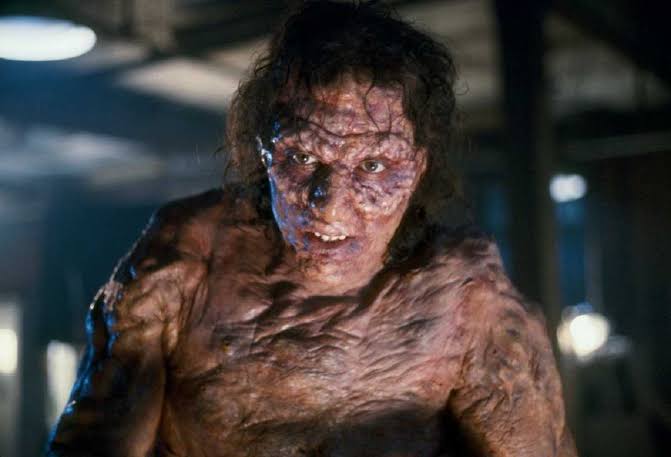
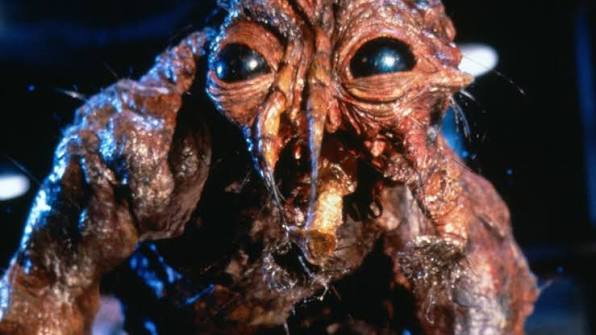
His body becomes increasingly insectoid.

His physical strength increases while his humanity diminishes.

Eventually, his body begins literally coming apart.

Cronenberg doesn’t allow the transformation to remain abstract.

We see it.

We hear it.

We watch Seth touch the things that are falling away from him.

The famous vomiting sequence is not simply grotesque comedy. It is a declaration of intent.

This film is going to make biological transformation unavoidable.

The body isn’t a metaphor placed on top of the story.

The body is the story.

And that is arguably the defining difference between the two films.


The Fly and the Fear of Ageing

There is another significant difference hidden inside the transformation.

The 1958 film is concerned with scientific catastrophe.

The 1986 film is also concerned with ageing.

Seth’s transformation is horrifying partly because it accelerates something all human beings experience.

His body begins changing without his consent.

His appearance deteriorates.

His physical abilities alter.

His body becomes unfamiliar.

He becomes increasingly aware that he cannot stop the process.

There is something brutally human beneath the science-fiction premise.

We are all, eventually, forced to confront a body that changes without asking our permission.

Cronenberg simply makes that process immediate, grotesque and impossible to ignore.

Seth doesn’t gradually age.

He metamorphoses.

And in doing so, he becomes a grotesque embodiment of the fear of losing ownership over one’s own body.


The Fly and Sexuality

Cronenberg also makes sexuality central to the transformation.

Seth and Veronica’s relationship begins with attraction and curiosity.

Their sexual relationship becomes one of the film’s most important emotional anchors.

Then Seth changes.

His sexuality changes with him.

His confidence becomes aggression.

His desire becomes increasingly animalistic.

His relationship with Veronica becomes complicated by his transformation.

This is a crucial departure from the 1958 film.

The earlier movie is concerned with scientific catastrophe and the destruction of a family.

Cronenberg’s film is concerned with intimacy.

What happens when the person you desire begins transforming into something you can no longer recognise?

What happens when attraction becomes repulsion?

What happens when love survives longer than the body it was attached to?

These questions make The Fly profoundly uncomfortable because the horror is not happening somewhere distant.

It is happening between two people.


Veronica Quaife Changes Everything

Patricia Owens’ Helene Delambre is central to the 1958 film, but Veronica Quaife serves a very different dramatic purpose.

Geena Davis isn’t simply an observer of Seth’s transformation.

She is emotionally entangled in it.

Her relationship with Seth gives Cronenberg’s film its human centre.

The horror is not merely that Seth is becoming a fly.

The horror is that Veronica is watching someone she loves disappear.

That distinction becomes crucial in the film’s final act.

The question is no longer:

Can Seth be saved?

It becomes:

What does love mean when there is almost nothing left to save?

The 1958 film ultimately remains a tragedy of scientific accident.

Cronenberg transforms it into a tragedy of intimacy.

And that is a far more painful proposition.


Two Different Monsters

The two films also offer radically different ideas of the monster.

In the 1958 film, the monstrous form is externalised.

André’s head and arm become fly-like while his body remains recognisably human.

The famous white-headed fly becomes a separate object of horror.

The audience can look at the monster.

There is a degree of distance.

Cronenberg destroys that distance.

There is no separate monster.

Seth is the monster.

The fly is inside him.

The fly is becoming him.

And eventually, the distinction between the two becomes meaningless.

This is one of the reasons Cronenberg’s creature effects remain so effective.

The audience isn’t watching an actor in a monster costume.

We are watching a human body progressively cease to obey the definition of human.

That is far more disturbing.


The Question of Identity

The transformation in both films raises the question of whether the transformed scientist remains the same person.

But Cronenberg pushes the question much further.

At what point does Seth stop being Seth?

Is it when his body changes?

When his behaviour changes?

When his thoughts become increasingly insect-like?

When he begins referring to himself as “Brundlefly”?

Or is Seth still present right until the end?

The film never provides a comfortable answer.

That ambiguity is essential.

If Seth simply dies and a monster takes his place, the story becomes straightforward.

But that isn’t what happens.

There is still a consciousness inside the creature.

There is still memory.

There is still love.

There is still recognition.

And that makes the final stages of the transformation so devastating.

The monster remembers being human.


The Tragedy of Progress

Both films ultimately contain a warning about progress, but they express it very differently.

The 1958 film essentially says:

Be careful what science makes possible.

Cronenberg’s film asks something more troubling:

What if progress works?

The telepods are not a failure.

They function.

Seth has genuinely solved teleportation.

The discovery could change civilisation.

It could revolutionise transportation.

It could transform medicine.

It could fundamentally alter the relationship between humans and physical space.

And that is precisely why the film’s horror works.

Seth’s catastrophe doesn’t invalidate his invention.

It proves its potential.

The machine has done exactly what it was designed to do.

It simply wasn’t designed to understand what a human being actually is.


1958: The Horror of the Machine

Kurt Neumann’s film therefore remains fascinating because its horror is ultimately technological.

The machine represents a threshold.

André crosses it.

He cannot come back.

There is something wonderfully old-fashioned about the film’s anxiety.

The scientist has opened a door that should perhaps have remained closed.

It is the same basic fear that runs through countless science-fiction stories of the period.

We discover something extraordinary.

We use it before understanding it.

The consequences are catastrophic.

Yet there is still a sense that the technology itself is morally neutral.

It is the human error surrounding it that creates the disaster.


1986: The Horror of the Body

Cronenberg is much less interested in whether the technology is morally neutral.

He is interested in what happens once technology enters the body.

The telepods are almost incidental.

They are the catalyst.

The real horror is biological.

This is what makes The Fly such an important film in the development of modern body horror.

Cronenberg understands that the human body is already a terrifying thing.

It grows.

It changes.

It heals.

It decays.

It produces fluids.

It breaks.

It ages.

And eventually it dies.

The science-fiction premise simply gives him permission to accelerate all of those processes.

The fly is therefore less frightening because it is an insect than because it provides a mechanism through which Seth can lose control of his own physical existence.


Two Films About Death

Ultimately, both The Fly films are about death.

But they arrive at death from opposite directions.

The 1958 film begins with science and ends with tragedy.

The 1986 film begins with science and ends with dissolution.

André’s transformation is a horrible accident that must be reversed.

Seth’s transformation becomes an irreversible process that must eventually be accepted.

That difference changes the emotional impact of the endings.

The 1958 film offers a conventional horror resolution.

The 1986 film offers something much closer to mourning.

Veronica doesn’t simply lose Seth.

She watches him disappear.

Piece by piece.

Cell by cell.

Memory by memory.

The horror lies in being forced to remain present for the process.


A Remake That Became Something Else

Perhaps the greatest achievement of Cronenberg’s The Fly is that it doesn’t require the 1958 film to be inferior.

The two films simply operate on different frequencies.

Kurt Neumann’s film is an elegant piece of 1950s science-fiction horror, built around the anxieties of technological progress and scientific experimentation.

Cronenberg’s film takes the same premise and turns it into something more intimate, sexual, biological and existential.

One is about a machine that goes wrong.

The other is about a body that goes wrong.

One is concerned with the danger of discovering something humanity isn’t ready to control.

The other is concerned with the terrifying possibility that we may never have been in control of our bodies in the first place.

That is why the 1986 film doesn’t feel like an attempt to replace its predecessor.

It feels like an excavation.

Cronenberg finds the body horror buried underneath the science fiction.

He finds the tragedy buried underneath the accident.

He finds the love story buried underneath the monster movie.

And then he drags all three into the light.


Which Fly Is More Frightening?

The answer depends entirely on what frightens you.

If the idea of scientific experimentation escaping human control is your nightmare, the 1958 film remains remarkably effective.

If your fear lies in bodily deterioration, disease, ageing, sexuality, loss of identity and watching someone you love become something you can no longer recognise, Cronenberg’s The Fly is in another category entirely.

But perhaps the most interesting way to view them is not as competitors.

It is as a conversation across generations.

The 1958 film asks what happens when science moves too quickly.

The 1986 film asks what happens when science moves inside us.

The first fears the machine.

The second fears the flesh.

And between them, the two films chart a remarkable shift in the language of horror itself.


The Fly at 40

Forty years after Cronenberg’s film arrived, it is tempting to talk about The Fly as though it simply perfected an existing story.

It didn’t.

It reinterpreted it.

That distinction matters.

The original The Fly remains the foundation. Without Neumann’s film, there would be no telepods, no André Delambre and no basic story of a scientist whose experiment merges him with an insect.

But Cronenberg understood that a remake becomes worthwhile when it discovers something the original could not—or did not—say.

His The Fly takes a Cold War-era science-fiction cautionary tale and turns it into an existential horror story about the body, identity, love and mortality.

It is a film about progress, but it is also a film about regression.

It is about scientific achievement, but also about biological inevitability.

It is about becoming something new.

And it is about losing everything that made you who you were.

That is why the two Flies remain so fascinating together.

1958 asks what happens when man becomes a monster because science fails.

1986 asks what happens when science succeeds—and the human body is the price.

The first Fly gave us the accident.

Cronenberg gave us the transformation.

And forty years later, it is the transformation that still refuses to let us look away.

The machine worked.

The body didn’t.

  • Saul Muerte

THE TECHNOLOGY THAT WORKED: Teleportation and the Horror of Progress

21 Friday Aug 2026

Posted by surgeons of horror in retrospective, the fly

≈ Leave a comment

Tags

david cronenberg, Geena Davis, jeff goldblum, the fly

The most frightening thing about The Fly is not that Seth Brundle’s teleportation experiment goes wrong. It is that it works. That distinction sits quietly at the centre of David Cronenberg’s 1986 masterpiece. The telepods are not some half-finished contraption that malfunctions because their creator has failed to understand the science. They do precisely what Seth Brundle has designed them to do. They disintegrate matter at one point and reintegrate it at another. They take the impossible idea of instantaneous transportation and make it real.

The horror begins when the machine becomes capable of doing something its creator has not yet considered. And that is a much more disturbing proposition. Science fiction has traditionally presented technological progress as a gateway to possibility. The invention opens the door. Humanity walks through it. In The Fly, Cronenberg asks what happens when the door opens onto somewhere humanity was never prepared to go.

Seth Brundle doesn’t invent a failed machine. He invents a successful one with consequences he cannot comprehend. That makes the telepods one of the great pieces of technology in horror cinema—not because they are impossible, but because Cronenberg understands that technological progress is rarely frightening because something doesn’t work. It is frightening because something does.

A Machine That Changes the Rules

When Seth first demonstrates the telepods to Veronica Quaife, the scene is almost charming. There is excitement in his voice. He is awkward, excitable and utterly convinced that he has achieved something extraordinary. And he has. The machine transports Veronica’s stocking from one pod to another. Matter has crossed space without travelling through it. Seth has effectively abolished the journey between two points. The achievement is staggering. It is also beautifully modest.

Cronenberg doesn’t introduce the telepods with the fanfare of a conventional science-fiction blockbuster. There is no enormous laboratory filled with gleaming machinery. The devices sit inside a grimy warehouse, resembling oversized phone booths. Veronica initially approaches them with understandable scepticism. Yet there they are. They work.

The film’s brilliance lies in making the technology seem plausible enough for us to accept it before we have had time to question what it actually means. What happens to something when it is disassembled? What constitutes the thing that arrives at the other end? If the original matter is destroyed and another arrangement of matter is created elsewhere, has the object travelled? Or has it died and been reconstructed?

These questions sit underneath The Fly without requiring the film to provide a philosophical lecture. The telepods simply operate, and the audience gradually realises that Seth has not merely invented transportation. He has invented a machine capable of rewriting matter. And eventually, himself.

The Telepod Doesn’t Understand Life

The first true warning comes when Seth attempts to teleport a living organism. The machine fails spectacularly. The baboon emerges mutilated, its body turned inside out.

This is perhaps the film’s most important technological moment because Seth has encountered a limitation he doesn’t initially understand. The telepods can recognise and reconstruct inorganic matter, but living flesh presents a problem. Seth’s response is not to abandon the experiment. He teaches the machine. That detail is crucial. He reprograms the computer so that it can understand the biological complexity of living tissue. The second baboon survives.

The technology has evolved. The problem has been solved. And that solution takes Seth one step closer to the catastrophe waiting for him. The machine isn’t evil. It isn’t defective. It is simply incapable of making the ethical distinction between what can be done and what should be done. Neither, increasingly, is Seth.

The Romance of Progress

Seth’s relationship with Veronica is intimately connected to his technological ambitions. She is not merely a journalist documenting his invention. She becomes the human presence capable of interrupting his increasingly isolated relationship with the machine. Their romance initially seems to make Seth more human. It also makes his technology more ambitious. The moment he begins thinking about living matter differently, the telepods move from being a means of transportation to a mechanism for manipulating biological existence.

The machine changes because Seth changes. And Seth changes because of the machine. The relationship becomes circular. Technology gives him power. Power gives him confidence. Confidence gives him recklessness. Recklessness sends him back into the machine. This is why his self-teleportation is not simply an act of scientific curiosity.

It is an act of arrogance. He has solved the problem. He believes he understands the system. He believes he understands himself. He is wrong.

The Fly Is Not the Accident

The housefly that enters the telepod with Seth has often been treated as the random accident that sets the tragedy in motion. But randomness isn’t really the point. The fly is merely the final variable in a system Seth has already chosen to trust. The machine detects two biological entities. It does not panic. It does not malfunction. It makes a decision. It fuses them.

The computer identifies the presence of two organisms and produces a result that is, according to the logic of the machine, perfectly coherent: a new biological entity created from both sources. The film describes this as fusion at a molecular-genetic level.

The horror is therefore not that the computer fails to understand what it is doing. The horror is that it understands exactly enough to do it. Seth has built a machine capable of interpreting life as information. And once life becomes information, the distinction between human and insect becomes a problem of data. That is a profoundly Cronenbergian nightmare.

Technology Has No Morality

The telepods don’t know that Seth is a human being. They don’t know that he has a history. They don’t know that he loves Veronica. They don’t know that he has hopes for his future. They don’t know that a fly is a fly. They process information. That is their function. And this is where the film’s technological horror becomes more interesting than the conventional “mad scientist” narrative.

Seth does not unleash an evil machine upon the world. He creates a machine without a moral framework. It can perform the operation. It cannot determine whether the operation should occur. That responsibility remains with the human being operating it. And Seth gradually becomes incapable of carrying that responsibility. The machine isn’t corrupting him. It is revealing the danger of giving enormous power to someone who has mistaken intelligence for wisdom.

The Illusion of Purification

Immediately after his teleportation, Seth initially believes the machine has improved him. He is stronger. He is more energetic. His sexual confidence increases. He becomes almost evangelical about the experience.

Teleportation, he believes, has purified him. This is one of the film’s darkest jokes. The scientist has just undergone the most profound biological transformation imaginable and interprets the result as technological progress. He isn’t horrified by his body. He is impressed by it. He believes he has been upgraded. That word is important.

Seth doesn’t initially think he is becoming something else. He thinks he is becoming something better. The language of technological progress has entered his understanding of his own body. He has not become ill. He has evolved. He has not deteriorated. He has improved. The horror is that the distinction between those ideas becomes increasingly difficult to maintain.

The Body as Software

Cronenberg’s great innovation is to make biological transformation feel like technological transformation. Seth’s body begins behaving as though it has received a corrupted software update. His fingernails detach. His skin changes. His bodily functions alter. His strength increases. His instincts become increasingly insectoid. The machine has rewritten him. And yet the process isn’t presented as a simple mutation. Seth becomes fascinated by the logic of what is happening to him. He studies his own transformation. He documents it. He gives it a name.

Brundlefly.

The scientist turns himself into the subject. He becomes both experiment and experimenter. This is one of the film’s most unsettling ideas: Seth retains enough scientific curiosity to observe his own destruction. He can see what is happening. He simply cannot stop it.

The Horror of Improvement

There is something particularly disturbing about the way Seth initially embraces his transformation because it reflects a very human faith in progress. We are conditioned to believe that new technology will make us faster, stronger, healthier and more efficient. Seth experiences exactly those things. He becomes stronger. He becomes faster. He develops abilities that his human body never possessed. If the transformation had stopped there, the telepods might have been celebrated as a technological miracle. Instead, Cronenberg asks the question that technological optimism frequently avoids:

What if becoming more efficient means becoming less human?

That is the heart of The Fly. Seth’s transformation isn’t simply from man to insect.It is from human complexity to biological efficiency. The fly doesn’t possess human morality.

It doesn’t possess human empathy. It doesn’t worry about dignity. It simply survives. Seth’s physical improvement therefore corresponds with a moral deterioration. The better his body becomes at being a fly, the worse he becomes at being Seth Brundle.

The Machine Cannot Give Him Back

Eventually Seth understands what the telepods have done. He tries to reverse the process. And once again, the technology works. The problem is that Seth’s understanding of the machine has changed. He is no longer simply trying to teleport himself. He is trying to manipulate identity.

He wants to use another human being to dilute the fly genes within his body. The telepod has become a mechanism for genetic reconstruction. The scientist who once wanted to transport matter across space now wants to use the same machine to decide what species he should belong to. This escalation is one of the film’s most devastating ideas. The technology never changes. Seth’s ambitions do.

Every solution creates a larger problem because the underlying assumption remains the same:

If something can be altered, it should be altered.

The telepods have given Seth extraordinary power. They have not given him wisdom.

The Telepods as a Modern Faustian Bargain

There is a distinctly Faustian structure to The Fly. Seth possesses knowledge that appears almost miraculous. He has achieved something that should be impossible. And the achievement transforms his understanding of what is possible. But unlike the traditional Faustian bargain, there is no demon standing outside the laboratory demanding payment. There doesn’t need to be. The invention itself is the bargain. Seth gets what he wants. He simply discovers that wanting it was the problem.

The telepods offer him freedom from physical distance. They ultimately imprison him inside his own biology. They promise instantaneous transportation. They leave him unable to escape his own body. They represent the conquest of nature. They demonstrate how little Seth understands nature in the first place. The machine therefore becomes a perfect symbol of technological hubris.

The Horror of Progress

Cronenberg made The Fly in the middle of a decade obsessed with technological acceleration. Computers were becoming increasingly embedded within everyday life. Biotechnology was advancing. Corporate science was becoming increasingly powerful. The language of innovation was increasingly associated with progress, wealth and human advancement. And yet Cronenberg’s film refuses to celebrate progress unconditionally.

It asks who controls it. Who benefits from it? Who understands its consequences? And what happens when the person operating the machine is so fascinated by what it can do that they stop asking whether it should be done? Those questions remain remarkably contemporary.

The real-world concept of teleportation is vastly different from Cronenberg’s fictional technology. Modern quantum teleportation concerns the transfer of quantum information rather than transporting a person or physical object intact from one place to another. Even speculative models of reconstructing a human being raise enormous questions concerning information, matter and identity. But The Fly doesn’t require its science to be literally predictive. It is using science fiction to explore a philosophical anxiety. What happens when technology gives us the ability to alter the fundamental conditions of existence before we have decided what those conditions mean?

The Technology That Worked

This is why the telepods are so important to The Fly. They are not a failed invention. They are an extraordinary success. Seth Brundle genuinely changes the world. His invention would transform civilisation if it could be perfected and controlled. Distance becomes irrelevant. Transportation is revolutionised. Matter can apparently be broken apart and reconstructed elsewhere. The miracle is real. And that is precisely why the film is horrifying. If the telepods had simply exploded, there would be no tragedy. If they had never worked, Seth would have remained a scientist pursuing an impossible dream. Instead, he succeeds. He creates the future. And then discovers that the future has no obligation to preserve him.

The Last Teleportation

By the end of The Fly, the telepods have ceased to represent progress. They represent inevitability. Seth enters the machine one final time not as the brilliant young scientist who first demonstrated his invention to Veronica, but as something barely recognisable as human. His body has become a fusion of flesh, insect and technology. His final transformation is grotesquely appropriate. He is no longer merely a man who has been changed by technology. He has become an entity created by technology.

The telepod has completed its journey from transportation device to biological engine. And when the final creature crawls from the wreckage and silently asks Veronica to end its suffering, the machine has achieved something almost unbearably tragic. It has worked perfectly. It has simply delivered its creator somewhere he never intended to go.

The Prognosis:

The genius of The Fly is that David Cronenberg never asks us to fear science itself. Science is not the villain. Technology is not inherently evil. Progress is not inherently destructive. The telepods are magnificent. That is what makes them terrifying. The film instead interrogates the faith we place in our inventions and the assumption that technological capability automatically represents human progress.

Seth Brundle can move matter through space. He cannot understand the meaning of being human. He can teach a machine to understand living tissue. He cannot understand the ethical consequences of altering it. He can rewrite biology. He cannot rewrite mortality. And when he finally attempts to use his own invention to escape what he has become, the machine does what it has always done. It obeys.

The horror is not that technology fails us. It is that technology can succeed perfectly while we fail ourselves. That is the true nightmare inside The Fly. The telepods don’t open a gateway to the future. They reveal the cost of arriving there too quickly.

  • Saul Muerte

The Woman Watching the Monster: Geena Davis’s Veronica Quaife

14 Friday Aug 2026

Posted by surgeons of horror in retrospective, the fly

≈ Leave a comment

Tags

body horror, david cronenberg, Geena Davis, the fly

When audiences think back to David Cronenberg’s The Fly, the images that usually come first are those of Jeff Goldblum’s extraordinary transformation. They remember the telepods, the deteriorating flesh, the grotesque practical effects and the slow evolution of Seth Brundle into Brundlefly. It is one of horror cinema’s most iconic metamorphoses and, rightly, Goldblum’s performance has become inseparable from the film’s legacy.

Yet focusing solely on Seth’s transformation risks overlooking the character who gives the film its emotional centre. Without Veronica Quaife, The Fly would still be a landmark of body horror. With her, it becomes something far more devastating: a love story about watching someone disappear while they are still standing in front of you.

Geena Davis does far more than play the romantic lead. She becomes the audience’s emotional anchor, guiding us through a tragedy that is as much about witnessing irreversible change as it is about enduring it. While Seth experiences the horror from within, Veronica experiences it from the outside. She cannot stop the transformation, cannot reverse it and cannot fully understand it. All she can do is watch, hope and eventually accept what neither science nor love can overcome.

One of the reasons Veronica remains such a compelling character is that she is never written as a passive participant in the story. Horror cinema has often relegated women to the role of victim or survivor, but Veronica occupies a far more nuanced position. She is an accomplished science journalist whose curiosity introduces her to Seth Brundle’s revolutionary work. She is intelligent, professionally ambitious and emotionally independent long before romance enters the picture.

That independence is crucial because it establishes the relationship on equal terms. Veronica is not drawn to Seth because he rescues her or because the screenplay requires a romance. She falls in love with his brilliance, his awkward humour and his boundless enthusiasm. Seth’s eccentricity becomes part of his charm, and Goldblum and Davis’ real-life relationship lends these early scenes a warmth that feels remarkably natural. Before The Fly becomes a horror film, it is almost a romantic drama, allowing audiences to invest in two people whose affection feels authentic rather than manufactured.

This emotional groundwork is what transforms the film’s second half into something so painful. The audience is not simply watching a scientist mutate into a monster; they are watching a relationship slowly disintegrate under the weight of something neither partner can control. Veronica remains committed to Seth long after most people would have walked away, continually searching for traces of the man she first met beneath the increasingly grotesque exterior.

In many ways, Veronica’s journey resembles what psychologists now describe as anticipatory grief. It is the experience of mourning someone before they have physically died—a gradual process of recognising that the person you love is slipping away while still being physically present. Cronenberg captures this emotional reality with remarkable sensitivity. Seth is alive throughout the film, yet every stage of his transformation places another layer of distance between who he was and who he is becoming.

Geena Davis communicates this progression with extraordinary restraint. Rather than relying on dramatic emotional outbursts, she allows Veronica’s heartbreak to accumulate quietly. Small changes in expression, lingering silences and hesitant glances often reveal more than pages of dialogue ever could. As Seth becomes increasingly isolated within his own body, Veronica becomes increasingly isolated within her own grief. She is forced to watch events unfold with growing helplessness, recognising long before Seth does that there may be no cure.

Veronica’s profession also becomes surprisingly significant. As a journalist, she is trained to observe, investigate and seek evidence before reaching conclusions. Those instincts shape her response to Seth’s transformation. She refuses to dismiss what she is seeing, yet equally refuses to surrender to hysteria. Instead, she approaches the impossible with the same intellectual curiosity that first attracted her to Seth. Ironically, it is that shared belief in reason that makes the tragedy so much harder to bear. Knowledge offers neither of them comfort. It simply confirms the inevitability of what is happening.

As Seth’s physical deterioration accelerates, Veronica’s role gradually shifts from partner to caregiver. This aspect of The Fly often receives less attention than its spectacular body horror, yet it remains one of the film’s most emotionally truthful elements. She worries about Seth’s wellbeing, encourages him to seek help, attempts to protect him from his own increasingly destructive impulses and continues to care for him even as his appearance becomes almost unrecognisable.

Cronenberg presents caregiving not as heroic spectacle but as an act of quiet endurance. Veronica cannot fight the disease consuming Seth because there is no external enemy to defeat. Her greatest act of courage lies simply in remaining present. That emotional commitment gives The Fly much of its enduring humanity. The horror does not stem solely from physical mutation but from the painful recognition that love cannot always prevent loss.

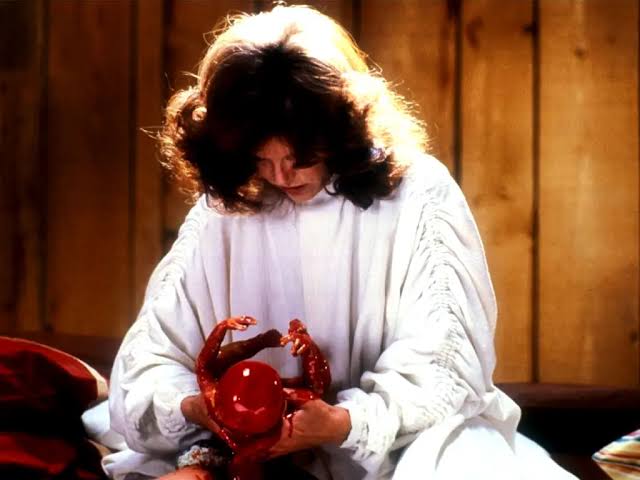
The film’s infamous nightmare sequence, in which Veronica dreams of giving birth to a grotesque larval creature, extends these themes even further. On the surface, it functions as one of Cronenberg’s most memorable moments of body horror. Beneath that shock lies a profound anxiety about the body’s unpredictability. Seth’s mutation has infected Veronica’s imagination, transforming pregnancy—a symbol of hope and new life—into another source of terrifying uncertainty. It reinforces one of Cronenberg’s central ideas: the human body can never be fully controlled, even by those who inhabit it.

Throughout the film, Geena Davis never competes with the extraordinary makeup effects surrounding her. Instead, she grounds them. Every grotesque transformation Seth undergoes becomes emotionally meaningful because Veronica reacts not simply with fear, but with compassion, disbelief and lingering affection. She continually reminds both Seth and the audience that there is still a person worth saving beneath the decaying flesh.

This emotional perspective reaches its devastating conclusion during the film’s final moments. The horrific fusion of Brundlefly and the telepod remains one of horror cinema’s most unforgettable images, yet the true emotional climax belongs to Veronica. When the grotesque creature silently raises the shotgun towards itself, she immediately understands the request being made.

She is not destroying a monster.

She is granting mercy to the man she still recognises.

That distinction is what elevates the ending beyond conventional horror. Veronica’s final act is not one of victory but of compassion. She sees Seth when almost every visible trace of him has disappeared. In doing so, she reminds the audience that humanity cannot always be measured by appearance alone.

Looking back forty years later, Veronica Quaife feels more relevant than ever. Modern audiences, particularly those who have experienced serious illness, degenerative disease or the responsibilities of caregiving, often recognise her journey as much as Seth’s. While The Fly is frequently celebrated for its astonishing practical effects, its emotional longevity owes just as much to Davis’ understated performance. She transforms a story of physical mutation into a meditation on love, grief and acceptance.

The Prognosis:

If Seth Brundle embodies the horror of losing oneself, Veronica Quaife embodies the heartbreak of watching someone you love disappear piece by piece. Geena Davis gives The Fly its emotional soul, ensuring that beneath every layer of prosthetic makeup remains a relationship worth mourning. Her performance reminds us that monsters are rarely frightening simply because of what they become. They are frightening because someone remembers who they used to be.

Forty years after its release, The Fly continues to move audiences not solely because of Brundlefly’s extraordinary transformation, but because Veronica never stops searching for Seth beneath it. In the end, she teaches us the film’s most profound truth: love does not end when bodies change. It simply asks more of those who remain.

  • Saul Muerte

Cronenberg’s Body: From Shivers to The Fly

31 Friday Jul 2026

Posted by surgeons of horror in retrospective

≈ Leave a comment

Tags

body horror, david cronenberg, Geena Davis, jeff goldblum, the fly

How David Cronenberg Turned Flesh Into Fear

Before Seth Brundle stepped into the telepod, David Cronenberg had already spent more than a decade asking audiences to look at the human body differently. Not as something sacred. Not as something inviolable. But as something vulnerable. Something porous. Something capable of changing without permission.

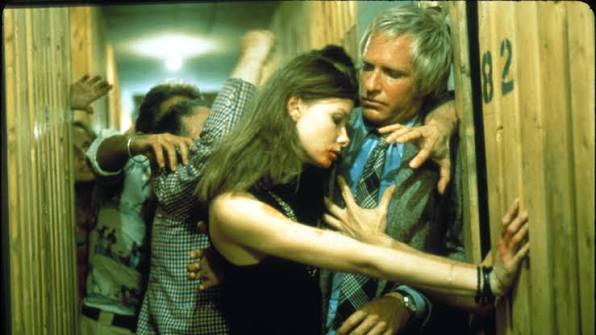
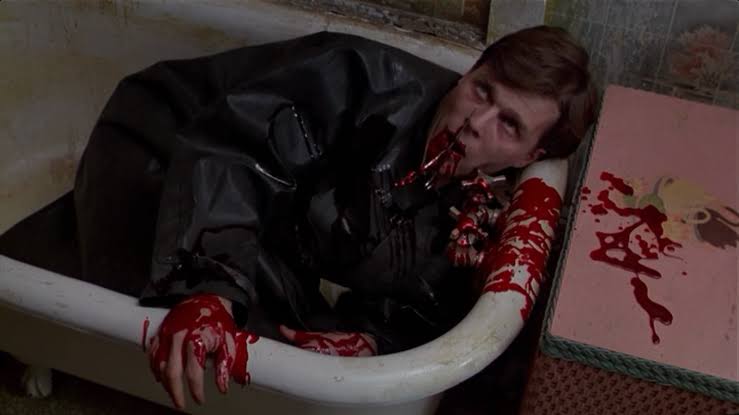
From the parasitic creatures of Shivers to the psychic violence of Scanners, from the biological mutation of Rabid to the technological nightmare of Videodrome, Cronenberg’s cinema has repeatedly returned to the same unsettling proposition:

The body is not a fixed thing.

It is a process.

And processes can go wrong.

By the time The Fly arrived in 1986, Cronenberg had already established himself as one of cinema’s great anatomists of fear. Yet the film represents something more than another entry in his growing body of work. It is a culmination. Everything Cronenberg had been exploring—the relationship between flesh and identity, science and mutation, sexuality and disease, technology and transformation—converges in Seth Brundle’s tragic metamorphosis. The fly did not arrive from nowhere. Cronenberg had been building towards it for years.

The Parasite Within

Shivers—released in 1975—announced Cronenberg as a filmmaker fascinated by the vulnerability of the human body. Its premise is deliberately grotesque. Parasitic creatures spread through a luxury apartment complex, transforming the residents into sexually driven hosts. But beneath the visceral horror lies an idea that would become central to Cronenberg’s cinema. The body can be invaded. Worse still, it can be persuaded to betray us.

The parasites in Shivers do not simply attack their victims from outside. They become part of them. The boundary between self and other begins to collapse.

This is a recurring Cronenberg anxiety. What happens when something enters the body and cannot be removed? What happens when the thing we fear is no longer outside us? What happens when we become the host? These questions would return repeatedly throughout his career. And eventually, in The Fly, the invader would be almost impossibly small.

A single insect.

A moment of contamination.

One microscopic intrusion capable of changing everything.

Rabid: The Body as Transmission

If Shivers introduced the idea of bodily invasion, Rabid developed it into something more recognisably biological. Rose is transformed following experimental surgery. The result is not merely physical alteration. Her body becomes a vector. An instrument of transmission. Those she encounters are infected. The personal becomes communal. The individual body becomes a threat to everyone around it.

Cronenberg’s fascination with disease is already apparent. The horror does not remain contained within one person.

It spreads.

It moves.

It crosses boundaries.

The body becomes both victim and perpetrator. That duality is crucial to understanding The Fly. Seth Brundle is both the person suffering from his transformation and the creature capable of causing harm. His tragedy is therefore not simply that his body is changing. It is that the transformation begins to change his relationship with everyone else. The disease becomes identity.

The Brood: Trauma Made Flesh

With The Brood, Cronenberg moved away from conventional infection and towards something more psychologically complex. The body becomes an expression of trauma. Pain becomes physical. Emotion becomes biological. The distinction between psychological and physiological suffering begins to disappear.

It is an idea that would become increasingly important to Cronenberg’s work. The body doesn’t simply experience the mind. It expresses it. This makes The Brood an important stepping stone towards The Fly. Seth Brundle’s transformation may be caused by science, but his experience is fundamentally emotional.

Fear.

Denial.

Anger.

Desperation.

Isolation.

His body becomes the physical manifestation of an existential crisis. Cronenberg’s monsters are therefore rarely just monsters. They are states of being.

Scanners: The Mind Is Flesh Too

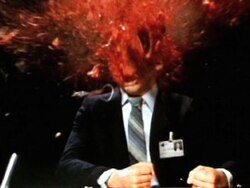
If The Brood explored the relationship between emotion and the body, Scanners expanded Cronenberg’s investigation into the relationship between mind and matter. The film’s infamous exploding-head sequence remains one of the most iconic images in Cronenberg’s cinema. Yet its deeper significance lies in the idea that the body cannot be separated from consciousness. The mind is not an abstract entity floating above the physical world.

It exists within flesh.

It is vulnerable to flesh.

And when the mind is overwhelmed, the body pays the price.

This becomes crucial in The Fly.

Seth’s intellect survives even as his physical form deteriorates.

He remains conscious.

He remains aware.

The tragedy is not that his mind disappears alongside his body. It is that it remains. The monster knows what is happening.

Videodrome: Welcome to the New Flesh

If there is a single film that provides the philosophical bridge between Cronenberg’s early body horror and The Fly, it is Videodrome.

“Long live the new flesh.”

The phrase became a defining statement of Cronenberg’s cinema. In Videodrome, technology doesn’t simply affect the body. It becomes part of the body. The boundaries between human flesh, media and machinery collapse. Reality becomes unstable. The body becomes something that can be rewritten.

Transformed.

Reprogrammed.

The concept of the “New Flesh” is not simply about mutation. It is about the end of certainty. The human body is no longer a stable category. It can be altered by technology.

By disease.

By desire.

By trauma.

By information.

By the world around it.

By the time Seth Brundle enters the telepod, the question is no longer whether the body can change. Cronenberg has already answered that. The question is:

What happens when we discover that change cannot be stopped?

The Dead Zone: The Body as Burden

The Dead Zone is sometimes treated as an outlier in Cronenberg’s filmography. It shouldn’t be. Although it lacks the overt grotesquerie of Shivers or Videodrome, its protagonist is still trapped inside a body that has become unfamiliar. Johnny Smith wakes from a coma with extraordinary abilities. But those abilities come at a cost.

His body has changed.

His life has changed.

His identity has changed.

He is forced to live with knowledge that isolates him from everyone else.

The supernatural premise is different from Cronenberg’s earlier films, but the emotional territory remains familiar. The individual becomes trapped within a condition they did not choose. The body becomes a prison. The person remains inside.

The Human Animal

Cronenberg’s fascination with transformation has always extended beyond disease. It is also about evolution.

What separates humans from animals?

What happens when that boundary begins to disappear?

This question sits at the centre of The Fly.

Seth initially interprets his transformation as evolution. He calls it “Brundlefly.” He imagines that he has transcended the limitations of humanity. He has become something new.

Something stronger.

Something better.

The tragedy is that he is not entirely wrong. There is something seductive about his transformation.

He is faster.

Stronger.

More energetic.

His body initially appears to improve.

But Cronenberg turns evolutionary optimism into existential horror.

Evolution has no moral compass. New does not mean better. Stronger does not mean happier. Survival does not mean humanity. Seth’s transformation becomes a grotesque parody of progress.

Sex, Desire and the Body

Sexuality has always been deeply embedded within Cronenberg’s body horror. From Shivers onwards, physical intimacy is rarely presented as entirely safe. Desire creates vulnerability.

Bodies come together.

Boundaries disappear.

Something is exchanged.

In The Fly, the relationship between Seth and Veronica begins with attraction. Their intimacy becomes the emotional centre of the film. And then the body that Veronica loves begins to change. The horror is therefore deeply connected to intimacy.

To touch someone is to know their body.

To love someone is to recognise them.

What happens when the body becomes unrecognisable?

What happens when the person you desire becomes someone—or something—you fear?

The film’s body horror is therefore inseparable from its love story. The transformation is frightening because it happens to someone. Not something.

Technology as the Catalyst

Cronenberg’s relationship with technology is rarely simplistic. Technology is not necessarily evil. It is simply powerful. And human beings are often incapable of understanding the consequences of their own inventions.

This is why the telepods are so important. They work. Seth has succeeded. The experiment is a triumph of scientific ingenuity. The tragedy comes from an unforeseen consequence. Technology has done exactly what Seth asked it to do. It simply doesn’t understand what he meant. The telepod cannot distinguish between the scientist and the fly. It sees matter. It sees patterns. It sees two organisms occupying the same space. And it creates something new. The horror is therefore not technological failure. It is technological success without human wisdom.

The Body as Identity

Perhaps the most important idea connecting Cronenberg’s films is the relationship between physical form and identity.

If the body changes, are we still ourselves?

If the mind survives, does the person survive?

If the face changes, does identity change with it?

If desire changes, does the self change?

Cronenberg never provides easy answers.

Instead, his films continually destabilise the idea of a fixed identity.

The body becomes fluid.

The self becomes unstable.

The boundary between human and non-human becomes increasingly difficult to define. Seth Brundle represents the ultimate expression of this philosophy. He is neither entirely human nor entirely fly. He exists between categories. And that is precisely where Cronenberg’s cinema has always been most comfortable.

From Infection to Transformation

Looking across Cronenberg’s career, a progression becomes visible.

Shivers asks what happens when the body is invaded.

Rabid asks what happens when the body becomes contagious.

The Brood asks what happens when psychological trauma becomes physical.

Scanners asks what happens when the mind itself becomes a biological weapon.

Videodrome asks what happens when technology rewrites the body.

The Dead Zone asks what happens when the body becomes a prison for unwanted knowledge.

And then comes The Fly.

A film that asks all of these questions at once.

What happens when the body is invaded?

What happens when it becomes contagious?

What happens when the mind remains trapped inside it?

What happens when technology causes the transformation?

What happens when identity itself begins to dissolve?

The answer is Seth Brundle.

The Fly as Culmination

That is why The Fly occupies such a significant place within Cronenberg’s filmography.

It is not simply his most famous body-horror film.

It is his most complete.

The film takes the ideas that had occupied him for more than a decade and brings them together within a single character.

Seth is infected.

He is transforming.

His body is becoming contagious.

His mind is changing.

Technology has caused the mutation.

His identity is dissolving.

And the people who love him are forced to watch.

Everything is connected.

The horror is physical.

Psychological.

Sexual.

Technological.

Existential.

And emotional.

The body becomes the battlefield upon which all of these fears collide.

After Brundlefly

Cronenberg’s later career would move increasingly away from the visceral body horror that defined his early work. But the body never truly disappeared. It simply became less visible. The themes remained.

Identity.

Transformation.

Desire.

Technology.

Mortality.

The instability of the self.

Even when Cronenberg’s films moved into crime drama, psychological thriller or literary adaptation, the same fascination remained beneath the surface. His characters continued to inhabit bodies that could not be trusted.

Bodies that betrayed them.

Bodies that desired things the mind could not control.

Bodies that became sites of transformation.

The flesh remained.

The Prognosis:

David Cronenberg did not invent body horror. But he transformed its possibilities. He understood that the most disturbing thing about the human body is not what happens when something attacks it. It is what happens when it changes.

When it stops behaving as expected.

When it becomes unfamiliar.

When it begins to reveal something about ourselves that we would rather not see.

From the parasites of Shivers to the mutation of Rabid.

From the psychic violence of Scanners to the New Flesh of Videodrome.

From the isolated body of The Dead Zone to the tragic metamorphosis of The Fly.

Cronenberg’s cinema has always been asking variations of the same question.

Where does the human end?

Is it the skin?

The mind?

The memory?

The face?

The body?

The answer becomes increasingly difficult to locate. And perhaps that is the point. Because in Cronenberg’s universe, the body is never fixed. It is always becoming something else.

Sometimes that transformation is terrifying.

Sometimes it is liberating.

Sometimes it is both.

But eventually, every one of us must confront the uncomfortable truth at the centre of Cronenberg’s work.

We are not separate from our bodies.

We are them.

And when the body changes, so does the person inside it. Seth Brundle simply takes that journey further than most of us ever will. He becomes the ultimate Cronenbergian nightmare. Not because he stops being human. But because he discovers, far too late, just how fragile the idea of being human really was.

  • Saul Muerte

The Fly (1986) at 40: The Body Is the Horror

27 Monday Jul 2026

Posted by surgeons of horror in retrospective

≈ Leave a comment

Tags

body horror, brundlefly, david cronenberg, Geena Davis, jeff goldblum, seth brundle, the fly

There are monsters that lurk in the shadows.

There are monsters that emerge from beneath the bed.

There are monsters that arrive from another planet, another dimension, another time.

And then there are monsters that begin with us.

David Cronenberg’s The Fly is often described as one of the greatest body-horror films ever made. But that description, while accurate, feels strangely inadequate. Because The Fly isn’t frightening simply because a man’s body begins to change. It is frightening because he knows it is happening. He watches himself disappear.

Released in 1986, Cronenberg’s reimagining of the 1958 science-fiction horror film transformed a familiar monster-movie premise into something far more intimate and devastating. Where Kurt Neumann’s original film explored the consequences of scientific experimentation, Cronenberg turned the story inward, making the body itself the site of an existential catastrophe.

At its centre is Seth Brundle. A brilliant scientist. A man who believes technology can overcome the limitations of human existence. A man who falls in love. And then, through a moment of scientific accident, becomes something else entirely. The horror is not that Seth becomes a monster. The horror is that, for a while, he remains human enough to understand exactly what he is losing.

The Beautiful Lie of Progress

Seth Brundle’s teleportation experiment begins with optimism. He has created something extraordinary. The telepods can transport matter from one location to another. Instantaneously. The impossible has become possible.

In the world of The Fly, science is not inherently sinister. The experiment works. That is what makes it so terrifying. The telepods aren’t defective. Seth isn’t punished because his invention fails. He is punished because it succeeds in a way he never anticipated.

A fly enters the pod. Seth enters after it. The computer doesn’t understand that two organisms have occupied the same space. It simply combines them. The result is not an explosion. It is not immediate death. It is transformation. And transformation, as Cronenberg understands better than almost any filmmaker, is infinitely more frightening than destruction.

Death is an ending.

Change is a process.

The Horror of Becoming

Seth doesn’t wake up one morning as Brundlefly. He becomes Brundlefly. That distinction forms the emotional foundation of the entire film. At first, the changes appear almost miraculous. Seth is stronger. More energetic. More confident. He moves with an exhilarating physicality. His body appears to have been improved. He calls it “the next step” in human evolution. For a brief moment, he believes he has transcended humanity.

This is perhaps the most seductive stage of the transformation. The monster doesn’t initially feel like a monster. It feels like an upgrade. Cronenberg’s genius is to make that idea both exhilarating and horrifying. Seth believes he has discovered something wonderful. The audience understands that he has discovered something terrible.

Then the body begins to betray him. The skin changes. The hair disappears. The fingernails loosen. The teeth become unstable. The body begins shedding itself. And Seth watches. That is the true horror.

The Body as Betrayal

Cronenberg’s cinema has always been fascinated by the fragile boundary between mind and flesh. In Shivers, the body becomes an instrument of infection. In Rabid, physical transformation becomes inseparable from sexuality. In The Brood, emotional trauma manifests physically. In Scanners, the mind becomes a weapon. In Videodrome, technology invades the body and consciousness itself.

By the time Cronenberg made The Fly, the body had become his most important cinematic landscape. But here, the body isn’t merely invaded. It is changing from within. Seth cannot escape himself. There is nowhere to run. No monster outside the window. No external force to defeat. His enemy is his own biology. The horror becomes profoundly intimate.

The Disease Film

It is tempting to view The Fly entirely through the lens of science fiction. But the film increasingly resembles something else. A disease narrative.

Seth develops symptoms. He rationalises them. He searches for explanations. He tries to understand what is happening. He becomes increasingly isolated. The people around him struggle to comprehend the transformation. And eventually, there is no cure.

The science-fiction premise provides the mechanism. The emotional experience is recognisably human. This is the horror of illness. Of watching someone change. Of witnessing the deterioration of someone you love. Of knowing that the person standing in front of you is still there somewhere, even as the body becomes unrecognisable. The fly is therefore not simply a monster. It is a metaphor for the terrifying unpredictability of mortality.

The Love Story at the Centre

Without Veronica Quaife, The Fly would still be an extraordinary piece of horror cinema. With her, it becomes something else. A tragedy.

Veronica isn’t merely the witness to Seth’s transformation. She is the person who loves him while it happens. That distinction gives the film its emotional weight. She meets Seth before the accident. She knows the man beneath the changing flesh. She remembers his voice, his humour, his intelligence and his vulnerability. As his body deteriorates, she is forced to confront an impossible question.

At what point does the person you love cease to be the person you know?

Cronenberg refuses to provide an easy answer. Seth remains Seth. And yet he doesn’t. He is simultaneously himself and something else. The film’s horror exists in that uncertainty.

Jeff Goldblum’s Transformation

Much has been written about the physical transformation of Jeff Goldblum’s Seth Brundle. The prosthetics. The makeup. The practical effects. The grotesque imagery. All of it remains extraordinary. But the true achievement belongs to Goldblum’s performance.

He doesn’t simply play a man becoming an insect. He plays a man discovering that he is becoming an insect. The distinction is enormous. The early Seth is charismatic and restless. He is brilliant but socially awkward. His excitement is infectious. As the transformation progresses, that energy becomes something more dangerous.

Confidence becomes arrogance.

Curiosity becomes obsession.

Euphoria becomes desperation.

The physical performance changes because the psychological performance changes. Goldblum doesn’t disappear beneath the makeup. He remains visible within it. That is why the transformation is so disturbing. We never forget who is underneath.

The New Flesh

Cronenberg’s concept of the “New Flesh” had already emerged through Videodrome, but The Fly offers perhaps its most accessible expression. Seth believes that he has evolved. He imagines himself as something beyond humanity. Yet the film presents evolution as indifferent rather than glorious.

There is no moral progression. No guarantee that “new” means “better.” The body changes because biology demands change. The universe doesn’t care whether the result is beautiful. It doesn’t care whether Seth is ready. And it certainly doesn’t care whether Veronica can bear to watch.

The New Flesh is therefore both promise and nightmare. Transformation without consent Evolution without morality. Progress without compassion.

The Monster We Pity

The great achievement of The Fly is that it makes the audience pity its monster. We don’t simply fear Brundlefly. We mourn him. The film continually asks us to remember the man who existed before the transformation. That memory becomes increasingly painful.

The more monstrous Seth becomes, the more desperately we want to find him. And eventually, the film confronts us with an unbearable possibility. Perhaps there is no Seth left to save. Or perhaps there is. Perhaps he is trapped somewhere inside the creature. Perhaps the monster understands exactly what it has become. The uncertainty is devastating.

The Horror of Care

There is another dimension to The Fly that becomes more apparent with age. The film is about caregiving. About witnessing decline. About loving someone whose body is changing beyond their control. Veronica’s experience is therefore not simply that of a horror heroine. She becomes a caretaker. A witness. An advocate. And eventually, the person who must confront the limits of compassion.

There is a profound cruelty in asking someone to remain beside you while you disappear. There is an equal cruelty in asking someone to leave. The Fly understands that love does not always provide solutions. Sometimes love simply means staying long enough to witness the truth.

The Horror of Mortality

Every great monster story contains a fear of death. The Fly contains something worse. It contains the fear of living while dying. Seth’s transformation is gradual. There is time to understand it. Time to fear it. Time to deny it. Time to rage against it. That makes the film more devastating than a simple creature feature.

Death is unavoidable. But the prospect of watching ourselves deteriorate piece by piece is something far more difficult to contemplate. Cronenberg forces the audience to confront that fear through flesh. The body becomes a clock. Every new symptom marks another step towards the inevitable.

Forty Years of Rot

Four decades after its release, The Fly remains one of the most extraordinary examples of mainstream body horror ever produced. The film was released by a major Hollywood studio. It featured recognisable stars. It possessed a substantial budget. And yet it refused to soften its central nightmare.

The practical effects remain shocking because they serve the story rather than overwhelm it. The gore is not decoration. It is narrative Every transformation tells us something about Seth’s physical and psychological decline. The body horror is therefore inseparable from the emotional horror. We recoil because we understand what the images mean.

The Remake That Became Something Else

Cronenberg’s film is technically a remake. But it feels less like a remake than a reinvention. The 1958 The Fly emerged from an era fascinated by atomic science and the dangers of experimentation. Cronenberg’s 1986 film belongs to another age. An era increasingly anxious about technology, genetic transformation, disease and the instability of the human body. The premise remains familiar. The nightmare changes.

That is what makes The Fly such a fascinating example of cinematic reinterpretation. The same story can be told twice. The monster can remain the same. Yet the fears surrounding it can evolve completely.

The Final Transformation

By the film’s conclusion, Seth Brundle has become almost entirely unrecognisable. But the tragedy is not that he has become an insect. It is that he knows what he has become. The final moments are not about defeating a monster. They are about acknowledging one. Veronica’s final act is not triumphant. It is devastating.

There is no victory. No cure. No restoration of the natural order. Only an ending. The kind of ending that forces us to confront the fact that some transformations cannot be reversed.

The Prognosis:

Forty years after David Cronenberg’s The Fly first entered cinemas, its reputation as a masterpiece of body horror remains entirely justified. But to describe it only as a body-horror film is to underestimate what Cronenberg achieved.

This is a film about disease.

About technology.

About evolution.

About sexuality.

About mortality.

About love.

And ultimately, about the terrifying fragility of identity.

Seth Brundle does not become frightening because he becomes less human. He becomes frightening because some part of his humanity remains. We recognise him. We remember him. We understand what he is losing. And because we understand that loss, we understand the film’s deepest horror.

The body is not a vessel we inhabit. It is the thing through which we experience ourselves. It is how we recognise one another.

How we touch.

How we love.

How we move through the world.

And eventually, it is the thing that betrays us.

That is why The Fly remains so powerful at forty. The monster is not the fly. The monster is the knowledge that none of us can remain unchanged forever. Seth Brundle simply gets to experience that truth sooner than the rest of us.

  • Saul Muerte

Episode review: The Exorcist S1 Chapter 10 “Three Rooms” review

20 Monday Feb 2017

Posted by surgeons of horror in The Exorcist

≈ Leave a comment

Tags

Alan Ruck, Ben Daniels, Geena Davis, The Exorcist

AND SO IT COMES TO PASS.

We have reached The Exorcist S1 Finale and The Surgeons ask ourselves ‘Was the journey worth the wait?”

We’ve given 10 hours of our time to reach the conclusion to the tales of Father Marcus, Father Tomas and The Rance’s”

But was it worth it? Did the Season satisfy our bloody curiosity?

Let’s take a look and dissect Chapter 10 “Three Rooms”.
Warning, there are spoilers ahead.

  1. “How far are you willing to take this?“
    The words uttered by Pazuzu to Father Tomas as he challenges him hangs on the lips of every viewer that has stuck it out thus far.
    How far are the writers willing to push the Angela / Regan storyline? And how deep are they willing to go for this final conflict?
    But… first things first? 
  1. “I’m dying for Him”
    When the Friars of Ascension challenge Father Marcus devotion to the church by slitting his wrists, they receiving a damning response as he declares his undying passion for the Lord.
    One that cannot be questioned or taken from him, so devoted to the Lord, he is willing to die for Him.
    Oh and did we mention that Father Bennett is still alive? (Although barely)
    And we are gifted with something of a buddy priest moment as our two victims meet again whilst tied up to chairs and bleeding to death.
  1. Family meetings can be torture
    Especially if Pazuzu is the one holding the talking stick.
    With arms potentially being pulled from their sockets, kneecaps smashed, and lives threatened, one is reminded of family gatherings at Christmas dinner.
    But one thing that proves trying for our demon on a mission is how blood is thicker than water, no matter how much of it he tries to spill.
    Despite their fractured lives they are willing to stand together until the bitter end. 
  1. Father Marcus’ mission
    Freeing himself from the shackles of imprisonment and near death, Father Marcus then ventures off to save the Pope.
    Yes that’s right the Pope.
    But not without first pushing Maria Walters to give herself to the demons.
    Free to then prevent an assassination on the Pope b y preventing Father Simon, who by this point has curiously turned into a warped version of Father Jack from Father Ted, if such a thing were at all possible.
    Once Marcus thwarts the plan by killing Father Simon, all is right in the world, which once again feels a bit of a week effort on the part of the Friars of Ascension.
    They’ve been hatching this plan for a while, only to leave all hope of success in the hands of one priest.
    You’d think they’d go all Agent Smith and duplicate themselves to a frenzy in order to act out there task.
    And what happened to all the possessed homeless folk?
  1. “You want me, come and get me”
    On the other side of Chicago, the Rance’s have a battle of their own going on.
    It’s revealed that part of Angela/Regan’s psyche still resides inside her mind as she gains in confidence and with the power and belief in the lord behind her, finally faces up to Pazuzu.
    Meanwhile in the outside world, Father Tomas comes too and in a moment that was somewhat reminiscent of Luke Skywalker’s confrontation before The Emperor where he tells his foe that he is a Jedi.
    Except in this case, Father Tomas declares that he is an Exorcist, before acting out God’s will and using the words of the bible to take on the demon aided by the Rance family who provide a chorus behind him.

EPILOGUE. Three Priests walk into a bar
So Pazuzu is defeated, left as a bloody pulp in the recesses of Angela/Regan’s mind.
Father Tomas, Father Bennett, and Father Marcus collect their thoughts and once again act chummy over a nice cup of char.
If The Exorcist were to have any life beyond Season 1, this relationship is the one to explore.
Hardened Priests forced together to defeat a common enemy in a life that no one else can or will ever understand.
The Rance family meanwhile take up residence in a remote setting to start life afresh, presumably in a house conveniently left by the now deceased grandmother, Chris McNeil.
And we’re left wondering if Angela/Regan really is free of her Demons and as safe as she proclaims.
My final verdict is that it felt a little too easy by the end of it.

So much promise for a final conflict but it was resolved with the bonding of a family and the words of the Lord.

And I guess that therein lies the issue when you have to have a complete narrative to tell within 10 episodes and not knowing if that story could extend further into a second season, plus you are limited by the direction taken within the Exorcist franchise parameter.

This leaves you confined within the parameters and if Season 2 arise, the series needs to be free to break down these walls and get a whole lot darker.

Only then will it be able to soar above and become an entity of its own.

Without that freedom, its wings will be clipped and it will never fly onwards.
– Paul Farrell


Episode review: The Exorcist S1 Chapter 9 “126” review

13 Monday Feb 2017

Posted by surgeons of horror in The Exorcist

≈ Leave a comment

Tags

Alan Ruck, Ben Daniels, Geena Davis, The Exorcist

THE PENULTIMATE EPISODE has a tough task to undertake.

It’s sole purpose is to tie up all the strands that have been laid down prior and build itself up with enough of a teaser to allow the final episode to produce the climax.

What will become of the Rance family now that Angela has given her soul to Pazuzu?

Will Father Marcus follow the breadcrumbs left by Father Bennett?

Will Father Tomas finally resist temptation?

Let’s take a look and dissect Chapter 9, “126”.

Warning, there are spoilers ahead.


  1. “Take me instead“
    If any of you were wondering, at what point Angela had given of herself to Pazuzu, your query was answered this week.
    The torture that was constantly being inflicted upon Casey was too much to bear, so to save her, Regan pleaded for her daughter’s life in exchange for her own.
    All of which curiously led to “3 Little Dogs sitting on my doorstep, growling a sweet growl”
    And time for Pazuzu to tie up lose ends. 
  1. The Friars of Ascension meet their match
    Just how powerful is Pazuzu and what demons lie behind or entwined within the Friars of Ascension cult.
    Pazuzu is certainly powerful enough to force the cult members to bow to his demands.
    We see throughout this episode the extent of his manipulation, both physically and mentally.
    So it’s interesting to see that despite resistance, they are unable to fight Pazuzu.
    Does this mean that the Friars are less threatening as a result?
    Perhaps.
  1. The Rego’s get too close to the fire
    The first of our victims would turn out to be The Rego’s.
    Too much snooping cost them dearly and so Lester and Cherry, The Exorcist’s answer to the Lone Gunmen (X-Files) met their maker.
    I guess someone had to go, and God forbid it should be any of or leads.
  1. The victory lap
    Content on bringing about an end to those that crossed him, Pazuzu then sets his eyes on Mother Bernadette. “There’s been a great disturbance in the force.”
    You could almost hear her saying this when she mentions sensing Pazuzu’s entrance.
    What Mother Bernadette probably didn’t predict was just how damning and vile this demon can be as Pazuzu snuffs out her life like one would to the flame of a candle.
    Another character that had promise but felt as though was cruelly robbed of any further exploration in order to prove the daunting task our Exorcists will have if they have any chance of destroying him.
  1. The Set Up
    And so we come to our 3-pronged storyline and what will inevitably be our final conclusion to the Rance family possession.
    Firstly – Father Marcus has the devil in him.
    His drive for revenge leads him to Father Simon. And boy does he let loose.
    But it’s not enough to finish off Father Simon yet (of course) as he is saved by a couple of lackeys and Marcus is whisked away.
    And Father Tomas receives a revelation in the page of a book by Chris McNeil, proclaiming that the demon will chase Regan/Angela until the end of time.
    Cue him chasing back to the Rance household to break up a family meeting.

Are we set for an epic conclusion?

Will The Exorcist reach a satisfying end to this chapter?
The Surgeons will tune again next week to give our final assessment.

Episode review: The Exorcist: S1 Chapter 7 “Father of Lies”

30 Monday Jan 2017

Posted by surgeons of horror in The Exorcist

≈ Leave a comment

Tags

Alan Ruck, Geena Davis, The Exorcist

OF ALL THE EPISODES so far, this one really felt like the series was treading water and stretching out the storyline.

Having said that, it still had little moments, gems if you will that kept you hooked into the direction that the series was going in.

But only just.

Let’s take a look at those moments in Chapter 7, “Father of Lies”.

Warning, there are spoilers ahead.

  1. Father Tomas steps up
    Since his fall from grace, Father Tomas has set out with a point to prove.Yes, he fell foul to temptation with Jessica, and there is doubt to be looked at still when it comes to their relationship.

    But, Casey is a member of his patronage.

    And there is a sense of loyalty on Father Tomas part to stand by his pack.

    He will strive to do what he can in order to save Casey.

    And there was one moment above all else that stood out in this episode when he stands between her and Father Marcus.

    At this moment he directs Casey to bow towards him. He is her saviour.


  1. The power of God
    One thing that may be worthy of noting is Father Marcus’ belief that the power of God runs through his hands.His belief is carried on from when he temporarily saved Casey’s soul last week.

    But is this self-belief going to be his undoing?

    So far, not much has shaken Father Marcus, but his confidence in his gift, could well see him trip up.

    Especially as he’s so good at pointing out everyone else’s flaws.

  1. Father Bennett challenges The Friars of Ascension 

    It was an episode that allowed doubt to creep in.Mother Bernadette doubts Father Marcus can save Casey and believes her soul is lost.

    Angela questions Tomas and his faith that Casey is still alive.

    But nothing is more potentially damning than when Father Bennett starts to question the representatives within the Friars of Ascension.

    Something is amiss and Father Bennett doesn’t back down from his hunch.

    But will this lead him down a path that he won’t be able to return from?

  1. Father Bennett’s descent into hell 

    Speaking of Father Bennett’s journey, his pursuit would lead him down a dark path, where he would discover the bloody corpses that are being used for some kind of sacrificial pact and literally has to fight his way out in order to survive.

  1. Father Tomas goes off the rails 

    The pressure becomes too much thought for Father Tomas and he spirals downwards.
    Believing that all could be lost, he loses his normally cool demeanour and God-like ways and lashes out on one of his flock.With no one to turn to, he calls upon Maria Walters, much to her delight.

    Will she now be looked upon kindly by the demons that she is so devoted to?

  1. Angela’s decent into madness 

    And what was actually an incredible performance (which I was surprised to see from Geena Davis) was Angela’s loss of faith in all around her when she truly believes that Casey has gone.It was both believable and tragic when she learns that all is not lost, at least not with Casey, but perhaps now the Demon has his ultimate prize in his sights?

    The soul of Angela is there for the taking.

Episode review: The Exorcist: S1 Chapter 6 “Star of the morning”

23 Monday Jan 2017

Posted by surgeons of horror in The Exorcist, Uncategorized

≈ Leave a comment

Tags

Alan Ruck, Ben Daniels, Geena Davis, The Exorcist

THE EXORCISM has been performed albeit without the desired results that Father Marcus and co. were hoping for

So… Where does that leave things for this series?

The writers and producers would have known that there was only so much rope to tie around the Rance’s possession, and with last week’s revelation that Angela is indeed Regan, where does that leave things?

What more damage can the demons accomplish?

Well, let’s take a look at Chapter 6, “Star of the morning” to see if there were any clues.

Warning, there are spoilers ahead.

  1. Chris MacNeill sold out
    Towards the beginning of the episode we are provided with something of a flashback.
    Basically, in the series version of Chris MacNeill, there is a lack of empathy towards her.
    After the ordeal that her daughter went through during the exorcism, Chris’ acting work dried up and she was left with the option of writing a book exploiting Regan’s demonic encounter entitled The Devil In My Daughter.
    The impact that this had between her and Regan was evident in the latter moving away and changing her name.
    What does it mean now that Chris is back on the scene though?
    Can she really change her ways and more importantly, will Regan forgive her for her sins?
    There is a moment in the morgue when it is revealed that the body is not Casey, that suggests there is hope there yet when both Chris and Regan hug, but again, is this just a false ray of hope for what is to come? 
  1. Father Tomas’ descent
    It appears that the Friars of Ascension’s hopes of luring him into their fray has come undone by the temptation of Jessica that they unleashed upon him.
    His distractions have led him down another path, but can he be saved and will he redeem himself yet?
    It appears that he is still willing to prove himself to Father Marcus.
     
  1. The Friars of Ascension
    The main focus moving forward does appear to be on the devil cult known as the Friars of Ascension, who have attained some pretty powerful representatives from the city of Chicago.
    Chief among these gatherers, priest aside, was the Chief of Police, hand picked by the demon himself to become, “One of Us”, much to Maria Walters chagrin.
    With the demon / devil attaining more and more power from Chicago’s officials, what is the end game here?
    And why is Father Tomas so important for their succession? 
  1. Dead bird gorging on the river bank
    When Father Marcus finally does catch up to Casey, it is via tunnel network underground riddled with the possessed homeless.
    We see Casey in full demonic mode, and even taking on the spider walk to make good her escape.
    Father Marcus persists however, stumbling across Casey by the river, washing away her sins in a baptism as he performs his last exorcism upon her and freeing her soul.
    It all seems a little too easy by this point.
    Why does the demon give up on her now?
    Now that Angela has revealed herself as Regan, does the Demon want to exploit this further and claim her as his prize?
    We’re well and truly past the halfway mark now, with four episodes remaining.
    We’ve made it thus far, but can’t help hoping that they’ve left some kind of ace up its sleeve as the show is in danger of losing interest fast.


  • Paul Farrell

Episode review: The Exorcist: S1 Chapter 5 “Through My Most Grievous Fault”

16 Monday Jan 2017

Posted by surgeons of horror in The Exorcist

≈ Leave a comment

Tags

Alan Ruck, Ben Daniels, Geena Davis, The Exorcist

THIS WEEK’S EPISODE appeared to follow firmly in the footsteps of its inspiration.

For sometime, this series has been circling around some issues that were questionable and at times uncertain of direction.

But with last night’s reveal, things began to cement itself in place and a clearer direction was left in place.

So let’s open up the operating theatre to dissect the latest episode and delve into this plot a little deeper with 5 key points taking from Chapter Five, ‘Through My Most Grievous Fault.”

Warning, there are spoilers ahead.

  1. Angela is Regan
    It was the elephant that had been in the room staring us in the face with no one daring to utter the obvious.
    Yes, the reason that Angela was so quick to recognize her daughter’s possession is that she had witnessed a similar episode before firsthand.
    What’s more she is Regan from the original storyline and inspiration for the series, now all grown up with a new identity.
    A secret that she even kept from her husband Henry. How will there relationship play out now that this has been revealed?
    We all know that the past has a way of catching up with you now matter how hard you try to run away from them.
    And there’s no hiding from these feelings from God or the Devil for that matter, for they know all.
    Now that the demon has found Angela again though, what is his grand plan? Why the fascination with her?
  1. The temptation of Jessica part 2
    Speaking of fascinations, the inevitable occurred when the demon explored Father Tomas’ one weakness, his feelings for Jessica.
    Sex is one of the Devil’s greatest assets to exploit and greater men have crumbled.
    Left with his tail between his legs, how will Father Tomas come back from this? Especially as he ‘sowed his seed’ with Jessica anyway,
    Can he truly redeem himself after exploiting his temptation and giving in to his desires?
     
  1. Katherine’s Lament
    She may have had her heart in the right place but boy did Kat play into the Devil’s hands.
    She firmly believed that she was helping her sister by calling the police, but all that she enabled was to let the devil roam free.
    Will her good nature be her own undoing?
    Has turning her back on her family only pushed her further away from them?
    The cracks have will and truly appeared and there’s no knowing if they can reunite together again. 
  1. The return of Chris MacNeil
    This is one area that caught me off guard a little.
    I liked the nod to the ray of hope cast from the street light and the expectation that this savior could be another expert priest arriving on the scene, but the reveal that this was Chris MacNeil left me deflated, it was all very well leaving us to believe that Regan was back on the scene but to introduce her mother too felt a little too far fetched.
    But is this revelation a false hope?
    Will her introduction and its likeness in symbolism to the original film spell out doom for her?
  1. The Devil on the run
    And what of Casey? Having finely tune her devil’s side and giving an Ambulance and its occupants a fine work over that would make the likes of Michael Myers blush, she is now on the loose.
    What end to this game of cat and mouse?
    Will she be found and in what state will she be in if they find her?


 – Paul Farrell

← Older posts

Subscribe

  • Entries (RSS)
  • Comments (RSS)

Archives

  • September 2026
  • August 2026
  • July 2026
  • June 2026
  • May 2026
  • April 2026
  • March 2026
  • February 2026
  • January 2026
  • December 2025
  • November 2025
  • October 2025
  • September 2025
  • August 2025
  • July 2025
  • June 2025
  • May 2025
  • April 2025
  • March 2025
  • February 2025
  • January 2025
  • December 2024
  • November 2024
  • October 2024
  • September 2024
  • August 2024
  • July 2024
  • June 2024
  • May 2024
  • April 2024
  • March 2024
  • February 2024
  • January 2024
  • November 2023
  • October 2023
  • September 2023
  • August 2023
  • July 2023
  • June 2023
  • May 2023
  • April 2023
  • March 2023
  • February 2023
  • January 2023
  • November 2022
  • October 2022
  • September 2022
  • August 2022
  • July 2022
  • June 2022
  • April 2022
  • March 2022
  • February 2022
  • January 2022
  • December 2021
  • November 2021
  • October 2021
  • September 2021
  • August 2021
  • July 2021
  • June 2021
  • May 2021
  • April 2021
  • March 2021
  • February 2021
  • January 2021
  • December 2020
  • November 2020
  • October 2020
  • September 2020
  • August 2020
  • July 2020
  • June 2020
  • May 2020
  • April 2020
  • March 2020
  • February 2020
  • January 2020
  • December 2019
  • November 2019
  • October 2019
  • September 2019
  • July 2019
  • June 2019
  • May 2019
  • April 2019
  • March 2019
  • February 2019
  • January 2019
  • December 2018
  • November 2018
  • October 2018
  • September 2018
  • August 2018
  • July 2018
  • June 2018
  • May 2018
  • April 2018
  • March 2018
  • February 2018
  • January 2018
  • December 2017
  • November 2017
  • October 2017
  • September 2017
  • August 2017
  • July 2017
  • June 2017
  • May 2017
  • April 2017
  • March 2017
  • February 2017
  • January 2017
  • December 2016
  • November 2016
  • October 2016
  • September 2016
  • August 2016
  • July 2016
  • June 2016
  • May 2016

Categories

  • A Night of Horror Film Festival
  • Alien franchise
  • Alliance Francaise French Film Festival
  • Australian Horror
  • Best Movies and Shows
  • Competition
  • dark nights film fest
  • episode review
  • Flashback Fridays
  • Friday the 13th Franchise
  • Full Moon Sessions
  • Halloween franchise
  • In Memorium
  • Interview
  • japanese film festival
  • John Carpenter
  • killer pigs
  • Library of the Occult
  • midwest weirdfest
  • MidWest WierdFest
  • MonsterFest
  • movie article
  • movie of the week
  • Movie review
  • New Trailer
  • News article
  • podcast episode
  • podcast review
  • press release
  • retrospective
  • Rialto Distribution
  • Ring Franchise
  • series review
  • Sounds of Horror
  • Soundtracks
  • Spanish horror
  • sydney film festival
  • Sydney Underground Film Festival
  • The Blair Witch Franchise
  • the conjuring franchise
  • the evil dead franchise
  • The Exorcist
  • the fly
  • The Howling franchise
  • Top 10 list
  • Top 12 List
  • top 13 films
  • Trash Night Tuesdays on Tubi
  • umbrella entertainment
  • Uncategorized
  • Universal Horror
  • Wes Craven
  • wes craven's the scream years

Meta

  • Create account
  • Log in

Blog at WordPress.com.

  • Subscribe Subscribed
    • Surgeons of Horror
    • Join 226 other subscribers
    • Already have a WordPress.com account? Log in now.
    • Surgeons of Horror
    • Subscribe Subscribed
    • Sign up
    • Log in
    • Report this content
    • View site in Reader
    • Manage subscriptions
    • Collapse this bar
Loading Comments...