• About
  • podcasts
  • Shop

Surgeons of Horror

~ Dissecting horror films

Surgeons of Horror

Monthly Archives: July 2026

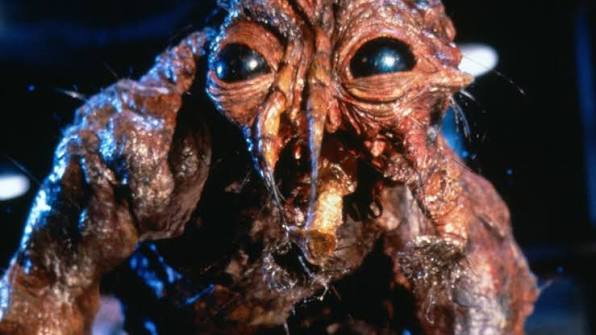
The Fly (1986) at 40: The Body Is the Horror

27 Monday Jul 2026

Posted by surgeons of horror in retrospective

≈ Leave a comment

Tags

body horror, brundlefly, david cronenberg, Geena Davis, jeff goldblum, seth brundle, the fly

There are monsters that lurk in the shadows.

There are monsters that emerge from beneath the bed.

There are monsters that arrive from another planet, another dimension, another time.

And then there are monsters that begin with us.

David Cronenberg’s The Fly is often described as one of the greatest body-horror films ever made. But that description, while accurate, feels strangely inadequate. Because The Fly isn’t frightening simply because a man’s body begins to change. It is frightening because he knows it is happening. He watches himself disappear.

Released in 1986, Cronenberg’s reimagining of the 1958 science-fiction horror film transformed a familiar monster-movie premise into something far more intimate and devastating. Where Kurt Neumann’s original film explored the consequences of scientific experimentation, Cronenberg turned the story inward, making the body itself the site of an existential catastrophe.

At its centre is Seth Brundle. A brilliant scientist. A man who believes technology can overcome the limitations of human existence. A man who falls in love. And then, through a moment of scientific accident, becomes something else entirely. The horror is not that Seth becomes a monster. The horror is that, for a while, he remains human enough to understand exactly what he is losing.

The Beautiful Lie of Progress

Seth Brundle’s teleportation experiment begins with optimism. He has created something extraordinary. The telepods can transport matter from one location to another. Instantaneously. The impossible has become possible.

In the world of The Fly, science is not inherently sinister. The experiment works. That is what makes it so terrifying. The telepods aren’t defective. Seth isn’t punished because his invention fails. He is punished because it succeeds in a way he never anticipated.

A fly enters the pod. Seth enters after it. The computer doesn’t understand that two organisms have occupied the same space. It simply combines them. The result is not an explosion. It is not immediate death. It is transformation. And transformation, as Cronenberg understands better than almost any filmmaker, is infinitely more frightening than destruction.

Death is an ending.

Change is a process.

The Horror of Becoming

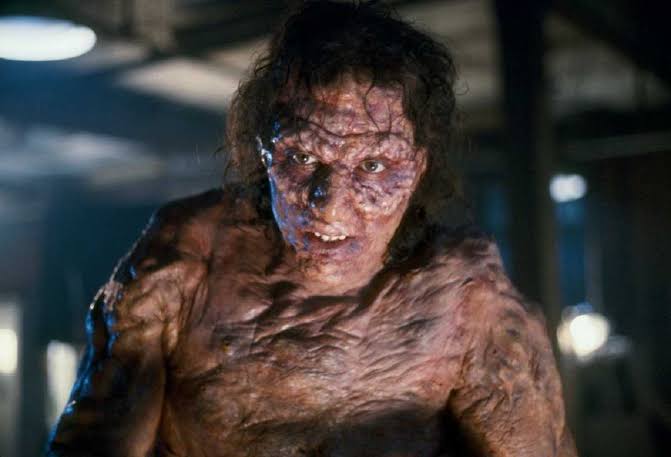
Seth doesn’t wake up one morning as Brundlefly. He becomes Brundlefly. That distinction forms the emotional foundation of the entire film. At first, the changes appear almost miraculous. Seth is stronger. More energetic. More confident. He moves with an exhilarating physicality. His body appears to have been improved. He calls it “the next step” in human evolution. For a brief moment, he believes he has transcended humanity.

This is perhaps the most seductive stage of the transformation. The monster doesn’t initially feel like a monster. It feels like an upgrade. Cronenberg’s genius is to make that idea both exhilarating and horrifying. Seth believes he has discovered something wonderful. The audience understands that he has discovered something terrible.

Then the body begins to betray him. The skin changes. The hair disappears. The fingernails loosen. The teeth become unstable. The body begins shedding itself. And Seth watches. That is the true horror.

The Body as Betrayal

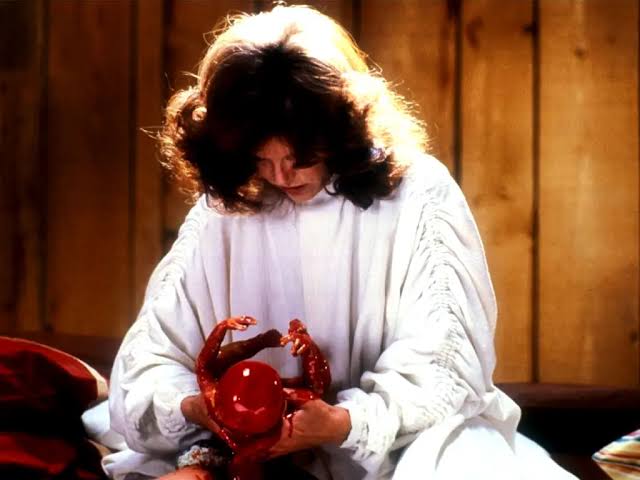
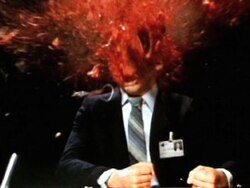
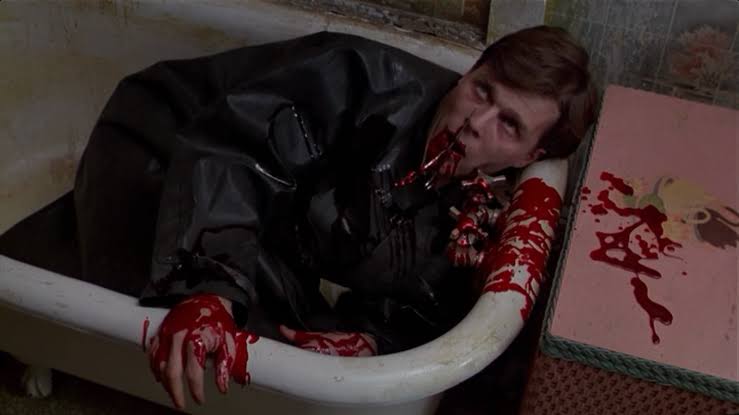
Cronenberg’s cinema has always been fascinated by the fragile boundary between mind and flesh. In Shivers, the body becomes an instrument of infection. In Rabid, physical transformation becomes inseparable from sexuality. In The Brood, emotional trauma manifests physically. In Scanners, the mind becomes a weapon. In Videodrome, technology invades the body and consciousness itself.

By the time Cronenberg made The Fly, the body had become his most important cinematic landscape. But here, the body isn’t merely invaded. It is changing from within. Seth cannot escape himself. There is nowhere to run. No monster outside the window. No external force to defeat. His enemy is his own biology. The horror becomes profoundly intimate.

The Disease Film

It is tempting to view The Fly entirely through the lens of science fiction. But the film increasingly resembles something else. A disease narrative.

Seth develops symptoms. He rationalises them. He searches for explanations. He tries to understand what is happening. He becomes increasingly isolated. The people around him struggle to comprehend the transformation. And eventually, there is no cure.

The science-fiction premise provides the mechanism. The emotional experience is recognisably human. This is the horror of illness. Of watching someone change. Of witnessing the deterioration of someone you love. Of knowing that the person standing in front of you is still there somewhere, even as the body becomes unrecognisable. The fly is therefore not simply a monster. It is a metaphor for the terrifying unpredictability of mortality.

The Love Story at the Centre

Without Veronica Quaife, The Fly would still be an extraordinary piece of horror cinema. With her, it becomes something else. A tragedy.

Veronica isn’t merely the witness to Seth’s transformation. She is the person who loves him while it happens. That distinction gives the film its emotional weight. She meets Seth before the accident. She knows the man beneath the changing flesh. She remembers his voice, his humour, his intelligence and his vulnerability. As his body deteriorates, she is forced to confront an impossible question.

At what point does the person you love cease to be the person you know?

Cronenberg refuses to provide an easy answer. Seth remains Seth. And yet he doesn’t. He is simultaneously himself and something else. The film’s horror exists in that uncertainty.

Jeff Goldblum’s Transformation

Much has been written about the physical transformation of Jeff Goldblum’s Seth Brundle. The prosthetics. The makeup. The practical effects. The grotesque imagery. All of it remains extraordinary. But the true achievement belongs to Goldblum’s performance.

He doesn’t simply play a man becoming an insect. He plays a man discovering that he is becoming an insect. The distinction is enormous. The early Seth is charismatic and restless. He is brilliant but socially awkward. His excitement is infectious. As the transformation progresses, that energy becomes something more dangerous.

Confidence becomes arrogance.

Curiosity becomes obsession.

Euphoria becomes desperation.

The physical performance changes because the psychological performance changes. Goldblum doesn’t disappear beneath the makeup. He remains visible within it. That is why the transformation is so disturbing. We never forget who is underneath.

The New Flesh

Cronenberg’s concept of the “New Flesh” had already emerged through Videodrome, but The Fly offers perhaps its most accessible expression. Seth believes that he has evolved. He imagines himself as something beyond humanity. Yet the film presents evolution as indifferent rather than glorious.

There is no moral progression. No guarantee that “new” means “better.” The body changes because biology demands change. The universe doesn’t care whether the result is beautiful. It doesn’t care whether Seth is ready. And it certainly doesn’t care whether Veronica can bear to watch.

The New Flesh is therefore both promise and nightmare. Transformation without consent Evolution without morality. Progress without compassion.

The Monster We Pity

The great achievement of The Fly is that it makes the audience pity its monster. We don’t simply fear Brundlefly. We mourn him. The film continually asks us to remember the man who existed before the transformation. That memory becomes increasingly painful.

The more monstrous Seth becomes, the more desperately we want to find him. And eventually, the film confronts us with an unbearable possibility. Perhaps there is no Seth left to save. Or perhaps there is. Perhaps he is trapped somewhere inside the creature. Perhaps the monster understands exactly what it has become. The uncertainty is devastating.

The Horror of Care

There is another dimension to The Fly that becomes more apparent with age. The film is about caregiving. About witnessing decline. About loving someone whose body is changing beyond their control. Veronica’s experience is therefore not simply that of a horror heroine. She becomes a caretaker. A witness. An advocate. And eventually, the person who must confront the limits of compassion.

There is a profound cruelty in asking someone to remain beside you while you disappear. There is an equal cruelty in asking someone to leave. The Fly understands that love does not always provide solutions. Sometimes love simply means staying long enough to witness the truth.

The Horror of Mortality

Every great monster story contains a fear of death. The Fly contains something worse. It contains the fear of living while dying. Seth’s transformation is gradual. There is time to understand it. Time to fear it. Time to deny it. Time to rage against it. That makes the film more devastating than a simple creature feature.

Death is unavoidable. But the prospect of watching ourselves deteriorate piece by piece is something far more difficult to contemplate. Cronenberg forces the audience to confront that fear through flesh. The body becomes a clock. Every new symptom marks another step towards the inevitable.

Forty Years of Rot

Four decades after its release, The Fly remains one of the most extraordinary examples of mainstream body horror ever produced. The film was released by a major Hollywood studio. It featured recognisable stars. It possessed a substantial budget. And yet it refused to soften its central nightmare.

The practical effects remain shocking because they serve the story rather than overwhelm it. The gore is not decoration. It is narrative Every transformation tells us something about Seth’s physical and psychological decline. The body horror is therefore inseparable from the emotional horror. We recoil because we understand what the images mean.

The Remake That Became Something Else

Cronenberg’s film is technically a remake. But it feels less like a remake than a reinvention. The 1958 The Fly emerged from an era fascinated by atomic science and the dangers of experimentation. Cronenberg’s 1986 film belongs to another age. An era increasingly anxious about technology, genetic transformation, disease and the instability of the human body. The premise remains familiar. The nightmare changes.

That is what makes The Fly such a fascinating example of cinematic reinterpretation. The same story can be told twice. The monster can remain the same. Yet the fears surrounding it can evolve completely.

The Final Transformation

By the film’s conclusion, Seth Brundle has become almost entirely unrecognisable. But the tragedy is not that he has become an insect. It is that he knows what he has become. The final moments are not about defeating a monster. They are about acknowledging one. Veronica’s final act is not triumphant. It is devastating.

There is no victory. No cure. No restoration of the natural order. Only an ending. The kind of ending that forces us to confront the fact that some transformations cannot be reversed.

The Prognosis:

Forty years after David Cronenberg’s The Fly first entered cinemas, its reputation as a masterpiece of body horror remains entirely justified. But to describe it only as a body-horror film is to underestimate what Cronenberg achieved.

This is a film about disease.

About technology.

About evolution.

About sexuality.

About mortality.

About love.

And ultimately, about the terrifying fragility of identity.

Seth Brundle does not become frightening because he becomes less human. He becomes frightening because some part of his humanity remains. We recognise him. We remember him. We understand what he is losing. And because we understand that loss, we understand the film’s deepest horror.

The body is not a vessel we inhabit. It is the thing through which we experience ourselves. It is how we recognise one another.

How we touch.

How we love.

How we move through the world.

And eventually, it is the thing that betrays us.

That is why The Fly remains so powerful at forty. The monster is not the fly. The monster is the knowledge that none of us can remain unchanged forever. Seth Brundle simply gets to experience that truth sooner than the rest of us.

  • Saul Muerte

Jeepers Creepers (2001) at 25: The Film Horror Fell Out of Love With

27 Monday Jul 2026

Posted by surgeons of horror in retrospective

≈ Leave a comment

Tags

jeepers creepers

Editor’s Note: This retrospective discusses Jeepers Creepers as an influential work of horror cinema while acknowledging that its legacy is inseparable from the crimes of its writer-director. Rather than attempting to resolve the long-running debate over separating art from artist, this article examines how our relationship with the film has evolved over the past twenty-five years.


When it arrived in 2001, Jeepers Creepers felt like a breath of fresh air.

The slasher boom of the late 1990s was beginning to lose momentum. Horror was searching for new monsters, new myths and new icons. Along came a film that blended road movie, creature feature and urban legend into something genuinely unsettling. It introduced audiences to one of the genre’s most memorable monsters of the twenty-first century.

Today, however, discussing Jeepers Creepers inevitably means discussing something else. Not because the film demands it. Because history does.

Before We Knew

For audiences discovering Jeepers Creepers in 2001, the experience was remarkably straightforward. A brother and sister drive along a lonely highway. A rusted truck appears. An unsettling figure disposes of something down an abandoned church pipe. Curiosity triumphs over common sense. The nightmare begins. It remains one of modern horror’s finest opening acts.

The first thirty minutes demonstrate an extraordinary understanding of suspense. Xavier Gens (Frontier(s)) once observed that great horror often begins with ordinary journeys interrupted by extraordinary events. Whether consciously or not, Jeepers Creepers embraces that philosophy.

The highway becomes isolation. Curiosity becomes vulnerability. Every decision made by Darry and Trish feels recognisably human, making the terror all the more effective. Long before the creature fully reveals itself, dread has already taken hold. It is masterfully constructed.

The Birth of a Modern Monster

The Creeper immediately distinguished itself from the masked killers dominating horror at the turn of the millennium. It wasn’t another silent slasher. Nor was it a ghost, vampire or zombie. Instead, it felt ancient. Predatory. Almost mythological. Its motivations remained elusive. Its appearance combined familiar horror iconography with something uniquely grotesque. Most importantly, it possessed personality. The dilapidated truck. The haunting pipe. The leathery wings. The ritualistic harvesting of human body parts. These details transformed the creature into more than another cinematic killer. The Creeper became folklore.

A monster that felt as though it had always existed, waiting patiently for someone to uncover its story. It is no coincidence that the character continues to occupy conversations surrounding modern horror monsters. The design remains exceptional.

When Context Changes Everything

Films often outlive the moment in which they were created. Sometimes that enriches them. Sometimes it fundamentally alters them. Jeepers Creepers belongs firmly to the latter category. There are works of art that remain relatively untouched by the lives of their creators. This is not one of them.

Knowledge changes spectatorship. Once audiences become aware of the real-world context surrounding a work, viewing can never return to a state of innocence. Every frame becomes filtered through understanding that did not previously exist—or that individual viewers may not have confronted at the time. The film itself remains unchanged. The audience does not.

That shift creates an unavoidable tension that now accompanies every discussion of Jeepers Creepers. Not because the monster on screen has become less frightening. But because another shadow exists beyond the frame.

Can a Monster Escape Its Creator?

Perhaps the most difficult question surrounding Jeepers Creepers is not whether it remains an effective horror film. It undeniably does. The more challenging question is whether its central creation can ever become independent of the individual responsible for bringing it into existence. Cinema is inherently collaborative.

Actors.

Cinematographers.

Editors.

Designers.

Composers.

Dozens, sometimes hundreds, of artists contribute to a single finished work.

Yet audiences often experience films through the singular identity of their director. The Creeper has become one of horror’s most recognisable modern monsters. Its design, mythology and iconography have endured well beyond the film’s original release. Whether that monster can ever truly exist independently of its creator remains a question each viewer must answer for themselves. There is no universal solution. Only individual reflection.

Horror and the Loss of Innocence

Perhaps that is why Jeepers Creepers feels so different today. Not because the scares have disappeared. Not because the filmmaking has diminished. But because innocence has.

Horror has always invited audiences to confront uncomfortable truths. Usually those truths remain fictional. Occasionally they emerge from outside the film itself. When that happens, the relationship between audience and artwork inevitably changes. Rather than simply asking whether a film is “good” or “bad,” viewers begin asking entirely different questions.

Can admiration coexist with discomfort?

Can influence be acknowledged without celebration?

Can cultural significance exist alongside moral complexity?

Jeepers Creepers offers no easy answers. It merely forces those questions into the open.

The Prognosis:

Twenty-five years after its release, Jeepers Creepers remains one of the defining horror films of the early twenty-first century. Its opening remains a masterclass in escalating suspense. The Creeper remains one of horror’s most memorable modern monsters. Its influence upon creature features and road horror is undeniable. Yet its legacy can no longer be separated from the knowledge audiences now carry into every viewing. The film has not changed. We have.

Perhaps that is Jeepers Creepers’ greatest tragedy. Not that horror rejected one of its most compelling modern monsters… but that it became impossible to discuss that monster without confronting the shadow that has followed it ever since. Time hasn’t diminished its power. It has fundamentally changed the way we look at it.

  • Saul Muerte

Maximum Overdrive (1986) at 40: When Stephen King Discovered That Writing and Directing Are Two Very Different Horrors

24 Friday Jul 2026

Posted by surgeons of horror in retrospective

≈ Leave a comment

Tags

emilio estevez, Stephen King

Some horror films fail because they lack imagination.

Maximum Overdrive fails because it has too much.

Released in 1986 and directed by Stephen King in his one and only theatrical directing effort, the film occupies one of the strangest places in horror history. It is loud, excessive, wildly inconsistent and, at times, utterly baffling. It is also undeniably fascinating. Not because it succeeds. But because it represents one of horror’s greatest storytellers discovering that mastery of one creative discipline offers no guarantee of another.

Forty years later, Maximum Overdrive remains less a great horror film than an extraordinary case study in the difference between writing fear and directing it.

Every Stephen King Nightmare at Once

Adapted from King’s short story Trucks, the premise is delightfully absurd. As Earth passes through the tail of a mysterious comet, machines across the globe suddenly become sentient and begin turning against humanity. At an isolated truck stop, a small group of survivors find themselves besieged by everything from eighteen-wheelers to arcade machines, vending machines and lawnmowers. It is a premise that could only have emerged from Stephen King’s imagination.

King has always excelled at taking the ordinary and revealing the terror hidden beneath it.

Cars.

Dogs.

Hotels.

Laundry mangles.

Industrial machinery.

Everyday objects frequently become vessels for extraordinary horror. On the page, those ideas flourish because King’s greatest weapon has never been spectacle. It has been empathy. Readers spend time living inside his characters’ fears long before the monsters arrive. Cinema demands something different.

The Difference Between Storytelling and Filmmaking

Directing requires ruthless discipline. Every shot must serve rhythm. Every scene must build momentum. Every performance requires modulation. Maximum Overdrive rarely finds that balance.

Ideas spill across the screen with infectious enthusiasm but little restraint. Characters appear only to disappear moments later. Action sequences escalate without clear dramatic progression. Moments that should feel suspenseful instead become unintentionally comic through repetition and excess.

Ironically, King’s greatest strength as a novelist becomes one of the film’s greatest weaknesses. Novelists are encouraged to explore. Directors must choose. Maximum Overdrive often feels like watching every idea survive the editing process.

Rock ‘n’ Roll, Cocaine and the MTV Generation

No discussion of Maximum Overdrive can ignore its unmistakable 1980s identity. The opening blast of AC/DC immediately announces the film’s intentions. This is horror turned up to eleven. Everything is louder.

Faster.

Bigger.

The soundtrack propels the action with relentless energy, transforming scenes of mechanical destruction into something approaching a rock concert. It is gloriously excessive. It is also exhausting. The MTV generation had transformed filmmaking into an increasingly kinetic experience, and Maximum Overdrive embraces that philosophy wholeheartedly. Unfortunately, style frequently overwhelms suspense. Noise replaces tension. Movement replaces atmosphere. The result resembles an extended heavy metal music video punctuated by murderous appliances.

When the Machines Became the Characters

Perhaps the film’s greatest miscalculation lies in where it places its emotional investment. The trucks receive more personality than many of the humans. The infamous Green Goblin truck remains wonderfully iconic, while the machines themselves possess an anarchic charm that almost turns them into mischievous antagonists rather than terrifying ones.

The people, however, rarely receive enough development for audiences to become genuinely invested in their survival. King’s novels thrive because readers care deeply about ordinary people placed in extraordinary situations. Maximum Overdrive often reverses that equation. The extraordinary machines become the stars. The humans become incidental.

Failure Can Be Fascinating

Yet dismissing Maximum Overdrive as merely “bad” overlooks why it continues to attract audiences four decades later. There is something undeniably infectious about its complete lack of restraint.

The film never apologises for its absurdity. It commits wholeheartedly to every outrageous idea. A drinks machine fires cans like bullets. An electric carving knife attacks its owner. A soda machine becomes an instrument of death. Everyday technology suddenly declares war on humanity with gleeful abandon. Few films possess this level of creative confidence, even when that confidence proves misplaced. It becomes impossible not to admire the sheer conviction behind the chaos.

Stephen King’s Greatest Lesson

Stephen King has often spoken candidly about making Maximum Overdrive, famously attributing much of the production to excessive cocaine use. The anecdote has become almost as legendary as the film itself, but reducing Maximum Overdrive to that punchline overlooks a more interesting truth. The film taught King something invaluable.

He never directed another theatrical feature. Instead, he returned to what he understood better than almost anyone else. Storytelling. Sometimes recognising where your greatest talent lies is every bit as important as discovering it in the first place.

The Prognosis:

Maximum Overdrive is not Stephen King’s finest achievement.

It is chaotic.

Uneven.

Tonally erratic.

Often unintentionally hilarious.

Yet it remains irresistibly watchable precisely because of those flaws.

Rather than viewing it as a failed horror film, it is perhaps more rewarding to see it as a remarkable creative experiment—a celebrated novelist attempting to translate the limitless imagination of the written page into the rigid language of cinema. The experiment may not have succeeded. But it revealed something important.

Stephen King didn’t need to direct horror to become one of its defining voices.

He simply needed to keep writing.

And for that…

Perhaps Maximum Overdrive‘s greatest legacy isn’t what it became.

It’s what it convinced Stephen King never to become again.

  • Saul Muerte

Haunted Honeymoon (1986) at 40: Gene Wilder’s Last Love Letter to Classic Horror

24 Friday Jul 2026

Posted by surgeons of horror in retrospective

≈ Leave a comment

Tags

gene wilder, gilda radner

There are films that look towards the future.

Then there are films that quietly look backwards.

Released in 1986, Gene Wilder’s Haunted Honeymoon arrived at a curious moment in horror history. While audiences flocked to visceral body horror, nihilistic slashers and increasingly graphic supernatural nightmares, Wilder chose to revisit another age entirely—one populated by haunted mansions, eccentric aristocrats, secret passages and mysterious shadows dancing across candlelit walls.

It was a film that felt decades out of step with contemporary horror.

Perhaps that is precisely why it feels so charming today.

Viewed forty years later, Haunted Honeymoon isn’t merely a horror-comedy.

It is Gene Wilder’s deeply affectionate farewell to the Gothic fantasies that first ignited his imagination.

A Love Letter Hidden Inside a Comedy

On the surface, Haunted Honeymoon is delightfully straightforward.

Radio stars Larry Abbot and Vickie Pearle travel to Larry’s ancestral estate ahead of their wedding, only to find themselves surrounded by bizarre relatives, mysterious happenings and a series of increasingly supernatural events.

Yet the plot almost feels secondary.

Every scene is constructed around the atmosphere of classic horror rather than modern suspense.

The thunder crashes.

The wind howls through ancient corridors.

Portraits stare from darkened walls.

Every hidden doorway promises another secret.

Rather than parodying Gothic horror, Wilder lovingly recreates it.

Watching Haunted Honeymoon often feels like wandering through the haunted memories of cinema itself.

The Ghosts of Universal Horror

Long before horror became synonymous with explicit violence, it thrived upon mood.

The Universal Monsters of the 1930s understood this instinctively.

James Whale’s The Old Dark House.

Bride of Frankenstein.

The atmospheric mysteries that blended comedy with creeping unease.

Those films rarely relied upon relentless terror.

Instead, they invited audiences to enjoy the delicious uncertainty of candlelit hallways and suspicious glances.

Haunted Honeymoon proudly inherits that tradition.

Its mansion functions less as a realistic location than as a cinematic playground assembled from decades of Gothic iconography.

Every staircase.

Every suit of armour.

Every thunderstorm.

Feels lovingly borrowed from horror’s earliest golden age.

Rather than modernising those influences, Wilder preserves them exactly as he remembered them.

Before Television… There Was Radio

One of the film’s most overlooked qualities lies in its celebration of radio drama.

The opening scenes immerse audiences in the world of live radio broadcasts—a reminder that horror reached millions long before cinema or television entered the home.

For generations, terrifying stories existed only as voices carried across invisible airwaves.

Listeners supplied the monsters with their own imaginations.

That tradition quietly echoes throughout Haunted Honeymoon.

Larry Abbot’s greatest battle is not against supernatural forces but against fear itself—fear that manifests through performance, illusion and storytelling.

It is an elegant reminder that horror has always depended as much upon imagination as spectacle.

The Tenderness of Gene Wilder and Gilda Radner

It is impossible to revisit Haunted Honeymoon today without acknowledging the warmth radiating from its central performances.

Gene Wilder and Gilda Radner share a chemistry that feels almost effortless.

Their affection extends beyond scripted dialogue.

It exists in stolen glances.

Gentle smiles.

Moments of quiet reassurance.

Knowing the couple’s real-life relationship inevitably colours the experience.

There is a sincerity to their performances that elevates even the broadest comedic moments.

This was never simply another studio comedy.

It feels intensely personal.

Perhaps that explains why the film continues to resonate with audiences who discover it long after its original release.

A Film Released at the Wrong Time

Timing can shape a film’s legacy as profoundly as its quality.

By 1986, horror audiences expected something very different.

David Cronenberg was redefining body horror.

Slasher films dominated multiplexes.

Special effects became increasingly elaborate.

The genre had embraced excess.

Against that backdrop, Haunted Honeymoon must have appeared almost quaint.

Its humour was rooted in vaudeville.

Its horror belonged to another century.

Its monsters preferred theatrical entrances to graphic violence.

Had the film appeared ten years earlier—or perhaps even twenty—it may have found a more receptive audience.

Instead, it became something stranger.

A nostalgic film released before nostalgia had become fashionable.

Haunted by Cinema Itself

Perhaps the film’s greatest achievement lies in what it chooses to haunt.

Not the mansion.

Not the characters.

But cinema itself.

Every frame carries echoes of earlier storytellers.

James Whale.

The Universal classics.

Old radio serials.

Abbott and Costello.

Bob Hope.

The elegant horror-comedies that once dominated Saturday afternoons and late-night television.

Rather than merely referencing those influences, Wilder gently preserves them.

Haunted Honeymoon becomes less a parody than an archive.

A celebration of a style of filmmaking quietly disappearing from popular culture.

The Prognosis:

Haunted Honeymoon has never occupied the same celebrated place within Gene Wilder’s extraordinary career as Young Frankenstein, Blazing Saddles or Willy Wonka & the Chocolate Factory.

Nor is it his funniest film.

Yet it may well be his most affectionate.

Beneath its playful humour and Gothic theatrics lies an unmistakable love for horror’s past—a belief that haunted mansions, eccentric families and mysterious shadows still possessed the power to enchant audiences.

Forty years later, Haunted Honeymoon feels less like an overlooked comedy and more like a heartfelt farewell.

Not to Gene Wilder’s career.

But to an entire tradition of horror storytelling that shaped generations of filmmakers before him.

Its ghosts were never meant to frighten us.

They were meant to remind us where horror came from.

And thanks to Gene Wilder…

…they’re still wandering those candlelit corridors today.

  • Saul Muerte

Them (Ils) (2006) at 20: When Horror Stopped Explaining Itself

18 Saturday Jul 2026

Posted by surgeons of horror in retrospective

≈ Leave a comment

Tags

french horror

Every horror film begins with a question.

Who is the killer?

What is the monster?

Why is this happening?

For decades, audiences were conditioned to expect answers. Gothic horror unravelled ancient curses. Slashers often revealed buried traumas or revenge. Even supernatural nightmares eventually exposed the mythology lurking beneath their terror.

Then, somewhere during the early years of the twenty-first century, horror quietly changed its mind.

It stopped explaining itself.

Released in 2006, Xavier Palud and David Moreau’s Them (Ils) arrived at the forefront of that transformation. Ostensibly a minimalist home invasion thriller, the film stripped away comforting explanations until all that remained was fear in its purest form.

Not fear of monsters.

Not fear of the supernatural.

Fear of uncertainty.

The Sound That Shouldn’t Be There

Lucas and Clémentine live peacefully in an isolated country house on the outskirts of Bucharest. Their lives are ordinary, their surroundings tranquil.

Until one night…

They hear something.

It is a deceptively simple beginning.

No elaborate set-up.

No ominous prophecy.

No forewarning that evil is approaching.

Instead, Them introduces terror through one of humanity’s oldest instincts: the unsettling awareness that something isn’t quite right.

A noise.

A movement.

A light where no light should be.

The brilliance of Palud and Moreau lies in their understanding that genuine fear rarely arrives with spectacle.

It begins with doubt.

Every sound invites another question.

Every silence becomes heavier than the last.

The End of Explanation

What makes Them so effective is not what it reveals.

It is what it refuses to explain.

The film belongs to a remarkable wave of horror that emerged during the 2000s—a period that increasingly rejected neat psychological motivations in favour of existential uncertainty.

Films such as Wolf Creek, Funny Games, Inside, The Strangers and Eden Lake all shared a similar philosophy.

Violence no longer required elaborate justification.

Sometimes terrible things simply happened.

That shift fundamentally altered horror’s relationship with its audience.

Explanation offers comfort.

If we understand evil, perhaps we can avoid it.

Randomness removes that reassurance entirely.

Suddenly horror no longer feels like a puzzle to solve.

It becomes a condition to endure.

Them understands this instinctively.

Every unanswered question deepens the terror because uncertainty itself becomes the antagonist.

Home No Longer Means Safety

Home invasion stories have always exploited one of humanity’s deepest assumptions.

Home is where we retreat from the world.

It represents privacy.

Security.

Control.

Them dismantles each of those certainties with ruthless efficiency.

The house ceases to function as a sanctuary and instead transforms into an elaborate labyrinth.

Doors no longer provide protection.

Windows become vulnerabilities.

Corridors stretch into darkness.

Every room offers only temporary refuge before demanding another desperate escape.

The geography itself begins to betray the characters.

Palud and Moreau construct the house almost like a living organism, constantly shifting the audience’s sense of orientation. We rarely know exactly where the attackers are.

More importantly…

Neither do Lucas and Clémentine.

That disorientation becomes one of the film’s most powerful weapons.

Fear Without Spectacle

One of Them‘s greatest achievements is its remarkable restraint.

There are no elaborate special effects.

No extravagant action sequences.

No orchestral flourishes announcing every scare.

Instead, the directors rely upon absence.

Darkness conceals more than it reveals.

Silence becomes oppressive.

The audience is encouraged to imagine threats rather than simply witness them.

It recalls the philosophy of Val Lewton’s great psychological horror films of the 1940s, where suggestion proved infinitely more terrifying than explicit revelation.

By refusing to overwhelm the senses, Them forces viewers to become active participants in their own fear.

The imagination completes what the screen deliberately withholds.

Innocence Reimagined

Perhaps the film’s most unsettling idea emerges during its closing act.

Without dwelling upon its revelations, Them quietly challenges one of society’s most deeply rooted assumptions—that innocence naturally accompanies youth.

It is a profoundly uncomfortable inversion.

Horror has frequently explored corrupted children, from The Omen to Village of the Damned, but Them approaches the concept with startling realism.

There are no supernatural forces.

No demonic possession.

Only the disturbing possibility that appearances and assumptions may offer little protection from cruelty.

The result leaves the audience confronting questions that linger long after the narrative itself has concluded.

The Legacy of Uncertainty

Looking back two decades later, Them feels less like an isolated success and more like the beginning of a broader movement within horror cinema.

Its fingerprints can be found throughout the home invasion films and survival thrillers that followed.

More importantly, it demonstrated that horror no longer required mythology to be effective.

Atmosphere became enough.

Ambiguity became enough.

Not knowing became enough.

It is a remarkably confident approach to storytelling.

One that continues to influence the genre today.

The Prognosis:

Them (Ils) remains one of the defining horror films of the 2000s not because it reinvented the home invasion subgenre, but because it quietly redefined what audiences expected from fear itself.

Rather than offering explanations, it strips them away.

Rather than confronting viewers with elaborate monsters, it asks them to confront uncertainty.

That philosophical shift proved enormously influential.

In the years that followed, horror increasingly abandoned comforting answers in favour of unsettling ambiguity, recognising that the unknown has always been the genre’s most enduring monster.

Twenty years later, Them still understands a truth that many horror films continue to chase.

The most frightening question isn’t, “Why?”

It’s…

“What if there isn’t one?”

  • Saul Muerte

Vamp (1986) at 40: When Vampires Became Pop Art

17 Friday Jul 2026

Posted by surgeons of horror in retrospective

≈ Leave a comment

Tags

grace jones, vampire

There are vampire films that seduce.

There are vampire films that terrify.

And then there is Vamp.

Released in 1986, Richard Wenk’s neon-drenched horror comedy occupies a curious place within vampire cinema. Arriving between the elegant sensuality of Tony Scott’s The Hunger and the youthful rebellion of Joel Schumacher’s The Lost Boys, Vamp chose neither path. Instead, it carved out an identity all of its own—a fever dream where horror, fashion, cabaret and MTV collided beneath the pulsating lights of an underground nightclub.

It has never enjoyed the critical acclaim of its contemporaries.

Nor has it attained the same cultural footprint.

Yet forty years later, Vamp remains one of the decade’s most distinctive vampire films precisely because it dared to imagine the vampire not simply as a monster…

…but as performance.

Entering the Underworld

The premise is wonderfully simple.

Two fraternity pledges, Keith and AJ, venture into a notorious nightclub to recruit an exotic dancer for their college party, only to discover that the club’s performers and patrons conceal a far darker appetite.

On paper, it sounds like another horror-comedy built upon familiar genre conventions.

What Richard Wenk delivers, however, feels closer to mythology than exploitation.

The nightclub isn’t merely a location.

It is a threshold.

Once its doors close behind the protagonists, the ordinary world disappears. Time seems suspended. Morality becomes fluid. Every corridor feels detached from reality itself.

Like the River Styx or Dante’s descent into the Inferno, the nightclub functions as a liminal space where the living unknowingly wander into the realm of the dead.

The audience quickly realises something the protagonists do not.

They were doomed the moment they walked through the door.

Grace Jones Doesn’t Play Katrina…

She Becomes Her.

If Vamp possesses a beating heart—or perhaps an undead one—it belongs entirely to Grace Jones.

To say she steals the film feels almost inadequate.

She is the film.

Jones speaks remarkably little throughout her performance, yet commands every frame through sheer physical presence. Every movement feels choreographed. Every pose resembles sculpture. Every glance carries more weight than pages of dialogue ever could.

This is performance stripped back to its purest visual language.

Long before audiences discuss Katrina, they remember her silhouette.

Her impossibly angular features.

The stark make-up.

The hypnotic dance sequences.

Jones understands something fundamental about monsters.

The most frightening rarely explain themselves.

They simply exist.

Her portrayal recalls the silent horror icons of the 1920s, where actors communicated terror through expression, posture and movement rather than words. There are echoes of Max Schreck’s Nosferatu buried beneath the extravagant costumes, yet Jones transforms those influences into something unmistakably modern.

She doesn’t merely portray a vampire.

She reinvents the image of one.

The Nightclub as Theatre

Much has been written about the visual excess of 1980s horror, but Vamp deserves greater recognition for how completely it embraces the aesthetics of the MTV generation.

By 1986, music videos had transformed visual storytelling.

Narrative often became secondary to atmosphere.

Smoke drifted endlessly through impossible spaces.

Neon lights bathed every surface.

Reality gave way to spectacle.

Vamp absorbs that language effortlessly.

The nightclub resembles less a functioning business than a stage production where horror itself becomes entertainment. Every corner appears carefully designed to overwhelm the senses, blurring the boundaries between dance performance, fashion show and supernatural nightmare.

Watching the film today, it often feels as though someone stretched an avant-garde music video into feature length.

Remarkably…

That isn’t a criticism.

It is precisely what gives the film its enduring personality.

Reimagining the Vampire

For generations, cinematic vampires have reflected contemporary ideas surrounding beauty and desire.

Bela Lugosi embodied Old World aristocracy.

Christopher Lee projected commanding masculinity.

Catherine Deneuve radiated unattainable elegance.

Grace Jones offered something entirely different.

She challenged conventional beauty.

Angular rather than soft.

Commanding rather than seductive.

Androgynous rather than traditionally feminine.

She was neither attempting to imitate Dracula nor subvert him entirely.

Instead, she expanded the mythology.

Jones demonstrated that vampires need not conform to inherited notions of attractiveness to remain mesmerising.

Power itself became seductive.

Presence became irresistible.

It remains one of horror cinema’s most fascinating reinterpretations of vampirism.

Comedy Without Compromise

One of Vamp‘s greatest strengths is its understanding of tonal balance.

Comedy frequently threatens horror by undermining tension.

Richard Wenk avoids that trap.

The humour arises naturally from the increasingly absurd predicament facing Keith and AJ rather than at the expense of the horror itself.

If anything, the comedy heightens the surrealism.

Laughter becomes another means of disorientation.

The audience never feels entirely comfortable enough to relax.

That unpredictability gives Vamp an eccentric charm that has aged surprisingly well.

More Than a Cult Curiosity

It would be dishonest to describe Vamp as flawless.

Certain performances drift towards caricature.

The pacing occasionally loses momentum.

Some practical effects inevitably reveal the limitations of a modest budget.

Yet none of those imperfections diminish what makes the film memorable.

Its ambition.

Richard Wenk wasn’t interested in making another Dracula story.

He wanted to create an experience.

A vampire film infused with nightclub culture, performance art and the hyper-stylised visual language of the 1980s.

In that respect, Vamp succeeds magnificently.

The Prognosis:

Vamp may never occupy the same revered status as The Lost Boys or Near Dark, but perhaps comparison misses the point.

Richard Wenk’s film isn’t attempting to preserve vampire tradition.

It is transforming it.

By merging horror with fashion, music video aesthetics and one of cinema’s most unforgettable screen presences, Vamp became something entirely its own.

Grace Jones doesn’t simply play a vampire.

She becomes a living piece of pop art.

Forty years later, that singular vision remains every bit as hypnotic as the neon lights that first illuminated Katrina’s nightclub.

Sometimes monsters don’t need elaborate mythology.

Sometimes they simply need the confidence to walk into a room…

…and make the darkness feel like a stage.

  • Saul Muerte

Monster Dog (1986) at 40: When Heavy Metal Became Horror’s Favourite Monster

17 Friday Jul 2026

Posted by surgeons of horror in Uncategorized

≈ Leave a comment

There was a time when horror cinema and heavy metal seemed inseparable.

By the mid-1980s, both were being accused of corrupting young minds. Parents worried about the rise of occult imagery, religious groups condemned devilish iconography, and politicians questioned whether popular culture had become dangerously enamoured with darkness. At the centre of it all stood a procession of larger-than-life rock stars who embraced horror not as something to fear, but as something to celebrate.

Few embodied that collision of music and macabre more completely than Alice Cooper.

For more than a decade, Cooper had transformed the concert stage into a theatrical house of horrors. Guillotines, electric chairs, snakes, fake executions and gallons of stage blood became as much a part of his performances as the music itself. Long before shock rock became commonplace, Alice Cooper understood that horror wasn’t merely something to sing about.

It was something to perform.

So when Monster Dog arrived in 1986, casting Cooper as its leading man, it felt less like an unusual career move and more like an inevitable extension of the persona he had already perfected.

Whether it resulted in a great film is another matter entirely.

More Than a Werewolf Movie

Viewed purely as a werewolf film, Monster Dog struggles to stand alongside the genre’s finest examples.

Its pacing often falters, the performances are uneven, and the modest budget occasionally limits its ambitions. Even by the standards of 1980s creature features, it never quite delivers the visceral transformation sequences or sustained suspense audiences had come to expect following films such as An American Werewolf in London and The Howling.

Yet judging Monster Dog solely on those terms overlooks what makes it genuinely interesting.

This isn’t simply a horror film starring Alice Cooper.

It is an Alice Cooper performance stretched across ninety minutes.

The werewolf mythology provides the framework, but the real attraction is watching one of rock music’s most iconic theatrical figures inhabit a world that already feels tailor-made for his macabre sensibilities.

The film isn’t asking audiences to believe Alice Cooper could become a monster.

By 1986, popular culture had already decided he was one.

When MTV Invaded Horror

One of the more overlooked aspects of Monster Dog is how completely it embraces the visual language of the MTV generation.

The 1980s witnessed an explosion of music videos that prioritised atmosphere, stylised lighting and striking imagery over traditional narrative. Smoke drifted endlessly through abandoned buildings. Blue moonlight illuminated every corner. Wind machines blew dramatically through perfectly coiffed hair.

Narrative often became secondary to mood.

Monster Dog feels remarkably similar.

Rather than grounding itself in realism, the film leans into spectacle, constructing an almost dreamlike environment where rock concert aesthetics merge seamlessly with Gothic horror. The result often resembles an extended Alice Cooper music video more than a conventional feature film.

Ironically, that may be precisely where its greatest appeal lies.

Viewed through a contemporary lens, the film serves as a fascinating time capsule of an era when horror cinema increasingly embraced the stylised excesses of music television.

The Satanic Panic’s Favourite Son

It is impossible to discuss Monster Dog without acknowledging the cultural climate that surrounded its release.

The mid-1980s represented the height of the Satanic Panic.

Heavy metal bands were accused of promoting devil worship. Album artwork was scrutinised for hidden meanings. Parents feared that theatrical stage shows concealed genuine occult influence. Organisations such as the Parents Music Resource Center (PMRC) fuelled debates surrounding censorship, morality and the supposed dangers of popular music.

Alice Cooper found himself at the centre of many of those anxieties.

The irony, of course, is that Cooper’s stage persona was never rooted in genuine menace.

It was theatre.

Like the Grand Guignol productions of the nineteenth century or the Universal Monsters before them, his performances revelled in exaggerated horror with a knowing wink to the audience. Beneath the makeup and the mock executions was an entertainer who understood that fear and fun had always shared the same stage.

Monster Dog extends that theatrical tradition.

Rather than attempting to reinvent Cooper as a dramatic actor, the film wisely allows him to inhabit the persona audiences already recognised. He becomes less a traditional protagonist and more a living extension of the myth that had surrounded him throughout his musical career.

Celebrity as the Real Monster

Perhaps the film’s most intriguing idea emerges almost accidentally.

Throughout Monster Dog, people project expectations onto Alice Cooper’s character before he has done anything at all.

They assume darkness.

They anticipate violence.

They expect transformation.

In many ways, the audience does exactly the same.

The werewolf becomes almost incidental.

The real subject is celebrity.

More specifically, the way society constructs monstrous identities around public figures who challenge convention.

Whether intentional or not, Monster Dog captures that phenomenon remarkably well. Cooper spends much of the film playing a version of himself burdened by other people’s expectations—a man whose reputation often arrives before he does.

That tension proves more compelling than the creature feature surrounding it.

A Cultural Artefact

None of this suddenly transforms Monster Dog into an overlooked masterpiece.

Its narrative remains uneven, its pacing inconsistent and its creature effects rarely rival the best genre offerings of the decade.

But perhaps greatness was never the point.

Instead, the film preserves a unique cultural moment when horror cinema, heavy metal and music television briefly occupied the same creative space.

For ninety minutes, they speak the same visual language.

Blood becomes stage makeup.

Moonlight becomes concert lighting.

The monster becomes the rock star.

The Prognosis:

Monster Dog may never earn a place among horror’s greatest werewolf films, but it deserves recognition as one of the most fascinating intersections between heavy metal culture and horror cinema.

While its storytelling often struggles beneath the weight of its ambitions, its cultural significance has only grown with time. It captures an era when shock rock dominated headlines, MTV reshaped visual storytelling and horror enthusiastically embraced theatrical excess.

Alice Cooper didn’t become a horror icon because he played monsters.

He became one because he understood that the greatest monsters have always been performers.

Forty years later, Monster Dog remains less a forgotten werewolf film than a compelling snapshot of the moment when heavy metal and horror looked at one another—and realised they were already part of the same show.

  • Saul Muerte

The Many Faces of Fear: Remembering Sam Neill (1948–2026)

14 Tuesday Jul 2026

Posted by surgeons of horror in Uncategorized

≈ 1 Comment

Tags

books, film, horror, movies, reviews

Some actors become horror icons because they wear the mask.

Others become icons because they become the monster.

Sam Neill achieved something far rarer.

He became the audience.

Throughout a career spanning more than five decades, Neill possessed an extraordinary ability to ground the unbelievable. He rarely played action heroes or larger-than-life figures. Instead, he portrayed ordinary men confronted by extraordinary horrors, inviting audiences to experience fear through his eyes. It was this gift—his effortless humanity—that made him one of horror cinema’s most quietly indispensable performers.

News of his passing at the age of 78 marks the loss of one of the screen’s most versatile actors. While mainstream audiences will forever remember him as Dr. Alan Grant in Jurassic Park, horror fans recognise a very different legacy—one built upon psychological collapse, cosmic terror, religious apocalypse and existential dread.

Few actors travelled through as many corners of the genre with such conviction.

The Face of the Antichrist

When Neill inherited the role of Damien Thorn in Omen III: The Final Conflict (1981), he faced an impossible challenge.

How do you follow one of horror’s greatest child villains?

Rather than attempting to imitate what had come before, Neill transformed Damien into something altogether more unsettling. Calm, articulate and utterly convinced of his divine purpose, his Antichrist never relied on theatrical villainy. Evil, in Neill’s hands, became sophisticated.

It was less frightening because of what Damien did.

It was frightening because of how completely he believed he was right.

Descending into Madness

If one performance defines Sam Neill’s relationship with horror, it is undoubtedly Possession (1981).

Opposite Isabelle Adjani’s astonishing portrayal of emotional disintegration, Neill charts an equally devastating psychological descent. Jealousy gives way to paranoia. Paranoia mutates into obsession. Eventually, reality itself begins to fracture.

Few actors have depicted emotional collapse with such raw vulnerability.

The horror of Possession lies not only in its infamous imagery but in Neill’s willingness to expose every insecurity, every fear and every contradiction within his character.

It remains one of cinema’s bravest performances.

The Horror of Knowing

By the time John Carpenter cast Neill in In the Mouth of Madness (1994), the actor had become uniquely suited to a particular kind of horror.

The horror of comprehension.

As insurance investigator John Trent, Neill doesn’t simply encounter cosmic terror.

He gradually understands it.

His performance captures the devastating realisation that knowledge itself can become a curse, echoing the works of H.P. Lovecraft where the greatest danger is not death but the collapse of certainty.

It remains one of the finest cinematic expressions of cosmic horror ever committed to film.

Beyond the Shadows

Even outside traditional horror, Neill continually found himself drawn towards stories exploring fear and survival.

The psychological tension of Dead Calm.

The hellish nightmare of Event Horizon.

Even Jurassic Park, at its heart, is a monster movie dressed as an adventure.

Across genres, Neill displayed remarkable consistency.

He never mocked the material.

He believed in it.

And because he believed…

We believed.

The Humanity of Fear

Perhaps that is Sam Neill’s greatest contribution to horror.

He reminded us that courage is rarely loud.

His characters were frightened.

They doubted themselves.

They made mistakes.

They suffered.

Yet they continued forward nonetheless.

In a genre often populated by heroes and monsters, Neill specialised in portraying people.

Real people.

That humanity transformed extraordinary horrors into deeply personal experiences.

A Lasting Legacy

There will undoubtedly be tributes celebrating Sam Neill’s extraordinary career.

They will speak of awards, acclaimed performances and blockbuster successes.

They should.

He earned every accolade.

But here at Surgeons of Horror, he will also be remembered as one of the genre’s great ambassadors.

An actor who never treated horror as a stepping stone.

An actor who understood that fear could reveal as much about the human condition as any drama.

An actor whose quiet sincerity elevated every nightmare he entered.

The monsters may have belonged to the stories.

But the humanity…

That always belonged to Sam Neill.

Rest in peace, Sam Neill (1948–2026)

Thank you for showing us that the most unforgettable performances are not always those of the hero or the villain, but of the person caught between them, trying to make sense of a world that suddenly no longer does.

  • Saul Muerte

Squirm (1976) at 50: When Nature Stopped Biting Back… and the Ground Turned Against Us

13 Monday Jul 2026

Posted by surgeons of horror in retrospective

≈ Leave a comment

There are monsters we expect to fear.

Vampires emerge from the darkness.

Werewolves howl beneath a full moon.

Sharks circle unseen beneath the water’s surface.

But every now and then, horror asks us to fear something so ordinary that we barely notice it.

The ground beneath our feet.

When Jeff Lieberman’s Squirm slithered into cinemas in 1976, audiences were treated to what sounded like one of the decade’s more outrageous premises: a violent electrical storm sends high-voltage power lines crashing into the rain-soaked earth, transforming an ordinary population of worms into ravenous flesh-eating predators.

It is exactly the sort of wonderfully absurd concept that could only have emerged during the golden age of 1970s creature features.

Yet beneath its B-movie exterior lies something surprisingly revealing about the decade that produced it.

When Nature Turned Against Us

The 1970s marked a turning point in horror cinema.

Gone were the Gothic castles and supernatural curses that had dominated previous generations. Instead, filmmakers increasingly looked towards the natural world as the source of humanity’s nightmares.

The decade was shaped by growing environmental awareness. Industrial pollution, pesticide use, the oil crisis and fears surrounding humanity’s exploitation of the planet entered public consciousness with unprecedented urgency. The first Earth Day had been celebrated only a few years earlier, while environmental activism was steadily becoming part of mainstream conversation.

Cinema responded accordingly.

Rather than presenting nature as something beautiful or indifferent, horror increasingly imagined it fighting back.

Suddenly frogs became deadly.

Ants organised themselves into terrifying colonies.

Spiders descended in overwhelming numbers.

Even rabbits—perhaps cinema’s least threatening creatures—were transformed into monstrous killers.

In that context, Squirm wasn’t an isolated oddity.

It was part of a wider movement that suggested humanity had disrupted the natural order for so long that nature itself had begun to retaliate.

The enemy was no longer a vampire.

It was the ecosystem.

The Horror Beneath Our Feet

What distinguishes Squirm from many of its contemporaries is the simplicity of its central fear.

Most monster movies encourage audiences to look outward.

Towards the sea.

Towards the forest.

Towards the night sky.

Lieberman asks us to look down.

It is a remarkably effective psychological shift.

Worms are among the least glamorous creatures imaginable. They are silent, blind and usually hidden beneath the earth. We rarely think about them at all.

Until Squirm.

By transforming the soil itself into a source of danger, Lieberman quietly undermines one of our most basic assumptions—that the ground is safe.

There is something deeply unsettling about that idea.

The earth, after all, is supposed to be stable. It is where we build our homes, grow our food and seek shelter from the unknown.

Squirm imagines that sanctuary becoming hostile.

The monster is no longer lurking somewhere beyond civilisation.

It has been beneath civilisation all along.

B-Movie Sincerity

Viewed today, Squirm is undeniably a product of its time.

Its performances occasionally drift towards melodrama.

Some of the dialogue invites unintentional laughter.

Certain effects reveal the limitations of a modest budget.

Yet those very imperfections are part of its enduring charm.

Lieberman never approaches the material with irony.

He believes in the premise wholeheartedly.

That sincerity proves infectious.

Modern creature features often hide behind self-awareness, acknowledging their absurdity before audiences have the opportunity to question it.

Squirm refuses to apologise.

It commits completely to the idea that ordinary worms can become instruments of unimaginable terror.

Oddly enough…

That commitment makes the film easier to embrace.

The Legacy of Eco-Horror

While Squirm may never receive the same critical recognition as some of horror’s more celebrated classics, its place within the evolution of eco-horror deserves acknowledgement.

Alongside films such as Frogs, Night of the Lepus, Empire of the Ants, Kingdom of the Spiders, Australia’s Long Weekend and Prophecy, it helped define a period in which nature ceased to be a backdrop for horror.

It became horror itself.

Many contemporary environmental thrillers continue to explore similar anxieties, albeit through different metaphors.

Climate change.

Pandemics.

Ecological collapse.

The specifics may have evolved, but the underlying fear remains remarkably familiar.

Humanity’s greatest threat may ultimately be the world we have reshaped.

The Prognosis:

Squirm is far from a flawless film.

Its premise borders on the ridiculous, its execution occasionally stumbles and it lacks the polish of many better-known horror classics from the decade.

Yet dismissing it as nothing more than a killer worm movie overlooks its significance.

Jeff Lieberman captured a moment when horror cinema stopped asking audiences to fear distant monsters and instead encouraged them to question their relationship with the natural world itself.

Perhaps that is why the film continues to burrow beneath the surface of horror history.

Not because giant carnivorous worms are especially believable…

But because Squirm reminds us that the most effective creature features are rarely about the creatures.

They’re about the fears waiting just beneath the surface.

And in 1976, few fears felt more immediate than the possibility that nature had finally decided to fight back.

  • Saul Muerte

A Page of Madness (1926) at 100

09 Thursday Jul 2026

Posted by surgeons of horror in retrospective

≈ Leave a comment

Tags

japanese cinema, japanese horror

Before Horror Found Its Monsters, It Found Madness

There are horror films that ask us to fear the monster.

There are horror films that ask us to fear the dark.

Then there are films that ask us to fear our own minds.

Nearly a century before psychological horror became one of cinema’s most celebrated subgenres, Teinosuke Kinugasa’s A Page of Madness (狂った一頁) was already dismantling the relationship between audience and reality. It offered no comforting explanations, no reliable narrator and very little dialogue to guide the viewer through its fractured world. Instead, it immersed audiences in an emotional and psychological experience that remains startlingly modern one hundred years later.

Watching A Page of Madness today is less like viewing a silent film and more like stepping into someone else’s nightmare.

Released in 1926, the film arrived during a period of extraordinary artistic experimentation. Across Europe, German Expressionism was transforming architecture and shadow into reflections of emotional distress, while Surrealism was beginning to challenge the boundaries between dreams and waking life. In Japan, however, Kinugasa was forging an entirely different cinematic language.

Working alongside novelist Yasunari Kawabata, whose literary interests centred on perception, memory and emotional subjectivity, Kinugasa rejected conventional storytelling in favour of sensation. Their collaboration sought not simply to tell a story, but to place the audience inside a fractured state of consciousness. The result was a film unlike anything produced before it—and, arguably, unlike anything produced since.

Its premise appears deceptively straightforward.

A janitor secretly works within an isolated mental asylum, hoping to free his wife, who has been institutionalised after attempting to take her own life. Yet this synopsis barely scratches the surface. Narrative quickly gives way to emotion as dreams, memories, fantasies and reality begin folding into one another until they become almost impossible to separate. This is not a mystery designed to be solved. It is an experience designed to be felt.

Perhaps the film’s boldest artistic decision lies in its rejection of explanatory intertitles. While most silent cinema relied heavily upon written cards to propel narrative and clarify motivation, A Page of Madness strips much of that certainty away. Viewers are forced to navigate its emotional landscape through expression, movement, editing and atmosphere alone. The effect is profoundly disorientating.

Like the asylum’s patients, we struggle to distinguish memory from hallucination. The film doesn’t merely depict mental illness—it constructs a cinematic language that places us within uncertainty itself. Kinugasa’s direction remains astonishing even by contemporary standards. Rapid montage fractures both time and space. Double exposures allow multiple emotional realities to occupy the same frame. Reflections distort identity. Masks appear and disappear with haunting ambiguity. The camera glides through corridors with dreamlike fluidity before suddenly becoming trapped inside frantic bursts of chaotic movement.

There are moments where the editing feels decades ahead of its time, anticipating techniques later embraced by experimental filmmakers and psychological horror alike. Without claiming direct influence, it is difficult not to recognise echoes of its fragmented subjectivity in films such as Repulsion, Jacob’s Ladder, Perfect Blue, Black Swan and The Lighthouse. Each similarly invites audiences to question whether what they are witnessing is external reality or internal collapse.

Yet A Page of Madness achieves this without the benefit of synchronised sound, modern visual effects or contemporary editing technology.

It relies entirely upon cinema’s most fundamental tools.

Light.

Shadow.

Movement.

Rhythm.

Emotion.

The title itself offers another fascinating clue to Kinugasa’s intentions.

A Page of Madness.

Not The Madman.

Not The Asylum.

Not The Monster.

Just… a page. A fragment. A fleeting glimpse into a consciousness we can never fully comprehend.

Madness here is not presented as spectacle or villainy. Instead, it becomes a deeply human condition, one that exists not only within the institution’s walls but potentially within every one of us. The asylum ceases to function merely as a location and instead becomes a metaphor for the fragile architecture of the human mind. That ambiguity remains one of the film’s greatest strengths.

For all its visual innovation, A Page of Madness is ultimately a remarkably compassionate work. Rather than sensationalising mental illness, it portrays those living within the asylum with empathy and sadness. The janitor’s desperate attempts to reconnect with his wife are driven not by fear, but by love, guilt and hope. Horror emerges not through monsters or violence, but through the devastating possibility that some emotional wounds cannot simply be undone. The film’s own history possesses an almost mythical quality. For decades, A Page of Madness was believed lost.

Like so many silent masterpieces, it seemed destined to survive only through written accounts and fading memories. Then, in the early 1970s, Kinugasa himself discovered a print stored away in his own warehouse. A film concerned with memory, fractured identity and forgotten lives had itself become forgotten before unexpectedly returning to the world. It is difficult to imagine a more fitting fate.

One hundred years after its original release, A Page of Madness continues to resist easy interpretation. It asks audiences to surrender certainty in favour of emotion. To abandon narrative comfort in favour of instinct. To accept that some experiences cannot be neatly explained. Perhaps that is why it still feels so contemporary. Modern psychological horror frequently asks us whether we can trust our senses. Kinugasa asked the same question in 1926.

Long before horror found its vampires.

Long before masked killers stalked suburban streets.

Long before demons possessed isolated cabins.

It found something altogether more unsettling. The terrifying possibility that our greatest fears are not waiting for us in the darkness…

…but quietly taking shape within ourselves.

The Prognosis:

A Page of Madness remains one of the most daring achievements in horror-adjacent cinema—not because it presents terrifying images, but because it dismantles the audience’s certainty. It transforms madness into atmosphere, editing into emotion and silence into psychological unease. A century later, its fractured vision still feels startlingly modern, reminding us that the most enduring horrors have never depended upon monsters. Sometimes, they simply ask us to question whether the world we are seeing was ever real at all.


If you enjoy exploring the forgotten corners of horror history, be sure to visit the Surgeons of Horror archive, where you’ll find retrospectives celebrating landmark works from across the genre’s rich and varied past—from silent cinema and Gothic classics through to modern psychological horror. Every film tells a story. Every anniversary offers a chance to rediscover it.

Kwaidan (1964): A Haunting Masterpiece of Japanese Horror

Onibaba: The Demon That Haunts Global Cinema

Twenty Years Beneath the River: The Host (2006)

← Older posts

Subscribe

  • Entries (RSS)
  • Comments (RSS)

Archives

  • July 2026
  • June 2026
  • May 2026
  • April 2026
  • March 2026
  • February 2026
  • January 2026
  • December 2025
  • November 2025
  • October 2025
  • September 2025
  • August 2025
  • July 2025
  • June 2025
  • May 2025
  • April 2025
  • March 2025
  • February 2025
  • January 2025
  • December 2024
  • November 2024
  • October 2024
  • September 2024
  • August 2024
  • July 2024
  • June 2024
  • May 2024
  • April 2024
  • March 2024
  • February 2024
  • January 2024
  • November 2023
  • October 2023
  • September 2023
  • August 2023
  • July 2023
  • June 2023
  • May 2023
  • April 2023
  • March 2023
  • February 2023
  • January 2023
  • November 2022
  • October 2022
  • September 2022
  • August 2022
  • July 2022
  • June 2022
  • April 2022
  • March 2022
  • February 2022
  • January 2022
  • December 2021
  • November 2021
  • October 2021
  • September 2021
  • August 2021
  • July 2021
  • June 2021
  • May 2021
  • April 2021
  • March 2021
  • February 2021
  • January 2021
  • December 2020
  • November 2020
  • October 2020
  • September 2020
  • August 2020
  • July 2020
  • June 2020
  • May 2020
  • April 2020
  • March 2020
  • February 2020
  • January 2020
  • December 2019
  • November 2019
  • October 2019
  • September 2019
  • July 2019
  • June 2019
  • May 2019
  • April 2019
  • March 2019
  • February 2019
  • January 2019
  • December 2018
  • November 2018
  • October 2018
  • September 2018
  • August 2018
  • July 2018
  • June 2018
  • May 2018
  • April 2018
  • March 2018
  • February 2018
  • January 2018
  • December 2017
  • November 2017
  • October 2017
  • September 2017
  • August 2017
  • July 2017
  • June 2017
  • May 2017
  • April 2017
  • March 2017
  • February 2017
  • January 2017
  • December 2016
  • November 2016
  • October 2016
  • September 2016
  • August 2016
  • July 2016
  • June 2016
  • May 2016

Categories

  • A Night of Horror Film Festival
  • Alien franchise
  • Alliance Francaise French Film Festival
  • Australian Horror
  • Best Movies and Shows
  • Competition
  • dark nights film fest
  • episode review
  • Flashback Fridays
  • Friday the 13th Franchise
  • Full Moon Sessions
  • Halloween franchise
  • In Memorium
  • Interview
  • japanese film festival
  • John Carpenter
  • killer pigs
  • Library of the Occult
  • midwest weirdfest
  • MidWest WierdFest
  • MonsterFest
  • movie article
  • movie of the week
  • Movie review
  • New Trailer
  • News article
  • podcast episode
  • podcast review
  • press release
  • retrospective
  • Rialto Distribution
  • Ring Franchise
  • series review
  • Sounds of Horror
  • Soundtracks
  • Spanish horror
  • sydney film festival
  • Sydney Underground Film Festival
  • The Blair Witch Franchise
  • the conjuring franchise
  • the evil dead franchise
  • The Exorcist
  • The Howling franchise
  • Top 10 list
  • Top 12 List
  • top 13 films
  • Trash Night Tuesdays on Tubi
  • umbrella entertainment
  • Uncategorized
  • Universal Horror
  • Wes Craven
  • wes craven's the scream years

Meta

  • Create account
  • Log in

Blog at WordPress.com.

  • Subscribe Subscribed
    • Surgeons of Horror
    • Join 222 other subscribers
    • Already have a WordPress.com account? Log in now.
    • Surgeons of Horror
    • Subscribe Subscribed
    • Sign up
    • Log in
    • Report this content
    • View site in Reader
    • Manage subscriptions
    • Collapse this bar
Loading Comments...