• About
  • podcasts
  • Shop

Surgeons of Horror

~ Dissecting horror films

Surgeons of Horror

Tag Archives: writing

Underground Horrors: Lucid

07 Monday Sep 2026

Posted by surgeons of horror in Sydney Underground Film Festival

≈ Leave a comment

Tags

film, horror, Horror movies, movies, reviews, suff, Sydney Underground Film Festival, writing

There is something inherently unsettling about a dream.

Not necessarily because of what happens within it, but because of the strange rules governing the experience. Familiar places become alien. People we know acquire unfamiliar faces. Memories surface without invitation. Cause and effect become slippery. And beneath it all is the uncomfortable knowledge that the nightmare is coming from somewhere inside us.

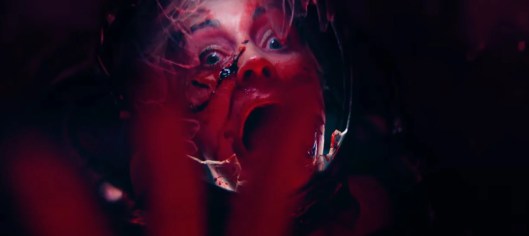
Lucid, the surreal art-punk horror film from Canadian filmmakers Deanna Milligan and Ramsey Fendall, takes that premise and runs headlong into the subconscious.

Set in the 1990s, the film follows Mia Sunshine Jones (Caitlin Acken Taylor), an art student whose creative ambitions are beginning to collapse beneath the weight of a seemingly insurmountable block. With her place at art school under threat, Mia turns to a mysterious lucid-dreaming elixir in the hope that she can unlock the creativity she feels slipping away.

Instead, she opens a door that perhaps should have remained closed.

The resulting descent into dreams, memories and increasingly monstrous manifestations makes Lucid less interested in conventional nightmare mechanics than in the uncomfortable connection between creation and self-examination.

For Mia, the problem isn’t simply that she can’t make art.

It is that she may not yet understand what she is trying to express.

Milligan and Fendall approach this psychological territory with an appropriately handmade aesthetic. Shot on 35mm and Super 8, Lucid has a tactile quality that distinguishes it from the increasingly polished digital language of contemporary genre cinema. The imagery feels deliberately unstable, as though the film itself is slipping between waking reality and the fragmented visual language of a dream.

That is where Lucid becomes most compelling.

Rather than treating lucid dreaming as a convenient supernatural gimmick, the film uses it as a mechanism for peeling away the layers Mia has constructed around herself. The deeper she travels into this increasingly fractured reality, the more difficult it becomes to distinguish between imagination, memory and emotional trauma.

The monsters, consequently, are more than things to be feared.

They are things to be confronted.

One of the film’s most striking ideas is that artistic expression cannot necessarily be separated from the experiences that produce it. Creativity may be liberating, but it can also be invasive. To create something genuinely personal may require confronting the parts of yourself that you would rather leave buried.

That makes Lucid an interesting companion piece to some of the more traditional forms of body and psychological horror appearing at SUFF this year. Where films such as Bagworm externalise transformation through the physical body, Lucid turns inward. Its battleground is the imagination itself.

And imagination proves to be a particularly dangerous place.

There is an undeniable influence of 1990s alternative and underground culture running through the film, but Lucid isn’t simply nostalgic window dressing. Its period setting becomes part of the film’s identity: a world of handmade art, subcultures and analogue imagery that feels particularly appropriate for a story about an artist struggling to discover her own voice. The filmmakers’ use of 35mm and Super 8 reinforces that connection, giving the film an aesthetic that feels deliberately tactile and imperfect.

It is also a film willing to take risks.

At times, those risks work against it. Lucid isn’t particularly interested in holding the audience’s hand, and its narrative can become as fragmented as the dreamscape through which Mia is travelling. There are moments when the symbolism threatens to overwhelm the story itself.

But that is also part of the film’s appeal.

Lucid isn’t particularly interested in behaving itself.

It wants to be strange.

It wants to be messy.

It wants to crawl inside the head of its protagonist and rummage around in the places where memory, fear and creativity become indistinguishable.

And for a film about an artist desperately searching for inspiration, there is something wonderfully appropriate about that approach.

The result is an ambitious piece of independent horror that feels less concerned with delivering a neatly constructed nightmare than with asking what happens when we deliberately surrender control of our own minds.

Sometimes the things we discover there are frightening.

Sometimes they’re grotesque.

And sometimes they are the very things we need to confront before we can create anything worth showing the world.

Lucid may occasionally lose its way inside its own dreamscape, but its willingness to embrace uncertainty is precisely what makes it such an intriguing piece of underground cinema.

SUFF #20

Lucid screens Friday 11 September at 7:45pm in Cinema 3 as part of the Sydney Underground Film Festival’s 20th anniversary program at Factory Theatre, Marrickville.

For more information and tickets, visit Sydney Underground Film Festival.

  • Saul Muerte

Penny Lane is Dead (2026): A New Voice in the Australian Dark

09 Sunday Aug 2026

Posted by surgeons of horror in Australian Horror, Movie review

≈ Leave a comment

Tags

Aussie horror, australia, bailey spalding, ben o'toole, film, horror, mia 'kate russell, movies, reviews, sophia wright-mendelsohn, steve le marquand, tahlee fereday, writing

Australian genre cinema has never needed to look overseas for its nightmares. They have always been here: in the bush, in the suburbs, on isolated roads and beneath the seemingly endless glare of the Australian sun. From the brutal social realism of Wake in Fright through the post-apocalyptic ferocity of Mad Max, the unsettling suburban nightmares of Next of Kin and the blackly comic violence of 100 Bloody Acres, Australian filmmakers have repeatedly demonstrated an ability to turn familiar landscapes into places of profound unease.

Mia’Kate Russell’s Penny Lane Is Dead belongs comfortably within that tradition.

What makes the film particularly exciting, however, is that it doesn’t feel like an exercise in Australian genre nostalgia. Russell’s feature directorial debut has the confidence to understand the visual and thematic vocabulary of the films that came before it while still attempting to establish a voice of its own. Set during the blistering Australian summer of 1986, it takes the familiar ingredients of the holiday-house thriller—friendship, isolation, youthful recklessness, secrets and escalating violence—and turns them into something considerably darker.

The result is not without its imperfections. At times, the film’s ambition exceeds the precision of its execution, and some of its genre mechanisms are more familiar than revolutionary. But those shortcomings are considerably less interesting than what Russell gets right. Penny Lane Is Dead announces the arrival of a director with a remarkably assured understanding of atmosphere, performance and the particular unease that can emerge when Australian sunlight becomes almost as oppressive as darkness.

At the centre of it all is Kat, played by Sophia Wright Mendelsohn in a performance of extraordinary complexity.

The premise is deceptively straightforward. During a scorching summer in 1986, three best friends gather at a summer house to celebrate, only for a prank to spiral catastrophically out of control. What begins as youthful mischief rapidly becomes a fight for survival, and the familiar rhythms of friendship are replaced by suspicion, fear and bloodshed.

Yet Penny Lane Is Dead is less interested in the mechanics of the prank than in what happens when the social bonds holding these characters together begin to disintegrate.

Russell understands that the most effective horror frequently emerges from relationships rather than monsters. The threat isn’t simply something invading the house from outside. It develops within the group itself, exposing resentments and anxieties that were already present beneath the surface. The summer house consequently becomes less a refuge than a pressure chamber, with the oppressive heat amplifying every argument, every secret and every moment of uncertainty.

That Australian summer is crucial to the film’s identity.

There is an almost tactile quality to the heat. Russell understands the visual contradiction of the Australian landscape: the brightness, openness and apparent freedom of the coast can coexist with profound isolation. The relentless sunlight offers nowhere to hide, while the house becomes increasingly claustrophobic despite its connection to the vast landscape outside.

It is a distinctly Australian form of unease.

The film’s 1986 setting could easily have become an exercise in retro decoration, but Russell largely avoids allowing nostalgia to overwhelm the story. The period is present without becoming the point. Instead, the analogue world reinforces the film’s sense of isolation. These characters cannot simply reach for a smartphone and summon assistance. Information travels differently. Secrets remain secrets for longer. Physical proximity matters.

The result is a setting that feels authentically lived in rather than manufactured for aesthetic effect.

But Russell’s greatest achievement is her command of tone.

Penny Lane Is Dead moves between youthful energy, dark humour and genuine brutality without entirely settling into any one register. That instability works in the film’s favour. The characters are young, impulsive and capable of making spectacularly bad decisions, yet the consequences are never treated as weightless genre entertainment.

When the prank goes wrong, the film changes.

The laughter becomes uncomfortable.

The summer atmosphere becomes oppressive.

Friendship becomes liability.

And the question shifts from what happened to what these people are capable of doing now that survival is at stake.

That tonal transition is where Russell demonstrates the greatest promise as a filmmaker. She understands that violence is most effective when it alters the emotional temperature of a scene rather than simply providing spectacle. The blood matters because something has changed between the characters.

And then there is Kat.

Sophia Wright Mendelsohn gives the film an extraordinary centre of gravity. Kat could easily have been written as an archetype—the troubled friend, the survivor, the unpredictable one—but Mendelsohn refuses to allow her to settle into any convenient category.

Instead, Kat remains elusive.

Her motivations are not always immediately transparent. Her emotional responses can be contradictory. She can be sympathetic in one moment and deeply troubling in the next. There are flashes of vulnerability alongside moments of apparent calculation, and Mendelsohn never signals too clearly which version of Kat we are supposed to believe.

That ambiguity is enormously important.

The performance asks the audience to keep reassessing Kat rather than simply deciding whether she is “good” or “bad”. She exists somewhere in the uncomfortable territory between those definitions, where trauma, fear, loyalty and self-preservation begin to overlap.

Mendelsohn’s work is particularly impressive because so much of Kat’s complexity exists in what she doesn’t say. A look can alter the meaning of an entire exchange. A pause can suggest resentment, fear or calculation without definitively confirming any of them. She gives Kat an interiority that extends beyond what the screenplay explicitly tells us.

As the situation deteriorates, that interior world becomes increasingly difficult to read.

And that is precisely what makes her so compelling.

Kat isn’t simply someone trying to survive the horror.

She becomes part of the horror’s moral problem.

Russell and Mendelsohn understand that survival can be an ugly proposition. The genre has traditionally rewarded characters who demonstrate courage, loyalty and resourcefulness, but Penny Lane Is Dead is considerably more interested in what survival does to those qualities when the pressure becomes unbearable.

What would you sacrifice?

Who would you betray?

How much of yourself are you willing to abandon if doing so means seeing another sunrise?

Kat becomes the embodiment of those questions.

This is also where the film’s friendship dynamics become particularly effective. The three central characters aren’t simply interchangeable genre victims. Their histories and emotional connections matter, and the escalating violence forces those relationships into uncomfortable territory. The film understands that the destruction of friendship can be every bit as disturbing as physical violence.

There is a particular sadness to watching people who once knew each other intimately become strangers.

Russell captures that fracture with an increasingly grim confidence.

The film isn’t perfect. Some of its narrative turns feel familiar, and there are moments when the screenplay reaches for a psychological complexity that the plotting doesn’t entirely support. The pacing can also feel uneven as the film transitions between its more character-driven passages and its escalating genre violence.

At times, the film’s influences are visible.

But influence is not the same thing as imitation.

The important thing is that Russell demonstrates an understanding of why Australian genre cinema has historically been so effective. The landscape matters. The heat matters. Isolation matters. Humour matters. Violence matters. Most importantly, the characters matter.

There is a distinctly Australian understanding of menace at work here: the recognition that the environment doesn’t need to become unfamiliar to become threatening. The house, the summer and the friendships are all recognisable. Russell simply applies enough pressure until their familiarity becomes uncomfortable.

That is an exciting foundation for a filmmaking career.

The Prognosis:

Penny Lane Is Dead is not a flawless film, but perfection is not what makes Russell’s debut exciting. What matters is the confidence behind the camera and the sense that a filmmaker has arrived with a genuine understanding of the genre she wants to inhabit.

Mia’Kate Russell demonstrates a strong visual sensibility, an assured command of atmosphere and, most importantly, an instinct for character-driven horror. She understands that Australian genre cinema works best when its horrors emerge from recognisable places and recognisable people rather than being imposed upon them.

And Sophia Wright Mendelsohn’s Kat gives the film its beating psychological heart.

It is a beautifully complex performance, one that refuses to simplify a character who becomes increasingly difficult to understand. Mendelsohn trusts the audience to sit with uncertainty, and the film is considerably stronger for it. Kat isn’t merely someone caught inside the nightmare. She becomes the question the nightmare is asking.

For all its rough edges, Penny Lane Is Dead feels like the kind of debut that deserves attention beyond its immediate genre pleasures. It belongs to an Australian tradition of dark, uncompromising genre filmmaking while suggesting that tradition still has plenty of life left in it.

If this is where Mia’Kate Russell begins, it will be fascinating to see where she goes next.

  • Saul Muerte

Desire, Identity, and DIY Nightmares: The Serpent’s Skin (2025)

14 Thursday May 2026

Posted by surgeons of horror in Movie review

≈ Leave a comment

Tags

alice maio mackay, film, horror, movies, reviews, writing

There is something undeniably fascinating about the emergence of Alice Maio Mackay as a modern underground horror voice.

In an era where independent genre cinema often bends toward algorithmic familiarity or nostalgia-driven imitation, Mackay’s work feels defiantly personal — rough around the edges, fiercely expressive, and deeply invested in stories of identity, transformation, queerness, alienation, and emotional vulnerability. Her films do not merely use horror as metaphor; they inhabit it as lived experience.

With The Serpent’s Skin, Mackay once again returns to those recurring thematic obsessions, crafting a supernatural relationship horror steeped in desire, insecurity, and bodily transformation. The result is a film bursting with sincerity and ambition, even if its execution occasionally struggles beneath the weight of its ideas.


Horror as Emotional Expression

At its core, The Serpent’s Skin is less concerned with demonic mythology than emotional rupture.

The narrative — centred on two young women whose growing romantic connection awakens supernatural powers and inadvertently unleashes a destructive evil — functions primarily as a framework for exploring intimacy, repression, guilt, and self-perception.

As with much of Mackay’s work, the horror emerges from emotional instability rather than external threat alone. The demon haunting the film feels symbolic of unresolved trauma and insecurity — a manifestation of emotional damage infecting the relationships around it.

This approach gives the film a deeply personal energy, even when its storytelling becomes uneven.


The Voice of Alice Maio Mackay

What continues to distinguish Alice Maio Mackay is the clarity of her voice.

Her cinema exists within a fascinating lineage of queer DIY horror filmmaking — openly embracing melodrama, camp, supernatural iconography, and emotional rawness while rejecting the polished sterility that often dominates contemporary independent horror.

There is an immediacy to her work that feels refreshingly unfiltered.

Mackay’s films frequently centre outsiders searching for identity and belonging within worlds that threaten to reject or consume them. In The Serpent’s Skin, desire itself becomes transformative and dangerous, blurring the boundaries between liberation and destruction.

The film understands that vulnerability can be terrifying.


Style Over Structure

Where The Serpent’s Skin falters somewhat is in its narrative cohesion.

The mythology surrounding the demon and supernatural powers often feels underdeveloped, with certain emotional and narrative beats arriving before the film has fully earned them. Tonal shifts occasionally create a sense of fragmentation, as though the film is torn between intimate character drama and heightened supernatural horror without fully reconciling the two.

Yet paradoxically, some of these imperfections also contribute to the film’s charm.

There is something admirable about a filmmaker prioritising emotional honesty and thematic expression over rigid structural precision. Mackay’s work rarely feels calculated. It feels instinctive — driven more by feeling than formula.


Bodies, Desire, and Transformation

Like much queer horror, The Serpent’s Skin uses supernatural transformation as a metaphor for internal change.

Desire leaves marks here — emotionally, psychologically, physically. Characters shift and unravel under the weight of longing, shame, and unresolved past trauma. The film repeatedly frames identity as fluid, unstable, and vulnerable to corruption, reflecting the anxieties tied to self-discovery and emotional dependence.

This thematic throughline proves far more compelling than the film’s literal mythology.

The true horror is not possession.
It is emotional exposure.


A Rising Cult Voice

Despite its flaws, The Serpent’s Skin reinforces why Mackay remains such an intriguing figure within contemporary independent horror.

She represents a generation of filmmakers reclaiming genre cinema as a space for deeply personal storytelling — unconcerned with mainstream expectations and more interested in emotional truth, queer identity, and artistic self-expression.

Not every experiment fully succeeds, but the sincerity behind the work is undeniable.

And increasingly, sincerity itself feels radical.


The Prognosis:

The Serpent’s Skin is an ambitious, emotionally charged supernatural horror film that further cements Alice Maio Mackay as one of underground horror’s most distinctive emerging voices.

Narratively uneven but thematically rich, the film thrives most when embracing its raw emotional vulnerability and DIY gothic sensibilities.

  • Saul Muerte

Wendigo (2001) and Larry Fessenden’s Quiet Place in American Folk Horror

22 Thursday Jan 2026

Posted by surgeons of horror in Uncategorized

≈ Leave a comment

Tags

books, film, horror, movies, writing

American horror has always struggled with its own mythology.

Where European cinema leans effortlessly into castles, covens, and inherited superstition, American folklore remains fragmented — scattered across Native legend, Puritan fear, frontier violence, and the unresolved guilt of colonisation. Monsters here are rarely elegant. They are born of hunger, cold, isolation, and the uneasy sense that the land itself remembers what we have tried to forget.

Wendigo is one of the rare American horror films that attempts to take that legacy seriously.

Folklore in the Margins

Based on Algonquian legend, the Wendigo is not merely a creature but a concept: a spirit of starvation, greed, and moral collapse, born when humans consume more than they should — flesh, land, or power. It is a monster inseparable from colonial history, ecological dread, and cultural trespass.

Larry Fessenden, ever the scholar of marginal horror, understands this instinctively.

From its opening moments, Wendigo resists the trappings of mainstream genre cinema. There are no easy shocks, no baroque effects, no grand set-pieces. Instead, the film unfolds as a low-key domestic tragedy — a city family retreating to the countryside, bringing with them the casual arrogance of outsiders who believe nature is merely scenery.

When an accidental shooting ignites the film’s chain of events, the horror that follows feels less supernatural than inevitable.

Fessenden’s America

By 2001, Larry Fessenden had already established himself as one of American indie horror’s great caretakers — a filmmaker less interested in spectacle than in preservation. Through films like Habit and his later work on The Last Winter and Depraved, Fessenden has acted as both archivist and advocate for a strain of horror that treats myth as cultural memory rather than genre decoration.

Wendigo fits squarely within that mission.

This is not a film about a monster in the woods so much as a film about trespass: moral, ecological, and cultural. The family’s intrusion into rural space, their careless handling of firearms, their unthinking disruption of local rhythms — all feel like small sins accumulating toward punishment. When the legend of the Wendigo finally surfaces, it feels less like summoning than consequence.

In theory, this is rich terrain.

The Problem of Restraint

In practice, Wendigo struggles to fully embody the power of its own mythology.

Fessenden’s commitment to understatement, while admirable, often becomes a liability. The film withholds too much, too often. The creature remains largely abstract. The rituals feel gestural rather than revelatory. What should accumulate as dread instead drifts into ambiguity.

The central performances are competent but muted, and the domestic drama — meant to ground the supernatural — never quite achieves the emotional density required to make the horror resonate fully. The film gestures toward trauma, guilt, and moral rupture, but rarely pierces them.

When the Wendigo finally asserts itself, the moment feels conceptually powerful but cinematically undernourished.

Indie Horror as Preservation

And yet, to judge Wendigo purely by conventional standards would be to misunderstand its place in the larger ecosystem of American horror.

This is not exploitation. It is not entertainment-first. It is an act of cultural stewardship.

Fessenden belongs to a lineage of American indie filmmakers — alongside figures like Kelly Reichardt (in her own register), Jim Mickle, and later Robert Eggers — who treat landscape as archive and myth as history. He is less concerned with thrills than with keeping endangered stories alive, even when their cinematic translation proves imperfect.

In that sense, Wendigo is less a failure than a partial success: a film that reaches for something rare in American horror, even if it cannot quite grasp it.

The Prognosis:

Wendigo remains a fascinating but flawed entry in the canon of American folk horror.

It lacks the visceral impact of its European cousins, and the narrative control to fully harness its mythology. But it compensates with sincerity, scholarship, and a genuine respect for the dark stories embedded in American soil.

Some myths refuse to die.

Even when poorly told, they continue to haunt — not because they are frightening, but because they are true.

  • Saul Muerte

Top 13 Killer Films of 2025: Horror, Form, and the Politics of Endurance

25 Thursday Dec 2025

Posted by surgeons of horror in top 13 films

≈ Leave a comment

Tags

books, film, horror, movies, writing

In 2025, horror cinema continued its decisive shift away from spectacle toward structure. Rather than functioning as vehicles for shock, the most compelling works of the year positioned fear as a sustained condition — something embedded within systems, bodies, and histories. These films do not simply represent terror; they organise it, asking spectators to endure rather than react, to interpret rather than consume.

Across this selection, horror emerges as an analytic mode — a means of interrogating authority, inheritance, technology, and perception itself. What follows is not a list of crowd-pleasers, but of films that demonstrate how the genre continues to function as one of contemporary cinema’s most rigorous critical tools.


13. Ash

Ash occupies a transitional space between experimental media art and narrative cinema, foregrounding sensation over causality. Flying Lotus privileges rhythm, texture, and sonic density as primary conveyors of meaning, destabilising conventional narrative comprehension in favour of affective immersion.

The film’s significance lies less in its storytelling than in its refusal of interpretive clarity. Ash treats disorientation as a structuring principle, aligning the spectator’s cognitive uncertainty with the film’s thematic concern for alienation and fragmentation. In doing so, it advances a mode of sci-fi horror that operates phenomenologically, privileging experience over explanation.

Ash (2025): A Sensory Voyage from a Singular Artist


12. The Rule of Jenny Pen

Situated within a tightly regulated institutional space, The Rule of Jenny Pen examines how authority produces horror not through excess, but through routine. The film’s power derives from its attention to systems of control that are normalised rather than questioned, rendering violence bureaucratic and cruelty procedural.

Rather than positioning its antagonist as aberrant, the film implicates the structure itself. Performance and restraint are key formal strategies here: menace accumulates through micro-gestures and withheld action, forcing the spectator to recognise how institutional power becomes most terrifying when it is administered calmly and without spectacle.

The Rule of Jenny Pen (2025) – A Chilling Game of Fear and Manipulation


11. Dangerous Animals

Dangerous Animals strips survival horror down to its most elemental components, foregrounding endurance over escalation. The film’s pacing resists the logic of set-piece thrills, instead cultivating a slow accretion of threat that mirrors the bodily exhaustion of its characters.

What distinguishes the film is its refusal to sentimentalise victimhood. Predator and prey are rendered as unstable positions rather than fixed identities, suggesting violence as a latent condition rather than a moral rupture. In this sense, Dangerous Animals operates as an examination of instinctual hierarchy, locating horror within the mechanics of survival itself.


10. Keeper

With Keeper, Osgood Perkins continues his exploration of isolation as a spatial and psychological condition. The film’s austere formalism — marked by elongated takes, sparse dialogue, and an emphasis on negative space — transforms setting into a form of narrative pressure.

Rather than offering mythological coherence, Keeper relies on emotional continuity. Ritual functions not as exposition but as repetition, reinforcing the sense of entrapment that defines the film’s affective core. Horror emerges gradually, not through revelation, but through the suffocating persistence of the unresolved.

Keeper (2025) — Osgood Perkins and the Slow Bleed of Mythic Terror


9. Sun

Sun rejects legibility as an organising principle. Its aggressive visual strategies — saturated colour, disjunctive editing, and sensory overload — position the spectator in a state of sustained assault, aligning form with thematic inquiry.

The film treats identity as unstable and perception as corrosive. Rather than constructing horror through narrative causation, Sun deploys excess as a destabilising force, implicating contemporary media saturation in the erosion of subjectivity. The result is a work that positions horror as experiential collapse rather than narrative event.

Dancing with Demons: SUN Burns Toxic Masculinity Alive in the Neon Abyss


8. Companion

Companion engages with speculative horror through a register of intimacy, examining how technological mediation reshapes emotional labour and consent. The film’s restraint is central to its effectiveness; moments of unease are generated through behavioural shifts rather than overt threat.

By situating its horror within domestic and relational spaces, Companion reframes technological anxiety as an extension of existing power dynamics. The film resists dystopian exaggeration, instead suggesting that the most disturbing futures are those that emerge seamlessly from present-day norms.

Companion (2025): A Sharp Blend of Humour, Tragedy, and Tech Gone Wrong


7. Presence

Defined by subtraction rather than accumulation, Presence employs absence as its primary aesthetic strategy. The film’s minimalism forces the spectator to attend to what is not shown, transforming silence and spatial emptiness into sites of tension.

Supernatural elements are deliberately ambiguous, allowing grief and memory to function as competing explanatory frameworks. In refusing to stabilise meaning, Presence aligns haunting with psychological persistence, suggesting that terror often resides not in invasion, but in endurance.

Steven Soderbergh’s Presence: A Chilling Descent into the Unseen


6. Bring Her Back

Bring Her Back operates through narrative fracture, destabilising temporal and causal coherence as a means of articulating loss. The film demands active spectatorship, requiring viewers to assemble meaning from incomplete information.

Its body horror is not gratuitous but instrumental, externalising the violence of obsession and the desire for restoration. By refusing interpretive closure, Bring Her Back transforms confusion into affect, positioning horror as a confrontation with the limits of understanding.

“Bring Her Back” Is a Brutal, Brain-Bending Horror That Sticks With You


5. The Dead Thing

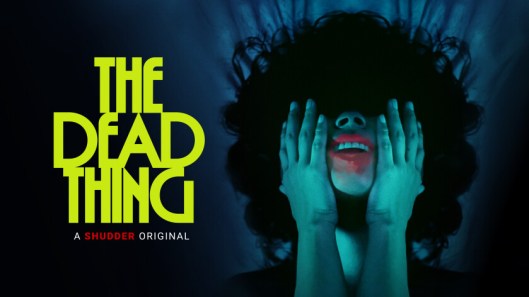
The Dead Thing frames horror as a byproduct of unresolved trauma, privileging emotional continuity over narrative propulsion. The film’s measured pacing allows grief to permeate its formal construction, rendering terror inseparable from mourning.

What emerges is a portrait of desire as compulsion — a need not to escape pain, but to remain tethered to it. The film’s restraint prevents catharsis, reinforcing the notion that some forms of suffering resist narrative resolution.

The Dead Thing (2025) – A Haunting Descent into Obsession and the Unknown


4. The Long Walk

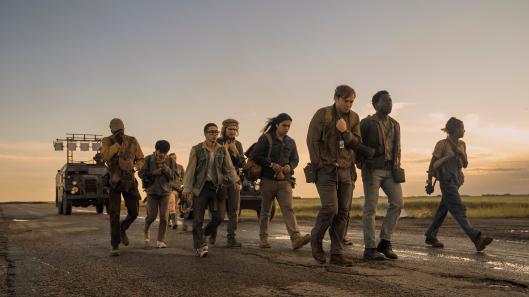
The Long Walk is structured around repetition as punishment. Its relentless forward motion mirrors the ideological rigidity of the system it depicts, transforming endurance into a mechanism of control.

By denying reprieve, the film implicates the spectator in its logic of attrition. Horror arises not from unpredictability, but from inevitability, positioning authoritarian violence as procedural rather than spectacular. The result is a work of sustained ideological critique.

No Finish Line: The Long Walk Turns Minimalism into Masterpiece


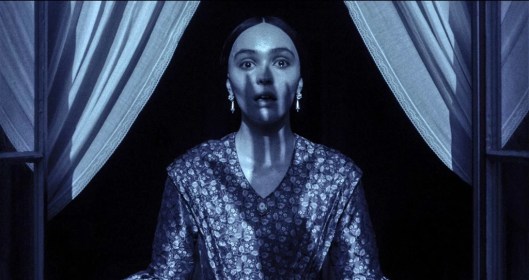
3. Nosferatu

Robert Eggers’ Nosferatu approaches adaptation as cinematic archaeology, reconstructing gothic horror through meticulous attention to texture, light, and performance. The film privileges atmosphere over innovation, treating fidelity as a form of rigor rather than limitation.

Its power lies in its seriousness of intent. By resisting irony or revisionist impulse, Nosferatu reasserts the enduring potency of myth when rendered with formal precision. The film functions as both homage and reaffirmation of horror’s classical foundations.

A Haunting Symphony of Shadows: Robert Eggers’ Nosferatu


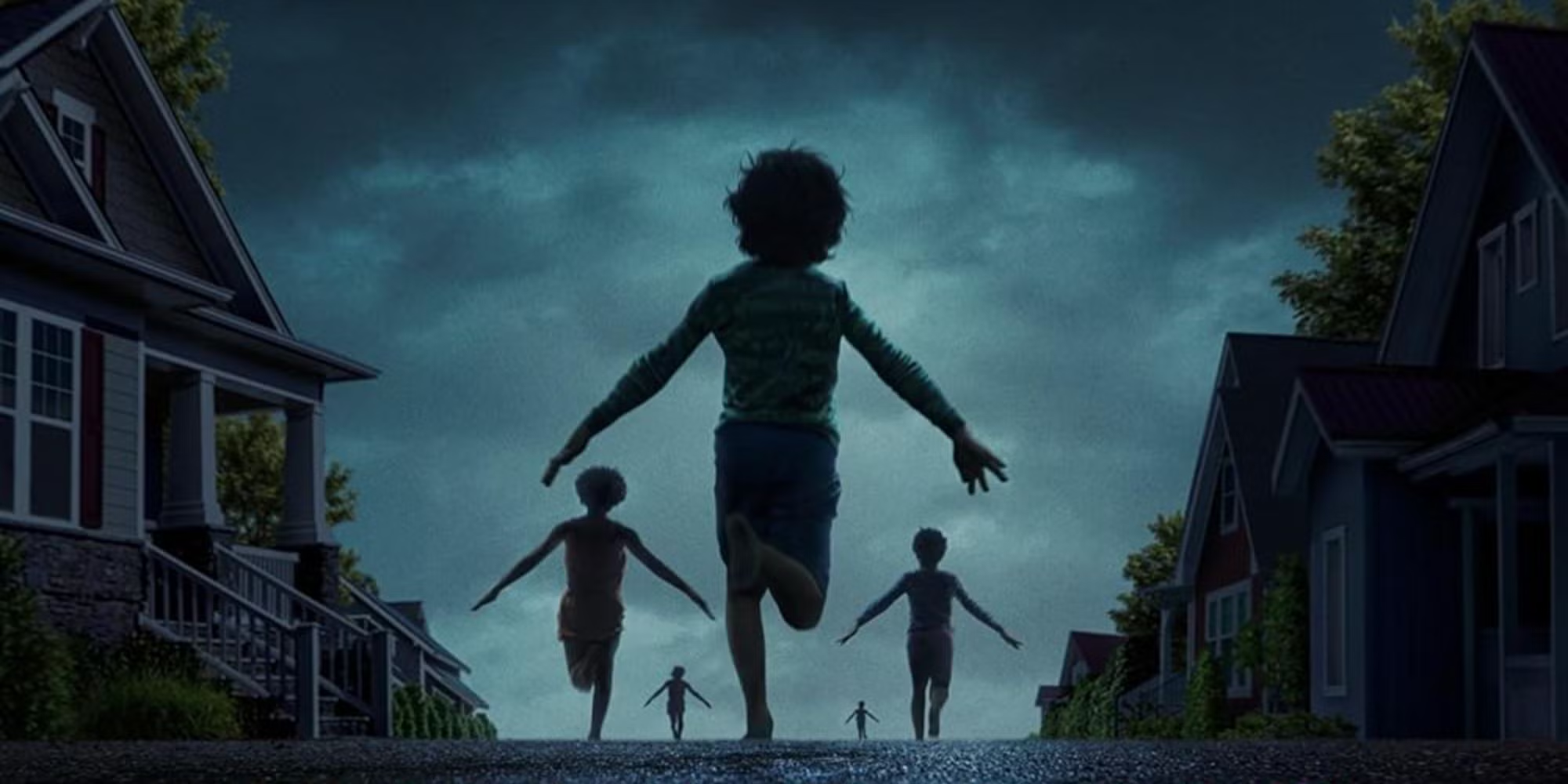
2. Weapons

Weapons fragments narrative authority, refusing to privilege any single perspective or resolution. The film’s structural ambiguity destabilises conventional genre expectations, repositioning horror as epistemological uncertainty.

Rather than delivering answers, Weapons foregrounds absence and contradiction. Its terror emerges through implication, forcing the spectator to confront the discomfort of unresolved meaning. In this sense, the film operates less as a thriller than as an inquiry into perception and belief.

Buried Truths & Walking Away: Why Weapons (2025) Matters


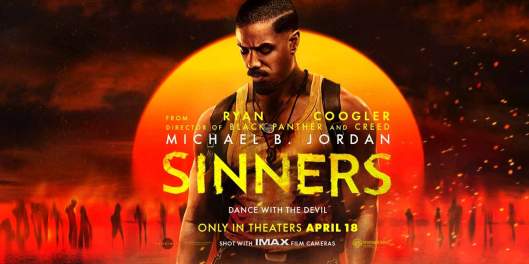
1. Sinners

At the pinnacle of 2025’s horror landscape, Sinners synthesises genre with historical inquiry. The film locates terror within inherited structures — cultural, racial, and familial — positioning horror as an extension of collective memory.

Ryan Coogler’s formal restraint allows atmosphere and performance to carry ideological weight. Rather than externalising evil, Sinners frames it as an embedded legacy, transmitted across generations. The result is a work of rare gravity: a horror film that understands fear as something learned, remembered, and endured.

Sinners (2025) Burns Slow, Strikes Deep: A Southern Gothic Horror for the Soul

  • Saul Muerte

The Drowned: A Mythic Thriller That Never Quite Breaks the Surface

08 Wednesday Oct 2025

Posted by surgeons of horror in Movie review

≈ Leave a comment

Tags

alan calton, books, corrine wicks, dominic vuliamy, film, greek mythology, history, hylas and the nymphs, john william waterhouse, lara lemon, Lily Catalifo, michaelangelo fortuzzi, Movie review, nymphs, samuel clemens, Sandrine Salyères, sirens, writing

Greek myths meet murky waters in a low-budget thriller that almost makes it to shore.

Samuel Clemens’ The Drowned attempts to merge myth and morality within a low-budget psychological thriller, dipping into the murky waters of Greek legend to find something ancient beneath the surface. The results, however, are mixed—an ambitious premise buoyed by striking influences but ultimately weighed down by pacing and atmosphere that never fully submerge the viewer.

Drawing on the myth of Hylas and the nymphs—immortalised in John William Waterhouse’s 1896 oil painting—Clemens reimagines the seductive call of the sea as a modern-day reckoning for guilt and greed. Three thieves hole up in a seaside safehouse after stealing a priceless painting, only to find their fourth member missing and an ominous presence rising from the tide. The film’s mythological undercurrents give it a literary backbone, but they’re never quite fleshed out enough to transform into something transcendent.

There’s a palpable sense of ambition here: The Drowned tries to swim in deep waters, blending folklore, crime, and psychological tension. Yet much like the doomed figures in its inspiration, it finds itself lured by its own reflection—entranced by imagery but unable to escape the shallows of its limited scope.

Performances by Alan Calton, Lara Lemon, and Lily Catalifo lend the feature some stability, grounding its mythic aspirations in believable tension. The cinematography occasionally captures the desolate beauty of the coast with painterly intent, echoing Waterhouse’s haunting stillness. But the low budget is keenly felt, particularly in its uneven pacing and abrupt tonal shifts.

The Prognosis:

The Drowned deserves some credit for attempting to do more than most thrillers in its range—it’s an atmospheric, if uneven, meditation on temptation and consequence. Yet, despite its mythic intentions, it never quite earns its place among the more evocative modern fables. The sirens sing, but their song doesn’t linger.

  • Saul Muerte

Roots of Guilt: Bark Ties a Man to His Own Demons in the Depths of the Forest

03 Friday Oct 2025

Posted by surgeons of horror in Movie review

≈ Leave a comment

Tags

aj buckley, dark nights film fest, fantasy, fiction, marc scholermann, micahel weston, nature, short-story, writing

The forest doesn’t care about you. It doesn’t care about your excuses, your regrets, your carefully constructed lies. Out there, among the trees, the world strips itself down to its bones — dirt, bark, roots, breath. That’s where Marc Schölermann drags us with Bark, a taut psychological thriller that ties both its protagonist and its audience to the raw elements of survival, guilt, and reckoning.

It begins with a man bound to a tree — a literal prisoner of nature and a figurative captive of his own sins. Charismatic Nolan Bentley wakes disoriented, tied down in the belly of a remote German forest. Enter the mysterious stranger, a figure both tormentor and liberator, whose taunting presence digs deeper than any rope ever could. The question isn’t just whether Bentley can escape. The question is whether he deserves to.

Bark is at its sharpest when it leans into this elemental battle: man vs. nature, man vs. stranger, man vs. himself. Schölermann uses the forest not as a backdrop but as a psychological weapon — the trees loom like silent judges, the soil feels heavy with secrets, and every snap of a branch echoes like a gavel slamming down in a cosmic courtroom.

At its core, the film isn’t about knots and ropes, it’s about consequences. You can’t disassociate from your own past forever; eventually the demons scratch their way through the bark and claw at your skin. Bark dramatises that inexorable truth with sweat, soil, and tension so tight it feels like the trees themselves are holding their breath.

The performances ground it — Bentley sells both desperation and denial, while the enigmatic outdoorsman needles and prods until every scab of guilt bursts open. And though the film runs its tension on a fairly narrow track, the payoff is a psychological unearthing that hits with the force of an axe to the trunk.

The Prognosis:

Bark is not just a thriller. It’s a meditation on accountability, guilt, and the way nature can strip us bare until we are nothing but the truth we tried to bury. Some secrets don’t stay hidden. Some forests don’t let you out.

  • Saul Muerte

Bark will screen as part of Dark Nights Film Fest on Fri 10 Oct at 7pm

Embrace the Darkness: Dark Nights Film Fest Vol. 2

10 Wednesday Sep 2025

Posted by surgeons of horror in dark nights film fest

≈ Leave a comment

Tags

a desert, a serbian documentary, adorable humans, bark, braindead, dark nights film fest, film, hell house llc lineage, horror, karmadonna, movies, necromorphosis, reviews, the school duel, writing

The shadows are calling again. The screen is no longer a safe window to peer through but a chasm, hungry and alive, waiting to swallow you whole. Strap in, Sydney — Dark Nights Film Fest Vol. 2 has crawled out of the grave and into the Ritz, and this time it’s not here to play nice.

This isn’t cinema for the faint, the casual, or the polite. This is cinema that stalks you through the back alleys of your subconscious, cinema that rips the floorboards off your cozy illusions and drags you headfirst into a pit of worms. Just when you thought the blood had dried and the screams had faded, festival director Bryn Tilly has cranked open the gates again, ushering in a delirious parade of maniacs, monsters, and midnight visions.

Nine Australian premieres. One unholy cult resurrection. Twenty-two short, sharp shocks from across the globe. It’s a full-course banquet of nightmares, each dish steaming with dread and dripping with the strange juices of cinema’s dark heart.

Opening night doesn’t just raise a curtain — it tears open the roof with Hell House LLC: Lineage, an unhinged carnival of terror where haunted basements and clown-faced demons set the tone for what’s to come: fear without safety nets. From there the fest descends into Germany’s tangled woods with Bark, drags you through the neon purgatory of America in A Desert, and burns you alive with the Serbian one-two punch of A Serbian Documentary and Karmadonna — films that don’t just push buttons, they rip them out and swallow them whole.

But the crown jewel of delirium? Peter Jackson’s Braindead in screaming 4K glory. Thirty years since its last Australian theatrical run, and the pus-filled carnage hasn’t aged a day. This isn’t a screening — it’s an exorcism of sanity, an orgy of undead slapstick that makes every Marvel movie look like a children’s nap-time.

And just when your skull’s about to split, along comes Necromorphosis, burrowing into your flesh like a cockroach in heat, and Sun, a fever-dream hybrid of movement and madness that dances straight into the abyss. By the time the anthology Adorable Humans rolls around, Hans Christian Andersen will be spinning in his grave fast enough to power a small Danish village.

Closing night locks the doors and swallows the keys with The School Duel, a dystopian grenade lobbed at society’s fragile bones — ferocious, timely, and cruelly relevant.

This isn’t just a festival. It’s a séance. A bacchanal of blood, dread, and midnight delirium. Between the Aussie and international shorts, the Movie Boutique of VHS relics and arcane treasures, and filmmakers dropping truth bombs about low-budget survival, Dark Nights is where the monsters come to play.

Forget safe cinema. Forget the plush multiplex glow. The Ritz is where the shadows come alive, and the screen bites back.

Dark Nights Film Fest Vol. 2 — October 9–12, Ritz Cinemas, Randwick.
Bring your nerves, bring your nightmares, and leave your soul at the door.

  • Saul Muerte

Love on the Run Turns to Terror in Queer Horror Road Trip Straight On Till Morning

02 Monday Jun 2025

Posted by surgeons of horror in Movie review, sydney film festival

≈ Leave a comment

Tags

Bonnie Jean Tyer, cooking, Craig Ouellette, homebrew, Kelsey Christian, Maria Olsen, nanowrimo, publishing, SFF, sydney film festival, writing

Freak Me Out delivers another bold, bruising genre gem.

The Freak Me Out program at Sydney Film Festival 2025 has always been a haven for horror misfits, and Straight On Till Morning is a welcome addition to its blood-splattered roster. Directed by Craig Ouellette, this road trip romance-turned-nightmare pits love against extremism, identity against tradition, and outsiders against a force of cruel conformity.

At its heart are Dani and Kaitlin, two queer lovers caught in the euphoric haze of newfound intimacy. Their chemistry is charming, unforced, and grounded in quiet authenticity—a refreshing portrayal that sidesteps overused tropes and instead paints their connection as real and lived-in. But their dreamy road trip through America’s underbelly soon turns into a brutal descent, as they collide with a seemingly God-fearing family whose values are warped by delusion and control.

The film takes its time to find traction, and its deliberate pacing may test some viewers. The first act drifts on the wind of romantic indie minimalism, until a mid-point collision throws everything off the rails and into pure survival horror. From there, it delivers raw tension, visceral violence, and a grim dissection of how love—queer or otherwise—threatens rigid systems built on fear and false righteousness.

What elevates Straight On Till Morning beyond standard genre fare is its refusal to paint anyone with a single brushstroke. The villains are monstrous, yes, but they are never cartoons. Likewise, our protagonists are flawed, unsure, and deeply human. Ouellette doesn’t go for clean lines—this is a film about grey areas. About how outcasts, be they queer lovers or zealots hiding from the modern world, can collide in catastrophic ways.

The Prognosis:

It’s a challenging, sometimes uneven ride, but when it hits its stride, it’s gripping and unrelenting. In a landscape still learning how to do queer horror without pandering or punishing, Straight On Till Morning is a welcome entry—messy, brave, and full of heart.


🎟 Screening Times – Freak Me Out @ Sydney Film Festival 2025

  • Tuesday 10 June, 8:20pm – Dendy Newtown, Cinema 1
  • Friday 13 June, 8:30pm – Event Cinemas George Street, Cinema 9

Dare to fall in love. Stay for the fear.

  • Saul Muerte

Subscribe

  • Entries (RSS)
  • Comments (RSS)

Archives

  • September 2026
  • August 2026
  • July 2026
  • June 2026
  • May 2026
  • April 2026
  • March 2026
  • February 2026
  • January 2026
  • December 2025
  • November 2025
  • October 2025
  • September 2025
  • August 2025
  • July 2025
  • June 2025
  • May 2025
  • April 2025
  • March 2025
  • February 2025
  • January 2025
  • December 2024
  • November 2024
  • October 2024
  • September 2024
  • August 2024
  • July 2024
  • June 2024
  • May 2024
  • April 2024
  • March 2024
  • February 2024
  • January 2024
  • November 2023
  • October 2023
  • September 2023
  • August 2023
  • July 2023
  • June 2023
  • May 2023
  • April 2023
  • March 2023
  • February 2023
  • January 2023
  • November 2022
  • October 2022
  • September 2022
  • August 2022
  • July 2022
  • June 2022
  • April 2022
  • March 2022
  • February 2022
  • January 2022
  • December 2021
  • November 2021
  • October 2021
  • September 2021
  • August 2021
  • July 2021
  • June 2021
  • May 2021
  • April 2021
  • March 2021
  • February 2021
  • January 2021
  • December 2020
  • November 2020
  • October 2020
  • September 2020
  • August 2020
  • July 2020
  • June 2020
  • May 2020
  • April 2020
  • March 2020
  • February 2020
  • January 2020
  • December 2019
  • November 2019
  • October 2019
  • September 2019
  • July 2019
  • June 2019
  • May 2019
  • April 2019
  • March 2019
  • February 2019
  • January 2019
  • December 2018
  • November 2018
  • October 2018
  • September 2018
  • August 2018
  • July 2018
  • June 2018
  • May 2018
  • April 2018
  • March 2018
  • February 2018
  • January 2018
  • December 2017
  • November 2017
  • October 2017
  • September 2017
  • August 2017
  • July 2017
  • June 2017
  • May 2017
  • April 2017
  • March 2017
  • February 2017
  • January 2017
  • December 2016
  • November 2016
  • October 2016
  • September 2016
  • August 2016
  • July 2016
  • June 2016
  • May 2016

Categories

  • A Night of Horror Film Festival
  • Alien franchise
  • Alliance Francaise French Film Festival
  • Australian Horror
  • Best Movies and Shows
  • Competition
  • dark nights film fest
  • episode review
  • Flashback Fridays
  • Friday the 13th Franchise
  • Full Moon Sessions
  • Halloween franchise
  • In Memorium
  • Interview
  • japanese film festival
  • John Carpenter
  • killer pigs
  • Library of the Occult
  • midwest weirdfest
  • MidWest WierdFest
  • MonsterFest
  • movie article
  • movie of the week
  • Movie review
  • New Trailer
  • News article
  • podcast episode
  • podcast review
  • press release
  • retrospective
  • Rialto Distribution
  • Ring Franchise
  • series review
  • Sounds of Horror
  • Soundtracks
  • Spanish horror
  • sydney film festival
  • Sydney Underground Film Festival
  • The Blair Witch Franchise
  • the conjuring franchise
  • the evil dead franchise
  • The Exorcist
  • the fly
  • The Howling franchise
  • Top 10 list
  • Top 12 List
  • top 13 films
  • Trash Night Tuesdays on Tubi
  • umbrella entertainment
  • Uncategorized
  • Universal Horror
  • Wes Craven
  • wes craven's the scream years

Meta

  • Create account
  • Log in

Blog at WordPress.com.

  • Subscribe Subscribed
    • Surgeons of Horror
    • Join 226 other subscribers
    • Already have a WordPress.com account? Log in now.
    • Surgeons of Horror
    • Subscribe Subscribed
    • Sign up
    • Log in
    • Report this content
    • View site in Reader
    • Manage subscriptions
    • Collapse this bar
Loading Comments...