Tags
horror, MonsterFest, vampires, vampire, movies, books, writing, nicky murphy
Vampires, vanity and the blood-soaked economics of becoming famous
The music industry has always been a vampire story.
Everybody wants something from you. Your voice. Your image. Your time. Your body. Your attention. Your followers. Your soul, if the contract is right.
Nicky Murphy’s I Love Paris simply has the good sense to stop pretending that metaphor is enough.
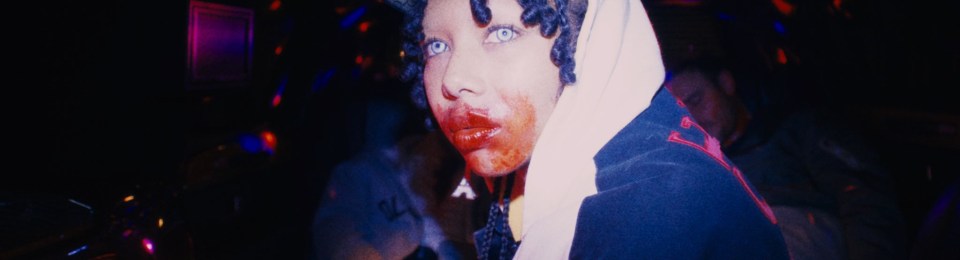
Shot through the deliberately grubby and voyeuristic lens of a mockumentary, I Love Paris follows Paris, an aspiring singer hustling through the Parisian music scene while chasing the increasingly elusive promise of fame. When a vampire attack unexpectedly interrupts her already precarious career trajectory, becoming undead proves to be less of a career-ending catastrophe than you might expect. In fact, immortality, nocturnal working hours and an endless appetite for blood may simply be another set of obstacles to negotiate on the road to stardom.
It is an inspired premise because Murphy understands that the vampire and the aspiring artist have considerably more in common than either might initially admit. Both are creatures of appetite. Both require an audience. Both survive by taking something from other people. Both can become objects of fascination while remaining fundamentally parasitic. And both eventually discover that the machinery which promises to elevate them can just as easily consume them.
The genius of I Love Paris is that it doesn’t hammer this metaphor into submission. Instead, it lets the absurdity of vampirism coexist with the mundane humiliations of trying to make it in the music business. Paris still needs recognition. She still needs contacts. She still needs someone to take her seriously. She still needs social media engagement. Becoming a blood-drinking immortal doesn’t magically make the gatekeepers disappear.
If anything, it gives her another fucking problem.
Murphy’s mockumentary approach is crucial to the film’s success. There is an immediate intimacy to the footage, as though we have stumbled into somebody else’s chaotic documentary about artistic ambition and simply forgotten to leave. The camera doesn’t stand outside Paris and judge her. It follows her. It watches her. It records the good, the bad, the embarrassing and the increasingly bloody.
That creates an uncomfortable relationship between subject and spectator.
At times, I Love Paris reminded me of Man Bites Dog, not because Murphy is attempting to replicate Rémy Belvaux, André Bonzel and Benoît Poelvoorde’s particular brand of cinematic provocation, but because the camera develops the same unsettling complicity with what it observes. We aren’t merely watching a dangerous situation unfold. We are watching people watch it unfold. And the longer the camera remains present, the more difficult it becomes to determine where documentation ends and exploitation begins.
That is where the film’s real fangs emerge.
Because how much are we willing to let go by in the name of entertainment?
How much cruelty becomes acceptable once there is a camera pointed at it?
How much exploitation are we prepared to forgive if the resulting footage is funny, shocking, fashionable or simply good art?
These aren’t abstract questions in I Love Paris. They are embedded in the very construction of the film. The camera is hungry. Paris is hungry. The music industry is hungry. The vampires are hungry.
Everybody wants a piece.
And somebody is going to get drained.
Aminata Thiboult is magnificent at the centre of this ecosystem. Paris is not constructed as some conventional tragic vampire figure, nor is she simply the naïve young artist who stumbles into darkness. She is ambitious, flawed, funny, occasionally infuriating and recognisably human. That humanity becomes particularly important once the supernatural enters the equation. Thiboult’s performance allows Paris to remain a person rather than becoming merely a vessel for the vampire gag. Her ambition survives the transformation. So does her ego. So does her desire to be seen.
Perhaps that is the real horror.
She hasn’t changed as much as she thinks she has.
Leonor Oberson is equally effective as Lutèce, the vampire responsible for bringing Paris into this nocturnal existence. Their relationship becomes one of the film’s richest sources of comedy and tension, because Lutèce is not simply an undead mentor handing down the sacred laws of vampirism. She is another complicated human being trapped inside a supernatural existence, and the relationship between the two women has the messy, affectionate and occasionally toxic quality of a friendship that has become impossible to categorise. An interview with Murphy, Thiboult and Oberson reveals that much of the film’s dialogue was developed through a mixture of scripted material and improvisation, with the performers translating and reshaping Murphy’s English-language scripts into something more naturally their own.
That authenticity is one of the film’s great assets.
Murphy allows Paris to feel inhabited rather than performed.
The streets feel lived in. The conversations have the looseness of people who know each other. The comedy doesn’t always announce itself as comedy. Sometimes it simply emerges from the collision between the utterly ridiculous and the completely ordinary.
And then there is the blood.
The vampire mythology is deliberately less interested in elaborate rules than in the practical inconvenience of being a creature that needs to feed. Murphy’s vampires don’t exist as some impossibly elegant aristocratic species floating above humanity. They are humans with an additional biological requirement.
They need blood.
Lots of it.
And if that sounds straightforward, try building a music career around it.
The result is a strange tonal balancing act. I Love Paris is funny without allowing its comedy to completely defang the horror. There are moments when the absurdity provokes laughter and moments when the laughter becomes slightly uncomfortable because the thing being laughed at is, objectively, horrible. That instability is important. The film understands that laughter and horror often occupy the same psychological space.
Sometimes we laugh because something is funny.
Sometimes we laugh because we don’t quite know what else to do.
And sometimes we laugh because the alternative is acknowledging that what we’re watching is genuinely disturbing.
Murphy’s direction allows these contradictions to breathe. The guerrilla-style production, shot on the streets of Paris with an extremely small footprint, could have produced something visually disposable. Instead, the limitations become part of the film’s aesthetic identity. The city doesn’t feel like a backdrop constructed for a vampire movie. It feels like Paris continuing to exist while these increasingly deranged people attempt to pursue their ambitions inside it.
That grounded reality is particularly important to Thiboult and Oberson’s performances. Their characters aren’t floating through some artificial vampire universe. They are negotiating relationships, artistic ambition, money, fame and survival within recognisable social spaces. The supernatural is therefore not an escape from reality. It becomes an exaggeration of it.
The vampire simply makes the exploitation harder to ignore.
This is where the film’s tension between greed and culture becomes particularly potent. Art is supposed to represent something beyond commerce, yet the music industry is an ecosystem built around selling identity. Paris wants to create. Other people want to package her. She wants to be heard. Other people want numbers. She wants artistic recognition. Other people want engagement.
And eventually the question becomes brutally simple:
Who is feeding on whom?
The answer, of course, is complicated.
The vampire feeds on the living.
The industry feeds on the artist.
The audience feeds on the spectacle.
And the filmmaker feeds the audience.
Suddenly that little mockumentary camera becomes considerably more sinister.
This is where I Love Paris earns its comparison with the voyeuristic discomfort of Man Bites Dog. The camera doesn’t merely record exploitation; its very presence raises the possibility that exploitation is the entertainment. We are watching Paris struggle, fail, scheme, bleed and feed because the film has invited us to watch.
We are not innocent observers.
We bought the ticket.
We pressed play.
We stayed.
And that makes the film’s questions about art considerably more interesting than a straightforward satire of the music industry. I Love Paris asks whether the audience itself is part of the ecosystem that creates these hungry creatures of celebrity.
Are we guilty of propelling the hungry hounds towards their glory, only to condemn them when they begin behaving like hungry hounds?
We want authenticity, but we also want spectacle.
We want artists to be vulnerable, but only in ways that entertain us.
We want to see behind the curtain, but rarely stop to ask whether the person standing behind it wanted the curtain removed.
And perhaps this is why the vampire is such a perfect metaphor for celebrity culture. The vampire is immortal because the audience refuses to let the image die. The celebrity survives through attention. Attention becomes currency. Currency becomes power. Power becomes appetite.
The cycle continues.
I Love Paris doesn’t need to lecture us about any of this. It simply puts the blood on the table and lets us decide whether we’re still hungry.
The film’s greatest achievement may ultimately be its ability to make Paris simultaneously ridiculous and sympathetic. She can be selfish. She can be vain. She can be frustrating. But she is also recognisable. Her hunger for success isn’t supernatural. It’s painfully human.
The vampire simply gives that hunger teeth.
Murphy’s film therefore becomes something considerably more interesting than a vampire comedy set against the music industry. It is a film about the performance of identity, the commodification of creativity and the uncomfortable relationship between artist and audience. It understands that the modern celebrity machine doesn’t necessarily need to destroy people outright.
Sometimes it simply keeps feeding.
And the people being fed upon keep smiling for the camera.
The Prognosis:
I Love Paris is a wonderfully strange hybrid: vampire movie, mockumentary, music-industry satire and uncomfortable exercise in cinematic voyeurism. Nicky Murphy’s direction finds considerable strength in allowing the natural elements of Paris, the performances and the improvised rhythms of everyday interaction to remain visible rather than burying them beneath excessive genre machinery.
Aminata Thiboult and Leonor Oberson give the film its grounded human pulse, creating characters whose relationships remain compelling even when the world around them becomes increasingly absurd. Their performances help ensure that the vampire mythology never overwhelms the film’s more interesting concerns: ambition, exploitation, artistic identity and the desperate hunger to be seen.
But perhaps the sharpest blade is directed back at us.
Because I Love Paris doesn’t simply ask what happens when a vampire enters the music industry.
It asks what happens when we keep watching.
When does fascination become voyeurism?
When does art become exploitation?
And how much blood are we prepared to overlook if the show is good enough?
The vampires may be hungry.
The industry may be hungry.
But the audience has been feeding them all along.
I LOVE PARIS screens at Monster Fest 2026 on Sunday 4 October at 5:00pm at Cinema Nova, Melbourne, following its Australian Premiere run after winning the Gold Audience Award for Best International Feature at Fantasia.
Come for the vampires.
Stay for the uncomfortable realisation that perhaps we’ve always been part of the feeding frenzy.
- Saul Muerte

