• About
  • podcasts
  • Shop

Surgeons of Horror

~ Dissecting horror films

Surgeons of Horror

Tag Archives: MonsterFest

I LOVE PARIS: Everybody Wants a Piece of You

01 Thursday Oct 2026

Posted by surgeons of horror in Movie review, MonsterFest

≈ Leave a comment

Tags

horror, MonsterFest, vampires, vampire, movies, books, writing, nicky murphy

Vampires, vanity and the blood-soaked economics of becoming famous

The music industry has always been a vampire story.

Everybody wants something from you. Your voice. Your image. Your time. Your body. Your attention. Your followers. Your soul, if the contract is right.

Nicky Murphy’s I Love Paris simply has the good sense to stop pretending that metaphor is enough.

Shot through the deliberately grubby and voyeuristic lens of a mockumentary, I Love Paris follows Paris, an aspiring singer hustling through the Parisian music scene while chasing the increasingly elusive promise of fame. When a vampire attack unexpectedly interrupts her already precarious career trajectory, becoming undead proves to be less of a career-ending catastrophe than you might expect. In fact, immortality, nocturnal working hours and an endless appetite for blood may simply be another set of obstacles to negotiate on the road to stardom.

It is an inspired premise because Murphy understands that the vampire and the aspiring artist have considerably more in common than either might initially admit. Both are creatures of appetite. Both require an audience. Both survive by taking something from other people. Both can become objects of fascination while remaining fundamentally parasitic. And both eventually discover that the machinery which promises to elevate them can just as easily consume them.

The genius of I Love Paris is that it doesn’t hammer this metaphor into submission. Instead, it lets the absurdity of vampirism coexist with the mundane humiliations of trying to make it in the music business. Paris still needs recognition. She still needs contacts. She still needs someone to take her seriously. She still needs social media engagement. Becoming a blood-drinking immortal doesn’t magically make the gatekeepers disappear.

If anything, it gives her another fucking problem.

Murphy’s mockumentary approach is crucial to the film’s success. There is an immediate intimacy to the footage, as though we have stumbled into somebody else’s chaotic documentary about artistic ambition and simply forgotten to leave. The camera doesn’t stand outside Paris and judge her. It follows her. It watches her. It records the good, the bad, the embarrassing and the increasingly bloody.

That creates an uncomfortable relationship between subject and spectator.

At times, I Love Paris reminded me of Man Bites Dog, not because Murphy is attempting to replicate Rémy Belvaux, André Bonzel and Benoît Poelvoorde’s particular brand of cinematic provocation, but because the camera develops the same unsettling complicity with what it observes. We aren’t merely watching a dangerous situation unfold. We are watching people watch it unfold. And the longer the camera remains present, the more difficult it becomes to determine where documentation ends and exploitation begins.

That is where the film’s real fangs emerge.

Because how much are we willing to let go by in the name of entertainment?

How much cruelty becomes acceptable once there is a camera pointed at it?

How much exploitation are we prepared to forgive if the resulting footage is funny, shocking, fashionable or simply good art?

These aren’t abstract questions in I Love Paris. They are embedded in the very construction of the film. The camera is hungry. Paris is hungry. The music industry is hungry. The vampires are hungry.

Everybody wants a piece.

And somebody is going to get drained.

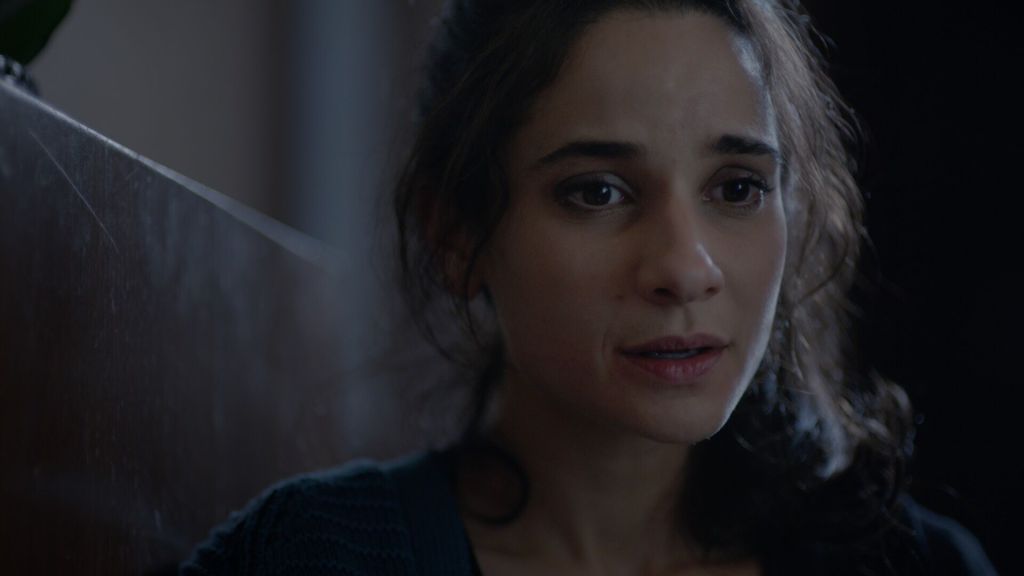
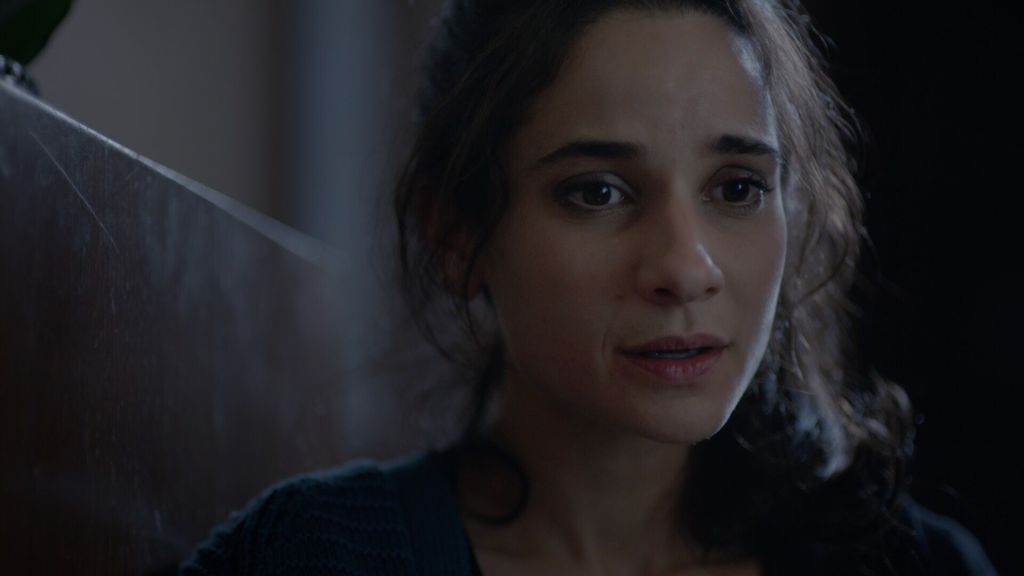
Aminata Thiboult is magnificent at the centre of this ecosystem. Paris is not constructed as some conventional tragic vampire figure, nor is she simply the naïve young artist who stumbles into darkness. She is ambitious, flawed, funny, occasionally infuriating and recognisably human. That humanity becomes particularly important once the supernatural enters the equation. Thiboult’s performance allows Paris to remain a person rather than becoming merely a vessel for the vampire gag. Her ambition survives the transformation. So does her ego. So does her desire to be seen.

Perhaps that is the real horror.

She hasn’t changed as much as she thinks she has.

Leonor Oberson is equally effective as Lutèce, the vampire responsible for bringing Paris into this nocturnal existence. Their relationship becomes one of the film’s richest sources of comedy and tension, because Lutèce is not simply an undead mentor handing down the sacred laws of vampirism. She is another complicated human being trapped inside a supernatural existence, and the relationship between the two women has the messy, affectionate and occasionally toxic quality of a friendship that has become impossible to categorise. An interview with Murphy, Thiboult and Oberson reveals that much of the film’s dialogue was developed through a mixture of scripted material and improvisation, with the performers translating and reshaping Murphy’s English-language scripts into something more naturally their own.

That authenticity is one of the film’s great assets.

Murphy allows Paris to feel inhabited rather than performed.

The streets feel lived in. The conversations have the looseness of people who know each other. The comedy doesn’t always announce itself as comedy. Sometimes it simply emerges from the collision between the utterly ridiculous and the completely ordinary.

And then there is the blood.

The vampire mythology is deliberately less interested in elaborate rules than in the practical inconvenience of being a creature that needs to feed. Murphy’s vampires don’t exist as some impossibly elegant aristocratic species floating above humanity. They are humans with an additional biological requirement.

They need blood.

Lots of it.

And if that sounds straightforward, try building a music career around it.

The result is a strange tonal balancing act. I Love Paris is funny without allowing its comedy to completely defang the horror. There are moments when the absurdity provokes laughter and moments when the laughter becomes slightly uncomfortable because the thing being laughed at is, objectively, horrible. That instability is important. The film understands that laughter and horror often occupy the same psychological space.

Sometimes we laugh because something is funny.

Sometimes we laugh because we don’t quite know what else to do.

And sometimes we laugh because the alternative is acknowledging that what we’re watching is genuinely disturbing.

Murphy’s direction allows these contradictions to breathe. The guerrilla-style production, shot on the streets of Paris with an extremely small footprint, could have produced something visually disposable. Instead, the limitations become part of the film’s aesthetic identity. The city doesn’t feel like a backdrop constructed for a vampire movie. It feels like Paris continuing to exist while these increasingly deranged people attempt to pursue their ambitions inside it.

That grounded reality is particularly important to Thiboult and Oberson’s performances. Their characters aren’t floating through some artificial vampire universe. They are negotiating relationships, artistic ambition, money, fame and survival within recognisable social spaces. The supernatural is therefore not an escape from reality. It becomes an exaggeration of it.

The vampire simply makes the exploitation harder to ignore.

This is where the film’s tension between greed and culture becomes particularly potent. Art is supposed to represent something beyond commerce, yet the music industry is an ecosystem built around selling identity. Paris wants to create. Other people want to package her. She wants to be heard. Other people want numbers. She wants artistic recognition. Other people want engagement.

And eventually the question becomes brutally simple:

Who is feeding on whom?

The answer, of course, is complicated.

The vampire feeds on the living.

The industry feeds on the artist.

The audience feeds on the spectacle.

And the filmmaker feeds the audience.

Suddenly that little mockumentary camera becomes considerably more sinister.

This is where I Love Paris earns its comparison with the voyeuristic discomfort of Man Bites Dog. The camera doesn’t merely record exploitation; its very presence raises the possibility that exploitation is the entertainment. We are watching Paris struggle, fail, scheme, bleed and feed because the film has invited us to watch.

We are not innocent observers.

We bought the ticket.

We pressed play.

We stayed.

And that makes the film’s questions about art considerably more interesting than a straightforward satire of the music industry. I Love Paris asks whether the audience itself is part of the ecosystem that creates these hungry creatures of celebrity.

Are we guilty of propelling the hungry hounds towards their glory, only to condemn them when they begin behaving like hungry hounds?

We want authenticity, but we also want spectacle.

We want artists to be vulnerable, but only in ways that entertain us.

We want to see behind the curtain, but rarely stop to ask whether the person standing behind it wanted the curtain removed.

And perhaps this is why the vampire is such a perfect metaphor for celebrity culture. The vampire is immortal because the audience refuses to let the image die. The celebrity survives through attention. Attention becomes currency. Currency becomes power. Power becomes appetite.

The cycle continues.

I Love Paris doesn’t need to lecture us about any of this. It simply puts the blood on the table and lets us decide whether we’re still hungry.

The film’s greatest achievement may ultimately be its ability to make Paris simultaneously ridiculous and sympathetic. She can be selfish. She can be vain. She can be frustrating. But she is also recognisable. Her hunger for success isn’t supernatural. It’s painfully human.

The vampire simply gives that hunger teeth.

Murphy’s film therefore becomes something considerably more interesting than a vampire comedy set against the music industry. It is a film about the performance of identity, the commodification of creativity and the uncomfortable relationship between artist and audience. It understands that the modern celebrity machine doesn’t necessarily need to destroy people outright.

Sometimes it simply keeps feeding.

And the people being fed upon keep smiling for the camera.

The Prognosis:

I Love Paris is a wonderfully strange hybrid: vampire movie, mockumentary, music-industry satire and uncomfortable exercise in cinematic voyeurism. Nicky Murphy’s direction finds considerable strength in allowing the natural elements of Paris, the performances and the improvised rhythms of everyday interaction to remain visible rather than burying them beneath excessive genre machinery.

Aminata Thiboult and Leonor Oberson give the film its grounded human pulse, creating characters whose relationships remain compelling even when the world around them becomes increasingly absurd. Their performances help ensure that the vampire mythology never overwhelms the film’s more interesting concerns: ambition, exploitation, artistic identity and the desperate hunger to be seen.

But perhaps the sharpest blade is directed back at us.

Because I Love Paris doesn’t simply ask what happens when a vampire enters the music industry.

It asks what happens when we keep watching.

When does fascination become voyeurism?

When does art become exploitation?

And how much blood are we prepared to overlook if the show is good enough?

The vampires may be hungry.

The industry may be hungry.

But the audience has been feeding them all along.

I LOVE PARIS screens at Monster Fest 2026 on Sunday 4 October at 5:00pm at Cinema Nova, Melbourne, following its Australian Premiere run after winning the Gold Audience Award for Best International Feature at Fantasia.

Come for the vampires.

Stay for the uncomfortable realisation that perhaps we’ve always been part of the feeding frenzy.

  • Saul Muerte

GODMOTHER: Welcome to the Desert, Where the Family Values Get Weird

30 Wednesday Sep 2026

Posted by surgeons of horror in MonsterFest, Movie review

≈ Leave a comment

Tags

alanah pearce, books, bruce davison, Cameron Cuffe, Dee Wallace, film, horror, john vernon, MonsterFest, movies, Paige Evans, reviews

There are few things more suspicious in a horror film than the phrase “romantic getaway.” It is cinema’s way of placing a flashing neon sign above the protagonists and quietly informing the audience that somebody, somewhere, has made a terrible booking decision. In Godmother, that decision begins innocently enough: a couple head into the New Mexico desert hoping to escape the machinery of everyday life, only for their retreat to become considerably less intimate when Theo invites her heartbroken sister Katie along for the ride. Then the house itself starts introducing complications, and suddenly the idea of a relaxing weekend away begins to resemble the sort of holiday brochure that should come with a psychiatric warning.

Directed by John Veron in his feature debut and co-written with Alanah Pearce, Godmother initially plays its cards with a certain restraint. There is an appealingly awkward quality to the interpersonal dynamics, with relationships already carrying enough baggage before the supernatural—or whatever lurks at the edges of the story—has had an opportunity to unpack its own. That gives the film an important foundation. The horror doesn’t simply arrive from somewhere outside the characters; it grows out of the increasingly uncomfortable social space they have entered.

And then the temperature begins to rise.

This is where Godmother becomes considerably more interesting. Rather than detonating its entire arsenal at once, the film gradually turns the screws, allowing the atmosphere to curdle. What initially resembles an offbeat desert drama starts acquiring the peculiar logic of a nightmare in which every attempt to maintain normality only makes the situation stranger. The New Mexico landscape becomes more than picturesque backdrop. It is a pressure cooker—wide open, sun-blasted and seemingly offering nowhere useful to hide.

That gradual escalation is one of the film’s strengths. Godmother understands that horror can benefit from letting the audience sit in the wrong room for a little too long. There is something distinctly off about the experience: the sense that we have taken a perfectly ordinary road trip, missed the appropriate exit somewhere outside civilisation and are now following a road sign pointing towards a destination nobody remembers agreeing to visit.

The film is also blessed with the presence of two actors who bring considerable genre history into this increasingly strange equation. Dee Wallace has spent decades inhabiting the emotional architecture of horror, from The Howling and Cujo through E.T. and beyond, and she possesses the rare ability to make warmth and unease coexist within the same performance. Bruce Davison, meanwhile, carries his own formidable genre pedigree, having moved through everything from Willard to X-Men and The Lords of Salem. Their presence gives Godmother an intriguing generational dimension: this is a film featuring performers who know precisely how much menace can hide behind a seemingly ordinary smile.

Their roles work particularly well because the film doesn’t treat veteran genre performers as museum pieces. They aren’t simply here to give horror fans a knowing wink. Instead, Wallace and Davison become part of the machinery that allows Godmother to transition from uncomfortable social encounter into something considerably more sinister.

And that transition is where Alanah Pearce and John Veron’s collaboration becomes particularly noticeable. There is a creative curiosity running through the film—a willingness to let the premise become increasingly peculiar rather than constantly steering it back towards familiar genre territory. Pearce brings a background steeped in games, storytelling and popular culture, while Veron approaches the material as a filmmaker making his feature debut. The result is a film that feels interested in the possibilities of its own premise rather than simply ticking boxes on a horror checklist.

It also helps that Godmother understands the value of not immediately explaining everything. Horror is often at its most effective when the audience has enough information to become suspicious but not enough to feel entirely comfortable. The film plays with that uncertainty, allowing its characters to keep making decisions that seem reasonable right up until the moment they very clearly aren’t.

The desert is particularly useful territory for this kind of horror. It is the landscape of American mythology stripped of its reassuring edges: enormous distances, isolated properties, strange encounters and the persistent possibility that civilisation is considerably further away than you initially thought. It is also a perfect setting because the environment itself seems to encourage bad decisions. You can almost imagine the road disappearing behind you while some unseen voice in the passenger seat whispers, Keep driving. It’ll be fine.

It won’t be fine.

But Godmother doesn’t need to pretend that it is reinventing horror to be worthwhile. Its pleasures are found in the way it builds, the peculiarities it introduces along the way and the performances that give its increasingly bizarre circumstances a human centre. The film has an infectious willingness to push its premise further, and when it finally begins letting the horror properly off the leash, the earlier restraint pays dividends.

There is also something pleasingly old-fashioned about its construction. The film is interested in characters first, atmosphere second and outright mayhem somewhere further down the road. That makes the eventual escalation feel earned rather than simply inserted because the runtime has reached the point where somebody needs to start screaming.

For Monster Fest audiences, Godmother offers precisely the kind of festival experience that works best when you know as little as possible beforehand. It is an Australian Premiere with a strong creative partnership at its centre, a couple of veteran genre performers lurking within the cast, and a premise that becomes increasingly difficult to classify the further it travels from the romantic getaway advertised on the itinerary.

So pack the sunscreen, fill the tank and leave your better judgement at home.

The Prognosis:

Godmother is a steadily escalating horror film that finds its personality in the collision between uncomfortable domestic dynamics, desert isolation and increasingly strange genre territory. John Veron and Alanah Pearce have fashioned something that is happy to take the scenic route before driving directly into darker territory, while Dee Wallace and Bruce Davison provide welcome genre gravitas to a cast of characters whose weekend is about to become considerably less relaxing.

GODMOTHER screens as an Australian Premiere at Monster Fest 2026 on Saturday 3 October at Cinema Nova, Melbourne.

Monster Fest runs from 2–10 October, with the festival’s 2026 program presenting the film among its international and Australian genre premieres.

If you’re heading to Monster Fest, this is one desert getaway where I’d recommend checking the return journey before you leave.

  • Saul Muerte

Under the Scalpel: Interview with John Veron

To accompany our exploration of Godmother, Surgeons of Horror’s Under the Scalpel goes directly to the source. Saul Muerte speaks with director John Veron about the film’s journey from screenplay to screen, the challenges of independent horror production, the decision to place this particular nightmare against an isolated desert landscape, and the creative influences that helped shape its uneasy blend of occult menace and psychological tension. It’s a spoiler-free conversation that offers a glimpse behind the curtain without dismantling the mysteries that make Godmother work — an opportunity to hear the filmmaker himself discuss the anatomy of the film before the scalpel goes in.

Movie Review: Outback

28 Monday Oct 2019

Posted by surgeons of horror in MonsterFest, Movie review

≈ 1 Comment

Tags

Australian Horror, mike green, MonsterFest, survival horror

During filming of Australian western The Proposition, British actor Ray Winstone once remarked that every living thing in this country was out to kill you.
It’s this component that director Mike Green wanted to paint of his homeland to evoke that sense of fear and dread in the vast open plain. 

Instead of having a serial killer or madman as the antagonist, I made Australia and the outback, the antagonist” 

Mike Green interview

We often vision Australia as this serene, beautiful land which on the surface casts one of the most majestic scenes that our planet offers, but if you delve deep enough, you find the hidden dangers lurking in plain sight.
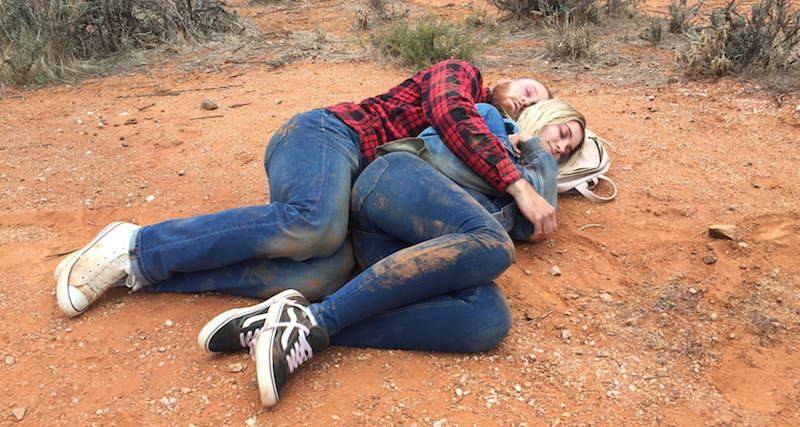
Green lures us into the desert terrain through the eyes of an American couple on what should have been a romantic adventure, but like the land in which they set out to explore, Lisa (Lauren Lofsberg) and Wade (Tyler Wiese) are just as fractured and unpredictable.

We join Lisa and Wade at the start of their journey from Sydney Airport where we learn that Lisa has rejected Wade’s marriage proposal.
The result finds the couple disconnected and searching for each other to see whether the relationship is worth fighting for.
In doing so, they become lost and insignificant in a foreign land.
Testament to Green’s writing skills should be mentioned as he draws out some well-developed characters in his leads which is fleshed out with some fantastic performances.
This is a good thing as between them they need to carry the movie with very little other characters to interact with.
By the film’s conclusion, we really care about their outcome, because Green has taken the time for us to connect and care for them both.

The choices that Lisa and Wade that lead them to their ordeal are born out of ignorance and naivety but their decisions that are believable and in the moment, as they try to navigate their way to survival whilst facing a number of dangers along the way from snakes and scorpions, to searing heat and dehydration.
All of which surmount into a gripping, heart-wrenching drama that captivates right to the end.

The Prognosis:

Director Mike Green takes the audience on a brutal and harsh journey of survival through the lens of an American couple on the brink of collapse. The gritty realism along with excellent performances helps lift this movie and casts a blistering light on the savage land with a narrative that keeps you hooked and willing the characters to endure their torment and live to tell their tale.

Outback will be screening at Monsterfest Australia 2019, where cast and crew will be available for a Q&A post film screening time below:

SATURDAY 2nd NOVEMBER, 9PM

Event Cinemas, George St, Sydney

  • Saul Muerte

Movie Review: Dark Whispers Vol. 1

27 Sunday Oct 2019

Posted by surgeons of horror in MonsterFest, Movie review

≈ 1 Comment

Tags

Andrea Demetriades, anthony la paglia, Asher Keddie, Briony Kidd, Dark Whispers Vol. 1, Megan Riakos, MonsterFest

So, here’s the thing. I’m not usually a fan of horror anthologies. Whilst I have enjoyed the more well known films that have carried the collective stories that tap into the the dark genre, such as Creepshow, Trick r’ Treat or V/H/S, invariably I feel a little let down by some of the stories that don’t quite meet the mark or the high standard of the better stories within the anthology. For every “The Crate” or “Something to Tide You Over” there’s a “The Lonesome Death of Jordy Verrill” or “They’re Creeping Up On You” using Creepshow as an example. So when viewing this latest offering from Australia entitled Dark Whispers Vol 1, I ventured with slight hesitation, but was pleasantly surprised by the result. 

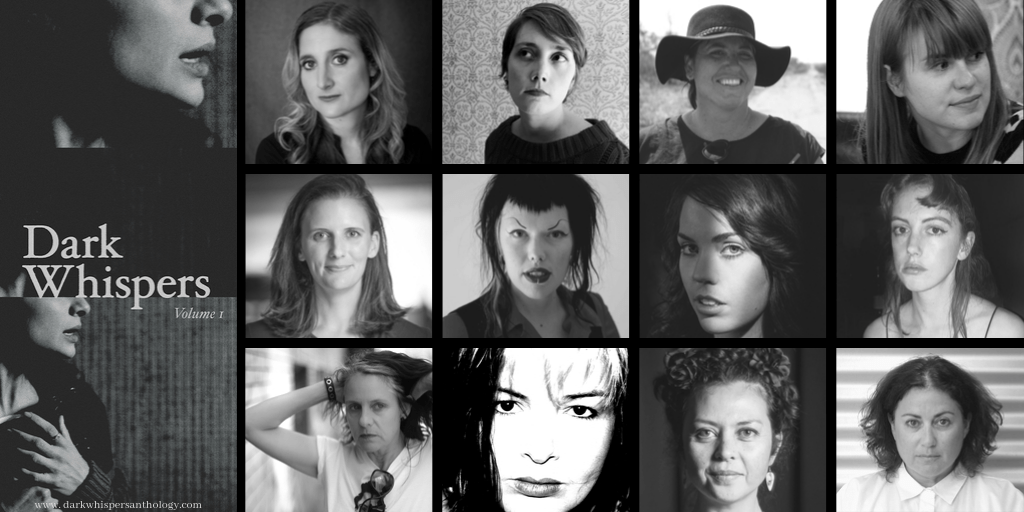
Inspired by the recent anthologies A Night of Horror Vol. 1 and XX, Australian director and producer, Megan Riakos teamed up with Leonie Marsh and festival director Briony Kidd to surmount a crack team of female visionists and creatives to deliver 10 highly-crafted tales of dread.

Megan Riakos on creating women’s horror anthology, Dark Whispers Vol 1

So, let’s delve into each of these tales one by one and see if these collective stories have enough strength and cohesion to drive the narrative together. 

BIRTHDAY GIRL
Director: Angie Black; Writer: Michael Harden

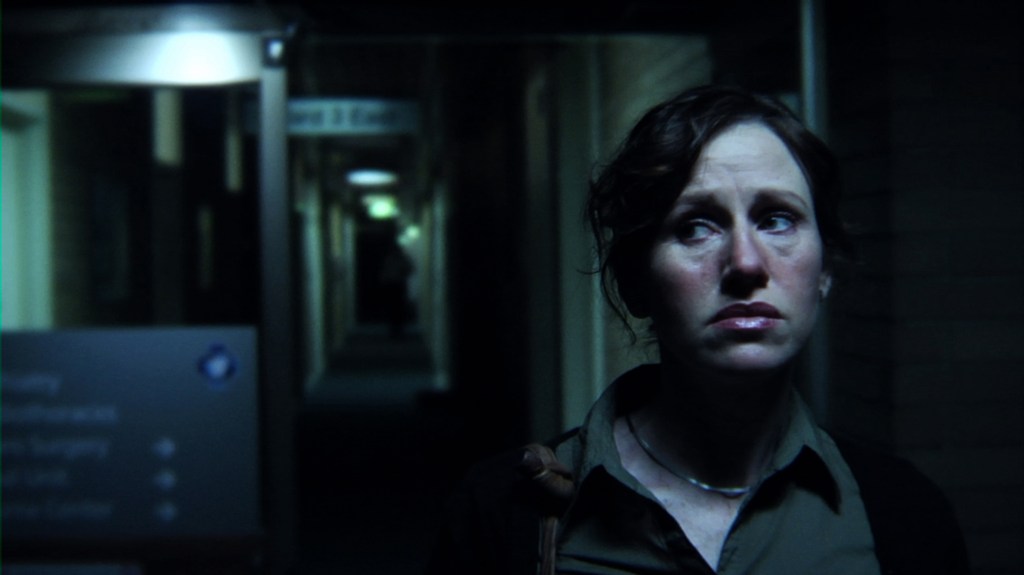
We open up with a fairly brief and condense tale that sees a grieving mother trying to capture those precious moments with her daughter trapped in a limbo of intense sorrow.
The short timeframe on display, Black weaves enough emotion for the audience to connect with the mother’s pain.

THE MAN WHO CAUGHT A MERMAID
Writer/Director: Kaitlin Tinker; Writer: Jean-Phillipe Lopez

This next tale dives into the fantastical, as an elderly man sets out to snare a mermaid amongst laughter and ridicule, but all is not as it appears as the story reveals a dark and sinister world lurking beneath the depths of fancy.

GLOOMY VALENTINE
Writer/Director: Isabel Peppard; Writer: Warwick Burton

I’m a huge sucky for stop motion and Peppard showers our visual senses with a glorious tale of heartbreak that is stunning and captivating, whilst tapping into a lamentable suffering.

WATCH ME
Director: Briony Kidd; Writer: Claire d’Este

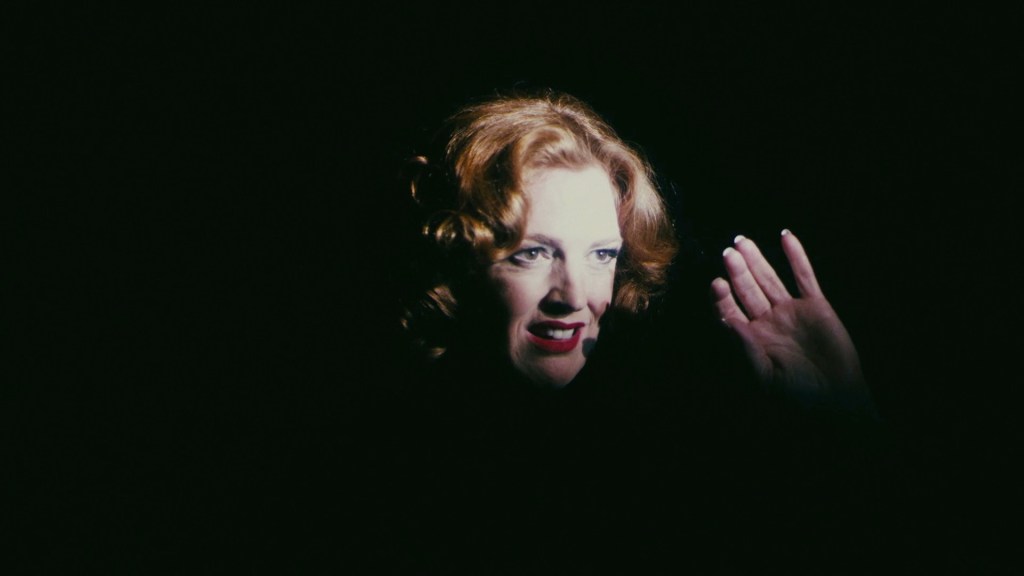
This was one of my favourites of the bunk as Kidd projects a tale of vanity and self-appreciation. Told from the perspective of a glamorous actress who is reminiscent of Norma Desmond with her ambition and thrives so much on attention that without the attention she will wither away.

STORYTIME
Writer/Director: Jub Clerc; Co-Writer: Sylvia Clarke

I equally had a lot of time and love for this tale of two kids in the Kimberely who venture into the mangroves despite the warnings of the Gooynbooyn Woman, believing her campfire stories to be the stuff of myth and legend. Clerc invokes an old story and infuses it with modern storytelling that beautifully captures the Dreamtime stories passed down from generation to generation through Aboriginal culture.

THE RIDE
Writer/Director: Marion Pilowsky; Story by Issy Pilowsky

Here I was reminded just how dark and glorious Anthony LaPaglia’s performances can be, and how he portrays an average Australian guy who can slip into sinister so easily. Playing a guy who picks up a hitchhiker, who gets more than he bargained for and a ride that will change his life forever.

GRILLZ
Director: Lucy Gouldthorpe; Writer: Claire d’Este

Online dating from the perspective of a female vampire in search for her next prey provides us with an enjoyably dark story that defies your assumptions and adds a little twist in her desire for blood.

WHITE SONG
Writer/Director: Katrina Irawati Graham

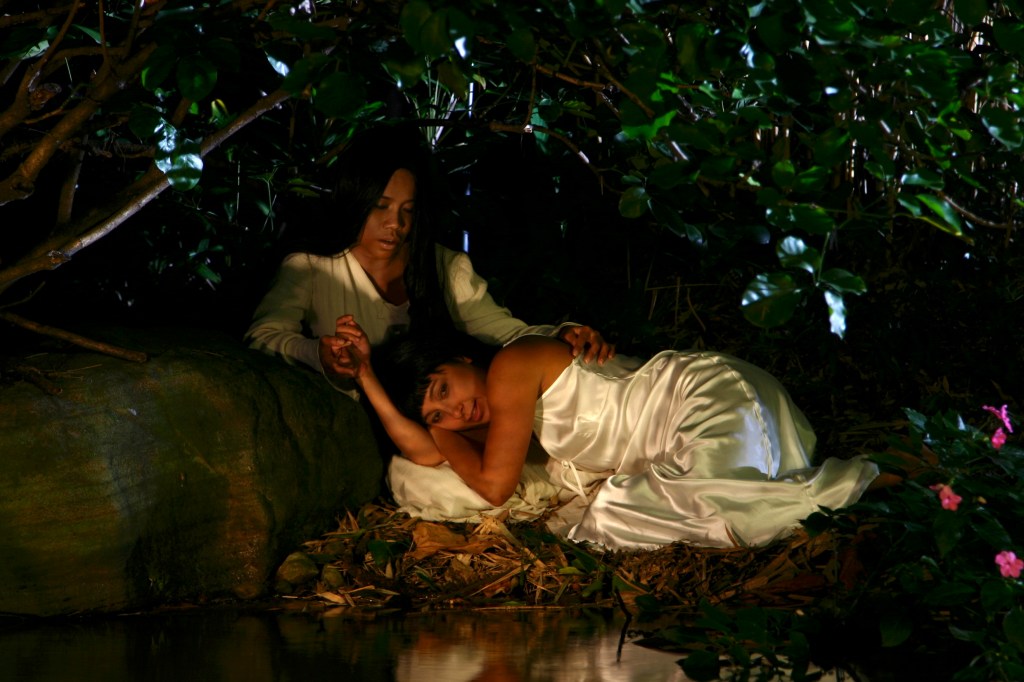
This one also left a lasting impression on me and uses the famous Indonesian ghost story of Kuntil Anak as its inspiration.
Kuntil Anak is a ghost who died whilst pregnant and when she appears before a grieving widow, she is confronted by a force far greater than her dark haunting embodiment has encountered before, unfolding a battle of energy and light in her wake. 

LITTLE SHAREHOUSE OF HORRORS
Writer/Director: Madeleine Purdy; Writer: Joel Perlgut

This quirky tale on the concept of “you are what you eat” or in this case, smoke, sees Maeve searching for a healthy alternative to her smoothies, but finds a strange concoction in the mix.
When nature fights back, it attacks the weak-minded souls, and Purdy provides a witty and sardonic view of humanity.

THE INTRUDER
Writer/Director: Janine Hewitt

Rounding out the dectet of stories comes a dark and wondrous tale that is beautifully played by its performers Asher Keddie and Bree Desborough. The homogeneity that marries this film alongside the first tale, Birthday Girl and the sense of being stuck in one’s emotions helps to cement the collection, as Zoe has become a prisoner in her own home, terrorized by a stalker containing her in her fear and despair.

Weaving its way through the various tales, Riakos envelops a series of segments entitled, The Book of Dark Whispers, as a young woman who inherits a mysterious book from her mother that symbolises the passing down through the years and the shared emotional baggage that we inevitable take on from previous generations.

It’s a captivating performance from Andrea Demetriades who manages to embody all the viewers thoughts and emotions and projects them through her character, and in doing so provides the heart and soul of the movie.

The Prognosis:

Dark Whispers Vol 1 really exceeded my expectations when it comes to horror anthologies that are so often worn down by the lesser stories in the collection.

Here though are some excellently well-crafted stories that make for a highly enjoyable narrative and proves that there are some dark and sinister tales to be told from some exciting female creatives that deserve praise and recognition. I look forward to further tales from these powerful and thought-provoking storytellers.

Dark Whispers Vol.1 will be screening at Monsterfest Australia 2019, where cast and crew will be available for a Q&A post film screening time below:

SUNDAY 3rd NOVEMBER, 6.15PM
Event Cinemas, George St, Sydney

  • Saul Muerte

Megan Riakos on creating women’s horror anthology, Dark Whispers Vol 1

27 Sunday Oct 2019

Posted by surgeons of horror in MonsterFest

≈ 1 Comment

Tags

Andrea Demetriades, Briony Kidd, Dark Whispers Vol. 1, Enzo Tedeschi, Leonie Marsh, Megan Riakos, MonsterFest

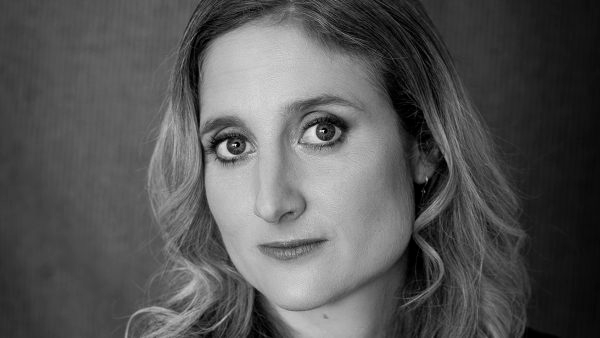
When director/producer Megan Riakos took the helm as President for Women in Film & Television NSW, little did she know that she was on the verge of establishing a potential pathway of hope for women in the industry.
With a feature film already on her credits, Crushed, which was incredibly well received, Megan would team up with Leonie Marsh and Briony Kidd to produce a horror anthology that would unite Australian female directors and writers in a powerful collection of stories that shake the soul.
Dark Whispers Vol. 1 is currently screening as part of Monsterfest Australia 2019 and Megan recently chatted with the Surgeons team ahead of the Sydney event to dissect and discuss the creative process involved.

Megan Riakos interview:

Megan Riakos, Director and Producer – Dark Whispers Vol. 1

One of the key strengths behind this anthology, is the strength in the storytelling, pulling from various aspects across the Australian landscape to combine and make a cohesive and powerful narrative of our great southern land.
When it came to selecting the stories that would bind together for
Dark Whispers Vol. 1, what specifically were you looking for?

I worked with Briony Kidd, festival director of Stranger With My Face International Film Festival (SWMFIFF) on the curation of the anthology and we received submissions via the general callout as well as approaching people directly to ask them to submit. Briony’s work on her festival meant she was privy to some great films that weren’t on my radar and gave us a good cross-section of films to consider. When submissions closed, we created a long list for discussion based on the film’s horror characteristics, as well as the quality of directing, acting, production values, script and originality.
There was no set theme required for these films beyond it being a horror film by a female identifying director who is a resident or citizen of Australia.
We curated the films that resonated with us and that would complement the other films in the anthology.

Your vision overall was to shed light on the wealth of female talent in the industry, which has this great myth that there is a shallow pool out there.
How did you go about shattering this myth and in what way do you hope that
Dark Whispers will transform the cinema audiences expectations?

The very act of creating a women’s horror anthology and kicking off the project with a call out to the Australian screen industry for horror films by women generated a discussion around the issue and now with the festival release, it is helping to recalibrate our expectations of who can be a horror filmmaker.
At our Melbourne Monster Fest screening we had several emerging women horror filmmakers in the audience who said that up ’til they point, they felt like they were the lone female horror maker amongst their peers and that they felt hopeful seeing a whole bunch of other women out their creating really great content.
I am a firm believer in ‘If you can see it, you can be it”.

The Creative team from Dark Whispers Vol.1

With 10 fellow directors involved in the short features in the film, how much weight did you allow them to let their creativity flourish?

We discovered these films when they were fully complete, so had no impact on how they were made, however I was heavily influenced by each film when it came time to write and direct the wraparound segment which tied each segment together. 

You have spoken about recent inspirations from anthologies, A Night of Horror and XX.
What did you learn from these films and how did that impact on your direction?

There is a rich history of horror, thriller and sci-fi anthologies over the years from the likes of Twilight Zone & Creepshow to the more recent Southbound, Black Mirror, ABC’s of Death and Holidays and they all use their own devices to create a cohesive bond around the Anthology.
As an audience member, I really enjoy it when there are “easter eggs” that tie otherwise disparate chapters together – whether it be a prop, a stylistic choice, a reference to a time or place or character that pops up in a different episode.
The two anthologies in particular that gave me the impetus to actually make Dark Whispers are A Night of Horror and XX which both came out about the same time.
A Night of Horror was also curated from existing films and I really enjoyed the way they developed their wrap around, referencing each proceeding film with the horror element within it – This project showed me that it was achievable to create a really great project with a low budget and I knew it was something that I could take on, especially once Enzo Tedeschi, the creator of that anthology, come onboard as Executive Producer on the film. XX was also a big inspiration – it was one of the first female horror anthologies out there and I wanted to do an Australian version for the horror filmmakers being overlooked here.

You’re a creative artist yourself and direct the segments called The Book of Whispers that unite the ten tales together.
What inspirations do you draw from in the creative process and what challenges did you face when creating this anthology?

Due to the broad call out for horror films, I wasn’t able to start working on the wrap around segment until we had locked in the final 10 films.
It was at that point that I started breaking down the inherent themes and similarities the films shared.
Many of the films explored longing, grief, regret and navigating life.
There were several films about family, kinship and motherhood and I was curious about the idea that we carry dark lessons with us from one generation to the next and we need to learn how to deal with carrying the darkness in life without succumbing to it.
The concept at the centre of the anthology is around a haunted book which is passed between helped to unify the diverse chapters within it.

Andrea Demtriades as Clara in Dark Whispers vol 1 segment, The Book of Whispers.

The Book of Whispers centers around one character played by the magnificent Andrea Demetriades.
How did she become involved in the project and what was it like working with her?

My producing partner Leonie Marsh and I were brainstorming ideas about who could play our lead Clara and we both thought of Andrea Demetriades. We have loved seeing her work on Crownies, Pulse and Janet King and thought she would be perfect for the role.
Working with Andrea was wonderful, we only had one day to shoot all her scenes and she jumped right in and nailed it.

What has been the reaction you have received so far, and could we expect a Vol.2? Are there any other future projects on the horizon?

We are proud of Volume 1 and are really pleased with the response during our festival release.
We will gauge how we go over the following six months but are definitely planning a Volume 2 – whether that be a second horror anthology or perhaps steering over to explore science fiction.
Keep your eyes peeled for the next instalment, in whatever guise that might be!

Dark Whispers Vol.1 will be screening at Monsterfest Australia 2019, where cast and crew will be available for a Q&A post film screening time below:

SUNDAY 3rd NOVEMBER, 6.15PM
Event Cinemas, George St, Sydney

Movie Review: Dark Whispers Vol. 1

Saul Muerte
Lead Surgeon
Editor, writer, podcast host

” I was curious about the idea that we carry dark lessons with us from one generation to the next and we need to learn how to deal with carrying the darkness in life without succumbing to it.”

Tweet

Movie review: Porno

11 Friday Oct 2019

Posted by surgeons of horror in MonsterFest, Movie review

≈ Leave a comment

Tags

MonsterFest, porno

https://www.youtube.com/watch?v=NIRro0eIPvY

Porno manages to tap into the celluloid lovers mainstream by essentially setting the film entirely within the confines of an art deco cinema with a strictly early 90s vibe and setting. In doing this, film director, Keola Racela catapults the audience into a world that invokes nostalgia and tackles some fun themes reminiscent of the time. 

The location is so integral to the central theme of buried, underground sex and shenanigans that we all harbour and fear of letting loose our greatest indulgences; the stuff of taboo that we are unwilling to face the repercussions of our fantasies. There was a time that those who wanted to get there kicks would do so in underground cinemas and lurk in the shadows of the auditorium to satiate these desires. Racela knows this and deliberately pokes fun at our shame by unleashing a sex demon that has been contained within a snuff film deep in the cinema’s basement on the quintet of characters (who just so happen to be Christian, which amplifies their repression) who are subjected to a journey where they must vanquish their inner most thoughts and survive the night. 

Forming the quintet is assistant manager, Chastity; projectionsist, Heavy Metal Jeff; Abe; Todd; and the stereotypical jock, Ricky, all of whom quander a secret that they try to keep buried. 

In addition we have the cinema manager, Mr Pike, who serves as a minister in the eyes of the youthful contingency, but he too has a concealment that he wishes to contain within his office. All these characters are ripe for a sex demon to seep their way into their minds, and pleasure them to death.

The Diagnosis:

This is pure fun and gloriously plays for laughs in the most puerile of senses, but equally casts the characters into a predicament that requires instincts, strength, faith and a little bit of kink.

Porno is currently screening as part of Monsterfest Australia

Sat, 2nd November, 1:45pm:
Event Cinemas, George St, Sydney
GU Film House, Adelaide
Capitol Cinemas, Manuka, Canberra
Event Cinemas, Myer Centre, Brisbane
Event Cinemas, Innaloo, Perth

  • Saul Muerte

Movie review: Tarnation

26 Monday Feb 2018

Posted by surgeons of horror in MonsterFest

≈ 1 Comment

Tags

Daniel Armstrong, Monster Pictures, MonsterFest, MonsterFest Travelling Sideshow - Sydney, Tarnation

Before I even start to discuss the movie, I have to commend Australian director, Daniel Armstrong for bringing the word, Tarnation back into the vocabulary, even if it is just for the title of his latest feature.

Armstrong has been making a strong name for himself in the low budget, ‘B-Movie’ scene, and each film released reflects how much he has developed his craft.

Tarnation presents itself as Australia’s bastardised distant cousin to The Evil Dead injecting a similar tone and humour that pits Oscar (Daisy Masterman) against a demonic force in a remote cabin retreat.

There are so many beautifully disturbing moments within this movie ranging from penis bugs to demonic unicorns, that every scene becomes a delight to behold.

By far the best moment for me is when Oscar comes face-to-face with a zombie kangaroo that she has to physically outbox to survive. You can’t get more absurd and Australian than that.

Masterman (a regular collaborator with Armstrong having appeared in MurderDrome and Sheborg Massacre) offers a standout performance as Oscar, offering both vulnerability and strength with relative ease and believability. She also has a deft touch of comedy in her bones that make her character incredibly likeable to boot.

In fact the humour on display is definitely one of Tarnation’s selling points as it ploughts along with a decent balance of comedy and the macabre.

Speaking of…

The effects and gore on display are suitably gruesome and gnarly and Armstrong manages to up the ante with every crazed situation that our heroine faces. You can see that there is a lot of love and dedication placed in ‘old school’ effects that is arguably lacking in modern filmmaking.

The Diagnosis:
Armstrong manages to inject a sublime blend of crazed anarchy, bloody mayhem, with a dash of tongue-in-cheek comedy, proving that he is a master of his craft.

There’s potential for more in this universe too, and I for one would love to see Oscar take on the demons once again.
Tarnation is a glorious roller-coaster ride of a movie that is fun-filled to the core.

– Saul Muerte

Catch the screening of Tarnation at the MonsterFest Travelling Sideshow in Sydney on SUNDAY MARCH 11TH  2:15PM.

Daniel Armstrong interview

Tarnation director Daniel Armstrong caught up with the Surgeons of Horror team to discuss his career, including his upcoming crowdfunding feature, Nova Star.
Check out the podcast here:
https://player.whooshkaa.com/player/episode/id/176084?visual=true&sharing=true

Subscribe

  • Entries (RSS)
  • Comments (RSS)

Archives

  • October 2026
  • September 2026
  • August 2026
  • July 2026
  • June 2026
  • May 2026
  • April 2026
  • March 2026
  • February 2026
  • January 2026
  • December 2025
  • November 2025
  • October 2025
  • September 2025
  • August 2025
  • July 2025
  • June 2025
  • May 2025
  • April 2025
  • March 2025
  • February 2025
  • January 2025
  • December 2024
  • November 2024
  • October 2024
  • September 2024
  • August 2024
  • July 2024
  • June 2024
  • May 2024
  • April 2024
  • March 2024
  • February 2024
  • January 2024
  • November 2023
  • October 2023
  • September 2023
  • August 2023
  • July 2023
  • June 2023
  • May 2023
  • April 2023
  • March 2023
  • February 2023
  • January 2023
  • November 2022
  • October 2022
  • September 2022
  • August 2022
  • July 2022
  • June 2022
  • April 2022
  • March 2022
  • February 2022
  • January 2022
  • December 2021
  • November 2021
  • October 2021
  • September 2021
  • August 2021
  • July 2021
  • June 2021
  • May 2021
  • April 2021
  • March 2021
  • February 2021
  • January 2021
  • December 2020
  • November 2020
  • October 2020
  • September 2020
  • August 2020
  • July 2020
  • June 2020
  • May 2020
  • April 2020
  • March 2020
  • February 2020
  • January 2020
  • December 2019
  • November 2019
  • October 2019
  • September 2019
  • July 2019
  • June 2019
  • May 2019
  • April 2019
  • March 2019
  • February 2019
  • January 2019
  • December 2018
  • November 2018
  • October 2018
  • September 2018
  • August 2018
  • July 2018
  • June 2018
  • May 2018
  • April 2018
  • March 2018
  • February 2018
  • January 2018
  • December 2017
  • November 2017
  • October 2017
  • September 2017
  • August 2017
  • July 2017
  • June 2017
  • May 2017
  • April 2017
  • March 2017
  • February 2017
  • January 2017
  • December 2016
  • November 2016
  • October 2016
  • September 2016
  • August 2016
  • July 2016
  • June 2016
  • May 2016

Categories

  • A Night of Horror Film Festival
  • Alien franchise
  • Alliance Francaise French Film Festival
  • Australian Horror
  • Best Movies and Shows
  • Competition
  • dark nights film fest
  • episode review
  • Flashback Fridays
  • Friday the 13th Franchise
  • Full Moon Sessions
  • Halloween franchise
  • In Memorium
  • Interview
  • japanese film festival
  • John Carpenter
  • killer pigs
  • Library of the Occult
  • midwest weirdfest
  • MidWest WierdFest
  • MonsterFest
  • movie article
  • movie of the week
  • Movie review
  • New Trailer
  • News article
  • podcast episode
  • podcast review
  • press release
  • retrospective
  • Rialto Distribution
  • Ring Franchise
  • series review
  • Sounds of Horror
  • Soundtracks
  • Spanish horror
  • sydney film festival
  • Sydney Underground Film Festival
  • The Blair Witch Franchise
  • the conjuring franchise
  • the evil dead franchise
  • The Exorcist
  • the fly
  • The Howling franchise
  • Top 10 list
  • Top 12 List
  • top 13 films
  • Trash Night Tuesdays on Tubi
  • umbrella entertainment
  • Uncategorized
  • Universal Horror
  • Wes Craven
  • wes craven's the scream years

Meta

  • Create account
  • Log in

Blog at WordPress.com.

  • Subscribe Subscribed
    Surgeons of Horror
    Join 228 other subscribers

    Have a WordPress.com account? Log in now.

  • Surgeons of Horror
    View site in Reader
    Manage subscriptionsSign upLog in
    Report this content
    Collapse this bar
Loading Comments...