
• About
  • podcasts
  • Shop

Surgeons of Horror

~ Dissecting horror films

Surgeons of Horror

Tag Archives: idle hands

The Hand Has A Mind Of Its Own

31 Sunday May 2026

Posted by surgeons of horror in Library of the Occult

≈ Leave a comment

Tags

ash williams, body parts, bruce campbell, cheiro, demonoid, evil dead 2, idle hands, Library of the Occult, mad love, maurice renard, oliver stone, palmistry, peter lorre, sam raimi, talk to me, the beast with five fingers, the hand, the hands or orlac, you and your hand

From Palmistry to Possession in Horror Cinema

“The hand is the visible part of the brain.” — Immanuel Kant

For centuries, mystics, fortune tellers and occult practitioners have stared into the human hand searching for answers. The lines etched across our palms have been interpreted as maps of destiny, markers of personality, warnings of misfortune and promises of success. Among the most famous practitioners was Cheiro, whose influential work You and Your Hand helped popularise palmistry for generations of curious readers.

The premise is deceptively comforting. Our hands reveal who we are.

Horror cinema, naturally, took one look at that idea and asked a far more disturbing question.

What if our hands reveal something else?

What if they possess desires independent of our own?

What if the very instruments we rely upon to create, communicate, nurture and survive suddenly decide to act against us?

Throughout horror history, possessed, severed and cursed hands have appeared with surprising frequency. Sometimes they crawl across the floor like predatory spiders. Sometimes they become gateways for demonic influence. Sometimes they serve as physical manifestations of repressed violence lurking beneath the surface of otherwise ordinary lives.

Whether treated with deadly seriousness or splatter-fuelled humour, the possessed hand remains one of horror’s most enduring occult symbols.

After all, there are few terrors more primal than losing control of your own body.


Written in the Flesh

The fascination with hands extends far beyond cinema.

Palmistry, chiromancy and other occult traditions emerged from the belief that the hand serves as a mirror of the soul. The shape of the fingers, the length of the lifeline, the curve of the heart line — all supposedly reveal hidden truths about an individual’s character and future.

Unlike tarot cards or crystal balls, the hand cannot be separated from the self.

It is uniquely ours.

Our fingerprints identify us. Our gestures communicate emotion. Our touch establishes intimacy. Hands create art, build homes, sign contracts and commit acts of violence.

They are perhaps the most direct expression of human agency.

Which is precisely why horror repeatedly targets them.

When a monster attacks from outside, we defend ourselves. When our own hand becomes the threat, the boundary between self and other begins to collapse.

The hand ceases to be an extension of identity and becomes an invader.


The Grandfather of Possessed-Hand Horror
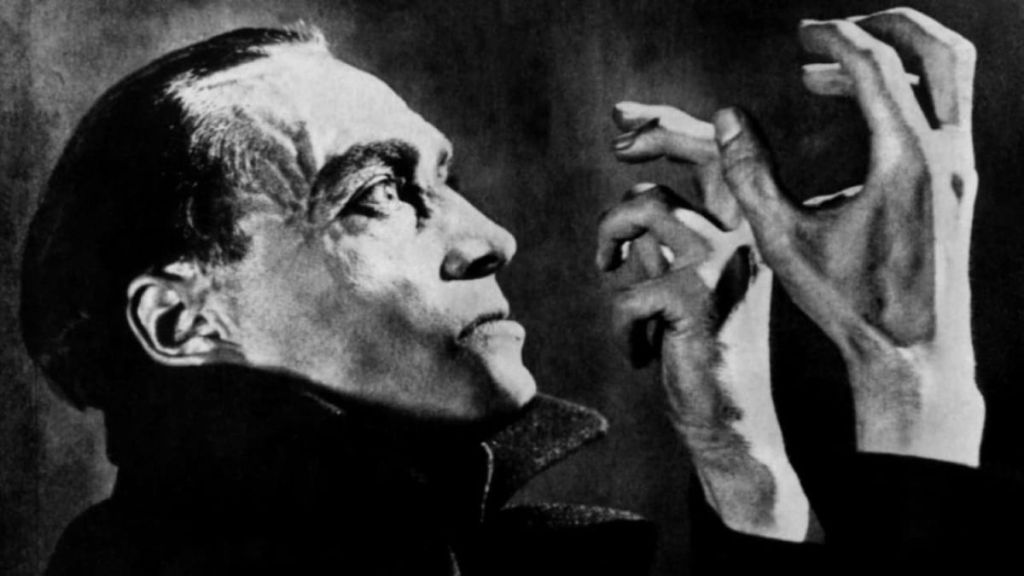
Long before chainsaws replaced hands and severed limbs became cult icons, there was The Hands of Orlac.

Based on the novel by Maurice Renard, the silent classic follows a concert pianist who loses his hands in a tragic accident. Following an experimental transplant, he receives the hands of an executed murderer and gradually becomes convinced that the donor’s violent impulses are influencing his behaviour.

Whether supernatural or psychological, the concept established many of the themes that would define the subgenre for the next century.

Identity.

Inheritance.

Loss of control.

The fear that evil can be transferred through flesh itself.

The film’s influence would later extend to Mad Love, starring the incomparable Peter Lorre, which transformed the premise into a feverish expressionist nightmare.

The seeds of possessed-hand horror had been planted.


The Beast With Five Fingers

By the mid-1940s the concept had become even stranger.

The Beast with Five Fingers dispensed with questions of psychology entirely and presented audiences with a crawling severed hand stalking victims through a Gothic mansion.

The image remains wonderfully absurd and genuinely unsettling.

Detached from the body, the hand becomes something uncanny. It resembles a spider, a parasite, an alien organism. Familiar enough to recognise, yet divorced from the context that makes it human.

The body provides meaning.

Without it, the hand becomes monstrous.


Oliver Stone’s Phantom Limb

Perhaps the most overlooked entry in the subgenre is The Hand, directed by Oliver Stone.

Released years before Stone became synonymous with political cinema, the film follows a comic book artist who loses his hand in a car accident. Soon after, a series of mysterious murders begin occurring around him.

The genius of The Hand lies in its ambiguity.

Is the severed limb genuinely alive?

Or does it represent a fractured psyche spiralling into violence?

Stone cleverly leaves the answer uncertain, transforming what could have been a straightforward horror premise into a meditation on ego, masculinity and artistic identity. The severed hand becomes a physical manifestation of impulses the protagonist refuses to acknowledge.

The monster may not be the hand at all.

It may simply be the man attached to it.


Ash Williams Versus Himself
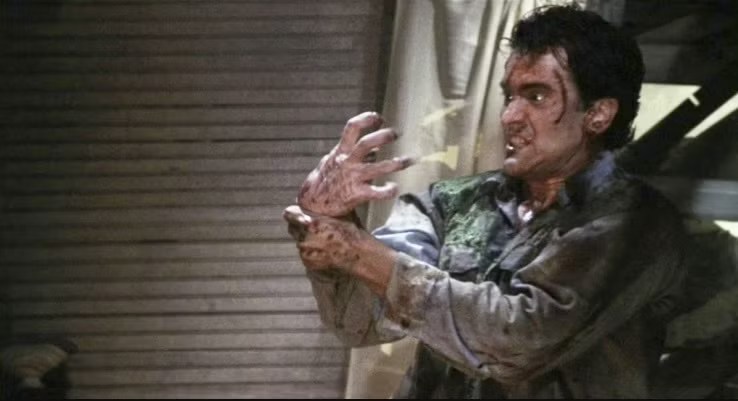
No discussion of possessed hands would be complete without Evil Dead II.

The sequence in which Ash Williams battles his own possessed hand remains one of the defining moments of horror comedy.

Director Sam Raimi transforms body horror into slapstick chaos as Ash punches, traps, smashes and ultimately dismembers the rebellious appendage while descending into manic hysteria.

It is hilarious.

It is grotesque.

It is also strangely profound.

The scene externalises internal conflict. Ash is literally at war with himself. His own body has become an enemy. The absurdity only heightens the underlying terror.

When possession arrives, there is nowhere left to run.


Demons, Stoners and Killer Limbs

The 1980s and 1990s embraced the possessed-hand concept with increasing enthusiasm.

Demonoid centred around an ancient demonic hand that transfers possession from victim to victim. Equal parts occult nightmare and exploitation oddity, it remains one of the strangest examples of the trope.

Body Parts revisited the Orlac formula, with a criminal psychologist receiving the arm of a murderer and gradually losing control over his actions. The film explored questions of biological memory and inherited violence long before such ideas became fashionable within genre cinema.

Then came Idle Hands, perhaps the most gleefully ridiculous entry of them all.

Here, demonic possession collides with late-90s slacker culture as a teenager discovers his hand has become a murderous force of its own. The film embraces absurdity without abandoning the underlying premise.

The hand is still a vessel for evil.

It’s simply having more fun with it.


Possession Through Touch
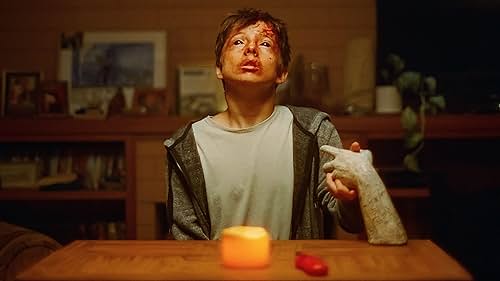
Modern horror continues to find new ways to weaponise hands.

One of the most striking examples arrives in the Australian phenomenon Talk to Me.

At the centre of the film sits a preserved ceramic hand used to contact spirits. Participants grasp it, speak an invitation, and willingly allow possession to occur.

The object functions like a cursed relic, but its symbolism runs deeper.

Possession is initiated through touch.

The hand becomes a conduit between worlds.

A bridge connecting the living and the dead.

In many ways, Talk to Me brings the possessed-hand tradition full circle. The hand once again serves as a site of occult power, much like the palmistry traditions that inspired centuries of mystical speculation.

The difference is that instead of revealing destiny, it actively alters it.


Why the Hand Endures

Possessed dolls.

Haunted houses.

Vampires.

Werewolves.

Horror trends come and go.

Yet the possessed hand continues to reappear because it taps into something fundamental.

The fear is not merely physical.

It is existential.

Our hands represent agency.

Choice.

Control.

They are how we interact with the world.

To lose command of them is to lose command of ourselves.

The possessed hand therefore occupies a unique space within horror mythology. It is simultaneously a body horror device, an occult symbol and a psychological metaphor.

A hand can represent inherited sin.

Repressed desire.

Addiction.

Violence.

Fate.

Or simply the terrifying possibility that we may not know ourselves as well as we think.


The Prognosis:

For occultists like Cheiro, the hand revealed hidden truths about a person’s future.

For horror filmmakers, the hand reveals something darker.

The possibility that identity itself is fragile.

That control is an illusion.

That beneath the surface of our everyday lives lurks something ancient, unknowable and hungry.

After all, if the eyes are the windows to the soul, perhaps the hands are the doors.

And horror has spent the last century wondering what might come through them.


Further Reading & Viewing

To explore the fascinating world of palmistry and occult symbolism further, check out Library of the Occult Episode 14: Cheiro – You and Your Hand on the Surgeons of Horror YouTube channel.

👉 Watch the episode here:

Because sometimes the future isn’t written in the stars.

Sometimes it’s written in the palm of your hand.

  • Saul Muerte

Retrospective: Idle Hands (1999) – A Cult Classic with Devilish Charm

20 Friday Dec 2024

Posted by surgeons of horror in retrospective

≈ Leave a comment

Tags

devon sawa, elden henson, idle hands, jessica alba, rodman flender

Released in 1999, Idle Hands arrived as a devilishly fun blend of stoner comedy, horror, and absurdity, teetering between grotesque and hilarious. Directed by Rodman Flender and starring Devon Sawa, Jessica Alba, and Seth Green, the film was an unapologetically offbeat addition to the horror-comedy subgenre. Though it stumbled at the box office upon release, Idle Hands has since carved out a well-deserved place as a cult classic.

The story follows Anton Tobias (Sawa), a quintessential slacker whose biggest ambition is mastering couch-potato life. However, his world turns upside down when his right hand becomes possessed by a demonic force, leading to a blood-soaked yet darkly comic rampage. The plot’s absurdity is matched only by its inventive execution, with scenes of gory chaos balanced by laugh-out-loud moments.

A Time Capsule of Late ’90s Culture

Idle Hands is a perfect time capsule of the late ’90s, complete with its slacker ethos, grungy aesthetic, and soundtrack brimming with alt-rock gems from The Offspring and others. The casting of Devon Sawa as the lovable anti-hero and a young Jessica Alba as the girl-next-door love interest cemented the film’s appeal to the MTV generation.

Seth Green and Elden Henson deliver standout performances as Anton’s undead best friends, Mick and Pnub, whose comedic timing and irreverence inject the film with a zany energy. Their undead antics, combined with Sawa’s physical comedy as he battles his own rebellious hand, remain some of the film’s most memorable aspects.

Cult Appeal: A Horror-Comedy with Staying Power

While critics initially panned Idle Hands, its ridicule, gore, and stoner humour resonated with audiences looking for something different. The film’s blend of horror and comedy struck a chord in an era dominated by self-serious teen slashers like Scream and I Know What You Did Last Summer.

Over the years, Idle Hands has gained a loyal fanbase who appreciate its quirky charm and unapologetic weirdness. The film’s over-the-top kills, grotesque humour, and ironic take on demonic possession have made it a favourite for late-night viewings and Halloween marathons.

A Flawed but Enduring Favourite

Though Idle Hands has its flaws—pacing issues and a somewhat uneven tone—it embraces its campy identity with gusto. The practical effects, including the grotesque antics of Anton’s possessed hand, are a testament to the film’s creativity, even on a modest budget.

For fans of horror-comedy, Idle Hands remains a hidden gem. Its unapologetic impertinence, nostalgic charm, and cult status ensure that it continues to find new audiences who revel in its absurdity. If nothing else, the film serves as a reminder: idle hands really are the devil’s playthings—and they’re a hell of a lot of fun to watch.

  • Saul Muerte

How The Craft formed my love for 90s teen horror

02 Sunday May 2021

Posted by surgeons of horror in retrospective

≈ Leave a comment

Tags

alcia witt, bebe neurwrith, Christine Taylor, clea duvall, courtney cox, Danielle Harris, David Arquette, devon sawa, disturbing behaviour, drew barrymore, elijah wood, Fairuza Balk, famke janssen, freddie prinze jr., ghostface, Halloween, Halloween franchise, halloween h20, i know what you did last summer, idle hands, james marsden, jamie kennedy, Jamie Lee Curtis, jared leto, jennifer love-hewitt, jessica alba, jon stewart, jordana brewster, Josh Hartnett, joshua jackson, katie holmes, Kevin Williamson, laura harris, matthew lillard, micahel rosenbaum, michael myers, Michelle Williams, Neve Campbell, nick stahl, piper laurie, rachel true, rebecca gayheart, robert englund, Robert Patrick, robert rodriguez, Robin Tunney, rose mcgowan, ryan phillipe, salma hayek, sarah michelle gellar, scream, seth green, shawn hatosy, Skeet Ulrich, tara reid, the craft, the faculty, urban legend, Wes Craven

25 years ago, before Scream would reawaken the horror genre and generate a plethora of like minded movies came a film that tapped wholly into my adolescent brain. I’ll let you decide which part of the brain from which I am referring. Needless to say, Fairuza Balk’s Nancy stirred something inside me that yearned for and connected with females who drifted outside the mainstream of what was considered “normal”.

Recently, The Craft was given new life in the public eye thanks to its sequel of sorts, The Craft: Legacy released by Blumhouse last year, but somehow it failed to ignite the same passion as the original.

Some of this could easily be put down to its strong, young cast with the afore-mentioned Fairuza playing the main antagonist to Robin Tunney’s white witch, Sarah in what is essentially a coming of age teen-drama. Joining these two are also Neve Campbell, Rachel True, Skeet Ulrich, and Christine Taylor, who all essentially lift what comes across as a medicroe tale when reviewed through today’s eyes.

It still however holds a strong place in my heart, despite its flaws and molded my love of 90s teen horror as a result. What can I say, it’s my achilles heel.

It helps that swiftly following The Craft came the behemoth of Teen Slasher films… Scream directed by the great, Wes Craven. It also boasted two of the movie’s stars in Neve Campbell and Skeet Ulrich whose careers were rightfully projected to stardom as a result.

Scream is now the stuff of legend with its meta representation of the horror franchise and again boasted an awesome cast with Courtney Cox, David Arqette, Matthew Lillard, Rose McGowan, Jamie Kennedy and let’s not forget that killer opening sequence with Drew Barrymore. Before the decade was out a sequel would also follow the following year and along with it a franchise and Ghostface’s interchangeable personna was born.

Chief among setting the tone for the decade and the success that followed in Scream’s wake was Dawson’s Creek scribe Kevin Williamson, who managed to tap into the pulse of those of my generation, eager to be understood and have those “deep and meaningful’ relationship discussions.

By 1997, Williamson was just starting to hit his stride with I Know What You Did Last Summer starring Campbell’s fellow Party of Five alumni Jennifer Love-Hewitt. 

Love-Hewitt stars as Julie James, who along with three other school friends (Ryan Philippe, Freddie Prinze Jr. and Sarah Michelle Gellar, the latter was already on the rise thanks to a certain Buffy role) accidentally run down a stranger on the road and leave him for dead. It’s basically an elongated urban legend with the man with a hook hellbent on revenge. Like Scream it would also generate a franchise with a further two sequels to cash the cow. 

Back to the Dawson’s Creek connection and another teen horror, Disturbing Behaviour that would be released in 1998, the busiest year for the sub-genre,  At the time, I more-than jumped on this band-wagon following Katie Holmes’ second feature film. This was a time when I, like Dawson, was undecided about the whole Joey/Jen thing, before realising in my case, that Michelle Williams was always the more interesting person to watch on screen, but more about her in a moment. 

Disturbing Behaviour is probably the weakest in this line up of movies, but does boast James Marsden and Nick Stahl in the mix, in a tale of idyllic suburbia with a sour undertone in both its take of the American Dream and repressed teenage sexuality but it does still have the same beats and touches on the same wavelength that was being generated at the time.

Onto Holmes’ counterpart, Michelle Williams, who, again in my opinion, deserves greater praise for the work that she produces each year. In 1998, Williams would be cast in the support role of Molly in one of Horrors biggest franchises, Halloween. 

Halloween H20: 20 Years Later would have Kevin Williamson on writing duties, so it’s no wonder that Williams would connect well with the screenplay. Aside from bringing Jamie Lee Curtis back for the first time since Halloween 2 to pit against Michael Myers, it also introduced us to the so fresh and hot right now, Josh Hartnett. Let’s not talk about that hair cut though, for in his other movie that year, The Faculty, he slipped easily into the bad boy, good heart character with a brooding presence. Oh and that guy Kevin Williamson is behind the screenplay again.

When I first watched The Faculty I had a strong negative reaction to it, as I wore my snobbery hat when I watched it and took all the homagees embedded within as rip=offs of the great films that preceded it. I was a huge fan of director Rober Rodriguez at the time, which I think added to my disappointment further.

I have since grown to love this film more though and recognise it for what it was, a love of sci fi horror and again had some great stars in Elijah Wood (pre-LOTR), Jordana Brewster, Clea Duvall (I had such a thing for her too – Apparently I have a type, just ask fellow Surgeon Antony Yee), Laura Harris, Salma Hayek, Famke Janssen, Bebe Neuwirth, Robert Patrick, Shawn Hatosy, Jon Stewart, and Piper Laurie. It definitely warrants repeat viewing and holds up because of the fun energy and bold direction that Rodriuez alway brings to his movies.

Rounding out the quartet of movies for 1998 is Urban Legend which is a little forgotten despite generating a franchise in its own right and another strong cast considering with Alicia Witt, Jared Leto, Tara Reid, Rebecca Gayheart, Michael Rosenbaum, Joshua Jackson (Dawson’s Creek again), Robert Englund, and Danielle Harris into the fold. It captures the urban legend tales of horror well enough but can’t quite shake off the fact that it’s riding on the coattails of stronger movies and suffers a little with age.

My last notable film to mention however lifts the  half-decade of teen horror back to higher standards with its clearly tongue in cheek tale, Idle Hands where a stoner, Anton (Devon Sawa currently seen in a cracking film, Hunter Hunter) who discovers his hands are possessed after waking up to find his parents murdered. A cool cast again with Jessica Alba and Seth Green, Idle Hands is great fun to watch and definitely not to be taken seriously.

Sawa would also go on to star in another cracking film at the turn of the next decade in Final Destination as the trend would dial down a little.

For those 5-6  years though, it would produce a number of movies, some to hold high and some probably best forgotten but for nostalgic reasons still resonate with me today. I can only blame Nancy. I should have taken the heed and bound her from harm… harm to others and harm to myself…

  • Saul Muerte

Subscribe

  • Entries (RSS)
  • Comments (RSS)

Archives

  • June 2026
  • May 2026
  • April 2026
  • March 2026
  • February 2026
  • January 2026
  • December 2025
  • November 2025
  • October 2025
  • September 2025
  • August 2025
  • July 2025
  • June 2025
  • May 2025
  • April 2025
  • March 2025
  • February 2025
  • January 2025
  • December 2024
  • November 2024
  • October 2024
  • September 2024
  • August 2024
  • July 2024
  • June 2024
  • May 2024
  • April 2024
  • March 2024
  • February 2024
  • January 2024
  • November 2023
  • October 2023
  • September 2023
  • August 2023
  • July 2023
  • June 2023
  • May 2023
  • April 2023
  • March 2023
  • February 2023
  • January 2023
  • November 2022
  • October 2022
  • September 2022
  • August 2022
  • July 2022
  • June 2022
  • April 2022
  • March 2022
  • February 2022
  • January 2022
  • December 2021
  • November 2021
  • October 2021
  • September 2021
  • August 2021
  • July 2021
  • June 2021
  • May 2021
  • April 2021
  • March 2021
  • February 2021
  • January 2021
  • December 2020
  • November 2020
  • October 2020
  • September 2020
  • August 2020
  • July 2020
  • June 2020
  • May 2020
  • April 2020
  • March 2020
  • February 2020
  • January 2020
  • December 2019
  • November 2019
  • October 2019
  • September 2019
  • July 2019
  • June 2019
  • May 2019
  • April 2019
  • March 2019
  • February 2019
  • January 2019
  • December 2018
  • November 2018
  • October 2018
  • September 2018
  • August 2018
  • July 2018
  • June 2018
  • May 2018
  • April 2018
  • March 2018
  • February 2018
  • January 2018
  • December 2017
  • November 2017
  • October 2017
  • September 2017
  • August 2017
  • July 2017
  • June 2017
  • May 2017
  • April 2017
  • March 2017
  • February 2017
  • January 2017
  • December 2016
  • November 2016
  • October 2016
  • September 2016
  • August 2016
  • July 2016
  • June 2016
  • May 2016

Categories

  • A Night of Horror Film Festival
  • Alien franchise
  • Alliance Francaise French Film Festival
  • Australian Horror
  • Best Movies and Shows
  • Competition
  • dark nights film fest
  • episode review
  • Flashback Fridays
  • Friday the 13th Franchise
  • Full Moon Sessions
  • Halloween franchise
  • In Memorium
  • Interview
  • japanese film festival
  • John Carpenter
  • killer pigs
  • Library of the Occult
  • midwest weirdfest
  • MidWest WierdFest
  • MonsterFest
  • movie article
  • movie of the week
  • Movie review
  • New Trailer
  • News article
  • podcast episode
  • podcast review
  • press release
  • retrospective
  • Rialto Distribution
  • Ring Franchise
  • series review
  • Sounds of Horror
  • Soundtracks
  • Spanish horror
  • sydney film festival
  • Sydney Underground Film Festival
  • The Blair Witch Franchise
  • the conjuring franchise
  • The Exorcist
  • The Howling franchise
  • Top 10 list
  • Top 12 List
  • top 13 films
  • Trash Night Tuesdays on Tubi
  • umbrella entertainment
  • Uncategorized
  • Universal Horror
  • Wes Craven
  • wes craven's the scream years

Meta

  • Create account
  • Log in

Blog at WordPress.com.

  • Subscribe Subscribed
    • Surgeons of Horror
    • Join 221 other subscribers
    • Already have a WordPress.com account? Log in now.
    • Surgeons of Horror
    • Subscribe Subscribed
    • Sign up
    • Log in
    • Report this content
    • View site in Reader
    • Manage subscriptions
    • Collapse this bar

Loading Comments...