Tags
ash williams, body parts, bruce campbell, cheiro, demonoid, evil dead 2, idle hands, Library of the Occult, mad love, maurice renard, oliver stone, palmistry, peter lorre, sam raimi, talk to me, the beast with five fingers, the hand, the hands or orlac, you and your hand
From Palmistry to Possession in Horror Cinema
“The hand is the visible part of the brain.” — Immanuel Kant
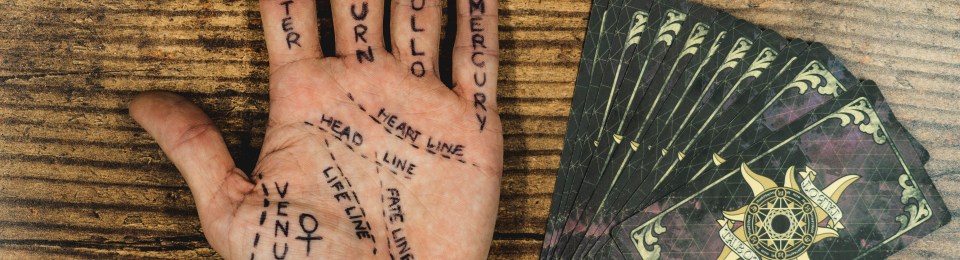
For centuries, mystics, fortune tellers and occult practitioners have stared into the human hand searching for answers. The lines etched across our palms have been interpreted as maps of destiny, markers of personality, warnings of misfortune and promises of success. Among the most famous practitioners was Cheiro, whose influential work You and Your Hand helped popularise palmistry for generations of curious readers.
The premise is deceptively comforting. Our hands reveal who we are.
Horror cinema, naturally, took one look at that idea and asked a far more disturbing question.
What if our hands reveal something else?
What if they possess desires independent of our own?
What if the very instruments we rely upon to create, communicate, nurture and survive suddenly decide to act against us?
Throughout horror history, possessed, severed and cursed hands have appeared with surprising frequency. Sometimes they crawl across the floor like predatory spiders. Sometimes they become gateways for demonic influence. Sometimes they serve as physical manifestations of repressed violence lurking beneath the surface of otherwise ordinary lives.
Whether treated with deadly seriousness or splatter-fuelled humour, the possessed hand remains one of horror’s most enduring occult symbols.
After all, there are few terrors more primal than losing control of your own body.
Written in the Flesh
The fascination with hands extends far beyond cinema.
Palmistry, chiromancy and other occult traditions emerged from the belief that the hand serves as a mirror of the soul. The shape of the fingers, the length of the lifeline, the curve of the heart line — all supposedly reveal hidden truths about an individual’s character and future.
Unlike tarot cards or crystal balls, the hand cannot be separated from the self.
It is uniquely ours.
Our fingerprints identify us. Our gestures communicate emotion. Our touch establishes intimacy. Hands create art, build homes, sign contracts and commit acts of violence.
They are perhaps the most direct expression of human agency.
Which is precisely why horror repeatedly targets them.
When a monster attacks from outside, we defend ourselves. When our own hand becomes the threat, the boundary between self and other begins to collapse.
The hand ceases to be an extension of identity and becomes an invader.
The Grandfather of Possessed-Hand Horror
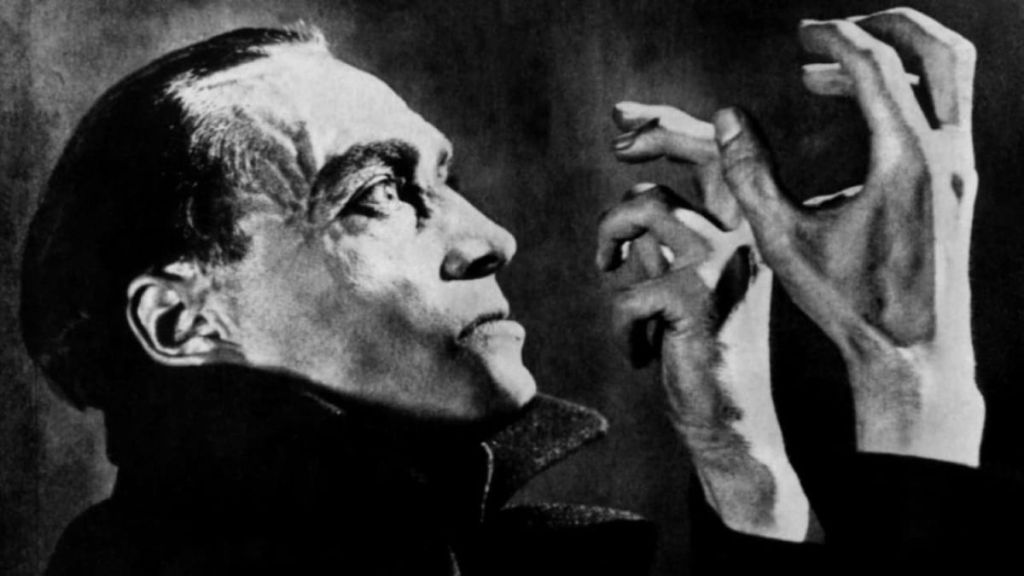
Long before chainsaws replaced hands and severed limbs became cult icons, there was The Hands of Orlac.
Based on the novel by Maurice Renard, the silent classic follows a concert pianist who loses his hands in a tragic accident. Following an experimental transplant, he receives the hands of an executed murderer and gradually becomes convinced that the donor’s violent impulses are influencing his behaviour.
Whether supernatural or psychological, the concept established many of the themes that would define the subgenre for the next century.
Identity.
Inheritance.
Loss of control.
The fear that evil can be transferred through flesh itself.
The film’s influence would later extend to Mad Love, starring the incomparable Peter Lorre, which transformed the premise into a feverish expressionist nightmare.
The seeds of possessed-hand horror had been planted.
The Beast With Five Fingers
By the mid-1940s the concept had become even stranger.
The Beast with Five Fingers dispensed with questions of psychology entirely and presented audiences with a crawling severed hand stalking victims through a Gothic mansion.
The image remains wonderfully absurd and genuinely unsettling.
Detached from the body, the hand becomes something uncanny. It resembles a spider, a parasite, an alien organism. Familiar enough to recognise, yet divorced from the context that makes it human.
The body provides meaning.
Without it, the hand becomes monstrous.
Oliver Stone’s Phantom Limb
Perhaps the most overlooked entry in the subgenre is The Hand, directed by Oliver Stone.
Released years before Stone became synonymous with political cinema, the film follows a comic book artist who loses his hand in a car accident. Soon after, a series of mysterious murders begin occurring around him.
The genius of The Hand lies in its ambiguity.
Is the severed limb genuinely alive?
Or does it represent a fractured psyche spiralling into violence?
Stone cleverly leaves the answer uncertain, transforming what could have been a straightforward horror premise into a meditation on ego, masculinity and artistic identity. The severed hand becomes a physical manifestation of impulses the protagonist refuses to acknowledge.
The monster may not be the hand at all.
It may simply be the man attached to it.
Ash Williams Versus Himself
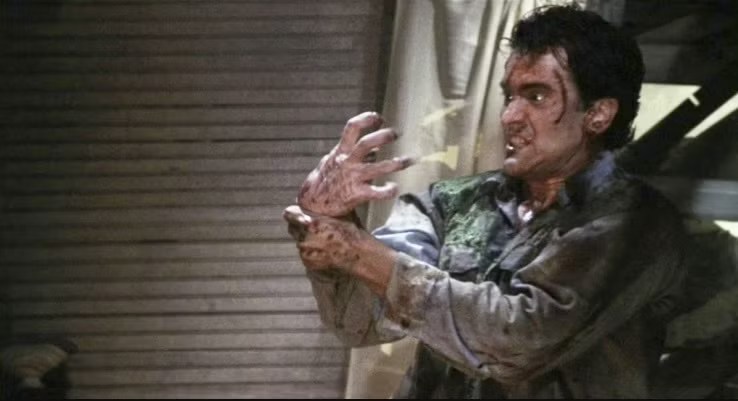
No discussion of possessed hands would be complete without Evil Dead II.
The sequence in which Ash Williams battles his own possessed hand remains one of the defining moments of horror comedy.
Director Sam Raimi transforms body horror into slapstick chaos as Ash punches, traps, smashes and ultimately dismembers the rebellious appendage while descending into manic hysteria.
It is hilarious.
It is grotesque.
It is also strangely profound.
The scene externalises internal conflict. Ash is literally at war with himself. His own body has become an enemy. The absurdity only heightens the underlying terror.
When possession arrives, there is nowhere left to run.
Demons, Stoners and Killer Limbs
The 1980s and 1990s embraced the possessed-hand concept with increasing enthusiasm.
Demonoid centred around an ancient demonic hand that transfers possession from victim to victim. Equal parts occult nightmare and exploitation oddity, it remains one of the strangest examples of the trope.
Body Parts revisited the Orlac formula, with a criminal psychologist receiving the arm of a murderer and gradually losing control over his actions. The film explored questions of biological memory and inherited violence long before such ideas became fashionable within genre cinema.
Then came Idle Hands, perhaps the most gleefully ridiculous entry of them all.
Here, demonic possession collides with late-90s slacker culture as a teenager discovers his hand has become a murderous force of its own. The film embraces absurdity without abandoning the underlying premise.
The hand is still a vessel for evil.
It’s simply having more fun with it.
Possession Through Touch
Modern horror continues to find new ways to weaponise hands.
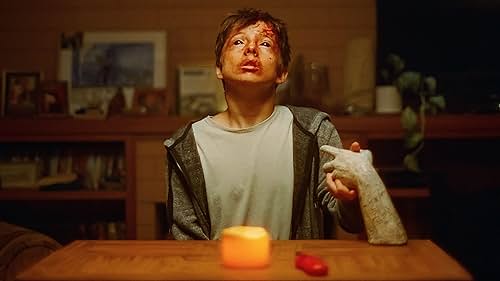
One of the most striking examples arrives in the Australian phenomenon Talk to Me.
At the centre of the film sits a preserved ceramic hand used to contact spirits. Participants grasp it, speak an invitation, and willingly allow possession to occur.
The object functions like a cursed relic, but its symbolism runs deeper.
Possession is initiated through touch.
The hand becomes a conduit between worlds.
A bridge connecting the living and the dead.
In many ways, Talk to Me brings the possessed-hand tradition full circle. The hand once again serves as a site of occult power, much like the palmistry traditions that inspired centuries of mystical speculation.
The difference is that instead of revealing destiny, it actively alters it.
Why the Hand Endures
Possessed dolls.
Haunted houses.
Vampires.
Werewolves.
Horror trends come and go.
Yet the possessed hand continues to reappear because it taps into something fundamental.
The fear is not merely physical.
It is existential.
Our hands represent agency.
Choice.
Control.
They are how we interact with the world.
To lose command of them is to lose command of ourselves.
The possessed hand therefore occupies a unique space within horror mythology. It is simultaneously a body horror device, an occult symbol and a psychological metaphor.
A hand can represent inherited sin.
Repressed desire.
Addiction.
Violence.
Fate.
Or simply the terrifying possibility that we may not know ourselves as well as we think.
The Prognosis:
For occultists like Cheiro, the hand revealed hidden truths about a person’s future.
For horror filmmakers, the hand reveals something darker.
The possibility that identity itself is fragile.
That control is an illusion.
That beneath the surface of our everyday lives lurks something ancient, unknowable and hungry.
After all, if the eyes are the windows to the soul, perhaps the hands are the doors.
And horror has spent the last century wondering what might come through them.
Further Reading & Viewing
To explore the fascinating world of palmistry and occult symbolism further, check out Library of the Occult Episode 14: Cheiro – You and Your Hand on the Surgeons of Horror YouTube channel.
👉 Watch the episode here:
Because sometimes the future isn’t written in the stars.
Sometimes it’s written in the palm of your hand.
- Saul Muerte

