• About
  • podcasts
  • Shop

Surgeons of Horror

~ Dissecting horror films

Surgeons of Horror

Tag Archives: sam raimi

Evil Dead Burn (2026): Burning Bright, But Without a Soul

08 Wednesday Jul 2026

Posted by surgeons of horror in Movie review, the evil dead franchise

≈ Leave a comment

Tags

bruce campbell, evil dead burn, evil dead franchise, rob tapert, sam raimi, Sebastian Vanicek, Souheila Yacoub, the evil dead

Since Sam Raimi, Bruce Campbell and Robert Tapert threw audiences into a ramshackle cabin in the Tennessee woods more than four decades ago, the Evil Dead franchise has become something of a creative playground. Rather than endlessly repeating itself, each instalment has dared to evolve, shifting from visceral survival horror to slapstick comedy, medieval fantasy and urban nightmare. It is a series that has thrived through reinvention.

With Sébastien Vaniček stepping into the director’s chair following the ferocious Vermines (Infested), expectations were understandably high. His debut demonstrated an extraordinary command of tension, practical effects and claustrophobic action, making him an inspired choice to shepherd the next chapter in one of horror’s most fearless franchises.

On paper, Evil Dead Burn appears to continue that tradition.

The film centres on a grieving widow who, following the death of her husband, retreats to the home of her in-laws in search of refuge. Instead, long-buried wounds are violently reopened as the family is consumed one by one by Deadites, forcing her to confront horrors that extend far beyond the supernatural.

The central metaphor is clear.

Like the franchise before it, Evil Dead Burn understands that the most terrifying demons are often the ones we bring home.

This time, however, the story explores the lingering trauma of domestic violence and the devastating ways abuse can continue to shape families long after the violence itself has ended. It is an important and timely subject, and Vaniček deserves credit for attempting to weave genuine social commentary into the relentless carnage.

Unfortunately, the film never fully earns the emotional weight its themes demand.

The domestic trauma feels less like the beating heart of the narrative and more like a framework upon which another Evil Dead story has been constructed. The metaphor is present, but it remains frustratingly underdeveloped. Rather than allowing its characters the space to breathe, the screenplay rushes from one violent set piece to the next, often mistaking intensity for emotional investment.

As a result, the horror frequently becomes spectacular without ever becoming genuinely affecting.

That is particularly disappointing because Souheila Yacoub delivers a committed and compelling central performance. She grounds the film with remarkable conviction, carrying scenes that occasionally ask more of her than the script is willing to provide. Even when the narrative falters, she remains entirely believable, offering flashes of vulnerability amid the escalating chaos.

Visually, however, there is little to criticise.

Vaniček once again demonstrates an impressive eye for physical action. The choreography of the Deadite attacks is inventive, kinetic and frequently brutal, while the practical effects embrace the franchise’s gleeful commitment to blood-soaked excess. Fans of the 2013 remake’s uncompromising violence will undoubtedly find much to admire here.

The film rarely lacks energy.

It simply lacks emotional gravity.

That absence becomes increasingly apparent as the story unfolds. One of the enduring strengths of the Evil Dead series has always been its ability to anchor even the most outrageous horrors in memorable characters. Whether it was Ash Williams’ reluctant transformation from everyman to hero, Mia’s battle with addiction in the 2013 remake, or the desperate family dynamics of Evil Dead Rise, there was always something human beneath the gore.

Evil Dead Burn struggles to establish that same connection.

Its characters remain broadly sketched, their relationships more implied than explored. Consequently, when the inevitable possessions begin, there is surprisingly little sense of tragedy. The violence is expertly staged, but without meaningful emotional investment, it often becomes an exercise in endurance rather than suspense.

Ironically, the film’s greatest weakness emerges from one of Raimi and his collaborators’ greatest strengths.

Their willingness to invite distinctive filmmakers into the franchise has ensured that Evil Dead never grows stale. Each director brings a unique perspective, allowing the mythology to evolve while retaining its anarchic spirit. It is an admirable philosophy, and one that continues to keep the series creatively alive.

Yet reinvention alone is not enough.

There must also be something that binds these stories together beyond the Necronomicon and the Deadites.

Here, that connective tissue feels unusually thin.

Strip away the familiar iconography, and Evil Dead Burn often feels like a competent supernatural horror that has been retrofitted into an established franchise. It borrows the mythology, embraces the brutality and honours the practical carnage, but rarely captures the mischievous personality or emotional investment that have long distinguished Evil Dead from its imitators.

It is telling that some of the film’s most memorable moments are its individual sequences rather than its overall narrative.

Vaniček continues to prove himself an immensely talented visual filmmaker, and there is little doubt that his career will continue to flourish. Few contemporary directors stage visceral horror with such confidence or physicality. The problem is not one of execution.

It is one of connection.

The Prognosis:

Evil Dead Burn contains flashes of the bold filmmaking that made Sébastien Vaniček such an exciting choice for the franchise. Its practical effects, relentless brutality and assured direction deliver several exhilarating moments, while Souheila Yacoub anchors the film with a committed performance. Yet despite its impressive craftsmanship, the emotional core never fully ignites. By leaning so heavily into violence without first giving audiences characters to truly invest in, the film ultimately becomes the least affecting—and perhaps the least distinctive—entry in the Evil Dead series to date.

It burns fiercely.

But unlike the franchise’s finest chapters…

It leaves surprisingly little behind once the flames have died.

  • Saul Muerte

🩸 Continue the Journey Through the Evil Dead

With the release of Evil Dead Burn, there’s never been a better time to revisit one of horror’s most inventive and enduring franchises.

Explore the full Surgeons of Horror Evil Dead retrospective series, where we chart the evolution of the Deadites from Sam Raimi’s groundbreaking 1981 original through to the franchise’s latest incarnation.

Read the series:

📖 The Evil Dead (1981) at 45 – How a group of friends created one of the most influential independent horror films ever made.


🎥 Watch on YouTube

Expand your journey through the world of the Deadites with two special companion series:

📚 Library of the Occult – The Necronomicon: The Book That Escaped Fiction
A four-part documentary exploring the extraordinary history of horror’s most infamous fictional grimoire—from H.P. Lovecraft’s imagination to its iconic role in The Evil Dead.

Whether you’re rediscovering the original cabin in the woods or venturing into the franchise’s latest nightmares, there’s always another page waiting to be turned…
The Evil Dead (1981): How Sam Raimi’s DIY Nightmare Changed Horror Forever

06 Monday Jul 2026

Posted by surgeons of horror in the evil dead franchise

≈ Leave a comment

Tags

bruce campbell, robert tapert, sam raimi, the evil dead

“The woods are alive… with the sound of terror.”

There are horror films that become classics.

There are horror films that become franchises.

Then there are the rare few that fundamentally alter the language of cinema itself.

Forty-five years after its release, The Evil Dead remains one of those singular works.

Made by a group of ambitious twenty-somethings armed with borrowed equipment, boundless enthusiasm and little understanding of what was supposedly impossible, Sam Raimi’s debut feature did far more than introduce audiences to a remote cabin and an ancient Book of the Dead. It demonstrated that imagination could triumph over budget, that invention could outweigh experience, and that horror—perhaps more than any other genre—could be fuelled by sheer force of will.

Every independent horror filmmaker working today owes something to The Evil Dead. Not because they imitate its story, but because Raimi proved that cinema’s greatest limitation was never money.

It was ambition.

A Cabin Built on Determination

The mythology surrounding The Evil Dead has become almost as legendary as the film itself.

Long before Ash Williams became a horror icon, before chainsaws replaced severed hands and before the Necronomicon became one of horror’s most recognisable artefacts, there were simply three friends from Michigan determined to make a movie.

Sam Raimi, Bruce Campbell and Robert Tapert were not industry veterans. They possessed neither studio backing nor Hollywood connections. What they did possess was an infectious belief that filmmaking was something one simply did rather than waited to be invited into.

Their earlier short film, Within the Woods, served as proof of concept—a terrifying calling card used to convince investors that a feature-length version could succeed. It was hardly a guarantee of success, but it was enough.

Production soon moved to a dilapidated cabin in rural Tennessee, where cast and crew endured punishing conditions that have since become the stuff of independent filmmaking folklore. Freezing temperatures, exhausting overnight shoots, malfunctioning equipment and physical injuries became routine.

The cabin itself was less a film set than a battlefield.

Yet adversity became invention.

Every obstacle demanded creativity, and creativity became the defining characteristic of Raimi’s filmmaking.

The Camera That Wouldn’t Sit Still

If The Evil Dead revolutionised anything, it was movement.

Horror cinema had certainly experimented with kinetic camerawork before, but Raimi transformed the camera into something almost supernatural.

It lunged.

It sprinted.

It crashed through forests.

It became an unseen predator racing towards its victims with terrifying inevitability.

What later became affectionately known as the “Shaky Cam” or “Raimi Cam” was born not from expensive technology but from resourcefulness. Cameras were mounted to planks of wood, bicycles, improvised rigs and anything else capable of generating movement. Every shot sought not merely to observe the horror but to embody it.

The result was revolutionary.

The audience no longer watched evil approaching.

They became it.

Forty-five years later, echoes of Raimi’s restless visual language can still be found throughout contemporary horror and action cinema. His influence extends far beyond genre filmmaking, shaping the grammar of modern blockbuster cinema itself.

Horror Without Permission

Perhaps the greatest achievement of The Evil Dead lies in its complete disregard for convention.

It is simultaneously terrifying and mischievous.

Savage and playful.

Its violence feels genuinely dangerous, yet beneath the blood-soaked surface exists an unmistakable sense of youthful experimentation. Raimi approaches horror with the enthusiasm of someone determined to test every cinematic possibility available to him.

Dutch angles become exaggerated.

Zoom lenses whip violently across the frame.

Objects crash into camera.

Sound design becomes aggressive, intrusive and almost musical.

Nothing remains static.

Watching The Evil Dead today still feels exhilarating because the film refuses to settle into predictability. Every sequence appears determined to discover a new way of frightening—or startling—the audience.

It is horror as experimentation.

Cinema as organised chaos.

The Birth of an Unlikely Hero

Ironically, The Evil Dead was never intended to create one of horror’s most beloved protagonists.

Ash Williams enters the story as an ordinary young man.

He is frightened.

Confused.

Frequently overwhelmed.

Unlike the unstoppable heroes that would later define action cinema, Ash survives largely through endurance rather than confidence.

This vulnerability is precisely what makes him compelling.

Only in hindsight does one recognise the seeds of the character who would eventually evolve into horror’s most unlikely icon. Bruce Campbell’s remarkable physical performance already hints at the expressive comedy that would flourish in Evil Dead II and Army of Darkness, even as he remains firmly rooted in genuine terror.

Ash is not born a legend.

He earns it.

The Book That Should Never Be Opened

At the centre of the film sits another character entirely.

The Necronomicon.

Although little more than a mysterious Book of the Dead in this first instalment, Raimi’s adaptation transformed H.P. Lovecraft’s fictional grimoire into one of horror’s most enduring symbols.

Unlike Dracula’s castle or Frankenstein’s laboratory, the Necronomicon possesses remarkable adaptability.

It travels.

It corrupts.

It whispers across generations.

The book would ultimately become the franchise’s true constant, surviving changing directors, protagonists, timelines and even reboots.

Long after individual characters disappear, the book remains.

Waiting patiently for the next curious soul willing to read aloud.

Its enduring legacy speaks not simply to Raimi’s imagination, but to horror’s enduring fascination with forbidden knowledge. Few fictional objects have become so deeply embedded within popular culture.

Independent Horror’s Greatest Legacy

It is tempting to judge The Evil Dead solely by what followed.

The sequels.

The television series.

The remakes.

The merchandise.

The devoted fanbase.

Yet doing so risks overlooking its greatest contribution.

The film gave aspiring filmmakers permission.

Permission to believe that passion could compensate for inexperience.

Permission to embrace limitations rather than fear them.

Permission to build careers outside the traditional machinery of Hollywood.

Without The Evil Dead, it becomes difficult to imagine the confidence of later independent horror filmmakers willing to take similar creative risks. The film’s influence extends well beyond stylistic imitation. It represents a philosophy of filmmaking grounded in ingenuity, persistence and relentless optimism.

That legacy continues to inspire nearly half a century later.

The Prognosis:

Forty-five years on, The Evil Dead remains astonishingly vital.

Not because every practical effect has aged flawlessly, nor because every performance is polished to perfection, but because its creative energy remains infectious. Every frame pulses with youthful ambition. Every camera movement announces a filmmaker discovering the limitless possibilities of cinema in real time.

Sam Raimi did not simply make one of horror’s greatest independent films.

He redefined what independent horror could become.

The cabin in the Tennessee woods was never merely the birthplace of a franchise.

It was the birthplace of a revolution.

And forty-five years later, horror is still following the trail through those haunted woods.

  • Saul Muerte

Long before Evil Dead Burn, I revisited Sam Raimi’s original trilogy in a dedicated podcast series exploring the films that redefined independent horror.

If you’re enjoying this retrospective series, revisit the conversations that helped shape my appreciation of the franchise.

🎧 The Evil Dead (1981)

🎧 Army of Darkness (1992)

🎧 The Evil Dead (2013)

The Hand Has A Mind Of Its Own

31 Sunday May 2026

Posted by surgeons of horror in Library of the Occult

≈ Leave a comment

Tags

ash williams, body parts, bruce campbell, cheiro, demonoid, evil dead 2, idle hands, Library of the Occult, mad love, maurice renard, oliver stone, palmistry, peter lorre, sam raimi, talk to me, the beast with five fingers, the hand, the hands or orlac, you and your hand

From Palmistry to Possession in Horror Cinema

“The hand is the visible part of the brain.” — Immanuel Kant

For centuries, mystics, fortune tellers and occult practitioners have stared into the human hand searching for answers. The lines etched across our palms have been interpreted as maps of destiny, markers of personality, warnings of misfortune and promises of success. Among the most famous practitioners was Cheiro, whose influential work You and Your Hand helped popularise palmistry for generations of curious readers.

The premise is deceptively comforting. Our hands reveal who we are.

Horror cinema, naturally, took one look at that idea and asked a far more disturbing question.

What if our hands reveal something else?

What if they possess desires independent of our own?

What if the very instruments we rely upon to create, communicate, nurture and survive suddenly decide to act against us?

Throughout horror history, possessed, severed and cursed hands have appeared with surprising frequency. Sometimes they crawl across the floor like predatory spiders. Sometimes they become gateways for demonic influence. Sometimes they serve as physical manifestations of repressed violence lurking beneath the surface of otherwise ordinary lives.

Whether treated with deadly seriousness or splatter-fuelled humour, the possessed hand remains one of horror’s most enduring occult symbols.

After all, there are few terrors more primal than losing control of your own body.


Written in the Flesh

The fascination with hands extends far beyond cinema.

Palmistry, chiromancy and other occult traditions emerged from the belief that the hand serves as a mirror of the soul. The shape of the fingers, the length of the lifeline, the curve of the heart line — all supposedly reveal hidden truths about an individual’s character and future.

Unlike tarot cards or crystal balls, the hand cannot be separated from the self.

It is uniquely ours.

Our fingerprints identify us. Our gestures communicate emotion. Our touch establishes intimacy. Hands create art, build homes, sign contracts and commit acts of violence.

They are perhaps the most direct expression of human agency.

Which is precisely why horror repeatedly targets them.

When a monster attacks from outside, we defend ourselves. When our own hand becomes the threat, the boundary between self and other begins to collapse.

The hand ceases to be an extension of identity and becomes an invader.


The Grandfather of Possessed-Hand Horror

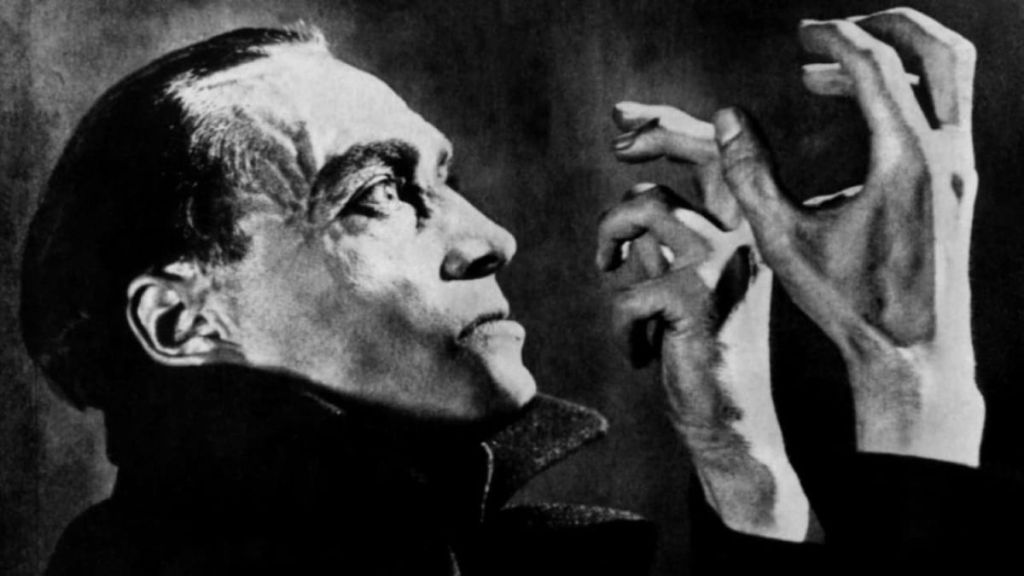
Long before chainsaws replaced hands and severed limbs became cult icons, there was The Hands of Orlac.

Based on the novel by Maurice Renard, the silent classic follows a concert pianist who loses his hands in a tragic accident. Following an experimental transplant, he receives the hands of an executed murderer and gradually becomes convinced that the donor’s violent impulses are influencing his behaviour.

Whether supernatural or psychological, the concept established many of the themes that would define the subgenre for the next century.

Identity.

Inheritance.

Loss of control.

The fear that evil can be transferred through flesh itself.

The film’s influence would later extend to Mad Love, starring the incomparable Peter Lorre, which transformed the premise into a feverish expressionist nightmare.

The seeds of possessed-hand horror had been planted.


The Beast With Five Fingers

By the mid-1940s the concept had become even stranger.

The Beast with Five Fingers dispensed with questions of psychology entirely and presented audiences with a crawling severed hand stalking victims through a Gothic mansion.

The image remains wonderfully absurd and genuinely unsettling.

Detached from the body, the hand becomes something uncanny. It resembles a spider, a parasite, an alien organism. Familiar enough to recognise, yet divorced from the context that makes it human.

The body provides meaning.

Without it, the hand becomes monstrous.


Oliver Stone’s Phantom Limb

Perhaps the most overlooked entry in the subgenre is The Hand, directed by Oliver Stone.

Released years before Stone became synonymous with political cinema, the film follows a comic book artist who loses his hand in a car accident. Soon after, a series of mysterious murders begin occurring around him.

The genius of The Hand lies in its ambiguity.

Is the severed limb genuinely alive?

Or does it represent a fractured psyche spiralling into violence?

Stone cleverly leaves the answer uncertain, transforming what could have been a straightforward horror premise into a meditation on ego, masculinity and artistic identity. The severed hand becomes a physical manifestation of impulses the protagonist refuses to acknowledge.

The monster may not be the hand at all.

It may simply be the man attached to it.


Ash Williams Versus Himself

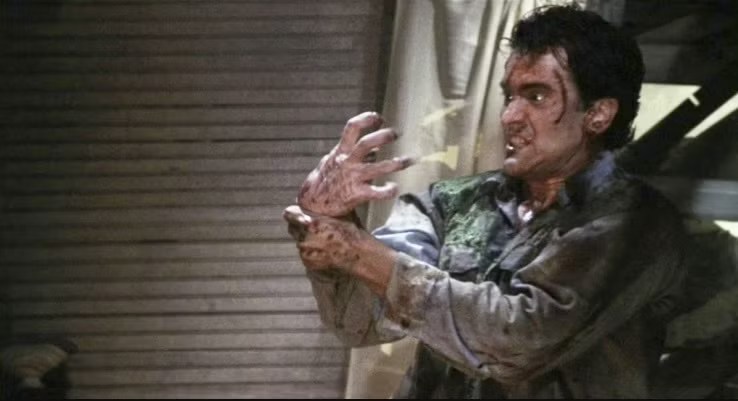
No discussion of possessed hands would be complete without Evil Dead II.

The sequence in which Ash Williams battles his own possessed hand remains one of the defining moments of horror comedy.

Director Sam Raimi transforms body horror into slapstick chaos as Ash punches, traps, smashes and ultimately dismembers the rebellious appendage while descending into manic hysteria.

It is hilarious.

It is grotesque.

It is also strangely profound.

The scene externalises internal conflict. Ash is literally at war with himself. His own body has become an enemy. The absurdity only heightens the underlying terror.

When possession arrives, there is nowhere left to run.


Demons, Stoners and Killer Limbs

The 1980s and 1990s embraced the possessed-hand concept with increasing enthusiasm.

Demonoid centred around an ancient demonic hand that transfers possession from victim to victim. Equal parts occult nightmare and exploitation oddity, it remains one of the strangest examples of the trope.

Body Parts revisited the Orlac formula, with a criminal psychologist receiving the arm of a murderer and gradually losing control over his actions. The film explored questions of biological memory and inherited violence long before such ideas became fashionable within genre cinema.

Then came Idle Hands, perhaps the most gleefully ridiculous entry of them all.

Here, demonic possession collides with late-90s slacker culture as a teenager discovers his hand has become a murderous force of its own. The film embraces absurdity without abandoning the underlying premise.

The hand is still a vessel for evil.

It’s simply having more fun with it.


Possession Through Touch

Modern horror continues to find new ways to weaponise hands.

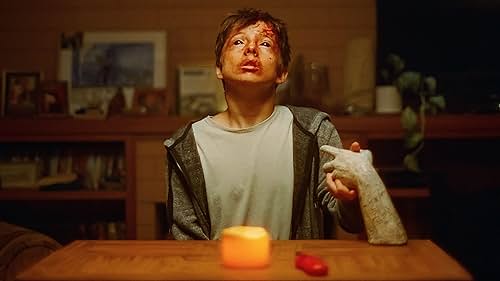
One of the most striking examples arrives in the Australian phenomenon Talk to Me.

At the centre of the film sits a preserved ceramic hand used to contact spirits. Participants grasp it, speak an invitation, and willingly allow possession to occur.

The object functions like a cursed relic, but its symbolism runs deeper.

Possession is initiated through touch.

The hand becomes a conduit between worlds.

A bridge connecting the living and the dead.

In many ways, Talk to Me brings the possessed-hand tradition full circle. The hand once again serves as a site of occult power, much like the palmistry traditions that inspired centuries of mystical speculation.

The difference is that instead of revealing destiny, it actively alters it.


Why the Hand Endures

Possessed dolls.

Haunted houses.

Vampires.

Werewolves.

Horror trends come and go.

Yet the possessed hand continues to reappear because it taps into something fundamental.

The fear is not merely physical.

It is existential.

Our hands represent agency.

Choice.

Control.

They are how we interact with the world.

To lose command of them is to lose command of ourselves.

The possessed hand therefore occupies a unique space within horror mythology. It is simultaneously a body horror device, an occult symbol and a psychological metaphor.

A hand can represent inherited sin.

Repressed desire.

Addiction.

Violence.

Fate.

Or simply the terrifying possibility that we may not know ourselves as well as we think.


The Prognosis:

For occultists like Cheiro, the hand revealed hidden truths about a person’s future.

For horror filmmakers, the hand reveals something darker.

The possibility that identity itself is fragile.

That control is an illusion.

That beneath the surface of our everyday lives lurks something ancient, unknowable and hungry.

After all, if the eyes are the windows to the soul, perhaps the hands are the doors.

And horror has spent the last century wondering what might come through them.


Further Reading & Viewing

To explore the fascinating world of palmistry and occult symbolism further, check out Library of the Occult Episode 14: Cheiro – You and Your Hand on the Surgeons of Horror YouTube channel.

👉 Watch the episode here:

Because sometimes the future isn’t written in the stars.

Sometimes it’s written in the palm of your hand.

  • Saul Muerte

The Evil Dead (1981): The Birth of DIY Carnage

29 Wednesday Oct 2025

Posted by surgeons of horror in Movie review

≈ Leave a comment

Tags

bruce campbell, Cult Horror, evil dead, film, Halloween, horror, Horror movies, movies, sam raimi

There’s something unholy about watching The Evil Dead in 2025 — not because of its gore (though the film still bleeds like a fresh wound), but because it reminds us how much horror has changed… and how much it owes to Sam Raimi’s twisted weekend in the woods.

Before franchises, before multiverses, before horror was a business plan — there was a group of friends in Tennessee, gallons of fake blood, and a Super 8 camera that barely held together. Raimi, Bruce Campbell, and producer Robert Tapert didn’t just make a film; they conjured one from sheer madness and duct tape. Every camera move, every shriek, every ash-smeared close-up feels like it was carved from the flesh of invention itself.

The Evil Dead isn’t just about possession — it’s about obsession. You can feel Raimi’s fever in every frame, the urge to push the medium past breaking point. Long before the word “indie” became shorthand for Sundance polish, this film was truly independent: reckless, raw, and glorious in its imperfection. Its claustrophobic energy turns the forest into a sentient entity, the cabin into a cursed organism. You can smell the wood rot, the sweat, the 16mm stock tearing in the projector.

What keeps it alive isn’t nostalgia — it’s rhythm. Raimi’s kinetic camera was punk cinema incarnate, years before digital tools democratised motion. That manic momentum, that willingness to risk everything for a shot, became the DNA of countless filmmakers who came after — from Peter Jackson’s Braindead to modern found-footage auteurs chasing the same fever dream.

Yet for all its brutality, there’s an innocence to The Evil Dead. It’s a film made by people who loved horror so much, they wanted to crawl inside it. Raimi’s signature blend of cruelty and comedy — later refined in Evil Dead II and Army of Darkness — starts here as an unfiltered scream. It’s clumsy, beautiful, and unforgettable.

In a cinematic age obsessed with IP and polish, The Evil Dead stands as a reminder that horror thrives on imperfection. It’s about spirit, not studio notes. It’s about throwing your friends into the mud and making something that feels like it might actually hurt you to watch.

The Prognosis:

Horror cinema has evolved in scale and sophistication, but few films still pulse with the same unhinged energy. Raimi’s debut is a masterclass in fearless filmmaking — a symphony of shrieks, sweat, and splintered wood that reminds us why terror should never feel safe.

  • Saul Muerte

THE EVIL DEAD –
BUY OR RENT NOW

Subscribe

  • Entries (RSS)
  • Comments (RSS)

Archives

  • July 2026
  • June 2026
  • May 2026
  • April 2026
  • March 2026
  • February 2026
  • January 2026
  • December 2025
  • November 2025
  • October 2025
  • September 2025
  • August 2025
  • July 2025
  • June 2025
  • May 2025
  • April 2025
  • March 2025
  • February 2025
  • January 2025
  • December 2024
  • November 2024
  • October 2024
  • September 2024
  • August 2024
  • July 2024
  • June 2024
  • May 2024
  • April 2024
  • March 2024
  • February 2024
  • January 2024
  • November 2023
  • October 2023
  • September 2023
  • August 2023
  • July 2023
  • June 2023
  • May 2023
  • April 2023
  • March 2023
  • February 2023
  • January 2023
  • November 2022
  • October 2022
  • September 2022
  • August 2022
  • July 2022
  • June 2022
  • April 2022
  • March 2022
  • February 2022
  • January 2022
  • December 2021
  • November 2021
  • October 2021
  • September 2021
  • August 2021
  • July 2021
  • June 2021
  • May 2021
  • April 2021
  • March 2021
  • February 2021
  • January 2021
  • December 2020
  • November 2020
  • October 2020
  • September 2020
  • August 2020
  • July 2020
  • June 2020
  • May 2020
  • April 2020
  • March 2020
  • February 2020
  • January 2020
  • December 2019
  • November 2019
  • October 2019
  • September 2019
  • July 2019
  • June 2019
  • May 2019
  • April 2019
  • March 2019
  • February 2019
  • January 2019
  • December 2018
  • November 2018
  • October 2018
  • September 2018
  • August 2018
  • July 2018
  • June 2018
  • May 2018
  • April 2018
  • March 2018
  • February 2018
  • January 2018
  • December 2017
  • November 2017
  • October 2017
  • September 2017
  • August 2017
  • July 2017
  • June 2017
  • May 2017
  • April 2017
  • March 2017
  • February 2017
  • January 2017
  • December 2016
  • November 2016
  • October 2016
  • September 2016
  • August 2016
  • July 2016
  • June 2016
  • May 2016

Categories

  • A Night of Horror Film Festival
  • Alien franchise
  • Alliance Francaise French Film Festival
  • Australian Horror
  • Best Movies and Shows
  • Competition
  • dark nights film fest
  • episode review
  • Flashback Fridays
  • Friday the 13th Franchise
  • Full Moon Sessions
  • Halloween franchise
  • In Memorium
  • Interview
  • japanese film festival
  • John Carpenter
  • killer pigs
  • Library of the Occult
  • midwest weirdfest
  • MidWest WierdFest
  • MonsterFest
  • movie article
  • movie of the week
  • Movie review
  • New Trailer
  • News article
  • podcast episode
  • podcast review
  • press release
  • retrospective
  • Rialto Distribution
  • Ring Franchise
  • series review
  • Sounds of Horror
  • Soundtracks
  • Spanish horror
  • sydney film festival
  • Sydney Underground Film Festival
  • The Blair Witch Franchise
  • the conjuring franchise
  • the evil dead franchise
  • The Exorcist
  • The Howling franchise
  • Top 10 list
  • Top 12 List
  • top 13 films
  • Trash Night Tuesdays on Tubi
  • umbrella entertainment
  • Uncategorized
  • Universal Horror
  • Wes Craven
  • wes craven's the scream years

Meta

  • Create account
  • Log in

Blog at WordPress.com.

  • Subscribe Subscribed
    • Surgeons of Horror
    • Join 222 other subscribers
    • Already have a WordPress.com account? Log in now.
    • Surgeons of Horror
    • Subscribe Subscribed
    • Sign up
    • Log in
    • Report this content
    • View site in Reader
    • Manage subscriptions
    • Collapse this bar

Loading Comments...