• About
  • podcasts
  • Shop

Surgeons of Horror

~ Dissecting horror films

Surgeons of Horror

Tag Archives: the omen franchise

The Omen at 50: The Last Great Religious Horror

26 Friday Jun 2026

Posted by surgeons of horror in retrospective

≈ Leave a comment

Tags

antichrist, damien, the omen, the omen franchise

For the Devil sends the Beast with wrath…

There was a time when horror films did not merely flirt with religion.

They believed in it.

Not necessarily in the spiritual sense, but in the narrative one. The Devil was real. God was real. Heaven and Hell existed as tangible forces influencing events on Earth. Priests were warriors. Prophecies mattered. The apocalypse was not metaphorical. It was a looming inevitability.

For a brief but extraordinary period during the late 1960s and 1970s, religious horror became one of cinema’s most potent forms of terror. Audiences flocked to stories about possession, prophecy, Satanic conspiracies, and biblical catastrophe with a seriousness that now feels almost impossible to imagine.

At the centre of that movement stands The Omen.

Fifty years after its release, Richard Donner’s masterpiece remains more than simply a great horror film. It represents the culmination of an era when horror confronted faith directly and asked audiences to consider a deeply uncomfortable possibility:

What if evil wasn’t symbolic?

What if the Devil was real?


When Satan Ruled the Box Office

The modern horror landscape is dominated by trauma, grief, psychological instability, social anxiety, and existential uncertainty. The monsters often emerge from within. The horror is personal.

Internal.

Metaphorical.

The 1970s were different.

The decade produced a remarkable cycle of films that treated evil as an external force acting upon humanity. Beginning with Rosemary’s Baby, continuing through The Exorcist, and culminating in The Omen, audiences encountered stories in which Satan was not an abstraction but an active participant.

These films became cultural phenomena. They inspired newspaper headlines. Religious debate. Public outrage. Moral panic. Entire generations of viewers left cinemas questioning beliefs they had previously taken for granted. Today, horror films still borrow religious imagery. Crosses remain. Demons persist. Possession narratives continue. Yet the certainty has largely vanished. Modern audiences are encouraged to interpret. The 1970s demanded belief.


A World Still Haunted by Faith

Part of The Omen‘s power lies in understanding the historical moment that produced it. The film emerged during a decade defined by uncertainty. The aftermath of the Vietnam War. The lingering trauma of political scandal. Economic instability. Cold War tensions. Institutional distrust. Yet despite growing scepticism toward authority, organised religion still maintained a profound influence on Western culture. Biblical literacy was common. The Book of Revelation remained deeply embedded within public consciousness. Concepts such as the Antichrist, Armageddon, and Judgment Day required little explanation.

Audiences arrived already familiar with the mythology. The Omen simply weaponised it. The film did not need to spend valuable screen time convincing viewers why Damien mattered. Everyone already understood the stakes. The apocalypse was a shared cultural language.


The Antichrist as Political Horror

One of the reasons The Omen continues to feel sophisticated is that it recognises evil rarely arrives through brute force. Instead, it infiltrates institutions. Robert Thorn is not a police officer. He is not a scientist. He is not a priest. He is an ambassador. A diplomat. A man operating within systems of power. Likewise, Damien is not raised in poverty or isolation. He is adopted into privilege. Protected by wealth. Surrounded by influence. This was a remarkably perceptive idea for a mainstream horror film. The Antichrist does not conquer civilisation. He inherits it.

The film understands that the most effective evil is often institutional rather than individual. It flourishes inside governments, organisations, families, and hierarchies because people assume those structures are trustworthy. Viewed from a contemporary perspective, this aspect of The Omen feels almost prophetic. The fear of corruption within institutions remains as potent today as it was in 1976. Perhaps even more so.


The Death of Objective Evil

As horror evolved through the 1980s, 1990s, and beyond, the genre gradually shifted away from religious certainty. The Devil remained. But increasingly as metaphor. The monsters became psychological manifestations of grief, repression, guilt, trauma, addiction, and fractured identity.

Films such as The Witch examine religious paranoia through historical and social frameworks. Saint Maud explores faith through mental instability and obsession. Hereditary disguises generational trauma beneath occult mythology. Even Longlegs, with its overt Satanic imagery, ultimately functions as a meditation on manipulation and inherited suffering. These films are exceptional. Many rank among the finest horror works of the modern era. Yet they approach religion differently. They ask: What does belief do to people? The Omen asks something else entirely. What if belief is correct? That distinction remains enormously important.


Why Modern Horror Can’t Quite Replicate It

The challenge facing contemporary religious horror is not one of craftsmanship. Modern filmmakers are more technically skilled than ever. The challenge is cultural. Western society has become increasingly secular. Audiences bring vastly different religious experiences into cinemas. Shared theological assumptions have fractured. Biblical literacy is no longer universal.

As a result, films can no longer rely upon collective belief systems in the same way. The Antichrist no longer automatically terrifies audiences. The Devil no longer dominates public imagination. The apocalypse has changed shape. Today we fear environmental collapse. Artificial intelligence. Political instability. Pandemics. Economic uncertainty. The end of the world remains compelling. Only the mechanism has evolved.


Why The Omen Endures

This is ultimately why The Omen continues to thrive while so many imitators have faded into obscurity. It operates successfully on multiple levels simultaneously. As religious horror. As conspiracy thriller. As family tragedy. As political allegory. As apocalyptic prophecy. Viewers do not need to believe in the Antichrist for the story to work. They merely need to understand fear.

Fear of losing a child.

Fear of institutional failure.

Fear of corrupted authority.

Fear that powerful forces may already be shaping the future beyond our control.

Those anxieties transcend religion. And because they transcend religion, The Omen transcends its era.


Fifty Years Later

Half a century after Damien Thorn first appeared on screen, horror has changed dramatically. Technology has evolved. Audience expectations have shifted. The genre has embraced new fears and new voices. Yet few films have managed to replicate the peculiar power of The Omen.

Perhaps because it arrived at the perfect moment. The moment when ancient religious fears collided with modern political uncertainty. The moment when audiences still recognised the Devil as a genuine cultural force. The moment when horror dared to suggest that prophecy might not be symbolic at all. That it might already be unfolding.


The Prognosis:

Fifty years later, The Omen remains more than a masterpiece of supernatural horror. It stands as the defining expression of religious horror’s golden age. A film that treated faith seriously. Treated evil literally. And transformed biblical prophecy into one of cinema’s most enduring nightmares.

Modern horror continues to explore grief, trauma, guilt, and identity with extraordinary sophistication. But The Omen belongs to a rarer tradition. One that dared to ask a question few films are willing to pose today: Not what if evil exists within us.

But what if evil exists beyond us?

And what if it has already arrived?

  • Saul Muerte

The Omen (2006) at 20

17 Wednesday Jun 2026

Posted by surgeons of horror in retrospective

≈ Leave a comment

Tags

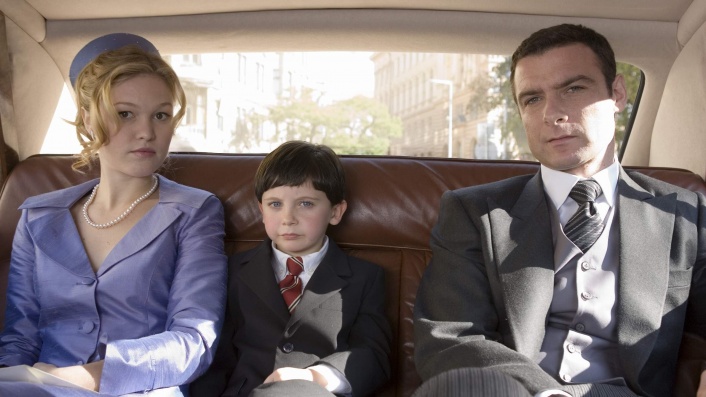
the omen, liev schrieber, julia stiles, antichrist, the omen franchise

The Devil Gets a Digital Upgrade

Twenty years later, The Omen remake remains a fascinating example of Hollywood’s obsession with recreating perfection.

Some films are remade because there is something new to say. Others are remade because technology has advanced. And then there are films like The Omen, a production that seemed to exist because someone looked at one of the greatest horror films ever made and wondered what it would look like with a larger budget, digital polish, and a release date perfectly aligned with the Number of the Beast.

June 6, 2006.

6/6/06.

From a marketing perspective, it was genius. From a creative perspective, the results were considerably more complicated.

Released exactly thirty years after The Omen, director John Moore‘s remake arrived during a period when Hollywood was aggressively resurrecting horror properties. The early 2000s had become the age of remakes. Studios sought recognisable brands, established audiences, and proven concepts. Originality increasingly took a backseat to familiarity. Yet few films presented a greater challenge than The Omen. After all, how do you improve upon prophecy?


Remaking the Antichrist

The original Omen succeeded because it balanced supernatural terror with emotional authenticity. At its heart was not a story about Satan. It was a story about doubt. Gregory Peck‘s Robert Thorn was a man slowly watching certainty erode beneath his feet. Every revelation chipped away at his rational worldview until he could no longer deny the impossible. The horror emerged from belief.The remake understands this structure and follows it almost religiously. Perhaps too religiously.

Screenwriter David Seltzer, returning from the original film, essentially recreates his own script. Dialogue, set pieces, character beats, and narrative progression remain remarkably faithful. The result is less reinterpretation than replication. This is not a film interested in reinventing Damien Thorn. It is interested in introducing him to a new generation.


The Curse of Fidelity

Faithfulness is often treated as a virtue when discussing remakes. Yet fidelity can become its own creative trap. The 2006 version recreates numerous iconic moments with admirable precision. The nanny’s suicide. The cemetery sequence. The horrifying discoveries surrounding Damien’s origins. The infamous glass decapitation. Everything is present and accounted for. Yet something essential feels missing.

The original film possessed a sense of uncertainty. Audiences were invited to question whether prophecy, coincidence, or paranoia might explain unfolding events. That ambiguity created tension. The remake arrives carrying thirty years of cultural baggage. Everyone already knows who Damien is. Everyone knows where the story is going. The mystery has vanished. What remains is execution. And execution alone can only carry a horror film so far.


Liev Schreiber’s Burden

Stepping into the shoes of Gregory Peck was always going to be an impossible task. To his credit, Liev Schreiber wisely avoids imitation.

His Robert Thorn is colder, more reserved, and considerably more contemporary. He projects the confidence of a modern political operator, a man accustomed to controlling outcomes and shaping narratives. This interpretation works surprisingly well. Where Peck conveyed moral certainty gradually collapsing, Schreiber presents professional certainty under siege. His descent becomes less tragic and more existential. The performance anchors the film whenever spectacle threatens to overwhelm substance. Schreiber understands the assignment. The problem is that he is trapped inside a story many viewers already know by heart.


Julia Stiles and the Shadow of Lee Remick

If Schreiber largely succeeds, Julia Stiles faces an even more difficult challenge. Lee Remick delivered one of horror’s most emotionally devastating performances in the original, capturing a mother’s growing terror with heartbreaking vulnerability. Stiles brings intelligence and conviction to Katherine Thorn, but the screenplay affords her fewer opportunities to fully explore the character’s psychological collapse. As a result, some of the emotional devastation feels compressed. The tragedy remains intact. The humanity becomes slightly muted.


Digital Dread

One area where the remake inevitably differs is visual presentation. The original film emerged from an era of practical filmmaking and naturalistic cinematography. Its horrors unfolded within recognisable spaces that felt grounded and tangible.

The 2006 version embraces a more stylised aesthetic. Storm clouds gather with apocalyptic grandeur. Visions arrive with digital enhancement. Biblical imagery receives a modern blockbuster sheen. At times this works beautifully. Certain sequences achieve a painterly quality reminiscent of religious artwork brought violently to life. At other moments, the polish works against the material. The Antichrist is most frightening when he feels plausible. The more elaborate the presentation becomes, the further the film drifts from the unsettling realism that made the original so effective.


A Product of Post-9/11 Anxiety

Viewed twenty years later, the remake functions as an intriguing time capsule of its era. The early twenty-first century was marked by growing uncertainty. Political instability, religious extremism, global conflict, and apocalyptic rhetoric dominated public discourse. Questions surrounding faith and power once again occupied cultural conversation. In that context, The Omen felt strangely relevant.

The idea that evil might infiltrate institutions rather than attack from outside resonated with contemporary anxieties. Damien remained frightening because he represented corruption hidden behind respectability. A child destined not simply to destroy society. But to inherit it. The remake perhaps never fully capitalises on these themes, yet their presence lingers beneath the surface.


Living in the Shadow of Greatness

Perhaps the greatest challenge facing The Omen was that it arrived burdened by comparison. This is not a bad film. Far from it. The performances are strong. The craftsmanship is professional. The atmosphere remains effective. The source material is inherently compelling. Its real crime is being measured against perfection. Richard Donner’s original transformed religious horror. John Moore’s remake preserves it. There is honour in that achievement, even if preservation ultimately proves less exciting than innovation.


The Prognosis:

Twenty years after its release, The Omen remains one of the more respectable horror remakes of the 2000s. Anchored by committed performances from Liev Schreiber and Julia Stiles, it successfully introduces Damien Thorn’s terrifying mythology to a new generation while maintaining considerable reverence for its source material.

Yet reverence alone cannot recreate dread.

The film faithfully reconstructs the architecture of a masterpiece without fully capturing the unease that once haunted its corridors.

The devil received a digital upgrade.

But some nightmares remain impossible to improve.

  • Saul Muerte

Blessed Are the Children

13 Saturday Jun 2026

Posted by surgeons of horror in retrospective

≈ Leave a comment

Tags

antichrist, damien, damien thorn, the omen, the omen franchise

Why Horror Fears Its Own Future

A child is both a promise and a prophecy.

Few figures in horror cinema are more unsettling than the child. Not the masked killer. Not the vampire. Not the ghost. The child.

For generations, horror filmmakers have returned again and again to images of corrupted innocence, murderous offspring, prophetic youths, and children who seem somehow disconnected from humanity itself. They stare with knowing eyes. They speak with borrowed wisdom. They smile at moments they should cry. And they often possess a terrifying understanding of the world that adults can neither comprehend nor control.

This recurring archetype has produced some of the genre’s most enduring nightmares. Yet beneath the scares lies something more profound than simple shock value. The evil child is not merely a monster. It is a manifestation of our collective anxieties about the future. Because unlike every other horror icon, children eventually inherit the world.


The Corruption of Innocence

The horror genre has always understood the power of contradiction. A church becomes a site of blasphemy. A home becomes a prison. A parent becomes a threat. Likewise, the child becomes frightening precisely because society instinctively associates childhood with purity. Children represent possibility, hope, continuity, and renewal. They are symbols of what comes next. When horror twists those expectations, the results become uniquely disturbing.

This tension was explored with chilling effectiveness in The Bad Seed, one of the earliest and most influential examples of the evil child narrative. Young Rhoda Penmark appears polite, intelligent, and charming. Beneath that perfect exterior, however, lurks a calculating sociopath capable of manipulation and murder. The film’s horror emerges not from what Rhoda does. It emerges from what she represents. The possibility that evil may be innate. That monstrosity might not be created. It might simply be born.


Children of a New World

By the 1960s, horror’s fascination with corrupted youth began reflecting broader cultural anxieties. The post-war generation was witnessing unprecedented social change. Traditional structures of authority were increasingly challenged. Scientific advancement accelerated at a dizzying pace. The future felt uncertain. Into this atmosphere arrived Village of the Damned.

Its platinum-haired children remain among horror’s most iconic images. Possessing telepathic powers and collective intelligence, these youngsters appear detached from ordinary human emotion. They are calm, rational, and utterly alien. Unlike previous monsters, they cannot be understood through conventional morality. They represent evolution itself. The next generation made flesh. The adults of Midwich are not confronting evil. They are confronting obsolescence. It is a fear that resonates far beyond science fiction. Every generation eventually confronts the unsettling reality that the future belongs to someone else.


Damien Thorn and the Birth of Destiny

Few characters embody this idea more completely than Damien Thorn. When The Omen arrived during the height of religious horror, it transformed the evil child archetype forever. Damien was not simply dangerous. He was prophetic.

The Antichrist.

A child whose existence carried apocalyptic implications. What distinguished Damien from many of his predecessors was inevitability. Rhoda Penmark might be stopped. The Midwich children might be destroyed. Damien represented something far more terrifying. Destiny.

The adults surrounding him are not merely fighting for survival. They are attempting to prevent history itself. In doing so, The Omen crystallised a recurring theme that would echo throughout countless films that followed:

Children are frightening because they embody the future we cannot control.


Revolution Through Childhood

The 1970s and 1980s saw the archetype expand further. Nowhere is this more evident than in Children of the Corn, adapted from the short story by Stephen King. Unlike Damien, Isaac and his followers are not supernatural aristocrats destined to rule nations. They are religious extremists who have overthrown the adult world entirely. Parents are slaughtered. Authority collapses.

Children establish their own society governed by violent dogma. Viewed through a cultural lens, the film taps into fears surrounding generational rebellion and ideological radicalisation. Adults become powerless spectators while the next generation constructs a future founded upon values they neither recognise nor understand. The cornfields conceal more than monsters. They conceal the possibility of replacement.


The Impossible Moral Question

Perhaps no film interrogates this theme more directly than Who Can Kill a Child?. Released the same year as The Omen, Chicho Ibáñez Serrador‘s masterpiece strips away supernatural explanations and forces audiences into an ethical nightmare. The title itself becomes the challenge.

Who can kill a child?

The film weaponises one of humanity’s most deeply ingrained moral instincts. Children are traditionally viewed as victims. They are protected, nurtured, and shielded from harm. When they become the aggressors, our ethical framework begins to fracture. The horror emerges not from violence itself but from hesitation. The inability to reconcile innocence with threat. Even today, few horror films pose a more uncomfortable question.


The Child as Reflection

As horror evolved into the 1990s and beyond, the evil child continued to adapt. The Good Son presented evil as domestic and intimate. Orphan manipulated assumptions surrounding childhood itself. Japanese horror introduced spectral children whose grief transcended death in films such as Ringu and Dark Water. These works differ dramatically in style and execution, yet they share a common thread. The child becomes a mirror. A reflection of adult fears, failures, and uncertainties. Whether supernatural, psychological, or symbolic, these figures reveal anxieties that society struggles to articulate openly.

Fear of losing influence.

Fear of social change.

Fear of inherited trauma.

Fear of what awaits beyond the horizon.


Why the Archetype Endures

The continued popularity of evil child narratives suggests these fears remain deeply embedded within the human experience. Every generation imagines itself uniquely positioned at the edge of transformation. Political upheaval, technological advancement, environmental uncertainty, and cultural evolution create recurring questions about what kind of world will emerge next. Children naturally become the embodiment of those questions. They are the future made visible. Hope and uncertainty intertwined. The horror genre simply explores what happens when uncertainty wins.

When the future arrives wearing a smile.

When innocence conceals something unknowable.

When tomorrow no longer belongs to us.


The Prognosis:

From The Bad Seed and Village of the Damned to The Omen, Who Can Kill a Child?, and Children of the Corn, horror’s fascination with corrupted youth has never been about children alone.

It is about what children represent. The unknown future. The next generation. The possibility that the world they inherit may no longer resemble the one we understand. The monster under the bed eventually disappears. The child standing beside it grows up. And one day, inherits everything.


Further Exploration: Children of the Apocalypse

The evil child remains one of horror’s most enduring figures because it attacks one of humanity’s most fundamental beliefs: that children represent hope for the future. Whether they arrive as prophetic harbingers, supernatural vessels, cult leaders, or simply reflections of our deepest societal anxieties, these young monsters force us to confront uncomfortable questions about innocence, inheritance, faith and destiny.

From Village of the Damned and The Omen to Children of the Corn, The Good Son, and modern successors such as Hereditary, horror has repeatedly returned to the unsettling notion that the next generation may not save us—they may be our undoing.

For a deeper dive into the history, symbolism and evolution of evil children in horror cinema, be sure to check out Resurrected Horrors Episode 5: Children of the Apocalypse on the Surgeons of Horror YouTube channel. The episode explores how filmmakers across decades have transformed childhood innocence into one of the genre’s most potent nightmares and examines why these stories continue to resonate with audiences today.

👉 Watch: Resurrected Horrors Ep 5 – Children of the Apocalypse

Because in horror, the most frightening monsters are often the ones we are supposed to protect.

  • Saul Muerte

Damien Thorn: Growing Up Evil

09 Tuesday Jun 2026

Posted by surgeons of horror in retrospective

≈ 1 Comment

Tags

antichrist, damien thorn, sam neill, the omen, the omen franchise

How Omen II and The Final Conflict Turned the Antichrist into a Corporate King

There is a common misconception surrounding the Omen sequels. For many horror fans, discussion of the franchise begins and ends with The Omen, a masterpiece of religious horror whose influence can still be felt in everything from Hereditary to The First Omen. Yet to dismiss the films that followed is to overlook one of horror’s most fascinating character arcs. Because Damien Thorn was never destined to remain a child. Unlike Michael Myers, Jason Voorhees, or Freddy Krueger, Damien’s power did not come from his ability to kill. It came from what he represented. The Antichrist was not merely a monster hiding in the shadows. According to prophecy, he was a future ruler. A figure destined to inherit power, influence nations, and usher in the end of days.

The brilliance of Damien: Omen II and Omen III: The Final Conflict lies in their willingness to follow that idea to its logical conclusion. The devil’s child grows up. And the world welcomes him with open arms.


The Horror of Self-Discovery

If The Omen explored the fear of unknowingly raising evil, Damien: Omen II examines something equally unsettling: discovering who you truly are. Directed by Don Taylor, the sequel finds Damien entering adolescence, living under the care of his wealthy relatives while attending military academy. On the surface, he appears to be an intelligent, well-adjusted teenager navigating the awkward transition into adulthood.

Yet beneath that ordinary facade lurks an unavoidable truth. Damien is beginning to realise he is different. The film cleverly reframes the coming-of-age narrative through the lens of supernatural destiny. Most teenagers wrestle with questions of identity, belonging, and purpose. Damien’s journey simply happens to involve discovering he is the son of Satan.

The result is a strangely compelling inversion of adolescence itself. Rather than rejecting a dark legacy, Damien embraces it. His acceptance is not tragic. It is triumphant. And that is what makes it disturbing.


Evil Learns Its Name

One of the sequel’s greatest strengths is its patient handling of Damien’s awakening. The original film kept the child largely passive, a vessel around which terrible events unfolded. Omen II grants him agency. As fragments of prophecy reveal themselves, Damien gradually sheds any illusion of normality. The discovery of the Seven Daggers of Megiddo. The revelations hidden within ancient texts. The mysterious deaths surrounding those who threaten him. Each piece pushes Damien closer toward acceptance of his role.

By the film’s conclusion, the uncertainty that haunted Gregory Peck‘s Robert Thorn has vanished entirely. Damien knows exactly who he is. And he smiles. It remains one of the most chilling transitions in horror cinema. Not because evil wins. But because evil finally understands itself.


From Antichrist to Executive

If Omen II is about awakening, The Final Conflict is about consolidation. Released in 1981 and directed by Graham Baker, the third instalment presents a fully grown Damien played with remarkable confidence by a young Sam Neill. The casting was inspired. Years before audiences would know him from Jurassic Park or In the Mouth of Madness, Neill brought intelligence, charisma, and elegance to the role. He understood that true evil rarely appears monstrous. It appears successful.

By now Damien has become an influential corporate executive with direct access to political power and international influence. Gone are the hidden conspiracies of the earlier films. The Antichrist no longer lurks in the shadows. He sits in boardrooms. Attends diplomatic functions. Commands armies of loyal followers. The devil has learned how institutions work.


The Politics of the Apocalypse

Viewed today, The Final Conflict feels surprisingly prophetic. The film emerged during an era increasingly defined by corporate expansion, global influence, media power, and political spectacle. Damien’s rise reflects anxieties that were beginning to dominate Western culture. The threat is no longer supernatural invasion. The threat is infiltration. Power structures become the mechanism through which evil operates. The Antichrist does not conquer the world through force. He climbs the ladder.

This evolution distinguishes the Omen sequels from many of their contemporaries. Rather than repeating the formula of the original, they expand its scope. The apocalypse becomes less about individual horror and more about societal corruption.

Damien is no longer merely a child.

He is a system.


Sam Neill’s Devilish Masterclass

Much of The Final Conflict rests upon the shoulders of Sam Neill, and he delivers one of horror’s most underrated performances. His Damien is calm, articulate, and frighteningly rational. He does not rant. He does not cackle. He does not resemble traditional cinematic evil. Instead, Neill portrays a man entirely convinced of his divine purpose.

Every action is justified. Every atrocity serves a greater plan. That conviction transforms Damien into something more dangerous than a monster. He becomes a believer. Even decades later, Neill’s performance remains one of the franchise’s defining achievements, elevating material that occasionally struggles beneath the weight of its ambitious theological ideas.


The Child Apocalypse

What ultimately makes Damien Thorn unique among horror icons is that he embodies a specific fear that resurfaces throughout genre history. The fear of children inheriting the future. The fear of what comes next. Films such as Village of the Damned, The Bad Seed, Children of the Corn, and Who Can Kill a Child? all tap into similar anxieties, but Damien occupies a category of his own. He is not merely a dangerous child. He is destiny incarnate. A prophecy walking amongst ordinary people. The sequels understand this fundamental truth better than they are often given credit for. Rather than treating Damien as a slasher villain, they treat him as a political and spiritual force gradually ascending toward power.


Reassessing the Sequels

Neither Damien: Omen II nor The Final Conflict reaches the towering heights of the original film. How could they? Richard Donner’s masterpiece remains one of the greatest horror films ever made. Yet judged on their own merits, both sequels offer far more than their reputation suggests. They expand the mythology intelligently, deepen Damien’s character, and dare to explore questions of power, faith, corruption, and destiny that many franchises would simply ignore. Together they transform a frightening child into something far more unsettling. An adult.


The Prognosis:

While The Omen introduced the Antichrist, Damien: Omen II and Omen III: The Final Conflict completed his evolution. The first charts the terrifying discovery of identity. The second explores the corruption of power. Together they form one of horror cinema’s most overlooked character studies, transforming Damien Thorn from an unsettling child into a chilling reflection of institutional influence and human ambition.

The devil did not arrive to destroy the world.

He grew up inside it.

And for a time, he ruled it.

  • Saul Muerte

The Omen at 50: The Devil’s Child and the Death of Innocence

Subscribe

  • Entries (RSS)
  • Comments (RSS)

Archives

  • June 2026
  • May 2026
  • April 2026
  • March 2026
  • February 2026
  • January 2026
  • December 2025
  • November 2025
  • October 2025
  • September 2025
  • August 2025
  • July 2025
  • June 2025
  • May 2025
  • April 2025
  • March 2025
  • February 2025
  • January 2025
  • December 2024
  • November 2024
  • October 2024
  • September 2024
  • August 2024
  • July 2024
  • June 2024
  • May 2024
  • April 2024
  • March 2024
  • February 2024
  • January 2024
  • November 2023
  • October 2023
  • September 2023
  • August 2023
  • July 2023
  • June 2023
  • May 2023
  • April 2023
  • March 2023
  • February 2023
  • January 2023
  • November 2022
  • October 2022
  • September 2022
  • August 2022
  • July 2022
  • June 2022
  • April 2022
  • March 2022
  • February 2022
  • January 2022
  • December 2021
  • November 2021
  • October 2021
  • September 2021
  • August 2021
  • July 2021
  • June 2021
  • May 2021
  • April 2021
  • March 2021
  • February 2021
  • January 2021
  • December 2020
  • November 2020
  • October 2020
  • September 2020
  • August 2020
  • July 2020
  • June 2020
  • May 2020
  • April 2020
  • March 2020
  • February 2020
  • January 2020
  • December 2019
  • November 2019
  • October 2019
  • September 2019
  • July 2019
  • June 2019
  • May 2019
  • April 2019
  • March 2019
  • February 2019
  • January 2019
  • December 2018
  • November 2018
  • October 2018
  • September 2018
  • August 2018
  • July 2018
  • June 2018
  • May 2018
  • April 2018
  • March 2018
  • February 2018
  • January 2018
  • December 2017
  • November 2017
  • October 2017
  • September 2017
  • August 2017
  • July 2017
  • June 2017
  • May 2017
  • April 2017
  • March 2017
  • February 2017
  • January 2017
  • December 2016
  • November 2016
  • October 2016
  • September 2016
  • August 2016
  • July 2016
  • June 2016
  • May 2016

Categories

  • A Night of Horror Film Festival
  • Alien franchise
  • Alliance Francaise French Film Festival
  • Australian Horror
  • Best Movies and Shows
  • Competition
  • dark nights film fest
  • episode review
  • Flashback Fridays
  • Friday the 13th Franchise
  • Full Moon Sessions
  • Halloween franchise
  • In Memorium
  • Interview
  • japanese film festival
  • John Carpenter
  • killer pigs
  • Library of the Occult
  • midwest weirdfest
  • MidWest WierdFest
  • MonsterFest
  • movie article
  • movie of the week
  • Movie review
  • New Trailer
  • News article
  • podcast episode
  • podcast review
  • press release
  • retrospective
  • Rialto Distribution
  • Ring Franchise
  • series review
  • Sounds of Horror
  • Soundtracks
  • Spanish horror
  • sydney film festival
  • Sydney Underground Film Festival
  • The Blair Witch Franchise
  • the conjuring franchise
  • The Exorcist
  • The Howling franchise
  • Top 10 list
  • Top 12 List
  • top 13 films
  • Trash Night Tuesdays on Tubi
  • umbrella entertainment
  • Uncategorized
  • Universal Horror
  • Wes Craven
  • wes craven's the scream years

Meta

  • Create account
  • Log in

Blog at WordPress.com.

  • Subscribe Subscribed
    • Surgeons of Horror
    • Join 222 other subscribers
    • Already have a WordPress.com account? Log in now.
    • Surgeons of Horror
    • Subscribe Subscribed
    • Sign up
    • Log in
    • Report this content
    • View site in Reader
    • Manage subscriptions
    • Collapse this bar

Loading Comments...