
For the Devil sends the Beast with wrath…
There was a time when horror films did not merely flirt with religion.
They believed in it.
Not necessarily in the spiritual sense, but in the narrative one. The Devil was real. God was real. Heaven and Hell existed as tangible forces influencing events on Earth. Priests were warriors. Prophecies mattered. The apocalypse was not metaphorical. It was a looming inevitability.
For a brief but extraordinary period during the late 1960s and 1970s, religious horror became one of cinema’s most potent forms of terror. Audiences flocked to stories about possession, prophecy, Satanic conspiracies, and biblical catastrophe with a seriousness that now feels almost impossible to imagine.
At the centre of that movement stands The Omen.
Fifty years after its release, Richard Donner’s masterpiece remains more than simply a great horror film. It represents the culmination of an era when horror confronted faith directly and asked audiences to consider a deeply uncomfortable possibility:
What if evil wasn’t symbolic?
What if the Devil was real?
When Satan Ruled the Box Office
The modern horror landscape is dominated by trauma, grief, psychological instability, social anxiety, and existential uncertainty. The monsters often emerge from within. The horror is personal.
Internal.
Metaphorical.
The 1970s were different.
The decade produced a remarkable cycle of films that treated evil as an external force acting upon humanity. Beginning with Rosemary’s Baby, continuing through The Exorcist, and culminating in The Omen, audiences encountered stories in which Satan was not an abstraction but an active participant.
These films became cultural phenomena. They inspired newspaper headlines. Religious debate. Public outrage. Moral panic. Entire generations of viewers left cinemas questioning beliefs they had previously taken for granted. Today, horror films still borrow religious imagery. Crosses remain. Demons persist. Possession narratives continue. Yet the certainty has largely vanished. Modern audiences are encouraged to interpret. The 1970s demanded belief.
A World Still Haunted by Faith
Part of The Omen‘s power lies in understanding the historical moment that produced it. The film emerged during a decade defined by uncertainty. The aftermath of the Vietnam War. The lingering trauma of political scandal. Economic instability. Cold War tensions. Institutional distrust. Yet despite growing scepticism toward authority, organised religion still maintained a profound influence on Western culture. Biblical literacy was common. The Book of Revelation remained deeply embedded within public consciousness. Concepts such as the Antichrist, Armageddon, and Judgment Day required little explanation.
Audiences arrived already familiar with the mythology. The Omen simply weaponised it. The film did not need to spend valuable screen time convincing viewers why Damien mattered. Everyone already understood the stakes. The apocalypse was a shared cultural language.
The Antichrist as Political Horror
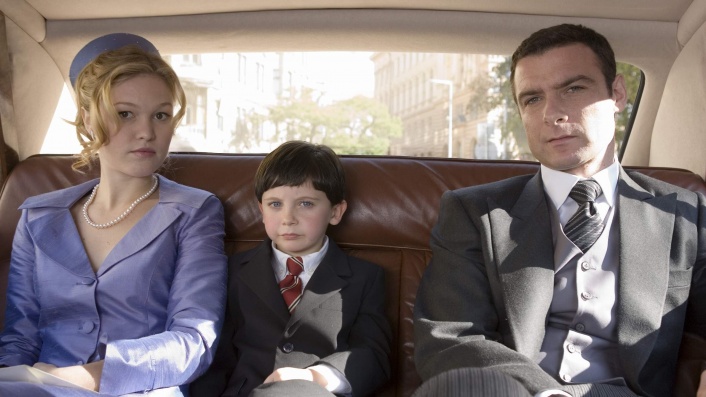
One of the reasons The Omen continues to feel sophisticated is that it recognises evil rarely arrives through brute force. Instead, it infiltrates institutions. Robert Thorn is not a police officer. He is not a scientist. He is not a priest. He is an ambassador. A diplomat. A man operating within systems of power. Likewise, Damien is not raised in poverty or isolation. He is adopted into privilege. Protected by wealth. Surrounded by influence. This was a remarkably perceptive idea for a mainstream horror film. The Antichrist does not conquer civilisation. He inherits it.
The film understands that the most effective evil is often institutional rather than individual. It flourishes inside governments, organisations, families, and hierarchies because people assume those structures are trustworthy. Viewed from a contemporary perspective, this aspect of The Omen feels almost prophetic. The fear of corruption within institutions remains as potent today as it was in 1976. Perhaps even more so.
The Death of Objective Evil
As horror evolved through the 1980s, 1990s, and beyond, the genre gradually shifted away from religious certainty. The Devil remained. But increasingly as metaphor. The monsters became psychological manifestations of grief, repression, guilt, trauma, addiction, and fractured identity.
Films such as The Witch examine religious paranoia through historical and social frameworks. Saint Maud explores faith through mental instability and obsession. Hereditary disguises generational trauma beneath occult mythology. Even Longlegs, with its overt Satanic imagery, ultimately functions as a meditation on manipulation and inherited suffering. These films are exceptional. Many rank among the finest horror works of the modern era. Yet they approach religion differently. They ask: What does belief do to people? The Omen asks something else entirely. What if belief is correct? That distinction remains enormously important.
Why Modern Horror Can’t Quite Replicate It
The challenge facing contemporary religious horror is not one of craftsmanship. Modern filmmakers are more technically skilled than ever. The challenge is cultural. Western society has become increasingly secular. Audiences bring vastly different religious experiences into cinemas. Shared theological assumptions have fractured. Biblical literacy is no longer universal.
As a result, films can no longer rely upon collective belief systems in the same way. The Antichrist no longer automatically terrifies audiences. The Devil no longer dominates public imagination. The apocalypse has changed shape. Today we fear environmental collapse. Artificial intelligence. Political instability. Pandemics. Economic uncertainty. The end of the world remains compelling. Only the mechanism has evolved.
Why The Omen Endures
This is ultimately why The Omen continues to thrive while so many imitators have faded into obscurity. It operates successfully on multiple levels simultaneously. As religious horror. As conspiracy thriller. As family tragedy. As political allegory. As apocalyptic prophecy. Viewers do not need to believe in the Antichrist for the story to work. They merely need to understand fear.
Fear of losing a child.
Fear of institutional failure.
Fear of corrupted authority.
Fear that powerful forces may already be shaping the future beyond our control.
Those anxieties transcend religion. And because they transcend religion, The Omen transcends its era.
Fifty Years Later
Half a century after Damien Thorn first appeared on screen, horror has changed dramatically. Technology has evolved. Audience expectations have shifted. The genre has embraced new fears and new voices. Yet few films have managed to replicate the peculiar power of The Omen.
Perhaps because it arrived at the perfect moment. The moment when ancient religious fears collided with modern political uncertainty. The moment when audiences still recognised the Devil as a genuine cultural force. The moment when horror dared to suggest that prophecy might not be symbolic at all. That it might already be unfolding.
The Prognosis:
Fifty years later, The Omen remains more than a masterpiece of supernatural horror. It stands as the defining expression of religious horror’s golden age. A film that treated faith seriously. Treated evil literally. And transformed biblical prophecy into one of cinema’s most enduring nightmares.
Modern horror continues to explore grief, trauma, guilt, and identity with extraordinary sophistication. But The Omen belongs to a rarer tradition. One that dared to ask a question few films are willing to pose today: Not what if evil exists within us.
But what if evil exists beyond us?
And what if it has already arrived?
- Saul Muerte
 Surgeons of Horror