In an era where video game movies usually chase blockbuster spectacle, OBEX heads defiantly in the opposite direction. Written, directed by, and starring Albert Birney, the film is a surreal, low-fi fantasy that feels less like a conventional adventure and more like a fever dream about loneliness, digital escapism, and the strange places our minds wander when reality becomes unbearable.
Fans of Birney’s earlier cult oddity Strawberry Mansion will recognize the sensibility immediately: handmade visuals, melancholy humour, and a fascination with the porous boundary between imagination and waking life.
A Quest That Begins With Loss
Birney plays Conor, a thirty-something recluse whose existence is almost entirely mediated through a computer screen. His two anchors are video games and his beloved dog Sandy. When Sandy mysteriously disappears, the loss shatters the fragile routine that defines Conor’s life. His search leads him somewhere unexpected — into the very game he has been obsessively playing.
The titular game, OBEX, becomes both portal and psychological mirror. To rescue Sandy, Conor must traverse its strange landscapes and confront a demon named Ixaroth, but the journey is less about heroic triumph than existential unraveling.
Like many of the film’s most effective moments, the premise works metaphorically: the game world is not merely a fantasy environment but a projection of Conor’s inner life.
Early Lynchian Echoes
There’s an unmistakably David Lynch-adjacent energy to the film’s tone — particularly the director’s early work, where narrative coherence often gives way to texture and mood. OBEX embraces dream logic. Scenes drift in and out of one another. Dialogue occasionally feels like fragments of a half-remembered conversation. Objects carry an eerie symbolic weight.
The aesthetic reinforces this atmosphere. Birney favours tactile, lo-fi visual effects and handmade set pieces that feel closer to experimental art installation than mainstream fantasy cinema. The game environments have the uncanny texture of forgotten 1990s PC graphics filtered through a surrealist lens.
Rather than striving for realism, OBEX leans into artificiality — and in doing so creates something oddly hypnotic.
Gamification as Psychological Descent
Where OBEX becomes particularly interesting is in its use of gaming mechanics as narrative structure. Levels, quests, and encounters mirror Conor’s emotional state. Progression through the game doesn’t feel triumphant; it feels obsessive, as if he’s spiraling deeper into a digital labyrinth.
This gamified framework also becomes commentary on escapism. Conor retreats into OBEX not just to save Sandy but to avoid confronting the emptiness of his real life. The deeper he goes, the less clear the boundaries between player and character become.
The film never fully explains the metaphysics of its world — wisely so. OBEX functions best when experienced as a symbolic landscape rather than a literal one.
Sound, Texture and Handmade Weirdness
Adding to the film’s dreamlike texture is its score, recorded by Josh Dibb, founding member of Animal Collective. The music drifts between ambient melancholy and eerie electronic pulses, giving the film a sonic identity that feels both nostalgic and otherworldly.
Combined with Birney’s deliberately rough visual style, the soundtrack enhances the sensation that OBEX exists somewhere between retro gaming nostalgia and avant-garde fantasy.
A Strange but Compelling Indie Journey
OBEX won’t be for everyone. Its narrative can feel deliberately opaque, and viewers expecting a traditional fantasy adventure may find themselves disoriented by its meandering dream logic. Yet that same refusal to conform is also its greatest strength.
Birney has crafted something personal, odd, and unmistakably independent — a film that feels like it emerged from the margins of cinema rather than its mainstream centre.
OBEX stands as an intriguing curiosity: a surreal digital odyssey that captures the strange emotional gravity of games, memory, and loneliness.
And like any good quest, it leaves you wondering whether the real journey happened inside the screen — or inside the player.
There are cult films, and then there are accidents of cinema — features that achieve immortality not through design, but through coincidence, misreading, and sheer historical mischief. Troll (1986) belongs squarely in the latter category: a film remembered less for what it is than for what it accidentally prefigured, misinspired, and became associated with long after its modest ambitions had curdled into kitsch.
And yet, behind the latex ears and ill-fated wizardry stands a filmmaker worth far more respect than this film’s reputation allows.
The Craftsman Behind the Curtain
John Carl Buechler remains one of genre cinema’s great unsung artisans. A gifted special effects designer who helped shape the tactile horrors of Friday the 13th Part VII, Re-Animator, and countless exploitation staples, Buechler belonged to that dying breed of filmmakers who understood monsters as objects — sculpted, painted, and animated by hand.
Troll was his directorial debut, and it bears all the marks of a craftsman promoted too quickly to magician.
There is, undeniably, a handmade charm to the film. The practical effects — crude as they are — possess a sincerity now absent from much digital fantasy. The creatures are physical. The makeup is tangible. You can see the fingerprints of labour in every prosthetic and puppet. But good intentions, sadly, do not summon good storytelling.
The Myth of the Boy Wizard
It is impossible to discuss Troll without addressing the elephant — or rather, the bespectacled boy — in the room.
Long before Hogwarts, long before J.K. Rowling, this film introduced a young protagonist named Harry Potter. The coincidence is so outrageous it has since become the film’s primary cultural legacy. The connection is legally irrelevant, narratively meaningless, and yet historically irresistible. In hindsight, Troll reads like a bootleg prophecy — a cheap VHS oracle accidentally whispering a name that would one day dominate popular culture.
Of course, this Harry Potter is no chosen one. He is a bland, passive child adrift in a narrative that barely knows what to do with him. Magic here is not destiny, but disorder — a grab bag of spells, potions, and goblin politics that never cohere into a convincing mythology.
What remains is not mythology, but meme.
Band, Bono & B-Movie Business
As ever, hovering behind the chaos is Charles Band, Full Moon’s impresario of low-budget fantasy and high-concept nonsense. His influence is everywhere: the tonal instability, the commercial opportunism, the sense that the film is less telling a story than testing a product line.
Troll feels engineered less as a film than as a franchise prototype — a world to be exploited, sequelised, and merchandised. That it eventually spawned the infamously unrelated Troll 2 only underlines how little creative coherence existed at the foundation.
Adding to the oddity is the presence of Sonny Bono, whose performance is less acting than cameo-as-curiosity. He drifts through the film like a misplaced sitcom ghost, never fully belonging to the fantasy world around him, and inadvertently reinforcing the film’s tonal confusion.
And then there is Julia Louis-Dreyfus, in an early role that serves primarily as historical footnote. She is capable, charming, and completely underserved — a future comedic titan trapped in a film that barely knows what to do with its own plot, let alone its supporting cast.
A Film at War with Itself
The central problem with Troll is not its budget, nor its effects, nor even its camp. It is its profound indecision.
Is this a children’s fantasy? A horror film? A family comedy? A supernatural soap opera? The film answers “yes” to all, and commits fully to none. Scenes of possession and body horror sit awkwardly beside slapstick and sitcom rhythms. Threat never coheres. Stakes never settle. Even Torok, the film’s central antagonist, oscillates between menace and pantomime.
What emerges is not a failed epic, but a confused one — a film whose imagination outpaces its discipline.
The Legacy of a Miscast Spell
Troll survives not as cinema, but as artifact.
It is remembered because of a name, not a narrative. Because of a sequel, not a success. Because of careers that outgrew it, not because it nurtured them. And yet, within its rubbery frame, there remains a faint trace of Buechler’s genuine love for monsters — a craftsman trying, unsuccessfully, to become a storyteller.
In the end, Troll is less a film than a cautionary tale: about promotion before preparation, about concept without control, about how even the most gifted monster-makers can be undone by a story that refuses to behave.
The Prognosis:
A curiosity. A footnote. A miscast spell that, by sheer accident, echoes through pop culture far louder than it ever deserved.
There is something inherently seductive about family-made cinema. Not merely collaborative, not simply economical, but almost ritualistic in nature — as if filmmaking itself becomes a shared incantation passed between bloodlines. Few modern genre outfits embody this notion more fiercely than the Adams family. With Hellbender, they didn’t just announce themselves; they howled their arrival, carving a space within contemporary folk horror that felt raw, feral, and authentically unpolished.
Mother of Flies, however, arrives burdened by that legacy — and perhaps undone by it.
Horror in the Blood
John Adams, Toby Poser, and Zelda Adams have, across their work, demonstrated a fascination with witchcraft, bodily sacrifice, inherited trauma, and the occult as something lived-in rather than merely aesthetic. Their films feel less written than unearthed, less scripted than summoned. In Hellbender, this approach reached its most potent expression: a coming-of-age tale steeped in pagan fury, where mother-daughter dynamics merged seamlessly with mythic inheritance. It felt dangerous. It felt discovered.
That sense of discovery is precisely what Mother of Flies struggles to replicate.
Once again, the Adams family retreat into the woods, this time following a young woman seeking salvation from a terminal diagnosis through dark magic and the guidance of a reclusive witch. It is fertile soil for their obsessions — body, ritual, desperation, the cost of power — yet the film rarely sinks its claws into them with conviction.
A Spell Half-Cast
Where Hellbender burned fast and bright, Mother of Flies smoulders — often beautifully, but frustratingly without ignition.
Atmospherically, the film remains tactile and sincere. There is a genuine commitment to texture here: the forest breathes, the rituals feel weighty, the blood not merely decorative but symbolic. The Adams family’s sincerity is never in question — they are filmmakers who believe deeply in what they are conjuring, and that faith lends the film moments of eerie gravitas.
Yet structurally, the film meanders far too long through its incantations, circling its themes without ever quite piercing them. Scenes linger where they should tighten. Symbolism repeats where it should escalate. What begins as hypnotic gradually becomes inert.
It is only in the final act — when consequences are finally allowed to surface — that Mother of Flies truly stirs. Here, the Adams family remind us of their potency: horror not as spectacle, but as reckoning. Unfortunately, by then, the film has already tested the audience’s patience too severely.
The Problem of Inherited Myth
This raises a more curious question about family-made horror itself.
There is something uniquely powerful about horror crafted by those bound not only by contracts, but by blood. Shared history allows shorthand storytelling. It encourages risk. It produces mythology that feels intimate rather than manufactured. We see echoes of this in other sibling or bloodline creatives — the Phillippou Brothers’ ferocious Talk To Me, even the generational echoes of Cronenbergian body horror.
But such intimacy comes with its own danger: when mythology becomes inherited rather than earned, ritual risks becoming repetition. Aesthetic replaces terror. Gesture replaces consequence.
Mother of Flies occasionally feels like the Adams family performing their own mythology, rather than discovering something new within it.
The Fragility of Folk Horror
Folk horror thrives on the illusion of something uncovered — an ancient story clawed from the soil rather than assembled in post-production. Once codified, once too self-aware, it becomes perilously close to costumed reverence. Hellbender felt dangerous because it seemed accidental, like lightning captured in a bottle. Mother of Flies feels careful by comparison — reverent, controlled, and therefore less frightening.
This does not make it a failure, but it does make it a frustrating experience — one brimming with potential, sincerity, and visual mood, yet restrained by its own solemnity.
Still Watching the Woods
Mother of Flies ultimately lands as a disappointment — not because it lacks craft or ambition, but because it fails to evolve the dark language the Adams family once spoke so fluently. And yet, to dismiss it outright would be to misunderstand its place in the larger arc of their work.
The Adams family remain one of indie horror’s most compelling bloodlines. Even in misstep, they conjure worlds few others dare to inhabit so sincerely. In a genre obsessed with inheritance, curses, and legacy, that alone keeps them worth following — back into the woods, back toward the firelight, back toward whatever spell they choose to cast next.
Saul Muerte
Mother of Flies is available to stream on Shudder from Fri 23rd Jan.
Released in the mid-1980s, when natural horror and animal-attack films were enjoying a second life on VHS and late-night television, Link occupies an unusual and often overlooked position within the killer ape subgenre. Directed by Richard Franklin—best known for his Hitchcockian leanings and his brief but curious detour into franchise horror with Psycho II—the film is less interested in primal savagery than in the unnerving implications of intelligence, hierarchy, and control.
The setup flirts with eccentricity. Graduate student Jane Chase arrives at the isolated home of an ageing zoology professor, only to discover that the household hierarchy has already been rewritten. The professor’s chimpanzees operate with eerie autonomy, while Link, an elderly orangutan dressed and treated like a gentleman’s butler, observes quietly from the margins. When one chimp is found dead and the professor vanishes, Franklin slowly inverts the power dynamic. Jane is no longer studying behaviour—she is subject to it.
Franklin directs Link with a measured, classical restraint that sets it apart from the more exploitative entries in the killer ape cycle. There is little in the way of sensational gore or overt shock tactics. Instead, tension is built through framing, pacing, and a creeping sense of domestic invasion. The house becomes a laboratory, and Jane its most vulnerable test subject. The horror emerges not from sudden violence but from the dawning realisation that the apes understand far more than they should—and may be capable of resentment, planning, and cruelty.
Elisabeth Shue, still early in her career, delivers a performance that anchors the film’s escalating unease. Her Jane is intelligent and resourceful, but never impervious. Shue excels at conveying fear through restraint, allowing the terror to register in hesitation and watchfulness rather than outright hysteria. It’s a performance that would foreshadow her later genre credibility, grounding increasingly absurd situations in emotional reality.
Terence Stamp, meanwhile, brings an off-kilter gravitas to the role of the eccentric professor. Though his screen time is limited, his presence lingers over the film, lending it an air of intellectual arrogance and ethical negligence. Stamp embodies a familiar horror archetype: the man of science who mistakes authority for control, and curiosity for dominion. His disappearance feels less like a mystery than an inevitability.
Within the broader killer ape genre, Link sits closer to Monkey Shines than to more bombastic entries like Congo or Rampage. This is not a film about nature striking back in spectacular fashion, nor is it interested in giant monsters or environmental collapse. Instead, Link taps into a subtler fear—the idea that intelligence, once nurtured and confined, may turn possessive and violent when its boundaries are tested.
That said, the film is not without its shortcomings. The third act leans into melodrama, and the film’s central conceit occasionally strains credulity. The mechanics of ape behaviour are pushed beyond plausibility, and some of the symbolism—particularly around class, servitude, and dominance—remains underdeveloped. Franklin’s restraint, while admirable, sometimes blunts the film’s impact, leaving it hovering between psychological thriller and creature feature without fully committing to either.
Viewed in retrospect, Link is a solid, thoughtful entry in the killer ape canon—more curious than terrifying, more cerebral than visceral. It lacks the cultural weight of Planet of the Apes or the grindhouse audacity of exploitation-era ape horror, but it compensates with atmosphere, performance, and an unsettling moral undercurrent.
For readers interested in the broader lineage of killer ape cinema—where Link fits alongside films that interrogate humanity’s uneasy relationship with intelligence, dominance, and the natural world—this film acts as a quiet but essential connective tissue, bridging prestige thrillers and pulp horror traditions.
The Prognosis:
A restrained, intelligent thriller that favours implication over excess, Link remains a peculiar but worthwhile footnote in the long, uneasy history of killer apes on screen.
There is something uniquely unsettling about the cinematic ape. Neither fully beast nor recognisably human, the ape exists in a liminal space where intelligence threatens instinct and instinct threatens civilisation. When apes turn violent on screen, it is rarely just spectacle—it is metaphor. Fear of regression. Fear of science. Fear of nature remembering its strength.
As Primate prepares to join this strange lineage, it’s worth tracing how killer ape cinema has evolved: from pulp exploitation and natural horror, through prestige allegory, to blockbuster spectacle and outright absurdity.
The Apex of Fear: Apes as Allegory
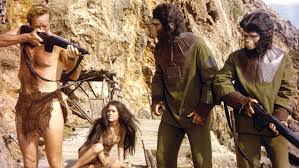
Planet of the Apes (1968)
Franklin J. Schaffner’s landmark film is not a “killer ape movie” in the crude sense, but it is foundational. The apes are not monsters; they are inheritors. Their violence is institutional, judicial, scientific. What terrifies is not their savagery but their civilisation—one that mirrors humanity’s worst impulses.
Every ape-on-human act here carries ideological weight. This is not about claws and teeth; it is about power structures. Nearly every killer ape film since has echoed this anxiety, whether consciously or not.
Dawn of the Planet of the Apes (2014)
The modern franchise reclaims that allegorical power. Caesar’s apes are tragic, political beings whose violence emerges from betrayal and fear. While not “killer apes” in the exploitation sense, the film’s emotional complexity elevates simian aggression into something operatic. Violence is framed as consequence, not novelty.
Kingdom of the Planet of the Apes (2024)
This latest entry leans further into myth-making. Apes as kings, generals, tyrants. Here, the killer ape becomes historical force—a reminder that dominance is cyclical. Humanity is no longer prey, but footnote.
Verdict: Essential context. These films legitimise the ape as cinematic threat by grounding it in philosophy rather than pulp.
Nature Turns Hostile: Apes as Environmental Horror
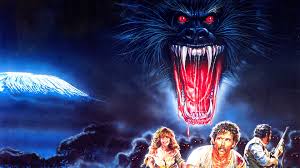
In the Shadow of Kilimanjaro (1985)
Possibly the most literal killer ape film ever made. Tens of thousands of starving baboons descend upon humans during a drought. It’s messy, bleak, and strangely prescient. Environmental collapse creates violence, not evil. The apes are not villains—they are survivors.
Despite its rough edges, the film taps into a genuine eco-horror vein later seen in shark, insect, and reptile cinema.
Blood Monkey (2006)
A late-era attempt to graft Jurassic Park aesthetics onto primate horror, Blood Monkey is disposable but emblematic of the genre’s exploitation phase. Science meddles. Apes mutate. People die. The film has little to say beyond spectacle, but it shows how the killer ape had become a direct-to-video creature feature staple.
Verdict: Relevant as cautionary tales—nature retaliating against human arrogance.
Laboratory Nightmares: Apes and Scientific Hubris
Monkey Shines (1988)
George A. Romero’s most psychologically disturbing work may also be his quietest. Ella the monkey is not a rampaging beast but a resentful, possessive intelligence shaped by experimentation. The horror lies in emotional transference and loss of autonomy.
This is killer ape cinema at its most intimate and uncomfortable.
Link (1986)
An underrated British horror gem where a super-intelligent orangutan becomes lethally territorial. The film weaponises intelligence rather than mutation, suggesting that awareness itself may be the most dangerous upgrade of all.
Night of the Bloody Apes (1969)
Mexican exploitation at its most lurid. A heart transplant turns a man into a masked ape monster. It’s crude, sensationalist, and morally dubious—but deeply influential in cementing the ape-man as grindhouse staple.
Panic in the Tower (1990)
A lab-escape narrative filtered through teen horror clichés. The killer baboon is more slasher than animal, stalking corridors like a furry Michael Myers.
Verdict: These films form the psychological backbone of killer ape cinema—where the true horror is not the animal, but the experiment.
Giants, Gods, and Spectacle: When Apes Become Myth
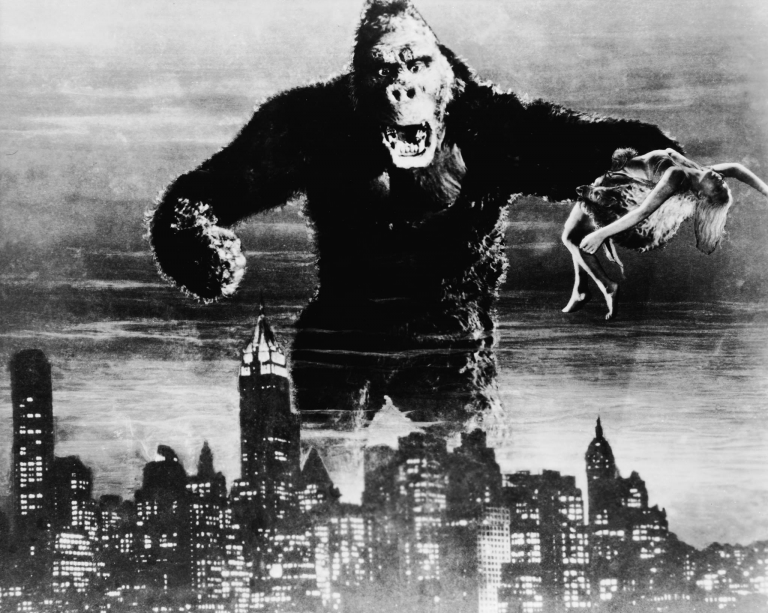
King Kong (1933 / 2005)
Kong is not a killer ape—he is a tragic one. Violence is secondary to romance, spectacle, and colonial metaphor. Yet his influence on the genre is incalculable. Every giant ape that follows owes him a debt.
Peter Jackson’s 2005 remake amplifies Kong’s emotional register, transforming destruction into operatic tragedy.
Kong: Skull Island (2017)
This iteration strips Kong of romance and repositions him as apex guardian. His violence is righteous, directed outward at greater monsters. Here, the killer ape becomes protector—a shift that reflects modern genre sensibilities.
Rampage (2018)
Pure popcorn nonsense. Genetic tampering turns a gorilla into a skyscraper-smashing kaiju. Fun, loud, and completely unconcerned with metaphor, Rampage represents the genre’s absorption into blockbuster bombast.
Verdict: Spectacle-driven entries that dilute fear but expand scale.
Absurdity and Parody: When the Genre Eats Itself
Mulva 2: Kill Teen Ape! (2004)
A micro-budget splatter parody that knows exactly how ridiculous the concept has become. It doesn’t undermine the genre—it autopsies it.
Mad Monster Party? (1967)
Not killer ape cinema per se, but illustrative of how apes were absorbed into pop-horror iconography by the late ’60s.
Verdict: Not essential, but proof that killer apes are culturally flexible—even laughable.
Outliers and Near Misses
Congo (1995)
Technically a killer ape movie, spiritually a corporate jungle adventure. The grey gorillas are terrifying in concept but undercut by tonal confusion and animatronic stiffness. A fascinating failure.
Ad Astra (2019)
The infamous space-baboon sequence is memorable but tangential. A jump scare, not a genre entry.
Why Killer Apes Endure — And Why Primate Matters
Killer ape films persist because they strike at something deeply primal: the fear that intelligence does not guarantee moral superiority. That evolution is not ascent, but competition. When apes attack, cinema asks whether humanity deserves its place at the top.
From allegory (Planet of the Apes) to exploitation (Night of the Bloody Apes), from eco-horror (Kilimanjaro) to blockbuster spectacle (Rampage), the genre has splintered but never vanished.
If Primate is to matter, it must choose which lineage it belongs to. Will it embrace pulp, philosophy, or paranoia? The history of killer ape cinema suggests that when these films work best, they don’t just show apes killing humans—they remind us how thin the line between them has always been.
If 2025 marked a consolidation of horror as a serious critical form — a year of restraint, inheritance, and psychological rigor — then 2026 promises escalation of a different kind. Not louder, necessarily, but broader. The forthcoming slate suggests a genre increasingly preoccupied with systems: religion, legacy franchises, folklore, surveillance, bodily autonomy, and historical memory. Sequels coexist with reinventions; prestige auteurs collide with grindhouse traditions; and horror’s long-standing obsession with the past intensifies into something closer to cultural archaeology.
What follows is not a ranking of box-office potential, nor a speculative list of shocks, but a curated survey of the most critically promising horror films currently scheduled for 2026 — projects that suggest where the genre may be headed, formally and ideologically.
1. Untitled Jordan Peele Project
Jordan Peele’s continued absence of detail has become its own form of authorship. Since Get Out, Peele has positioned secrecy as a conceptual extension of his work — a refusal to allow audience expectation to pre-empt meaning. Whatever form his 2026 project takes, it is almost certain to engage with systems of power, visibility, and American myth-making, filtered through genre architecture.
Peele’s films operate less as allegory than as diagnosis, embedding social critique within meticulously constructed genre frameworks. Anticipation here is not rooted in premise but in method: the expectation that horror will once again be used to interrogate what America refuses to name.
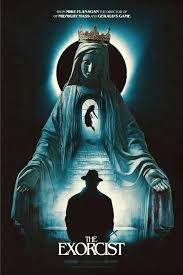
2. Untitled The Exorcist Project
Director: Mike Flanagan
Mike Flanagan’s involvement with The Exorcist franchise suggests a decisive tonal shift away from bombast and toward interiority. Flanagan’s strength has always been his ability to locate horror within grief, faith, and unresolved trauma — concerns deeply aligned with The Exorcist’s theological underpinnings.
With Scarlett Johansson and Jacobi Jupe attached, the project signals a focus on relational dynamics rather than spectacle. If successful, this could mark a rare revival: not of a franchise’s iconography, but of its existential seriousness.
3. The Mummy
Director: Lee Cronin Expected April 17, 2026
Lee Cronin’s reinvention of The Mummy appears poised to reject colonial adventure tropes in favour of familial horror and bodily unease. The disappearance-and-return narrative frames the monster not as ancient spectacle, but as an invasive presence within the domestic sphere.
Cronin’s work has consistently emphasised corruption through intimacy — the idea that horror enters through love rather than conquest. This approach could finally liberate The Mummy from pastiche, reimagining it as a story of loss, identity, and irreversible change.
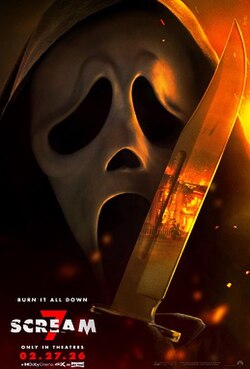
4. Scream 7
Director: Kevin Williamson Releases February 27, 2026
With Kevin Williamson returning to direct, Scream 7 represents a rare case of a franchise turning inward rather than outward. The focus on Sidney Prescott’s daughter reframes the series’ meta-commentary as generational inheritance — asking what it means to pass trauma, notoriety, and survival forward.
Rather than parodying contemporary horror, Scream 7 appears positioned to interrogate its own legacy, transforming self-awareness into something closer to reckoning.
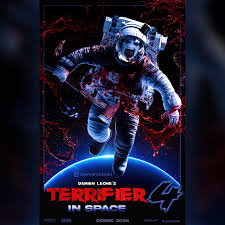
5. Terrifier 4
Director: Damien Leone Expected October 1, 2026
By its fourth entry, Terrifier has evolved from cult provocation into a sustained endurance experiment. Leone’s commitment to practical effects and confrontational violence resists prestige horror’s current trend toward refinement.
What makes Terrifier 4 compelling is not escalation, but persistence. It exists as a countercurrent — forcing a conversation about the limits of spectatorship and the uneasy pleasure of excess.
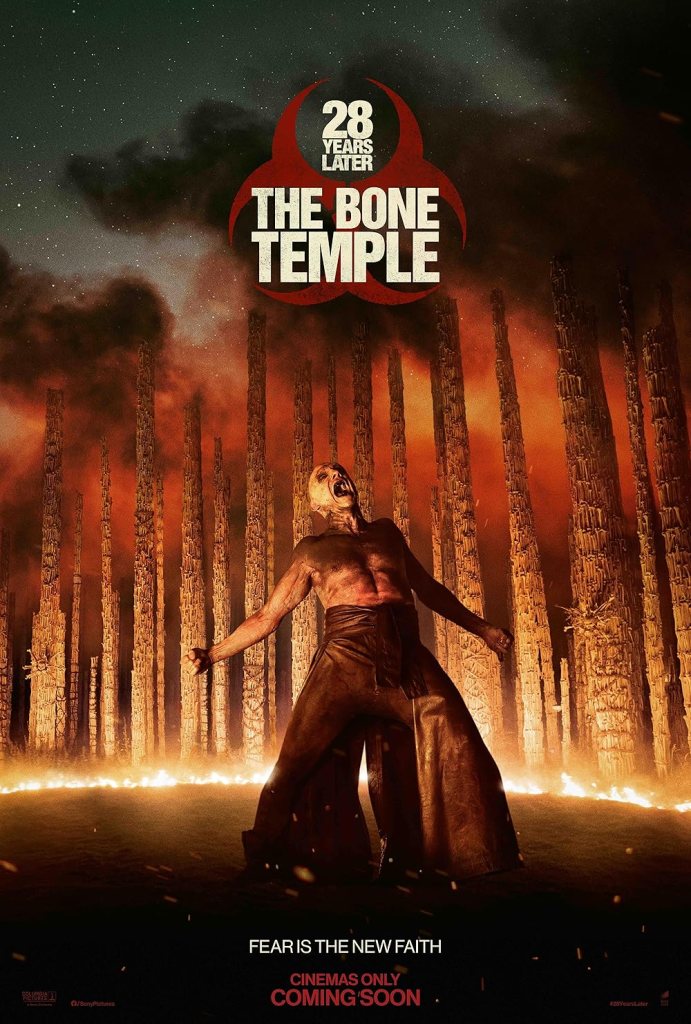
6. 28 Years Later: The Bone Temple
Director: Nia DaCosta Releases January 16, 2026
Nia DaCosta’s entry into the 28 universe signals a shift from outbreak panic to post-collapse power structures. The move toward organised gangs and world-altering discovery suggests a franchise finally confronting its long-term implications.
DaCosta’s sensitivity to social hierarchy and myth-making positions The Bone Temple as less survival horror than political horror — a study of what replaces civilisation after fear becomes normalised.
7. Clayface
Director: James Watkins Expected September 11, 2026
Clayface’s shape-shifting mythology offers fertile ground for horror rooted in identity instability. James Watkins’ involvement hints at a psychological approach rather than comic-book spectacle, reframing the character as tragic figure rather than villain.
The horror here is not transformation, but indeterminacy — the terror of never knowing where the self ends.
8. Evil Dead Burn
Director: Sébastien Vanicek Expected July 24, 2026
With its plot under wraps, Evil Dead Burn remains one of the year’s most intriguing unknowns. Vanicek’s involvement suggests a grittier, more confrontational sensibility — potentially pushing the franchise toward nihilism rather than slapstick.
The challenge will be maintaining Evil Dead’s anarchic spirit while adapting it to contemporary horror’s more controlled brutality.
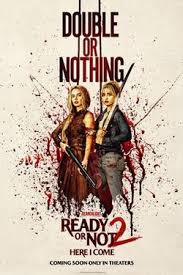
9. Ready or Not 2: Here I Come
Directors: Matt Bettinelli-Olpin & Tyler Gillett Releases March 27, 2026
The sequel expands the first film’s class satire into something closer to mythic competition. By multiplying families and stakes, Here I Come risks dilution — but also offers the opportunity to transform satire into operatic cruelty.
If successful, it could become a dark fairy tale about inheritance, entitlement, and survival economics.
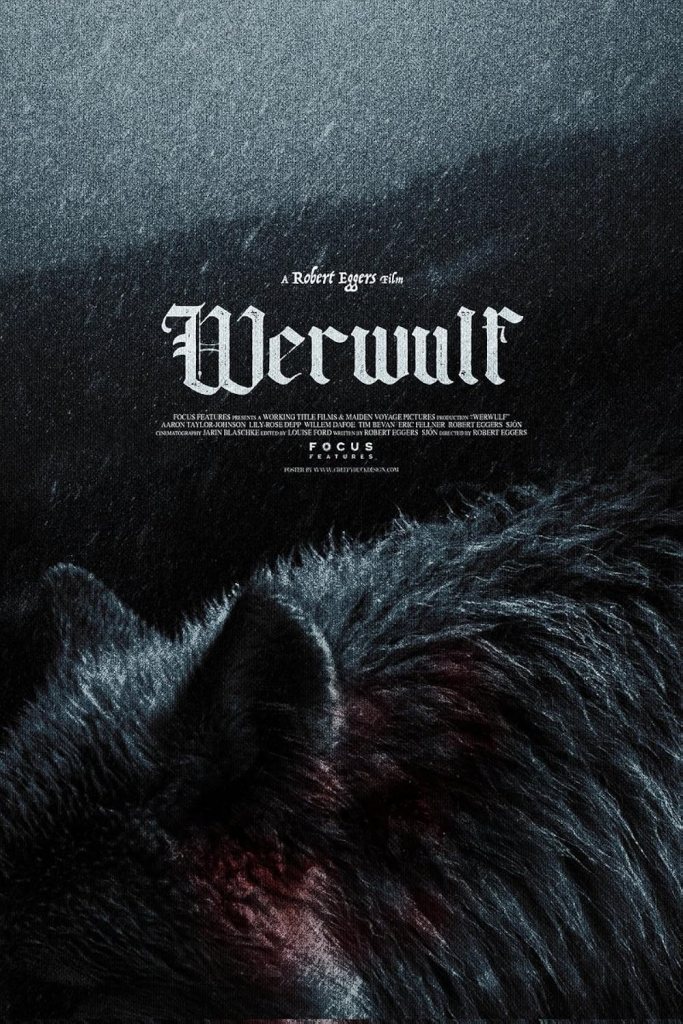
10. Werwulf
Director: Robert Eggers Expected December 25, 2026
Eggers’ medieval werewolf film promises a return to folklore as lived belief rather than cinematic trope. Set against fog, superstition, and communal paranoia, Werwulf appears positioned as a study of fear as social contagion.
Eggers’ commitment to linguistic and historical authenticity suggests a film less concerned with transformation than with the terror of collective conviction.
11. Thread: An Insidious Tale
Director: Jeremy Slater Expected August 21, 2026
Time travel as grief mechanism reframes the Insidious universe around consequence rather than shock. The central conceit — rewriting tragedy — situates horror within parental desperation and moral compromise.
If handled with restraint, this could become the franchise’s most emotionally coherent entry.
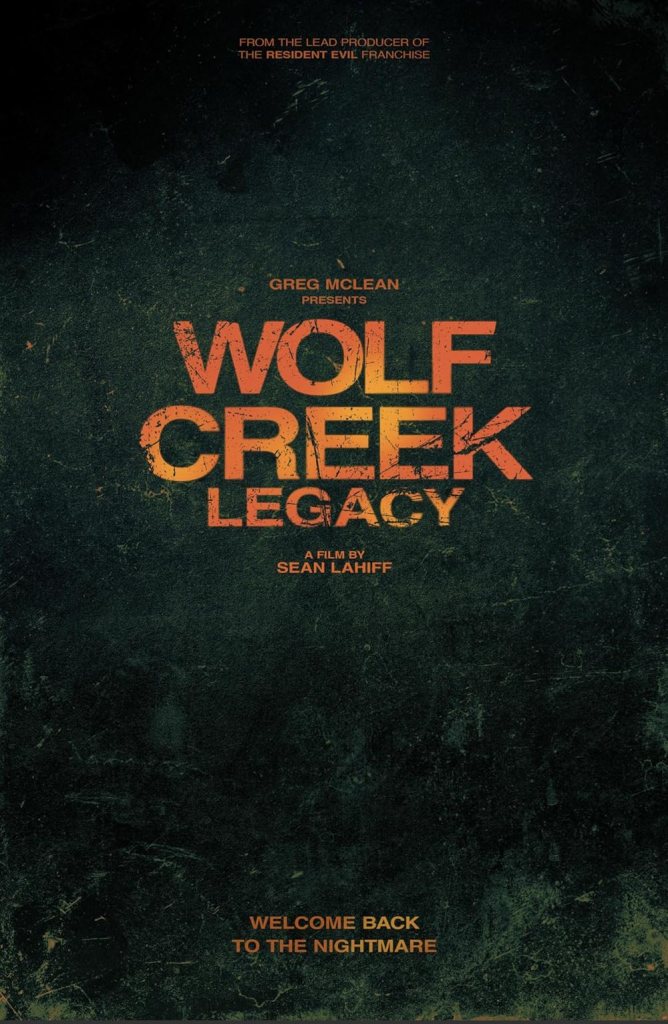
12. Wolf Creek: Legacy
Director: Sean Lahiff Expected 2026
By shifting focus to children surviving in Mick Taylor’s territory, Legacy reframes the franchise around endurance rather than nihilism. The Australian landscape once again becomes indifferent, vast, and complicit.
The film’s success will hinge on its ability to balance brutality with perspective — horror as survival, not spectacle.
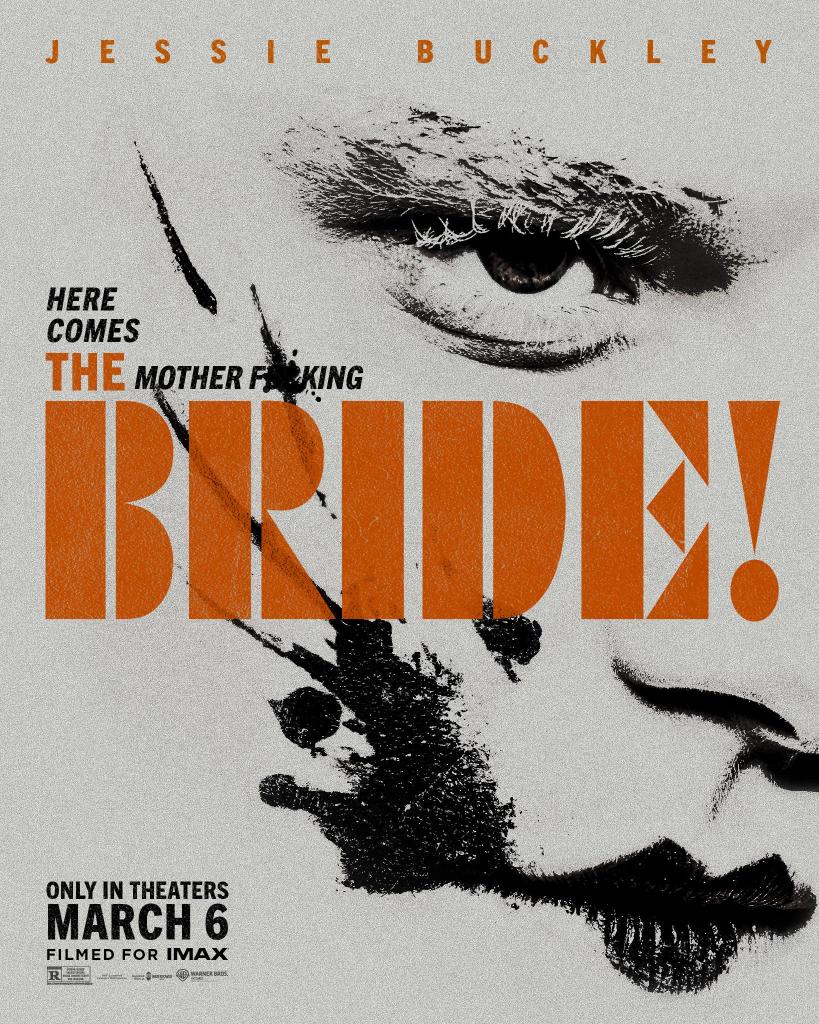
13. The Bride
Director: Maggie Gyllenhaal Releases March 6, 2026
Gyllenhaal’s reinterpretation of Bride of Frankenstein foregrounds politics, gender, and radical transformation. Set against 1930s social upheaval, the film positions monstrosity as emancipatory rather than aberrant.
This is Frankenstein as social revolution — a reclamation of agency rather than a cautionary tale.
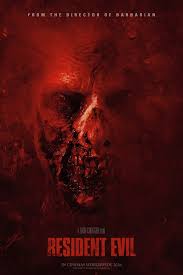
14. Resident Evil
Director: Zach Cregger Expected September 18, 2026
Cregger’s involvement suggests a deliberate move away from franchise excess toward claustrophobic immediacy. A courier trapped in a hospital outbreak recalls survival horror’s roots: isolation, confusion, and bodily threat.
If successful, this could be the franchise’s first genuinely frightening reinvention.
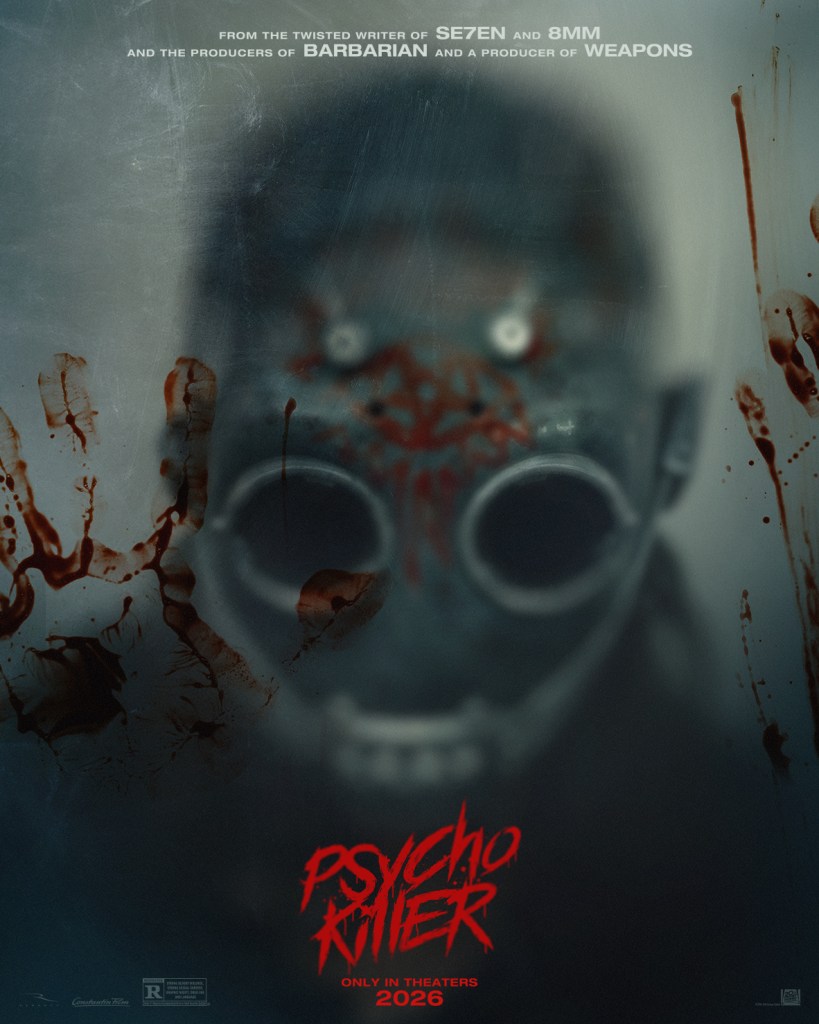
15. Psycho Killer
Director: Gavin Polone Releases February 20, 2026
Positioned as procedural horror, Psycho Killer explores violence through aftermath rather than spectacle. By centring a police officer navigating personal loss, the film aligns horror with grief and investigation rather than shock.
Its promise lies in restraint.
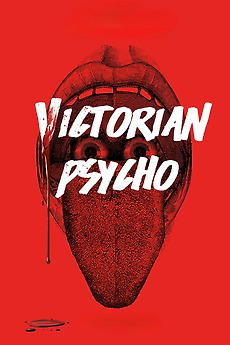
16. Victorian Psycho
Director: Zachary Wigon Expected 2026
This gothic narrative of a governess amid disappearing staff evokes The Turn of the Screw through a feminist lens. Horror emerges gradually, through atmosphere and implication rather than revelation.
The film’s strength will lie in ambiguity: whether monstrosity is external, internal, or socially constructed.
17. Iron Lung
Director: Mark Fischbach Releases January 30, 2026
Adapted from minimalist survival horror, Iron Lung translates isolation into cosmic dread. Its confined submarine setting and apocalyptic mythology suggest horror as existential endurance.
The challenge will be sustaining tension without relief — an experiment in atmospheric extremity.
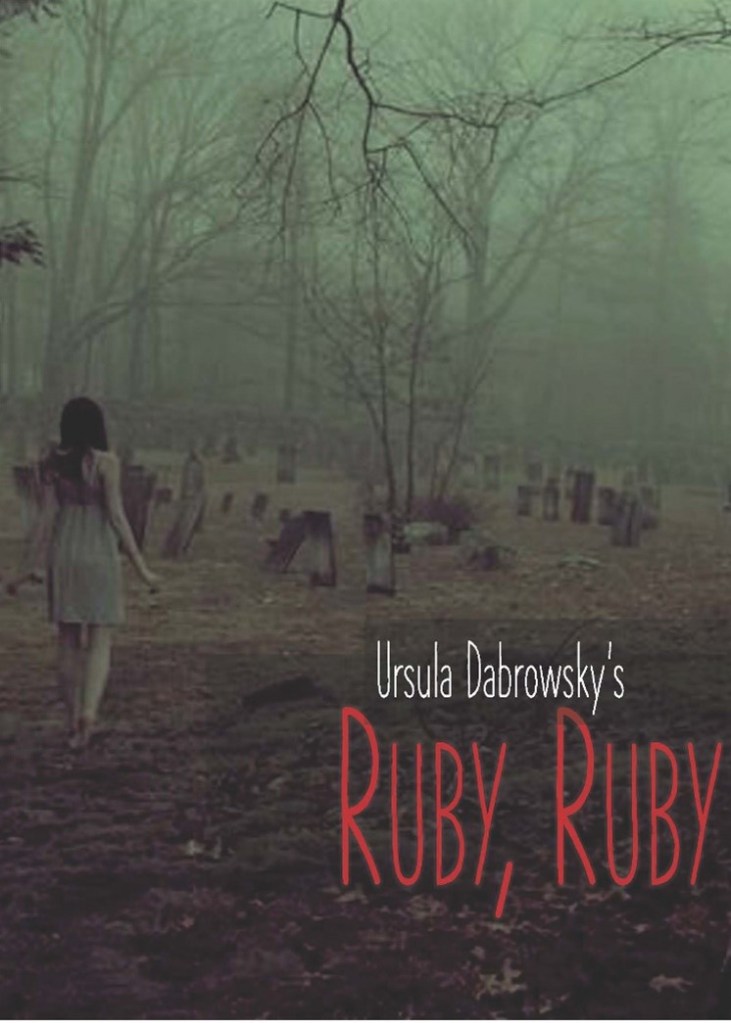
18. Ruby, Ruby
Director: Ursula Dabrowsky Expected 2026
An Australian ghost story rooted in injustice and reclamation, Ruby, Ruby frames haunting as consequence rather than curse. The cemetery setting positions memory as a site of entrapment and resistance.
If handled with restraint, it could join the lineage of Australian horror that privileges melancholy over menace.
Closing Cut
The horror films of 2026 appear less concerned with novelty than with continuity — of trauma, myth, and unresolved systems. Whether through folklore, franchise, or speculative futures, these projects suggest a genre increasingly aware of its own history and responsibilities.
If 2025 taught us how horror cuts, 2026 may show us where it scars.
Michael Shanks’ Together arrives draped in the familiar trappings of modern relationship horror: an isolated move, emotional fractures laid bare, and the suggestion that intimacy itself might be the most dangerous terrain of all. What distinguishes the film—at least initially—is its willingness to literalise emotional dependency through supernatural means, turning the language of co-dependence into something disturbingly corporeal.
The story centres on a couple already fraying at the edges, their relocation to the countryside framed less as fresh start than slow retreat. Shanks smartly uses the rural setting as an amplifier rather than a cause, isolating the pair in a space where grievances echo and silences grow heavy. When the supernatural intrusion arrives, it does not feel like an external threat so much as an acceleration of tensions already present. Love, here, is not broken—it is mutating.
At its best, Together is sharply observant about the quiet violences couples inflict on one another in the name of closeness. The film’s central conceit—an “extreme transformation” of love and flesh—is handled with a commitment to physical horror that aligns it with the recent wave of intimacy-as-body-horror cinema. Shanks stages these moments with an unflinching eye, allowing discomfort to linger rather than rushing toward release. The implication is clear: to merge completely is to erase boundaries, and erasure is rarely benign.
Where the film falters is in its balance between metaphor and mechanics. The supernatural rules remain hazy, and while ambiguity suits the emotional material, it occasionally undermines narrative momentum. There’s a sense that Together knows precisely what it wants to say about relationships, but struggles to sustain tension once its thesis has been made flesh. The final stretch, in particular, leans heavily on repetition, circling its ideas rather than deepening them.
Still, Shanks deserves credit for resisting easy catharsis. Together refuses to offer a clean moral or a redemptive escape hatch. Its vision of love is not romanticised nor outright condemned—it is presented as something dangerous precisely because it is so often mistaken for safety. The horror comes not from the supernatural encounter itself, but from the realisation that devotion, unchecked, can become a kind of possession.
The Prognosis:
Uneven but thoughtful, Together is a grim meditation on intimacy and identity, using body horror to expose the cost of losing oneself in another—even when the invitation sounds like love.
Osgood Perkins has never been interested in horror as spectacle. His films drift, linger, and rot from the inside out, favouring mood over momentum and suggestion over shock. Keeper finds the director once again circling his most enduring fixations—the paranormal, the mythic, and the occult—and when he commits fully to these shadowy preoccupations, the results are among his most unsettling to date.
The premise is deceptively simple. Liz and Malcolm retreat to a secluded cabin for an anniversary weekend, a familiar setup that Perkins treats less as narrative engine than ritual initiation. When Malcolm abruptly returns to the city, the film fractures, leaving Liz alone in a space that begins to feel less like a holiday retreat and more like a consecrated site. What follows is not a barrage of scares but a slow accretion of dread, as the cabin reveals itself to be a vessel for something ancient, watchful, and profoundly uninterested in human morality.
Perkins’ greatest strength has always been his willingness to let horror breathe. Like The Blackcoat’s Daughter and Gretel & Hansel, Keeper operates on a frequency closer to folklore than modern genre mechanics. The evil here is not noisy or demonstrative; it is embedded, inherited, and ritualistic. The cabin feels less haunted than kept—maintained by forces that predate Liz’s arrival and will endure long after she’s gone. Perkins paints this world with a vivid but restrained brush, using sound design, negative space, and repetition to suggest a cosmology that remains tantalisingly opaque.
Tatiana Maslany anchors the film with a performance of remarkable control. Isolated for much of the runtime, she carries Keeper through micro-expressions, physical tension, and an ever-shifting relationship to her surroundings. Her Liz is neither hysterical nor heroic; she is observant, increasingly wary, and quietly devastated as the rules of reality begin to slip. Maslany understands Perkins’ rhythms, allowing fear to register not as reaction but as recognition—an awareness that something has always been wrong here.
If the film falters, it’s in its refusal to fully sharpen its final act. Perkins’ devotion to ambiguity, while thematically consistent, occasionally blunts the emotional impact. There are moments where the mythology feels more gestured at than excavated, and viewers seeking narrative closure may find the ending frustratingly elusive. Yet this, too, feels intentional. Keeper is not about defeating evil or escaping it, but about realising one’s place within a larger, indifferent order.
In the context of Perkins’ body of work, Keeper stands as a confident reaffirmation of his obsessions. When he centres his stories on the occult and the mythic, he is capable of conjuring horror that feels timeless, intimate, and deeply unclean. This is a film that seeps rather than strikes, lingers rather than lunges.
The Prognosis:
A haunting, slow-burning descent into ritual and isolation, Keeper confirms Osgood Perkins as one of modern horror’s most singular—and uncompromising—voices.
The Strangers was once terrifying precisely because it refused to explain itself. Masks without motive. Violence without catharsis. Bryan Bertino’s original film understood that randomness is the most unsettling horror of all. The Strangers: Chapter 2, directed by Renny Harlin, represents the franchise’s continued drift away from that ethos—an increasingly desperate attempt to stretch a concept built on nihilistic simplicity into an ongoing mythology it was never designed to sustain.
Picking up immediately after the events of Chapter 1, the film leans hard into continuation. Maya survived. That alone already strains the fatalistic purity of the original premise, but Chapter 2 doubles down: the Strangers are no longer abstract forces of intrusion, but pursuers with intent, persistence, and—most damagingly—narrative obligation. Survival, we’re told, was just the beginning. Unfortunately, so was the creative erosion.
Harlin, a director long associated with bombastic escalation (Die Hard 2, Cliffhanger), approaches the material with a franchise mindset rather than a conceptual one. The result is a film that confuses momentum for menace. The stalking becomes repetitive, the violence procedural, and the sense of existential dread gives way to something closer to slasher mechanics. The masks are still there, but the mystery behind them has been hollowed out.
The film’s most baffling misstep arrives midway through with a moment so tonally deranged it threatens to derail the entire enterprise: Maya’s encounter with a boar, framed with portentous symbolism and played as some kind of primal omen. It’s a genuine what-the-hell-am-I-watching beat—the precise moment the film abandons any remaining psychological coherence and wanders off into horror non sequitur. What should have been stripped-back terror curdles into accidental surrealism, as if the film briefly mistakes itself for an arthouse allegory before snapping back to franchise obligation.
The latter half retreats into an even more familiar, and equally uninspired, space: the hospital. The nods to Halloween II are unmistakable—fluorescent corridors, wounded survivor, killer(s) returning to finish the job—but where Carpenter and Rosenthal used the setting to extend a nightmarish inevitability, Chapter 2 uses it as connective tissue. The hospital becomes less a space of vulnerability than a narrative checkpoint, a place where the franchise can pause, reset, and prepare itself for further chapters.
This is the core problem: The Strangers was never meant to be episodic. Its power lay in finality. In meaninglessness. In the suggestion that violence doesn’t continue because it must, but because it can. By forcing continuation, Chapter 2 drains the concept of its philosophical cruelty. The Strangers don’t feel inevitable anymore—they feel contractual.
By the time the film limps to its conclusion, it’s clear that the franchise is running on fumes. What was once cold, terrifying minimalism has become overextended, over-explained, and increasingly absurd. The boar may be the most obvious sign that the film has gone off the rails, but the real damage was done the moment The Strangers decided it needed chapters at all.
The Prognosis:
A sequel that mistakes persistence for purpose, and mythology for menace—proof that some doors, once closed, should stay that way.
Kiah Roache-Turner has never been subtle. From the splatter-punk bravado of Wyrmwood to the steel-jawed siege mentality of Nekrotronic and Wyrmwood: Apocalypse, his films have been fueled by testosterone, gallows humour, and a gleeful refusal to apologise for excess. Beast of War doesn’t abandon that DNA—it just throws it into the open ocean and strips it back to muscle, salt, and desperation.
Set during World War II, the film strands a group of young Australian soldiers on a shrinking raft in the Timor Sea after their boat goes down. There’s no grand campaign, no strategic victory to be won—just survival. The enemy comes in familiar forms: hunger, exposure, paranoia, and the creeping inevitability of death. Then there’s the shark. Big. Hungry. Patient. Circling like a debt that always comes due.
Roache-Turner approaches the material with the same bruised knuckles and dark grin that have defined his career. This is still a male, sweat-soaked pressure cooker of a film—men snapping at one another, egos flaring, leadership eroding under the sun. But where Wyrmwood leaned into anarchic mayhem, Beast of War opts for attrition. The humour is still there, sharp and irreverent, often surfacing in moments of grim resignation rather than punchline gags. A joke muttered through cracked lips. A laugh that dies halfway out of the mouth.
Visually, the film punches well above its weight. The cinematography makes art out of scarcity: endless blue horizons that feel less like freedom and more like a prison, sun-bleached skin rendered almost raw, the raft shrinking not just physically but psychologically. The production design understands that less is more—the sea doesn’t need dressing, and the raft becomes both stage and coffin. For a low-budget production, Beast of War carries itself with remarkable confidence.
The shadow of Jaws looms large, and Roache-Turner doesn’t pretend otherwise. The shark is used sparingly, often implied rather than shown, its presence felt through ripples, shadows, and the soldiers’ growing dread. More telling is the film’s spiritual debt to Quint’s USS Indianapolis monologue—men trapped in open water, slowly realising the ocean doesn’t care about bravery or patriotism. Survival isn’t heroic. It’s ugly. It’s luck and endurance and the will to keep breathing one more minute than the bloke next to you.
Where Beast of War occasionally stumbles is in its character depth. The soldiers are broadly sketched—archetypes rather than fully formed men—and while that serves the film’s hard-boiled tone, it limits its emotional reach. When tempers flare or bodies slip beneath the water, the impact is felt more viscerally than personally. It’s effective, but not devastating.
Still, as a continuation of Roache-Turner’s career, Beast of War feels like a natural evolution. It tempers his bombast without sanding down his instincts, trading chainsaws and zombies for saltwater and teeth, while retaining the same irreverent edge. It’s a lean, muscular survival thriller that knows exactly what it is and never pretends to be more.
The Prognosis:
Beast of War isn’t about winning. It’s about lasting. About men pushed past bravado into something rawer and quieter. A gritty, blood-in-the-water chapter in Kiah Roache-Turner’s ongoing fascination with endurance, masculinity, and monsters—human and otherwise.




 Surgeons of Horror