
Tags
animal attack films, ape horror, creature features, cult horror cinema, film, horror, Horror movies, killer ape movies, movies, primate horror, reviews
There is something uniquely unsettling about the cinematic ape. Neither fully beast nor recognisably human, the ape exists in a liminal space where intelligence threatens instinct and instinct threatens civilisation. When apes turn violent on screen, it is rarely just spectacle—it is metaphor. Fear of regression. Fear of science. Fear of nature remembering its strength.
As Primate prepares to join this strange lineage, it’s worth tracing how killer ape cinema has evolved: from pulp exploitation and natural horror, through prestige allegory, to blockbuster spectacle and outright absurdity.
The Apex of Fear: Apes as Allegory
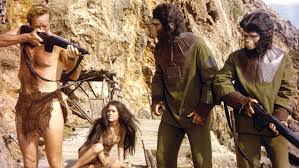
Planet of the Apes (1968)
Franklin J. Schaffner’s landmark film is not a “killer ape movie” in the crude sense, but it is foundational. The apes are not monsters; they are inheritors. Their violence is institutional, judicial, scientific. What terrifies is not their savagery but their civilisation—one that mirrors humanity’s worst impulses.
Every ape-on-human act here carries ideological weight. This is not about claws and teeth; it is about power structures. Nearly every killer ape film since has echoed this anxiety, whether consciously or not.
Dawn of the Planet of the Apes (2014)
The modern franchise reclaims that allegorical power. Caesar’s apes are tragic, political beings whose violence emerges from betrayal and fear. While not “killer apes” in the exploitation sense, the film’s emotional complexity elevates simian aggression into something operatic. Violence is framed as consequence, not novelty.
Kingdom of the Planet of the Apes (2024)
This latest entry leans further into myth-making. Apes as kings, generals, tyrants. Here, the killer ape becomes historical force—a reminder that dominance is cyclical. Humanity is no longer prey, but footnote.
Verdict: Essential context. These films legitimise the ape as cinematic threat by grounding it in philosophy rather than pulp.
Nature Turns Hostile: Apes as Environmental Horror

In the Shadow of Kilimanjaro (1985)
Possibly the most literal killer ape film ever made. Tens of thousands of starving baboons descend upon humans during a drought. It’s messy, bleak, and strangely prescient. Environmental collapse creates violence, not evil. The apes are not villains—they are survivors.
Despite its rough edges, the film taps into a genuine eco-horror vein later seen in shark, insect, and reptile cinema.
Blood Monkey (2006)
A late-era attempt to graft Jurassic Park aesthetics onto primate horror, Blood Monkey is disposable but emblematic of the genre’s exploitation phase. Science meddles. Apes mutate. People die. The film has little to say beyond spectacle, but it shows how the killer ape had become a direct-to-video creature feature staple.
Verdict: Relevant as cautionary tales—nature retaliating against human arrogance.
Laboratory Nightmares: Apes and Scientific Hubris
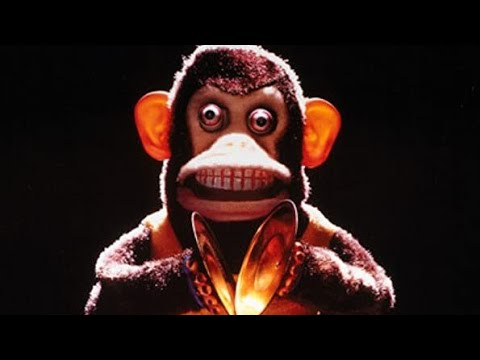
Monkey Shines (1988)
George A. Romero’s most psychologically disturbing work may also be his quietest. Ella the monkey is not a rampaging beast but a resentful, possessive intelligence shaped by experimentation. The horror lies in emotional transference and loss of autonomy.
This is killer ape cinema at its most intimate and uncomfortable.
Link (1986)
An underrated British horror gem where a super-intelligent orangutan becomes lethally territorial. The film weaponises intelligence rather than mutation, suggesting that awareness itself may be the most dangerous upgrade of all.
Night of the Bloody Apes (1969)
Mexican exploitation at its most lurid. A heart transplant turns a man into a masked ape monster. It’s crude, sensationalist, and morally dubious—but deeply influential in cementing the ape-man as grindhouse staple.
Panic in the Tower (1990)
A lab-escape narrative filtered through teen horror clichés. The killer baboon is more slasher than animal, stalking corridors like a furry Michael Myers.
Verdict: These films form the psychological backbone of killer ape cinema—where the true horror is not the animal, but the experiment.
Giants, Gods, and Spectacle: When Apes Become Myth
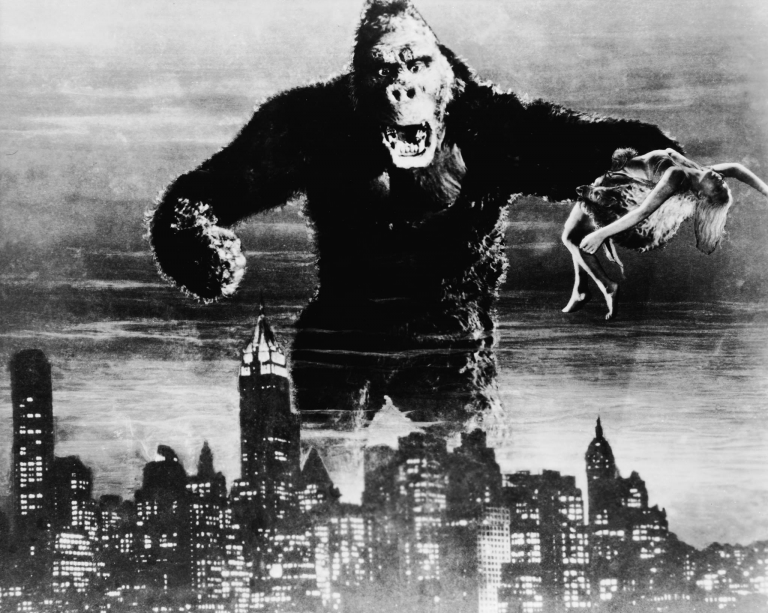
King Kong (1933 / 2005)
Kong is not a killer ape—he is a tragic one. Violence is secondary to romance, spectacle, and colonial metaphor. Yet his influence on the genre is incalculable. Every giant ape that follows owes him a debt.
Peter Jackson’s 2005 remake amplifies Kong’s emotional register, transforming destruction into operatic tragedy.
Kong: Skull Island (2017)
This iteration strips Kong of romance and repositions him as apex guardian. His violence is righteous, directed outward at greater monsters. Here, the killer ape becomes protector—a shift that reflects modern genre sensibilities.
Rampage (2018)
Pure popcorn nonsense. Genetic tampering turns a gorilla into a skyscraper-smashing kaiju. Fun, loud, and completely unconcerned with metaphor, Rampage represents the genre’s absorption into blockbuster bombast.
Verdict: Spectacle-driven entries that dilute fear but expand scale.
Absurdity and Parody: When the Genre Eats Itself
Mulva 2: Kill Teen Ape! (2004)
A micro-budget splatter parody that knows exactly how ridiculous the concept has become. It doesn’t undermine the genre—it autopsies it.
Mad Monster Party? (1967)
Not killer ape cinema per se, but illustrative of how apes were absorbed into pop-horror iconography by the late ’60s.
Verdict: Not essential, but proof that killer apes are culturally flexible—even laughable.
Outliers and Near Misses

Congo (1995)
Technically a killer ape movie, spiritually a corporate jungle adventure. The grey gorillas are terrifying in concept but undercut by tonal confusion and animatronic stiffness. A fascinating failure.
Ad Astra (2019)
The infamous space-baboon sequence is memorable but tangential. A jump scare, not a genre entry.
Why Killer Apes Endure — And Why Primate Matters
Killer ape films persist because they strike at something deeply primal: the fear that intelligence does not guarantee moral superiority. That evolution is not ascent, but competition. When apes attack, cinema asks whether humanity deserves its place at the top.
From allegory (Planet of the Apes) to exploitation (Night of the Bloody Apes), from eco-horror (Kilimanjaro) to blockbuster spectacle (Rampage), the genre has splintered but never vanished.
If Primate is to matter, it must choose which lineage it belongs to. Will it embrace pulp, philosophy, or paranoia? The history of killer ape cinema suggests that when these films work best, they don’t just show apes killing humans—they remind us how thin the line between them has always been.
- Saul Muerte































 Surgeons of Horror