• About
  • podcasts
  • Shop

Surgeons of Horror

~ Dissecting horror films

Surgeons of Horror

Monthly Archives: January 2026

Sasquatch, the Legend of Bigfoot (1976) and the Problem of Filming a Legend

27 Tuesday Jan 2026

Posted by surgeons of horror in Uncategorized

≈ Leave a comment

American folklore has always been haunted by what it cannot prove.

Unlike the fixed monsters of European tradition, America’s creatures live in the margins — glimpsed, alleged, misremembered, always just beyond the frame. Bigfoot, perhaps more than any other, is not a monster of narrative but of testimony: a creature sustained less by sightings than by the human need to believe that the wilderness still hides something unconquered.

Sasquatch, the Legend of Bigfoot arrives squarely within that tradition — and reveals both the power and the limits of trying to film a myth that survives precisely because it refuses to be filmed.

The Documentary as Incantation

Disguised as a scientific expedition, the film adopts the trappings of documentary authority: talking heads, field notes, expedition footage, and a tone of sober investigation. Long before the codification of found footage or mockumentary horror, Sasquatch positions itself as evidence rather than entertainment.

This strategy is not accidental. Bigfoot cinema has always depended on simulation. The myth thrives on blurry images, partial tracks, unreliable narrators. To present Sasquatch clearly would be to kill it.

In theory, the pseudo-documentary form is the perfect vessel for American cryptid folklore.

In practice, the film mistakes method for meaning.

The Failure of Authority

What quickly becomes apparent is that the film has little interest in tension, character, or even narrative momentum. The expedition exists less as drama than as scaffolding for assertion. We are told what to believe far more often than we are shown why.

The scientists, meant to embody rational inquiry, function largely as mouthpieces for exposition. The wilderness becomes backdrop rather than threat. Even the encounters with the creature are staged with such caution that they generate neither terror nor awe.

The pseudo-documentary approach, instead of lending credibility, drains the film of mystery.

By explaining too much and revealing too little, the film occupies the worst of both worlds: neither persuasive as evidence nor effective as horror.

Bigfoot and the American Imagination

And yet, to dismiss the film entirely would be to ignore its curious cultural value.

Bigfoot is not merely a monster. He is an American anxiety.

He emerges from frontier guilt, from the erasure of indigenous histories, from the fear that something ancient survived westward expansion. He is the embodiment of unfinished conquest — a reminder that the wilderness was never fully tamed, only renamed.

Sasquatch, the Legend of Bigfoot gestures toward this lineage without ever articulating it. The film treats the creature as biological puzzle rather than cultural symptom. It wants to solve the legend, not understand it.

This is where the film’s ambition collapses.

By treating folklore as a problem to be disproved or confirmed, rather than a story to be interrogated, the film reduces myth to novelty.

When Myth Becomes Tourism

Much of the film feels less like investigation than like travelogue.

The expedition wanders, interviews drift, landscapes are photographed lovingly but without menace. The wilderness never becomes hostile, only scenic. The legend becomes an excuse for footage rather than a force shaping the narrative.

Even the final revelations — such as they are — lack conviction. The creature remains vague, the danger abstract, the consequences minimal.

What should feel like trespass instead feels like tourism.

The Prognosis:

Sasquatch, the Legend of Bigfoot survives as a historical curiosity rather than a successful work of horror.

It is significant less for what it achieves than for what it anticipates: the long lineage of found footage, mockumentary, and cryptid cinema that would later understand how to weaponise uncertainty rather than explain it away.

In trying to capture a legend, the film forgets the one rule folklore demands:

A myth only survives if you never look at it too closely.

  • Saul Muerte

Wendigo (2001) and Larry Fessenden’s Quiet Place in American Folk Horror

22 Thursday Jan 2026

Posted by surgeons of horror in Uncategorized

≈ Leave a comment

Tags

books, film, horror, movies, writing

American horror has always struggled with its own mythology.

Where European cinema leans effortlessly into castles, covens, and inherited superstition, American folklore remains fragmented — scattered across Native legend, Puritan fear, frontier violence, and the unresolved guilt of colonisation. Monsters here are rarely elegant. They are born of hunger, cold, isolation, and the uneasy sense that the land itself remembers what we have tried to forget.

Wendigo is one of the rare American horror films that attempts to take that legacy seriously.

Folklore in the Margins

Based on Algonquian legend, the Wendigo is not merely a creature but a concept: a spirit of starvation, greed, and moral collapse, born when humans consume more than they should — flesh, land, or power. It is a monster inseparable from colonial history, ecological dread, and cultural trespass.

Larry Fessenden, ever the scholar of marginal horror, understands this instinctively.

From its opening moments, Wendigo resists the trappings of mainstream genre cinema. There are no easy shocks, no baroque effects, no grand set-pieces. Instead, the film unfolds as a low-key domestic tragedy — a city family retreating to the countryside, bringing with them the casual arrogance of outsiders who believe nature is merely scenery.

When an accidental shooting ignites the film’s chain of events, the horror that follows feels less supernatural than inevitable.

Fessenden’s America

By 2001, Larry Fessenden had already established himself as one of American indie horror’s great caretakers — a filmmaker less interested in spectacle than in preservation. Through films like Habit and his later work on The Last Winter and Depraved, Fessenden has acted as both archivist and advocate for a strain of horror that treats myth as cultural memory rather than genre decoration.

Wendigo fits squarely within that mission.

This is not a film about a monster in the woods so much as a film about trespass: moral, ecological, and cultural. The family’s intrusion into rural space, their careless handling of firearms, their unthinking disruption of local rhythms — all feel like small sins accumulating toward punishment. When the legend of the Wendigo finally surfaces, it feels less like summoning than consequence.

In theory, this is rich terrain.

The Problem of Restraint

In practice, Wendigo struggles to fully embody the power of its own mythology.

Fessenden’s commitment to understatement, while admirable, often becomes a liability. The film withholds too much, too often. The creature remains largely abstract. The rituals feel gestural rather than revelatory. What should accumulate as dread instead drifts into ambiguity.

The central performances are competent but muted, and the domestic drama — meant to ground the supernatural — never quite achieves the emotional density required to make the horror resonate fully. The film gestures toward trauma, guilt, and moral rupture, but rarely pierces them.

When the Wendigo finally asserts itself, the moment feels conceptually powerful but cinematically undernourished.

Indie Horror as Preservation

And yet, to judge Wendigo purely by conventional standards would be to misunderstand its place in the larger ecosystem of American horror.

This is not exploitation. It is not entertainment-first. It is an act of cultural stewardship.

Fessenden belongs to a lineage of American indie filmmakers — alongside figures like Kelly Reichardt (in her own register), Jim Mickle, and later Robert Eggers — who treat landscape as archive and myth as history. He is less concerned with thrills than with keeping endangered stories alive, even when their cinematic translation proves imperfect.

In that sense, Wendigo is less a failure than a partial success: a film that reaches for something rare in American horror, even if it cannot quite grasp it.

The Prognosis:

Wendigo remains a fascinating but flawed entry in the canon of American folk horror.

It lacks the visceral impact of its European cousins, and the narrative control to fully harness its mythology. But it compensates with sincerity, scholarship, and a genuine respect for the dark stories embedded in American soil.

Some myths refuse to die.

Even when poorly told, they continue to haunt — not because they are frightening, but because they are true.

  • Saul Muerte

Troll (1986) and the Curious Curse of John Carl Buechler

21 Wednesday Jan 2026

Posted by surgeons of horror in retrospective

≈ Leave a comment

Tags

charles band, film, harry potter, horror, john carl buechler, Movie review, movies, reviews, sonny bono

There are cult films, and then there are accidents of cinema — features that achieve immortality not through design, but through coincidence, misreading, and sheer historical mischief. Troll (1986) belongs squarely in the latter category: a film remembered less for what it is than for what it accidentally prefigured, misinspired, and became associated with long after its modest ambitions had curdled into kitsch.

And yet, behind the latex ears and ill-fated wizardry stands a filmmaker worth far more respect than this film’s reputation allows.

The Craftsman Behind the Curtain

John Carl Buechler remains one of genre cinema’s great unsung artisans. A gifted special effects designer who helped shape the tactile horrors of Friday the 13th Part VII, Re-Animator, and countless exploitation staples, Buechler belonged to that dying breed of filmmakers who understood monsters as objects — sculpted, painted, and animated by hand.

Troll was his directorial debut, and it bears all the marks of a craftsman promoted too quickly to magician.

There is, undeniably, a handmade charm to the film. The practical effects — crude as they are — possess a sincerity now absent from much digital fantasy. The creatures are physical. The makeup is tangible. You can see the fingerprints of labour in every prosthetic and puppet. But good intentions, sadly, do not summon good storytelling.

The Myth of the Boy Wizard

It is impossible to discuss Troll without addressing the elephant — or rather, the bespectacled boy — in the room.

Long before Hogwarts, long before J.K. Rowling, this film introduced a young protagonist named Harry Potter. The coincidence is so outrageous it has since become the film’s primary cultural legacy. The connection is legally irrelevant, narratively meaningless, and yet historically irresistible. In hindsight, Troll reads like a bootleg prophecy — a cheap VHS oracle accidentally whispering a name that would one day dominate popular culture.

Of course, this Harry Potter is no chosen one. He is a bland, passive child adrift in a narrative that barely knows what to do with him. Magic here is not destiny, but disorder — a grab bag of spells, potions, and goblin politics that never cohere into a convincing mythology.

What remains is not mythology, but meme.

Band, Bono & B-Movie Business

As ever, hovering behind the chaos is Charles Band, Full Moon’s impresario of low-budget fantasy and high-concept nonsense. His influence is everywhere: the tonal instability, the commercial opportunism, the sense that the film is less telling a story than testing a product line.

Troll feels engineered less as a film than as a franchise prototype — a world to be exploited, sequelised, and merchandised. That it eventually spawned the infamously unrelated Troll 2 only underlines how little creative coherence existed at the foundation.

Adding to the oddity is the presence of Sonny Bono, whose performance is less acting than cameo-as-curiosity. He drifts through the film like a misplaced sitcom ghost, never fully belonging to the fantasy world around him, and inadvertently reinforcing the film’s tonal confusion.

And then there is Julia Louis-Dreyfus, in an early role that serves primarily as historical footnote. She is capable, charming, and completely underserved — a future comedic titan trapped in a film that barely knows what to do with its own plot, let alone its supporting cast.

A Film at War with Itself

The central problem with Troll is not its budget, nor its effects, nor even its camp. It is its profound indecision.

Is this a children’s fantasy? A horror film? A family comedy? A supernatural soap opera? The film answers “yes” to all, and commits fully to none. Scenes of possession and body horror sit awkwardly beside slapstick and sitcom rhythms. Threat never coheres. Stakes never settle. Even Torok, the film’s central antagonist, oscillates between menace and pantomime.

What emerges is not a failed epic, but a confused one — a film whose imagination outpaces its discipline.

The Legacy of a Miscast Spell

Troll survives not as cinema, but as artifact.

It is remembered because of a name, not a narrative. Because of a sequel, not a success. Because of careers that outgrew it, not because it nurtured them. And yet, within its rubbery frame, there remains a faint trace of Buechler’s genuine love for monsters — a craftsman trying, unsuccessfully, to become a storyteller.

In the end, Troll is less a film than a cautionary tale: about promotion before preparation, about concept without control, about how even the most gifted monster-makers can be undone by a story that refuses to behave.

The Prognosis:

A curiosity. A footnote. A miscast spell that, by sheer accident, echoes through pop culture far louder than it ever deserved.

  • Saul Muerte

Mother of Flies (2025) and the Fragile Alchemy of Family-Made Folk Horror

19 Monday Jan 2026

Posted by surgeons of horror in Movie review

≈ Leave a comment

Tags

film, horror, john adams, movies, occult, occult horror, reviews, shudder, toby poser, witchcraft, zelda adams

There is something inherently seductive about family-made cinema. Not merely collaborative, not simply economical, but almost ritualistic in nature — as if filmmaking itself becomes a shared incantation passed between bloodlines. Few modern genre outfits embody this notion more fiercely than the Adams family. With Hellbender, they didn’t just announce themselves; they howled their arrival, carving a space within contemporary folk horror that felt raw, feral, and authentically unpolished.

Mother of Flies, however, arrives burdened by that legacy — and perhaps undone by it.

Horror in the Blood

John Adams, Toby Poser, and Zelda Adams have, across their work, demonstrated a fascination with witchcraft, bodily sacrifice, inherited trauma, and the occult as something lived-in rather than merely aesthetic. Their films feel less written than unearthed, less scripted than summoned. In Hellbender, this approach reached its most potent expression: a coming-of-age tale steeped in pagan fury, where mother-daughter dynamics merged seamlessly with mythic inheritance. It felt dangerous. It felt discovered.

That sense of discovery is precisely what Mother of Flies struggles to replicate.

Once again, the Adams family retreat into the woods, this time following a young woman seeking salvation from a terminal diagnosis through dark magic and the guidance of a reclusive witch. It is fertile soil for their obsessions — body, ritual, desperation, the cost of power — yet the film rarely sinks its claws into them with conviction.

A Spell Half-Cast

Where Hellbender burned fast and bright, Mother of Flies smoulders — often beautifully, but frustratingly without ignition.

Atmospherically, the film remains tactile and sincere. There is a genuine commitment to texture here: the forest breathes, the rituals feel weighty, the blood not merely decorative but symbolic. The Adams family’s sincerity is never in question — they are filmmakers who believe deeply in what they are conjuring, and that faith lends the film moments of eerie gravitas.

Yet structurally, the film meanders far too long through its incantations, circling its themes without ever quite piercing them. Scenes linger where they should tighten. Symbolism repeats where it should escalate. What begins as hypnotic gradually becomes inert.

It is only in the final act — when consequences are finally allowed to surface — that Mother of Flies truly stirs. Here, the Adams family remind us of their potency: horror not as spectacle, but as reckoning. Unfortunately, by then, the film has already tested the audience’s patience too severely.

The Problem of Inherited Myth

This raises a more curious question about family-made horror itself.

There is something uniquely powerful about horror crafted by those bound not only by contracts, but by blood. Shared history allows shorthand storytelling. It encourages risk. It produces mythology that feels intimate rather than manufactured. We see echoes of this in other sibling or bloodline creatives — the Phillippou Brothers’ ferocious Talk To Me, even the generational echoes of Cronenbergian body horror.

But such intimacy comes with its own danger: when mythology becomes inherited rather than earned, ritual risks becoming repetition. Aesthetic replaces terror. Gesture replaces consequence.

Mother of Flies occasionally feels like the Adams family performing their own mythology, rather than discovering something new within it.

The Fragility of Folk Horror

Folk horror thrives on the illusion of something uncovered — an ancient story clawed from the soil rather than assembled in post-production. Once codified, once too self-aware, it becomes perilously close to costumed reverence. Hellbender felt dangerous because it seemed accidental, like lightning captured in a bottle. Mother of Flies feels careful by comparison — reverent, controlled, and therefore less frightening.

This does not make it a failure, but it does make it a frustrating experience — one brimming with potential, sincerity, and visual mood, yet restrained by its own solemnity.

Still Watching the Woods

Mother of Flies ultimately lands as a disappointment — not because it lacks craft or ambition, but because it fails to evolve the dark language the Adams family once spoke so fluently. And yet, to dismiss it outright would be to misunderstand its place in the larger arc of their work.

The Adams family remain one of indie horror’s most compelling bloodlines. Even in misstep, they conjure worlds few others dare to inhabit so sincerely. In a genre obsessed with inheritance, curses, and legacy, that alone keeps them worth following — back into the woods, back toward the firelight, back toward whatever spell they choose to cast next.

  • Saul Muerte

Mother of Flies is available to stream on Shudder from Fri 23rd Jan.

Paint-by-Numbers Panic: Primate and the Perils of Playing It Safe

13 Tuesday Jan 2026

Posted by surgeons of horror in Movie review

≈ Leave a comment

Tags

survival horror, teen horror

Johannes Roberts has made a career out of placing young bodies in enclosed spaces and seeing what breaks first. From the submerged panic of 47 Meters Down to the neon-lit attrition of Resident Evil: Welcome to Raccoon City, his cinema is built on pressure systems: ticking clocks, shrinking environments, and protagonists perpetually one bad decision away from catastrophe. Primate continues this fixation almost to the point of self-parody, trapping its cast of college-aged characters in a chlorine-blue nightmare where fear, logic, and common sense all slowly evaporate.

The premise is lean to the point of austerity. Lucy returns home from college to reconnect with her fractured family and their long-time pet chimp, Ben. A pool party goes awry, Ben contracts rabies, and the animal’s sudden shift from domestic novelty to feral threat pushes the film into siege mode. Friends barricade themselves in and around a swimming pool, devising increasingly desperate strategies to outlast a creature that is stronger, faster, and far less forgiving than they are. It’s a setup that screams exploitation, but Roberts approaches it with the clean, functional competence that has become his calling card.

To the film’s credit, Primate is often tense. Roberts understands spatial geography well, and the poolside setting is used with a claustrophobic clarity that keeps the action readable. The director’s knack for escalation — another hallmark of his work — ensures that the chimp’s attacks arrive with bruising force, and the practical effects are commendably gnarly. There are moments where the violence lands hard, not because it’s shocking, but because it feels cruelly inevitable.

Yet inevitability is also Primate’s greatest weakness. This is a paint-by-numbers survival thriller that never strays from its template. Characterisation is skeletal, dialogue often grating, and the decision-making of the besieged teens frequently borders on self-sabotage. Rather than grinding the audience through fear, the film more often grinds their teeth through frustration, as tension gives way to repetition and contrivance.

Roberts’ fascination with teens in peril remains intact, but here it feels rote rather than revealing. Where his better work finds momentum in relentless pacing, Primate stalls, circling the same beats without deepening its stakes or themes. The chimp becomes less a symbol of uncontrollable nature or domestic denial and more a blunt instrument deployed whenever the film needs a jolt.

The Prognosis:

Primate is competent but hollow — a functional creature feature with flashes of brutality and tension, undone by its refusal to evolve beyond familiar rhythms. It’s not without craft, but it’s also not without fatigue. A rabid idea, executed safely, and ultimately remembered less for its bite than for how long it takes to let go.

  • Saul Muerte

Link (1986) — When Intelligence Turns Hostile

08 Thursday Jan 2026

Posted by surgeons of horror in Movie review

≈ Leave a comment

Tags

ape horror, cinema, elisabeth shue, film, horror, link, movies, reviews, terence stamp

Released in the mid-1980s, when natural horror and animal-attack films were enjoying a second life on VHS and late-night television, Link occupies an unusual and often overlooked position within the killer ape subgenre. Directed by Richard Franklin—best known for his Hitchcockian leanings and his brief but curious detour into franchise horror with Psycho II—the film is less interested in primal savagery than in the unnerving implications of intelligence, hierarchy, and control.

The setup flirts with eccentricity. Graduate student Jane Chase arrives at the isolated home of an ageing zoology professor, only to discover that the household hierarchy has already been rewritten. The professor’s chimpanzees operate with eerie autonomy, while Link, an elderly orangutan dressed and treated like a gentleman’s butler, observes quietly from the margins. When one chimp is found dead and the professor vanishes, Franklin slowly inverts the power dynamic. Jane is no longer studying behaviour—she is subject to it.

Franklin directs Link with a measured, classical restraint that sets it apart from the more exploitative entries in the killer ape cycle. There is little in the way of sensational gore or overt shock tactics. Instead, tension is built through framing, pacing, and a creeping sense of domestic invasion. The house becomes a laboratory, and Jane its most vulnerable test subject. The horror emerges not from sudden violence but from the dawning realisation that the apes understand far more than they should—and may be capable of resentment, planning, and cruelty.

Elisabeth Shue, still early in her career, delivers a performance that anchors the film’s escalating unease. Her Jane is intelligent and resourceful, but never impervious. Shue excels at conveying fear through restraint, allowing the terror to register in hesitation and watchfulness rather than outright hysteria. It’s a performance that would foreshadow her later genre credibility, grounding increasingly absurd situations in emotional reality.

Terence Stamp, meanwhile, brings an off-kilter gravitas to the role of the eccentric professor. Though his screen time is limited, his presence lingers over the film, lending it an air of intellectual arrogance and ethical negligence. Stamp embodies a familiar horror archetype: the man of science who mistakes authority for control, and curiosity for dominion. His disappearance feels less like a mystery than an inevitability.

Within the broader killer ape genre, Link sits closer to Monkey Shines than to more bombastic entries like Congo or Rampage. This is not a film about nature striking back in spectacular fashion, nor is it interested in giant monsters or environmental collapse. Instead, Link taps into a subtler fear—the idea that intelligence, once nurtured and confined, may turn possessive and violent when its boundaries are tested.

When Apes Strike Back: A Brief, Bloody History of Killer Ape Cinema

That said, the film is not without its shortcomings. The third act leans into melodrama, and the film’s central conceit occasionally strains credulity. The mechanics of ape behaviour are pushed beyond plausibility, and some of the symbolism—particularly around class, servitude, and dominance—remains underdeveloped. Franklin’s restraint, while admirable, sometimes blunts the film’s impact, leaving it hovering between psychological thriller and creature feature without fully committing to either.

Viewed in retrospect, Link is a solid, thoughtful entry in the killer ape canon—more curious than terrifying, more cerebral than visceral. It lacks the cultural weight of Planet of the Apes or the grindhouse audacity of exploitation-era ape horror, but it compensates with atmosphere, performance, and an unsettling moral undercurrent.

For readers interested in the broader lineage of killer ape cinema—where Link fits alongside films that interrogate humanity’s uneasy relationship with intelligence, dominance, and the natural world—this film acts as a quiet but essential connective tissue, bridging prestige thrillers and pulp horror traditions.

The Prognosis:

A restrained, intelligent thriller that favours implication over excess, Link remains a peculiar but worthwhile footnote in the long, uneasy history of killer apes on screen.

  • Saul Muerte

When Apes Strike Back: A Brief, Bloody History of Killer Ape Cinema

08 Thursday Jan 2026

Posted by surgeons of horror in Best Movies and Shows

≈ 1 Comment

Tags

animal attack films, ape horror, creature features, cult horror cinema, film, horror, Horror movies, killer ape movies, movies, primate horror, reviews

There is something uniquely unsettling about the cinematic ape. Neither fully beast nor recognisably human, the ape exists in a liminal space where intelligence threatens instinct and instinct threatens civilisation. When apes turn violent on screen, it is rarely just spectacle—it is metaphor. Fear of regression. Fear of science. Fear of nature remembering its strength.

As Primate prepares to join this strange lineage, it’s worth tracing how killer ape cinema has evolved: from pulp exploitation and natural horror, through prestige allegory, to blockbuster spectacle and outright absurdity.


The Apex of Fear: Apes as Allegory

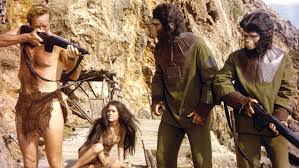
Planet of the Apes (1968)

Franklin J. Schaffner’s landmark film is not a “killer ape movie” in the crude sense, but it is foundational. The apes are not monsters; they are inheritors. Their violence is institutional, judicial, scientific. What terrifies is not their savagery but their civilisation—one that mirrors humanity’s worst impulses.

Every ape-on-human act here carries ideological weight. This is not about claws and teeth; it is about power structures. Nearly every killer ape film since has echoed this anxiety, whether consciously or not.

Dawn of the Planet of the Apes (2014)

The modern franchise reclaims that allegorical power. Caesar’s apes are tragic, political beings whose violence emerges from betrayal and fear. While not “killer apes” in the exploitation sense, the film’s emotional complexity elevates simian aggression into something operatic. Violence is framed as consequence, not novelty.

Kingdom of the Planet of the Apes (2024)

This latest entry leans further into myth-making. Apes as kings, generals, tyrants. Here, the killer ape becomes historical force—a reminder that dominance is cyclical. Humanity is no longer prey, but footnote.

Verdict: Essential context. These films legitimise the ape as cinematic threat by grounding it in philosophy rather than pulp.


Nature Turns Hostile: Apes as Environmental Horror

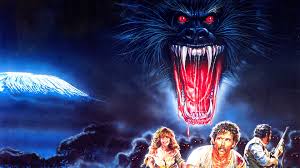
In the Shadow of Kilimanjaro (1985)

Possibly the most literal killer ape film ever made. Tens of thousands of starving baboons descend upon humans during a drought. It’s messy, bleak, and strangely prescient. Environmental collapse creates violence, not evil. The apes are not villains—they are survivors.

Despite its rough edges, the film taps into a genuine eco-horror vein later seen in shark, insect, and reptile cinema.

Blood Monkey (2006)

A late-era attempt to graft Jurassic Park aesthetics onto primate horror, Blood Monkey is disposable but emblematic of the genre’s exploitation phase. Science meddles. Apes mutate. People die. The film has little to say beyond spectacle, but it shows how the killer ape had become a direct-to-video creature feature staple.

Verdict: Relevant as cautionary tales—nature retaliating against human arrogance.


Laboratory Nightmares: Apes and Scientific Hubris

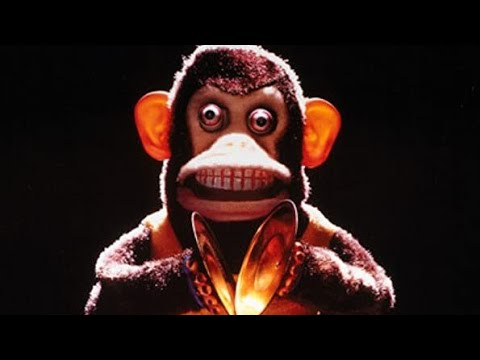
Monkey Shines (1988)

George A. Romero’s most psychologically disturbing work may also be his quietest. Ella the monkey is not a rampaging beast but a resentful, possessive intelligence shaped by experimentation. The horror lies in emotional transference and loss of autonomy.

This is killer ape cinema at its most intimate and uncomfortable.

Link (1986)

An underrated British horror gem where a super-intelligent orangutan becomes lethally territorial. The film weaponises intelligence rather than mutation, suggesting that awareness itself may be the most dangerous upgrade of all.

Night of the Bloody Apes (1969)

Mexican exploitation at its most lurid. A heart transplant turns a man into a masked ape monster. It’s crude, sensationalist, and morally dubious—but deeply influential in cementing the ape-man as grindhouse staple.

Panic in the Tower (1990)

A lab-escape narrative filtered through teen horror clichés. The killer baboon is more slasher than animal, stalking corridors like a furry Michael Myers.

Verdict: These films form the psychological backbone of killer ape cinema—where the true horror is not the animal, but the experiment.


Giants, Gods, and Spectacle: When Apes Become Myth

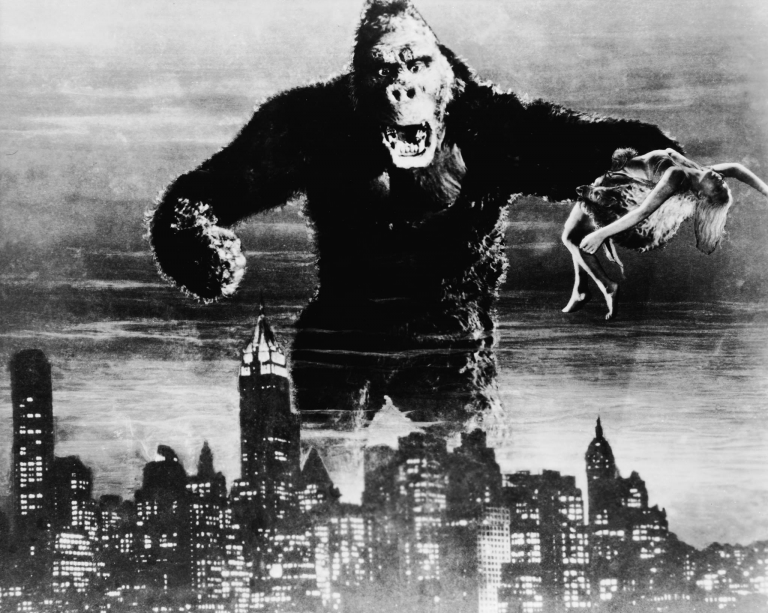
King Kong (1933 / 2005)

Kong is not a killer ape—he is a tragic one. Violence is secondary to romance, spectacle, and colonial metaphor. Yet his influence on the genre is incalculable. Every giant ape that follows owes him a debt.

Peter Jackson’s 2005 remake amplifies Kong’s emotional register, transforming destruction into operatic tragedy.

Kong: Skull Island (2017)

This iteration strips Kong of romance and repositions him as apex guardian. His violence is righteous, directed outward at greater monsters. Here, the killer ape becomes protector—a shift that reflects modern genre sensibilities.

Rampage (2018)

Pure popcorn nonsense. Genetic tampering turns a gorilla into a skyscraper-smashing kaiju. Fun, loud, and completely unconcerned with metaphor, Rampage represents the genre’s absorption into blockbuster bombast.

Verdict: Spectacle-driven entries that dilute fear but expand scale.


Absurdity and Parody: When the Genre Eats Itself

Mulva 2: Kill Teen Ape! (2004)

A micro-budget splatter parody that knows exactly how ridiculous the concept has become. It doesn’t undermine the genre—it autopsies it.

Mad Monster Party? (1967)

Not killer ape cinema per se, but illustrative of how apes were absorbed into pop-horror iconography by the late ’60s.

Verdict: Not essential, but proof that killer apes are culturally flexible—even laughable.


Outliers and Near Misses

Congo (1995)

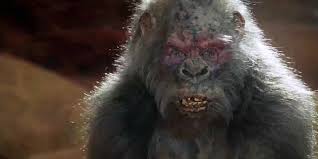
Technically a killer ape movie, spiritually a corporate jungle adventure. The grey gorillas are terrifying in concept but undercut by tonal confusion and animatronic stiffness. A fascinating failure.

Ad Astra (2019)

The infamous space-baboon sequence is memorable but tangential. A jump scare, not a genre entry.


Why Killer Apes Endure — And Why Primate Matters

Killer ape films persist because they strike at something deeply primal: the fear that intelligence does not guarantee moral superiority. That evolution is not ascent, but competition. When apes attack, cinema asks whether humanity deserves its place at the top.

From allegory (Planet of the Apes) to exploitation (Night of the Bloody Apes), from eco-horror (Kilimanjaro) to blockbuster spectacle (Rampage), the genre has splintered but never vanished.

If Primate is to matter, it must choose which lineage it belongs to. Will it embrace pulp, philosophy, or paranoia? The history of killer ape cinema suggests that when these films work best, they don’t just show apes killing humans—they remind us how thin the line between them has always been.

  • Saul Muerte

Subscribe

  • Entries (RSS)
  • Comments (RSS)

Archives

  • January 2026
  • December 2025
  • November 2025
  • October 2025
  • September 2025
  • August 2025
  • July 2025
  • June 2025
  • May 2025
  • April 2025
  • March 2025
  • February 2025
  • January 2025
  • December 2024
  • November 2024
  • October 2024
  • September 2024
  • August 2024
  • July 2024
  • June 2024
  • May 2024
  • April 2024
  • March 2024
  • February 2024
  • January 2024
  • November 2023
  • October 2023
  • September 2023
  • August 2023
  • July 2023
  • June 2023
  • May 2023
  • April 2023
  • March 2023
  • February 2023
  • January 2023
  • November 2022
  • October 2022
  • September 2022
  • August 2022
  • July 2022
  • June 2022
  • April 2022
  • March 2022
  • February 2022
  • January 2022
  • December 2021
  • November 2021
  • October 2021
  • September 2021
  • August 2021
  • July 2021
  • June 2021
  • May 2021
  • April 2021
  • March 2021
  • February 2021
  • January 2021
  • December 2020
  • November 2020
  • October 2020
  • September 2020
  • August 2020
  • July 2020
  • June 2020
  • May 2020
  • April 2020
  • March 2020
  • February 2020
  • January 2020
  • December 2019
  • November 2019
  • October 2019
  • September 2019
  • July 2019
  • June 2019
  • May 2019
  • April 2019
  • March 2019
  • February 2019
  • January 2019
  • December 2018
  • November 2018
  • October 2018
  • September 2018
  • August 2018
  • July 2018
  • June 2018
  • May 2018
  • April 2018
  • March 2018
  • February 2018
  • January 2018
  • December 2017
  • November 2017
  • October 2017
  • September 2017
  • August 2017
  • July 2017
  • June 2017
  • May 2017
  • April 2017
  • March 2017
  • February 2017
  • January 2017
  • December 2016
  • November 2016
  • October 2016
  • September 2016
  • August 2016
  • July 2016
  • June 2016
  • May 2016

Categories

  • A Night of Horror Film Festival
  • Alien franchise
  • Alliance Francaise French Film Festival
  • Australian Horror
  • Best Movies and Shows
  • Competition
  • dark nights film fest
  • episode review
  • Flashback Fridays
  • Friday the 13th Franchise
  • Full Moon Sessions
  • Halloween franchise
  • In Memorium
  • Interview
  • japanese film festival
  • John Carpenter
  • killer pigs
  • midwest weirdfest
  • MidWest WierdFest
  • MonsterFest
  • movie article
  • movie of the week
  • Movie review
  • New Trailer
  • News article
  • podcast episode
  • podcast review
  • press release
  • retrospective
  • Rialto Distribution
  • Ring Franchise
  • series review
  • Spanish horror
  • sydney film festival
  • Sydney Underground Film Festival
  • The Blair Witch Franchise
  • the conjuring franchise
  • The Exorcist
  • The Howling franchise
  • Top 10 list
  • Top 12 List
  • top 13 films
  • Trash Night Tuesdays on Tubi
  • umbrella entertainment
  • Uncategorized
  • Universal Horror
  • Wes Craven
  • wes craven's the scream years

Meta

  • Create account
  • Log in

Blog at WordPress.com.

  • Subscribe Subscribed
    • Surgeons of Horror
    • Join 229 other subscribers
    • Already have a WordPress.com account? Log in now.
    • Surgeons of Horror
    • Subscribe Subscribed
    • Sign up
    • Log in
    • Report this content
    • View site in Reader
    • Manage subscriptions
    • Collapse this bar
 

Loading Comments...