• About
  • podcasts
  • Shop

Surgeons of Horror

~ Dissecting horror films

Surgeons of Horror

Tag Archives: reviews

A Symphony in Splatter: Langley’s Butchers Trilogy Goes for the Jugular

10 Saturday May 2025

Posted by surgeons of horror in Movie review

≈ Leave a comment

Tags

adrian langley, butchers, film, horror, movies, naomi malemba, review, reviews, shannon dalonzo

Director Adrian Langley stays true to his blood-soaked roots in this gleefully gruesome third chapter.

In a genre that thrives on extremity, Adrian Langley’s Butchers trilogy has carved out its own brutal little niche—one not of narrative elegance or thematic innovation, but of bone-crunching, limb-lopping, nerve-shredding excess. With Butchers Book Three: Bonesaw, Langley stays the course, offering up another round of down-home horror where pain is inevitable and escape is unlikely.

Gone are the niceties of plot complexity or emotional nuance. In their place: sinew, shrieks, and gallons of the good stuff—practical effects and prosthetics that drip with a kind of DIY devotion rarely seen in modern horror. Langley doesn’t just lean into the gore; he practically does a cannonball into it. This time, his antagonist is a grotesque butcher on wheels, hacking through anyone in his way from the confines of his roving abattoir van. It’s ridiculous, yes, but it’s also grotesquely entertaining.

The story, such as it is, follows three women caught in the butcher’s path and a small-town sheriff who attempts to make sense of the carnage. There’s a familiar structure here—the cat-and-mouse setup, the slasher’s calculated chaos—but Langley’s real interest lies in the carnage itself. Heads roll. Limbs drop. The camera rarely flinches, and neither does the director.

Where the film stumbles is in its limited character development and tonal rigidity. The sheriff subplot adds some much-needed shape, but our protagonists exist mostly to scream, bleed, and be pursued. Still, in the context of a trilogy where spectacle has always trumped subtext, Bonesaw feels like a natural and—dare it be said—confident culmination of Langley’s rural carnage canon.

This isn’t horror that aims for atmosphere or metaphors. It’s red meat cinema—satisfyingly gnarly, grotesquely tactile, and proud of its splatterpunk DNA. In an era of glossy elevated horror, Butchers Book Three proudly remains low to the ground, in the dirt and the blood, where it has always belonged.

The Prognosis:

Not for the squeamish, but for gorehounds and genre loyalists, Langley delivers precisely what’s on the tin—if that tin were dented, rusted, and soaked through with blood.

  • Movie Review by Saul Muerte

Movie Review: Butchers

Movie Review: Butchers Two: Raghorn

The Island Fades into the Mist

10 Saturday May 2025

Posted by surgeons of horror in Movie review

≈ Leave a comment

Tags

aida folch, fernando trueba, film, horror, juan pablo urrego, matt dillon, movies, reviews, thriller

Fernando Trueba’s sun-drenched thriller is a lethargic drift through secrets, sensuality, and squandered potential.

The Mediterranean sun may dazzle, the waves may glitter, and the cast may smoulder with generically attractive tension—but none of it can save The Island from becoming one of the more soporific cinematic experiences. Fernando Trueba, a director with an esteemed filmography, trades narrative vitality for languid ambiance in this inert psychological drama that unfolds like a long, humid sigh.

Set against the postcard backdrop of a Greek island, the film introduces us to Alex, a new waitress at a boutique seaside restaurant. With a femme-fatale allure and an air of mystery, she quickly captures the attention of Enrico, the chef, but is drawn instead to Max, the elusive American manager hiding something in his brooding stares and clenched silences. What follows is less a thrilling triangle than a series of glances, sighs, and ultimately, a glacial unraveling of a secret that arrives with the narrative urgency of a missed ferry.

Trueba clearly intends a slow-burn approach, but what results is barely a flicker. The plot trudges along with the weight of its own self-importance, mistaking inertia for introspection. The sexual tension, which should crackle, barely hums. Conversations are riddled with cryptic hints and evasive stares, yet the payoffs are few and far between. When revelations do come, they feel both undercooked and unearned—mere embers that fail to ignite.

Visually, The Island is polished, occasionally picturesque. The camera lingers lovingly on the sea and stone, the half-lit interiors, the salt-flecked skin of its cast. But the atmosphere, no matter how finely curated, cannot compensate for narrative void. You keep waiting for the film to snap into focus, to finally tap into its thriller DNA. Instead, it drifts—first into lethargy, then into complete emotional disengagement.

The performances are competent, but the characters remain archetypes rather than people. Alex is sultry but shallowly drawn; Max, the American enigma, is more mannequin than man; and poor Enrico spends most of the runtime in a state of aimless suspicion. The film attempts to explore obsession, betrayal, and the burdens of past sins, but only gestures vaguely toward each before retreating back into the blue haze.

The Prognosis:

The Island wants to be a sun-bleached neo-noir, a slow meditation on desire and consequence, but what we’re left with is a whisper of a film—beautifully composed, but hollow and soporific. Sometimes, secrets are better left buried. In this case, the film’s own narrative might have been.

  • Movie Review by Saul Muerte

Ride the Snake Slithers into Darkness, But Never Truly Strikes

10 Saturday May 2025

Posted by surgeons of horror in Movie review

≈ Leave a comment

Tags

film, horror, madhav sharma, michael maloney, Movie review, movies, reviews, shani grewal, suzanna hamilton

Despite bold intentions and strong performances, this slow-burning psychological thriller is too meandering to leave a lasting bite.

Ride the Snake, the latest effort from British filmmaker Shani Grewal, attempts to crawl into the feverish subconscious of grief, guilt, and revenge, but ends up shedding more skin than substance. With an ambitious palette of references, the film isn’t lacking in aesthetic aspirations. Unfortunately, it’s precisely this reverence for genre greats that weighs the narrative down, muddying what could have been a searing, timely story of loss and reckoning.

At its core, the premise is loaded with potential. Harper (Suzanna Hamilton) and her daughter abduct the drunk driver responsible for the death of Harper’s husband, believing they’ve seized justice on their own terms. What follows is not the revenge thriller one might expect, but a slow, deliberate psychological descent. The pacing dares to crawl, not sprint. And while restraint can be a virtue, here it flirts too closely with inertia.

Hamilton, best known for her haunting turn in 1984, delivers a performance of quiet intensity. Her portrayal of Harper teeters between vulnerability and steel resolve. Michael Maloney also anchors the film with a weary charisma that keeps certain scenes afloat, particularly when the tension begins to sag. Madhav Sharma, too, brings subtle gravity to his supporting role, though he is underutilised.

Where Ride the Snake does strike a chord is in its atmospheric tension. The visuals are brooding and textured, soaked in bleak palettes and long, oppressive silences. Grewal and his cinematographer seem deeply attuned to visual storytelling—but perhaps too much so. At times, the atmosphere feels like an end in itself rather than a complement to the story. There are echoes of genre classics everywhere, but they never quite congeal into something distinct or urgent. It’s a film that gestures toward menace without ever fully embracing it.

Yet, beneath the uneven pacing and the sometimes self-conscious aesthetic, there’s something commendable. Grewal’s comment about the difficulties of casting British/Asians in non-stereotypical roles speaks to a real and persistent issue in UK cinema. In that regard, Ride the Snake is a step forward—not because it tokenises its characters of colour, but because it simply allows them to exist in complex, human roles. The film’s universality lies in its grief, in its moral murk, and in the desperation that grief can provoke.

The Prognosis:

For all its noble intentions and atmospheric flourishes, Ride the Snake ends up coiling in on itself. It never quite delivers the psychological punch it promises. The suspense simmers but rarely boils. The horror stays at arm’s length, more suggested than felt. In the end, it’s a film that mourns deeply but moves too slowly—and struggles to find its own voice amid the echoes of cinematic ghosts.

  • Movie Review by Saul Muerte

Ride The Snake is currently streaming on Amazon Prime.

The Ugly Stepsister Finds Her Voice in the Shadows

10 Saturday May 2025

Posted by surgeons of horror in Movie review

≈ Leave a comment

Tags

cinderella, eagle entertainment, Eagle Entertainment Australia, emile kristine blichfeldt, fantasy, film, horror, movies, reviews

This darkly feminist fairy tale slow-burns its way through vanity, envy, and the societal curse of beauty.

In Emilie Kristine Blichfeldt’s icy, melancholic The Ugly Stepsister, the velvet drapes and soft golden glows of the fairy tale kingdom mask something far more corrosive: the bitter ache of envy, inadequacy, and the impossible pressure to be seen. It’s a film that peers behind the glass slipper and turns the looking glass back on us—audiences raised on ideals of beauty, charm, and happy endings for the fairest of them all.

The titular “ugly” stepsister, Elvira (Lea Myren), is not the cackling caricature of pantomime lore. Played with aching restraint, she’s a quiet storm of desperation and longing—her plainness not exaggerated but perceptibly measured against the luminous perfection of her stepsister, who seems preordained to capture the prince’s attention. The film’s magic lies not in spells or transformations, but in its psychological excavation of a woman unraveling under the weight of expectation and invisibility.

Blichfeldt wisely avoids overt parody or satire. Instead, she leans into the fairy tale structure only to slowly erode it, exposing the emotional and societal cost of a world built on outward beauty. In Elvira’s quiet glances, her tightening posture, and her increasing willingness to bend morality in pursuit of admiration, we witness something tragic: not a villainess in the making, but a reflection of how warped self-worth becomes in a world that equates beauty with value.

The film’s pacing is deliberate, sometimes to a fault. It takes its time—almost too much—in building its portrait of simmering resentment and warped aspiration. But the stillness serves a purpose: The Ugly Stepsister is less concerned with plot propulsion than with emotional erosion. This is no Cinderella story, even if it steals her ballgown. It’s a study in marginalisation—of being the one never chosen, never seen, and never allowed to dream on her own terms.

Though the production design is gorgeously oppressive—regal and cold in equal measure—it’s the thematic spine that resonates: the film’s commentary on the female experience within patriarchal beauty myths. Elvira’s descent isn’t driven by malice, but by an internalised belief that to be loved, she must first be looked at. It’s a bitter irony that in pursuing visibility, she must become someone—something—unrecognisable.

The Prognosis:

The Ugly Stepsister doesn’t always land its punches with perfect clarity and might frustrate viewers expecting a more dramatic reversal or fantasy payoff. Blichfeldt isn’t rewriting a fairy tale—she’s exhuming it, pulling up what’s been buried beneath centuries of curated perfection.

In this world, beauty is not a blessing. It’s a prison. And for those left outside its gates, the fairy tale is a nightmare told in soft pastels and sharpened smiles.

  • Review by Saul Muerte

Until Dawn Falls into the Loop, but Misses the Fear

02 Friday May 2025

Posted by surgeons of horror in Movie review

≈ Leave a comment

Tags

david f sandberg, film, horror, kaitlyn bernard, movies, review, reviews, until dawn

This adaptation of the cult horror game spins a promising premise into a stylish but shallow spiral of déjà vu.

Translating a beloved video game into a feature-length film is no easy feat, and Until Dawn (2025) finds itself caught between reverence and reinvention—never fully satisfying either impulse. Directed by David F. Sandberg (Lights Out, Annabelle: Creation), the film adaptation of Supermassive Games’ acclaimed 2015 interactive horror experience arrives with expectations as high as the snowy mountain peaks that once haunted the original. Unfortunately, the result is a visually competent, sometimes eerie effort that ultimately loops on itself in more ways than its premise intends.

Gone are the sweeping tracking shots of icy cliff edges and gothic ski lodges that defined the game’s snowy isolation. In their place is a mist-shrouded valley and a rusting visitor centre—less operatic in tone, more grounded in survival horror clichés. The story follows Clover (Kaitlyn Bernard) and her group of friends who venture into the remote wilderness where her sister Melanie vanished a year earlier. But this isn’t a straightforward slasher. Soon, each grisly death resets the evening, plunging the characters into a surreal time loop. Every death becomes part of a macabre routine—a concept ripe for tension and innovation.

Yet despite this intriguing setup, Until Dawn struggles to replicate the game’s carefully balanced atmosphere of dread, character interplay, and escalating supernatural unease. While the film toys with repetition in the vein of Happy Death Day or Triangle, its execution feels flatter. The stakes should rise with each iteration, but instead, the sense of urgency dissipates into predictability.

One of the most glaring issues is tonal dissonance. The game deftly shifted between teen horror, creature feature, and psychological thriller—leaning into its interactive nature to let players explore moral ambiguity and consequence. The film, however, strips away much of that complexity. The characters are archetypal and underwritten, with little of the branching narrative depth that gave players a stake in their survival. Despite Bernard’s earnest turn and a committed supporting cast, we don’t get enough time or texture to care deeply when the inevitable deaths arrive—especially when the film keeps undoing them.

David F. Sandberg, known for his knack with shadowplay and minimalist dread, brings some eerie flourishes to the visuals—particularly in the initial sequences of isolation and the early deaths. But his more intimate, character-driven horror style doesn’t always sync with the sprawling, meta-narrative scope the story requires. There are moments of atmosphere, to be sure, but they’re rarely sustained.

Perhaps most disappointing to fans of the game is the near-total omission of the Wendigo mythology that underpinned its final act. In favour of streamlining the plot for a film-length runtime, the supernatural elements are toned down or erased entirely—leaving a more conventional masked killer in their place. It’s a simplification that robs the story of its distinctive edge and sense of mythic terror.

The Prognosis:

Until Dawn isn’t an outright failure—just a missed opportunity. It flirts with high-concept horror and offers a few moments of stylish unease, but never quite captures the pulpy grandeur or narrative inventiveness of its source material. As a standalone film, it’s serviceable. As an adaptation, it’s trapped in its own loop, chasing shadows of something far more chilling.

  • Movie review by Saul Muerte

Ash (2025): A Sensory Voyage from a Singular Artist

24 Thursday Apr 2025

Posted by surgeons of horror in Movie review

≈ 1 Comment

Tags

aaron paul, amazon prime, elza gonzalez, film, flying lotus, horror, review, reviews, sci-fi, scifi horror

Flying Lotus has never been a filmmaker to colour inside the lines. With Kuso (2017), he exploded onto the scene with a hallucinogenic blend of body horror, surrealism, and sound design that dared viewers to stick with it—or run screaming. With Ash, he reins in the chaos just enough to create what is arguably his most accessible film to date, while still packing it with enough aural and visual flourishes to remain unmistakably his own.

Set on a remote planet and anchored by a creeping sense of cosmic dread, Ash follows a woman (Elza González) who wakes up to find her crew slaughtered and must unravel the mystery before a darker truth consumes her. It’s a premise steeped in sci-fi tradition, but Flying Lotus isn’t here to offer a straightforward space thriller. Instead, he weaves a waking dream of sound and vision—atmospheric, meditative, and disorienting in equal measure.

The real marvel is in the film’s sensory layering. The soundscape—unsurprisingly exquisite—is a collage of ambient dread, industrial echoes, and meditative melodies that feel like transmissions from another dimension. As a musician, Flying Lotus has always been a sound alchemist; here, he pushes that instinct into the very bones of the film.

Elza González gives a committed, emotional performance that grounds the film’s cerebral tendencies. It’s largely her show, and she rises to the occasion with a mix of vulnerability and resolve. Aaron Paul appears in a supporting role that brings both tension and quiet depth, acting as a counterpoint to González’s isolation and inner turmoil.

The film’s Achilles’ heel is its plot. Beneath the rich surface textures and hypnotic editing, Ash tells a story that is familiar, even predictable. But it’s cleverly concealed beneath the stylistic veneer, like a well-worn book with a mesmerising new cover. There’s craft in how Flying Lotus reshapes and recontextualises sci-fi horror tropes, but at times, it feels like style just barely holding up a sagging structure.

The Prognosis:

There’s no denying Ash is a step forward—a distillation of Flying Lotus’s eccentricities into something more narratively digestible while retaining his unique artistic stamp. For fans of bold sci-fi that dares to flirt with the abstract, Ash may not be the deepest story, but it’s one hell of a ride through an artist’s ever-evolving mind.

Ash is currently streaming on Amazon Prime.

  • Review by Saul Muerte

The Monkey (2025) – A Misfire That Claps to Its Own Beat

01 Saturday Mar 2025

Posted by surgeons of horror in Movie review

≈ Leave a comment

Tags

film, horror, Movie review, movies, osgood perkins, reviews, Stephen King, tatiana maslany, theo james

Osgood Perkins has built a reputation for moody, atmospheric horror (The Blackcoat’s Daughter, I Am the Pretty Thing That Lives in the House), crafting eerie slow burns that settle under your skin. So it’s baffling that his adaptation of Stephen King’s The Monkey swings so wildly in the opposite direction, embracing an oddly comedic tone that is both its saving grace and its Achilles’ heel.

The film follows twin brothers who, after discovering a cursed wind-up monkey, become entangled in a series of grotesque and improbable deaths. Decades later, the sinister toy resurfaces, forcing the now-estranged siblings to confront their past—and the murderous primate—before its deadly rhythm consumes them completely.

As someone who was deeply impacted by King’s short story during my formative years, this adaptation feels like a tonal misstep. While Perkins injects moments of dry, almost absurd humour that occasionally land (I’ll admit, I chuckled more than once), the film never fully commits to either horror or comedy, leaving it feeling strangely weightless. The sense of dread that should accompany a tale about an unrelenting, supernatural force is missing, replaced with an offbeat energy that doesn’t quite fit.

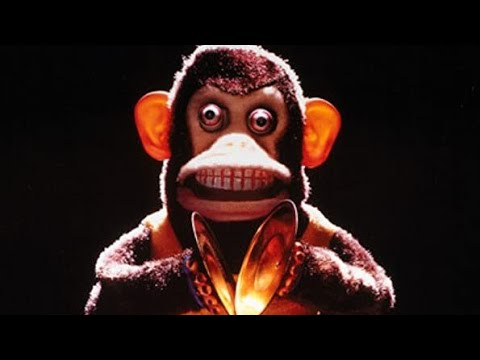
Visually, The Monkey does retain some of Perkins’ signature flair. There are pockets of eerie imagery, particularly when the toy is in motion, its drum banging in ominous slow motion as its glassy eyes seem to bore into the characters’ souls. However, the film’s pacing stumbles between moody horror and slapstick absurdity, undercutting its tension just as it starts to build. Instead of letting the horror breathe, it often pivots to a joke or exaggerated reaction, as if second-guessing its own scares.

The performances do their best to sell the concept, with the lead actors committing to the madness, but there’s a disjointedness to the storytelling that prevents any real emotional weight from forming. Without a stronger anchor—whether it be a grounded sense of familial trauma or a truly nightmarish atmosphere—the film lacks the staying power of both Perkins’ previous work and King’s original story.

With The Monkey, Perkins seems to be playing against type, but instead of reinventing the demonic toy subgenre, he fumbles it. The film claps along to its own beat, but much like the monkey itself, the rhythm grows tiresome—thumping away long after the terror has worn off.

  • Saul Muerte

The Dead Thing (2025) – A Haunting Descent into Obsession and the Unknown

09 Sunday Feb 2025

Posted by surgeons of horror in Movie review

≈ 1 Comment

Tags

ben smith-petersen, blu hunt, elric kane, film, horror, movies, reviews, shudder, shudder australia

Shudder’s latest original, The Dead Thing, is a slow-burning, atmospheric descent into grief, trauma, and something even more unearthly. Directed with a steady, unsettling hand, this supernatural thriller refuses to play by conventional horror rules, opting instead for a creeping dread..

At the heart of the film is Alex (Blu Hunt, The New Mutants), a young woman adrift in a sea of meaningless encounters, numbed by her own detachment from the world. When a seemingly random dating app match leads her to Kyle (Ben Smith-Petersen, Mad Max: Fury Road), their connection is instant, electric—yet fleeting. The morning after, Kyle vanishes without a trace, leaving behind an aching absence that sends Alex spiraling into a desperate search for answers. What she uncovers is a chilling revelation that warps the boundaries of reality, dragging her into an inescapable cycle of obsession, dependence, and something far darker than she could have imagined.

Blu Hunt delivers a powerhouse performance, embodying Alex’s hollowed-out existence with eerie precision. Her portrayal of emotional disconnection makes her eventual unraveling all the more compelling, as she clings to Kyle in a feverish attempt to grasp at something—anything—real. The film’s hypnotic pacing mirrors her descent, pulling the viewer into a suffocating atmosphere of existential dread.

What sets The Dead Thing apart is its layered exploration of trauma, not just in the psychological sense, but in the way it fractures time, memory, and even space. The film flirts with the astrophysical, hinting at horrors that exist beyond human perception, yet tethered to the deeply personal. It’s an unnerving blend of body horror and cosmic unease, where love and terror become indistinguishable.

Director Elric Kane crafts a film that rewards patience. Those expecting conventional horror beats may find themselves frustrated, but for those willing to embrace its methodical pacing and brooding atmosphere, The Dead Thing delivers a uniquely unsettling experience. With haunting imagery, a skin-crawling score, and a gut-punch of an ending, it cements itself as one of Shudder’s most memorable releases in recent years.

The Prognosis:

A terrifying meditation on trauma and the lengths we go to feel alive again, The Dead Thing lingers like a half-remembered nightmare—one you might not want to wake up from.

  • Saul Muerte

The Dead Thing will stream on Shudder from Fri 14th Feb.

In Memorium: Olivia Hussey (1951–2024)

28 Saturday Dec 2024

Posted by surgeons of horror in In Memorium

≈ 5 Comments

Tags

black christmas, film, horror, movies, olivia hussey, reviews

The world of cinema has lost one of its most unforgettable stars with the passing of Olivia Hussey. Known for her captivating performances and ethereal presence, Hussey’s career spanned decades, but it was her work in the horror genre that cemented her place in cinematic history. Her portrayal of strong, complex characters across a variety of films has left an indelible mark on both the industry and audiences alike.

Hussey’s notable role in Black Christmas (1974), directed by Bob Clark, remains one of the defining contributions to the horror genre. As Jess Bradford, a college student who becomes the target of a terrifying phone stalker during Christmas break, Hussey delivered a performance of quiet strength and vulnerability. Black Christmas would go on to become a cult classic, influencing generations of slasher films that followed, with Hussey’s chilling turn as one of its earliest heroines still resonating with fans.

Her talents transcended the genre, yet it was her return to horror that brought more unforgettable moments. In Psycho IV: The Beginning (1990), she portrayed Norma Bates, a character that brought fresh depth to the story of Norman Bates, brilliantly counterbalancing the legacy of the original Psycho films. Hussey’s portrayal imbued the role with nuance, adding a layer of sympathy to a tragic and infamous character.

In addition to these films, Hussey’s role in Turkey Shoot (1982) stands out as another testament to her versatility. This action-packed horror film saw her in a more physical, confrontational role, showcasing her ability to navigate both suspenseful terror and high-stakes action with grace and poise.

Hussey also made a memorable contribution to IT: The Mini-Series (1990), where she portrayed Audra Denbrough, the wife of Billy Denbrough (played by Richard Thomas). In this role, Hussey brought a grounded, emotional presence to the adaptation of Stephen King’s beloved novel, adding depth to the narrative and anchoring the emotional stakes of the story, particularly in her scenes alongside Thomas.

While her career spanned a wide variety of genres and roles, it was her contributions to horror that continue to influence and inspire. Olivia Hussey’s legacy in the world of film will not soon be forgotten. Her ability to convey fear, resilience, and vulnerability on screen has left an enduring impression on both her fans and the filmmakers who followed in her wake.

We remember Olivia Hussey not only for the characters she brought to life but for the profound impact she had on shaping the genre and the hearts of all who were fortunate enough to witness her performances.

Rest in peace, Olivia Hussey. You will be greatly missed.

  • Saul Muerte

The Creep Tapes: Episode 6 (Mom (and Albert)) Review

13 Friday Dec 2024

Posted by surgeons of horror in episode review

≈ Leave a comment

Tags

creep, film, horror, mark duplass, movies, patrick brice, reviews, shudder, shudder australia, the creep tapes

Shudder Original Series
Series Premiere Date: December 13, 2024

As The Creep Tapes bows out with its final episode, Mom (and Albert) delivers a potent blend of psychological unease and familial dysfunction. Taking the story back to Josef’s roots, this episode ventures into the unsettling realm of the family home, peeling back layers of his psyche while injecting a fresh dose of tension with the titular Albert—his mother’s new lover.

The shift in setting immediately distinguishes this episode. The familiar, impersonal backdrops of previous entries give way to the suffocating intimacy of a childhood home. It’s a place that should offer comfort but instead brims with latent tension. Josef’s arrival feels less like a homecoming and more like an invasion, with every exchanged glance and clipped remark between him and his mother steeped in unspoken history.

Enter Albert, a seemingly mild-mannered addition to the household, whose presence tips the power dynamics into dangerous territory. Played with an unsettling mix of charm and obliviousness, Albert becomes a lightning rod for Josef’s simmering rage and jealousy. Their interactions veer between awkward civility and veiled hostility, and as the cracks in Josef’s mask widen, it becomes clear that Albert is more than just an unwelcome guest in Josef’s eyes—he’s a symbol of everything Josef feels he’s lost.

The direction here is particularly sharp, leaning into uncomfortable silences and tight framing that captures the oppressive weight of these relationships. The episode’s tension builds methodically, leading to a climactic moment that is equal parts shocking and darkly comedic—a trademark of the series. The “titillating” conclusion, while provocative, feels earned in the context of the episode’s exploration of power, control, and Josef’s fractured psyche.

What makes Mom (and Albert) so effective is its ability to subvert expectations. Where previous episodes leaned heavily into Josef’s control over others, this installment strips him of his dominance, leaving him exposed and vulnerable. It’s a bold move for a finale, challenging the audience to reconsider their understanding of Josef while providing an unsettling endnote to his arc.

Final Thoughts:
Mom (and Albert) is a fittingly twisted send-off for The Creep Tapes, doubling down on the series’ psychological and emotional complexity. By juxtaposing Josef’s past with his present and introducing a disruptive force in Albert, the episode underscores the fragility of Josef’s carefully constructed persona. As the series concludes, it leaves us with a lingering sense of dread—and a morbid curiosity about what lies ahead for Josef.

  • Saul Muerte

The Creep Tapes Series are currently streaming Exclusively on Shudder and AMC+

← Older posts
Newer posts →

Subscribe

  • Entries (RSS)
  • Comments (RSS)

Archives

  • March 2026
  • February 2026
  • January 2026
  • December 2025
  • November 2025
  • October 2025
  • September 2025
  • August 2025
  • July 2025
  • June 2025
  • May 2025
  • April 2025
  • March 2025
  • February 2025
  • January 2025
  • December 2024
  • November 2024
  • October 2024
  • September 2024
  • August 2024
  • July 2024
  • June 2024
  • May 2024
  • April 2024
  • March 2024
  • February 2024
  • January 2024
  • November 2023
  • October 2023
  • September 2023
  • August 2023
  • July 2023
  • June 2023
  • May 2023
  • April 2023
  • March 2023
  • February 2023
  • January 2023
  • November 2022
  • October 2022
  • September 2022
  • August 2022
  • July 2022
  • June 2022
  • April 2022
  • March 2022
  • February 2022
  • January 2022
  • December 2021
  • November 2021
  • October 2021
  • September 2021
  • August 2021
  • July 2021
  • June 2021
  • May 2021
  • April 2021
  • March 2021
  • February 2021
  • January 2021
  • December 2020
  • November 2020
  • October 2020
  • September 2020
  • August 2020
  • July 2020
  • June 2020
  • May 2020
  • April 2020
  • March 2020
  • February 2020
  • January 2020
  • December 2019
  • November 2019
  • October 2019
  • September 2019
  • July 2019
  • June 2019
  • May 2019
  • April 2019
  • March 2019
  • February 2019
  • January 2019
  • December 2018
  • November 2018
  • October 2018
  • September 2018
  • August 2018
  • July 2018
  • June 2018
  • May 2018
  • April 2018
  • March 2018
  • February 2018
  • January 2018
  • December 2017
  • November 2017
  • October 2017
  • September 2017
  • August 2017
  • July 2017
  • June 2017
  • May 2017
  • April 2017
  • March 2017
  • February 2017
  • January 2017
  • December 2016
  • November 2016
  • October 2016
  • September 2016
  • August 2016
  • July 2016
  • June 2016
  • May 2016

Categories

  • A Night of Horror Film Festival
  • Alien franchise
  • Alliance Francaise French Film Festival
  • Australian Horror
  • Best Movies and Shows
  • Competition
  • dark nights film fest
  • episode review
  • Flashback Fridays
  • Friday the 13th Franchise
  • Full Moon Sessions
  • Halloween franchise
  • In Memorium
  • Interview
  • japanese film festival
  • John Carpenter
  • killer pigs
  • midwest weirdfest
  • MidWest WierdFest
  • MonsterFest
  • movie article
  • movie of the week
  • Movie review
  • New Trailer
  • News article
  • podcast episode
  • podcast review
  • press release
  • retrospective
  • Rialto Distribution
  • Ring Franchise
  • series review
  • Spanish horror
  • sydney film festival
  • Sydney Underground Film Festival
  • The Blair Witch Franchise
  • the conjuring franchise
  • The Exorcist
  • The Howling franchise
  • Top 10 list
  • Top 12 List
  • top 13 films
  • Trash Night Tuesdays on Tubi
  • umbrella entertainment
  • Uncategorized
  • Universal Horror
  • Wes Craven
  • wes craven's the scream years

Meta

  • Create account
  • Log in

Blog at WordPress.com.

  • Subscribe Subscribed
    • Surgeons of Horror
    • Join 230 other subscribers
    • Already have a WordPress.com account? Log in now.
    • Surgeons of Horror
    • Subscribe Subscribed
    • Sign up
    • Log in
    • Report this content
    • View site in Reader
    • Manage subscriptions
    • Collapse this bar