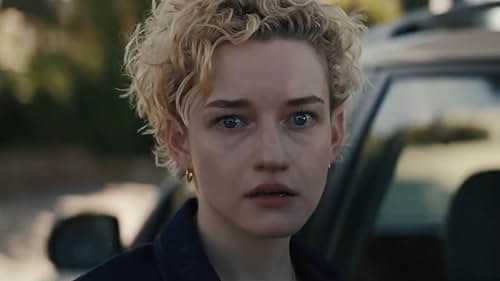
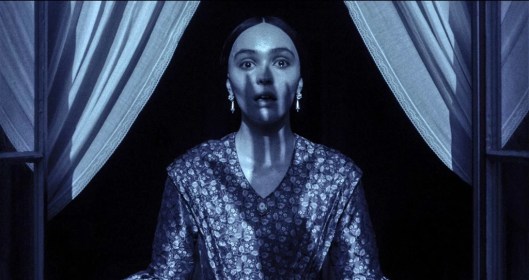
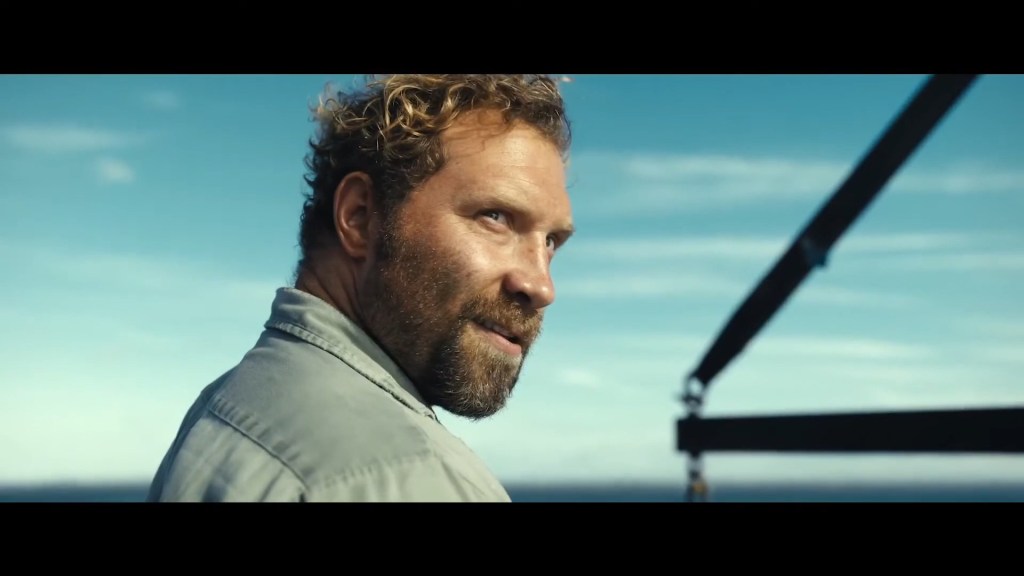
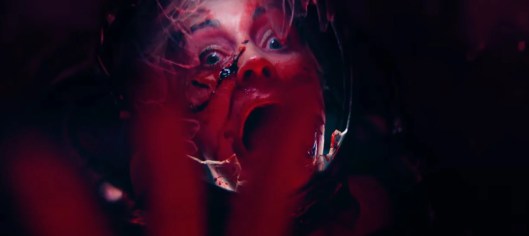
Shelby Oaks arrives carrying the weight of expectation that inevitably accompanies a passion project years in the making. Directed by Chris Stuckmann, the film positions itself at the crossroads of found-footage horror, investigative mystery, and internet-age urban legend—a convergence that has produced some of the genre’s most enduring works. Unfortunately, Shelby Oaks doesn’t synthesise these influences so much as stack them on top of one another, resulting in a film that is ambitious in intent but disastrously unfocused in execution.
The central hook is a familiar one: the disappearance of Riley Brennan and her sister’s increasingly obsessive attempt to uncover what happened. On paper, it’s a solid spine—personal stakes fused with creeping dread. In practice, the film never decides what kind of horror story it wants to tell. It borrows liberally from the breadcrumb-style investigation of The Blair Witch Project, the faux-documentary escalation of Lake Mungo, the cursed-media mythology of Sinister, and the online-conspiracy aesthetics of The Poughkeepsie Tapes. Rather than coalescing into something cohesive, these elements clash, constantly resetting the tone and momentum.
The found-footage framework, already a precarious format, becomes especially unwieldy here. The film toggles between mockumentary interviews, handheld investigation, archival clips, and conventional narrative scenes without any clear internal logic. What should feel immersive instead feels arbitrarily assembled, as though the film were endlessly re-editing itself in search of an identity it never quite finds. Tension dissipates not because the scares fail, but because the narrative keeps stopping to reinvent its own rules.
Worse still, the mystery at the film’s core grows less compelling the more it is elaborated. Each new revelation muddies the waters rather than deepening the dread, until the supernatural threat becomes a vaguely defined catch-all evil—more concept than presence. The obsession that should drive the story forward instead mirrors the film’s own fixation on referencing better works, mistaking accumulation for escalation.
To Stuckmann’s credit, Shelby Oaks is not without flashes of promise. A handful of isolated sequences suggest a filmmaker with a genuine affection for the genre and an understanding of its visual grammar. But affection alone is not authorship. Without discipline, restraint, or a unifying vision, the film collapses under the weight of its influences.
The Prognosis:
Shelby Oaks feels less like a horror film than a collage—an anxious attempt to be every successful found-footage mystery at once, and in doing so, failing to be anything at all. What begins as a missing-person story ends as a noisy, overextended hot mess, its sense of dread smothered by its own excess.
In the recent wave of minimalist horror — the creeping, patient, anti-spectacle cinema of Skinamarink, In a Violent Nature, The Outwaters, and When Evil Lurks’ quietest passages — fear is less a constructed set piece than a condition. A suffocating stillness. A negative space. A question of what the camera refuses to illuminate. Ben Leonberg’s Good Boy arrives squarely within this movement, committed to the genre’s most ascetic instincts: sparse storytelling, spatial ambiguity, and the eerie potency of silence. What distinguishes Good Boy from its contemporaries, however, is its protagonist — not a faceless killer or traumatised everyman but a 35-pound retriever named Indy, whose performance is so unwavering, so soulful, that he becomes the film’s emotional core and, crucially, its most expressive actor.
Indy’s work here has already made waves. The New York Times’ Erik Piepenburg called his eyes “soft” yet capable of conveying “joy, pathos and, most astonishingly, terror.” Variety’s Peter Debruge praised the film’s ability to “devastate us with the devotion these soulmates are capable of showing.” These aren’t backhanded compliments; they are acknowledgments that Good Boy, for all its supernatural trappings, rests on a profoundly grounded emotional premise — the purity of a dog’s love for its human, and what happens when that human begins to slip into darkness.
The Haunted House as Negative Space
Leonberg’s directing style, shaped by an Eagle Scout pragmatism and an MFA’s sense of craft, embraces an artisanal minimalism. The film’s rural home — long vacant, thick with dust and memory — is not populated by jump scares but by suggestion. Corners breathe. Empty rooms hum with expectancy. The world is haunted not by apparitions but by absence.
This aesthetic places the entire burden of emotional interpretation on Indy, and astonishingly, it works. The dog’s reactions — a lowered head, a whine, a sudden lurch into the dark — become semiotic clues, as if the canine is whispering an alternate plot beneath the human one. In one early scene, Indy freezes at a doorway and refuses to enter, and the hesitation is more chilling than any spectral figure would have been.
Leonberg knows the grammar of minimalist horror: long takes, fixed shots, diegetic silence punctured only by the house’s nocturnal contractions. It’s a mode designed to induce paranoia in the viewer, to make us scrutinise every shadow for signs of the supernatural. The technique is effective — to a point.
The Strength and Strain of Minimalism
Minimalist horror is a delicate architecture. When the premise is razor-thin, pacing becomes everything. Good Boy’s story — Indy senses an invisible presence; Todd succumbs to it — is conceptually strong but narratively sparse. It relies on atmosphere and gesture rather than escalation, and as a result, the film occasionally buckles under the weight of its own simplicity.
Scenes of Indy pacing hallways, staring into voids, or reacting to sounds we never hear create a hypnotic loop that risks repetition. What feels unnerving in the first act begins to sag by the midsection, and although the third act reintroduces urgency, the film’s momentum never fully matches the intensity promised by its premise.
This is not a failure of direction so much as a structural challenge inherent to the genre. When your protagonist cannot speak, when your antagonist remains invisible, and when your environment is deliberately barren, rhythm becomes treacherous terrain. Good Boy is atmospheric, often beautifully so, but the atmosphere sometimes dilates beyond its dramatic utility.
Still, the emotional spine — the bond between Todd and Indy — remains compelling throughout. Their relationship bears the film’s heart, even when the plot stalls.
Indy, the Actor, and Indy, the Idea
To call Indy “remarkably focused” undersells the phenomenon onscreen. He is not a gimmick. He is not comic relief. He is not even, despite the title, simply “a good boy.” He is a full-fledged dramatic participant whose emotional arc mirrors Todd’s psychological unraveling.
We see the supernatural entirely through Indy’s sensory field, and in this choice lies the film’s most unusual power: the horror is not filtered through a traumatised human consciousness but through a loyal animal desperately trying to save someone who does not understand that he is in danger.
Leonberg’s gamble — to build a horror chassis around a dog — pays off because Indy is not performing as a trained animal. He is responding. Feeling. Reacting with an authenticity no human could replicate. If the film unsettles, it is because Indy believes the house is wrong.
Where the Film Lands: Devotion as Haunting
For all its experiments in minimalism, Good Boy is ultimately not about ghosts or curses but about devotion. The supernatural presence may be indistinct, the pacing uneven, the tension sometimes stretched thin, but the thematic clarity never falters: a dog will follow you anywhere, even into the spaces where the living and the dead bleed together.
This is what elevates the film above mere gimmick or novelty. It does not anthropomorphise Indy; it recognises something purer — the instinctive loyalty, the unguarded love, the readiness to protect. In a genre built on human fragility, Good Boy dares to centre an animal’s emotional resilience.
The Prognosis:
Good Boy is a compelling addition to the minimalist horror boom, a film that combines handcrafted genre sensibilities with an unusual and affecting performance from its canine star. While its slender premise occasionally stretches too thin, and its pacing wavers under the constraints of its aesthetic, the film remains memorable for the very thing that makes it risky: its sincerity.
A haunting, heartfelt experiment that sometimes falters but never loses sight of the bond at its core.
“You can’t cheat death twice.” The tagline for The Jester 2 knowingly toys with the very predicament its creators find themselves in: how do you resurrect a concept that, while promising, never quite mastered the trick the first time around? Colin Krawchuk’s sequel attempts to double down on the carnival of cruelty he began in 2023’s The Jester, expanding the mythology of its demonic mime while testing the limits of how much showmanship can mask repetition. The result is a film that juggles energy and invention in fleeting bursts, but too often trips on its own elaborate setup.
Picking up the pieces from the first outing’s father–daughter tragedy, The Jester 2 shifts focus to teen magician Max, whose sleight-of-hand becomes both metaphor and mechanism for survival. Her encounter with the titular killer—a supernatural trickster whose violence borders on ritual—sets in motion a classic Halloween-night pursuit that pits illusion against illusion. On paper, it’s a clever conceit: the hunted becomes the performer, blurring lines between spectacle and sacrifice. Yet for all its smoke and mirrors, the film struggles to find genuine suspense amid its flourishes.
What Krawchuk continues to capture well is the tactile texture of fear. His world feels grimy, tactile, and grounded in a kind of dark vaudeville sensibility that distinguishes The Jester from its obvious cousins—Terrifier and The Bye Bye Man among them. The set pieces have an almost mechanical rhythm to them: gears grind, lights flicker, and the inevitable payoff arrives with splattering precision. There are, admittedly, some inspired kills—moments that flirt with invention without surrendering to pure sadism—and they serve as small mercies in a film otherwise content to revisit its predecessor’s beats.
Performance-wise, newcomer Max (played with gritty conviction and just enough pathos from Trentham) gives the film its pulse. She lends emotional dimension to what might otherwise have been a mere exercise in Halloween carnage. The character’s duality as performer and prey allows for some intriguing thematic play—magic as self-delusion, survival as artifice—but these moments are fleeting, buried beneath narrative repetition and pacing issues that dull the edge.
If The Jester was about potential unrealised, The Jester 2 is about potential overplayed. It suffers the fate of many horror sequels: the impulse to explain what should remain mysterious. The mask, the mythos, the magic—all begin to fray under the weight of unnecessary exposition. What’s lost is the eerie enigma that made the character work best in the shorts—a phantom that needed no backstory to haunt us.
The Prognosis:
There’s a decent film hiding beneath the face paint—a story about performance, grief, and female agency wrapped in blood-streaked pageantry—but The Jester 2 can’t quite pull the rabbit from the hat. For every clever twist or gruesome flourish, there’s a scene that drags, a trick that lands flat. It’s an average follow-up that entertains enough to justify the ticket, but not enough to warrant an encore.
In the end, this jest feels familiar, its laughter hollow. The mask remains unsettling, the kills inventive—but the magic? It’s starting to vanish.
Australian genre cinema has been pushing at the boundaries of horror for over a decade now—restless, ambitious, and eager to prove that its terrors can hold their own on the world stage. Daniel J. Phillips’ Diabolic certainly aspires to sit within that tradition. A visually confident piece that leans into the current wave of “elevated” folk horror, it promises grand spiritual torment and supernatural vengeance but settles, unfortunately, into familiar rhythms.
Elise (Elizabeth Cullen) seeks a miracle cure for her mysterious blackouts, joining a fundamentalist healing ritual that inevitably stirs something far darker. From there, Diabolic unfolds as a study in paranoia and possession, invoking the cursed lineage of witches, faith, and the female body as battleground. Phillips, who previously demonstrated a keen eye for atmosphere, drenches his frames in shadow and ritualistic imagery—a visual style that sometimes outpaces the screenplay’s thin sense of dread.
The problem lies in pacing and predictability. The film spends its first act buried beneath exposition, taking too long to let the horror breathe. By the time the vengeful spirit emerges in earnest, much of the mystery has already withered. Its narrative beats—visions, confessions, cursed objects, and escalating hysteria—feel telegraphed, echoing better works from The Witch to The Wailing.
Still, Diabolic finds some salvation in its performances. Elizabeth Cullen anchors the chaos with a quiet, unflinching intensity, grounding the supernatural in something believably human. Her descent feels lived-in, even as the story around her becomes increasingly schematic. John Kim and Mia Challis provide competent support, though their characters are largely ornamental to the central exorcism of guilt and power.
Where Diabolic succeeds is in its texture—the way the camera lingers on faces during moments of dread, the ritualistic hum of sound design, and the sense that Phillips genuinely wants to explore faith as both salvation and curse. Yet it struggles to escape the trappings of the genre it reveres. What could have been a new cornerstone of Australian occult cinema ends up merely competent: handsomely shot, occasionally haunting, but ultimately too cautious to transcend its own formulas.
The Prognosis:
By the time the final act’s firelight fades, one is left admiring the ambition rather than fearing the outcome. Diabolic isn’t unholy—it’s just undercooked.
“Possession knows no bounds,” the tagline warns, though sadly, the film’s imagination does. An American Haunting attempts to bring the notorious Bell Witch legend to cinematic life, boasting the acting pedigree of Donald Sutherland and Sissy Spacek, yet even their combined gravitas can’t save this otherwise weightless ghost story from dissipating into the fog.
Set in 19th-century Tennessee, the film follows the devout Bell family as they are tormented by an invisible force that grows increasingly violent. Courtney Solomon anchors the narrative in a quasi-historical framing device, flashing between the period setting and modern-day correspondences — a decision that feels more distracting than illuminating. The supposed authenticity of the haunting, drawn from one of America’s most enduring supernatural legends, is buried beneath layers of slick art direction and overwrought emotional manipulation.
There are moments where the film almost succeeds. Solomon’s use of stark winter landscapes and period detail captures a genuine sense of isolation and religious repression. The interplay between faith, guilt, and patriarchal authority hints at a deeper psychological reading — particularly in the film’s controversial subtext of abuse and repression. Yet these glimpses of ambition are undermined by generic jump scares and erratic pacing, reducing what might have been an eerie meditation on American folklore into a routine exercise in gothic excess.
Sutherland delivers a sturdy, if uninspired, performance as the tormented patriarch John Bell, while Spacek provides the emotional centre as the devout matriarch, stoic but visibly cracking under the strain. Their efforts, however, are let down by a screenplay that offers them little beyond reaction shots to unseen horrors. The younger cast members, including Rachel Hurd-Wood as daughter Betsy, fare better in the moments of pure terror — though even these are undercut by inconsistent visual effects and abrupt tonal shifts.
The film’s conclusion, which attempts to blend historical tragedy with supernatural justice, arrives with the subtlety of a hammer blow. What should feel revelatory instead plays as exploitative and confused, failing to commit to either psychological realism or full-blooded horror fantasy.
The Prognosis:
An American Haunting ultimately joins the long line of early-2000s supernatural thrillers that mistake gloss for gravitas. For all its promise of ancestral dread and spectral vengeance, what lingers isn’t fear, but fatigue — a ghost story that haunts itself with the shadow of what it could have been.
40 Years Later, Freddy’s Most Controversial Outing Finds Its Voice
When A Nightmare on Elm Street Part 2: Freddy’s Revenge was released in 1985, it was branded the misfit of the franchise — the sequel that neither understood nor respected Wes Craven’s original nightmare logic. It broke the rules, confused the mythology, and, for years, stood as an awkward entry that fans politely stepped around on their way from the original to Dream Warriors. Yet four decades on, this strange, feverish sequel has become something else entirely: a film reborn through reinterpretation, its queerness no longer subtext but the key to its survival.
Directed by Jack Sholder and written by David Chaskin, Freddy’s Revenge abandoned the dream-bound terror that defined Craven’s universe. Instead, it placed Freddy Krueger (Robert Englund, as gleefully unhinged as ever) in the real world, emerging from the subconscious of a high-school boy, Jesse Walsh (Mark Patton). Freddy doesn’t haunt Jesse’s dreams so much as possess his waking body — a metaphor that was once dismissed as clumsy and now reads as heartbreakingly potent.
For years, Sholder and Chaskin denied any intentional queer coding in the script, even as the evidence screamed from the screen: Jesse’s confusion, his attraction to his male friend, the locker-room glances, the visit to a leather bar, the purging of desire through literal combustion. It’s a coming-of-age horror written in the language of repression. Mark Patton, himself a closeted gay actor navigating the homophobic undercurrents of 1980s Hollywood, became the unwitting vessel for a film that mirrored his own struggle. What was once derided as camp excess has since been reclaimed as a bold, if accidental, act of visibility.
Stylistically, Sholder’s direction can’t match Craven’s dreamlike precision. The suburban sets feel overlit, the kills lack imaginative flair, and the final act collapses under a barrage of rubber and fire. Yet, there’s something raw in its awkwardness — an emotional exposure that feels more personal than any of the slick sequels that followed. Freddy’s transformation from an abstract nightmare into an embodiment of internal fear makes Freddy’s Revenge less a horror film and more a psychological exorcism.
In hindsight, the film’s flaws have become its strengths. Where Dream Warriors polished the franchise into pop spectacle, Freddy’s Revenge remains stubbornly intimate — sweaty, confused, and unafraid of its own vulnerability. It’s a film that accidentally said too much, and in doing so, became something greater than its makers intended: a queer text born out of repression, now celebrated for the same reasons it was once mocked.
Forty years later, Freddy’s second outing stands as the series’ most haunted film — not by Krueger’s knives, but by the ghosts of shame, identity, and self-discovery. It may not be the nightmare Wes Craven envisioned, but it’s one that has found its audience at last.
The Prognosis:
Flawed, fascinating, and deeply human — Freddy’s Revenge remains the bravest mistake the franchise ever made.
Saul Muerte
“Scream, Queen! My Nightmare on Elm Street” — Reclaiming the Dream
When Scream, Queen! My Nightmare on Elm Street (2019) premiered, it reframed one of horror cinema’s most divisive sequels through a lens of personal redemption. Co-directed by Roman Chimienti and Tyler Jensen, the documentary follows actor Mark Patton — once dubbed “the first male scream queen” — as he confronts both the film’s legacy and the industry that nearly erased him.
For decades, Patton lived in self-imposed exile, burned by the fallout from Freddy’s Revenge. His performance, ridiculed in its time for its “unintended” homoerotic undertones, became a scapegoat for a film that studio executives and creatives refused to acknowledge as queer. The doc reveals the painful aftermath: the homophobia of the 1980s Hollywood system, the stigma surrounding the AIDS crisis, and the way Patton’s career dissolved in the shadow of a film that mirrored his inner life too closely.
What Scream, Queen! achieves — and why it remains essential viewing — is its reclamation of authorship. It positions Patton not as a victim of misinterpretation but as the heart of Freddy’s Revenge, the one who gave its confused metaphors a pulse. His confrontation with screenwriter David Chaskin, who long denied the script’s queer coding before finally conceding its intent, is one of the most cathartic moments in horror documentary history.
In essence, the film transforms Freddy’s Revenge from franchise oddity into a landmark of queer horror — not because it was perfect, but because it survived. It reminds us that horror, at its best, is a mirror for the things we’re told to fear — even, and especially, ourselves.
There’s something unholy about watching The Evil Dead in 2025 — not because of its gore (though the film still bleeds like a fresh wound), but because it reminds us how much horror has changed… and how much it owes to Sam Raimi’s twisted weekend in the woods.
Before franchises, before multiverses, before horror was a business plan — there was a group of friends in Tennessee, gallons of fake blood, and a Super 8 camera that barely held together. Raimi, Bruce Campbell, and producer Robert Tapert didn’t just make a film; they conjured one from sheer madness and duct tape. Every camera move, every shriek, every ash-smeared close-up feels like it was carved from the flesh of invention itself.
The Evil Dead isn’t just about possession — it’s about obsession. You can feel Raimi’s fever in every frame, the urge to push the medium past breaking point. Long before the word “indie” became shorthand for Sundance polish, this film was truly independent: reckless, raw, and glorious in its imperfection. Its claustrophobic energy turns the forest into a sentient entity, the cabin into a cursed organism. You can smell the wood rot, the sweat, the 16mm stock tearing in the projector.
What keeps it alive isn’t nostalgia — it’s rhythm. Raimi’s kinetic camera was punk cinema incarnate, years before digital tools democratised motion. That manic momentum, that willingness to risk everything for a shot, became the DNA of countless filmmakers who came after — from Peter Jackson’s Braindead to modern found-footage auteurs chasing the same fever dream.
Yet for all its brutality, there’s an innocence to The Evil Dead. It’s a film made by people who loved horror so much, they wanted to crawl inside it. Raimi’s signature blend of cruelty and comedy — later refined in Evil Dead II and Army of Darkness — starts here as an unfiltered scream. It’s clumsy, beautiful, and unforgettable.
In a cinematic age obsessed with IP and polish, The Evil Dead stands as a reminder that horror thrives on imperfection. It’s about spirit, not studio notes. It’s about throwing your friends into the mud and making something that feels like it might actually hurt you to watch.
The Prognosis:
Horror cinema has evolved in scale and sophistication, but few films still pulse with the same unhinged energy. Raimi’s debut is a masterclass in fearless filmmaking — a symphony of shrieks, sweat, and splintered wood that reminds us why terror should never feel safe.
Some monsters crawl back from the grave; others crawl from the sewer. With The Toxic Avenger (2025), writer-director Macon Blair has achieved something bordering on alchemy — turning the sludge of 1980s exploitation cinema into a molten reflection of our contemporary world. It’s less a remake than a resurrection: a grotesque, heartfelt eulogy for a time when bad taste was an act of rebellion.
The original 1984 Toxic Avenger was pure Troma chaos — an anarchic cocktail of slime, slapstick, and splatter. It was both anti-superhero and anti-society, gleefully dismembering the Reagan-era obsession with moral cleanliness. Blair’s revival doesn’t sanitise that legacy; it weaponises it. If the first film was a punk scream from the gutter, the new one is a howl echoing from the biohazard bin of late capitalism.
Peter Dinklage’s portrayal of Winston Gooze — a meek janitor transformed into a radioactive antihero — anchors the absurdity with tragic weight. Dinklage plays the part not for camp, but for catharsis: his deformity becomes the mirror of a system that feeds on deforming its own. Kevin Bacon’s villainous corporate baron, all Botox and bile, feels like a mutant descendant of every Troma CEO caricature — but here, he’s horrifyingly real.
Blair’s vision retains Troma’s vulgar spirit while finding unexpected poetry in the putrescence. His Toxic Avenger is as much about class rage and environmental collapse as it is about geysers of green goo. Every viscera-slick punch lands with the melancholy of a generation choking on the toxins it helped create. The violence is ludicrous, yes, but the laughter catches in the throat — this is camp reimagined as ecological despair.
What’s remarkable is how The Toxic Avenger feels simultaneously nostalgic and corrosively modern. Blair pays homage to Lloyd Kaufman’s transgressive humour, but refracts it through the aesthetics of contemporary superhero fatigue. His monster isn’t an accident of nuclear waste but of bureaucracy — a man destroyed by the very infrastructures meant to protect him. The film’s gore set-pieces are less about indulgence than excess as indictment: when the blood sprays, it sprays neon, irony, and sorrow.
There’s an undercurrent of empathy that never existed in the original. Blair, ever the humanist even amidst the carnage, treats his freaks with tenderness. The mutants, misfits, and malformed are no longer punchlines; they’re the ones inheriting the Earth — or what’s left of it. It’s as though the spirit of Troma grew up, got angry, and learned how to aim its sludge cannon.
The Prognosis:
In the landscape of 2025 horror, where clean franchises and polished dread dominate, The Toxic Avenger feels like a badly needed contamination. It reminds us that horror’s job isn’t always to terrify — sometimes, it’s to repulse, provoke, and unsettle in the service of truth. Blair’s remake drips with the very stuff most studios would rather wash away.
And that’s precisely why it matters. Because amid the algorithmic uniformity of modern genre filmmaking, The Toxic Avenger dares to be disgusting — and in doing so, it becomes pure again.
Halloween rarely stays confined to a single night. The ritual of the Halloweekend—a three-day communion of darkness, nostalgia, and popcorn—has become an annual rite for horror fans. It’s a time when the barriers between the cinema and the living room dissolve, and the flicker of the television once again becomes our campfire glow. This year, as October 31st falls on a Friday, it’s the perfect excuse to transform your home into a theatre of the uncanny.
From franchise resurrections and genre experiments to reanimated cult icons and family-friendly frights, this year’s home entertainment line-up offers a spectrum of screams for every taste. Whether you crave dread-laden mythology, subversive satire, or a gentle chill that still lets the kids sleep at night, here’s your guide to building a Halloweekend Movie Marathon worthy of the season.
The Franchises Return: Evil Never Dies, It Just Streams Differently
Sequels are the lifeblood of the horror ecosystem, and 2024–2025 has delivered them with unholy enthusiasm. The Conjuring: Last Rites has become the highest-grossing entry in the franchise—proof that James Wan’s universe of haunted faith still has audiences under its spell. The film closes the Ed and Lorraine Warren saga with ritualistic grandeur, blending theological terror with operatic spectacle. It’s horror as folklore, deeply Catholic yet oddly romantic, and best watched with the lights off and the volume indecently high.
Hot on its spectral heels comes I Know What You Did Last Summer, the long-awaited sequel that trades the 1990s teen slasher sheen for something darker and more mournful. Age has crept into its survivors, and the sins of the past feel heavier, more human. Together, these two films form the perfect one-two punch for a Friday night of ghosts and guilt—two hauntings from opposite ends of the horror spectrum.
If you still have stamina after that, revisit The Black Phone. Scott Derrickson’s original remains a masterclass in slow-burn suspense, and Ethan Hawke’s masked performance feels destined to be rediscovered each Halloween.
Weapons of Fear: The New Face of Prestige Horror
For those who prefer their terror thoughtful, Weaponsstands as this year’s dark horse—a meticulously constructed nightmare that unfolds with existential precision. Director Zach Cregger’s follow-up to Barbarian dissects masculinity and violence through a lens of cosmic dread, proving once again that the most terrifying monsters are often human. It’s not just horror; it’s arthouse apocalypse.
And just beyond the horizon lurks HIM—available to pre-order now and set to release in early November. Word from festival circuits teases something Lovecraftian, something deeply unsettling. If Weapons is about human violence, HIM promises to explore the unfathomable violence of the universe itself. For the serious horror aesthete, these two titles belong at the heart of your Halloweekend viewing.
Horror Meets Humour: The Body Horrific
Sometimes the only way to survive the darkness is to laugh through the blood. Together, starring Alison Brie and Dave Franco, does exactly that—fusing body horror with relationship disintegration in a way that’s both hilarious and grotesque. It’s Cronenberg by way of couple’s therapy, proof that the boundaries between love and revulsion remain dangerously thin.
Then there’s The Toxic Avenger (2025), the riotous revival of Troma’s most beloved mutant. Director Macon Blair reimagines the cult classic for a new age of environmental anxiety and pop-cultural absurdity. With Peter Dinklage and Kevin Bacon leading the chaos, it’s a delirious love letter to 1980s splatter cinema—messy, magnificent, and defiantly unclean. Expect a full-length exploration of this one soon on Surgeons of Horror, because The Toxic Avenger deserves more than a mere mention; it’s a mutation worth celebrating.
Family Frights: When the Night Belongs to Everyone
For those who prefer their ghosts gentle and their monsters misunderstood, Halloween can still be a shared experience. Freakier Friday offers body-swap comedy with a spectral twist—perfect for a family-friendly movie night that nods toward the macabre without the nightmares. Meanwhile, Tim Burton’s Corpse Bride remains a perennial classic, a gothic romance that continues to delight and haunt with its delicate stop-motion melancholy.
Pair these two for Sunday evening—an epilogue of warmth after the chaos, proof that the spirit of Halloween can be cosy, not just cold.
Classics Reawakened: Blood and Memory
No Halloween is complete without returning to the foundations. The Evil Dead (1981), Sam Raimi’s kinetic debut, remains one of the most visceral horror experiences ever committed to film. Its mixture of slapstick terror and relentless energy forged the DNA of modern horror filmmaking. Forty years later, its influence is still bleeding into the genre’s veins. Watching it today is like summoning the raw essence of what makes horror eternal: audacity, invention, and the thrill of transgression.
Curtain Call: The Comfort of Fear
Halloween on screen has evolved beyond simple scares—it’s a shared ritual, a space for collective catharsis. The modern horror fan might binge on supernatural sequels, dissect social allegories, or seek comfort in gothic animation. Yet the result is the same: we gather in the dark to feel alive.
This Halloweekend, the ghosts aren’t outside—they’re waiting in your queue. So dim the lights, queue up your terror of choice, and let the screen glow like a candle in the night.
In Strange Harvest, Ortiz reshapes the language of true-crime horror, transforming the procedural form into a conduit for cosmic unease — a subtle evolution from his Grave Encounters origins.
In Strange Harvest, Stuart Ortiz — one half of the duo behind Grave Encounters — returns to the found footage-adjacent horror landscape with a surprising degree of control and maturity. Where Grave Encounters (2011) revelled in its haunted asylum chaos and digital distortion, Strange Harvest feels leaner and more deliberate, channelling that same eerie energy into a faux true-crime format that plays like Zodiac meets The Fourth Kind.
The film opens with what seems like a procedural—detectives responding to a welfare check in suburban San Bernardino—but quickly descends into something far darker. A murdered family, strange symbols written in blood, and the re-emergence of a serial killer known as “Mr. Shiny” set the stage for a horror narrative that thrives on implication and dread. Each new crime scene pushes the story further into cosmic territory, hinting at malevolent forces that exist well beyond the scope of human comprehension.
Ortiz demonstrates that he’s learned from over a decade in the horror trenches. His handling of the faux documentary format feels both grounded and authentic, using interviews, news footage, and handheld police recordings to build a layered mythology around the murders. The pacing is steady but tense, and the editing keeps the viewer in that unnerving space between realism and the supernatural — a sweet spot Ortiz has always excelled at.
While the premise is simple, that’s part of its strength. Strange Harvest doesn’t overcomplicate its narrative or chase high-concept spectacle; instead, it leans into its lo-fi authenticity, letting the horror emerge through atmosphere and suggestion. There are shades of procedural TV mixed with cosmic unease, but Ortiz ties it together with a firm grasp of tone and an eye for unsettling imagery.
It’s a testament to Ortiz’s craft that what could have been another run-of-the-mill mockumentary instead feels genuinely unnerving. Strange Harvest proves that the Grave Encounters legacy wasn’t a one-off fluke — Ortiz remains a filmmaker who understands how to weaponise form, texture, and the illusion of truth to make horror hit a little too close to home.
The Prognosis:
A deceptively simple yet chilling faux true-crime horror that tightens the screws through atmosphere and implication. Ortiz’s strongest solo work to date.