• About
  • podcasts
  • Shop

Surgeons of Horror

~ Dissecting horror films

Surgeons of Horror

Tag Archives: horror

“In Her Skin: The Stylist and the High Cost of Belonging”

13 Friday Jun 2025

Posted by surgeons of horror in Movie review

≈ Leave a comment

Tags

brea grant, film, horror, jill gevargizan, movies, najarra townsend, review, reviews

Streaming on Shudder and AMC+ from Monday 16 June

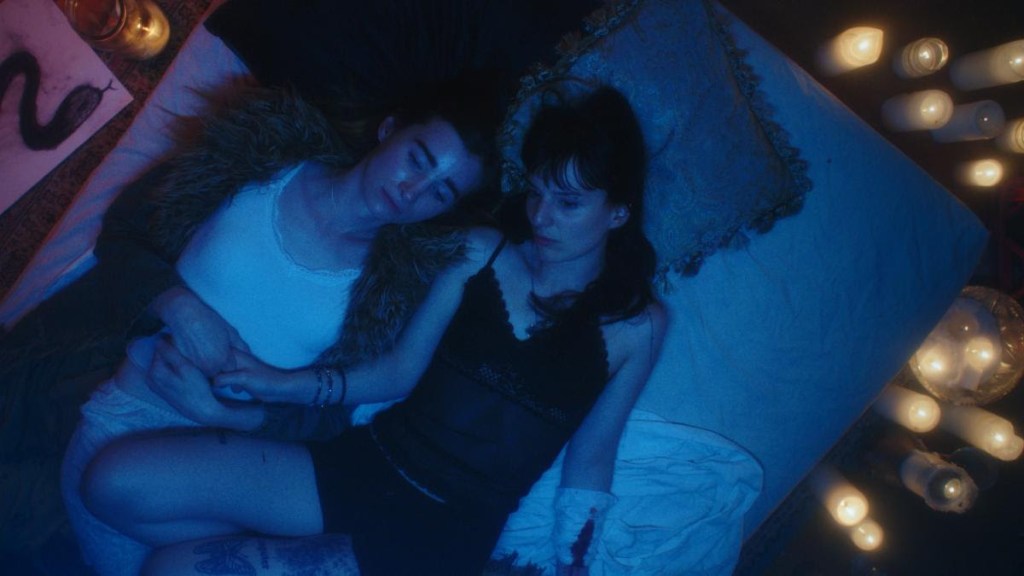
Beneath its softly lit salons and the hushed intimacy of late-night haircuts, The Stylist carves out something far more unsettling: a psychological portrait of aching loneliness, identity collapse, and the monstrous lengths some will go to feel like they belong. Directed with eerie precision by Jill Gevargizian, this feature-length adaptation of her acclaimed short film offers a muted but effective horror tale that leans more into sadness than shocks.

Claire (Najarra Townsend) is a woman adrift—quiet, awkward, desperate to connect—but with a hunger that’s gone grotesquely unmet. She doesn’t just cut hair. She scalps. Each kill is not about violence for its own sake, but a tragic, chilling attempt to wear someone else’s life. And that’s where The Stylist cuts deepest—not in the gore, but in its exploration of identity as a fragile performance, and what happens when someone can no longer locate their own sense of self.

Enter Olivia (Brea Grant), an affable, outgoing bride-to-be who naively invites Claire deeper into her world. From there, the spiral is slow and agonising. What starts as admiration curdles into obsession. Claire’s need to be Olivia isn’t just jealousy—it’s pathological yearning. Her scalping isn’t about trophies in the serial killer sense. It’s about transference. Taking the one thing a person can’t fake: their presence, their social ease, their confidence. Claire doesn’t want to destroy—she wants to inhabit.

Townsend delivers a superb, painfully internal performance. Her Claire is meek but never blank—each nervous twitch and downward glance revealing someone quietly screaming behind her skin. She doesn’t play the killer as a monster, but as a woman in mourning—for connection, for warmth, for identity. It’s a performance that sticks with you. Brea Grant, meanwhile, plays Olivia with a brightness that never tips into caricature, making her slow realisation all the more tragic.

Stylistically, the film is polished, with an elegant aesthetic that contrasts beautifully with its macabre subject matter. There are echoes of Maniac, May, even Single White Female, but The Stylist stands on its own, particularly in how grounded its emotional horror remains. The mood is heavy, sometimes to a fault, with pacing that occasionally feels listless rather than deliberate. Still, the thematic undercurrents—how we mask our emptiness, how we covet others’ confidence like currency—are deeply resonant.

The Prognosis:

There’s a sadness in the scissors. In the need to be seen. In the horror of invisibility. The Stylist doesn’t reinvent the horror genre, but it delivers something more haunting than expected: a quiet eulogy for those who never quite found their place, and the darkness that fills the void.

  • Saul Muerte

From Chains to Clichés: Revisiting Hellraiser: Deader and Hellworld 20 Years Later

08 Sunday Jun 2025

Posted by surgeons of horror in retrospective

≈ Leave a comment

Tags

clive barker, doug bradley, hellraiser, henry cavill, horror, kari wuhrer, Lance Henriksen, marc warren, movies, paul rhys, pinhead, rick bota

The box is still open—but by 2005, the horrors inside had lost their teeth.

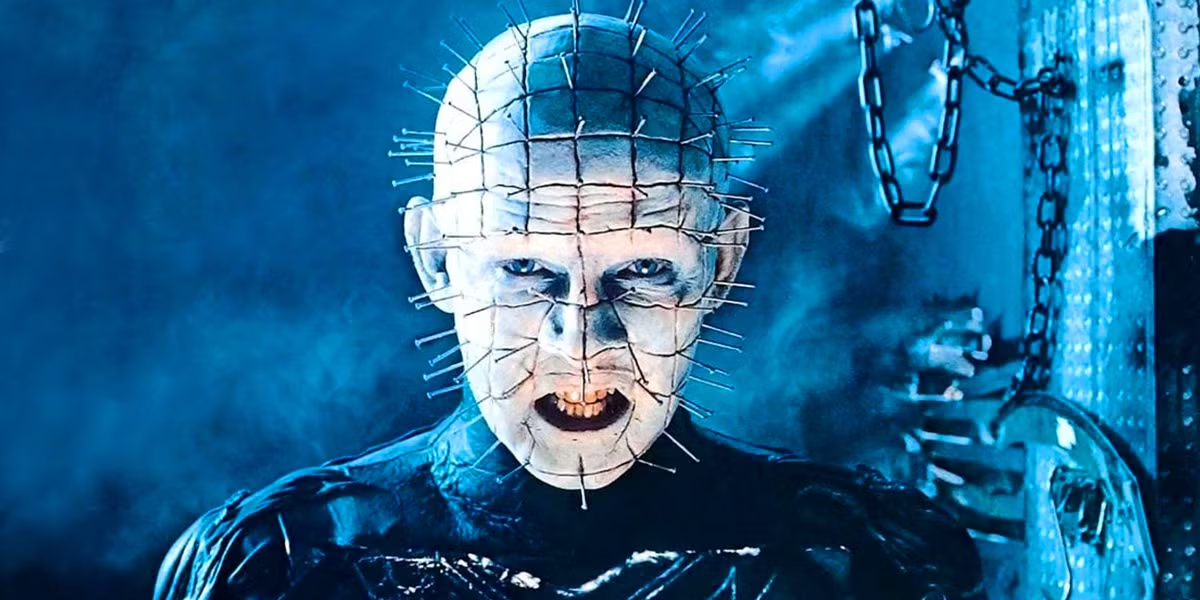
As the Hellraiser franchise entered its straight-to-video era in the early 2000s, fans had already weathered a series of diminishing returns. But 2005’s double blow of Hellraiser: Deader and Hellraiser: Hellworld, both directed by Rick Bota and released within months of each other, marked a significant point of no return. Celebrating (or lamenting) their 20th anniversary in 2025, these two entries are less remembered for expanding Clive Barker’s mythos and more for highlighting how far the series had drifted from its grim, sensual origins.

Hellraiser: Deader 

Of the two, Deader fares slightly better—not because it’s a faithful addition to the Hellraiser canon, but because it begins life as something else entirely. Originally a standalone supernatural thriller script, it was retrofitted to include the Cenobites and the Lament Configuration, resulting in a stitched-together film that almost works in spite of itself.

Kari Wuhrer leads the story as a hard-nosed journalist chasing down an underground death cult in Romania. The film flirts with themes of trauma, addiction, and blurred reality—concepts that Hellraiser once handled with provocative boldness—but here, they’re dulled by a by-the-numbers execution. Still, the moody Eastern European backdrop and committed turns from Wuhrer, Marc Warren, and Paul Rhys give it some atmosphere, and the central premise—of a cult obsessed with conquering death—does echo Hellraiser’s fascination with pushing bodily and spiritual limits.

But despite flashes of creativity, Deader never shakes its identity crisis. The Cenobites are barely relevant to the narrative, and Pinhead’s presence feels perfunctory. It’s not a Hellraiser movie so much as a middling thriller that happens to feature a few familiar hooks.

Hellraiser: Hellworld 

If Deader is diluted, then Hellworld is downright disposable. Set in a pseudo-Internet-era gaming world, Hellworld attempts to be meta and modern, pitting a group of teens against a Hellraiser-themed online game. The resulting film feels like Scream meets House on Haunted Hill—but without the tension, intelligence, or atmosphere of either.

Despite the presence of genre legend Lance Henriksen and a young Henry Cavill (long before the cape), the cast is wasted in a script that relies on techno-jargon, faux-twists, and a painfully forced attempt at self-awareness. Doug Bradley’s Pinhead appears for his final time here, but his screen time is minimal, his dialogue rote, and his menace utterly defanged.

The film ends with a ridiculous twist that robs it of even the shallow pleasures of a bad slasher flick. For many fans, Hellworld marks the lowest point in the franchise—and it’s hard to argue with that sentiment.

Doug Bradley: The Final Configuration

If Hellworld is a disappointing swan song, it’s also the end of an era for Doug Bradley, who portrayed Pinhead across eight Hellraiser films from 1987 to 2005. With his commanding presence and Shakespearean delivery, Bradley transformed what could have been a gimmicky monster into a tragic, philosophical figure—a dark priest of pain and pleasure who lingered long after the credits rolled.

Bradley’s contributions to the franchise can’t be overstated. In Hellbound and Hell on Earth, he explored the remnants of humanity in Pinhead’s psyche; in later films like Inferno and Deader, he still managed to bring gravitas even when the writing failed him. His final appearance in Hellworld may be a muted farewell, but his legacy remains stitched into the flesh of the genre.


The Prognosis:

Twenty years on, Deader and Hellworld stand as cautionary tales about franchise fatigue and the dangers of branding over storytelling. What began with Clive Barker’s twisted poetry and existential dread had, by 2005, become little more than window dressing. Still, Deader holds a flicker of creativity, and even in the depths of Hellworld, Bradley’s shadow looms large—a final, ghostly reminder of what Hellraiser once dared to be.

  • Retrospective by Saul Muerte

The Dhampir Rises Again: 40 Years of Vampire Hunter D’s Haunting Influence

28 Wednesday May 2025

Posted by surgeons of horror in retrospective

≈ Leave a comment

Tags

Dracula, film, horror, japanese cinema, japanese horror, manga, manga horror, movies, reviews, vampire

Premiering Exclusively on Shudder, AMC+ and HIDIVE – Friday 30 May
“In a world ruled by vampires, only a half-blood dares to hunt them.”

When Vampire Hunter D premiered in 1985, few could have predicted the cultural ripple effect it would have across manga, anime, and horror for decades to come. Now, forty years later, this gothic, genre-defying milestone returns with a long-awaited streaming premiere on Shudder, AMC+, and HIDIVE—offering a perfect moment to reflect on its enduring power.

Set in the far-flung future of 12,090 A.D., the film unfolds in a post-apocalyptic landscape where science and sorcery coexist, and humanity lives in fear under the rule of the vampire Nobility. At its centre is Doris Lang, a brave young woman marked for unholy matrimony by the ancient Count Magnus Lee. Her only hope lies in the hands of a mysterious wanderer known only as D—an enigmatic vampire hunter with a tragic secret etched into his very bloodline.

Directed by Toyoo Ashida and based on the novel by Hideyuki Kikuchi with iconic illustrations by Yoshitaka Amano, Vampire Hunter D was a revelation for its time. It merged the aesthetics of Western horror—Dracula, Frankenstein, Lovecraft—with a distinctly Japanese post-apocalyptic flair, opening a door to global audiences that had rarely encountered horror anime in this form. The film’s blend of violence, melancholy, and romanticism felt alien and refreshing—an animated Gothic western that flirted with sci-fi, body horror, and dark fantasy.

The horror in Vampire Hunter D is not just visual—it’s atmospheric. Shadowy castles, mutated creatures, and the decaying elegance of the vampire Nobility all serve to create an air of terminal beauty, where death and corruption linger in every frame. The film pulses with dread, not just from its antagonists, but from the melancholic burden D carries as a dhampir—caught between two worlds, never at home in either.

Manga, and later anime, would absorb and amplify these motifs. Vampire Hunter D helped normalise horror as a serious mode within manga storytelling, inspiring a lineage that includes Berserk, Hellsing, Claymore, and Attack on Titan. Its DNA can be traced through the decades, proving that gothic horror, when stylised with poetic nihilism and speculative world-building, could resonate far beyond Japan.

Though animation has since evolved in leaps and bounds, there’s a charm in Vampire Hunter D’s hand-drawn grit—a visual texture that feels inseparable from its era and identity. It may lack the polish of modern anime, but it makes up for it in atmosphere, tone, and mythic presence.

The Prognosis:

As it celebrates its 40th anniversary with a new generation of fans ready to rediscover it, Vampire Hunter D still holds its scythe high. Part horror, part tragedy, and wholly influential, it remains a cornerstone of horror anime—and proof that even in a world of monsters, the greatest fear often lies within the hero himself.

  • Retrospective Review by Saul Muerte

Vampire Hunter D premieres exclusively on Shudder, AMC+ and HIDIVE – Friday 30 May

From Killer to Filler: Fear Street’s Prom Queen Fails to Reign

24 Saturday May 2025

Posted by surgeons of horror in Movie review

≈ Leave a comment

Tags

fear street, film, horror, movies, netflix, rl stine, slasher

The crown may glitter, but this prom queen is all tulle and no terror.

Fear Street: Prom Queen stumbles into Netflix’s horror lineup with limp energy and even less imagination. Gone is the confident, genre-savvy edge that defined Leigh Janiak’s 2021 trilogy—a trio of interconnected films (1994, 1978, and 1666) that managed to surprise and delight by leaning into horror history while crafting its own mythology. That trilogy was vibrant, bloody, and bold—elevating RL Stine’s teen-friendly chills into something slick and cinematically compelling. With Prom Queen, the fall from Fear Street grace is as loud as it is underwhelming.

Janiak’s absence is keenly felt. What once felt like a love letter to horror has been reduced to a colourless cash-in, trading atmosphere and tension for hollow homage and tired tropes. Director Matt Palmer brings little visual flair or tonal conviction, and the script lacks the spark that made the earlier films feel alive with danger. There’s a fundamental disconnect between the material and its adaptation—as if it’s been lifted from the shelf and passed through a soulless streaming algorithm before making its way to screen.

And that’s a shame, because Prom Queen comes from decent stock. RL Stine’s original novel, while perhaps lighter on the bloodshed, delivered the kind of pulpy suspense and teen melodrama that made his work addictive for a generation. The story’s premise—deadly competition for the school crown—was ripe for a satirical or sinister update in the post-Carrie, post-Mean Girls horror landscape. Instead, the film barely flirts with either, delivering a painfully formulaic slasher that neither frightens nor surprises.

The kills, such as they are, feel half-hearted and predictable. Characters are introduced only to be dispatched minutes later, never afforded personalities beyond archetypes. Suspense is conspicuously absent, replaced by a mechanical rhythm of setup and slash that grows increasingly tiresome. It doesn’t help that the film plays it incredibly safe—never leaning into camp, nor darkness, nor even irony. It simply exists, like a photocopy of a photocopy, drained of the ink that once gave the franchise bite.

India Fowler stands out, her performance as Lori Granger offering flickers of emotion and control that the film doesn’t deserve. She does what she can with thin material and walks away mostly unscathed. The Newton Brothers’ score is another high point—synthy, nostalgic, and oddly elegant—almost a haunting echo of the trilogy’s sharper sound design. But these are isolated gems in an otherwise barren crown.

The Prognosis:

Fear Street: Prom Queen is a disappointing return to a once-promising franchise. It neither honours its roots nor pushes the story in new directions. Instead, it limps across the finish line with little to say and even less to feel. If this is the future of Fear Street, it may be time to turn back.

  • Movie Review by Saul Muerte

Letting Go Hurts: The Surrender Cuts Deep

18 Sunday May 2025

Posted by surgeons of horror in Movie review

≈ Leave a comment

Tags

colby minifie, film, horror, julia max, kate burton, Movie review, movies, reviews, shudder, shudder australia

Grief, guilt, and resurrection collide in this modest but emotionally raw Shudder original, anchored by Colby Minifie’s compelling performance.

Shudder’s The Surrender, directed by Julia Max, delivers a slow-burn horror that uses its modest means to tell a deeply emotional—and at times unnerving—tale of grief, guilt, and letting go. While the film initially struggles under the weight of its low budget, it gradually finds its footing as it surrenders itself to the emotional and psychological turmoil at its centre.

At the heart of the story is the fraught relationship between a grieving mother and her daughter Megan (Colby Minifie), as they wrestle with the sudden death of their husband and father. Desperate and broken, the mother enlists a mysterious stranger to bring her husband back from the dead. What begins as a misguided act of love quickly spirals into something much more brutal and unnatural.

The supernatural elements are understated at first, and admittedly, the film’s visual limitations are most noticeable in its early scenes. But what The Surrender lacks in spectacle, it more than makes up for in its performances—particularly Minifie’s. As Megan, she delivers a performance grounded in realism and vulnerability, guiding the audience through the stages of grief with raw authenticity. Her arc—resisting, confronting, and eventually accepting the horror unraveling around her—anchors the film and gives its title real weight.

Director Julia Max plays with mood and silence rather than jump scares, and the atmosphere becomes more effective the longer we sit in it. The film’s title becomes a double-edged term: surrender to grief, surrender to love, and ultimately, surrender to what can’t be undone.

The Prognosis:

While it never fully transcends its genre or budget, The Surrender is a thoughtful entry in the grief-horror subgenre that lingers in the mind more than expected. For those patient enough to give in, there’s something genuinely resonant beneath the blood and shadow.

  • Movie Review by Saul Muerte

The Surrender is streaming on Shudder from Fri 23rd May.

Final Destination: Bloodlines” Sends the Franchise Out with a Bloody, Belly-Laugh Bang

14 Wednesday May 2025

Posted by surgeons of horror in Movie review

≈ Leave a comment

Tags

adam stein, film, final destination, horror, movies, nbc universal, reviews, tony Todd, universal pictures, zach lipovsky

Gruesome deaths, tongue-in-cheek humour, and one last haunting turn from Tony Todd give this unexpected final chapter a shockingly fun farewell.

Okay, so what number is this? FD 14? 80? Final Destination 482?

Meh, who cares.

To be perfectly honest, I really wasn’t expecting much from this, so did it deliver?
Drum roll… well, you’ll see.

The plot is: College student, Stefani, is plagued by the same super-violent nightmare  night after night so investigates to find out what’s the deal. Then blah de blah, something, something about cheating death and it coming back to get you.

IRL SPOILER ALERT: Death catches up with everyone in the end.

Starring… well, I don’t know. Other than Tony Todd (in his final role before his passing) reprising his usual role, there’s no big ‘stars’… unless you count the Maya Hawke lookalike. This obviously makes the cast extra-expendable when they meet their bloody end. And boy oh boy, did they not scrimp on the blood and gore!!!

Every death is gratuitously gore-rific. The audience at the screening, the sick puppies they were, erupted in absolute fits of laughter every time one of the characters was killed.

Again, sick puppies… myself included of course.

But that’s it too. It most definitely plays for laughs. The writers are comedy and/or horror specialists. Between them they are responsible for: “Abigail”, “Ready or Not”, “Spider-Man: Homecoming” to name but a few. And they’ve had a great deal of fun with the script for this.

The Prognosis:

For me, “Final Destination: Bloodlines” was a great surprise. The makers have promised this is the final chapter of the long-exhausted franchise but hooly dooly, what a way to go out.

Now let the franchise die and head to its final destination.

  • Movie Review by Myles Davies

Clown in a Cornfield Juggles Gore, Heart, and Teen Angst—but Drops a Few Balls

13 Tuesday May 2025

Posted by surgeons of horror in Movie review

≈ Leave a comment

Tags

aaron abrams, adam cesare, brian pearson, carson macCormac, clown in a cornfield, eli craig, film, horror, Horror movies, katie douglas, kevin durand, movies, reviews, scary clowns, studiocanal

Eli Craig’s stylish adaptation of the Bram Stoker Award-winning novel lands some bloody punches, but struggles to balance slasher thrills, meta commentary, and character depth.

Adapted from the 2020 novel of the same name by Adam Cesare. Clown in the Cornfield won the Bram Stoker Award for Best Young Adult Novel and was a prominent addition to the new wave of horror literature. Acquired by Shudder and pushed wider than one would expect for a Canadian teen slasher, the film has high aspirations and plenty to show for it.

Still grieving the loss of her mother, Quinn (Katie Douglas) has been transplanted from Philadelphia to the corn country town of Kettle Springs by her father, the new town’s doctor (Aaron Abrams). Hoping for a new start, they find the town, still stuck in the 90s, has a strange air about it. The adults all seem to have it out for the teens of the town, in particular the group lead by the Mayor’s son, Cole (Carson MacCormac). Much to the town’s chagrin Cole and his friends make internet horror videos, starring Friendo the Clown, the Factory and the Town’s Mascot. After one of their recent after hours shoots in the corn syrup factory, a fire mysteriously started and burned the whole thing down, putting half the town out of work and the teens in the crosshairs of a very angry clown.

A slasher lives and dies (and dies and dies) on its kills and in this teen slasher comedy Director Eli Craig brings his experience from the very fun Tucker & Dale vs Evil and the Adam Scott starring, Omen parody, Little Evil. While the killing is sparse to begin with, the violence ramps up towards the end in fun and inventive ways. There is a surprising amount of heart put into the film and the teen drama between the leads is engaging and affecting. One of the film’s weak points though is the supporting cast, the performances are held well but characters are so thinly drawn which only is highlighted because the leads have such life and depth to them.

Out of the whole Canadian cast, Kevin Durand is the biggest name here and really he’s more of a “Hey, I know that guy!” Durand plays the conservative Mayor obsessed with tradition and hard on the youth. While there isn’t a whole lot for him to do for most of the film’s run, there is one scene towards the end where he gets to really chew the scenery.

Together, Craig and cinematographer Brian Pearson (Final Destination 5, I Am Legend) bring a gorgeous look to the film, it’s probably one of the best looking teen horrors in a long while. Divorced from so many of the bad habits that have plagued the lower tier horror films of the last decade. The action is clear and you are always oriented in the scenes. I know this sounds like faint praise but there are so many slashers aimed at teens that just do not try and end up edited to pieces.

Unfortunately, the film suffers in the act of adaptation, too often you can feel a novel’s pacing and story squeezed into the brisk 96 minutes of the film’s run time. The tone fights with itself throughout flitting between classic slasher, meta comedy and teen drama, doing all three well when it’s happening on screen but all three never coalesce into a singular piece. Friendo never really gets the moments to elevate anywhere near to the likes of Jason or Freddy, or even Art the Clown for that matter. His design is not terribly interesting and the reveal of what’s really going on, while surprising at first, leaves the lore pretty thin and shallow to play in

The Prognosis:

The aspirations to be Scream for this generation are here; the mixture of horror and comedy, generational commentary, teenage cast. As an entry level slasher it does plenty right and with solid direction, inventive kills and charming performances but for more seasoned slasher lovers will be left wanting from Friendo the Clown.

  • Movie Review by Oscar Jack

A Symphony in Splatter: Langley’s Butchers Trilogy Goes for the Jugular

10 Saturday May 2025

Posted by surgeons of horror in Movie review

≈ Leave a comment

Tags

adrian langley, butchers, film, horror, movies, naomi malemba, review, reviews, shannon dalonzo

Director Adrian Langley stays true to his blood-soaked roots in this gleefully gruesome third chapter.

In a genre that thrives on extremity, Adrian Langley’s Butchers trilogy has carved out its own brutal little niche—one not of narrative elegance or thematic innovation, but of bone-crunching, limb-lopping, nerve-shredding excess. With Butchers Book Three: Bonesaw, Langley stays the course, offering up another round of down-home horror where pain is inevitable and escape is unlikely.

Gone are the niceties of plot complexity or emotional nuance. In their place: sinew, shrieks, and gallons of the good stuff—practical effects and prosthetics that drip with a kind of DIY devotion rarely seen in modern horror. Langley doesn’t just lean into the gore; he practically does a cannonball into it. This time, his antagonist is a grotesque butcher on wheels, hacking through anyone in his way from the confines of his roving abattoir van. It’s ridiculous, yes, but it’s also grotesquely entertaining.

The story, such as it is, follows three women caught in the butcher’s path and a small-town sheriff who attempts to make sense of the carnage. There’s a familiar structure here—the cat-and-mouse setup, the slasher’s calculated chaos—but Langley’s real interest lies in the carnage itself. Heads roll. Limbs drop. The camera rarely flinches, and neither does the director.

Where the film stumbles is in its limited character development and tonal rigidity. The sheriff subplot adds some much-needed shape, but our protagonists exist mostly to scream, bleed, and be pursued. Still, in the context of a trilogy where spectacle has always trumped subtext, Bonesaw feels like a natural and—dare it be said—confident culmination of Langley’s rural carnage canon.

This isn’t horror that aims for atmosphere or metaphors. It’s red meat cinema—satisfyingly gnarly, grotesquely tactile, and proud of its splatterpunk DNA. In an era of glossy elevated horror, Butchers Book Three proudly remains low to the ground, in the dirt and the blood, where it has always belonged.

The Prognosis:

Not for the squeamish, but for gorehounds and genre loyalists, Langley delivers precisely what’s on the tin—if that tin were dented, rusted, and soaked through with blood.

  • Movie Review by Saul Muerte

Movie Review: Butchers

Movie Review: Butchers Two: Raghorn

The Island Fades into the Mist

10 Saturday May 2025

Posted by surgeons of horror in Movie review

≈ Leave a comment

Tags

aida folch, fernando trueba, film, horror, juan pablo urrego, matt dillon, movies, reviews, thriller

Fernando Trueba’s sun-drenched thriller is a lethargic drift through secrets, sensuality, and squandered potential.

The Mediterranean sun may dazzle, the waves may glitter, and the cast may smoulder with generically attractive tension—but none of it can save The Island from becoming one of the more soporific cinematic experiences. Fernando Trueba, a director with an esteemed filmography, trades narrative vitality for languid ambiance in this inert psychological drama that unfolds like a long, humid sigh.

Set against the postcard backdrop of a Greek island, the film introduces us to Alex, a new waitress at a boutique seaside restaurant. With a femme-fatale allure and an air of mystery, she quickly captures the attention of Enrico, the chef, but is drawn instead to Max, the elusive American manager hiding something in his brooding stares and clenched silences. What follows is less a thrilling triangle than a series of glances, sighs, and ultimately, a glacial unraveling of a secret that arrives with the narrative urgency of a missed ferry.

Trueba clearly intends a slow-burn approach, but what results is barely a flicker. The plot trudges along with the weight of its own self-importance, mistaking inertia for introspection. The sexual tension, which should crackle, barely hums. Conversations are riddled with cryptic hints and evasive stares, yet the payoffs are few and far between. When revelations do come, they feel both undercooked and unearned—mere embers that fail to ignite.

Visually, The Island is polished, occasionally picturesque. The camera lingers lovingly on the sea and stone, the half-lit interiors, the salt-flecked skin of its cast. But the atmosphere, no matter how finely curated, cannot compensate for narrative void. You keep waiting for the film to snap into focus, to finally tap into its thriller DNA. Instead, it drifts—first into lethargy, then into complete emotional disengagement.

The performances are competent, but the characters remain archetypes rather than people. Alex is sultry but shallowly drawn; Max, the American enigma, is more mannequin than man; and poor Enrico spends most of the runtime in a state of aimless suspicion. The film attempts to explore obsession, betrayal, and the burdens of past sins, but only gestures vaguely toward each before retreating back into the blue haze.

The Prognosis:

The Island wants to be a sun-bleached neo-noir, a slow meditation on desire and consequence, but what we’re left with is a whisper of a film—beautifully composed, but hollow and soporific. Sometimes, secrets are better left buried. In this case, the film’s own narrative might have been.

  • Movie Review by Saul Muerte

Ride the Snake Slithers into Darkness, But Never Truly Strikes

10 Saturday May 2025

Posted by surgeons of horror in Movie review

≈ Leave a comment

Tags

film, horror, madhav sharma, michael maloney, Movie review, movies, reviews, shani grewal, suzanna hamilton

Despite bold intentions and strong performances, this slow-burning psychological thriller is too meandering to leave a lasting bite.

Ride the Snake, the latest effort from British filmmaker Shani Grewal, attempts to crawl into the feverish subconscious of grief, guilt, and revenge, but ends up shedding more skin than substance. With an ambitious palette of references, the film isn’t lacking in aesthetic aspirations. Unfortunately, it’s precisely this reverence for genre greats that weighs the narrative down, muddying what could have been a searing, timely story of loss and reckoning.

At its core, the premise is loaded with potential. Harper (Suzanna Hamilton) and her daughter abduct the drunk driver responsible for the death of Harper’s husband, believing they’ve seized justice on their own terms. What follows is not the revenge thriller one might expect, but a slow, deliberate psychological descent. The pacing dares to crawl, not sprint. And while restraint can be a virtue, here it flirts too closely with inertia.

Hamilton, best known for her haunting turn in 1984, delivers a performance of quiet intensity. Her portrayal of Harper teeters between vulnerability and steel resolve. Michael Maloney also anchors the film with a weary charisma that keeps certain scenes afloat, particularly when the tension begins to sag. Madhav Sharma, too, brings subtle gravity to his supporting role, though he is underutilised.

Where Ride the Snake does strike a chord is in its atmospheric tension. The visuals are brooding and textured, soaked in bleak palettes and long, oppressive silences. Grewal and his cinematographer seem deeply attuned to visual storytelling—but perhaps too much so. At times, the atmosphere feels like an end in itself rather than a complement to the story. There are echoes of genre classics everywhere, but they never quite congeal into something distinct or urgent. It’s a film that gestures toward menace without ever fully embracing it.

Yet, beneath the uneven pacing and the sometimes self-conscious aesthetic, there’s something commendable. Grewal’s comment about the difficulties of casting British/Asians in non-stereotypical roles speaks to a real and persistent issue in UK cinema. In that regard, Ride the Snake is a step forward—not because it tokenises its characters of colour, but because it simply allows them to exist in complex, human roles. The film’s universality lies in its grief, in its moral murk, and in the desperation that grief can provoke.

The Prognosis:

For all its noble intentions and atmospheric flourishes, Ride the Snake ends up coiling in on itself. It never quite delivers the psychological punch it promises. The suspense simmers but rarely boils. The horror stays at arm’s length, more suggested than felt. In the end, it’s a film that mourns deeply but moves too slowly—and struggles to find its own voice amid the echoes of cinematic ghosts.

  • Movie Review by Saul Muerte

Ride The Snake is currently streaming on Amazon Prime.

← Older posts
Newer posts →

Subscribe

  • Entries (RSS)
  • Comments (RSS)

Archives

  • January 2026
  • December 2025
  • November 2025
  • October 2025
  • September 2025
  • August 2025
  • July 2025
  • June 2025
  • May 2025
  • April 2025
  • March 2025
  • February 2025
  • January 2025
  • December 2024
  • November 2024
  • October 2024
  • September 2024
  • August 2024
  • July 2024
  • June 2024
  • May 2024
  • April 2024
  • March 2024
  • February 2024
  • January 2024
  • November 2023
  • October 2023
  • September 2023
  • August 2023
  • July 2023
  • June 2023
  • May 2023
  • April 2023
  • March 2023
  • February 2023
  • January 2023
  • November 2022
  • October 2022
  • September 2022
  • August 2022
  • July 2022
  • June 2022
  • April 2022
  • March 2022
  • February 2022
  • January 2022
  • December 2021
  • November 2021
  • October 2021
  • September 2021
  • August 2021
  • July 2021
  • June 2021
  • May 2021
  • April 2021
  • March 2021
  • February 2021
  • January 2021
  • December 2020
  • November 2020
  • October 2020
  • September 2020
  • August 2020
  • July 2020
  • June 2020
  • May 2020
  • April 2020
  • March 2020
  • February 2020
  • January 2020
  • December 2019
  • November 2019
  • October 2019
  • September 2019
  • July 2019
  • June 2019
  • May 2019
  • April 2019
  • March 2019
  • February 2019
  • January 2019
  • December 2018
  • November 2018
  • October 2018
  • September 2018
  • August 2018
  • July 2018
  • June 2018
  • May 2018
  • April 2018
  • March 2018
  • February 2018
  • January 2018
  • December 2017
  • November 2017
  • October 2017
  • September 2017
  • August 2017
  • July 2017
  • June 2017
  • May 2017
  • April 2017
  • March 2017
  • February 2017
  • January 2017
  • December 2016
  • November 2016
  • October 2016
  • September 2016
  • August 2016
  • July 2016
  • June 2016
  • May 2016

Categories

  • A Night of Horror Film Festival
  • Alien franchise
  • Alliance Francaise French Film Festival
  • Australian Horror
  • Best Movies and Shows
  • Competition
  • dark nights film fest
  • episode review
  • Flashback Fridays
  • Friday the 13th Franchise
  • Full Moon Sessions
  • Halloween franchise
  • In Memorium
  • Interview
  • japanese film festival
  • John Carpenter
  • killer pigs
  • midwest weirdfest
  • MidWest WierdFest
  • MonsterFest
  • movie article
  • movie of the week
  • Movie review
  • New Trailer
  • News article
  • podcast episode
  • podcast review
  • press release
  • retrospective
  • Rialto Distribution
  • Ring Franchise
  • series review
  • Spanish horror
  • sydney film festival
  • Sydney Underground Film Festival
  • The Blair Witch Franchise
  • the conjuring franchise
  • The Exorcist
  • The Howling franchise
  • Top 10 list
  • Top 12 List
  • top 13 films
  • Trash Night Tuesdays on Tubi
  • umbrella entertainment
  • Uncategorized
  • Universal Horror
  • Wes Craven
  • wes craven's the scream years

Meta

  • Create account
  • Log in

Blog at WordPress.com.

  • Subscribe Subscribed
    • Surgeons of Horror
    • Join 227 other subscribers
    • Already have a WordPress.com account? Log in now.
    • Surgeons of Horror
    • Subscribe Subscribed
    • Sign up
    • Log in
    • Report this content
    • View site in Reader
    • Manage subscriptions
    • Collapse this bar
 

Loading Comments...