• About
  • podcasts
  • Shop

Surgeons of Horror

~ Dissecting horror films

Surgeons of Horror

Tag Archives: horror

Drained of Dread: Abraham’s Boys Offers a Tepid Take on the Van Helsing Curse

05 Wednesday Nov 2025

Posted by surgeons of horror in Movie review

≈ Leave a comment

Tags

abraham van helsing, books, Bram Stoker, Dracula, horror, joe hill, mina harker, vampires

Joe Hill’s short story Abraham’s Boys offered a quietly haunting coda to the Dracula mythos — a modern Gothic in miniature, soaked in melancholy and generational trauma. Unfortunately, this Shudder-exclusive adaptation struggles to translate that restrained power to the screen. What emerges is a film that mistakes heavy exposition for emotional weight and loses the eerie ambiguity that made Hill’s prose hang in the air.

Set in the American Midwest, the film imagines Abraham Van Helsing as a broken patriarch trying to protect his sons, Max and Rudy, from the supernatural horrors he once fought. It’s a bold premise — relocating Stoker’s world from the fog of Europe to the dust and decay of small-town America — but in doing so, the film sheds the very atmosphere that defined the Gothic. The Midwest may hold its ghosts, but here it feels oddly sterile, a backdrop devoid of menace or mystique.

Even more jarring is the notion that Van Helsing, once defined by faith and obsession, would settle down with Mina Harker and start a family. The choice feels not only implausible but thematically tone-deaf, undercutting the tragic consequences of their shared history. The result is a domestic melodrama stitched awkwardly to a monster myth that deserved grander treatment.

There are flashes of something worthwhile — the strained father-son dynamic occasionally hints at the emotional brutality Hill conjured in his story, and the film’s final moments attempt to reclaim some of its literary melancholy. But it’s too little, too late. Abraham’s Boys: A Dracula Story is a gothic without a heart, a reimagining that leaves both the horror and the humanity of its lineage drained.

The Prognosis:

A well-intentioned expansion of Joe Hill’s world that fails to capture his haunting tone or Stoker’s legacy. The bloodline runs thin.

  • Saul Muerte

Abraham’s Boys: A Dracula Story will be streaming on Shudder from Thurs 6th Nov.

A Nightmare on Elm Street Part 2: Freddy’s Revenge — The Scream That Wouldn’t Stay Silent

02 Sunday Nov 2025

Posted by surgeons of horror in retrospective

≈ Leave a comment

Tags

a nightmare on elm street, david chaskin, film, freddy kreuger, freddy's revenge, freddy-krueger, horror, jack sholder, mark patton, movies, roman chimienti, tyler jensen, Wes Craven

40 Years Later, Freddy’s Most Controversial Outing Finds Its Voice

When A Nightmare on Elm Street Part 2: Freddy’s Revenge was released in 1985, it was branded the misfit of the franchise — the sequel that neither understood nor respected Wes Craven’s original nightmare logic. It broke the rules, confused the mythology, and, for years, stood as an awkward entry that fans politely stepped around on their way from the original to Dream Warriors. Yet four decades on, this strange, feverish sequel has become something else entirely: a film reborn through reinterpretation, its queerness no longer subtext but the key to its survival.

Directed by Jack Sholder and written by David Chaskin, Freddy’s Revenge abandoned the dream-bound terror that defined Craven’s universe. Instead, it placed Freddy Krueger (Robert Englund, as gleefully unhinged as ever) in the real world, emerging from the subconscious of a high-school boy, Jesse Walsh (Mark Patton). Freddy doesn’t haunt Jesse’s dreams so much as possess his waking body — a metaphor that was once dismissed as clumsy and now reads as heartbreakingly potent.

For years, Sholder and Chaskin denied any intentional queer coding in the script, even as the evidence screamed from the screen: Jesse’s confusion, his attraction to his male friend, the locker-room glances, the visit to a leather bar, the purging of desire through literal combustion. It’s a coming-of-age horror written in the language of repression. Mark Patton, himself a closeted gay actor navigating the homophobic undercurrents of 1980s Hollywood, became the unwitting vessel for a film that mirrored his own struggle. What was once derided as camp excess has since been reclaimed as a bold, if accidental, act of visibility.

Stylistically, Sholder’s direction can’t match Craven’s dreamlike precision. The suburban sets feel overlit, the kills lack imaginative flair, and the final act collapses under a barrage of rubber and fire. Yet, there’s something raw in its awkwardness — an emotional exposure that feels more personal than any of the slick sequels that followed. Freddy’s transformation from an abstract nightmare into an embodiment of internal fear makes Freddy’s Revenge less a horror film and more a psychological exorcism.

In hindsight, the film’s flaws have become its strengths. Where Dream Warriors polished the franchise into pop spectacle, Freddy’s Revenge remains stubbornly intimate — sweaty, confused, and unafraid of its own vulnerability. It’s a film that accidentally said too much, and in doing so, became something greater than its makers intended: a queer text born out of repression, now celebrated for the same reasons it was once mocked.

Forty years later, Freddy’s second outing stands as the series’ most haunted film — not by Krueger’s knives, but by the ghosts of shame, identity, and self-discovery. It may not be the nightmare Wes Craven envisioned, but it’s one that has found its audience at last.

The Prognosis:

Flawed, fascinating, and deeply human — Freddy’s Revenge remains the bravest mistake the franchise ever made.

  • Saul Muerte

“Scream, Queen! My Nightmare on Elm Street” — Reclaiming the Dream

When Scream, Queen! My Nightmare on Elm Street (2019) premiered, it reframed one of horror cinema’s most divisive sequels through a lens of personal redemption. Co-directed by Roman Chimienti and Tyler Jensen, the documentary follows actor Mark Patton — once dubbed “the first male scream queen” — as he confronts both the film’s legacy and the industry that nearly erased him.

For decades, Patton lived in self-imposed exile, burned by the fallout from Freddy’s Revenge. His performance, ridiculed in its time for its “unintended” homoerotic undertones, became a scapegoat for a film that studio executives and creatives refused to acknowledge as queer. The doc reveals the painful aftermath: the homophobia of the 1980s Hollywood system, the stigma surrounding the AIDS crisis, and the way Patton’s career dissolved in the shadow of a film that mirrored his inner life too closely.

What Scream, Queen! achieves — and why it remains essential viewing — is its reclamation of authorship. It positions Patton not as a victim of misinterpretation but as the heart of Freddy’s Revenge, the one who gave its confused metaphors a pulse. His confrontation with screenwriter David Chaskin, who long denied the script’s queer coding before finally conceding its intent, is one of the most cathartic moments in horror documentary history.

In essence, the film transforms Freddy’s Revenge from franchise oddity into a landmark of queer horror — not because it was perfect, but because it survived. It reminds us that horror, at its best, is a mirror for the things we’re told to fear — even, and especially, ourselves.

The Evil Dead (1981): The Birth of DIY Carnage

29 Wednesday Oct 2025

Posted by surgeons of horror in Movie review

≈ Leave a comment

Tags

bruce campbell, Cult Horror, evil dead, film, Halloween, horror, Horror movies, movies, sam raimi

There’s something unholy about watching The Evil Dead in 2025 — not because of its gore (though the film still bleeds like a fresh wound), but because it reminds us how much horror has changed… and how much it owes to Sam Raimi’s twisted weekend in the woods.

Before franchises, before multiverses, before horror was a business plan — there was a group of friends in Tennessee, gallons of fake blood, and a Super 8 camera that barely held together. Raimi, Bruce Campbell, and producer Robert Tapert didn’t just make a film; they conjured one from sheer madness and duct tape. Every camera move, every shriek, every ash-smeared close-up feels like it was carved from the flesh of invention itself.

The Evil Dead isn’t just about possession — it’s about obsession. You can feel Raimi’s fever in every frame, the urge to push the medium past breaking point. Long before the word “indie” became shorthand for Sundance polish, this film was truly independent: reckless, raw, and glorious in its imperfection. Its claustrophobic energy turns the forest into a sentient entity, the cabin into a cursed organism. You can smell the wood rot, the sweat, the 16mm stock tearing in the projector.

What keeps it alive isn’t nostalgia — it’s rhythm. Raimi’s kinetic camera was punk cinema incarnate, years before digital tools democratised motion. That manic momentum, that willingness to risk everything for a shot, became the DNA of countless filmmakers who came after — from Peter Jackson’s Braindead to modern found-footage auteurs chasing the same fever dream.

Yet for all its brutality, there’s an innocence to The Evil Dead. It’s a film made by people who loved horror so much, they wanted to crawl inside it. Raimi’s signature blend of cruelty and comedy — later refined in Evil Dead II and Army of Darkness — starts here as an unfiltered scream. It’s clumsy, beautiful, and unforgettable.

In a cinematic age obsessed with IP and polish, The Evil Dead stands as a reminder that horror thrives on imperfection. It’s about spirit, not studio notes. It’s about throwing your friends into the mud and making something that feels like it might actually hurt you to watch.

The Prognosis:

Horror cinema has evolved in scale and sophistication, but few films still pulse with the same unhinged energy. Raimi’s debut is a masterclass in fearless filmmaking — a symphony of shrieks, sweat, and splintered wood that reminds us why terror should never feel safe.

  • Saul Muerte

THE EVIL DEAD –
BUY OR RENT NOW

Toxic Avenger (2025): The Return of Filth and Fury

29 Wednesday Oct 2025

Posted by surgeons of horror in Movie review

≈ Leave a comment

Tags

comedy, elijah wood, film, horror, jacob tremblay, julia davis, kevin bacon, macon blair, movies, peter dinklage, reviews, taylour paige, toxic avenger

Some monsters crawl back from the grave; others crawl from the sewer.
With The Toxic Avenger (2025), writer-director Macon Blair has achieved something bordering on alchemy — turning the sludge of 1980s exploitation cinema into a molten reflection of our contemporary world. It’s less a remake than a resurrection: a grotesque, heartfelt eulogy for a time when bad taste was an act of rebellion.

The original 1984 Toxic Avenger was pure Troma chaos — an anarchic cocktail of slime, slapstick, and splatter. It was both anti-superhero and anti-society, gleefully dismembering the Reagan-era obsession with moral cleanliness. Blair’s revival doesn’t sanitise that legacy; it weaponises it. If the first film was a punk scream from the gutter, the new one is a howl echoing from the biohazard bin of late capitalism.

Peter Dinklage’s portrayal of Winston Gooze — a meek janitor transformed into a radioactive antihero — anchors the absurdity with tragic weight. Dinklage plays the part not for camp, but for catharsis: his deformity becomes the mirror of a system that feeds on deforming its own. Kevin Bacon’s villainous corporate baron, all Botox and bile, feels like a mutant descendant of every Troma CEO caricature — but here, he’s horrifyingly real.

Blair’s vision retains Troma’s vulgar spirit while finding unexpected poetry in the putrescence. His Toxic Avenger is as much about class rage and environmental collapse as it is about geysers of green goo. Every viscera-slick punch lands with the melancholy of a generation choking on the toxins it helped create. The violence is ludicrous, yes, but the laughter catches in the throat — this is camp reimagined as ecological despair.

What’s remarkable is how The Toxic Avenger feels simultaneously nostalgic and corrosively modern. Blair pays homage to Lloyd Kaufman’s transgressive humour, but refracts it through the aesthetics of contemporary superhero fatigue. His monster isn’t an accident of nuclear waste but of bureaucracy — a man destroyed by the very infrastructures meant to protect him.
The film’s gore set-pieces are less about indulgence than excess as indictment: when the blood sprays, it sprays neon, irony, and sorrow.

There’s an undercurrent of empathy that never existed in the original. Blair, ever the humanist even amidst the carnage, treats his freaks with tenderness. The mutants, misfits, and malformed are no longer punchlines; they’re the ones inheriting the Earth — or what’s left of it. It’s as though the spirit of Troma grew up, got angry, and learned how to aim its sludge cannon.

The Prognosis:

In the landscape of 2025 horror, where clean franchises and polished dread dominate, The Toxic Avenger feels like a badly needed contamination. It reminds us that horror’s job isn’t always to terrify — sometimes, it’s to repulse, provoke, and unsettle in the service of truth. Blair’s remake drips with the very stuff most studios would rather wash away.

And that’s precisely why it matters.
Because amid the algorithmic uniformity of modern genre filmmaking, The Toxic Avenger dares to be disgusting — and in doing so, it becomes pure again.

  • Saul Muerte

THE TOXIC AVENGER – BUY OR RENT NOW

A Halloweekend Movie Marathon: The Home Entertainment Guide

25 Saturday Oct 2025

Posted by surgeons of horror in Uncategorized

≈ 1 Comment

Tags

film, Halloween, horror, Horror movies, movies

Halloween rarely stays confined to a single night. The ritual of the Halloweekend—a three-day communion of darkness, nostalgia, and popcorn—has become an annual rite for horror fans. It’s a time when the barriers between the cinema and the living room dissolve, and the flicker of the television once again becomes our campfire glow. This year, as October 31st falls on a Friday, it’s the perfect excuse to transform your home into a theatre of the uncanny.

From franchise resurrections and genre experiments to reanimated cult icons and family-friendly frights, this year’s home entertainment line-up offers a spectrum of screams for every taste. Whether you crave dread-laden mythology, subversive satire, or a gentle chill that still lets the kids sleep at night, here’s your guide to building a Halloweekend Movie Marathon worthy of the season.


The Franchises Return: Evil Never Dies, It Just Streams Differently

Sequels are the lifeblood of the horror ecosystem, and 2024–2025 has delivered them with unholy enthusiasm. The Conjuring: Last Rites has become the highest-grossing entry in the franchise—proof that James Wan’s universe of haunted faith still has audiences under its spell. The film closes the Ed and Lorraine Warren saga with ritualistic grandeur, blending theological terror with operatic spectacle. It’s horror as folklore, deeply Catholic yet oddly romantic, and best watched with the lights off and the volume indecently high.

Hot on its spectral heels comes I Know What You Did Last Summer, the long-awaited sequel that trades the 1990s teen slasher sheen for something darker and more mournful. Age has crept into its survivors, and the sins of the past feel heavier, more human. Together, these two films form the perfect one-two punch for a Friday night of ghosts and guilt—two hauntings from opposite ends of the horror spectrum.
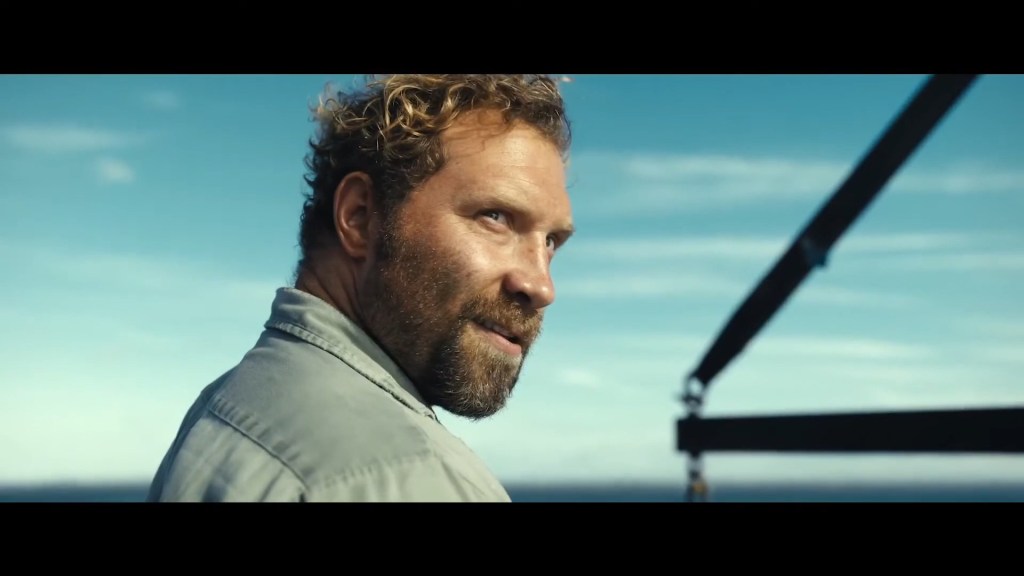
If you still have stamina after that, revisit The Black Phone. Scott Derrickson’s original remains a masterclass in slow-burn suspense, and Ethan Hawke’s masked performance feels destined to be rediscovered each Halloween.
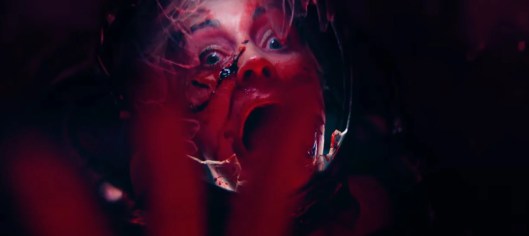

Weapons of Fear: The New Face of Prestige Horror

For those who prefer their terror thoughtful, Weapons stands as this year’s dark horse—a meticulously constructed nightmare that unfolds with existential precision. Director Zach Cregger’s follow-up to Barbarian dissects masculinity and violence through a lens of cosmic dread, proving once again that the most terrifying monsters are often human. It’s not just horror; it’s arthouse apocalypse.
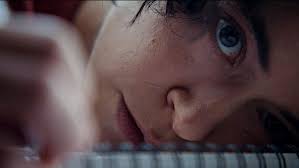
And just beyond the horizon lurks HIM—available to pre-order now and set to release in early November. Word from festival circuits teases something Lovecraftian, something deeply unsettling. If Weapons is about human violence, HIM promises to explore the unfathomable violence of the universe itself. For the serious horror aesthete, these two titles belong at the heart of your Halloweekend viewing.


Horror Meets Humour: The Body Horrific

Sometimes the only way to survive the darkness is to laugh through the blood. Together, starring Alison Brie and Dave Franco, does exactly that—fusing body horror with relationship disintegration in a way that’s both hilarious and grotesque. It’s Cronenberg by way of couple’s therapy, proof that the boundaries between love and revulsion remain dangerously thin.

Then there’s The Toxic Avenger (2025), the riotous revival of Troma’s most beloved mutant. Director Macon Blair reimagines the cult classic for a new age of environmental anxiety and pop-cultural absurdity. With Peter Dinklage and Kevin Bacon leading the chaos, it’s a delirious love letter to 1980s splatter cinema—messy, magnificent, and defiantly unclean. Expect a full-length exploration of this one soon on Surgeons of Horror, because The Toxic Avenger deserves more than a mere mention; it’s a mutation worth celebrating.


Family Frights: When the Night Belongs to Everyone

For those who prefer their ghosts gentle and their monsters misunderstood, Halloween can still be a shared experience. Freakier Friday offers body-swap comedy with a spectral twist—perfect for a family-friendly movie night that nods toward the macabre without the nightmares. Meanwhile, Tim Burton’s Corpse Bride remains a perennial classic, a gothic romance that continues to delight and haunt with its delicate stop-motion melancholy.

Pair these two for Sunday evening—an epilogue of warmth after the chaos, proof that the spirit of Halloween can be cosy, not just cold.


Classics Reawakened: Blood and Memory

No Halloween is complete without returning to the foundations. The Evil Dead (1981), Sam Raimi’s kinetic debut, remains one of the most visceral horror experiences ever committed to film. Its mixture of slapstick terror and relentless energy forged the DNA of modern horror filmmaking. Forty years later, its influence is still bleeding into the genre’s veins. Watching it today is like summoning the raw essence of what makes horror eternal: audacity, invention, and the thrill of transgression.


Curtain Call: The Comfort of Fear

Halloween on screen has evolved beyond simple scares—it’s a shared ritual, a space for collective catharsis. The modern horror fan might binge on supernatural sequels, dissect social allegories, or seek comfort in gothic animation. Yet the result is the same: we gather in the dark to feel alive.

This Halloweekend, the ghosts aren’t outside—they’re waiting in your queue. So dim the lights, queue up your terror of choice, and let the screen glow like a candle in the night.

  • Saul Muerte

Beyond the Crime Scene: Stuart Ortiz and the Cosmic Anatomy of Fear

20 Monday Oct 2025

Posted by surgeons of horror in Movie review

≈ Leave a comment

Tags

andrew lauer, books, docu-horror, faux true crime docu-horror, film, horror, movies, peter zizzo, reviews, stuart ortiz, terri apple, vertigo releasing

In Strange Harvest, Ortiz reshapes the language of true-crime horror, transforming the procedural form into a conduit for cosmic unease — a subtle evolution from his Grave Encounters origins.

In Strange Harvest, Stuart Ortiz — one half of the duo behind Grave Encounters — returns to the found footage-adjacent horror landscape with a surprising degree of control and maturity. Where Grave Encounters (2011) revelled in its haunted asylum chaos and digital distortion, Strange Harvest feels leaner and more deliberate, channelling that same eerie energy into a faux true-crime format that plays like Zodiac meets The Fourth Kind.

The film opens with what seems like a procedural—detectives responding to a welfare check in suburban San Bernardino—but quickly descends into something far darker. A murdered family, strange symbols written in blood, and the re-emergence of a serial killer known as “Mr. Shiny” set the stage for a horror narrative that thrives on implication and dread. Each new crime scene pushes the story further into cosmic territory, hinting at malevolent forces that exist well beyond the scope of human comprehension.

Ortiz demonstrates that he’s learned from over a decade in the horror trenches. His handling of the faux documentary format feels both grounded and authentic, using interviews, news footage, and handheld police recordings to build a layered mythology around the murders. The pacing is steady but tense, and the editing keeps the viewer in that unnerving space between realism and the supernatural — a sweet spot Ortiz has always excelled at.

While the premise is simple, that’s part of its strength. Strange Harvest doesn’t overcomplicate its narrative or chase high-concept spectacle; instead, it leans into its lo-fi authenticity, letting the horror emerge through atmosphere and suggestion. There are shades of procedural TV mixed with cosmic unease, but Ortiz ties it together with a firm grasp of tone and an eye for unsettling imagery.

It’s a testament to Ortiz’s craft that what could have been another run-of-the-mill mockumentary instead feels genuinely unnerving. Strange Harvest proves that the Grave Encounters legacy wasn’t a one-off fluke — Ortiz remains a filmmaker who understands how to weaponise form, texture, and the illusion of truth to make horror hit a little too close to home.

The Prognosis:

A deceptively simple yet chilling faux true-crime horror that tightens the screws through atmosphere and implication. Ortiz’s strongest solo work to date.

  • Saul Muerte

Black Phone 2 — Derrickson Dials Back the Horror, But the Line’s Gone Cold

16 Thursday Oct 2025

Posted by surgeons of horror in Movie review

≈ Leave a comment

Tags

Anna Lore, Arianna Rivas, blumhouse, blumhouse productions, Demián Bichir, Ethan Hawke, film, horror, jason blum, jeremy davies, madeleine mcgraw, mason thames, Miguel Mora, movies, Scott Derrickson, universal pictures

Scott Derrickson returns to familiar ground with Black Phone 2 (2025), a sequel that stretches the eerie premise of his 2022 hit into icier, more supernatural territory — but the call doesn’t quite connect this time.

Set four years after Finney Blake’s (Mason Thames) narrow escape from The Grabber, the film finds the once-traumatised boy struggling to rebuild his life under the weight of memory and unresolved fear. His sister Gwen (Madeleine McGraw) remains gifted — or cursed — with psychic visions, and when she begins dreaming of three missing boys at a winter camp, the black phone begins to ring again. Only this time, the voice on the other end isn’t just calling from the past — it’s pulling them back into it.

Derrickson, who cut his teeth on Sinister and Deliver Us from Evil, once again demonstrates a clear mastery of atmosphere. His use of light and shadow is chillingly deliberate, and the wintry backdrop gives the sequel a haunting, desaturated beauty that recalls the nightmare logic of A Nightmare on Elm Street crossed with the isolation of Friday the 13th. The cinematography by Brett Jutkiewicz captures frost-bitten textures and dreamlike corridors of fear, keeping the mood taut even when the story falters.

And falter it does. Despite a promising setup, Black Phone 2 struggles to escape the confines of its own mythology. What once felt mysterious and emotionally grounded now feels repetitive and muddled. The attempts to expand The Grabber’s lore — turning him into a supernatural force rather than a disturbed man — rob the story of its primal fear. The original thrived on ambiguity; this sequel over-explains.

Mason Thames and Madeleine McGraw both deliver earnest performances, grounding their characters in shared trauma, but they’re hampered by dialogue that’s often clunky and exposition-heavy. Even the film’s pacing, once one of Derrickson’s strong suits, slips into uneven rhythms — long stretches of ghostly visions interrupted by bursts of predictable violence.

Still, credit where it’s due: Derrickson’s visual language remains potent. Echoes of Sinister resonate throughout, from the use of distorted sound design to the flicker of analogue textures, suggesting a filmmaker who still knows how to craft a mood. The Grabber, though used sparingly, continues to terrify — his mask, redesigned with subtle variations, remains one of modern horror’s most unsettling icons.

But for all its chills, Black Phone 2 can’t shake the feeling of déjà vu. It’s a sequel haunted not only by its ghostly antagonist but by the shadow of a stronger predecessor. Derrickson’s talent for visual dread is undeniable — he just needs a story worth listening to again.

The Prognosis:

Black Phone 2 has the atmosphere, tension, and menace you’d expect from Scott Derrickson, but not the clarity or emotional pull that made the original so striking. Despite its best efforts to evolve into a supernatural slasher, this follow-up never quite finds its signal.

In the end, Black Phone 2 just doesn’t have time to thaw out properly — it rings, but the line’s gone cold.

  • Saul Muerte

V/H/S/Halloween (2025): Analog Nightmares, Digital Fatigue

08 Wednesday Oct 2025

Posted by surgeons of horror in Movie review

≈ Leave a comment

Tags

alex ross perry, anna zlokovic, bryan m ferguson, casper kelly, film, Halloween, horror, Horror movies, movies, paco plaza, shudder, shudder australia, v/h/s/

Eight films in, and the V/H/S franchise has reached that strange liminal space between reinvention and redundancy. V/H/S/Halloween promises another grab bag of analog nightmares, but what it ultimately offers is a reminder that this format — and perhaps found footage itself — is struggling to justify its continued revival.

Segmented through Bryan M. Ferguson’s Diet Phantasma, a frame narrative about a possessed soft drink, the film pulses between absurdist body horror and tongue-in-cheek satire. It’s gory, chaotic, and knowingly silly — a kind of VHS-era Cronenberg-lite filtered through Slimehouse aesthetics. It’s amusing enough, but its placement between each short becomes little more than a sugar rush: a filler designed to jolt, not haunt.

Anna Zlokovic’s Coochie Coochie Coo aims for Barbarian-esque weirdness but collapses under its own shaky-cam chaos. It’s conceptually interesting — exploring the monstrous side of motherhood and lost innocence — yet the execution feels forced, desperate to shock rather than unsettle.

Paco Plaza’s Ut Supra Sic Infra is easily the standout. The [REC] director flexes his mastery of dread with a metaphysical descent into ritual horror and the supernatural. It’s slick, moody, and genuinely disorienting, proving that when the right filmmaker takes the reins, the V/H/S anthology format can still bite.

Casper Kelly’s Fun Size, however, is a regression — an infantile splatter piece that mistakes noise for novelty. Whether its deliberately bad performances are meant to parody ‘80s horror cheese or are just poorly handled is anyone’s guess, but it grates either way.

Alex Ross Perry’s Kidprint ends things on a troubling note, tackling child abduction and snuff imagery with an uneasy hand. The idea — a man unwittingly complicit in a ring of video-taped killings — could have been chilling, but the tone wobbles between exploitative and hollow. It’s a grim finish that leaves you numb rather than disturbed.

And that’s the core issue here: V/H/S/Halloween feels like it’s circling the drain of its own nostalgia. The analog grime, the static, the jittery cuts — once the aesthetic of underground menace — now play like ritualised pastiche. There are sparks of invention, but they’re buried under too many loud edits and too few genuine scares.

The Prognosis:

Maybe it’s time to admit what’s been lurking behind the flicker for years: the found footage format — once raw, immediate, and terrifying — is finally running out of tape.

  • Saul Muerte

House on Eden – Where Found Footage Finally Flatlines

03 Friday Oct 2025

Posted by surgeons of horror in Movie review

≈ Leave a comment

Tags

celena myers, film, found footage, horror, Horror movies, jason christopher mayer, kris collins, movies, shudder, shudder australia

Kris Collins’ House on Eden feels like a film caught between admiration and imitation. On one hand, there’s a clear love for the stripped-down mechanics of low-budget horror — a small cast, a single creepy location, a reliance on atmosphere over spectacle. On the other, its DNA is so heavily indebted to The Blair Witch Project that it struggles to escape that long shadow, never quite finding its own voice in a subgenre that has already been mined for all it’s worth.

The setup is textbook found footage: paranormal investigators Kris, Celina, and their videographer Jay stumble into an abandoned house in the woods, where unsettling sounds, missing crew members, and unnerving presences steadily erode their sanity. To Collins’ credit, the film knows how to milk tension out of a flickering flashlight and a half-glimpsed shadow. There’s a genuine appreciation for the lo-fi aesthetic, which at times gives the film a scrappy, grassroots charm.

But charm isn’t enough when the beats feel so familiar. Every missing person, every static-laden frame, every anguished scream into the darkness calls back to 1999 — but without the raw novelty or cultural punch that made Blair Witch revolutionary. Instead of reinventing the formula, House on Eden seems content to echo it, and in doing so highlights just how stale the found footage format can feel in 2025.

The biggest frustration is that there are hints of potential. The lore surrounding the house suggests something ancient and malevolent, but the film barely scratches at it before retreating into shaky cam hysteria. A stronger commitment to its own mythology might have given it some distinction. Instead, what lingers is the sense of a genre on its last legs — a reminder that what once felt like the future of horror may finally be ready for burial.

The Prognosis:

House on Eden isn’t unwatchable, and diehard found footage fans may appreciate its sincerity. But for most, it lands as a pale reflection of a classic, underscoring that sometimes the scariest thing a horror movie can show us is that the format itself might be dead.

  • Saul Muerte

House on Eden is currently streaming on Shudder.

No Finish Line: The Long Walk Turns Minimalism into Masterpiece

22 Monday Sep 2025

Posted by surgeons of horror in Movie review

≈ 1 Comment

Tags

film, francis lawrence, horror, Horror movies, movies, reviews, Stephen King, the long walk

Sometimes when we get caught up reviewing all these films, it’s easy – all too easy – to forget that
as with a painter staring at a blank canvas; a director, when given their brief, is staring at a multitude
of choices in which to tell the story they have written (or in the case of The Long Walk; been given) .
And this particular story is the brainchild of writing grand master Stephen King. So, no presh.
Also throw in the fact that it involves walking, a ton of it, and you might think this is a film for a
novice (too inexperienced to know that this is an extremely tough assignment) or a black belt
filmmaker. Someone who knows enough to know that a movie that’s about walking in the open air
gives you nowhere to go. No immediate cutaways, no car chases, no love scenes to dictate changes
in pace etc.
Heck even your coverage choices are limited by how stylised (or not) you want to go about filming
men walking. And walking. And walking.
So what do you do? Well, there are a few things this pic leans on, and we’ll talk about those in a bit.
But first – some much-needed context for the 0.08% of you who have clicked on this article not
knowing what this movie is about.
Set in a dystopian alternative reality (around 1970’s ish – although the exact time period is never
stated, so I’m going off the novel, which was written in 1979) you soon realise that The Hunger
Games (and King’s own The Running Man) owe a lot to this idea.
Which is, you get people to WILLINGLY go through a trial of fire to get some nebulous sense of
financial freedom, and freedom from bondage.
In this particular case, you walk. As in you collate at a starting line, get assigned a number and you
walk. There is no finish line. Last man standing (and it is all men in this story. Young men, one from
each State of the U.S. – so 50 in total) wins. And wins big. Both in terms of $ and a wish…
The rule is you DO NOT stop. Evah. If you do for more than a few seconds you are given a warning.
If you fall below 3 miles an hour you are given a warning. More than 3 warnings in an hour and you
are executed there and then by one of the volley of military personnel keeping pace with you.
Water and rudimentary rations are given to the walkers, which prolongs their agony if anything.
Because stopping to relieve yourself or sleeping is counted as a warning/shootable offence. Taking a
pebble out of your shoe, bad weather, incredibly steep inclines…. you’d be surprised just how many
things can impede a good walk when halting is not an option.
And that’s what this review will do right now to get the always insightful Chris Dawes to give his take
on the movie. Over to you Chris!


Ok. So. In my view there are two types of Stephen King adaptations – The genre defining classic (The
Shining, Green Mile, Shawshank) and Dreamcatcher.

The Long Walk is the former.
It’s incredible – they have managed to make a minimalist, mid budget film about a bunch of people
walking through middle America deeply engaging.
Even the moments that you can see coming hit you, and hit you hard.
Everyone in this film is acting the shit out of it in the best possible way – I reckon this will be the
breakout movie for a bunch of the next generations’ Oscar winners.
It’s the kind of film that sits with you when it is over.
And boy howdy, do I love a Mark Hamill heel turn – I genuinely hated his character in a way I have
not often hated a film bad guy. Fucker managed to out-Darth Darth.
Glorious. No notes.
See this movie.


So, as you can see – mixed emotions from Chris there.
I kid.
As he touched upon, the best weapon this movie had at its disposal was casting. One way to get
around a story that has limitations in terms of setting is to make sure your actors are world class for
the roles they have been chosen to play. And for this trek, the filmmakers have nailed it.
When all you have is dialogue interspersed with ratcheting tension with each death, it helps that the
baseline words come from Stephen King. But when those words are delivered by young actors who
themselves are clearly gifted craftsmen, then you have the luxury of letting this movie do all the
heavy lifting for you.
And the tone from the outset is thrown down by the only real female member of the cast – Judy
Greer.
Now well and truly in the mother character phase of her career, her heartbreak as she bids farewell
to her son at the starting line hits a perfect balance. Not over-wrought to put you off the film before
it’s even started, but 100% grounded in a reality you can buy into. Because at this point of the
movie you don’t know the rules of The Walk, but in a great example of show don’t tell, you know it
can’t be good. So from the get-go you are intrigued and a little bit tense – the exact sort of tone you
want at the start of a flick like this.
So. Writing and acting. That’s how you make a dangerously simple premise work. [Allow time for
the world’s biggest d’uh].
But another thing that played in favour of this film was its unapologetic refusal to look away. The
way these men die is graphic, and that’s the point. A bullet does horrendous damage to a human
body. Powered metal explodes through bone and tissue and it doesn’t care how you look
when it does, and this film makes sure you SEE that, in all its factually visceral detail.

And it’s not gratuitous either. But rather, the point. Because why would these men sign up for
something that has a 49 in 50 chance of killing you in a physically painful and undignified way?
Well – why would 12 districts send 2 young people each year to fight to the death for the
amusement of the rich masses?
And by extension… why would SO MANY people in a real-life election vote AGAINST their own best
interest?
Because the illusion those in power sell to those without is tantalising and intoxicating. It’s framed
in rules that THEY set, but if you play the game, you can be ONE OF THEM. One of US!
In this case, chances are 49 to 50 against, but the result is binary. It’s either yes, or it’s no. And most
of us think and feel – deep down – we are the lead character of our own story. And rules don’t apply
to lead characters! Lead characters stand out by going against the mainstream and beating the
odds. Lead characters are special and so are YOU! Despite something immutable as math saying
you’re not.
Plus changing an unfair status quo through revolution seems like a lot of hard work. Work that
mostly benefits those who come after you, as revolts usually kill a lot of instigators. Even successful
ones.
So why not choose a path that could immediately benefit YOU instead? Countless money AND a
wish?
So what if the odds are not in favour? If you want anything in life, anything that’s worth it, you gotta
work for it. Bleed for it.
Walk for it. Die for it.

The Prognosis:

Power is an illusion, but it doesn’t make it not real. And this film makes you feel that every step of
the way.
5 stars.

  • Antony Yee & Chris Dawes
← Older posts
Newer posts →

Subscribe

  • Entries (RSS)
  • Comments (RSS)

Archives

  • December 2025
  • November 2025
  • October 2025
  • September 2025
  • August 2025
  • July 2025
  • June 2025
  • May 2025
  • April 2025
  • March 2025
  • February 2025
  • January 2025
  • December 2024
  • November 2024
  • October 2024
  • September 2024
  • August 2024
  • July 2024
  • June 2024
  • May 2024
  • April 2024
  • March 2024
  • February 2024
  • January 2024
  • November 2023
  • October 2023
  • September 2023
  • August 2023
  • July 2023
  • June 2023
  • May 2023
  • April 2023
  • March 2023
  • February 2023
  • January 2023
  • November 2022
  • October 2022
  • September 2022
  • August 2022
  • July 2022
  • June 2022
  • April 2022
  • March 2022
  • February 2022
  • January 2022
  • December 2021
  • November 2021
  • October 2021
  • September 2021
  • August 2021
  • July 2021
  • June 2021
  • May 2021
  • April 2021
  • March 2021
  • February 2021
  • January 2021
  • December 2020
  • November 2020
  • October 2020
  • September 2020
  • August 2020
  • July 2020
  • June 2020
  • May 2020
  • April 2020
  • March 2020
  • February 2020
  • January 2020
  • December 2019
  • November 2019
  • October 2019
  • September 2019
  • July 2019
  • June 2019
  • May 2019
  • April 2019
  • March 2019
  • February 2019
  • January 2019
  • December 2018
  • November 2018
  • October 2018
  • September 2018
  • August 2018
  • July 2018
  • June 2018
  • May 2018
  • April 2018
  • March 2018
  • February 2018
  • January 2018
  • December 2017
  • November 2017
  • October 2017
  • September 2017
  • August 2017
  • July 2017
  • June 2017
  • May 2017
  • April 2017
  • March 2017
  • February 2017
  • January 2017
  • December 2016
  • November 2016
  • October 2016
  • September 2016
  • August 2016
  • July 2016
  • June 2016
  • May 2016

Categories

  • A Night of Horror Film Festival
  • Alien franchise
  • Alliance Francaise French Film Festival
  • Australian Horror
  • Best Movies and Shows
  • Competition
  • dark nights film fest
  • episode review
  • Flashback Fridays
  • Friday the 13th Franchise
  • Full Moon Sessions
  • Halloween franchise
  • In Memorium
  • Interview
  • japanese film festival
  • John Carpenter
  • killer pigs
  • midwest weirdfest
  • MidWest WierdFest
  • MonsterFest
  • movie article
  • movie of the week
  • Movie review
  • New Trailer
  • News article
  • podcast episode
  • podcast review
  • press release
  • retrospective
  • Rialto Distribution
  • Ring Franchise
  • series review
  • Spanish horror
  • sydney film festival
  • Sydney Underground Film Festival
  • The Blair Witch Franchise
  • the conjuring franchise
  • The Exorcist
  • The Howling franchise
  • Top 10 list
  • Top 12 List
  • Trash Night Tuesdays on Tubi
  • umbrella entertainment
  • Uncategorized
  • Universal Horror
  • Wes Craven
  • wes craven's the scream years

Meta

  • Create account
  • Log in

Blog at WordPress.com.

  • Subscribe Subscribed
    • Surgeons of Horror
    • Join 228 other subscribers
    • Already have a WordPress.com account? Log in now.
    • Surgeons of Horror
    • Subscribe Subscribed
    • Sign up
    • Log in
    • Report this content
    • View site in Reader
    • Manage subscriptions
    • Collapse this bar