AFTER DEDICATING OUR last podcast season to the early works of the late great Wes Craven, we now switch our attention to another horror film auteur in John Carpenter.
Much like in our last season our method is to look back at his early work and to dissect these movies with great analysis and with a bit a friendly banter along the way.
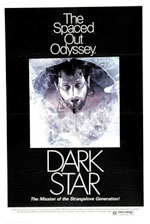
The first subject to ho under the knife is Carpenter’s first feature, Dark Star, a university / pet project in which he would team up with Dan O’Bannon (Alien) to write, produce, and direct a movie that would gain significant attention from like-minded students and wind up as a classic among sci-fi fans.
Whilst this doesn’t fit among the canon of work that Carpenter would go on to direct, Dark Star certainly has its elements that lift the movie above many of its counterparts.
It must be said though, that this movie plants itself well and truly in comedy territory despite this not being its original intent.
Certainly not worthy of close scrutiny but Carpenter delivers a fun, light-hearted movie all the same.
For more thoughts and opinions head over to our podcast discussion below.
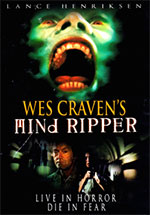
BACK IN THE MID 90’s, a little known HBO movie was released with little fanfare or critical reaction.
It has also been known as The Hills Have Eyes Part 3 despite the fact that the only thing that connects this movie with the franchise is that Wes Craven is billed as producer and his son Jonathan is credited as writer.
Yes it is primarily set in some abandoned quarry in the middle of nowhere, which can loosely connect the films but rather than be a collection of mutants infected by radiation poisoning and reeking havoc on a family, here we have a character, THOR, who has been experimented upon via re-animation. In fact it is probably more closely aligned with Frankenstein, Re-Animator, or Universal Soldier with its subject matter.
The movie doesn’t exactly offer anything new, with it’s team of scientists holed up deep underground to perform their experiments only to have the tables turned on them when their test subject becomes a blood thirsty killer, hunting them one by one.
It does though have some prominent star-pulling power in Lance Henriksen (Aliens, The Terminator) and Giovanni Ribisi (Boiler Room, The Gift) as the dropout son who comes good. And they both stand out in the cast for what is essentially mediocre characters.
In some places the dialogue is clunky but at the end of the day, this movie was never going to win awards for its high brow conversation piece. It’s an action-based horror movie that struggled to find an identity, aiming for Aliens but ending up more like The Mimic.
It’s entertaining enough, but never finds its voice or is strong enough to mark on the horror celluloid mantle of greatness.
The Seventh and Last Feature for our Wes Craven Season 1 discussion centres on his first sequel and with it a potential to start a franchise.
Needless to say, The Hills Have Eyes Part 2 would not live up to expectations and the franchise would end up dead in the water despite reaching a cult status. Subsequently there have been 2 recent film adaptations based on the original and a comic book to boot.
Wes Craven has distanced himself from the project, citing it as an unfinished piece when he handed it in to the producers to review. The producers, aka the money and finance would accept the film as its first draft and push this out into cinemas with the need to market swiftly. The result speaks for itself.
As for Craven, this was no passion project. It did however, provide funds for him to create horror cinema gold, A Nightmare On Elm Street, (More on this in an upcoming season) and along with it the iconic character of Freddie Kruger.
When sidled next to A Nightmare On Elm Street, The Hills Have Eyes Part 2 pales in comparison. The film picks up with survivor from the first film, Bobby, discussing the horrific events that unfolded and the devastating impact it had on him and his family.
Bobby now runs a bike racing outfit and endeavours to take them back out to the sticks for them to compete in a race, but this task appears to be too great an ordeal and he reluctantly chooses not to go.
So, it is down to fellow survivor, Ruby / Rachel (and the dog, Beast of course) to take our intrepid team of victims / youths to certain doom when they once again come face to face with the mutant family in horror poster icon, Michael Berryman reprising his role as Pluto and The Reaper (Papa Jupiter’s brother).
So much is inherently wrong with this movie. Bad characters, poor set up, and no plot. It’s a wonder that it got off the ground. Perhaps is it wasn’t resting on its stronger predecessor and Craven’s now recogniseable name attached to it, it probably wouldn’t have.
And with the already mentioned, A Nightmare On Elm Street, and its success, along with it cane a much longer lifespan for The Hills Have Eyes Part 2 would ordinarily have occurred.
Check out the surgeons of horror podcast below for more thoughts and views.
Based on the short story by Edgar Allen Poe and directed by B-Movie legend Roger Corman, this macabre story centres around a prince who lords it up whilst sheltering from the plague-ridden scenes that envelop the town around him.
He’s more than happy to delve into his riches and ignore the plight of others.
In fact he relishes in it and goes to great strengths to terrorize the peasantry.
Playing the role of the villainous tyrant Prospero is another horror icon, Vincent Price who becomes embroiled in a satanic cult and despite being known for his hammy antics, in this role his very nature is well suited to the character and he appears to be incredibly comfortable in his skin.
Corman was also evidently a huge fan of Poe’s work, this movie being the seventh of eight series, which included The Pit and the Pendulum and The Raven. The Masque of the Red Death is definitely the stronger of these titles, with Corman hitting all the right notes and belying the negative image that has been depicted upon him by critics.
This movie has a great lead in Price and plays with the melodrama and nuances with great style and substance and is a fine example of a director at the height of his craft.
INVITATION TO HELL MARKS another entry into the TV movie world for Wes Craven.
With all due respect to Craven, this certainly feels like a TV movie too.
It often feels like a paint by numbers outing for Craven and this may well be the case as he was knee deep in writing what would become A Nightmare On Elm Street and doing last minute sound edits for The Hills Have Eyes Part 2 at the time.
There is a fine array of talent on display during this movie too, with Robert Ulrich taking the lead role of family patriarch, Matt Winslow.
When the Winslows move to a new neighbourhood and Matt takes up his new job when he soon discovers that there is something sinister going on beneath the surface and it seems to be centred on the prestigious club, Steaming Springs.
Anyone who is anyone is fighting for a spot at membership.
And soon enough the family bow to the trappings of materialism and are drawn to all that lies within this world.
Only Matt remains dubious and holds on to his principals, not wishing to conform or be seduced by Jessica Jones played by Susan ‘ Queen of daytime TV’, Lucci.
Notable performances also come from Joanna Cassidy, Soleil Moon Frye, and Barret Oliver.
Overall though, there is nothing that invokes any real emotion from the film. The sense of threat doesn’t hold true and the result of which is that Invitation to Hell becomes a standard movie-watching experience.
Sure the concept of hell is the stuff of nightmares but we have seen this story told before and with a better outcome too.
Craven himself would create a form of hell himself with A Nightmare On Elm Street with its satanesque demon, Freddy Kruger warping the minds of teenagers throughout the world both in dreams and in reality.
For now though, this film does feel like a stepping-stone for greater things to come for Craven and we should acquiesce to that notion.
Craven enthusiasts might be intrigued, but that’s about all there the movie has to offer.
Check out the surgeons of horror podcast below for more thoughts and views.
DEADLY BLESSING IS ONE of those movies that appear to have fallen completely off the radar. Craven himself has stated that whenever he mentioned this being one of his movies, he was met with blank stares.
It seems fairly odd that this would occur as Craven’s profile would grow, and it stars Sharon Stone in her first speaking role in a movie, but perhaps when put into connection with the negative reviews that the film would receive at the time coupled with Ernest Borgnine (Escape From New York, The Wild Bunch) getting a “Razzie” nomination for Worst Supporting Actor for his efforts.
Upon review the critical response feels a little harsh.
So, why the negativity?
Well, a lot of it has to do with the strong religious message that is firmly stamped all over it, with Borgnine’s character, Isaiah preaching the word throughout the entire movie.
When you look past this though there are some elements that prove fruitful and there’s enough ticking along to keep you wondering who or what is behind the foul play that is taking place.
And for keen horror enthusiasts there is a lot at play here that would feel familiar to Wes Craven’s A Nightmare On Elm Street in some of the shots that he would produce.
Most notably in the bath scene when a snake protrudes from between Martha’s legs ala Freddy’s glove. Although in this instance it’s a far more phallic image.
The cast pulls off a fairly adequate performance with Maren Jensen known for her role as Athena in the original Battlestar Galactica. Taking on the lead heroine, Martha.
Stone’s performance is also notable, but perhaps more so for the scene in the barn, which creates enough ambience to feel sinister and certainly feels as though Arachnophobia lifted a few shots and ideas from this scene.
Craven regular (Michael Berryman) also makes an appearance as William.
The movie certainly doesn’t deserve to be admonished and definitely warrants a viewing.
With old horror movies providing Hollywood execs with source material, Deadly Blessing has the chops to be revisited.
Check out the surgeons of horror podcast below for more thoughts and views.
STRANGER IN OUR HOUSE WOULD BE Wes Craven’s third film as director and his first outing into the television arena.
This would allow Craven to be exposed to a more professional crew and access to equipment that he hadn’t had the privilege to use before such as a dolly.
It would also be the first time that he shot anything on 35mm.
Craven would use this valuable experience to his advantage, soaking up as much knowledge that he could muster.
Part of that experience would be to work with more known actors, among them was Linda Blair, who had just come out of rehab.
Blair was struggling on the social scene and despite still working in the movie industry, Stranger In Our House would be the last TV movie that she would be involved with.
Blair’s performance in this movie wouldn’t exactly turn heads but she definitely holds her own as Rachel Bryant, an All-American-Girl with a love of riding horses and is dating the local stud, Brad.
Her wholesome life is turned upside down however, when her long lost cousin, Julia comes to stay with them after her parents were tragically killed in an automobile accident.
But Julia (played by Lee Purcell in a noteworthy performance) is not all she appears to be.
Over time, Julia turns the tables into her favour and appears to have all the men waiting on her hand and foot.
Who is this Julia really?
What spell does she hold over the men of the town?
Is witchcraft be involved?
Sure this film is a TV movie and certainly has that feel about it when viewing. The make up and visual effects border on B-Movie style, but some of that lends to its appeal.
It certainly isn’t one of Craven’s finest entries to is resume but it’s certainly watchable and the 35% rating on Rotten Tomatoes is a slightly tougher mark than this film probably deserves.
Check out the surgeons of horror podcast below for more thoughts and views.



 Surgeons of Horror