As we fast approach the last month of 2019, I realise that there’s a fair few movies that I need to watch in order to satiate my thirst for horror. Among these was the Netflix feature Eli, starring Kelly Reilly, Lili Taylor, and Stranger Things’ Sadie Sink.
Directed by Ciaran Foy (Citadel, Sinister 2) struggles to make a deep impact despite the strong performances from the cast, and I can’t help but feel that this is a combination of Foy’s inability to shift away out of the generic, failing to provide something memorable, and a predictable storyline that is almost too afraid to deliver anything new to the audience, more than comfortable to sit in the middle of the road.
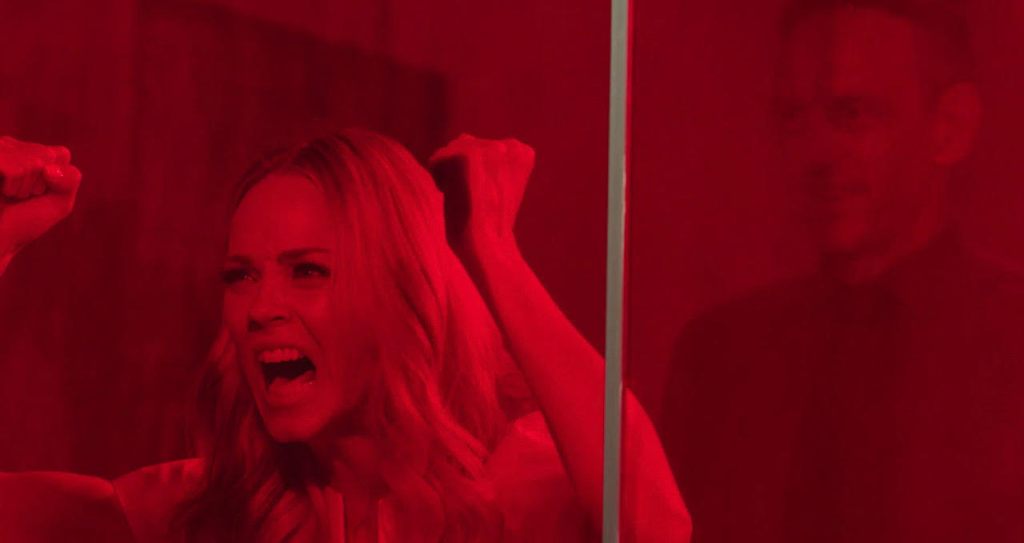
The premise begins with the titular character played by Charlie Shotwell, as a bubble boy, cocooned from the world due to a rare disease that causes a severe reaction if he is exposed to the outside world. When provided with the opportunity to cure him of his affliction, Eli’s parents (Reilly and Max Martini) head to a specialised clinic run by Dr Isabella Horn (Taylor). When things appear to be too good to be true, it’s often the case, and there’s something dark and sinister behind the great doctor and her practice.
As Eli starts to uncover the mystery, he unearths a secret that once exposed will change everything forever. Dare he open Pandora’s Box and who exactly is the mysterious Hayley from next door?
Prognosis:
Medical facilities, skin diseases and dark secrets that fuel this horror feature, should be the stuff of every genre fans dreams, but instead of offering up scares Eli remains trapped in formulaic territory and seems comfortable to sit in safe territory.
As such, it’s a mediocre affair – watchable but never truly wets the appetite of any hardened horror enthusiast.
It’s been a couple of weeks now since Doctor Sleep hit cinemas and as the steam dissipates I’m left in a bit of a quandary. There seems to be some mixed reviews out there and some pushing into the negative which quite frankly stumped me as I thought it was a well composed and structured movie with plenty of heart and some strong characters for the audience to engage with. So why the backlash?
The answer to this is simple and it’s to do with that giant sized elephant in the room, which is called Stanley Kubrick’s The Shining. Without doubt this film was a masterpiece and helmed by one of the greatest directors ever. His vision was unique and his interpretation of Stephen King’s novel while not appreciated by the originator has been widely received by the horror community. Those who have read King’s novel though will know that it is vastly different from what was initially conceived and plays more like a man with a severe case of cabin fever and the supernatural elements are considerably downplayed. From my perspective I always loved both versions and viewed them as part of a parallel universe, where Kubrick splintered away from the source material and created a movie that looked at the kernel horror that humanity can display.
So when it was announced that Mike Flanagan was to direct a sequel to The Shining, he faced a conundrum. How would he place the film considering that there are two versions to draw inspiration from. It was a tough task, but he decided to amalgamate the two infused with a vision of his own. This was both masterful and his undoing for it would inevitably divide his audience from those devoted to Kubrick’s world and those eager to see new life in the much older Danny Torrance.
It feels to me that audiences have been clouded (by no fault of their own) by Kubrick’s vision and have neglected the source material in King’s novel, Doctor Sleep; a story that embodies the supernatural and belongs more in the sci-fi fantasy world than that of horror. As such, hardcore horror fans will be left wanting, but I believe Flanagan has been incredibly faithful to King’s tale and added a little Kubrick kink to harness these two worlds and the end result is highly engaging and captivating, proving that he is possibly the best craftsmen working in the industry today. Much like King, Flanagan knows how to spin a tale and in doing, allows the characters to really shine in the movie.
If there was one part that jarred with me, it was in the opening few scenes that painted a younger Danny with his mother (Not Shelley Duvall) in order to lay the foundations of how he suppressed his shining and keeps the ‘entities’ of the Overlook Hotel from feeding from his energy by containing them in boxes within his mind. The minor quibble is in that it is clearly different from the actors we connected with the story from Kubrick’s The Shining, but there is no real way around this without CGI technology to capture the original actors in the younger form. As I stated it’s a minor criticism, and its also necessary to set the scene. Once we move away from this we’re introduced to the characters proper – the older, washed out Danny (Ewan McGregor) who try as he might is destined to walk in his fathers’ footsteps and has succumbed to alcoholism. He eventually arrives at a small town in New Hampshire and settles down thanks to a new friend, Billy Freeman (Cliff Curtis) who also becomes his AA sponsor and helps him on his new path of sobriety, but in doing so, his shining becomes stronger.
We’re also introduced to some amazing characters in the True Knot (who deserve a spin off series in their own right) a collection of people who feed off the steam (energy) of those who shine. Possibly the most harrowing component from a viewers perspective is that they tend to hone in on children as their shine is stronger. The scene where they lure Bradley, (a kid who is travelling home from his baseball game) to his demise is particularly striking. Led by Rose The Hat (Rebbeca Ferguson), who is the strongest of the group and the lead antagonist in Danny’s epic and climactic confrontation. Other standouts from the group are Crow Daddy (Zahn McClarnon), who serves as the lead predator and a wise figure in the group, the elder Grandpa Flick (Carel Struycken), and their newest addition Snakebite Annie (Emily Alyn Lind) who has the ability to use hypnosis to lure her victims and deserved much longer screen time.
And finally there’s Abra (Kyleigh Curren), a girl with an incredibly strong shining and when her presence becomes known to the True Knot, she must seek help from Danny, whilst channeling her own powers.
The fact that both King and in return Flanagan pay so much time and dedication in building the background to these characters serves as Doctor Sleep’s masterstroke. We’re allowed to care for all of the characters and in doing so, fall deeper into the narrative and are driven to follow them on their journey to their conclusion.
Prognosis:
Flanagan is faced with a difficult task in infusing both King and Kubrick’s Shining worlds to create a highly-entertaining sequel. It is filled with the supernatural and characters that shine beyond the screen, whilst providing an engaging narrative with a more than satisfying conclusion.
There will be the doubters, but for this reviewer, Flanagan has created another little gem that proves that he is a masterful storyteller and possibly the best of our generation. I can’t wait to see which story he generates next as I will definitely be at the front of the queue.
Check out our podcast and further thoughts on Doctor Sleephere:
Ten years ago Blumhouse Productions took centre stage on the horror scene when they released what would become a cult classic, Paranormal Activity. Since then, they have become masters of their craft, tapping into the teenage pulses with the Insidious franchise, Sinister, the Purgefranchise, Happy Death Day, Upgrade, and the latest Halloween movie to name just a few of their hits.
With every win though, there have also been some failures. Personally, Unfriended, The Gallows, and The Darkness are all questionable, but some could argue that in order to stay relevant then Blumhouse can’t always have a 100% success rate. There have to be a few trips along the way as they continue to learn and create new ways to fright and delight.
So where does that leave MA? Released in the States back in May, and with a fairly average Box Office return, the rest of the world would have to wait for the On Demand release which wouldn’t come about until September this year. All this doesn’t bode well and deserves closer scrutiny as to why MA failed to resonate with its audience.
Firstly, let’s look at its strengths, or in this case its one redeeming feature: Octavia Spencer. There’s good reason that she has had three Academy Award nominations and one win to her name and thanks to her talents, the audience is able to stick with this film longer than its weak plot line deserves.
Octavia plays Sue Ann, a local vet who is extends a hand to a group of teenagers looking to buy some booze. “When Sue Ann obliges, the group are beside themselves by there’s more to the pleasant exterior, and Sue Ann slowly reveals her true methods in quite possibly the longest revenge act in history. Hell she waited a whole generation. It’s a shame as with a bit more effort and attention to detail with some depth of character, we may have ended up with a fairly decent thriller. It doesn’t matter how deep Octavia channels her inner psycho, there’s only so much acting chops to dish out before the audience realises that she’s hauling around a cadaver of a script.
The teenagers themselves are incredibly week and two dimensional, with Maggie – new girl to the neighbourhood and our lead protagonist seemingly the only one to see through Sue Ann’s facade. By which time, we couldn’t really care less and when the film tries to let everything off at the hinges, most audience members would have already bolted out of the door or stopped streaming by this point. The actions are tiresome and in some places laughable that we really don’t give a damn what happens anymore.
It does boast a couple of decent supporting roles in brooding Luke Ford as one of the kids fathers, Alison Janney as a grumpy boss, and Juliette Lewis as Maggie’s mother and potentially the second decent thing about this movie. You feel for her plight as a single mother trying to make ends meet and resorting to coming back to her home town despite trying to break free from her old shackles. And hey, it’s Juliette Lewis God Damn It! This lady is always a pleasure to watch.
Prognosis:
Octavia Spencer steals the show as the unhinged Ma, but all that’s left behind is dead weight and a poor plot line. This has to go down as a misfire from the Blumhouse canon of work.
Eternal Code is one of those movies in which every scene you ask yourself, “Hey I know that guy/girl. Where have I seen them before?”
For me the biggest moment of “Oh hell yeah, that’s right!!” came from realising that the lead villain in the piece, rich tycoon Oliver is played by Richard Tyson – the guy who played the villain in Kindergarten Cop. “Here he deserves top billing, as every scene he’s in he chews it up and completely owns his character and overshadows those around him.
The premise of the movie (similarly to our latest podcast feature on Wes Craven’s Chiller, with cryogenics and immortality at the centrefold. Oliver is pitted against Bridget (Erika Hoveland – Before I Wake) whose company has discovered the elixir of life, a powerful gift in the wrong hands. When Bridget refuses to bow to Oliver’s demands, he takes the law into his own hands and kidnaps her in the hope that he can get the board to approve of his venture.
All would go according to plan, but Oliver didn’t count on down and out, ex-military dude, Corey (Damien Chinappi), who when we first meet him is at the end of his rope following a relationship breakdown, but is swiftly broken from his darkness when he rescues hooker Stephanie from a brutal attack. We see plenty of his action chops coming into play hinting at more to come down the track. Between kicking ass and saving helpless victims, Corey spends the time living on the streets and helping the homeless and others in need. A bit like The Littlest Hobo, only human.
He eventually teams up with Bridget’s daughter Miranda and Stephanie to try and outwit the hoodlums and rescue Bridget.
As mentioned before there are plenty of cameos along the way including Billy Wirth (The Lost Boys) as Bridget’s husband, Scout Taylor-Compton (Rob Zombie’s Halloween movies) also kicking some serious ass I might add, and Mel Novak (Tales of Frankenstein, Game of Death) as one of the company executives.
Prognosis:
It’s a low budget thriller that hits a few of its marks, making it an enjoyable watch, albeit a struggle in places. Part of the fun is in the dialogue, particularly in the banter between Corey and one of the hitmen, Sam, who just so happens to be played by the writer and director, Harley Wallen. Well played Harley, well played. And the afore-mentioned Richard Tyson, who looked like he was enjoying every damn minute.
It’s been over 20 years since Canadian director, Vicenzo Natali left a highly impressionable mark with his directorial debut, Cube. It’s fair to say, that since then he has never quite had the same response from his movies, but always has a visual style that he draws upon to create his vision.
With In The Tall Grass, Natali’s sixth feature length feature (excluding the cancelled Tremors TV movie last year) it may have proven to be a step too far in translating a novella by Stephen King and Joe Hill into a 1 hour 40 min running time, as he stretches his vision across a broad canvas and in doing so, loses its appeal.
The premise is a simple one. A heavily pregnant Becky and her brother Cal are travelling to San Diego to give up her baby for adoption, when they pull up alongside a field of tall grass. It is here that the siblings hear the voice of a young boy calling for help. As soon as they enter the mysterious void, they fall into a labyrinth of despair that calls upon their wits to fight their way out.
Laboured with strong theology throughout, Becky and Cal must weave their way through the strange and everlasting land, but are constantly confronted by their own inner inhibitions. Doomed to repeat their actions with slight changes, the audience is treated to an insight into how often they try alternate methods, only to be lead back to the centre of the field and a mysterious rock that feeds on energy and life.
Accompanying them in the field is another family (a father, mother, and their son, Tobin), equally lost in their myriad of emotions and history. They are lead by an evangelical father figure, played by the magnificent Patrick Wilson, and his hammed up rampage is a much needed pulse to project the narrative forward.
Also introduced into the fold is Travis (Australian Harrison Gilbertson) Becky’s ex and father of the unborn child to provide some depth and dynamic interaction, as their fervour reaches fever pitch and leads the audience on a twisted, convoluted journey of redemption.
Prognosis:
Natali seems to love project his protagonists into a tangled web of fear and resolution that shows the kernel of humanity at its core. In The Tall Grass propels this theme further, but is constantly bogged down in a merky plot that draws on and feels repetitive and predictable as it draws to its conclusion.
It’s hard to believe that director Abe Forsythe has been dabbling in the movie scene since he won the Tropicana award for his short feature, Guided by the Light of the Lord back in 1998 at the tender age of 16. Since then, he has carved a career that has seen him mature and expand upon his skills to develop a knack for the unrestful, and unhinged psyche of the human mind, shedding the facade that we project onto others and baring the darker souls that reside beneath. None more so than the 2016 black comedy feature Down Under, which was set in the aftermath of the Cronulla riots.
His latest venture proves that Forsythe is not only a director to take note of, but with Little Monsters is only just starting to hit his stride. By shifting away from crime drama, Forsythe now tackles the horror genre and displays enough confidence to poke fun at the little things such as slow and fast zombies. In this instance, it’s the slow kind ala Dawn of the Dead, but instead of a mall, the shuffling corpses home in on a farm-based attraction.
Little Monsters much like its zombies take a little time to get going, as we centre on drop out, Dave (Alexander England) and his break up from his long-time girlfriend. The montage at the beginning of the film is actually kinda fun and projects Dave in a less-than appealing light, constantly arguing with his partner in highly social situations, and even when he bunks down on the couch of his older sisters place, has evidently still got a lot of growing up to do. Who is the real little monster at play?
Dave quickly rebounds though and thus starts his infatuation with his nephew, Felix’s (Diesel La Torraca) kindergarten teacher, Miss Caroline played by Academy Award Winner, Lupita Nyong’o.
Nyong’o is simply marvelous here as the kind-hearted, bold, and humble kindergarten teacher, who just so happens to be an excellent kick-ass zombie killer. That’s fortunate.
It’s only when Nyong’o enters the scene that the movie really picks up, which is a testament to her acting prowess and charisma on screen as she provides the beating heart in an otherwise undead genre.
When Dave accompanies the Kindergarten class in pursuit of his newfound infatuation, he doesn’t anticipate that they are about to encounter the ambling creepers, and team up with Miss Caroline and kids entertainer, Teddy McGiggle (Josh Gad) in a fight for survival and to protect the kids from the real-life danger and dread that lurks all around them.
The Prognosis:
This may not hit the mark compared to most zombie flicks with a slow-shuffled start, but Forsythe provides a fun ride with plenty of heart, thanks mainly to the performance of Lupita Nyong’o.
Just when you thought that you couldn’t sink any deeper, Johannes Roberts delves into a sequel to the mediocre 47 Meters Down, only this time, it’s uncaged. Taking the same concept of an underwater dive into unchartered waters only to come face to face with nature’s deadliest underwater predator.
Director Johannes Roberts, who oversaw the first movie knows his element and develops a fun, and thrilling ride that puts our characters to the nth degree in order to survive their ordeal. Let’s face it though. This is not going to rock any brain cells. I’d say that it’s a pretty watered down affair, but then that would be stating the obvious seeing as we spend most of the time submerged.
Peppered with some offsprings from A-List celebs looking for their big break with Corrine Foxx and Sistine Stallone, to add some bite to the cast, but it’s a pretty big pond, and the impact that they have on screen will hardly turn heads… well not in the way they may have hoped… ahem.
Okay, where was I? Ah yes, the plot. So we once again have two sisters, only this time it’s through a mixed blended family. One girl is awkward and a bit of a loner, Mia (Sophie Nelisse), the other, is confident and strong-headed Sasha (Foxx). Needless to say, Sasha finds Mia an embarrassment and tends to steer clear of her, but when given the opportunity to duck out of pre-arranged tourist underwater trip, she grabs Mia along with her friends Alexa (Brianne Tju) and Nicole (Stallone) to have an underwater adventure of their own.
Roberts sets the scene early on by laying the foundations about Mia and Sasha’s father (John Corbett) who happens to be an underwater archaeologist that has discovered an ancient city buried within a cave system and that a shark has somehow found its way down there and gotten stuck. Cue one hangry shark. This allows more time for action and to lengthen the nightmare for the four girls.
Having said that, most of the action gets lost in the murky depths and as such, becomes a little hard to follow. Our connection with the girls is slim and we don’t really care what happens to them by the end.
Equally Roberts is guilty of typical killer shark movie tropes, in particular one scene that feels remarkably similar to THAT moment in Deep Blue Sea.
Prognosis:
There are some twists and turns along the way and Director Johannes Roberts continues to entertain but fails to stimulate beyond the usual shark fodder that is already out there.
I rarely go straight out when writing a review by stating my position and casting a prognosis but in the instance of Daniel Isn’t Real my gut reaction was so strong and reactive during and post viewing that I felt an overwhelming compulsion to rave about how fantastic this movie is. I’ve often mentioned how integral it is for movies to evoke a reaction that churns up inside and leaves me with this feeling that is hard to describe, but essentially sends a buzz of excitement and I can literally feel the creative energy being transmitted from the screen.
At its core Daniel Isn’t Real is a window into the psyche of our central character, Luke played by Miles Robbins last seen on the screen playing stoner Dave from Halloween 2018.
Luke suffers a mental relapse when two impactful events occur when he is young. The first is when his father walks out on him and Mary Stuart Masterson, who “Joons” it up as an equally unhinged mother. On the same day, Luke ventures out into his neighbourhood and comes across the aftermath of a mass shooting. It is then that Luke meets an imaginary friend, Daniel, who brings the worst out in Luke’s personality. This results on Luke’s mother making him lock Daniel away in the doll house to suppress this negativity ala Drop Dead Fred without the comedy.
Cut to years later and Luke is now 21, and with his mother’s condition seemingly worse, he begins to fear that the same thing may happen to him. Encouraged by his psychotherapist to unleash his imagination, Luke releases Daniel once more, but this time is lead by this mysterious entity (and takes on the form of Arnie’s son Patrick Schwarzenegger) that only he can see. At first, Daniel encourages Luke to step out of his shell, where he meets Cassie (a magnificent Sasha Lane) but this soon escalate as Daniel is able to possess Luke and make him do things that he has no control over and sends Luke into a transcendent spiral of depression and disillusionment.
Part of the magic of this film comes through the special effects that warp and shape our senses and throws the audience into disarray while we like Luke try to decipher the distinction between reality and a warped imagination.
Prognosis:
It’s the age old story of good vs evil told between a disillusioned young man and his imaginary friend. Who will get the upper hand?
Director Adam Egypt Mortimer delivers a beautifully visceral journey that is stunning and encapsulating. This is a must-watch film that needs to be viewed and discussed. Thankfully it can be seen at MonsterFest Australia this weekend.
The first lines spoken in The Soska Sisters latest feature is something of an odd choice seeing that the film itself is a remake of David Cronenberg’s science fiction body horror feature that was released back in 1977, but then the ‘Twisted Twins’ have built a reputation on face-lifts and transformations within their features that it should come as no surprise that should revamp a cult classic. Cronenberg is clearly an inspiration in the Soska Sisters previous features where body horror, mutilation, and the butchering of the beautiful is constantly a running theme through their narrative. From their low-budget debut feature, Dead Hooker In A Truck, they have been willing to their bodies on the line for the sake of their vision and in doing so, continuously look to raise the stakes, but arguably haven’t attained this since their brilliant sophomore outing behind the director’s chair with American Mary.
So, how does this modern transformation of Rabid fair and does it amount to the twin directors’ previous outings?
I have enjoyed watching the Soska Sisters’ journey, even their paint by numbers WWE venture, See No Evil 2, and I found that Rabid had the right pulse to entertain and satiate the gruesome, and bloody fascination with the human aesthetic and its ultimate destruction. We cast ourselves deep in the fashion world, where there is an expected elegance and if you don’t measure up, then you’re cast aside and considered insignificant.
This is where we meet our lead protagonist, Rose (Laura Vandervoot) who works for a fashion designer, Gunther (Mackenzie Gray), but struggles to meet her mark. One night she is invited out by photographer Brad (Ben Hollingsworth) and believes that her luck could potentially be turning, but soon discovers that it’s a pity date, set up by her best friend, Chelsea (Hanneke Talbot). Humiliated, Rose attempts to flee on her bike but is plowed down by an unseen vehicle and rushed to hospital leaving her disfigured and more depressed. It is only when she learns of a scientific breakthrough that could potentially restore her figure that Rose seizes the opportunity to be considered normal. Once again though, trust comes into question as we are only willing to expose the mask we choose to wear with people and only every so often do we allow our true selves be seen. This is a common theme throughout the movie where we should question everyone’s motives and always be suspicious of the characters we encounter, even within the medical profession as hinted by Stephen McHattie’s doctor when he asks his assistant to lend a deformed Rose a mirror, only to contradict himself by saying that Rose should never look at a mirror.
So, Rose undergoes a significant and delicate operation that not only restores her looks but metamorphosed her whole demeanour with mesmerising effect on her persona. Whilst her life suddenly flips for the better, Rose is consumed with lust for blood and meat that sends her into a frenzy and unleashing a creature within that leaves her victims with something that closely resembles rabies, but spreads as quickly as the black plague.
From here on in the action becomes frenetic and just as uncontrollable as the disease, which is obviously a directorial choice, but I can understand some viewers who might find this approach grating.
Stuck between pursuing her dreams of having her own design on the catwalk and recognition of her style, and seeking medical aid, Rose steers closer to self-destruction and chaos.
Prognosis:
The Soska Sisters are back in their domain of stripping the human facade and revealing the tortured soul lurking within in their latest turn in the directors’ chair. Yes, it’s a remake, but there is enough spin on the original and more of the visual style and substance that makes Jen and Sylvia a force to be reckoned with when they are at their best. As always their films are beautifully shot, and manage to infuse some raw energy within the beats, and Rabid continues to project the Soskas into a twisted limelight that feels gnarly and fresh.
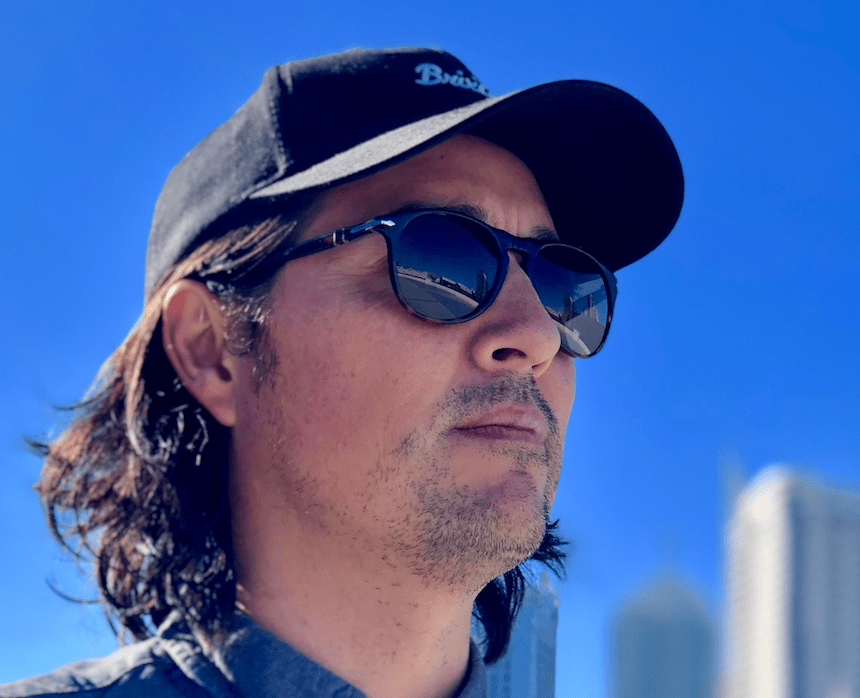
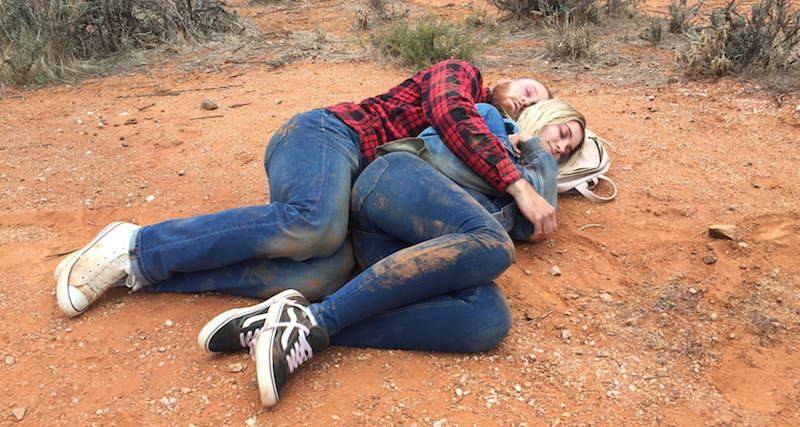
Mike Green has been gradually building on his film credentials with a series of screenplays and work as 1st AD on a number of high profile films including Truth starring Cate Blanchet and Robert Redford. Now he has turned his attention to directing his first feature length movie, Outback, a tale of survival in the heart of Australia, and casts a bewildered and fractured American couple in the midst of this savage land.
Before its Sydney screening as part of Monsterfest Australia on Sat 2 Nov at 9pm, Mike sat down with the surgeons team to discuss his journey and his own challenges in creating his vision.
Mike Green interview:
What initially drew you to the story behind Lisa and Wade’s outback plight?
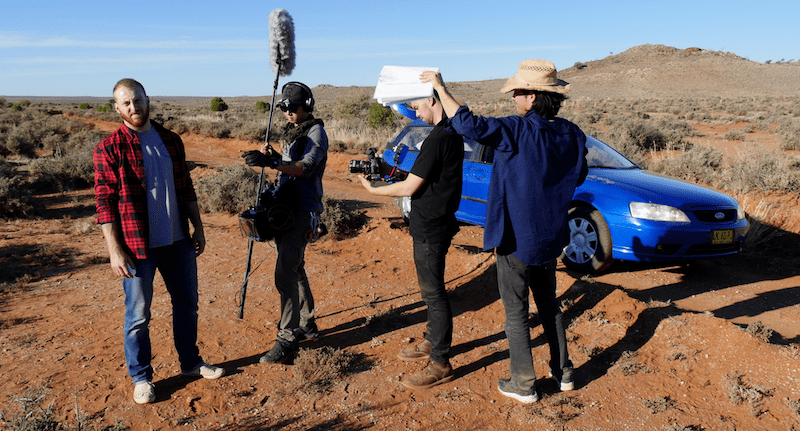
Well, I had a proper budget feature that I was hoping to make with a cast attached and building a team and then Nicole Kidman announced Angel of Mine which on the surface sounded very much like our feature film project. That really pulled the rug beneath our feet and I had a small window of time in which to shoot something because my wife was going back to work from maternity leave and a little bit of money saved on my credit card. So I essentially reverse engineered something I could shoot in a compressed amount of time. And 10 days is what we shot Outback in. So I took a familiar story which was Open Water, the two people that get stranded in the ocean. I thought about taking that situation and placing them in the outback. Limiting your cast means limiting so much of the production, so it was essentially going to be a two-hander. Everyone has a perception of the Australian outback and how vast and dry it is, how it’s filled with critters and creepy crawlies. So I took that idea and instead of having a serial killer or madman as the antagonist, I made Australia and the outback, the antagonist. No one has done a film called Outback which was surprising to me. So I put it all in a blender and out came a two-hander about this couple of Americans and the dynamic between them in a survival thriller with this tragic love story, and place them in a scenario that sees them stranded in the outback.
There is a lot of weight on the shoulders of the two leads, Lauren Lofberg and Taylor Wiese to carry the film. How did you get them to tap into the gravitas of their situation?
The first thing I needed to do when casting was have the right face, character, and persona for the parts, so after reaching out to a few people I spoke to Lauren, who despite her small showreel had something there, but she was looking to do something substantial and put a stamp on something. She put a few self tapes down and she was really emotional and she was going through some things at the time, which I asked with her blessing if I could weave into the storyline because it was something so personal to her and we knew that she could tap into that so easily and access those emotional time stones.
What do you think fascinates us about human survival?
I think there is this primeval situation where you would ask yourself, “what would I do?” It doesn’t take much for the audience to be there with them. The performance and environment helped from a cinematic perspective. You often hear stories of how even locals get lost for two or three days in the Blue Mountains for example, and things can get pretty gnarly quickly. Even with the best intentions and with a phone on you, when you start to get dehydrated, what seems like a smart decision, upon reflection is like, “what was I thinking?”
What has been the most enduring thing that you’ve encountered in your lifetime? Have you had much experience of the outback yourself and what impact did this beautifully vast location have on production.
For me taking from the theme of the movie of not taking tomorrow for granted, was a way into the storyline. From the plot and survival aspect, I used to go to the outback a lot as a kid with a mate who had a property. We were in a couple of situations where we ran out of water and we didn’t have a compass, and when you are out there, you don’t really have any sense of direction other than which way the sun is going. He’d been on the land a bit and I was more of a city slicker, and I remember him saying the mathematical equation that I use in the film, and he knew from my answers that I was dehydrated even though I wasn’t aware of it. I could have been in a lot of trouble if it wasn’t for him and his experience on the land.
What would you say was your toughest challenge during filming?
I’m first AD, I’m producing, I’m catering, like I’m cooking at night, I’m printing off the schedule for the next day for the crew and everyone is working so hard, so you have to lead by example. In that environment and working such long hours in the heat, working so intimately with such a tight-knit crew, It’s not always rosy and part of having such a good team is allowing people to let off steam in certain ways. The toughest thing was keeping everyone emotionally and physically on the same page in what we were trying to do. You’re really fathering a group of people, in the most beautiful way.
What do you think or hope that people will take home after watching Outback?
I’m hoping the audience reflect on their own life and how they can embrace the day or the moment, whether that’s with their family, career, or just life itself, and appreciate it. I know that sounds a bit arty farty, but being in Australia, there shouldn’t be anyone whinging really. Any kind of developed country, I know there has been some bad things that have happened, but each to their own I guess.
Now that your first feature film is released into the festival circuit, what was the biggest learning you will take and what is next on the horizon?
I think the biggest learning for me is to keep making stuff, It’s not always going to click but you should be getting better when you make stuff and that’s the key to improving. It’s that old adage, “Practice, practice, practice”. In regards to what’s next, I’m working with a bunch of writers I kinda wanna be aggressive and get projects made and being prolific.

 Surgeons of Horror