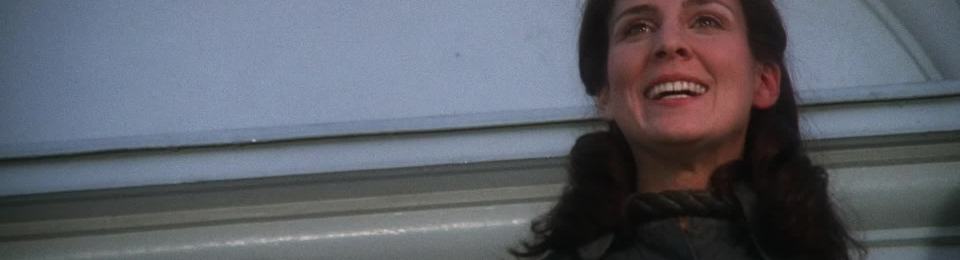
Look at me, Damien. It’s all for you.
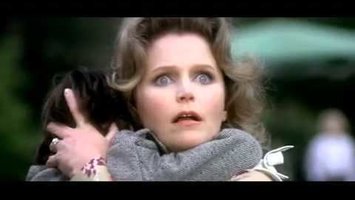
Few horror franchises have enjoyed a journey as strange, uneven, and ultimately rewarding as The Omen series.
Unlike many genre properties that quickly devolved into increasingly elaborate body counts and diminishing returns, The Omen was born from a remarkably sophisticated concept. Beneath the supernatural horror lurked questions about faith, destiny, political power, family, and the terrifying possibility that evil might not emerge from the shadows but from the very institutions designed to protect us.
At its best, the franchise transformed biblical prophecy into deeply personal horror. At its worst, it struggled beneath the weight of its own mythology. Yet fifty years after Damien Thorn first appeared on screen, the son of Satan continues to fascinate audiences, proving that some nightmares never truly die. They simply wait for another resurrection.
The Birth of the Antichrist
When The Omen arrived in cinemas, religious horror was already enjoying a renaissance thanks to the enormous success of The Exorcist. Rather than attempting to replicate demonic possession, however, director Richard Donner and screenwriter David Seltzer pursued a more insidious idea. What if the Antichrist had already arrived? Not as a horned beast. Not as a supernatural invader. But as a child. Raised within wealth, privilege, and political influence. The result was one of horror cinema’s defining masterpieces.
Anchored by extraordinary performances from Gregory Peck, Lee Remick, and Billie Whitelaw, alongside Jerry Goldsmith‘s legendary Oscar-winning score, The Omen succeeded because it grounded apocalyptic horror within emotional reality.
This was not merely a story about Satan. It was a story about parenthood. About doubt. About the terrifying moment when love collides with truth. The film’s ending remains one of horror’s most unsettling final images. Damien survives. The prophecy remains intact. Evil has not been defeated. It has merely advanced to the next stage.
Growing Up Evil
The franchise’s greatest strength would emerge through its willingness to embrace the logical progression of its central idea. Damien could not remain a child forever.

With Damien: Omen II, the series transformed into a dark coming-of-age story. Adolescence becomes an awakening as Damien slowly discovers his true nature and destiny. The sequel remains one of horror’s most underrated follow-ups because it understands something crucial: The real horror is not discovering evil. The real horror is accepting it. By the conclusion, Damien no longer fears who he is. He embraces it.
That evolution continued in Omen III: The Final Conflict, where an exceptional Sam Neill portrays the fully realised Antichrist as a charismatic political and corporate leader. This was a fascinating direction for the franchise. Damien no longer needed supernatural theatrics. Power itself became his weapon. The devil had learned how institutions worked. And he was thriving within them.
When the Apocalypse Runs Out of Steam
By the early 1980s, however, horror itself was changing. The rise of the slasher film shifted audience expectations. Villains became icons. Gore became spectacle. Franchises increasingly focused on repetition rather than mythology.
The Omen found itself caught between two eras. Its religious themes and biblical ambition suddenly seemed less fashionable than masked killers and body-count formulas. A decade later, Omen IV: The Awakening attempted to revive the series by introducing a female heir to Damien’s legacy. The results were mixed.
Produced for television, the film lacked the scope, confidence, and atmosphere that had defined the original trilogy. While it contains moments of intrigue and occasional flashes of the franchise’s theological imagination, it ultimately feels like an echo rather than a continuation. The apocalypse had become smaller. The mythology felt exhausted. For many years, it appeared Damien Thorn’s story had finally reached its conclusion.
The Devil Goes Digital
Like so many iconic horror properties, resurrection eventually arrived through the remake machine. Released on the appropriately marketed date of June 6, 2006, The Omen sought to introduce Damien to a new generation.
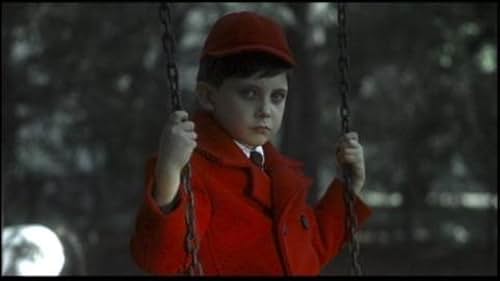
Directed by John Moore and starring Liev Schreiber and Julia Stiles, the remake largely chose reverence over reinvention. Its greatest strength proved to be its greatest weakness. By remaining so faithful to the original, the film successfully preserved the mythology but struggled to justify its own existence. It was competent. Professional. Respectable.
Yet it also highlighted an uncomfortable truth. Some horror classics derive their power from atmosphere, cultural context, and historical timing as much as narrative itself. Those elements are difficult to recreate. No matter how advanced the technology becomes.
A Forgotten Son
The franchise attempted another reinvention through television with Damien. Unlike previous entries, this continuation imagined an adult Damien who had spent decades unaware of his true destiny. It explored questions of identity, denial, and self-discovery while attempting to modernise the mythology for contemporary audiences. The premise was promising. The execution occasionally compelling. Yet despite positive reactions from sections of the fanbase, the series failed to find a sufficiently large audience and was cancelled after a single season. Once again, Damien disappeared. But perhaps not for long.
The Unexpected Resurrection
For many fans, the greatest surprise arrived with The First Omen. Expectations were modest. After all, horror history is littered with unnecessary prequels attempting to explain mysteries that never required explanation. Yet against the odds, The First Omen emerged as one of the strongest entries the franchise had produced since the original film. Rather than merely recycling familiar imagery, the film expanded the mythology while preserving the atmosphere of dread that made the series so effective. It embraced religious horror, institutional corruption, bodily autonomy, and conspiratorial paranoia with genuine confidence. Most importantly, it understood what The Omen had always been about.
Not jump scares.
Not spectacle.
Not Satan.
Fear.
Specifically, the fear that powerful institutions may willingly create the horrors they claim to oppose. For the first time in decades, Damien Thorn’s mythology felt vital again.
Why Damien Endures
What separates Damien from so many horror villains is that he represents more than death. He represents inevitability.
Michael Myers kills.
Freddy Krueger stalks dreams.
Jason haunts campgrounds.
Damien threatens history itself.
The franchise succeeds whenever it remembers this. Its most effective entries understand that the Antichrist is not merely a monster but an idea. A manifestation of fears surrounding political power, religious extremism, institutional corruption, inherited privilege, and uncertain futures. Every generation finds new reasons to fear those things. Which means every generation finds new reasons to fear Damien.
The Prognosis:
Few horror franchises have travelled a more unpredictable road than The Omen series. From the near-perfect terror of the original through the ambitious mythology of Damien: Omen II and Omen III: The Final Conflict, through periods of decline, reinvention, cancellation, and eventual rebirth, Damien Thorn has repeatedly proven more resilient than prophecy itself. The franchise has stumbled. It has disappeared. It has occasionally lost sight of what made it special. Yet it endures because its central fear remains timeless. The devil is rarely at his most frightening when he arrives with fire and brimstone. He is far more terrifying when he arrives as a child.
Smiling.
Waiting.
Ready to inherit the world.
- Saul Muerte
 Surgeons of Horror