Tags
Few filmmakers understood paranoia quite like Roman Polanski.
Across his so-called “Apartment Trilogy” — Repulsion, Rosemary’s Baby, and finally The Tenant — Polanski transformed domestic spaces into psychological battlegrounds. Apartments became prisons. Walls became conspirators. Everyday noises carried the weight of existential collapse.
But where Repulsion explored fractured identity through psychosexual repression, and Rosemary’s Baby weaponised paranoia against motherhood and bodily autonomy, The Tenant feels like the culmination of something even more deeply personal:
the terror of losing oneself entirely.
Fifty years later, The Tenant remains one of cinema’s most suffocating descents into psychological disintegration — a nightmare where identity slowly dissolves beneath isolation, conformity, surveillance, and self-erasure.
The Horror of Existing
At first glance, the premise seems deceptively mundane.
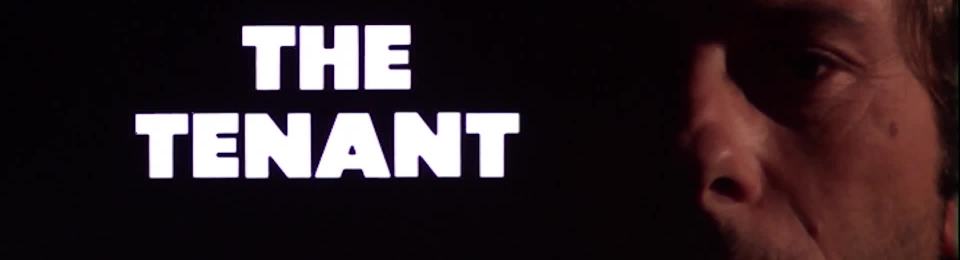
Trelkovsky, a timid and socially awkward clerk played by Roman Polanski himself, rents an apartment in Paris whose previous tenant attempted suicide. What follows appears initially rooted in social discomfort rather than outright horror: hostile neighbours, oppressive silence, passive-aggressive complaints, bureaucratic coldness.
Yet this is precisely where the film becomes so deeply unsettling.
Polanski understands that paranoia rarely arrives loudly. It grows incrementally through repetition, alienation, and emotional erosion. The apartment itself becomes an oppressive organism — a space that slowly strips Trelkovsky of individuality until he begins to question not merely his sanity, but the stability of his own identity.
The true terror of The Tenant lies in how plausible its psychological collapse feels.
Polanski’s Most Personal Nightmare
Of all Polanski’s films, The Tenant often feels the most autobiographical in spirit.
An immigrant filmmaker living between cultures, identities, and countries, Polanski channels a profound sense of displacement into Trelkovsky’s unraveling psyche. The character exists as a perpetual outsider — foreign, socially anxious, constantly aware of his inability to fully assimilate into the rigid environment surrounding him.
The neighbours become less individual characters than manifestations of societal conformity itself. Their expectations feel suffocatingly precise: how one should behave, speak, exist.
Gradually, Trelkovsky begins losing the boundaries separating himself from the apartment’s former occupant, Simone Choule. Identity becomes porous. Personality becomes performance.
The film evolves into something almost Kafkaesque:
a nightmare about society reshaping individuals through pressure, expectation, and surveillance.
A Masterclass in Psychological Space
Visually, The Tenant may be one of Polanski’s most claustrophobic achievements.
The apartment building is filmed like a labyrinthine tomb — narrow corridors, suffocating rooms, distant windows constantly watching. The architecture itself feels hostile. Even open spaces carry emotional confinement.
Polanski repeatedly frames Trelkovsky as dwarfed within his environment, swallowed by doorways, mirrors, staircases, and communal spaces. The apartment ceases functioning as shelter and instead becomes an extension of his deteriorating mind.
And then there are the bathrooms.
The recurring imagery surrounding the communal toilet remains among the strangest and most disturbing visual motifs in 1970s psychological horror — surreal, voyeuristic, absurdly comic, yet profoundly threatening. Few filmmakers balanced black humour and existential dread with Polanski’s precision.
Identity as Contagion
What makes The Tenant so enduringly powerful is its refusal to provide easy answers.
Is Trelkovsky genuinely being manipulated by those around him?
Or is he collapsing inward beneath his own fragile psychological state?
Polanski deliberately destabilises certainty until reality itself becomes unreliable.
The film’s exploration of identity feels remarkably modern. Trelkovsky becomes increasingly consumed by performance and imitation, gradually absorbing the personality and appearance of Simone Choule as though identity itself were contagious. The horror emerges not from transformation alone, but from the terrifying possibility that individuality may be frighteningly fragile to begin with.
Who are we when stripped of routine, stability, and external validation?
The Tenant never offers reassurance.
Black Comedy Inside the Abyss
Like many of Polanski’s greatest works, The Tenant is unexpectedly funny.
Not comforting funny.
Uncomfortable funny.
The absurd politeness masking hostility, the bureaucratic cruelty, the exaggerated social etiquette — all of it creates a deeply cynical portrait of modern urban existence. The humour becomes another mechanism of alienation, forcing audiences to laugh while simultaneously recoiling.
That tonal balancing act elevates the film beyond conventional psychological horror. It transforms into existential satire — a darkly comic portrait of societal systems quietly devouring the individual.
A Legacy of Unease
While The Tenant was initially overshadowed by Rosemary’s Baby and Chinatown, its reputation has only grown over time. Modern psychological horror owes an enormous debt to its suffocating ambiguity and identity-driven terror.
One can see its fingerprints across the works of filmmakers exploring urban isolation, fractured consciousness, and psychological surveillance.
Yet few films have replicated its uniquely oppressive atmosphere.
This is not horror driven by shock.
It is horror driven by emotional suffocation.
The Prognosis:
Fifty years later, The Tenant remains one of Roman Polanski’s most haunting achievements — a deeply personal nightmare where paranoia, conformity, and identity collapse into one endlessly spiralling psychological abyss.
A suffocating masterclass in existential horror that turns ordinary apartment living into a slow-motion descent toward self-erasure.
Unsettling, surreal, and psychologically devastating cinema that continues to burrow beneath the skin decades later.
- Saul Muerte
 Surgeons of Horror