American horror has always struggled with its own mythology.
Where European cinema leans effortlessly into castles, covens, and inherited superstition, American folklore remains fragmented — scattered across Native legend, Puritan fear, frontier violence, and the unresolved guilt of colonisation. Monsters here are rarely elegant. They are born of hunger, cold, isolation, and the uneasy sense that the land itself remembers what we have tried to forget.
Wendigo is one of the rare American horror films that attempts to take that legacy seriously.
Folklore in the Margins
Based on Algonquian legend, the Wendigo is not merely a creature but a concept: a spirit of starvation, greed, and moral collapse, born when humans consume more than they should — flesh, land, or power. It is a monster inseparable from colonial history, ecological dread, and cultural trespass.
Larry Fessenden, ever the scholar of marginal horror, understands this instinctively.
From its opening moments, Wendigo resists the trappings of mainstream genre cinema. There are no easy shocks, no baroque effects, no grand set-pieces. Instead, the film unfolds as a low-key domestic tragedy — a city family retreating to the countryside, bringing with them the casual arrogance of outsiders who believe nature is merely scenery.
When an accidental shooting ignites the film’s chain of events, the horror that follows feels less supernatural than inevitable.
Fessenden’s America
By 2001, Larry Fessenden had already established himself as one of American indie horror’s great caretakers — a filmmaker less interested in spectacle than in preservation. Through films like Habit and his later work on The Last Winter and Depraved, Fessenden has acted as both archivist and advocate for a strain of horror that treats myth as cultural memory rather than genre decoration.
Wendigo fits squarely within that mission.
This is not a film about a monster in the woods so much as a film about trespass: moral, ecological, and cultural. The family’s intrusion into rural space, their careless handling of firearms, their unthinking disruption of local rhythms — all feel like small sins accumulating toward punishment. When the legend of the Wendigo finally surfaces, it feels less like summoning than consequence.
In theory, this is rich terrain.
The Problem of Restraint
In practice, Wendigo struggles to fully embody the power of its own mythology.
Fessenden’s commitment to understatement, while admirable, often becomes a liability. The film withholds too much, too often. The creature remains largely abstract. The rituals feel gestural rather than revelatory. What should accumulate as dread instead drifts into ambiguity.
The central performances are competent but muted, and the domestic drama — meant to ground the supernatural — never quite achieves the emotional density required to make the horror resonate fully. The film gestures toward trauma, guilt, and moral rupture, but rarely pierces them.
When the Wendigo finally asserts itself, the moment feels conceptually powerful but cinematically undernourished.
Indie Horror as Preservation
And yet, to judge Wendigo purely by conventional standards would be to misunderstand its place in the larger ecosystem of American horror.
This is not exploitation. It is not entertainment-first. It is an act of cultural stewardship.
Fessenden belongs to a lineage of American indie filmmakers — alongside figures like Kelly Reichardt (in her own register), Jim Mickle, and later Robert Eggers — who treat landscape as archive and myth as history. He is less concerned with thrills than with keeping endangered stories alive, even when their cinematic translation proves imperfect.
In that sense, Wendigo is less a failure than a partial success: a film that reaches for something rare in American horror, even if it cannot quite grasp it.
The Prognosis:
Wendigo remains a fascinating but flawed entry in the canon of American folk horror.
It lacks the visceral impact of its European cousins, and the narrative control to fully harness its mythology. But it compensates with sincerity, scholarship, and a genuine respect for the dark stories embedded in American soil.
Some myths refuse to die.
Even when poorly told, they continue to haunt — not because they are frightening, but because they are true.
In 2025, horror cinema continued its decisive shift away from spectacle toward structure. Rather than functioning as vehicles for shock, the most compelling works of the year positioned fear as a sustained condition — something embedded within systems, bodies, and histories. These films do not simply represent terror; they organise it, asking spectators to endure rather than react, to interpret rather than consume.
Across this selection, horror emerges as an analytic mode — a means of interrogating authority, inheritance, technology, and perception itself. What follows is not a list of crowd-pleasers, but of films that demonstrate how the genre continues to function as one of contemporary cinema’s most rigorous critical tools.
13. Ash
Ash occupies a transitional space between experimental media art and narrative cinema, foregrounding sensation over causality. Flying Lotus privileges rhythm, texture, and sonic density as primary conveyors of meaning, destabilising conventional narrative comprehension in favour of affective immersion.
The film’s significance lies less in its storytelling than in its refusal of interpretive clarity. Ash treats disorientation as a structuring principle, aligning the spectator’s cognitive uncertainty with the film’s thematic concern for alienation and fragmentation. In doing so, it advances a mode of sci-fi horror that operates phenomenologically, privileging experience over explanation.
Situated within a tightly regulated institutional space, The Rule of Jenny Pen examines how authority produces horror not through excess, but through routine. The film’s power derives from its attention to systems of control that are normalised rather than questioned, rendering violence bureaucratic and cruelty procedural.
Rather than positioning its antagonist as aberrant, the film implicates the structure itself. Performance and restraint are key formal strategies here: menace accumulates through micro-gestures and withheld action, forcing the spectator to recognise how institutional power becomes most terrifying when it is administered calmly and without spectacle.
Dangerous Animals strips survival horror down to its most elemental components, foregrounding endurance over escalation. The film’s pacing resists the logic of set-piece thrills, instead cultivating a slow accretion of threat that mirrors the bodily exhaustion of its characters.
What distinguishes the film is its refusal to sentimentalise victimhood. Predator and prey are rendered as unstable positions rather than fixed identities, suggesting violence as a latent condition rather than a moral rupture. In this sense, Dangerous Animals operates as an examination of instinctual hierarchy, locating horror within the mechanics of survival itself.
10. Keeper
With Keeper, Osgood Perkins continues his exploration of isolation as a spatial and psychological condition. The film’s austere formalism — marked by elongated takes, sparse dialogue, and an emphasis on negative space — transforms setting into a form of narrative pressure.
Rather than offering mythological coherence, Keeper relies on emotional continuity. Ritual functions not as exposition but as repetition, reinforcing the sense of entrapment that defines the film’s affective core. Horror emerges gradually, not through revelation, but through the suffocating persistence of the unresolved.
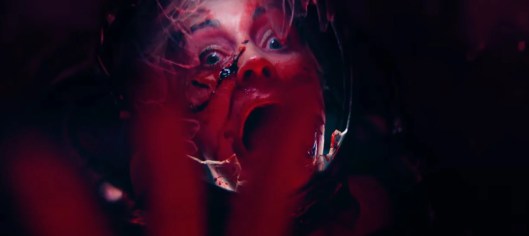
Sun rejects legibility as an organising principle. Its aggressive visual strategies — saturated colour, disjunctive editing, and sensory overload — position the spectator in a state of sustained assault, aligning form with thematic inquiry.
The film treats identity as unstable and perception as corrosive. Rather than constructing horror through narrative causation, Sun deploys excess as a destabilising force, implicating contemporary media saturation in the erosion of subjectivity. The result is a work that positions horror as experiential collapse rather than narrative event.
Companion engages with speculative horror through a register of intimacy, examining how technological mediation reshapes emotional labour and consent. The film’s restraint is central to its effectiveness; moments of unease are generated through behavioural shifts rather than overt threat.
By situating its horror within domestic and relational spaces, Companion reframes technological anxiety as an extension of existing power dynamics. The film resists dystopian exaggeration, instead suggesting that the most disturbing futures are those that emerge seamlessly from present-day norms.
Defined by subtraction rather than accumulation, Presence employs absence as its primary aesthetic strategy. The film’s minimalism forces the spectator to attend to what is not shown, transforming silence and spatial emptiness into sites of tension.
Supernatural elements are deliberately ambiguous, allowing grief and memory to function as competing explanatory frameworks. In refusing to stabilise meaning, Presence aligns haunting with psychological persistence, suggesting that terror often resides not in invasion, but in endurance.
Bring Her Back operates through narrative fracture, destabilising temporal and causal coherence as a means of articulating loss. The film demands active spectatorship, requiring viewers to assemble meaning from incomplete information.
Its body horror is not gratuitous but instrumental, externalising the violence of obsession and the desire for restoration. By refusing interpretive closure, Bring Her Back transforms confusion into affect, positioning horror as a confrontation with the limits of understanding.
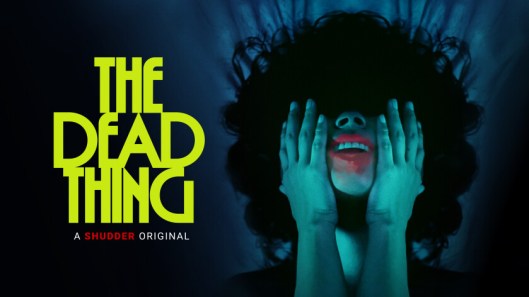
The Dead Thing frames horror as a byproduct of unresolved trauma, privileging emotional continuity over narrative propulsion. The film’s measured pacing allows grief to permeate its formal construction, rendering terror inseparable from mourning.
What emerges is a portrait of desire as compulsion — a need not to escape pain, but to remain tethered to it. The film’s restraint prevents catharsis, reinforcing the notion that some forms of suffering resist narrative resolution.
The Long Walk is structured around repetition as punishment. Its relentless forward motion mirrors the ideological rigidity of the system it depicts, transforming endurance into a mechanism of control.
By denying reprieve, the film implicates the spectator in its logic of attrition. Horror arises not from unpredictability, but from inevitability, positioning authoritarian violence as procedural rather than spectacular. The result is a work of sustained ideological critique.
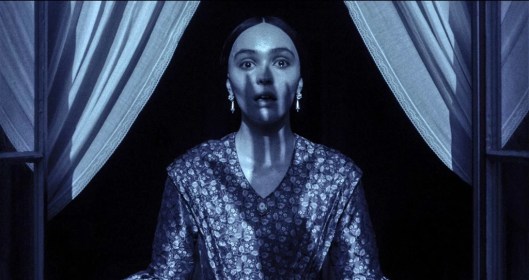
Robert Eggers’ Nosferatu approaches adaptation as cinematic archaeology, reconstructing gothic horror through meticulous attention to texture, light, and performance. The film privileges atmosphere over innovation, treating fidelity as a form of rigor rather than limitation.
Its power lies in its seriousness of intent. By resisting irony or revisionist impulse, Nosferatu reasserts the enduring potency of myth when rendered with formal precision. The film functions as both homage and reaffirmation of horror’s classical foundations.
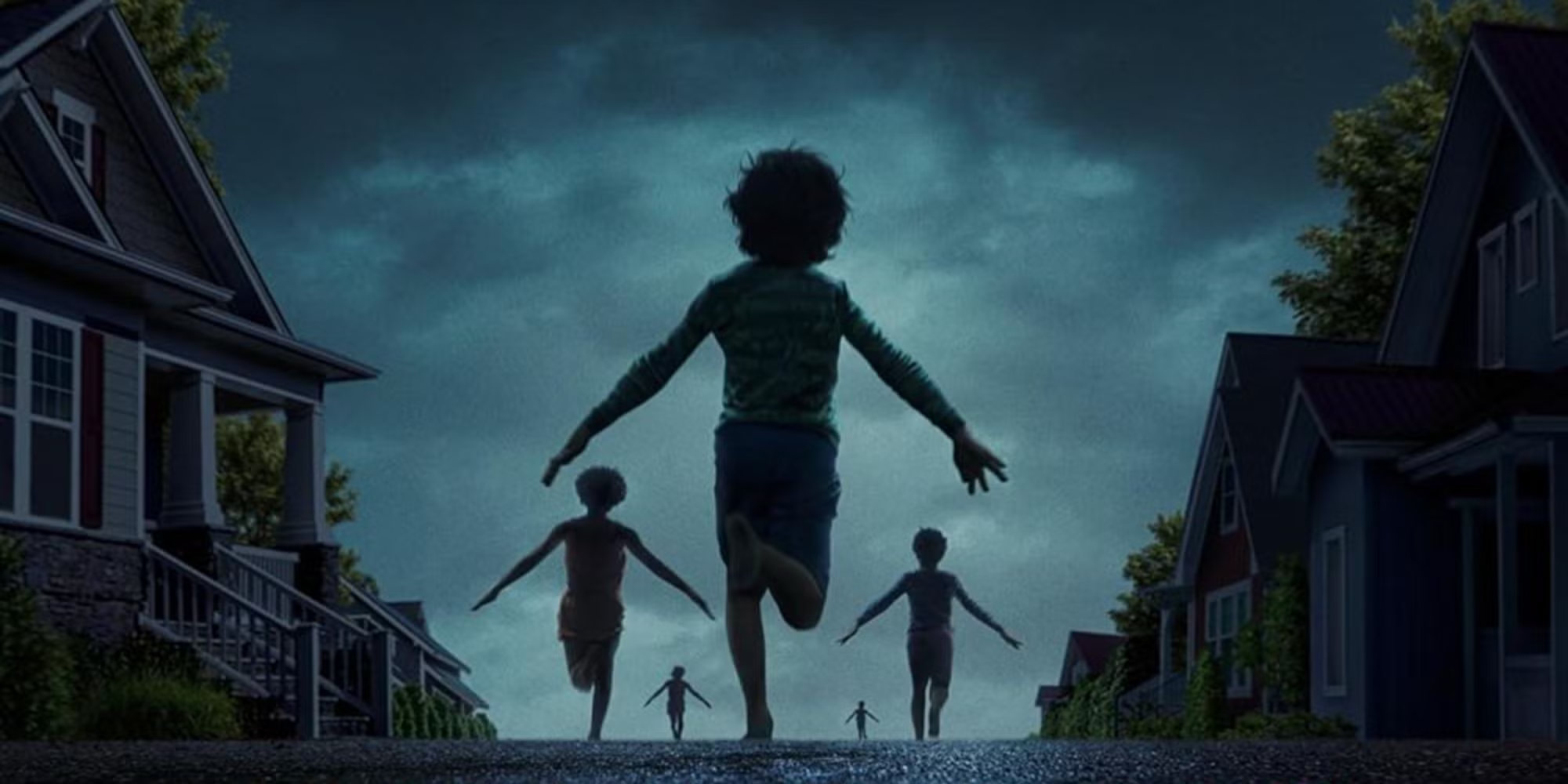
Weapons fragments narrative authority, refusing to privilege any single perspective or resolution. The film’s structural ambiguity destabilises conventional genre expectations, repositioning horror as epistemological uncertainty.
Rather than delivering answers, Weapons foregrounds absence and contradiction. Its terror emerges through implication, forcing the spectator to confront the discomfort of unresolved meaning. In this sense, the film operates less as a thriller than as an inquiry into perception and belief.
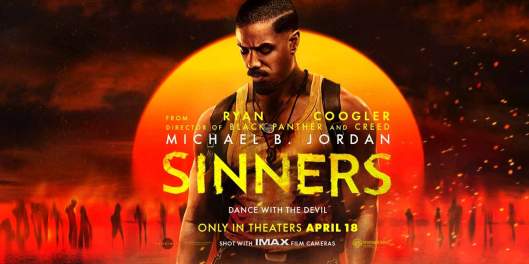
At the pinnacle of 2025’s horror landscape, Sinners synthesises genre with historical inquiry. The film locates terror within inherited structures — cultural, racial, and familial — positioning horror as an extension of collective memory.
Ryan Coogler’s formal restraint allows atmosphere and performance to carry ideological weight. Rather than externalising evil, Sinners frames it as an embedded legacy, transmitted across generations. The result is a work of rare gravity: a horror film that understands fear as something learned, remembered, and endured.
Greek myths meet murky waters in a low-budget thriller that almost makes it to shore.
Samuel Clemens’ The Drowned attempts to merge myth and morality within a low-budget psychological thriller, dipping into the murky waters of Greek legend to find something ancient beneath the surface. The results, however, are mixed—an ambitious premise buoyed by striking influences but ultimately weighed down by pacing and atmosphere that never fully submerge the viewer.
Drawing on the myth of Hylas and the nymphs—immortalised in John William Waterhouse’s 1896 oil painting—Clemens reimagines the seductive call of the sea as a modern-day reckoning for guilt and greed. Three thieves hole up in a seaside safehouse after stealing a priceless painting, only to find their fourth member missing and an ominous presence rising from the tide. The film’s mythological undercurrents give it a literary backbone, but they’re never quite fleshed out enough to transform into something transcendent.
There’s a palpable sense of ambition here: The Drowned tries to swim in deep waters, blending folklore, crime, and psychological tension. Yet much like the doomed figures in its inspiration, it finds itself lured by its own reflection—entranced by imagery but unable to escape the shallows of its limited scope.
Performances by Alan Calton, Lara Lemon, and Lily Catalifo lend the feature some stability, grounding its mythic aspirations in believable tension. The cinematography occasionally captures the desolate beauty of the coast with painterly intent, echoing Waterhouse’s haunting stillness. But the low budget is keenly felt, particularly in its uneven pacing and abrupt tonal shifts.
The Prognosis:
The Drowned deserves some credit for attempting to do more than most thrillers in its range—it’s an atmospheric, if uneven, meditation on temptation and consequence. Yet, despite its mythic intentions, it never quite earns its place among the more evocative modern fables. The sirens sing, but their song doesn’t linger.
The forest doesn’t care about you. It doesn’t care about your excuses, your regrets, your carefully constructed lies. Out there, among the trees, the world strips itself down to its bones — dirt, bark, roots, breath. That’s where Marc Schölermann drags us with Bark, a taut psychological thriller that ties both its protagonist and its audience to the raw elements of survival, guilt, and reckoning.
It begins with a man bound to a tree — a literal prisoner of nature and a figurative captive of his own sins. Charismatic Nolan Bentley wakes disoriented, tied down in the belly of a remote German forest. Enter the mysterious stranger, a figure both tormentor and liberator, whose taunting presence digs deeper than any rope ever could. The question isn’t just whether Bentley can escape. The question is whether he deserves to.
Bark is at its sharpest when it leans into this elemental battle: man vs. nature, man vs. stranger, man vs. himself. Schölermann uses the forest not as a backdrop but as a psychological weapon — the trees loom like silent judges, the soil feels heavy with secrets, and every snap of a branch echoes like a gavel slamming down in a cosmic courtroom.
At its core, the film isn’t about knots and ropes, it’s about consequences. You can’t disassociate from your own past forever; eventually the demons scratch their way through the bark and claw at your skin. Bark dramatises that inexorable truth with sweat, soil, and tension so tight it feels like the trees themselves are holding their breath.
The performances ground it — Bentley sells both desperation and denial, while the enigmatic outdoorsman needles and prods until every scab of guilt bursts open. And though the film runs its tension on a fairly narrow track, the payoff is a psychological unearthing that hits with the force of an axe to the trunk.
The Prognosis:
Bark is not just a thriller. It’s a meditation on accountability, guilt, and the way nature can strip us bare until we are nothing but the truth we tried to bury. Some secrets don’t stay hidden. Some forests don’t let you out.
The shadows are calling again. The screen is no longer a safe window to peer through but a chasm, hungry and alive, waiting to swallow you whole. Strap in, Sydney — Dark Nights Film Fest Vol. 2 has crawled out of the grave and into the Ritz, and this time it’s not here to play nice.
This isn’t cinema for the faint, the casual, or the polite. This is cinema that stalks you through the back alleys of your subconscious, cinema that rips the floorboards off your cozy illusions and drags you headfirst into a pit of worms. Just when you thought the blood had dried and the screams had faded, festival director Bryn Tilly has cranked open the gates again, ushering in a delirious parade of maniacs, monsters, and midnight visions.
Nine Australian premieres. One unholy cult resurrection. Twenty-two short, sharp shocks from across the globe. It’s a full-course banquet of nightmares, each dish steaming with dread and dripping with the strange juices of cinema’s dark heart.
Opening night doesn’t just raise a curtain — it tears open the roof with Hell House LLC: Lineage, an unhinged carnival of terror where haunted basements and clown-faced demons set the tone for what’s to come: fear without safety nets. From there the fest descends into Germany’s tangled woods with Bark, drags you through the neon purgatory of America in A Desert, and burns you alive with the Serbian one-two punch of A Serbian Documentary and Karmadonna — films that don’t just push buttons, they rip them out and swallow them whole.
But the crown jewel of delirium? Peter Jackson’s Braindead in screaming 4K glory. Thirty years since its last Australian theatrical run, and the pus-filled carnage hasn’t aged a day. This isn’t a screening — it’s an exorcism of sanity, an orgy of undead slapstick that makes every Marvel movie look like a children’s nap-time.
And just when your skull’s about to split, along comes Necromorphosis, burrowing into your flesh like a cockroach in heat, and Sun, a fever-dream hybrid of movement and madness that dances straight into the abyss. By the time the anthology Adorable Humans rolls around, Hans Christian Andersen will be spinning in his grave fast enough to power a small Danish village.
Closing night locks the doors and swallows the keys with The School Duel, a dystopian grenade lobbed at society’s fragile bones — ferocious, timely, and cruelly relevant.
This isn’t just a festival. It’s a séance. A bacchanal of blood, dread, and midnight delirium. Between the Aussie and international shorts, the Movie Boutique of VHS relics and arcane treasures, and filmmakers dropping truth bombs about low-budget survival, Dark Nights is where the monsters come to play.
Forget safe cinema. Forget the plush multiplex glow. The Ritz is where the shadows come alive, and the screen bites back.
Dark Nights Film Fest Vol. 2 — October 9–12, Ritz Cinemas, Randwick. Bring your nerves, bring your nightmares, and leave your soul at the door.
Freak Me Out delivers another bold, bruising genre gem.
The Freak Me Out program at Sydney Film Festival 2025 has always been a haven for horror misfits, and Straight On Till Morning is a welcome addition to its blood-splattered roster. Directed by Craig Ouellette, this road trip romance-turned-nightmare pits love against extremism, identity against tradition, and outsiders against a force of cruel conformity.
At its heart are Dani and Kaitlin, two queer lovers caught in the euphoric haze of newfound intimacy. Their chemistry is charming, unforced, and grounded in quiet authenticity—a refreshing portrayal that sidesteps overused tropes and instead paints their connection as real and lived-in. But their dreamy road trip through America’s underbelly soon turns into a brutal descent, as they collide with a seemingly God-fearing family whose values are warped by delusion and control.
The film takes its time to find traction, and its deliberate pacing may test some viewers. The first act drifts on the wind of romantic indie minimalism, until a mid-point collision throws everything off the rails and into pure survival horror. From there, it delivers raw tension, visceral violence, and a grim dissection of how love—queer or otherwise—threatens rigid systems built on fear and false righteousness.
What elevates Straight On Till Morning beyond standard genre fare is its refusal to paint anyone with a single brushstroke. The villains are monstrous, yes, but they are never cartoons. Likewise, our protagonists are flawed, unsure, and deeply human. Ouellette doesn’t go for clean lines—this is a film about grey areas. About how outcasts, be they queer lovers or zealots hiding from the modern world, can collide in catastrophic ways.
The Prognosis:
It’s a challenging, sometimes uneven ride, but when it hits its stride, it’s gripping and unrelenting. In a landscape still learning how to do queer horror without pandering or punishing, Straight On Till Morning is a welcome entry—messy, brave, and full of heart.


 Surgeons of Horror