There’s an compelling idea lurking beneath Killer Whale: a trauma drama dressed up as a creature feature. Director Jo-Anne Brechin frames her survival thriller around grief, survivor’s guilt and damaged ambition, using the rampaging orca less as a monster and more as an externalisation of unresolved pain. It’s a thoughtful angle in theory — but one that struggles to stay afloat amid the film’s more formulaic genre trappings.
The story follows Maddie (Virginia Gardner), a gifted cellist whose life stalls after a violent robbery leaves her hearing impaired and her boyfriend dead. A year later, a guilt-ridden holiday to Thailand with her friend Trish (Mel Jarnson) spirals into nightmare territory when an abused captive orca is unleashed into a secluded lagoon. What begins as an emotional reckoning quickly pivots into familiar killer-creature beats: stranded swimmers, tightening geography, and a predator circling with mechanical persistence.
Brechin deserves credit for attempting to graft psychological weight onto a well-worn subgenre. The early passages, which explore Maddie’s fractured identity and her complicated relationship with sound and silence, hint at a more introspective film. Gardner carries these quieter moments with conviction, grounding the character’s grief in a way that feels authentic. Yet once the survival mechanics kick in, the emotional throughline becomes increasingly submerged beneath routine suspense staging.
Compared to the great killer-creature touchstones — from the elegant dread of Jaws to the lean efficiency of modern aquatic thrillers — Killer Whale feels caught between ambitions. The orca itself is an effective symbol of exploitation and rage, but the visual execution varies wildly, with tension undercut by uneven effects and repetitive attack rhythms. The lagoon setting promises claustrophobia but rarely capitalises on its full spatial potential, resulting in sequences that feel more cyclical than escalating.
What works best is the film’s thematic intent: the suggestion that trauma, like a wounded animal, will keep circling until confronted. What doesn’t is the script’s tendency to spell out these ideas while relying on stock genre decisions that blunt their impact. Characters make frustrating choices less out of psychological necessity than narrative convenience, and the pacing sags in a middle stretch that should be tightening the screws.
The Prognosis:
Killer Whale never entirely bores, and its central metaphor gives it a faint pulse beyond standard creature-feature thrills. But the disconnect between its emotional aspirations and its execution leaves it feeling like a sketch of a stronger film — one where trauma and terror might have truly reinforced each other, rather than competing for the spotlight.
Saul Muerte
Killer Whale will be available to rent on digital platforms from Feb 20.
American horror has always struggled with its own mythology.
Where European cinema leans effortlessly into castles, covens, and inherited superstition, American folklore remains fragmented — scattered across Native legend, Puritan fear, frontier violence, and the unresolved guilt of colonisation. Monsters here are rarely elegant. They are born of hunger, cold, isolation, and the uneasy sense that the land itself remembers what we have tried to forget.
Wendigo is one of the rare American horror films that attempts to take that legacy seriously.
Folklore in the Margins
Based on Algonquian legend, the Wendigo is not merely a creature but a concept: a spirit of starvation, greed, and moral collapse, born when humans consume more than they should — flesh, land, or power. It is a monster inseparable from colonial history, ecological dread, and cultural trespass.
Larry Fessenden, ever the scholar of marginal horror, understands this instinctively.
From its opening moments, Wendigo resists the trappings of mainstream genre cinema. There are no easy shocks, no baroque effects, no grand set-pieces. Instead, the film unfolds as a low-key domestic tragedy — a city family retreating to the countryside, bringing with them the casual arrogance of outsiders who believe nature is merely scenery.
When an accidental shooting ignites the film’s chain of events, the horror that follows feels less supernatural than inevitable.
Fessenden’s America
By 2001, Larry Fessenden had already established himself as one of American indie horror’s great caretakers — a filmmaker less interested in spectacle than in preservation. Through films like Habit and his later work on The Last Winter and Depraved, Fessenden has acted as both archivist and advocate for a strain of horror that treats myth as cultural memory rather than genre decoration.
Wendigo fits squarely within that mission.
This is not a film about a monster in the woods so much as a film about trespass: moral, ecological, and cultural. The family’s intrusion into rural space, their careless handling of firearms, their unthinking disruption of local rhythms — all feel like small sins accumulating toward punishment. When the legend of the Wendigo finally surfaces, it feels less like summoning than consequence.
In theory, this is rich terrain.
The Problem of Restraint
In practice, Wendigo struggles to fully embody the power of its own mythology.
Fessenden’s commitment to understatement, while admirable, often becomes a liability. The film withholds too much, too often. The creature remains largely abstract. The rituals feel gestural rather than revelatory. What should accumulate as dread instead drifts into ambiguity.
The central performances are competent but muted, and the domestic drama — meant to ground the supernatural — never quite achieves the emotional density required to make the horror resonate fully. The film gestures toward trauma, guilt, and moral rupture, but rarely pierces them.
When the Wendigo finally asserts itself, the moment feels conceptually powerful but cinematically undernourished.
Indie Horror as Preservation
And yet, to judge Wendigo purely by conventional standards would be to misunderstand its place in the larger ecosystem of American horror.
This is not exploitation. It is not entertainment-first. It is an act of cultural stewardship.
Fessenden belongs to a lineage of American indie filmmakers — alongside figures like Kelly Reichardt (in her own register), Jim Mickle, and later Robert Eggers — who treat landscape as archive and myth as history. He is less concerned with thrills than with keeping endangered stories alive, even when their cinematic translation proves imperfect.
In that sense, Wendigo is less a failure than a partial success: a film that reaches for something rare in American horror, even if it cannot quite grasp it.
The Prognosis:
Wendigo remains a fascinating but flawed entry in the canon of American folk horror.
It lacks the visceral impact of its European cousins, and the narrative control to fully harness its mythology. But it compensates with sincerity, scholarship, and a genuine respect for the dark stories embedded in American soil.
Some myths refuse to die.
Even when poorly told, they continue to haunt — not because they are frightening, but because they are true.
In 2025, horror cinema continued its decisive shift away from spectacle toward structure. Rather than functioning as vehicles for shock, the most compelling works of the year positioned fear as a sustained condition — something embedded within systems, bodies, and histories. These films do not simply represent terror; they organise it, asking spectators to endure rather than react, to interpret rather than consume.
Across this selection, horror emerges as an analytic mode — a means of interrogating authority, inheritance, technology, and perception itself. What follows is not a list of crowd-pleasers, but of films that demonstrate how the genre continues to function as one of contemporary cinema’s most rigorous critical tools.
13. Ash
Ash occupies a transitional space between experimental media art and narrative cinema, foregrounding sensation over causality. Flying Lotus privileges rhythm, texture, and sonic density as primary conveyors of meaning, destabilising conventional narrative comprehension in favour of affective immersion.
The film’s significance lies less in its storytelling than in its refusal of interpretive clarity. Ash treats disorientation as a structuring principle, aligning the spectator’s cognitive uncertainty with the film’s thematic concern for alienation and fragmentation. In doing so, it advances a mode of sci-fi horror that operates phenomenologically, privileging experience over explanation.
Situated within a tightly regulated institutional space, The Rule of Jenny Pen examines how authority produces horror not through excess, but through routine. The film’s power derives from its attention to systems of control that are normalised rather than questioned, rendering violence bureaucratic and cruelty procedural.
Rather than positioning its antagonist as aberrant, the film implicates the structure itself. Performance and restraint are key formal strategies here: menace accumulates through micro-gestures and withheld action, forcing the spectator to recognise how institutional power becomes most terrifying when it is administered calmly and without spectacle.
Dangerous Animals strips survival horror down to its most elemental components, foregrounding endurance over escalation. The film’s pacing resists the logic of set-piece thrills, instead cultivating a slow accretion of threat that mirrors the bodily exhaustion of its characters.
What distinguishes the film is its refusal to sentimentalise victimhood. Predator and prey are rendered as unstable positions rather than fixed identities, suggesting violence as a latent condition rather than a moral rupture. In this sense, Dangerous Animals operates as an examination of instinctual hierarchy, locating horror within the mechanics of survival itself.
10. Keeper
With Keeper, Osgood Perkins continues his exploration of isolation as a spatial and psychological condition. The film’s austere formalism — marked by elongated takes, sparse dialogue, and an emphasis on negative space — transforms setting into a form of narrative pressure.
Rather than offering mythological coherence, Keeper relies on emotional continuity. Ritual functions not as exposition but as repetition, reinforcing the sense of entrapment that defines the film’s affective core. Horror emerges gradually, not through revelation, but through the suffocating persistence of the unresolved.
Sun rejects legibility as an organising principle. Its aggressive visual strategies — saturated colour, disjunctive editing, and sensory overload — position the spectator in a state of sustained assault, aligning form with thematic inquiry.
The film treats identity as unstable and perception as corrosive. Rather than constructing horror through narrative causation, Sun deploys excess as a destabilising force, implicating contemporary media saturation in the erosion of subjectivity. The result is a work that positions horror as experiential collapse rather than narrative event.
Companion engages with speculative horror through a register of intimacy, examining how technological mediation reshapes emotional labour and consent. The film’s restraint is central to its effectiveness; moments of unease are generated through behavioural shifts rather than overt threat.
By situating its horror within domestic and relational spaces, Companion reframes technological anxiety as an extension of existing power dynamics. The film resists dystopian exaggeration, instead suggesting that the most disturbing futures are those that emerge seamlessly from present-day norms.
Defined by subtraction rather than accumulation, Presence employs absence as its primary aesthetic strategy. The film’s minimalism forces the spectator to attend to what is not shown, transforming silence and spatial emptiness into sites of tension.
Supernatural elements are deliberately ambiguous, allowing grief and memory to function as competing explanatory frameworks. In refusing to stabilise meaning, Presence aligns haunting with psychological persistence, suggesting that terror often resides not in invasion, but in endurance.
Bring Her Back operates through narrative fracture, destabilising temporal and causal coherence as a means of articulating loss. The film demands active spectatorship, requiring viewers to assemble meaning from incomplete information.
Its body horror is not gratuitous but instrumental, externalising the violence of obsession and the desire for restoration. By refusing interpretive closure, Bring Her Back transforms confusion into affect, positioning horror as a confrontation with the limits of understanding.
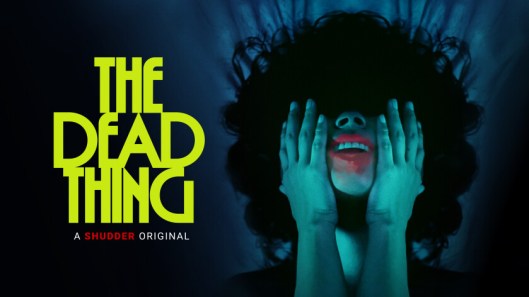
The Dead Thing frames horror as a byproduct of unresolved trauma, privileging emotional continuity over narrative propulsion. The film’s measured pacing allows grief to permeate its formal construction, rendering terror inseparable from mourning.
What emerges is a portrait of desire as compulsion — a need not to escape pain, but to remain tethered to it. The film’s restraint prevents catharsis, reinforcing the notion that some forms of suffering resist narrative resolution.
The Long Walk is structured around repetition as punishment. Its relentless forward motion mirrors the ideological rigidity of the system it depicts, transforming endurance into a mechanism of control.
By denying reprieve, the film implicates the spectator in its logic of attrition. Horror arises not from unpredictability, but from inevitability, positioning authoritarian violence as procedural rather than spectacular. The result is a work of sustained ideological critique.
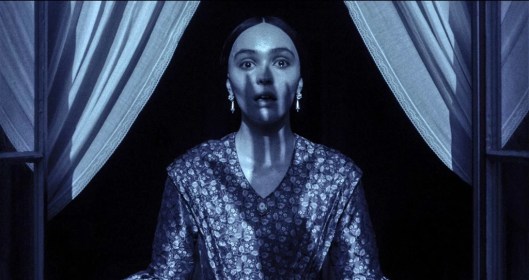
Robert Eggers’ Nosferatu approaches adaptation as cinematic archaeology, reconstructing gothic horror through meticulous attention to texture, light, and performance. The film privileges atmosphere over innovation, treating fidelity as a form of rigor rather than limitation.
Its power lies in its seriousness of intent. By resisting irony or revisionist impulse, Nosferatu reasserts the enduring potency of myth when rendered with formal precision. The film functions as both homage and reaffirmation of horror’s classical foundations.
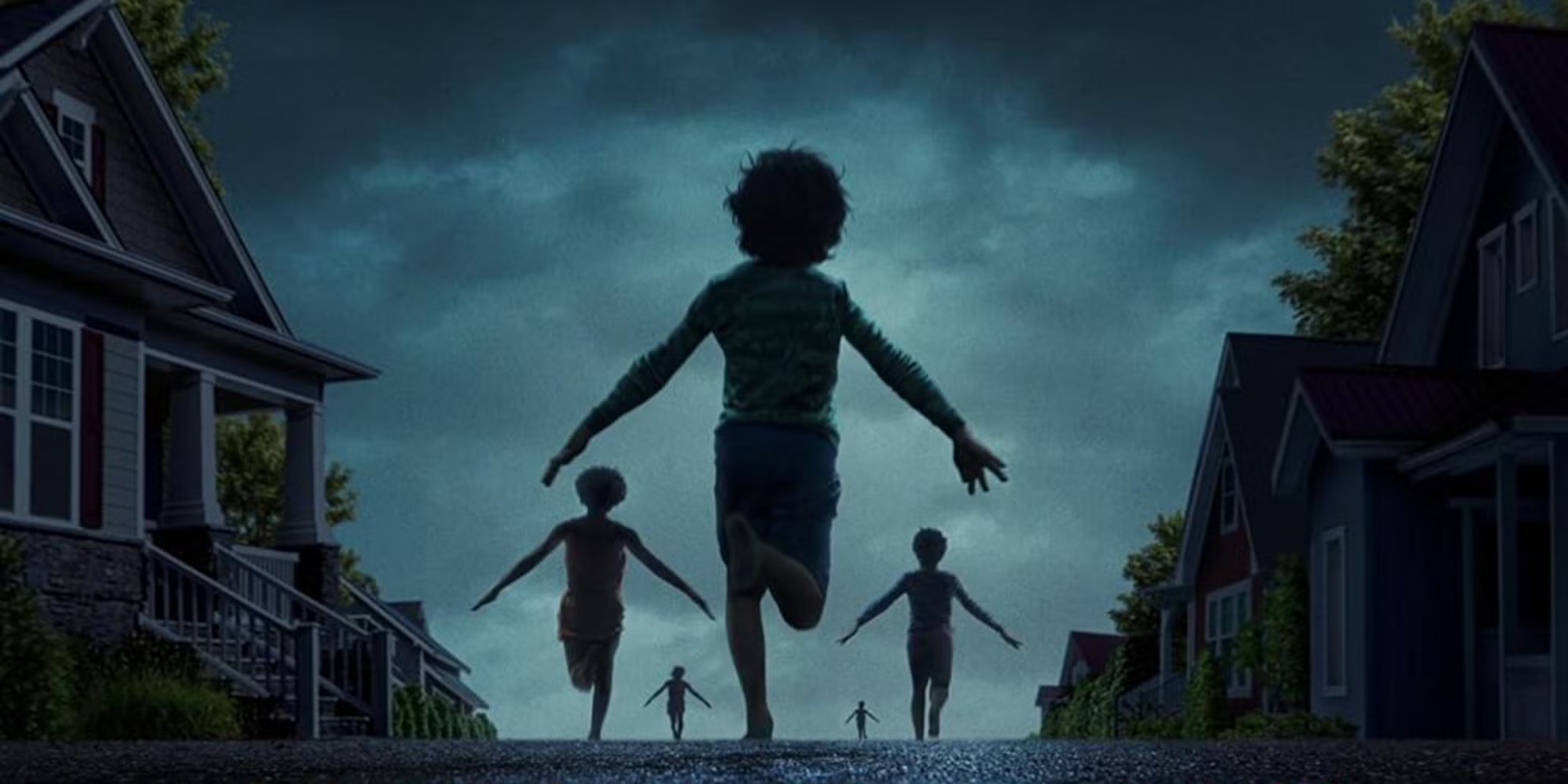
Weapons fragments narrative authority, refusing to privilege any single perspective or resolution. The film’s structural ambiguity destabilises conventional genre expectations, repositioning horror as epistemological uncertainty.
Rather than delivering answers, Weapons foregrounds absence and contradiction. Its terror emerges through implication, forcing the spectator to confront the discomfort of unresolved meaning. In this sense, the film operates less as a thriller than as an inquiry into perception and belief.
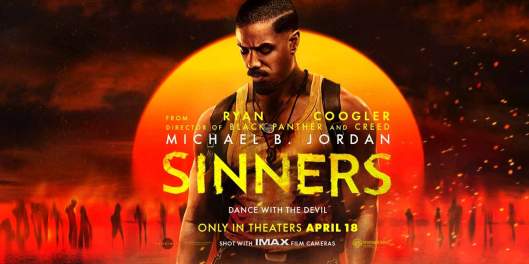
At the pinnacle of 2025’s horror landscape, Sinners synthesises genre with historical inquiry. The film locates terror within inherited structures — cultural, racial, and familial — positioning horror as an extension of collective memory.
Ryan Coogler’s formal restraint allows atmosphere and performance to carry ideological weight. Rather than externalising evil, Sinners frames it as an embedded legacy, transmitted across generations. The result is a work of rare gravity: a horror film that understands fear as something learned, remembered, and endured.
Joe Hill’s short story Abraham’s Boys offered a quietly haunting coda to the Dracula mythos — a modern Gothic in miniature, soaked in melancholy and generational trauma. Unfortunately, this Shudder-exclusive adaptation struggles to translate that restrained power to the screen. What emerges is a film that mistakes heavy exposition for emotional weight and loses the eerie ambiguity that made Hill’s prose hang in the air.
Set in the American Midwest, the film imagines Abraham Van Helsing as a broken patriarch trying to protect his sons, Max and Rudy, from the supernatural horrors he once fought. It’s a bold premise — relocating Stoker’s world from the fog of Europe to the dust and decay of small-town America — but in doing so, the film sheds the very atmosphere that defined the Gothic. The Midwest may hold its ghosts, but here it feels oddly sterile, a backdrop devoid of menace or mystique.
Even more jarring is the notion that Van Helsing, once defined by faith and obsession, would settle down with Mina Harker and start a family. The choice feels not only implausible but thematically tone-deaf, undercutting the tragic consequences of their shared history. The result is a domestic melodrama stitched awkwardly to a monster myth that deserved grander treatment.
There are flashes of something worthwhile — the strained father-son dynamic occasionally hints at the emotional brutality Hill conjured in his story, and the film’s final moments attempt to reclaim some of its literary melancholy. But it’s too little, too late. Abraham’s Boys: A Dracula Story is a gothic without a heart, a reimagining that leaves both the horror and the humanity of its lineage drained.
The Prognosis:
A well-intentioned expansion of Joe Hill’s world that fails to capture his haunting tone or Stoker’s legacy. The bloodline runs thin.
Saul Muerte
Abraham’s Boys: A Dracula Story will be streaming on Shudder from Thurs 6th Nov.
In Strange Harvest, Ortiz reshapes the language of true-crime horror, transforming the procedural form into a conduit for cosmic unease — a subtle evolution from his Grave Encounters origins.
In Strange Harvest, Stuart Ortiz — one half of the duo behind Grave Encounters — returns to the found footage-adjacent horror landscape with a surprising degree of control and maturity. Where Grave Encounters (2011) revelled in its haunted asylum chaos and digital distortion, Strange Harvest feels leaner and more deliberate, channelling that same eerie energy into a faux true-crime format that plays like Zodiac meets The Fourth Kind.
The film opens with what seems like a procedural—detectives responding to a welfare check in suburban San Bernardino—but quickly descends into something far darker. A murdered family, strange symbols written in blood, and the re-emergence of a serial killer known as “Mr. Shiny” set the stage for a horror narrative that thrives on implication and dread. Each new crime scene pushes the story further into cosmic territory, hinting at malevolent forces that exist well beyond the scope of human comprehension.
Ortiz demonstrates that he’s learned from over a decade in the horror trenches. His handling of the faux documentary format feels both grounded and authentic, using interviews, news footage, and handheld police recordings to build a layered mythology around the murders. The pacing is steady but tense, and the editing keeps the viewer in that unnerving space between realism and the supernatural — a sweet spot Ortiz has always excelled at.
While the premise is simple, that’s part of its strength. Strange Harvest doesn’t overcomplicate its narrative or chase high-concept spectacle; instead, it leans into its lo-fi authenticity, letting the horror emerge through atmosphere and suggestion. There are shades of procedural TV mixed with cosmic unease, but Ortiz ties it together with a firm grasp of tone and an eye for unsettling imagery.
It’s a testament to Ortiz’s craft that what could have been another run-of-the-mill mockumentary instead feels genuinely unnerving. Strange Harvest proves that the Grave Encounters legacy wasn’t a one-off fluke — Ortiz remains a filmmaker who understands how to weaponise form, texture, and the illusion of truth to make horror hit a little too close to home.
The Prognosis:
A deceptively simple yet chilling faux true-crime horror that tightens the screws through atmosphere and implication. Ortiz’s strongest solo work to date.
Greek myths meet murky waters in a low-budget thriller that almost makes it to shore.
Samuel Clemens’ The Drowned attempts to merge myth and morality within a low-budget psychological thriller, dipping into the murky waters of Greek legend to find something ancient beneath the surface. The results, however, are mixed—an ambitious premise buoyed by striking influences but ultimately weighed down by pacing and atmosphere that never fully submerge the viewer.
Drawing on the myth of Hylas and the nymphs—immortalised in John William Waterhouse’s 1896 oil painting—Clemens reimagines the seductive call of the sea as a modern-day reckoning for guilt and greed. Three thieves hole up in a seaside safehouse after stealing a priceless painting, only to find their fourth member missing and an ominous presence rising from the tide. The film’s mythological undercurrents give it a literary backbone, but they’re never quite fleshed out enough to transform into something transcendent.
There’s a palpable sense of ambition here: The Drowned tries to swim in deep waters, blending folklore, crime, and psychological tension. Yet much like the doomed figures in its inspiration, it finds itself lured by its own reflection—entranced by imagery but unable to escape the shallows of its limited scope.
Performances by Alan Calton, Lara Lemon, and Lily Catalifo lend the feature some stability, grounding its mythic aspirations in believable tension. The cinematography occasionally captures the desolate beauty of the coast with painterly intent, echoing Waterhouse’s haunting stillness. But the low budget is keenly felt, particularly in its uneven pacing and abrupt tonal shifts.
The Prognosis:
The Drowned deserves some credit for attempting to do more than most thrillers in its range—it’s an atmospheric, if uneven, meditation on temptation and consequence. Yet, despite its mythic intentions, it never quite earns its place among the more evocative modern fables. The sirens sing, but their song doesn’t linger.
The Hell House LLC director slows things down for a moody, multi-perspective mystery.
A slow-burning mystery from the creator of Hell House LLC, soaked in dread and small-town secrets.
After a family tragedy, Chuck Wilson (Joe Falcone) moves to the quiet town of Ashland Falls with his wife Maria (Elizabeth Vermilyea) and younger sister Isabelle (Kathryn Miller), hoping for a fresh start. But peace proves elusive as the trio becomes entangled in the unsettling lore of their new home—specifically the ominous mystery surrounding a woman named Helen Foster. As the story unfolds from the perspectives of each family member, the true nature of Ashland Falls begins to take shape—and it’s far from comforting.
Stephen Cognetti, best known for his Hell House LLC trilogy, steps away from the chaos of found-footage terror to deliver a more measured, psychological horror in 825 Forest Road. The scares are subtle, the pacing deliberate, and the dread seeps in slowly as the audience is invited to peel back the layers of each character’s experience. By splitting the narrative into three viewpoints, Cognetti crafts an eerie puzzle box of grief, guilt, and unresolved trauma, all tethered to a town that harbors something rotten at its core.
While some may find the pacing too slow or miss the jolting immediacy of Hell House LLC, there’s a quiet confidence in Cognetti’s restraint. He’s developing his voice beyond found footage, proving that he can unsettle audiences without relying on the genre’s usual tricks. The performances—especially Vermilyea as the emotionally fraying Maria—ground the film and help build a creeping sense of paranoia.
The Prognosis:
825 Forest Road may not fully capitalise on its premise, and its ambiguity might frustrate some, but it marks another intriguing step in Cognetti’s horror journey. It’s a film that whispers rather than screams—but it leaves behind a chill all the same.
Riding the dubious wave of horror-fied childhood classics, Cinderella’s Revenge arrives with the promise of twisted fairy tale carnage. With Winnie the Pooh: Blood and Honey and its ilk paving the way, director Andy Edwards attempts to bring a slasher spin to the beloved tale of glass slippers and midnight transformations. Unfortunately, this grim retelling is more of a rotten pumpkin than a blood-soaked ball, failing to capitalise on its premise in any meaningful way.
The film follows Cinderella, who, after years of torment at the hands of her wicked stepmother, is granted freedom and power through her Fairy Godmother (played by Species star Natasha Henstridge). But instead of attending a magical ball, Cinderella embarks on a quest for vengeance, carving a path of bloodshed through her stepfamily and anyone else unfortunate enough to cross her.
It’s a fun idea on paper—turning the rags-to-riches fairy tale into a horror-tinged revenge flick—but Cinderella’s Revenge fumbles its execution at every turn. Rather than fully embracing the absurdity of its concept or delivering the kind of gleeful grindhouse thrills it desperately needs, the film lands in a no-man’s-land of weak gore, limp action, and half-hearted humour. Even the kills, which should be the film’s main draw, feel uninspired and rushed, as if the filmmakers ran out of ideas before they even got started.
The presence of Natasha Henstridge as the Fairy Godmother initially seems like a potential saving grace. Given the right material, she could have delivered a delightfully wicked performance, perhaps something akin to Maleficent by way of Evil Dead. But the script gives her little to work with, reducing her to a glorified exposition machine with occasional flashes of menace. Likewise, Cinderella herself lacks the charisma or depth to make her transformation into a bloodthirsty avenger compelling.
Perhaps the biggest problem is that the film never figures out what it wants to be. Is it a straight horror movie? A tongue-in-cheek slasher? A dark fantasy revenge tale? Instead of committing to any one tone, Cinderella’s Revenge awkwardly lurches between them, resulting in a film that feels both tedious and lifeless.
While the trend of turning public domain fairy tales into horror movies isn’t inherently a bad idea, Cinderella’s Revenge serves as a cautionary tale of how not to do it. Lacking style, wit, or even the basic competence to deliver enjoyable schlock, this is one fairy tale that should have stayed on the shelf.
Neil Jordan’s Interview with the Vampire (1994) is a lush and lavish exploration of eternal life, where the shadows of New Orleans and Paris are as inviting as they are haunting. Adapted from Anne Rice’s celebrated novel, the film is a powerful blend of gothic romanticism, bloodlust, and erotic tension, but its leading men—Tom Cruise as the charismatic vampire Lestat and Brad Pitt as the tormented Louis—remain a point of contention to this day. With Rice’s novel as its beating heart, Jordan’s adaptation brought a nuanced, sensuous exploration of love, horror, and longing that has endured for nearly three decades, despite those famously bold casting choices.
Jordan’s direction underscores the sensuality that made Rice’s novel iconic. The story is imbued with themes of lust and longing, extending beyond mortal desire into a deep, predatory hunger that consumes its characters, literally and emotionally. Cinematographer Philippe Rousselot bathes the world in warm, seductive lighting that makes the vampire’s nocturnal existence a beautiful nightmare. The story’s vampire leads are creatures driven by a desire that is both deeply romantic and undeniably grotesque, elevating the traditional horror elements of vampirism into something more profound and captivating.
The two vampire leads are captivating in their own way, but critics were polarized by the casting of Cruise and Pitt as Lestat and Louis. For Rice, Lestat was an iconic antihero, an exuberant villain with a touch of madness and charisma that commands the screen. Cruise, already a megastar, seemed an odd choice for the role, and while his performance is flamboyant and committed, it doesn’t always capture the layered, dark humour or philosophical weight of Lestat. Pitt, as the brooding Louis, offers a more subdued, sorrowful portrayal, but at times it veers into passivity, making the character feel too reserved to fully connect with Lestat’s extravagance. In that sense, while Cruise and Pitt deliver star power and charisma, it’s arguable that they miss some of the existential torment and depth that Rice imbued in her protagonists.
Even so, Interview with the Vampire shines when it focuses on the delicate, almost familial connection between the vampires. The introduction of the child vampire Claudia, portrayed by an astonishingly talented Kirsten Dunst, injects a fresh dynamic into the film. Claudia’s tragedy, as a woman trapped in a child’s body, intensifies the film’s exploration of love, loss, and identity, with Dunst’s performance stealing many of the film’s most powerful moments. Claudia’s frustration with her unchanging form and her love-hate relationship with Louis and Lestat elevate Interview beyond a typical vampire tale into a complex character study of immortality’s price.
In the end, Interview with the Vampire is a mesmerizing, albeit imperfect, gothic romance—a film that drips with atmosphere and raw emotion. Jordan’s vision, although sometimes hindered by casting choices, remains a powerful cinematic translation of Rice’s narrative, filled with seduction and existential dread. In fact, its occasional missteps in casting have ironically become part of its charm. Whether or not Cruise and Pitt were ideal as Lestat and Louis, their portrayals have carved a unique place in the pantheon of vampire lore.
Decades later, Interview with the Vampire holds its place as a defining piece of 1990s horror, a moody, romantic, and darkly beautiful portrait of an eternal struggle with mortality and morality. It’s a film that leaves you transfixed by its dark allure and makes you ponder what it truly means to live forever.
Transport yourself back to the enchanting era of 1960s horror with “Mill of the Stone Women,” a Gothic gem that stands as a historical milestone in Italian cinema. Shot in vibrant color, this film immerses viewers in the lush landscapes of the Holland countryside, expertly captured by cinematographer Pier Ludovico Pavoni. Drawing inspiration from Flemish and Dutch painters, the visuals alone are worth the price of admission. Also, on a worthy note, the opening credits claim that the film is based on the book Flemish Tales by Pieter van Weigen. This is a fictionalised statement as no such book exists and sparks the imagination and inspiration of similar concepts adopted by future filmmakers who claim their features are ‘based on a true story’.
The story revolves around journalist Hans von Arnim (Pierre Brice), who embarks on an investigation into the fabled Mill of the Stone Women. Designed by the enigmatic Professor Gregorious Wahl (Herbert A.E. Böhme), the mill features a carousel adorned with female statues. As Hans delves deeper into the mysteries surrounding the mill, he becomes entangled in a web of secrets, madness, and macabre occurrences.
While the initial setup may feel somewhat pedestrian, the film gains momentum as it hurtles towards its climactic finale. Director Giorgio Ferroni deftly infuses the narrative with Grand Guignol flair, delivering a theatrical and melodramatic conclusion that grips viewers until the very end. Though it may not reach the dizzying heights of Mario Bava’s “Black Sunday,” released in the same year, “Mill of the Stone Women” still offers plenty to sink your teeth into, from its captivating storyline to its haunting visual charm.
The Prognosis:
“Mill of the Stone Women” is a captivating journey into the heart of Gothic horror, filled with intrigue, suspense, and visual splendor. While it may stumble at times, it ultimately delivers a satisfying cinematic experience that will linger in the minds of viewers long after the credits roll.


 Surgeons of Horror