• About
  • podcasts
  • Shop

Surgeons of Horror

~ Dissecting horror films

Surgeons of Horror

Category Archives: retrospective

Retrospective: The Invisible Woman (1940)

10 Wednesday Jun 2020

Posted by surgeons of horror in retrospective, Universal Horror

≈ Leave a comment

Tags

john barrymore, john howard, oscar homolka, Universal, universal pictures, virginia bruce

In 1940 Universal Pictures bookended the calendar year starting with The Invisible Man Returns and then ending with The Invisible Woman.
While the former took on the tone of a crime thriller, the latter took the series in an entirely different direction, comedy.
This would also be an indication of Universal Classic Monsters future, leaning away from the macabre and into humour.

With The Invisible Woman it is indicative of its time when it comes to the bawdy comedy at hand with a little bit of screwball rom com in the mix ala Cary Grant and Rosalind Russell in His Girl Friday, also released in the same year.
Here the two leads that are at odds with one another are wealthy lawyer Richard Russell (John Howard) and Kitty Carroll (Virginia Bruce), a feisty, smart and determined department store model.
When we meet Kitty, she gets fired from her job for basically speaking her mind and with the promise of money learns of a wild scheme by local scientist, Professor Gibbs (an ageing and always excellent, John Barrymore) who claims that he has invented an invisibility device.
Gibbs in need of a guinea pig gets one in Kitty, who is surprised to see that the mad professor’s invention actually works and what’s more, she can turn it to her advantage and seek revenge on her misogynistic former boss. 

Before long, we’re headlong into a crime caper with a mob boss, Blackie Cole (Oscar Homolka) seeking to use the invisibility device for his own gain. Kitty must use her guile and new-found abilities to stop Cole in his devious plans. 

The Prognosis:

The Invisible Woman is definitely a film for its time and even though some of its subject still resonates today, the style and mode of its delivery may be stifling for some.
I for one welcome this old-school, nostalgic road trip that the 40s delivered to the silver screen enjoying it all the way and for a third instalment, I personally connected with this one more than The Invisible Man Returns.
It would be interesting to see how it would have been handled as a dark comedy. At the time of writing, Elizabeth Banks is set to direct a new version of The Invisible Woman and being a veteran of the comedy and horror scene, it will be interesting to see if she plans to marry these two genres for a modern audience and continue the trend set by Whannell… and it does bode the question, Will we see the return of Elizabeth Moss as Cecilia Kass?

  • Saul Muerte

Retrospective: The Invisible Man Returns (1940)

03 Wednesday Jun 2020

Posted by surgeons of horror in retrospective, Universal Horror

≈ 1 Comment

Tags

hg wells, The Invisible Man, Universal, Vincent Price

Before Leigh Whannel and the Blumhouse team reinvented and reinvigorated the Invisible Man franchise for the modern generation with their 2020 adaptation, I would have argued that no one could have stepped into Claude Rains shoes as the doomed scientist, Dr. Jack Griffin.
In Fact he would reprise the role once more with American comedians Bud Abbot and Lou Costello in Abbott and Costello Meet The Invisible Man further associating himself with the iconic character.
Rains became synonymous with the Universal horror franchise with his dignified gentlemanly manner which also saw him in The Wolf Man movie and The Phantom of the Opera.
HG Wells’ novel would inspire 7 feature films under the Universal umbrella, none could match the original film however, but something must have stirred the creative flow to keep the infamous production company revisiting the story.

There would be a seven year gap between the original 1933 release and a sequel, so perhaps the time lapse was too big a call for it to truly lift off from its predecessor but for me The Invisible Man Returns never quite lands the mark.
This view may have raised eyebrows from some, particularly as the film boasts the magnificent Vincent Price as its lead, whose physical presence is only seen for about a minute of screen time.
The rest of the movie, the renaissance man is either wrapped up in bandages or providing his sultry tones to the piece.
As much as Price adds much needed gravitas to the narrative, it never encapsulates the viewer beyond the tale of redemption.
As such there is no real audience connection to the characters and their one-dimensional storyline, that essentially sees Price as Geoffrey Radcliffe, a man accused of murder and sentenced to death for a crime that he didn’t commit.
In steps Dr Jack Griffin’s brother, Frank, with the invisible formula and gives it to Radcliffe so that he can escape and prove his innocence.
Quite why Frank does this is neither mentioned, nor followed up again. The rest of the movie plays out as a crime thriller, where Radcliffe tries to uncover who the real murderer was.

The Prognosis:

Not a patch on the original, which personally is because it steers away from the science and the side effects that ensue from substance abuse.
It’s only saving grace is the presence of Vincent Price, even if it is merely in voice alone.

  • Saul Muerte

Retrospective: The Cabinet of Dr. Cagliari

27 Thursday Feb 2020

Posted by surgeons of horror in retrospective

≈ 2 Comments

Tags

cabinet of dr cagliari, german expressionism, robert wiene

Director Robert Wiene was once creully dubbed a one-hit wonder following the success of his German expressionist silent film, The Cabinet of Dr Cagliari, which celebrates its centenary this year. Cruel because its stature as a film both in the horror genre and the celluloid art form as a whole is elevated, even now in modern times, audiences can still view the film and appreciate its vivid structure and powerful storytelling. This concept has been carried out through a number of Wiene’s films since and as such places the auteur in a higher pedigree as a result.

Part of the reason for TCoDC’s success is its beauty and why I believe that it still resonates today is because of how the Expressionist movement that Wiene articulates throughout the narrative heightens the sense of fear, horror and dread. The use of exaggerated framing within the set, scenery, dramatic lighting and obscure camera angles, all of which have been harnessed and inspire many great film directors today. This abstract style of filmmaking that broke down the parameters of the environment is a welcoming device that unsettles the viewer, and it’s this discomfort that is dialled up and emphasised during the early 1920s with films such as Phantom, Nosferatu, and The Golem: How He Came Into The World, that captured the imaginations of their audience and captivated them. 

I’ve alway been drawn to this style of storytelling and combined with Hans Janowitz and Carl Mayer’s screenplay that twists and turns our perception of the world, we are left questioning our judgement and a little foolish at our trust in the storytellers.

The device is a simple one that plays with the audience, who have come accustomed to the conviction of the author, that when the reveal happens we see that the true horror lies within the mind of our narrator. This device has oft been repeated, but the simplicity of its tale is what continues to captivate audiences and any cinephile who has yet to catch this masterpiece, should do so without haste, and it is fairly easy to stream it without any restriction involved. Without it, the term calgiarism wouldn’t have been formed, a word that I might add warrants resurrection to highlight madness and obsession with distorted visuals.
In short, don’t judge this film by its age, black and white images, and lack of audio dialogue, as it is a strong and compelling film and a fascinating insight into the formation of the horror genre on screen. We at Surgeons of Horror raise a goblet and celebrate its centenary.

  • Saul Muerte

Retrospective: Lake Placid (20 years on)

16 Tuesday Jul 2019

Posted by surgeons of horror in retrospective

≈ 1 Comment

Tags

betty white, bill pullman, brendan gleeson, bridget fonda, creature feature, croc horror, crocodile, oliver platt, stan winston, steve miner

There’s a lot to be said about the stellar work produced by director Steve Miner, having rubbed shoulders with the likes of Wes Craven and Sean Cunningham (on set of their respective experimental directorial debut features, Last House On The Left, and Friday the 13th) before giving charge to oversee the birth of Jason Vorhees in Friday the 13th Part 2. Despite its gimmicks, Miner’s sophomore feature would project Jason out of the screen in all its 3D glory, but more importantly witness the now infamous hockey mask for the first time. By the time he rolled out his third feature, House, Miner appeared to have hit his stride with an off-beat blend of comedy and horror. That is until the diabolically awful Soul Man was released and then Miner went through the wringer serving up mediocre comedy drama movies that seemed to leave him trailing in the dust of his glory years in the directors chair. Fast track to 1998, and Miner finds himself thrust in the limelight once again and in charge of resurrecting another slasher villain Michael Myers in Halloween: H20. It looked like Miner had found his niche once more and showed that he was more than able to slide into the slasher world with relative ease.

The following year, Miner would step into fairly new territory, the creature feature and look to subject horror onto the screen in the form of a 30-foot-long man-eating saltwater crocodile. It’s been 20 years since Lake Placid graced the celluloid art and my only memories of the film was of Bridget Fonda (who had already captured this young man’s heart in 1993’s The Assassin), Oliver Platt (who at the time was only known to me as the guy with the camera in Flatliners, and playing Porthos alongside Kiefer Sutherland in The Three Musketeers. So, does this film still stand the test of time today? I went into my most recent viewing with pretty low expectations, but I was surprised to find out that it’s not too shabby.

Before, you raise your quizzical eyebrows at me, let me present a few interesting points about the movie that lift it out of the quagmire of cheesy dialogue and one-note characters. 

Firstly, the cast are strong enough to mould some shape into their characters, starting with the afore-mentioned Fonda as a paleontologist called in to investigate the owner of a prehistoric tooth found embedded in a victim of an underwater attack. To begin with her frosty, cool demeanour is a little off-putting admittedly, but by the time she warms up, so does our reception of her, which helps with her flirtatious relationship with the charming Bill Pullman (playing the local Fish and Game officer). To round out our quartet of intrepid explorers, there’s Platt as mythology expert Hector (a sure thing to become croc fodder, but somehow survives the odds) and his own heated relationship with the often underrated Brendan Gleeson as the Local Sheriff. And let’s not forget Betty White as the batty old lady who’s been hand-rearing reptiles from a lakeside abode. 

The effects are actually pretty gnarly too with a man ripped in two, and a nasty decapitation scene, there’s enough to whet the appetite of your average movie-watcher, but the real hero is in the croc, which could so easily fall prey of poor results, but thankfully this beast still looks remarkable solid, and that has a lot to do with the late, great Stan Winston who oversaw the creature effects. Even the climax of the movie, despite its faults does enough to step up and deliver. 

Sure, Lake Placid plays it fairly safe, but it wins you over with charm and a bit of grit, a hallmark of Miner at his best. There have been other croc movies since that arguably have pushed the boat out and delivered a stronger film, but if you wanna just kick back, take it easy, and still be entertained, this croc movie more than holds itself above water.

As for Miner, he drifted away from the feature scene after this following a forgotten western starring James Van Der Beek (Texas Rangers) and a Day of the Dead remake, and has since been cruising the odd tv show instead. Who knows, he may well wash ashore again to resurrect a whole new franchise. Until then, we’re left with a few classics to measure him by.

  • Saul Muerte

Retrospective: The Driller Killer – 40 years on

15 Saturday Jun 2019

Posted by surgeons of horror in retrospective

≈ Leave a comment

Tags

abel ferrara, the driller killer

My first entry into the world of Abel Ferrara came in the early 90s with his two features dedicated to the criminal underworld of his hometown; King of New York, and Bad Lieutenant. The latter resonated strongly long in my mind with Harvey Keitel’s powerful performance as a drug-addicted, corrupt police officer intent on changing his ways. Ferrara is clearly inspired by the unhinged minds of mankind and this subject is often the driving force of the lead protagonists in his movies, as we watch them spiral deeper into insanity and out of control.

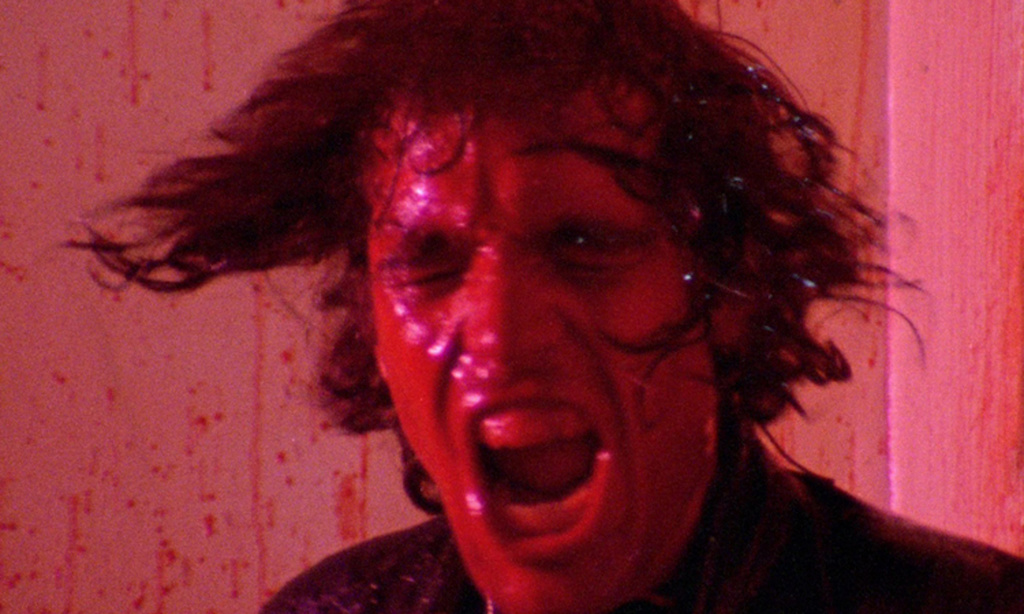
The Driller Killer, (Ferrara’s debut feature in the director’s chair), is no exception, and follows struggling painter, Reno Miller (played by Ferrara), living in New York, as he slowly descends into madness and despair. His crazed mind, unable to contend with the reality of his dire situation, resorts to taking his frustrations and anger out on the streets and onto the homeless and impoverished, wielding his weapon of choice; a power drill.

Growing up in the UK, The Driller Killer had been thrown into the video nasties heap and wouldn’t see the light of day through legal means until 1999, when a cutdown version would make its way into the video rental market. It was shortly after this that I would finally get to watch the movie, which by now was so heightened in my mind as a dark and distressing feature, that I went in, fully wanting to be shook to the core and have my mind inflicted with some gross-out gore to the extreme.

So I huddled up in my horror haven at the time, a labyrinth of blood curdling wonder that hosted the classics and the downright disturbing delights, and let The Driller Killer wash over me. I have to admit my initial reaction was underwhelming, as I was confronted with a mish mash of a storyline, jumbled up with sparse and confusing dialogue, combined with really long jam sessions from the band living in the neighbouring apartment. True, when Reno lost control, it was suitably unhinged and the SFX were effective enough with its crimson palette oozing from his victims. The trouble was, I found the fractured nature of the narrative too jarring and the abrupt conclusion a little too complex. And yet somehow, something hung in my mind and stuck there to this day.

Abel Ferrara playing Reno Miller drenched in blood from the movie The Driller Killer

So, with its 40th Anniversary upon us, I thought that now would be a good time to dust down the dvd that was immersed in my horror film collection and take a look at The Driller Killer once again.

True, the same old flaws are apparent, but rather than seem like blemishes within the celluloid frame, they become moments of wonder, as we journey with Reno into his state of madness and social decay. I’d like to think that my older, wiser mind appreciates the disconnected and fractured storyline as a symbol of the human psyche, but it may also be that I too have cracked in the realms of reality and find that I am able to connect with the artists plight a little more, (although thankfully I haven’t picked up the nearest power tool to reek my vengenace on the world…yet).

The moments of rage are deliberately awkward and messy, which adds to the raw energy that Ferrara brings to his work, and by the time we reach the climax, the audience is suddenly snapped out of the macabre fantasy. This is something of an unpopular choice these days, as often audiences like to have their narrative sewn up and explained, but I prefer the ambiguity of the films’ closure, leaving us to wallow in the wake of Reno’s rampage. This feeling of desolation that hangs in the air is a stark reminder, that society may have come a long way, but we still have no direct answer to aid anyone with mental deficiencies. We’re quite content to let their actions go by and merely act as spectators, as long as it affects the impoverished members of society, but the moment it has an impact on someone deemed of class, then we feel appalled and react, which is why it seems fitting that Ferrara denies the audience the chance to witness Carol’s outcome. It’s for this reason that I feel The Driller Killer still resonates today and is a must-watch on any fan of the horror genre. It maybe a little rough and raw compared with some of the polished movies of today, but this only makes the impact of the film a much greater one.

  • Saul Muerte

Retrospective: The Blair Witch Project

25 Friday Jan 2019

Posted by surgeons of horror in retrospective

≈ 1 Comment

Tags

Blair Witch, Daniel Myrick, Eduardo Sanchez, found footage, Heather Donahue, Joshua Leonard, michael c williams, the Blair Witch Project

Transport yourself back twenty years and cast yourself in an auditorium draped with red velvet curtains and matching carpet where the unwanted popcorn had stuck to the floor and would crunch beneath your feet.

This is where I found myself ahead of this massively hyped movie that had allegedly had audiences throwing up in the aisles.

Was this a reaction to the events in the movie or from the hand-held cinematography that the filmmakers Daniel Myrick and Eduardo Sanchez were looking to achieve in order to capture the old documentary style filming you often saw in news reports etc.? What ever it was, Myrick and Sanchez had a lightning in the bottle moment that sent the Internet ablaze while it was still in its infancy, (no other film at this stage had created such a multimedia sensation) and in the process reawakened the found footage genre.

The twenty-year-old version of myself was determined not to buy into the insanity, but as I sat as the lights went down anticipating an awakening of my own. To be scared, thrilled, and gripped in fear at the events that would flow before me. This twenty-year-old was also incredibly stubborn. I beckoned, nay, willed the filmmakers to push my senses to the limit. Yes, I was disorientated, but not nearly to the degree that I had been led to believe, and I found my excitement transported to fury at these whining Americans that were lost in the woods.

To say that I was underwhelmed was a gross understatement.

And yet, something kept niggling away at me beneath the surface.

I was aware of the impact that this little movie had had on the horror industry, an industry that I loved so much. And numerous friends of mine would often talk about the impact that it had on them over the years. Was I wrong to have scoffed at the film so readily? Was there more to this movie than just your average run-of-the-mill found-footage horror?

Films of similar ilk like Paranormal Activity, or Cloverfield would come and go and not resonate as deeply, with the exception of Jaume Balagueró’s [Rec]. It was safe to say that I wasn’t a fan of this sub-genre.

It was only upon a few years back in preparation ahead of Adam Wingard’s sequel Blair Witch that I gathered the team together for a podcast on the franchise. It was during this time that I began to appreciate the making of this movie.

Listen to The Surgeons of Horror podcast:

The Blair Witch franchise


As The Blair Witch Project celebrates its 20th Anniversary, I’ve come to realize that it is a cracking example of experimental horror at its finest. The techniques that Myrick and Sanchez use in both production and marketing were exemplary, and should be applauded.

Whilst some could argue that it feels like a student film in places, (which let’s face it, it was) the direction would mark a new approach in film-making moving forward and open the door for similar stylized films.

With a 32-page screenplay and a trio of as-yet undiscovered actors (Heather Donahue, Michael C. Williams, and Joshua Leonard) in their crew, (some having to double-up as camera crew) they ventured out into the wooded terrain in Maryland to carry out their vision.

The aim was to guide the actors through pre-decided marks throughout the woods, where they would improvise around the screenplay, whilst adapting to each action as it was given to them. The effect was a naturalistic piece of drama, which made the plight of our trio all the more gritty and realistic.

It essentially became a test of endurance on the three actors, as they were deprived of food and disorientated by lack of sleep.

Throw in the shock ending, which was initially asked to be reshot by Artisan Entertainment for its confusion, only to end up in the final cut. It’s a good job too, as the ending is both startling and unsettling leaving the viewer hollow inside. Any movie that can garner such a reaction from its audience will always be held highly in these writers’ eyes.

The final mark of brilliance though comes in the marketing. With so much back-story written, it became an online producer’s playing field to create and sell the ‘history’ and cement the believability further. In an age where the scope of the internets online marketing capability had yet to be explored, and the mythology behind the Blair Witch was catapulted into the mainstream, coupled with the mockumentary, Curse of the Blair Witch, and the book, The Blair Witch Project: A Dossier.

There’s plenty of good reason that The Blair Witch Project should and still be deemed a horror movie classic, and twenty years on, it is a testament to clever filmmaking, marketing, and that special lightning in bottle magic, that only comes around every so often.

Listen to The Surgeons of Horror podcast:

Director Eduardo Sanchez interview

  • Saul Muerte

Retrospective: Saw – 15 years on

19 Saturday Jan 2019

Posted by surgeons of horror in retrospective

≈ Leave a comment

Tags

Cary Elwes, James Wan, Jigsaw, Leigh Whannell, Lionsgate, psychological thriller, Saw, Sundance Film Festival, Tobin Bell, Twisted Pictures

Strip away all the torture devices and wash away all the blood-soaked, gore-infested mayhem that the franchise has become synonymous for and some of you maybe questioning what’s left? But with James Wan and Leigh Whannell’s original film that kick-started the whole Jigsaw frenzy the audience were treated to an exercise in constrained drama, flickered with tense, psychological elements that quite rightly projected the writer and director partnership into the Hollywood limelight as a result.

Part of Saw’s brilliance comes from the low-budget constraints that were placed on the making of the movie. Once the creative duo realised that the cheapest way to shoot a movie would be to have two actors in one room, this germ of an idea developed into the final product and the birth of Jigsaw and his twisted vision of justice.

Apparently the Jigsaw character began when Whannell feared that he had a brain tumour and pondered the notion of what he would do or need to do if he were only to have a year or two to live. This was the leaping point into the dark recesses of Jigsaws’ mind.

It’s this tightly shot, well structured movie that allowed Wan to develop his technique for manipulating lights and shadow to trick and deceive the audiences’ eye. He would harness this skill further with his sophomore film Dead Silence before working on his masterpiece, The Conjuring.

It wasn’t that easy getting budget for the movie though. With no luck gaining interest from their homeland in Australia, Wan and Whannell tried to taut their project in Los Angeles, but even then had to shoot a short feature to provide a proof of concept before getting any decent interest.
You have to applaud their bravado to. So intent were they in getting their vision made, they insisted on having both directing and acting duties respectively. In the end it took newly formed production outfit, Twisted Pictures to give them their desires and have been behind every Saw movie since.

So with one half of the acting team already cast in Whannell as the photographer with a complex past, the team needed a decent actor opposite him as Dr. Lawrence Gordon, a Doctor with an equally dubious past. In steps Cary Elwes, normally associated with his comical roles but proved worthwhile in this serious performance, more than holding his own and providing gravitas to the scenario.

The masterstroke comes with the casting of Tobin Bell as Jigsaw aka John Kramer, who simply owns his role and has propelled himself into horror movie history with his performance as the disturbed yet brilliant mind behind the various traps and tortuous devices throughout all the Saw movies.

So with the narrative played out with Adam and Dr. Lawrence wake up in a bathroom, chained to the floor with nothing but a corpse, a revolver, and a tape recorder to guide them on a journey that will test their metal and push them to the very limits of their intellect and perception.

Saw would be released in front of a Sundance audience for its initial premiere where Lionsgate picked up the distribution rights and the rest is history.

Since then, Wan has established a firm career in the director’s chair to the point hat he has been given the chance to give DC movies some decent crowd with Aquaman, and Whannell more recently carved his own success with Upgrade.

So for those who may have been apprehensive about checking out the origins of Jigsaw, before the bloodbath began, I’d recommend going back to the original source as you maybe pleasantly surprised by this outing with a clever, psychological thriller that is an example of how to shoot a low-budget movie with a lot of smarts and a decent narrative to keep the audience hooked.

It still stands strong 15 years on and my bet is that this will still be the case in another 15 years.

Newer posts →

Subscribe

  • Entries (RSS)
  • Comments (RSS)

Archives

  • September 2026
  • August 2026
  • July 2026
  • June 2026
  • May 2026
  • April 2026
  • March 2026
  • February 2026
  • January 2026
  • December 2025
  • November 2025
  • October 2025
  • September 2025
  • August 2025
  • July 2025
  • June 2025
  • May 2025
  • April 2025
  • March 2025
  • February 2025
  • January 2025
  • December 2024
  • November 2024
  • October 2024
  • September 2024
  • August 2024
  • July 2024
  • June 2024
  • May 2024
  • April 2024
  • March 2024
  • February 2024
  • January 2024
  • November 2023
  • October 2023
  • September 2023
  • August 2023
  • July 2023
  • June 2023
  • May 2023
  • April 2023
  • March 2023
  • February 2023
  • January 2023
  • November 2022
  • October 2022
  • September 2022
  • August 2022
  • July 2022
  • June 2022
  • April 2022
  • March 2022
  • February 2022
  • January 2022
  • December 2021
  • November 2021
  • October 2021
  • September 2021
  • August 2021
  • July 2021
  • June 2021
  • May 2021
  • April 2021
  • March 2021
  • February 2021
  • January 2021
  • December 2020
  • November 2020
  • October 2020
  • September 2020
  • August 2020
  • July 2020
  • June 2020
  • May 2020
  • April 2020
  • March 2020
  • February 2020
  • January 2020
  • December 2019
  • November 2019
  • October 2019
  • September 2019
  • July 2019
  • June 2019
  • May 2019
  • April 2019
  • March 2019
  • February 2019
  • January 2019
  • December 2018
  • November 2018
  • October 2018
  • September 2018
  • August 2018
  • July 2018
  • June 2018
  • May 2018
  • April 2018
  • March 2018
  • February 2018
  • January 2018
  • December 2017
  • November 2017
  • October 2017
  • September 2017
  • August 2017
  • July 2017
  • June 2017
  • May 2017
  • April 2017
  • March 2017
  • February 2017
  • January 2017
  • December 2016
  • November 2016
  • October 2016
  • September 2016
  • August 2016
  • July 2016
  • June 2016
  • May 2016

Categories

  • A Night of Horror Film Festival
  • Alien franchise
  • Alliance Francaise French Film Festival
  • Australian Horror
  • Best Movies and Shows
  • Competition
  • dark nights film fest
  • episode review
  • Flashback Fridays
  • Friday the 13th Franchise
  • Full Moon Sessions
  • Halloween franchise
  • In Memorium
  • Interview
  • japanese film festival
  • John Carpenter
  • killer pigs
  • Library of the Occult
  • midwest weirdfest
  • MidWest WierdFest
  • MonsterFest
  • movie article
  • movie of the week
  • Movie review
  • New Trailer
  • News article
  • podcast episode
  • podcast review
  • press release
  • retrospective
  • Rialto Distribution
  • Ring Franchise
  • series review
  • Sounds of Horror
  • Soundtracks
  • Spanish horror
  • sydney film festival
  • Sydney Underground Film Festival
  • The Blair Witch Franchise
  • the conjuring franchise
  • the evil dead franchise
  • The Exorcist
  • the fly
  • The Howling franchise
  • Top 10 list
  • Top 12 List
  • top 13 films
  • Trash Night Tuesdays on Tubi
  • umbrella entertainment
  • Uncategorized
  • Universal Horror
  • Wes Craven
  • wes craven's the scream years

Meta

  • Create account
  • Log in

Blog at WordPress.com.

  • Subscribe Subscribed
    • Surgeons of Horror
    • Join 226 other subscribers
    • Already have a WordPress.com account? Log in now.
    • Surgeons of Horror
    • Subscribe Subscribed
    • Sign up
    • Log in
    • Report this content
    • View site in Reader
    • Manage subscriptions
    • Collapse this bar
Loading Comments...