Tags
There are films that disturb through spectacle… and then there are those that unsettle by quietly dismantling our assumptions. The Little Girl Who Lives Down the Lane, directed by Nicolas Gessner, belongs firmly in the latter category — a restrained, deeply disquieting chamber piece that cloaks transgression, autonomy, and moral ambiguity beneath the veneer of youthful innocence.
It is a film that asks a simple question:
What happens when a child refuses to be powerless?
Jodie Foster’s Controlled Enigma
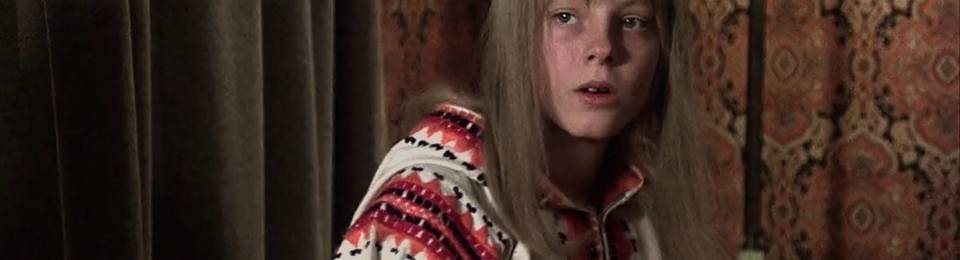
At the centre of it all is Jodie Foster, delivering a performance of astonishing composure and intelligence. As Rynn Jacobs, Foster does not play vulnerability in the expected sense. Instead, she constructs a character defined by precision, self-possession, and emotional restraint.
Rynn is not naïve. She is observant, calculating, and acutely aware of the world’s intrusions. Foster imbues her with a stillness that is both captivating and unnerving — a young girl who speaks like an adult, thinks like a survivor, and reacts with a logic that feels… slightly off-centre.
It is this ambiguity that makes the performance so compelling.
We are never entirely sure whether to protect her… or fear her.
A House Built on Secrets
The film’s setting — a quiet New England home by the sea — becomes a space of both sanctuary and concealment. Gessner frames the house not as a place of comfort, but as a carefully maintained illusion, one that Rynn must constantly defend against outside intrusion.
That intrusion comes in the form of neighbours who cannot accept what they do not understand.
The narrative tension is not driven by overt horror, but by social pressure — the creeping insistence that something is “wrong,” that the natural order has been disrupted, and must be corrected.
Martin Sheen and the Face of Entitlement
Enter Martin Sheen as Frank Hallet — a character who embodies a far more recognisable form of menace.
Sheen’s performance is quietly repellent. Frank is not a monster in the traditional sense; he is something far more insidious — entitled, invasive, and disturbingly comfortable in his own predatory behaviour. His interactions with Rynn carry an undercurrent of unease that the film never overstates, but never allows us to ignore.
In many ways, Frank represents the true horror of the film:
the adult world’s assumption of control over the young, the vulnerable, the different.
Childhood Without Safeguards
What makes The Little Girl Who Lives Down the Lane so controversial — and so enduring — is its refusal to frame childhood in sentimental terms.
Rynn exists outside the structures designed to contain and protect children. There are no parents, no guardians, no safety nets. What remains is a stark exploration of autonomy — and the lengths one might go to preserve it.
The film does not offer easy moral positioning. It does not condemn outright, nor does it fully endorse. Instead, it lingers in the uncomfortable space between justification and transgression.
Atmosphere of Quiet Dread
Gessner’s direction is deliberately restrained. There are no grand gestures, no overt shocks. The horror is psychological, cumulative, and deeply intimate.
Silences stretch. Conversations carry double meanings. The camera lingers just long enough to suggest that something is always being concealed.
It is a film that trusts its audience to feel the tension rather than be instructed by it.
A Study in Moral Ambiguity
Perhaps the film’s greatest strength lies in its ambiguity. Rynn is neither victim nor villain in any conventional sense. She is something more complex — a figure shaped by circumstance, responding with a logic that is both understandable and deeply unsettling.
The question is not whether her actions are right or wrong, but whether the world that forces those actions is any less culpable.
The Prognosis:
The Little Girl Who Lives Down the Lane is a haunting, quietly provocative exploration of autonomy, intrusion, and the fragile boundary between innocence and control.
Anchored by a remarkable performance from Jodie Foster and an unsettling turn from Martin Sheen, it remains a film that lingers — not through shock, but through implication.
A chillingly composed study of a child who refuses to be contained, and the world that cannot accept her independence.
- Saul Muerte

