
Tags
1960s horror, 1960s retrospective, john cassavetes, mia farrow, occult, roman polanski, rosemarys baby, ruth gordon
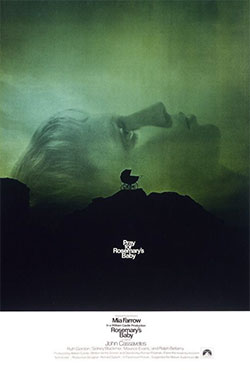
Roman Polanski’s Rosemary’s Baby is not just a horror film; it’s a cultural milestone. Based on Ira Levin’s 1967 novel, this psychological horror masterpiece marked a significant turning point in Polanski’s career and redefined the genre with its chilling subtlety, riveting performances, and hauntingly resonant themes.
By the time Polanski directed Rosemary’s Baby, he was already an established filmmaker with successes like Knife in the Water and Repulsion. However, it was this adaptation of Ira Levin’s novel that solidified his reputation as a master storyteller capable of blending psychological depth with unnerving horror. Polanski’s ability to craft a narrative that feels at once intimate and epic is on full display, with every frame of Rosemary’s Baby pulsing with dread.
The film’s slow-burn tension, its deliberate pacing, and its ability to turn the mundane into the menacing were groundbreaking in 1968. Polanski took Levin’s chilling story and elevated it, crafting a tale of paranoia and betrayal that unfolds within the claustrophobic confines of a New York City apartment building.
At the heart of the film is Mia Farrow’s unforgettable performance as Rosemary Woodhouse. Farrow’s transformation from a hopeful, naïve young wife to a terrified, isolated woman is nothing short of mesmerising. Her fragile vulnerability and determination make Rosemary one of the most iconic characters in horror history.
John Cassavetes delivers a complex performance as Guy Woodhouse, Rosemary’s ambitious husband whose moral compromises set the story’s sinister events into motion. The chemistry between Farrow and Cassavetes heightens the emotional stakes, making the betrayal at the heart of the story all the more devastating.
Ruth Gordon’s turn as the eccentric yet menacing Minnie Castevet earned her a well-deserved Academy Award for Best Supporting Actress. Gordon’s portrayal is equal parts comedic and chilling, capturing the bizarre allure of the seemingly harmless neighbour whose sinister intentions are gradually revealed.
Rosemary’s Baby explores themes that were both timely and timeless. The 1960s were a time of cultural upheaval, and the film’s undercurrents of paranoia and societal control mirrored the anxieties of the era.
- Women’s Liberation: The film can be seen as a commentary on women’s autonomy—or lack thereof. Rosemary’s body becomes a battleground, controlled and manipulated by those around her. The struggle for agency is as relevant today as it was in 1968.
- Paranoia and Isolation: The film’s creeping sense of distrust reflects the fear of conspiracies, both personal and societal.
- Catholicism and the Occult: Religious imagery and themes of good versus evil are woven throughout, presenting a chilling exploration of faith and its darker implications.
The film’s primary location, the ominous Bramford (in reality, the Dakota building on Manhattan’s Upper West Side), is as much a character as Rosemary and Guy. The building’s Gothic architecture, shadowy interiors, and foreboding atmosphere provide the perfect backdrop for the unfolding terror. New York’s bustling streets contrast with the eerie insularity of the Woodhouses’ world, amplifying the sense of Rosemary’s entrapment.
From its release, Rosemary’s Baby has remained a touchstone in popular culture. Krzysztof Komeda’s haunting score, particularly “Sleep Safe and Warm,” is a chilling lullaby that lingers in the mind long after the credits roll. The film’s imagery, from Rosemary’s pixie haircut to the chilling final scene, has been referenced and parodied countless times, cementing its status as a cultural icon.
Polanski’s masterful direction, the stellar cast, and Levin’s gripping source material combined to create a horror film that transcends its genre. Its exploration of power, betrayal, and fear remains as relevant today.
Rosemary’s Baby is a masterpiece of psychological horror, a film that paved the way for a new kind of storytelling in the genre. With its pitch-perfect performances, evocative themes, and Polanski’s impeccable direction, it stands as one of the most influential and enduring films of all time. Its dark allure continues to captivate audiences, ensuring that we’ll be praying for Rosemary—and her baby—for generations to come.
- Saul Muerte
 Surgeons of Horror