
Tags
dan hedaya, david lynch, justin theroux, laura harring, melissa george, naomi watts, robert forster
There are films that ask to be understood… and then there are those that refuse comprehension entirely, existing instead as emotional experiences — fragments of dream, trauma, desire, and identity colliding in ways that feel both alien and deeply personal. Mulholland Drive is one such film.
Twenty-five years on, David Lynch’s masterpiece remains less a narrative than a state of being — a cinematic labyrinth where Hollywood fantasy curdles into psychological horror, and where identity itself becomes fluid, fractured, and ultimately unknowable.
But to understand Mulholland Drive is to understand Lynch — and to understand Lynch is to confront the strange, persistent horror that runs through every frame of his work.
At first glance, Mulholland Drive presents itself as a dream of Hollywood: bright-eyed optimism, mystery, possibility. Betty arrives in Los Angeles with ambition and innocence, stepping into a world that promises transformation.
But Lynch has never been interested in dreams as escapism.
He is interested in what lies beneath them.
The film slowly reveals Hollywood not as a place of creation, but of consumption — a machine that reshapes identity, devours aspiration, and leaves behind fragments of those who fail to survive its illusions.
The horror here is not external.
It is systemic.
It is internalised.
Lynch’s cinema consistently returns to one core idea: that identity is not fixed, but mutable, unstable, and vulnerable to collapse.
In Mulholland Drive, this manifests through doubling, mirroring, and narrative disintegration. Characters shift. Names change. Reality folds in on itself.
This is not a puzzle to be solved, but a psychological truth to be felt.
And it echoes across Lynch’s filmography.
The Lynchian Horror: A Cinema of Unease
To trace the horror in Lynch’s work is to recognise that he rarely operates within the genre’s traditional boundaries. Instead, he creates a persistent atmosphere of dread, where the familiar becomes alien, and the ordinary is infused with something deeply wrong.
The Monstrous Within
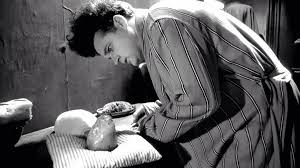
In Eraserhead, Lynch’s debut, horror emerges from the body and the domestic space. Industrial soundscapes, decaying environments, and the grotesque “child” create a vision of parenthood as existential nightmare.
This is not horror imposed from outside.
It is horror generated by existence itself.
Violence Beneath the Surface
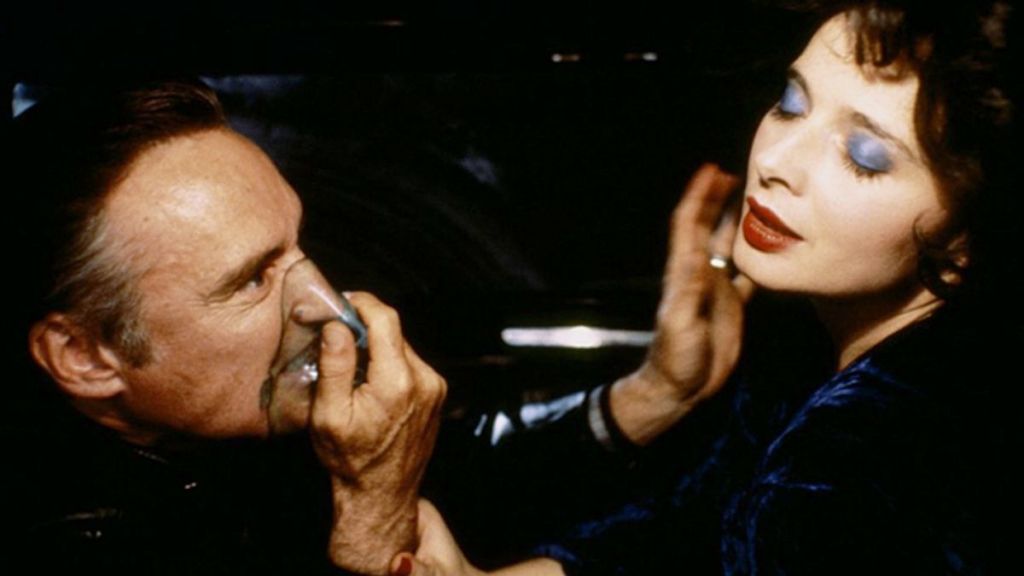
With Blue Velvet, Lynch peels back the manicured lawns of suburbia to reveal a world of sexual violence, control, and psychosis.
The image of the severed ear is not just shocking — it is symbolic, an entry point into a hidden reality where civility is a thin veneer over brutality.
Here, horror is the truth behind the façade.
Identity and Obsession
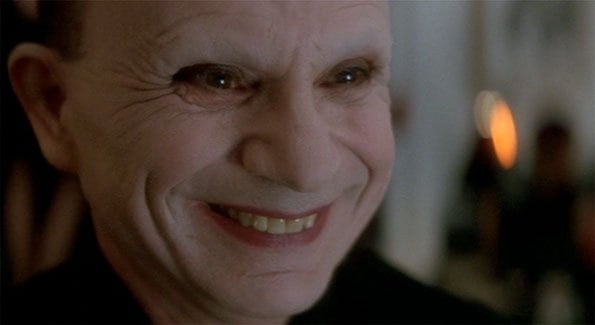
In Lost Highway, Lynch fully embraces narrative fragmentation, presenting identity as something that can be shed, reformed, and re-experienced.
The film’s shifting protagonists and looping structure create a sense of existential dislocation — a horror rooted in the idea that the self is not stable, but infinitely malleable.
Dreams as Reality
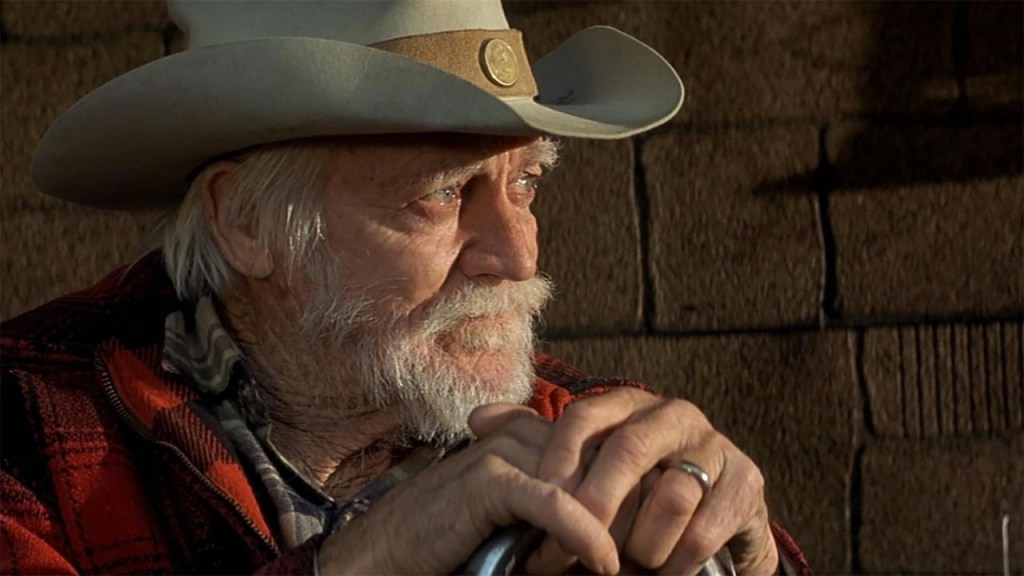
Even in something as ostensibly straightforward as The Straight Story, Lynch’s gentlest work, there is an undercurrent of melancholy and reflection. It lacks overt horror, yet still engages with themes of mortality, regret, and the passage of time.
It is proof that Lynch’s darkness is not always expressed through fear — but through quiet existential weight.
The Digital Nightmare
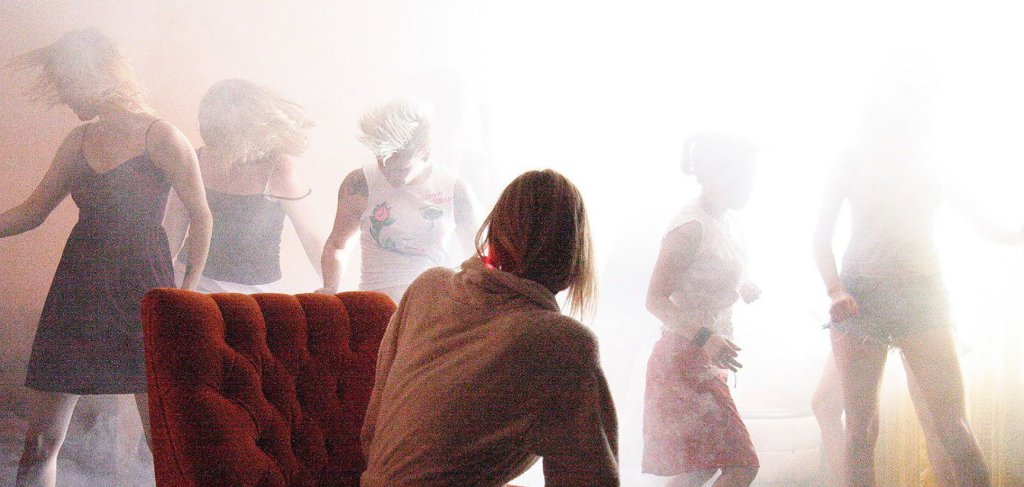
With Inland Empire, Lynch pushes his approach to its most abstract extreme. Shot on digital video, the film feels unstable, fragmented, and deeply disorienting — a descent into pure subconscious chaos.
Here, horror is no longer metaphorical.
It is experiential.
Returning to Mulholland Drive
What makes Mulholland Drive the apex of Lynch’s work is its ability to synthesise all of these elements:
- The bodily unease of Eraserhead
- The hidden violence of Blue Velvet
- The fractured identity of Lost Highway
- The emotional melancholy of The Straight Story
- The abstraction of Inland Empire
All coalesce into a film that is at once beautiful and devastating.
And then there is the Club Silencio sequence — a moment that encapsulates Lynch’s entire philosophy:
“No hay banda.”
There is no band.
There is no reality.
There is only illusion.
And yet… the emotion is real.
Ultimately, Mulholland Drive is a horror film — not in the conventional sense, but in its understanding that dreams can destroy us.
The terror lies in:
- Wanting something too much
- Losing yourself in the pursuit of it
- And realising, too late, that the dream was never real
It is a film about failure, identity, and the crushing weight of expectation — themes that resonate far beyond Hollywood.
The Lynch Legacy
Across his body of work, David Lynch has crafted a cinema that is unmistakably his own — a language of sound, image, and emotion that bypasses logic and speaks directly to the subconscious.
His horror is not about monsters.
It is about the instability of reality itself.
And in that sense, it is far more unsettling.
The Prognosis:
Mulholland Drive remains a towering achievement — a film that defies interpretation while demanding engagement, that seduces even as it unsettles.
A hypnotic, devastating masterpiece that encapsulates the genius of David Lynch and the uniquely Lynchian horror that continues to haunt cinema.
This is the girl.
And this is the dream.
- Saul Muerte

