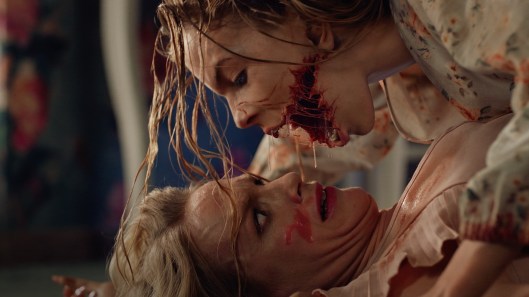
House of Terrors (1965) – A Unique, Atmospheric Spin on The Haunting

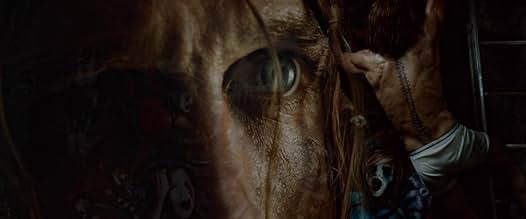
Hajime Satô’s House of Terrors (Kaibyô Noroi no Yakata) is an intriguing entry into the haunted house genre, offering a distinctive Japanese take on the themes explored in Robert Wise’s The Haunting (1963). While it doesn’t quite reach the heights of its inspiration, House of Terrors manages to deliver an eerie, atmospheric experience that will appeal to fans of slow-burn horror.

The film follows a grieving widow who inherits a secluded mansion after her husband’s mysterious death. Accompanied by her maid, she soon discovers that the mansion harbours vengeful spirits, including that of her late husband. This setup, while familiar, is given a fresh twist through the lens of Japanese folklore and cultural nuances, which add layers of intrigue to the unfolding mystery.

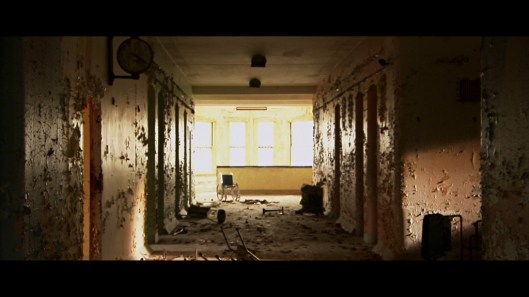
One of the film’s strongest aspects is its use of atmosphere. Satô skillfully crafts a sense of dread, utilising the mansion’s shadowy corridors and haunting silence to build tension. The cinematography, with its unsettling angles and effective use of light and shadow, is clearly influenced by The Haunting. However, House of Terrors injects its own flavor, with a more surreal and dreamlike quality that distinguishes it from its Western counterparts.

The pacing, while deliberately slow, serves to heighten the sense of unease. House of Terrors takes its time to unravel its story, allowing the viewer to sink into the eerie world it creates. While this approach might test the patience of some viewers, it also rewards those who appreciate a more measured build-up. The climax, though not as explosive as one might hope, is still satisfying in its own way, offering a resolution that is both haunting and thought-provoking.

The performances are solid, if not particularly memorable. The cast does a commendable job with the material, especially given the film’s focus on atmosphere over character development. The widow’s descent into fear and paranoia is portrayed with subtlety, and while the characters might not be as fully fleshed out as one would like, they serve their purpose within the narrative.

What sets House of Terrors apart is its unique blend of Western and Eastern horror elements. The film’s ghostly apparitions and cursed mansion are classic horror tropes, but the way Satô infuses them with Japanese cultural motifs and folklore gives the film a distinct identity. This cross-cultural approach adds an extra layer of interest, particularly for viewers familiar with the genre.

However, House of Terrors is not without its flaws. The slow pacing, while effective in building atmosphere, can also feel a bit meandering at times. Some scenes stretch on longer than necessary, which can dilute the tension rather than amplify it. Additionally, the film’s reliance on atmosphere means that it occasionally sacrifices narrative coherence, leaving certain plot points underdeveloped.

Despite these shortcomings, House of Terrors is an engaging watch, particularly for those who enjoy classic haunted house stories with a twist. It may not achieve the same level of psychological horror as The Haunting, but its atmospheric visuals and unique cultural perspective make it a noteworthy addition to the genre. For fans of Japanese horror and Gothic cinema alike, this film offers a moody, unsettling journey into the supernatural.

  • Saul Muerte
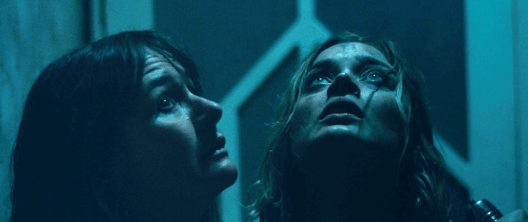
Saint Clare (2024) – Promising Cast, Unbalanced Execution

Tags

, , , , ,

Saint Clare, directed by Mitzi Peirone, comes with a premise that immediately piqued my interest—blending psychological tension with the religious undertones of its titular character, Clare Beeker. While the film boasts a notable cast, including Bella Thorne in the lead role, along with the familiar faces of Ryan Phillippe and Rebecca De Mornay, it ultimately struggles to find its footing, leaving much of its potential untapped.

Let’s start with Bella Thorne. I’ll admit, she’s not an actor I typically connect with on screen, as her performances often come across as lacking emotional depth. However, in Saint Clare, she does a decent job portraying the enigmatic and haunted Clare Beeker. There’s a fragility to her portrayal that occasionally breaks through, and I found myself more engaged with her performance than I expected to be. That said, there are still moments where her character feels distant and underdeveloped, which keeps the audience from fully investing in Clare’s internal turmoil. It’s as though she’s on the cusp of something more profound but never quite reaches it.

The film also brings back Ryan Phillippe and Rebecca De Mornay, which is a pleasant surprise for anyone who’s missed seeing these two on screen. Phillippe plays his role competently, though there’s not much for him to work with. De Mornay, meanwhile, brings her usual grace and presence, but like Phillippe, her character is underutilized, leaving me wanting more from both actors. Their presence feels more like a nostalgic nod than an essential component of the story.

The true standout, however, is Frank Whaley. Despite being criminally underused, Whaley steals every scene he’s in, offering a refreshing balance between reality and fantasy. His performance adds a much-needed layer of complexity to a film that often teeters on the edge of surrealism but never fully commits. Whaley’s ability to walk the fine line between grounded reality and unsettling fantasy suggests that Saint Clare could have leaned further into its psychological aspects, using his character as a bridge between the two worlds.

Unfortunately, the film’s execution is where things start to falter. While there are moments that hint at something deeper—particularly with its exploration of Clare’s fractured psyche and the eerie atmosphere surrounding her—the pacing is uneven, and the script lacks focus. What could have been an intense exploration of faith, guilt, and redemption gets bogged down by disjointed storytelling and underwhelming tension. The film never fully grips you in the way it intends to, leaving key plot points feeling unresolved or poorly developed.

Visually, Saint Clare has its moments. There are a few arresting images that play with the boundaries between reality and Clare’s inner world, but the cinematography often feels at odds with the tone. Rather than fully embracing the psychological horror or surrealism that the narrative teases, it settles into a more straightforward drama, which doesn’t quite mesh with the potential lurking beneath the surface.

Saint Clare feels like a missed opportunity. It boasts a capable cast and an interesting premise, but the uneven execution keeps it from being more than a brief curiosity. While Bella Thorne delivers a better performance than usual, and Frank Whaley shines in his limited screen time, the film fails to maintain momentum or dive deep into its more intriguing themes. It’s worth a watch for the cast alone, but Saint Clare ultimately struggles to rise above mediocrity, leaving me wanting more from what could have been a much darker, more compelling tale.

  • Saul Muerte
Catch the screening of Saint Clare at the Sydney Underground Film Festival at Dendy, Newtown.

Screening times and tickets available below:

FRIDAY 13TH SEPTEMBER – 7PM

SATURDAY 14TH SEPTEMBER – 8PM

All You Need is Death (2024) – A Sinister Tune that Loses Its Power

Tags

, , , , , , ,

Paul Duane’s All You Need is Death begins with an enticing premise, steeped in the rich folklore and haunting traditions of Ireland, but as the narrative unfolds, it struggles to maintain the initial tension and promise it sets up. The film, which revolves around a young couple’s discovery of an ancient, taboo folk ballad, dives into themes of love, death, and the dark power of music. While there are moments of disturbing brilliance and an intriguing exploration of Irish mythology, the film ultimately falters in delivering a cohesive or captivating story.

At its core, All You Need is Death is a meditation on the power of music to carry both history and curses through time. The young couple, played with solid commitment by Simone Collins and her co-star Charlie Maher, are collectors of rare folk ballads, drawn into a sinister mystery when they record and translate a forbidden song from the distant past. The weight of the song—carried through generations of women who were forced to bear its cursed legacy—is a compelling idea, and Duane’s vision of an ancient, almost primal force embedded in the music has genuine potential.

The film’s opening scenes are some of its strongest, immersing the audience in the deep, folkloric atmosphere of rural Ireland. There’s a palpable sense of dread and mystery as the couple’s curiosity leads them into darker, more dangerous territory. The exploration of cult-like figures, secret histories, and the uncanny resonance of the song is effective in building tension, and Duane crafts these scenes with an unsettling edge, suggesting that the past is never truly gone—it lingers in the present, carried through cultural artifacts like music.

However, once the initial mystery is established, the film struggles to keep up the momentum. What starts as a fascinating delve into the supernatural and the occult loses its sharpness as the plot meanders, repeating certain ideas without developing them further. While the cursed ballad is an effective metaphor for the way history and trauma are passed down through time, the execution feels drawn out, and the film becomes bogged down in its own mythology. Instead of deepening the intrigue, All You Need is Death falls into a series of repetitive sequences that dampen the initial sense of dread.

Simone Collins is a clear standout in the film, delivering a nuanced performance that captures the slow unraveling of her character’s sanity as the curse takes hold. Her portrayal of a woman caught between the ancient and the modern, the living and the dead, is powerful, and she brings emotional depth to the film even when the script falters. Collins’ ability to convey the psychological toll of the song’s curse elevates the otherwise flat narrative, and her performance alone is worth watching.

The film’s themes of repressed history, particularly in its treatment of women’s voices being both vessels and victims of the curse, resonate on a symbolic level. The idea that the song has been carried through time, forced upon generations of women who had no choice but to bear its weight, is a strong thematic thread, but it’s one that is never fully explored. The horror of being a conduit for something destructive is hinted at but never given the depth it deserves. As the film progresses, these ideas are overshadowed by less compelling plot developments, and the emotional weight of the story is lost in the shuffle.

Duane’s direction is strongest when he leans into the more abstract, mystical aspects of the story. There are visually arresting moments—such as scenes that depict the landscape of Ireland as both beautiful and foreboding, echoing the duality of the song itself—but these moments are too few and far between. The film could have benefitted from a more focused exploration of the ancient, pagan themes it toys with rather than falling into a conventional horror rhythm that feels tired by the time the climax arrives.

All You Need is Death suffers from a lack of narrative drive. While it touches on fascinating ideas—such as the inescapability of history, the power of songlines to carry curses, and the dark side of love—the film doesn’t sustain these themes in a way that keeps the audience engaged. What begins as a chilling and thought-provoking journey into the past becomes a meandering tale that loses its bite.

For a film that promises a lot with its eerie concept, it ultimately leaves much to be desired. All You Need is Death is worth a watch for its themes and some strong performances, particularly from Simone Collins, but it never quite reaches its potential, losing steam before the credits roll.

  • Saul Muerte

All You Need Is Death is currently streaming on Shudder.

La Loba (1965): A Howling Tale of Female Power in Mexican Horror’s Golden Era

Tags

, , , , , , , ,

Mexican cinema has a long and rich tradition of genre films, especially within the realm of horror. From the early days of celluloid, Mexican filmmakers have embraced the macabre, drawing on a rich cultural tapestry of folklore and superstition to create uniquely haunting tales. La Loba (1965) is a film that continues this tradition, though it does so with a particular focus on a female antagonist—a rarity in the male-dominated world of horror cinema at the time. While not a masterpiece, La Loba offers an intriguing glimpse into the evolving landscape of Mexican genre films, and the power of a female lead who embodies both terror and tragedy.

Directed by Rafael Baledón, La Loba is a werewolf tale with a twist. It tells the story of Clarisa (Kitty de Hoyos), a woman cursed with the ability to transform into a wolf. Her struggle with this dark gift is the driving force of the film, as she battles both the monstrous nature within her and the societal forces that seek to control her. Clarisa’s duality—her simultaneous victimhood and villainy—makes her a compelling character, and one that audiences can connect with on an emotional level.

Kitty de Hoyos’ performance as Clarisa is the film’s standout element. She imbues the character with a sense of vulnerability that is rare in horror antagonists, particularly those of the era. Clarisa’s curse is portrayed not just as a physical transformation, but as a deeply psychological burden that isolates her from the world. De Hoyos captures this inner turmoil with nuance, making Clarisa a character who is both feared and pitied.

The film’s focus on a female antagonist is notable within the context of Mexican horror, where women were often relegated to the roles of victims or secondary characters. La Loba breaks this mold by placing a woman at the center of the horror, not as a damsel in distress, but as the source of the terror itself. This inversion of traditional gender roles adds a layer of complexity to the narrative, making La Loba a film that resonates with contemporary audiences as well as those of its time.

However, despite its intriguing premise and strong central performance, La Loba falls short in several areas. The film’s pacing is uneven, with long stretches of exposition that slow down the narrative. The special effects, while ambitious, are dated even by 1960s standards, and the werewolf transformation scenes lack the impact that the story demands. Additionally, the film’s exploration of Clarisa’s inner conflict, while commendable, feels underdeveloped, leaving the audience wanting more depth and resolution.

That said, La Loba is still a significant entry in the canon of Mexican horror. It stands as a testament to the creativity and resourcefulness of Mexican filmmakers, who, despite limited budgets and resources, were able to craft films that left a lasting impact on the genre. La Loba may not be the most polished or frightening werewolf film, but it is a film that dares to tell a different kind of story—one that places a woman’s experience at the forefront of the horror.

The film also fits into a broader movement within Mexican genre cinema during the 1960s, a time when filmmakers were pushing the boundaries of what horror could be. Films like El Espejo de la Bruja (1962) and El Vampiro (1957) laid the groundwork for this exploration of psychological and supernatural horror, and La Loba continues in this vein, albeit with a more intimate, character-driven focus.

La Loba earns its place in the pantheon of Mexican horror not for its scares, but for its willingness to explore the complexities of its female lead. It’s a film that reflects the evolving role of women in horror, both on and off the screen, and it remains a fascinating piece of cinematic history. For fans of Mexican horror and those interested in the genre’s treatment of female characters, La Loba is a film worth revisiting.

  • Saul Muerte

Gothic Gloom with a Glimmer: Barbara Steele Shines in the Shadowy Terror Creatures From the Grave (1965)

Tags

, , , , , , ,

In the annals of 1960s Italian horror, Terror Creatures From the Grave (1965) stands as a lesser-known but intriguing entry that showcases the genre’s atmospheric strengths while grappling with its narrative shortcomings. Directed by Massimo Pupillo (under the pseudonym Ralph Zucker), the film leans heavily on the eerie charm of its leading lady, Barbara Steele, whose presence alone elevates what might otherwise be a forgettable B-movie into something more memorable.

The film’s plot revolves around a lawyer, played by Walter Brandi, who is summoned to a decaying estate to settle the affairs of a recently deceased man. However, the story quickly descends into a gothic nightmare as the restless spirits of plague victims are unleashed, seeking vengeance on those who wronged them. While the setup is ripe with potential for terror, the execution falls short, hampered by a convoluted script and pacing that drags in key moments.

What Terror Creatures From the Grave lacks in coherent storytelling, it attempts to make up for with its unsettling atmosphere. The film is awash in the gloomy aesthetics that Italian horror was becoming known for—fog-shrouded cemeteries, crumbling mansions, and an omnipresent sense of doom. Yet, these elements feel more like a collage of genre staples rather than a cohesive vision, leaving the viewer with the impression that the film is more style than substance.

Barbara Steele, by this point already a recognized face in the horror genre, carries the film with her haunting beauty and enigmatic screen presence. Her role as the mysterious Cleo Hauff is one of the film’s saving graces, as she effortlessly embodies the duality of allure and menace that Italian horror so often explores. Despite the film’s shortcomings, Steele’s performance adds a layer of intrigue that keeps the audience engaged, even as the plot meanders.

By the mid-1960s, Italian horror was beginning to carve out a niche for itself, with directors like Mario Bava leading the charge. Terror Creatures From the Grave is a testament to the growing influence of Italian cinema on the horror genre, even if it doesn’t reach the heights of its contemporaries. The film’s reliance on gothic horror tropes, combined with the increasing prominence of supernatural elements, reflects the genre’s evolution during this period.

Terror Creatures From the Grave is a film that will likely appeal more to die-hard fans of Barbara Steele and Italian horror completists than to the casual viewer. Its atmosphere and Steele’s performance are worth noting, but the film’s overall mediocrity prevents it from being a standout in the genre. As Italian horror continued to rise throughout the 1960s, this film serves as a reminder that not every entry can be a classic, but even the lesser-known titles contribute to the rich tapestry of the genre.

  • Saul Muerte

Repulsion (1965): Polanski’s Unsettling Descent into Madness and the Monsters of the Mind

Tags

, , ,

Roman Polanski’s Repulsion (1965) is a masterclass in psychological horror, a film that, even decades later, remains a deeply disturbing exploration of fear, repression, and the dark corners of the human psyche. As Polanski’s sophomore directorial feature, Repulsion has earned its place as one of the most unsettling films in cinema history, despite the director’s own ambivalence toward it. What emerges is a terrifying, claustrophobic journey into madness, supported by exquisite cinematography and innovative sound design that work in tandem to create an atmosphere of unrelenting dread.

The film centers on Carol Ledoux, played with haunting precision by Catherine Deneuve, a young and repressed woman living in London with her sister. Left alone in their apartment, Carol’s already fragile mental state begins to unravel, leading her down a path of violent hallucinations and murderous impulses. Polanski’s portrayal of Carol’s descent into madness is both sympathetic and horrifying, a delicate balance that makes Repulsion as emotionally impactful as it is terrifying.

Polanski’s direction is nothing short of brilliant, transforming the mundane setting of a London flat into a nightmarish landscape where walls crack and hands emerge, where every creak and groan is imbued with menace. The apartment itself becomes a character in the film, its oppressive, decaying interior mirroring Carol’s deteriorating mind. The confined space amplifies her isolation and paranoia, trapping both her and the audience in a relentless downward spiral.

At the heart of Repulsion is an unflinching critique of toxic masculinity and the pervasive fear it instills. Carol’s interactions with men—from her lecherous suitor to her sister’s overbearing boyfriend—are marked by a palpable sense of discomfort and dread. These encounters, though often understated, serve as the catalyst for Carol’s breakdown, revealing the corrosive impact of living in a world where male dominance is both omnipresent and suffocating.

Deneuve’s performance is a tour de force, capturing Carol’s fragile beauty and internal torment with a subtlety that makes her unraveling all the more terrifying. Her portrayal of Carol’s fear and repression is so visceral that it transcends language, relying on physicality and expression rather than dialogue to convey her inner turmoil. It’s a performance that lingers long after the film has ended, leaving an indelible mark on the viewer.

The film’s technical aspects further elevate its nightmarish quality. Gilbert Taylor’s cinematography is stark and unyielding, using deep shadows and disorienting angles to convey Carol’s fractured reality. The camera often lingers on empty spaces or zooms in on seemingly innocuous details, heightening the sense of unease. The sound design, too, plays a crucial role, with everyday noises distorted into something monstrous—whether it’s the ticking of a clock or the sound of a faucet dripping. The recurring use of sound, or the lack thereof, becomes a psychological tool, plunging the audience deeper into Carol’s disturbed mind.

Repulsion is also a study in sexual repression, with Polanski meticulously dissecting the ways in which societal expectations and personal traumas collide to devastating effect. Carol’s increasing detachment from reality is intertwined with her fear of sexual intimacy, a fear that manifests in grotesque hallucinations and violent outbursts. Polanski doesn’t shy away from the horror of this repression, instead forcing the viewer to confront its devastating consequences head-on.

Repulsion stands as one of Polanski’s most disturbing works, a film that crawls under the skin and stays there. It may not be Polanski’s favorite among his own films, but it is undoubtedly one of his most powerful. Repulsion is a harrowing examination of the human psyche, where fear, repression, and isolation culminate in a chilling portrait of madness. It’s a film that demands to be seen, not just for its groundbreaking technical achievements, but for its unflinching portrayal of the darkness that can consume us all.

  • Saul Muerte

The Demon Disorder (2024) – A Mixed Bag of Revenge and Reckoning

Tags

, , , , ,

The Demon Disorder by Steven Boyle is a horror film that taps into the darker side of family dynamics, exploring themes of toxic masculinity, repressed secrets, and supernatural revenge. While the film has some standout moments, particularly in its special effects, it ultimately falls short of delivering a fully cohesive or compelling experience.

The story revolves around the Reilly family, with the patriarch, played by John Noble, casting a long shadow even after his death. His three estranged sons—Graham (Christian Willis), Jake (Dirk Hunter), and Phillip (Charles Cottier) — are drawn back to their father’s garage, the site where they uncover a buried family secret that unleashes a vengeful force from beyond the grave. As the brothers confront their past and the legacy of their father, they’re forced to reckon with the toxic masculinity that has defined their lives.

One of the film’s strongest elements is its special effects. Boyle clearly knows how to create a sense of dread and terror, with the supernatural elements being both visually striking and unsettling. The scenes of the vengeful spirit manifesting in the garage are genuinely creepy, and the practical effects used to bring these moments to life are a cut above what one might expect from a mid-tier horror film. There’s a visceral quality to the hauntings that keeps the audience engaged, even when the narrative starts to waver.

The film’s thematic exploration of toxic masculinity is also noteworthy. The Reilly brothers are all shaped, in different ways, by their father’s domineering presence. The late patriarch, portrayed with chilling intensity by Noble, represents a man whose illness stripped away his physical strength, but not his overpowering influence. His sons, left to grapple with their own unresolved issues, embody different aspects of the toxic traits they’ve inherited. Graham is the responsible but emotionally distant one, Jake is the angry and rebellious middle child, and Phillip is the youngest, still struggling to find his place. The tension between them is palpable, and the film does a decent job of showing how their father’s legacy has poisoned their relationships with each other.

However, despite these promising elements, The Demon Disorder struggles to maintain a consistent tone or pace. The film often feels disjointed, with the narrative shifting awkwardly between character drama and horror. The brothers’ backstory is hinted at but never fully explored, leaving their motivations and conflicts feeling underdeveloped. This lack of depth makes it difficult to fully invest in their plight, and the emotional beats don’t hit as hard as they should.

Additionally, while the film’s exploration of toxic masculinity is commendable, it can sometimes feel heavy-handed. The script doesn’t always trust the audience to pick up on the nuances of the brothers’ relationships, opting instead for blunt dialogue that spells out the themes rather than letting them emerge naturally from the story. This approach can make the film feel preachy at times, detracting from the horror elements that should be driving the plot.

The performances, while competent, are similarly uneven. John Noble is the standout, even in death, delivering a menacing portrayal of a man whose influence lingers beyond the grave. However, the actors playing the Reilly brothers struggle to elevate their characters beyond the archetypes they’re given. The result is a set of performances that, while not bad, fail to leave a lasting impression.

The Demon Disorder is a film with strong ideas and solid technical execution, but it doesn’t quite come together as a whole. The special effects and thematic undercurrents make it worth a watch for horror fans, but the disjointed narrative and uneven character development keep it from being more than a middling effort. It’s a film that hints at greatness but ultimately settles for something more forgettable.

  • Saul Muerte

THE DEMON DISORDER is now available to watch at home.

C.H.U.D. (1984) – A Cult Classic That Crawls from the Sewers

Tags

, , , , ,

Celebrating its 40th anniversary, C.H.U.D. (1984) remains a quintessential example of 1980s B-movie horror that has somehow survived the passage of time to become a cult classic. Directed by Douglas Cheek and featuring an unexpectedly strong cast, the film has earned a special place in the hearts of genre fans despite its many flaws. As we revisit C.H.U.D. four decades later, it’s clear that while the film is far from perfect, its blend of camp, social commentary, and creature-feature thrills continues to captivate audiences.

The film’s title, an acronym for “Cannibalistic Humanoid Underground Dwellers,” sets the tone for what’s to come. The plot revolves around the mysterious disappearance of homeless people in New York City, which leads a small group of investigators—including a photographer, a police captain, and a soup kitchen operator—to uncover a horrifying government cover-up. Toxic waste has transformed the city’s homeless population into grotesque, flesh-eating mutants lurking in the sewers.

One of the most intriguing aspects of C.H.U.D. is its social commentary. Beneath the surface-level monster mayhem, the film touches on issues like homelessness, government negligence, and environmental hazards. While these themes are never fully developed, their presence gives the film a bit more depth than the average creature feature of the era. The gritty depiction of New York City in the 1980s, with its urban decay and pervasive sense of danger, adds an extra layer of authenticity to the story.

The film’s cast is surprisingly strong for a B-movie, with John Heard, Daniel Stern, and Christopher Curry all delivering solid performances. Heard’s portrayal of photographer George Cooper and Stern’s turn as the eccentric but earnest soup kitchen operator, A.J. “The Reverend” Shepherd, give the film a bit more gravitas than one might expect from a movie about sewer mutants. Their performances help ground the film, even when the plot veers into outlandish territory.

However, C.H.U.D. is not without its shortcomings. The film’s pacing is uneven, with stretches that feel sluggish and others that are frenetic but disjointed. The low budget is evident in the creature effects, which are charmingly cheesy but lack the polish of higher-end productions. While the monsters themselves are memorable, they’re not utilized as effectively as they could be, often appearing only briefly and in poorly lit scenes that obscure their design.

The film’s tone is another area where C.H.U.D. falters. It walks a fine line between serious horror and campy fun, but it never fully commits to either. This ambiguity can be jarring, as the film oscillates between scenes of genuine tension and moments of unintentional comedy. This tonal inconsistency is part of what gives the film its unique charm, but it also prevents it from being a truly great horror movie.

Despite these issues, C.H.U.D. has endured as a beloved cult classic. Its blend of horror, social commentary, and dark humor resonates with fans who appreciate its quirky, DIY spirit. The film’s influence can be seen in later horror and science fiction movies, as well as in pop culture references that have kept it in the public consciousness long after its initial release.

As we celebrate the 40th anniversary of C.H.U.D., it’s worth acknowledging its place in the horror canon—not as a masterpiece, but as a scrappy underdog that has managed to claw its way into the hearts of genre fans. While it may not be a perfect film, it’s undeniably memorable, and its mix of urban horror and mutant mayhem continues to entertain. For those who haven’t yet ventured into the sewers with the Cannibalistic Humanoid Underground Dwellers, there’s no better time to take the plunge.

  • Saul Muerte

Fanatic (1965): Stefanie Powers Shines in Hammer’s Low-Budget Dive into Psychological Terror

Tags

, , , , ,

By the mid-1960s, Hammer Films had firmly established itself as a powerhouse of Gothic horror, but the studio was also exploring new directions, particularly in the realm of psychological suspense. Fanatic (1965), also released under the more sensational title Die! Die! My Darling!, is a prime example of Hammer’s foray into the thriller genre. While not as widely celebrated as their more iconic horror offerings, Fanatic stands as a testament to Hammer’s versatility, driven largely by a strong central performance from Stefanie Powers.

Based on the novel Nightmare by Anne Blaisdell, Fanatic tells the story of young American woman Patricia Carroll (Powers) who visits the eccentric Mrs. Trefoile (Tallulah Bankhead), the mother of her deceased fiancé. What begins as a courteous visit quickly spirals into a nightmarish ordeal, as Mrs. Trefoile’s fanatical religious beliefs and obsession with her late son lead to Patricia’s imprisonment and psychological torment.

Stephanie Powers, then in the early stages of her career, carries the film with an earnest portrayal of a woman trapped in a living nightmare. Powers’ performance is commendable, particularly given the film’s low budget, which required her to anchor the tension and suspense with limited resources. Her ability to convey both vulnerability and resilience adds depth to a role that could easily have been one-dimensional.

Tallulah Bankhead’s turn as the fanatical Mrs. Trefoile is the film’s other standout performance, providing a chilling counterbalance to Powers’ youthful energy. Bankhead, in her final film role, delivers a memorably menacing portrayal of a woman unhinged by grief and religious fervor. Her theatrical background lends a certain gravitas to the role, elevating the material beyond its modest origins.

Fanatic is also notable for its place within Hammer’s broader pivot towards suspense thrillers during the early to mid-60s. Following the success of Paranoiac (1963), directed by Freddie Francis and starring Oliver Reed, Hammer recognized the potential of psychological thrillers as a complement to their established horror lineup. Films like Maniac (1963) and Nightmare (1964) explored similar themes of mental instability, isolation, and the thin line between sanity and madness, all wrapped in a Hitchcockian veneer.

While Fanatic may not reach the heights of these earlier efforts, it remains a solid entry in Hammer’s suspense catalog. The film’s claustrophobic setting—a decaying, isolated mansion—serves as a perfect backdrop for the escalating tension, a hallmark of Hammer’s atmospheric storytelling. Director Silvio Narizzano, better known for his work on the British New Wave, brings a certain stylistic flair to the proceedings, though the film occasionally struggles to maintain its momentum, particularly in its slower middle act.

In retrospect, Fanatic is a film that, while not groundbreaking, offers a fascinating glimpse into Hammer’s experimentation with genre during the 1960s. It’s a film that bridges the gap between their Gothic horror roots and the psychological thrillers that would continue to evolve throughout the decade. Stephanie Powers’ performance, coupled with Tallulah Bankhead’s swan song, makes it a worthy watch for fans of Hammer’s broader oeuvre, even if it doesn’t quite achieve the same level of suspense as its contemporaries.

Overall, Fanatic is a modest but intriguing chapter in the Hammer Films legacy. It showcases the studio’s willingness to push beyond its comfort zone and embrace new forms of terror—this time not through monsters and mad scientists, but through the all-too-real horrors of fanaticism and psychological abuse. As Hammer’s suspense thrillers go, Fanatic may not be the most polished, but it certainly leaves its mark.

  • Saul Muerte

Dr. Terror’s House of Horrors (1965) – A Star-Studded Anthology with Chilling Charms

Tags

, , , , , , , , , , ,

Dr. Terror’s House of Horrors is a prime example of the horror anthology format at its most entertaining, blending eerie tales with a rich atmosphere and a roster of legendary stars. Directed by Freddie Francis and produced by Amicus Productions, this 1965 film capitalises on the anthology craze of the time, delivering a package of five macabre stories wrapped in a sinister framing device that keeps the audience on edge from start to finish.

The film’s plot revolves around five men sharing a train compartment, each of whom has his fortune read by the mysterious Dr. Schreck (Peter Cushing), using a deck of tarot cards. Each card reveals a terrifying glimpse into their potential future, serving as the springboard for five distinct stories, each with its own unique flavour of horror.

The stories range from tales of vengeful plants and werewolves to voodoo curses and vampire lore, offering a diverse mix that keeps the film engaging. While not all segments are equally strong, there’s a consistency in tone and execution that makes the entire anthology satisfying as a whole. The direction by Freddie Francis, a seasoned cinematographer and director known for his work with Hammer Films, ensures that even the weaker segments are visually compelling and atmospherically rich.

The star power in Dr. Terror’s House of Horrors is one of its biggest draws. Peter Cushing is superb as the enigmatic Dr. Schreck, imbuing the role with just the right mix of menace and mystique. He is the glue that holds the anthology together, and his presence is felt in every story, even when he’s not on screen. The supporting cast is equally impressive, featuring Christopher Lee, Donald Sutherland, Michael Gough, and Roy Castle, each of whom brings their own charisma and gravitas to their respective segments.

Christopher Lee, in particular, shines as a snobbish art critic who finds himself at the mercy of a vengeful painter, while Donald Sutherland’s turn as a newlywed doctor who suspects his wife might be a vampire adds a chilling twist to the film’s final tale. These performances elevate the material, ensuring that even the more outlandish plots are delivered with conviction.

While the film is undeniably fun, it does have its limitations. Some of the stories feel a bit predictable by today’s standards, and the special effects, though effective for the time, may come off as quaint to modern viewers. However, these are minor quibbles when set against the film’s many strengths. The pacing is brisk, with each story moving swiftly to its inevitable twist, and the film never overstays its welcome.

The real charm of Dr. Terror’s House of Horrors lies in its ability to create an unsettling atmosphere with minimal resources. The film relies on suggestion, shadows, and the power of storytelling to evoke fear, rather than on gore or shock value. This restraint is refreshing and gives the film a timeless quality, making it a must-watch for fans of classic horror.

Dr. Terror’s House of Horrors stands as one of Amicus Productions’ finest contributions to the horror anthology genre. It’s a film that understands the appeal of a well-told tale, and while it may not be the most groundbreaking of horror films, it remains an enjoyable and memorable experience, especially for those who appreciate the genre’s golden era.

  • Saul Muerte