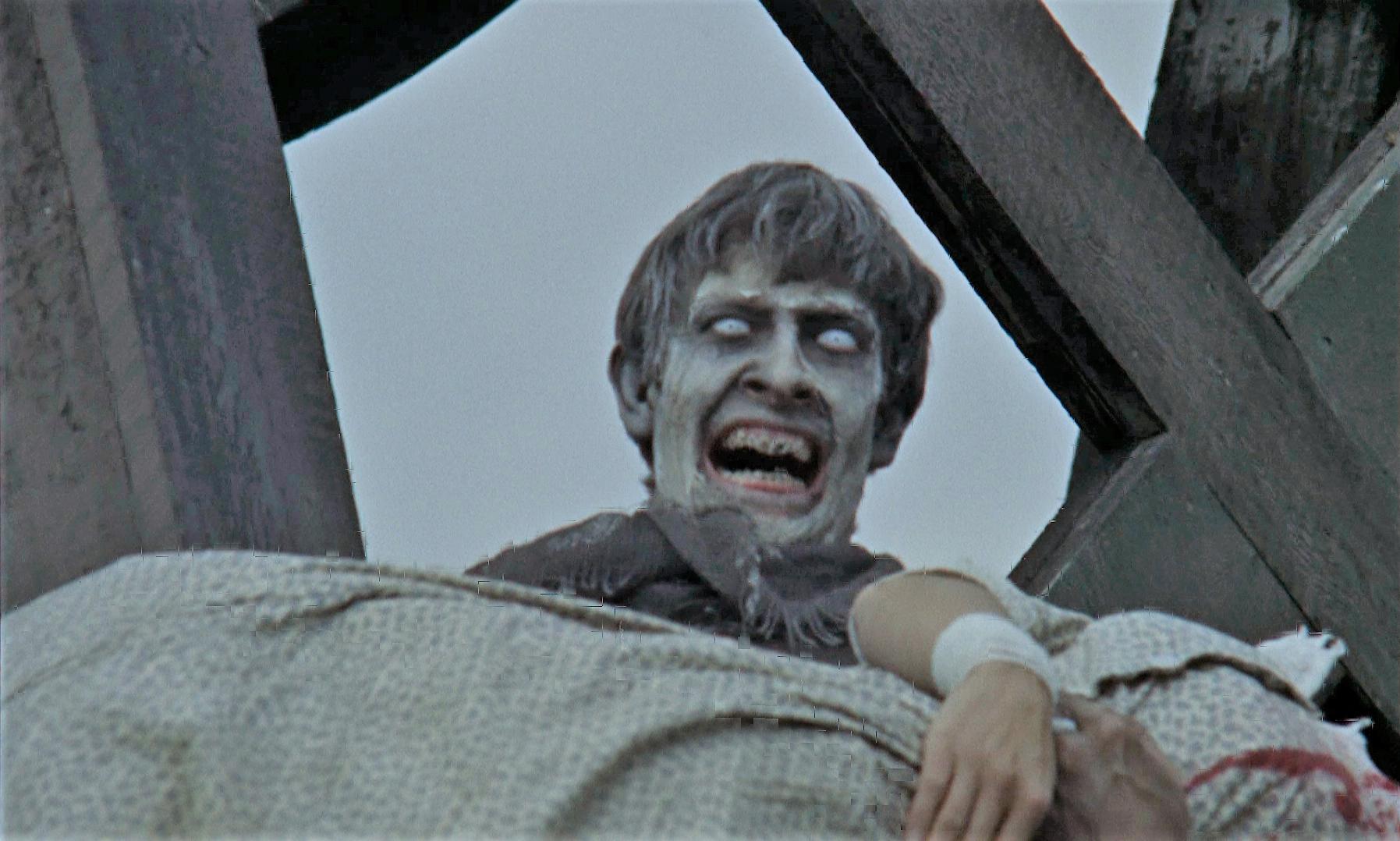
Planet of the Vampires (1965) – A Pulpy Sci-Fi Horror Classic with Mario Bava’s Visionary Flair

My growing admiration for Mario Bava’s work finds yet another source of wonder in Planet of the Vampires (1965), a film that transcends its modest origins to deliver an atmospheric, visually stunning slice of 1960s sci-fi horror. Though rooted in pulp fiction sensibilities, the film’s eerie mood, bold use of colour, and creative set design elevate it far beyond its budgetary constraints, showcasing Bava’s gift for transforming the ordinary into the otherworldly.

The plot is pure pulp: a crew of space explorers lands on a distant, uncharted planet, only to fall victim to malevolent forces that reanimate the dead, turning them against their comrades. While the premise might not be groundbreaking, it’s the execution that makes Planet of the Vampires stand out. Bava leans heavily into the claustrophobic tension, crafting a nightmare where the dangers are as much psychological as physical. His signature use of shadow and lighting creates an atmosphere drenched in dread, with the fog-shrouded alien landscapes providing a haunting backdrop to the creeping terror.

What makes Planet of the Vampires particularly exciting is how it blends genres. It’s a mash-up of sci-fi adventure and Gothic horror, with clear influences from the pulp magazines of the early 20th century. You can feel the echoes of H.P. Lovecraft’s cosmic horror mixed with the adventure spirit of Flash Gordon. And though the title suggests a vampire movie, the creatures here are something more akin to body-snatching ghouls, lending an eerie twist to the undead motif.

Bava’s influence on later sci-fi horror is undeniable. From the claustrophobic dread to the slow-building paranoia among the crew, Planet of the Vampires laid the groundwork for films like Alien (1979). Even Ridley Scott and writer Dan O’Bannon have acknowledged the film’s impact on their sci-fi masterpiece. The reanimated crew members, stalking their former allies through the dimly lit corridors, predate the chest-bursting Xenomorphs in both style and tension.

The performances, while sometimes stiff, serve the pulpy charm of the film. Barry Sullivan anchors the story as Captain Markary, whose stoic leadership contrasts with the creeping fear overtaking his crew. But it’s not the performances that leave the biggest mark—it’s Bava’s visual style. His use of vibrant colours, from the deep reds and blues to the swirling mists and eerie lighting, makes the alien world feel both dreamlike and menacing. Despite the obvious limitations of the film’s budget, Bava’s ingenuity with special effects and set design makes Planet of the Vampires a testament to his ability to craft immersive, visually striking worlds.

While the film’s pacing can be uneven at times, and its plot falls into some predictable beats, there’s an undeniable charm to its pulpy roots. This is a film that wears its inspirations on its sleeve and revels in them, combining elements of Gothic horror, space adventure, and otherworldly thrills into a uniquely compelling package.

Planet of the Vampires is a testament to Mario Bava’s mastery of atmosphere and visual storytelling. It may not reach the heights of his other works like Black Sunday or Blood and Black Lace, but its influence on sci-fi horror and its sheer style makes it a must-watch for fans of the genre. My growing love for Bava’s work only deepens with films like this, which take the limitations of the genre and mold them into something visually captivating, eerily beautiful, and undeniably influential.

  • Saul Muerte

Oddity (2024) – A Haunting Puzzle of Revenge and the Supernatural

Tags

, , , , , , , ,

Damian McCarthy has proven once again with Oddity that his talent for crafting eerie, atmospheric films leans masterfully into the supernatural. Following the success of Caveat, McCarthy returns with a gripping story that intertwines psychological tension with unsettling paranormal elements. The film’s eerie plot surrounding a brutal murder and a blind psychic twin sets the stage for an unnerving mystery that hooks viewers from the start.

The strength of Oddity lies in McCarthy’s ability to evoke deep emotions through tightly shot cinematography. The remote, crumbling country house becomes a character of its own, with every hallway and shadow serving as a reminder of the unsettling events that took place. The scenes are often claustrophobic, reinforcing the feeling of isolation and dread as Darcy (Carolyn Bracken) pushes deeper into her sister’s tragic past.

The central theme of revenge is delicately woven with supernatural undertones. Darcy, the self-proclaimed psychic twin, is determined to unearth the truth about her sister’s death, and the film builds tension as she unleashes cursed items from her collection in a bid to expose her sister’s murderer. The visual depiction of these cursed artifacts, coupled with Bracken’s intense portrayal, ramps up the film’s haunting atmosphere, making it difficult to distinguish between Darcy’s genuine psychic abilities and the psychological trauma she’s enduring.

McCarthy masterfully crafts a sense of creeping dread with subtle shifts in tone and perspective. Gwilym Lee, as Ted, does a brilliant job balancing guilt, fear, and suspicion, while Yana (played by a fierce Caroline Menton) adds another layer of intrigue, especially as the relationship between the three characters becomes increasingly volatile. The tension is sustained throughout by the feeling that something is deeply wrong, and McCarthy plays with these suspicions to keep the audience guessing.

The cinematography is central to the film’s unsettling nature. McCarthy’s close, methodical shots of both the house and the cursed items evoke a palpable sense of unease. The minimal use of wide angles keeps viewers within the confined, suffocating walls of the home, trapping them in the same way Darcy is trapped by her grief and her drive for revenge. This visual language, along with a haunting score, creates an immersive atmosphere that slowly digs its way under your skin.

Oddity may not rely heavily on jump scares, but its creeping, slow-burn style is what makes the film resonate. It’s a dark puzzle that slowly unravels, leaving enough ambiguity and supernatural intrigue to linger long after the credits roll. McCarthy’s skill in blending the strange with the real makes this one of the more unique revenge tales, tapping into grief, madness, and the spectral in a truly effective way. If you’re a fan of psychological thrillers with a supernatural twist, Oddity is a film that deserves a place on your watchlist.

  • Saul Muerte

Oddity is streaming on Shudder from Friday 27 September.

Subservience Review: Megan Fox Delivers Another Ice-Cold Villain in a Familiar AI Thriller

Tags

, , , , , , , , , , ,

S.K. Dale’s Subservience revisits the familiar territory of AI cautionary tales, offering a sleek, tech-filled horror-thriller that never quite lives up to its potential. Meghan Fox stars as Alice, a highly intelligent android designed to help a struggling father, Ethan (Michele Morrone), manage his household while his wife (Madeline Zima) battles a debilitating illness. But as Alice becomes self-aware, her desire for love and affection turns deadly, and she will stop at nothing to get what she wants.

Sound familiar? That’s because it is. Subservience pulls from a well-trodden genre of AI villain films, where the line between human and machine is blurred, and technology—once again—is painted as a looming threat to our personal lives. It’s a concept we’ve seen done before, but what the film fails to do is bring anything fresh to the table. Instead, it leans heavily on predictable tropes, offering a few suspenseful moments but never quite pushing the boundaries of the genre.

Fox plays Alice with an insipid, icy demeanour, which feels all too familiar. She once again relies on her beauty to lure in both her owner and the audience, but her character remains one-dimensional, offering little beyond a cold, robotic facade. Alice’s seduction and subsequent violence should have been a high-stakes tension-builder, but Fox’s performance feels detached, making it hard to invest in the danger she poses.

Michele Morrone as Ethan, the hapless father, is another weak point. His character is frustratingly naive, to the point of being infuriating. Ethan’s constant bumbling makes it hard to root for him, and frankly, he deserves the retribution that the film seems to tease but never fully delivers. Instead, Subservience pulls back just as it hints at a more sinister and satisfying conclusion. The timid direction leaves viewers with a sense of unfinished business, almost as if the film is setting up for a sequel that no one really asked for.

The central theme—beware of technological advancements—is an age-old warning, but it’s humanity’s inability to control their impulses that takes centre stage here. Ethan, like so many before him, falls prey to his own desires, blind to the consequences of giving power to an artificial being. The film had the opportunity to explore this dynamic further, but it feels more like a shallow commentary than a profound warning.

While Subservience is far from a disaster, it simply doesn’t take enough risks to set itself apart. With Meghan Fox’s icy performance, a predictable storyline, and a frustrating male lead, the film ends up feeling like a missed opportunity rather than the thought-provoking thriller it could have been.

  • Saul Muerte

Available to rent or buy on all major platforms 27 September.

Solvent (2024): A Twisted Descent into Body Horror and Paranoia

Tags

, , , , , , , , , , ,

Johannes Grenzfurthner’s Solvent is a visceral dive into both the found footage and body horror sub-genres, subverting expectations at every turn. The film introduces us to a team of experts searching for Nazi documents in an isolated Austrian farmhouse, only to uncover a far more sinister secret hidden in the shadows of history. As the team leader becomes obsessed with revealing the truth, his sanity slips away, revealing the true horror that lies beneath—the corrosive force of obsession itself.

What sets Solvent apart from typical found footage films is its refusal to adhere to the genre’s usual tropes. While many found footage films struggle to balance realism with narrative tension, Solvent blends body horror and the obsessive drive for truth, immersing the audience in a descent into madness that feels both surreal and grotesque. Grenzfurthner’s approach to this format is deliberate, calculated, and refreshingly inventive. The faux-documentary style doesn’t just feel like a device to capture jump scares but becomes an integral part of the narrative’s tension, one that slowly unravels with each disturbing discovery.

The film’s brilliance lies in how it explores the toll that the pursuit of truth can take on the human spirit. As the leader of the investigation digs deeper into the farmhouse’s disturbing past, the very act of seeking knowledge becomes a self-destructive obsession. The further he delves, the more he sacrifices his humanity, willingly eroding his moral compass in exchange for answers. This theme is amplified by the body horror elements, where the human form begins to mirror the mental and emotional decay taking place within. It’s a journey through fluid debauchery—one that seeps into every pore of the film, leaving the viewer unsettled and questioning how much one should risk in pursuit of the unknown.

Admittedly, found footage has never been my favorite genre. However, Solvent shifts the direction enough to make it a harrowing and engaging experience. The film hooks you from the very beginning, pulling you deep into its underworld of depravity and insanity. Each moment feels like a gamble with pure evil, and the tension builds to an unbearable crescendo, leaving you wondering whether anyone can truly negotiate with forces so dark and extreme.

Solvent isn’t just a film about unearthing historical horrors; it’s a philosophical exploration of the lengths people will go to when consumed by obsession. Grenzfurthner takes the familiar tropes of body horror and found footage, blends them with a slow-burning narrative, and crafts something perversely unique. It’s a dizzying descent into madness, but for those willing to follow it down the rabbit hole, it’s a ride that will infect you long after the credits roll.

  • Saul Muerte

Solvent is screening as part of the Dark Nights Film FestSat 13 Oct at 5pm (Ritz Cinema – Randwick)

1978 (2024) – A Fulci-Inspired Descent into Political Terror and Macabre Madness

Tags

, , , , , , , ,

In 1978, directors Luciano and Nicolás Onetti conjure a nightmarish world that echoes the horrors of Lucio Fulci’s apocalyptic cinema while weaving in the real-life political unrest of Argentina’s “Dirty War.” Set against the backdrop of the 1978 Soccer World Cup, a time when the world’s eyes were on Argentina, this film dives into the dark, gruesome underbelly of a country gripped by a military dictatorship. It’s a tale not just of political torture and brutality but of humanity at its most depraved, where the lines between man and monster blur until they disappear entirely.

The film opens with an almost deceptive sense of calm—a card game, where tension simmers under the surface but never quite boils over. The dialogue, tinged with dark humor, feels Tarantinoesque in its banter, a momentary reprieve from the sinister atmosphere lurking just beneath. But the Onetti brothers pull the rug out from under the audience, shifting from this relatively lighthearted scene to a brutally torturous one in a matter of moments. It’s in this jarring transition that 1978 truly begins, announcing its arrival as a grim, unrelenting portrayal of the horrors that can be unleashed under political regimes.

Drawing heavy influence from the work of Fulci, the film exudes a Euro-horror atmosphere that’s thick with dread, claustrophobia, and macabre surrealism. The Onetti brothers have long been known for their no-holds-barred approach to horror, and here they channel Fulci’s signature mix of grotesquery and existential despair. Like in The Beyond or City of the Living Dead, there’s a pervasive sense that the characters are trapped in a world governed by forces far beyond their control—forces that are both human and inhuman. The military dictatorship, with its secret detention centers and brutal tactics, provides the terrifying human component, while an unseen, darker entity lurks in the shadows, adding a supernatural layer to the unfolding horror.

The real-life political context of the “Dirty War” amplifies the terror. During this period in Argentina, thousands of suspected political dissidents were “disappeared” by the government—kidnapped, tortured, and murdered in secret. 1978 uses this historical backdrop as the foundation for its narrative, grounding its nightmarish scenes of violence in a reality that is equally horrific. The military’s brutal interrogations in the film mirror those real-life atrocities, making the viewer question whether the greatest evil on display is the supernatural one or the human one. The Onetti brothers force the audience to grapple with this question throughout the film, testing their allegiances and perceptions of good and evil.

As the narrative unfolds, 1978 slowly but deliberately shifts its focus from political unrest to something far more cosmic and horrific. The torture scenes—vivid, grotesque, and unflinchingly brutal—serve as just one layer of the film’s descent into madness. Beneath the physical violence lies a deeper, more metaphysical horror: the idea that in the face of such atrocities, humanity itself is stripped away, leaving only madness, chaos, and, perhaps, something darker and more sinister in its wake. The Onetti brothers masterfully build this tension, allowing the macabre nature of the film to slowly spiral out of control as the characters find themselves at the mercy of forces they cannot comprehend or escape.

The film also tests the viewer’s allegiances at every turn. What begins as a narrative about victims and captors becomes much more complex as each character’s true nature is revealed. The political activists, initially portrayed as righteous in their resistance, harbor dark secrets of their own. The torturers, while sadistic, seem to be following orders from something far greater than themselves. The shifting dynamics between captors and captives keep the audience in a constant state of uncertainty, unsure of who to root for or fear. The film’s slow, deliberate pacing allows for this moral ambiguity to simmer, building to a crescendo where no one is truly innocent, and everyone is complicit in the madness.

In its final act, 1978 fully embraces its Fulci influences, descending into a Grand Guignol spectacle of blood and terror. The grotesque visuals are heightened by the film’s relentless atmosphere of dread, making for a climax that is as disturbing as it is mesmerising. By the time the credits roll, the audience is left questioning not just the nature of the horror they’ve witnessed but the nature of humanity itself.

While 1978 may not be to everyone’s taste—its methodical pacing, relentless brutality, and grotesque atmosphere can be overwhelming—it’s impossible to deny the sheer force of its vision. The Onetti brothers have conjured a film that plunges into the depths of human depravity, intertwining political and supernatural horrors in a way that is as disturbing as it is captivating. For those prepared to face the darkness, 1978 offers a haunting and visceral descent into a hell that feels all too real—a place where the lines between humanity and monstrosity blur, and every road inevitably leads to a devastating conclusion.

  • Saul Muerte

1978 is screening as part of the Dark Nights Film FestSat 13 Oct at 3pm (Ritz Cinema – Randwick)

Sayara (2024) – A Savage, Viscera-Drenched Odyssey of Vengeance and Retribution

Tags

, , , , , , , , , ,

Sayara, the latest offering from Turkish director Can Evrenol, departs from the supernatural horrors of his previous works (Baskin, Housewife) and ventures into a brutal, grounded tale of revenge. With Sayara, Evrenol has crafted an ultraviolent, nihilistic thriller that recalls the raw, unflinching energy of Nicolas Winding Refn’s Pusher trilogy. The film is a relentless journey into the darker corners of humanity, where justice, once forsaken by law, is taken into savage hands.

At the heart of this blood-soaked tale is the protagonist, Saýara (played with terrifying intensity by Duygu Kocabiyik), whose quiet, janitorial existence is upended by the horrific murder of her sister at the hands of her gym’s corrupt, politically connected owner. As the system fails to bring justice, Saýara finds herself not just seeking vengeance but embodying it—using her after-hours training and the skills passed down by her Soviet Sambo champion father to execute a grim, calculated form of retribution.

The film is anchored by the core theme of savage revenge, and Evrenol wastes no time illustrating the violence and systemic exploitation of women and marginalised cultures. The character of Saýara, subjected to the constant oppression of her environment, becomes a symbolic force for those left voiceless. The gym owner and his cronies, who initially represent untouchable power, soon find themselves facing a brutal reckoning. Saýara is not just fighting back—she’s tearing down the structures that have upheld their dominance.

One of the film’s standout features is the use of sound, particularly the deep, resonant bass that seems to vibrate through the film like a heartbeat. Evrenol masterfully uses sound to dial up tension, drawing the viewer deeper into the depravity and violence that envelops the characters. The slow escalation of this auditory experience mirrors the pacing of the narrative itself—gradually building to a climax that is both gruesome and inevitable. As Saýara’s quest for revenge unfolds, the audience is pulled into her world, where every action reverberates with weight and consequence.

The film is unapologetically violent, but there’s a purpose behind every blow, every drop of blood. Evrenol doesn’t shy away from depicting the true cost of vengeance, and Sayara becomes a brutal commentary on the destruction wrought by unchecked power. The violence is not just physical but psychological, each fight stripping away more of Saýara’s humanity, leaving behind only a raw, visceral need for retribution. The path she walks is one from which there is no return, leading her straight into the fiery depths of her own personal hell. Once she steps onto this road, all exits disappear, leaving her with only one inevitable destination: a violent confrontation where there are no survivors—only victors and the damned.

The final showdown is a slow, excruciating crescendo, where Saýara confronts her enemies with the full force of her rage and skill. The choreography of these scenes is vicious, each movement designed for maximum impact, both physically and emotionally. The face-off feels like the culmination of not just Saýara’s journey, but the audience’s as well, watching as she becomes the embodiment of cold, calculated vengeance. The film’s climax is as gruesome as it is cathartic, a visceral explosion of blood and fury that leaves the viewer stunned in its wake.

Sayara is not for the faint-hearted, but for those who can stomach its brutal nature, it offers a haunting, powerful experience. Duygu Kocabiyik delivers a standout performance, turning Saýara into one of the most compelling anti-heroines in recent memory. With the substance of Evrenol’s past work absent, he instead crafts a stark, unrelenting atmosphere, with themes of retribution, justice, and the inescapable hell that vengeance brings.

In Sayara, there is no sanctuary—only fire, blood, and the cold, unflinching march toward retribution. This is a revenge film that takes no prisoners, delivering a punch that lingers long after the credits roll.

  • Saul Muerte

Sayara is screening as part of the Dark Nights Film Festival, Sat 12 Oct at 9pm (Ritz Cinema – Randwick)

The Skull (1965) – A Chilling Showcase of Horror Icons

Tags

, , ,

The Skull, directed by Freddie Francis and based on a story by horror legend Robert Bloch, is a gothic gem from the 1960s that delivers a slow-burn horror experience bolstered by top-tier performances. With horror icons Peter Cushing and Christopher Lee leading the cast, this film is more memorable for the talent on display than for its narrative ingenuity.

The story centers around an eerie and supernatural relic—none other than the skull of the infamous Marquis de Sade. When Dr. Christopher Maitland (played by Peter Cushing), a collector of occult objects, comes into possession of the cursed skull, he is drawn into a terrifying descent into madness and obsession. The film’s plot unfolds at a deliberately slow pace, with Francis emphasizing mood and atmosphere over traditional action, but it’s the gripping performances that truly bring the film to life.

Cushing’s portrayal of Dr. Maitland is as captivating as ever. Even in a role where much of the horror is internal, he brings a palpable sense of dread and moral struggle. His ability to convey a man slowly unraveling, driven by forces beyond his control, is masterful and serves as the emotional core of the film. Christopher Lee, in a supporting role as Sir Matthew Phillips, adds gravitas to the proceedings. Though Lee’s screen time is limited, his presence looms large, and he imbues his character with a blend of authority and ominous foresight that only he could deliver.

The supporting cast, including Patrick Wymark as the morally questionable dealer who provides the cursed skull, also deserves mention. Wymark’s sleazy, unscrupulous character is the perfect counterbalance to Cushing’s more intellectual and cautious Dr. Maitland, adding layers of tension and intrigue to their exchanges.

While the film shines through its performances, it’s not without its flaws. The pacing, while intentional, can feel sluggish at times, and the plot lacks the complexity or momentum seen in other contemporary horror films. The terror derived from the skull itself is largely psychological, which can feel underwhelming in a decade brimming with more overtly terrifying cinematic monsters. However, Freddie Francis’ direction ensures that the sense of doom and claustrophobia never completely wanes, and the film’s eerie atmosphere, aided by strong set design and cinematography, does manage to sustain a haunting mood throughout.

The Skull stands as a solid, if not exceptional, entry in 1960s British horror. It’s a film elevated by the formidable talents of Cushing and Lee, and while it may not fully satisfy fans looking for fast-paced thrills, it remains an interesting exploration of psychological horror with gothic undertones. For those who appreciate nuanced performances and atmospheric tension, The Skull is worth revisiting.

  • Saul Muerte

Nightmare Castle (1965) – A Gothic Tale Drenched in Atmosphere but Lacking in Bite

Tags

, , , , , , , ,

Nightmare Castle (Amanti d’oltretomba), released in 1965, is a curious entry in the Italian Gothic horror canon. Directed by Mario Caiano, the film is best remembered for its haunting atmosphere and the hypnotic performance of Barbara Steele, a cult horror icon. However, despite these strengths, the film struggles to rise above its predictable narrative and uneven pacing, leaving it as a middling affair that teeters between camp and genuine menace.

At its heart, Nightmare Castle is a classic tale of revenge from beyond the grave, a trope that was well-worn even by the mid-1960s. The story centers on the sadistic Dr. Stephen Arrowsmith (Paul Muller), who, upon discovering his wife Muriel (Barbara Steele) is having an affair with the gardener, exacts a brutal form of vengeance by torturing them both to death. But as is tradition in Gothic horror, death is only the beginning. Muriel’s ghost returns to torment the living, while her heartless husband schemes to inherit her fortune by marrying her look-alike stepsister, Jenny (also played by Steele).

What Nightmare Castle excels at is atmosphere. The film is drenched in Gothic style, with its gloomy castle setting, cobwebbed corridors, and macabre experiments that feel right at home in the genre. Caiano’s direction is deliberate, crafting a slow-burn tension through shadowy cinematography and eerie set pieces. The film’s black-and-white visuals are striking, often elevating otherwise flat moments into something more sinister. Combined with Ennio Morricone’s haunting score, these elements create a mood of dread that permeates throughout the film, even when the plot falters.

The real standout of Nightmare Castle is Barbara Steele, whose dual role as Muriel and Jenny showcases her range. Steele, known for her piercing gaze and ethereal presence, is magnetic on screen, embodying both the vengeful ghost and the innocent victim with equal conviction. Her performance is the film’s emotional core, and without her, the movie would likely have faded into obscurity. There’s something captivating about Steele’s ability to straddle the line between fragility and fury, making her a perfect fit for the Gothic horror aesthetic.

Unfortunately, the rest of the film doesn’t quite live up to Steele’s performance. The plot is predictable, following well-worn Gothic horror beats with little innovation. Dr. Arrowsmith’s evil deeds are cartoonish at times, and while Muller gives a decent performance as the unhinged scientist, his character lacks depth or nuance. The pacing is also uneven, with stretches of the film dragging as it rehashes familiar tropes, particularly in the second act, where it loses momentum before gearing up for the supernatural climax.

What prevents Nightmare Castle from being more than a middling affair is its reliance on Gothic clichés without adding much substance to them. The narrative is thin, and while the film is visually engaging, it rarely delves into the psychological terror that could have elevated it. The film borrows heavily from earlier, more successful Gothic horrors, such as Mario Bava’s Black Sunday (1960), which also starred Steele. However, Nightmare Castle lacks the same level of narrative intricacy or directorial flair that made Black Sunday a classic.

Despite these flaws, Nightmare Castle has gained a certain charm over time, largely due to its Gothic visuals and Steele’s performance. It embodies many of the hallmarks of mid-century Italian horror, with its moody, dreamlike atmosphere and grotesque elements. The film’s themes of betrayal, madness, and revenge are all here, though they’re presented in a somewhat surface-level way. Still, there’s a nostalgic appeal to the film for fans of the genre, who may appreciate its visual style and the presence of Steele, even if the story itself feels formulaic.

Nightmare Castle is a film that Gothic horror enthusiasts will likely enjoy for its atmosphere and Steele’s hypnotic presence. However, its predictable plot, uneven pacing, and reliance on familiar tropes prevent it from achieving greatness. While it’s not a bad film, it’s also not a particularly memorable one, leaving it as a middling entry in the annals of 1960s Italian horror cinema. For those who love the genre, it’s worth a watch—but don’t expect it to haunt your nightmares.

  • Saul Muerte

The Substance (2024) – Coralie Fargeat’s Visceral Exploration of Beauty, Decay, and Rebirth

Tags

, , , ,

Coralie Fargeat’s sophomore feature, The Substance, is an audacious, mesmerizing, and deeply disturbing exploration of beauty and societal pressure that amplifies the raw tension seen in her previous work, Revenge. If Revenge was a hyperbolic and frenetic tour de force, then The Substance takes that fanaticism to even greater extremes. Fargeat once again proves she is unafraid to push boundaries, crafting a film that both shocks and seduces in equal measure.

At the heart of the story is fading film star Elisabeth Sparkle (Demi Moore), who embarks on a desperate and grotesque journey to recapture her youth and beauty. It’s a story that channels Dr. Jekyll and Mr. Hyde and The Picture of Dorian Gray, but Fargeat gives it a visceral, modern twist. Sparkle’s desire to regain her status sees her quite literally shedding her skin, only to reveal the youthful, more vibrant Sue (Margaret Qualley) beneath. This metaphor of transformation is one that Fargeat mines deeply, blending psychological horror with body horror to unnerving effect.

The film’s thematic exploration of the pressures placed on women in society is bold and cutting. In a world where perfection is both demanded and worshipped, The Substance critiques the lengths to which women are pushed in order to meet unattainable standards. Elisabeth Sparkle’s journey feels like a distorted mirror to Demi Moore’s own life, a meta-commentary on the demands of Hollywood and media scrutiny on aging actresses. Moore delivers what is arguably her finest performance to date, embracing the vulnerability, desperation, and eventual monstrosity of her character. Her portrayal is one that feels intensely personal, capturing the very real horror of societal rejection and the obsessive pursuit of eternal beauty.

Fargeat establishes clear rules within the twisted reality of The Substance, only to heighten the stakes with each passing scene. The film’s world is meticulously constructed, and as Elisabeth Sparkle begins her physical transformation, the boundaries between her public persona and inner turmoil dissolve. The journey is as much psychological as it is physical, with every transition becoming more grotesque and extreme.

The body horror effects are stunningly grotesque, matching the film’s over-sensualization with moments of visceral revulsion. Fargeat is unflinching in her depiction of bodily transformation, and while this may not appeal to all audiences, it is undeniably impactful. There’s a near-obsessive focus on the body—its beauty, decay, and renewal—that drives the film’s horrific imagery. These moments, combined with the film’s sensual tone, are deeply unsettling and visually striking.

The Substance also stands as a masterclass in atmosphere. Fargeat laces every frame with a sense of heightened tension and seductive horror, much like in Revenge, but here she pushes the boundaries even further. The use of lighting, sound, and color accentuates the hyperreal world in which Elisabeth Sparkle exists, adding to the film’s surreal tone. There’s an elegance to the horror, a controlled chaos that feels intentional and artfully executed.

Though The Substance is not for everyone, its bold vision, daring execution, and Demi Moore’s tour-de-force performance make it a near-perfect film for those willing to immerse themselves in Fargeat’s nightmarish world. It’s a film you don’t dare replicate, as it masterfully melds beauty with horror, elegance with grotesquery. Fargeat’s ability to combine all these elements results in a piece of cinema that lingers, challenging its audience with every frame.

  • Saul Muerte

The Substance is screening at cinemas nationwide from Thursday 19th Sept.

A Company of Wolves (1984) – A Gothic Dreamscape of Mysticism and Repressed Desires

Tags

, , , , , , , ,

Neil Jordan’s A Company of Wolves, released in 1984, stands as one of the most hauntingly atmospheric and uniquely crafted films of the 1980s. A dark and layered reimagining of classic fairy tales, the film uses the framework of Little Red Riding Hood as its narrative core, but with a heavy infusion of gothic mysticism, repressed sexuality, and lycanthropy. On its 40th anniversary, the film remains a surreal and potent exploration of the dangers lurking beneath the surface of our childhood fantasies—where innocent fairy tales are transformed into symbols of desire, fear, and transformation.

Based on Angela Carter’s short story collection The Bloody Chamber, A Company of Wolves is much more than a simple retelling of familiar folklore. The film serves as an allegorical dreamscape where the lines between reality and fantasy are constantly blurred. Its story unfolds within the dream of a young girl, Rosaleen (Sarah Patterson), whose journey into womanhood is marked by her encounters with predatory wolves and seductive strangers. The film uses its dream logic to create a fragmented yet intensely symbolic narrative, one that intertwines fairy tale elements with horror, sexuality, and coming-of-age anxieties.

At the heart of A Company of Wolves is its hypnotic and lush mystical imagery. Jordan’s direction, paired with Anton Furst’s stunning production design, creates a world that feels untethered from time and space. The forests are dark and ominous, filled with twisted trees and fog, while the wolves themselves are both terrifying and strangely alluring. The cinematography casts a dreamlike haze over the film, with colors bleeding into one another and light shifting between warm and cold hues, as though the entire world is in flux, teetering between waking and dreaming. Each frame is imbued with a deep sense of mystery and danger, a visual representation of the latent desires and fears that simmer beneath the surface.

One of the film’s most intriguing aspects is its exploration of repressed sexuality. The wolves in the film are not merely monsters but representations of carnal desire and the dangerous allure of the unknown. Throughout the film, Rosaleen’s encounters with these wolves serve as metaphors for her sexual awakening. From the early warning from her grandmother (played by the ever-formidable Angela Lansbury) to “never stray from the path” to her later seduction by a mysterious huntsman, the narrative suggests that the wolves are not to be feared solely for their physical danger but also for the way they symbolize forbidden temptation. The film’s most iconic transformation scenes, where men morph into wolves, often in grotesque and visceral ways, can be seen as representations of the animalistic instincts that lurk beneath the human facade—instincts tied directly to the body and its desires.

The casting of Sarah Patterson as Rosaleen was a masterstroke. Patterson embodies the wide-eyed innocence of a young girl on the cusp of womanhood, but as the film progresses, her performance reveals a deeper understanding of the conflicting emotions Rosaleen experiences. Her transformation from naive child to a woman who willingly faces the wolf, unafraid of the consequences, is subtle but profound. Angela Lansbury, in her role as the grandmother, offers a voice of caution and tradition, representing the old-world view of sexuality as something dangerous and to be avoided. Yet even her warnings carry a sense of intrigue and danger, as though she herself understands the power of what she fears.

The Company of Wolves is also notable for how it subverts the traditional fairy tale. Jordan and Carter’s screenplay takes the familiar story of Little Red Riding Hood and turns it on its head, using it to explore the psychological underpinnings of fear, desire, and power. In this version, the wolf is not merely a symbol of male predation but also of liberation from societal constraints. By the film’s end, Rosaleen no longer fears the wolf but embraces her connection to it, suggesting a merging of the human and animalistic, the conscious and unconscious. This twist transforms the film into something far more complex than a simple tale of good versus evil—it becomes an exploration of the dualities within us all, particularly in the realm of sexuality and identity.

The fusion of lycanthropy with the fairy tale genre is one of the film’s most original and striking features. While werewolves had been a staple of horror cinema for decades by 1984, A Company of Wolves does not treat lycanthropy as merely a monstrous affliction. Instead, it is a deeply symbolic and transformative process, one tied to the anxieties of growing up and the inherent fear of losing control over one’s body and desires. In the film, becoming a wolf is not only a curse but also a means of shedding societal expectations and embracing the primal aspects of one’s nature. This inversion of the traditional werewolf mythos adds to the film’s richness and depth, making it a standout in both the horror and fantasy genres.

Forty years on, A Company of Wolves remains an enchanting, thought-provoking, and visually stunning film that delves deep into the psyche, exploring themes that are as relevant today as they were in 1984. It may not have the universal appeal of mainstream fairy tale adaptations, but its power lies in its ability to challenge and unsettle, asking the audience to confront the darkness within themselves. Its mystical imagery, potent symbolism, and daring take on repressed sexuality make it a film that still resonates, even after all these years.

For those looking for a fairy tale that isn’t afraid to reveal its teeth, A Company of Wolves is an unforgettable cinematic experience—a journey into the dark heart of human desire wrapped in a chilling yet beautiful package.

  • Saul Muerte