Brazilian cinema takes a stab at the anthology horror format in Trilogy of Terror (Trilogia de Terror), a collaboration between renowned directors Luiz Sérgio Person, Ozualdo Ribeiro Candeias, and José Mojica Marins. On paper, this film had the potential to be a landmark in horror, drawing on the stylistic and thematic sensibilities of three distinct auteurs. Unfortunately, the end result is an uneven collection of shorts that, despite flashes of creativity, struggles to maintain coherence or a satisfying level of tension.
The first segment, directed by Person, feels more like an existential drama wrapped in horror’s clothing. It’s a meditative, slow-paced exploration of dread, which is intriguing in theory but ultimately too meandering to captivate. While the cinematography shows glimpses of brilliance, the narrative lacks urgency or cohesion, leaving the audience adrift in a sea of disjointed ideas. Candeias’ segment, on the other hand, attempts to push the boundaries with its gritty, almost documentary-style approach. While it succeeds in capturing a grimy, oppressive atmosphere, it leans too heavily on shock value without delivering a meaningful payoff.
The final segment, helmed by the iconic José Mojica Marins (best known as “Coffin Joe”), is the most engaging but still falters. Marins injects his signature surrealistic flair, complete with macabre imagery and grotesque performances. However, the segment feels rushed and underdeveloped, leaving its potentially fascinating ideas half-baked. Compared to Marins’ standalone work, this short feels like a diluted version of his signature style.
Trilogy of Terror is a frustrating watch that hints at greatness but falters in execution. Its ambitious premise is undercut by inconsistent pacing, underwhelming storytelling, and a lack of synergy between the segments. Fans of Brazilian cinema or anthology horror may find some historical or academic value in watching this film, but for casual viewers, it’s unlikely to leave a lasting impression. Two stars for effort and moments of visual brilliance, but the trilogy ultimately fails to deliver on its terrifying promise.
Kaneto Shindō’s Kuroneko (Black Cat in the Bamboo Grove) is a haunting masterpiece of Japanese cinema that blends ghostly folklore, revenge, and heart-wrenching tragedy into a tale as elegant as it is unsettling. Released in 1968, this chilling horror drama unfolds in the Sengoku period, an era rife with war and moral decay, serving as the perfect backdrop for its story of loss, love, and vengeance.
The film begins with a brutal act of violence: a mother and daughter are raped and murdered by marauding samurai, their home consumed by fire. Left in the ashes, their spirits return as onryō—vengeful ghosts—manifesting as black cats that lure unsuspecting samurai to their doom. This chilling setup is a stark indictment of wartime atrocities, as Shindō uses the supernatural as a vehicle to critique human cruelty.
When the local governor learns of the mysterious deaths, he dispatches Gintoki, a fiercely loyal and hotheaded young warrior, to eliminate the ghostly threat. What follows is a beautifully tragic confrontation between Gintoki and the two spirits, who reveal themselves to be the vengeful mother and daughter. Bound by love and duty, Gintoki must face the devastating realisation of his connection to the ghosts, leading to a climactic battle that is as emotionally charged as it is visually stunning.
The cinematography by Kiyomi Kuroda is nothing short of breathtaking. Shindō and Kuroda craft a visual world that feels both otherworldly and deeply rooted in Japanese tradition. The bamboo forest, bathed in soft moonlight, becomes an ethereal stage for the unfolding drama. The interplay of light and shadow creates a dreamlike atmosphere, where every frame is as meticulously composed as a classical painting. The spectral appearances of the women, draped in flowing white robes and gliding across the screen, are hauntingly beautiful, embodying the eerie elegance that defines the film.
At its heart, Kuroneko is a story about love and loss. The bond between the mother and daughter, even in death, adds a poignant layer to the horror. Their revenge is not born of pure malice but of righteous fury against the injustice done to them. The film also explores Gintoki’s torn loyalties as he grapples with his duty to the state and his personal ties to the ghosts. This emotional complexity elevates the film beyond a mere tale of vengeance, making it a deeply human story.
The score by Hikaru Hayashi further enhances the film’s haunting quality, blending traditional Japanese sounds with a sense of otherworldly dread. The music is sparse yet impactful, heightening the tension and underscoring the tragic beauty of the story.
Kuroneko is not just a horror film; it is a meditation on the cyclical nature of violence, the consequences of war, and the indelible scars left on the human soul. It weaves together horror, romance, and social commentary in a way that few films achieve.
Kaneto Shindō’s ability to balance the macabre with the poetic makes Kuroneko a standout work of Japanese cinema. Its evocative storytelling, exceptional cinematography, and emotional depth ensure its place as a timeless classic.
As Leigh Whannell prepares to unleash his vision of Wolf Man on modern audiences, it’s worth reflecting on the cinematic journey of one of horror’s most iconic monsters. The Wolf Man has prowled across the decades, transforming with the times while maintaining his primal appeal. From the tragic figure of the 1941 classic to the varied reimaginings that followed, the legacy of the Wolf Man is a fascinating study in reinvention.
The Birth of a Legend: Lon Chaney Jr. and Universal’s Classic Era The Wolf Man’s journey began in 1941, with Lon Chaney Jr. donning the iconic fur in Universal’s The Wolf Man. Directed by George Waggner and written by Curt Siodmak, the film introduced audiences to Larry Talbot, a sympathetic protagonist cursed to transform into a werewolf under the full moon. Chaney’s portrayal of Talbot’s anguish gave the film its heart, and Jack Pierce’s groundbreaking makeup solidified the character’s image.
The success of The Wolf Man led to three sequels: Frankenstein Meets the Wolf Man (1943), House of Frankenstein (1944), and House of Dracula (1945). These films further developed Talbot’s tragic arc, weaving his story into Universal’s monster crossover universe. Each sequel reinforced the character’s dual nature: a man tormented by his monstrous alter ego.
A Lighter Touch: Abbott and Costello and the Wolf Man By 1948, the Wolf Man had taken on a comedic edge, appearing alongside Frankenstein’s Monster and Dracula in Abbott and Costello Meet Frankenstein. Chaney reprised his role, playing Talbot as the straight man amidst the comedic chaos. The film’s success demonstrated the character’s flexibility, capable of navigating both horror and humour.
Unexpected Turns: Alvin and the Chipmunks, Van Helsing, and Beyond Over the years, the Wolf Man’s influence extended into unexpected territory. He howled his way into pop culture parodies like Alvin and the Chipmunks Meet the Wolfman (2000), where the character’s legacy was reimagined for younger audiences.
In Stephen Sommers’ Van Helsing (2004), the Wolf Man returned to his monstrous roots, albeit with a modern action-horror twist. This iteration leaned into the creature’s ferocity, pitting him against Dracula and showcasing a more physically imposing design.
Another notable homage came with House of the Wolf Man (2009), an independent film that sought to recapture the spirit of Universal’s golden age. The film’s black-and-white aesthetic and classic monster vibes paid loving tribute to the Wolf Man’s origins.
The Modern Wolf: Benicio Del Toro in The Wolfman In 2010, Universal attempted to revitalise their iconic character with The Wolfman, starring Benicio Del Toro as Lawrence Talbot. Directed by Joe Johnston, the film embraced the gothic atmosphere of the original while updating the story with modern effects. Despite mixed reviews, Del Toro’s brooding performance and Rick Baker’s Oscar-winning makeup honoured the character’s tragic essence.
A New Moon Rises: Leigh Whannell’s Vision As we look ahead to Leigh Whannell’s upcoming Wolf Man, there’s excitement in seeing how this legendary figure will be reimagined for a new era. Whannell’s track record with The Invisible Man (2020) suggests a fresh, psychological approach to the tale, potentially emphasising themes of isolation, inner turmoil, and the beast within.
A Legacy of Transformation From Lon Chaney Jr.’s mournful Larry Talbot to Benicio Del Toro’s tortured Lawrence, the Wolf Man’s enduring appeal lies in his duality. He is both victim and villain, embodying the eternal struggle between man and monster. Over the decades, this tragic figure has adapted to reflect the fears and sensibilities of each generation, ensuring his place among the pantheon of cinematic monsters.
Whannell’s Wolf Man will undoubtedly add a new chapter to this storied legacy. Whether it will embrace the past, forge a new path, or find a balance between the two, one thing is certain: the howl of the Wolf Man will continue to echo across the ages.
La Bête (1975), directed by Walerian Borowczyk, remains one of the most controversial films in the history of French cinema, and for good reason. An unsettling blend of horror, fantasy, and eroticism, the film challenged societal norms by confronting the taboo subject of bestiality, while also exploring themes of sexual repression and the dark recesses of human desire. While its provocative subject matter may have shocked audiences at the time, La Bête‘s impact on the fairytale genre is undeniable, as it distorts and dismantles the traditional, innocent imagery typically associated with fables.
The film’s plot centres on a young woman, played by Sirpa Lane, who is sent to an isolated mansion to care for a family member, only to discover that the house’s bizarre and sexually charged atmosphere hides a deeply unsettling secret. It is there that she finds herself drawn into a surreal and grotesque relationship with a monstrous beast, played by the infamous animal actor, the titular “beast.” The beast’s primal instincts are interwoven with the protagonist’s sexual awakening, creating a narrative that is both disturbing and strangely hypnotic.
One of La Bête‘s most striking features is how it blends the fantastical with the grotesque, challenging the audience’s expectations of what a fairytale is supposed to represent. In a genre traditionally known for its innocence, purity, and moral lessons, La Bête flips the narrative on its head, replacing magical creatures and romantic ideals with sexual depravity and psychological torment. The fairytale-like setting—lush, lavish, and seemingly enchanted—becomes a place of perverse fantasy, where innocence is stripped away, and dark, hidden desires come to light. The sexualization of the beast and the protagonist’s complex relationship with it force the viewer to confront uncomfortable questions about the nature of desire, fantasy, and the human psyche.
At the heart of the film is its exploration of sexual repression. The characters, both human and animal, seem locked in a struggle with their desires, attempting to navigate the constraints imposed by society, and by their own identities. The beast, though monstrous in form, is portrayed as a creature driven by raw, unfiltered lust, a force of nature beyond human control. The woman, in contrast, is initially portrayed as a character torn between fear and fascination, unable to suppress her own desires, despite the taboo nature of the relationship. In its own strange way, La Bête highlights the violence inherent in both human and animal instinct, suggesting that society’s repression of such instincts can lead to horrifying outcomes.
However, it is this very subject matter that also invites criticism. The film’s depiction of bestiality, while artfully filmed and purposefully provocative, can be difficult to watch. The boundary-pushing nature of the film has drawn its fair share of ire over the years, with some arguing that it borders on exploitation. Whether La Bête’s treatment of its controversial subject matter is exploitative or merely an exploration of human sexuality’s most forbidden corners is open to interpretation, but what remains clear is that Borowczyk’s approach was undeniably daring.
The film’s visuals are haunting and surreal, filled with long, lingering shots of the beast, the protagonist’s vulnerable expressions, and the haunting, otherworldly beauty of the mansion. The lavish, often dreamlike atmosphere creates an intoxicating mood, one that’s simultaneously erotic and nightmarish, as if the fairytale itself is slowly being suffocated by darker forces. The performances, particularly from Sirpa Lane, manage to convey both the fragility and complexity of her character, even in the most uncomfortable of situations.
La Bête is a deeply unsettling film that works on multiple levels—visually, emotionally, and intellectually. Its exploration of taboo desires and its subversion of the traditional fairytale makes it an unforgettable piece of cinema, though one that is not for the faint of heart. While its controversial content may overshadow its artistic merits for some viewers, there’s no denying that Borowczyk’s audacious approach remains a unique entry in the genre. La Bête is both disturbing and beautiful, and it forces the audience to confront the darker aspects of human sexuality in a way few films have ever dared to do.
Ultimately, La Bête is a bold, fascinating work that demands a careful, critical eye. It may not be for everyone, but for those willing to engage with its challenging themes, it remains a haunting exploration of desire and the grotesque.
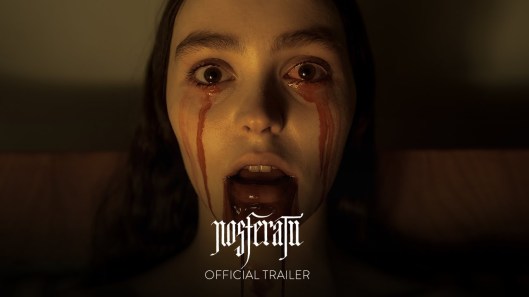
Robert Eggers’ long-anticipated Nosferatu proves to be another striking entry in the director’s growing repertoire. While it may not reach the towering heights of his earlier works like The Lighthouse or The Witch, Eggers’ fourth feature-length film is a visually intoxicating journey that honours its 1922 namesake while breathing new, sinister life into the legend.
From the moment the first frame flickers on screen, it’s evident that Eggers holds the original Nosferatu close to his heart. The film is awash with nods to F.W. Murnau’s silent classic, both in its reverence for German Expressionism and its stark, almost otherworldly aesthetic. Shadows and light clash in every frame, creating a chiaroscuro effect that feels like a love letter to the era of silent cinema. The jagged, angular sets—almost living entities in their starkness—slice through the film, their ominous presence as much a character as any in the story.
The performances elevate Nosferatu beyond mere homage. Willem Dafoe, no stranger to transforming himself for a role, brings a haunted gravitas to his character, Prof. Albin Eberhart Von Franz, while Lily-Rose Depp infuses her performance as Ellen Hutter with both fragility and strength, commanding the screen with grace. Bill Skarsgård, stepping into the titular role, once again demonstrates his ability to embody grotesque creatures with a chilling ease. His portrayal of the vampiric Count Orlok is unsettling and mesmerising, a fusion of menace and melancholy that lingers with you as you leave the cinema.
Sound design plays a pivotal role in Eggers’ vision. Breath—both its presence and absence—becomes a motif that underscores the film’s themes. The rasping, laboured exhalations of plague-stricken Londoners weave into the score, amplifying the suffocating dread that permeates the story. This auditory detail enriches the narrative, turning something as mundane as breathing into a symbol of survival and decay.
However, the film is not without its flaws. The storyline, while serviceable, lacks the depth and complexity of Eggers’ previous outings. This thinness in the plot occasionally exposes the runtime, making certain stretches feel elongated. Yet, this simplicity could be seen as a strength, allowing Eggers to delve into the essence of the tale rather than overburden it with unnecessary intricacies.
The Prognosis:
Nosferatu is a beautifully crafted piece of cinema, a masterclass in visual storytelling that immerses viewers in its eerie, dreamlike world. Though it may not soar as high as Eggers’ earlier works, it is undeniably a film made with passion and precision. For lovers of the original and newcomers alike, it offers a rich, sensory experience that solidifies Robert Eggers’ status as one of modern cinema’s most distinctive voices.
Ingmar Bergman’s Hour of the Wolf (1968) is a haunting exploration of the human psyche, wrapped in the shroud of surrealist horror. Often overshadowed by his magnum opus, Persona(1966), this film still stands as a remarkable achievement in Bergman’s illustrious career. Infused with themes of isolation, grief, sexuality, and fractured relationships, Hour of the Wolf delves into the fragile boundaries between reality and nightmare, offering a chilling portrait of psychological unraveling.
The film centres on Johan Borg (Max von Sydow), an artist tormented by inner demons, and his wife Alma (Liv Ullmann), who bears witness to his gradual descent into madness. Set on a remote island, their isolation becomes a breeding ground for paranoia and supernatural dread. Through Johan’s journal entries, we are introduced to a cast of grotesque figures—possibly products of his imagination—whose interactions blur the lines between memory, hallucination, and folklore.
Bergman’s use of folklore-inspired horror is particularly striking. The title refers to the time just before dawn, when the most deaths and births occur, evoking an atmosphere of heightened vulnerability. Subtle allusions to vampirism and lycanthropy further deepen the film’s surreal mystique, positioning it as a psychological horror piece with universal resonance.
Visually, Hour of the Wolf is a masterclass in unsettling imagery. Sven Nykvist’s stark black-and-white cinematography amplifies the film’s oppressive mood, while Bergman’s use of dreamlike sequences and fragmented storytelling creates an otherworldly atmosphere. One standout moment is Johan’s vivid recollection of an aristocratic dinner party, where grotesque characters mock and torment him. The sequence is both absurd and terrifying, encapsulating the film’s unique blend of existential dread and surrealism.
The film’s exploration of Johan and Alma’s relationship is equally compelling. Liv Ullmann delivers a powerful performance as Alma, whose love for Johan is both her strength and her curse. Her quiet resilience contrasts with Johan’s increasing detachment, highlighting the emotional toll of living with someone consumed by inner turmoil.
At its core, Hour of the Wolf is a meditation on the destructive power of creativity and obsession. Johan’s art becomes a metaphor for his deteriorating mental state, raising questions about the price of artistic genius. The film’s unsettling climax, where Johan confronts his demons in a surreal and chaotic sequence, serves as a harrowing depiction of psychological collapse.
Bergman’s exploration of grief and repressed desires adds another layer of complexity. The spectral figures haunting Johan can be interpreted as manifestations of his guilt and unfulfilled longings, making the horror deeply personal and introspective.
The Prognosis:
While not as universally lauded as Persona, Hour of the Wolf remains a standout in Bergman’s filmography for its bold fusion of psychological drama and horror. Its surreal style, rich symbolism, and unflinching examination of the human condition make it a compelling and thought-provoking experience. Hour of the Wolf is a mesmerising journey into the darkness of the soul.
In the crowded slasher landscape of the 1980s, The Mutilator (1985) carved out its place as a lesser-known but memorable entry. Written and directed by Buddy Cooper, this indie horror flick owes much of its cult status to its inventive kills and gruesome effects. Despite a screenplay that stumbles through clichés and awkward dialogue, the film’s sheer commitment to delivering blood-soaked carnage keeps it afloat.
The plot of The Mutilator treads well-worn territory. A group of teenagers decides to spend their fall break cleaning up a beach house, only to become prey for a vengeful, deranged father with a penchant for creative murder. The setup borrows heavily from the Friday the 13th playbook—a secluded setting, a mysterious killer, and an ensemble cast of soon-to-be victims—but lacks the tension and character depth of its inspiration. What The Mutilator offers instead is a straightforward march toward carnage, eschewing narrative complexity for shock value.
Where the screenplay falters, the practical effects shine. The kills in The Mutilator are among the most brutal and imaginative of the era, featuring pitchfork impalements, decapitations, and the infamous fishing gaff scene that remains a talking point among horror aficionados. The commitment to practical effects lends the film a visceral quality that helps offset its narrative shortcomings.
Cooper’s direction may lack finesse, but he shows a clear understanding of what his audience craves. The emphasis on elaborate death sequences makes the film’s flaws more forgivable, as each gruesome payoff keeps the energy alive.
The cast, comprised largely of unknowns, delivers serviceable performances that range from passable to wooden. Dialogue often feels stilted, and character development is minimal, leaving the audience with little investment in the protagonists’ fates. However, the actors’ enthusiasm for the material shines through, adding a layer of charm to the otherwise clunky script.
On the production side, The Mutilator wears its low budget on its sleeve, with modest sets and uneven cinematography. Yet, these limitations contribute to the film’s scrappy, grindhouse appeal. The synth-heavy score by Michael Minard enhances the atmosphere, offering a nostalgic glimpse into the aesthetics of 1980s horror.
The Prognosis:
While The Mutilator doesn’t reinvent the slasher genre, it delivers exactly what its title promises: unapologetically gory entertainment. The film’s shortcomings in writing and acting are mitigated by its standout effects and unrelenting dedication to visceral thrills. For fans of low-budget 1980s slashers, The Mutilator is a must-see curiosity—a flawed yet endearing homage to the era’s excesses.
The Mutilator thrives on its gory spectacle, carving out a small but bloody niche in the annals of horror history.
In the golden age of Hammer Horror-inspired cinema, The Blood Beast Terror (1968) dared to stand out with its blend of detective mystery and creature feature antics. Unfortunately, this boldness didn’t translate into cinematic success, resulting in a film that’s more curiosity than classic. Despite its flaws, the movie is buoyed by a stellar central performance from Peter Cushing and a capable supporting cast including Robert Flemyng and Wanda Ventham.
The film’s plot reads like a fever dream of 1960s pulp horror: a series of grisly murders plagues the countryside, each victim drained of blood. Enter Inspector Quennell (Cushing), a sharp-witted detective determined to solve the mystery. The trail leads him to Dr. Mallinger (Flemyng), an entomologist whose secret experiments have birthed a horrifying creature—a human-moth hybrid with a deadly thirst. Mallinger’s enigmatic daughter, Clare (Ventham), further complicates matters as Quennell unravels the twisted truth.
Peter Cushing’s performance as Inspector Quennell is the film’s greatest asset. His trademark gravitas and effortless charm breathe life into the otherwise pedestrian script. Whether interrogating suspects or confronting unspeakable horrors, Cushing elevates every scene with his nuanced delivery and commanding presence. His performance alone makes The Blood Beast Terror worth a watch for fans of vintage horror.
Robert Flemyng provides a suitably sinister turn as Dr. Mallinger, blending arrogance and desperation in his portrayal of a man consumed by hubris. Wanda Ventham, as Clare, delivers an enigmatic performance that hints at the character’s duality, though the script’s limitations leave her with little room to shine. Ventham’s ethereal beauty and restrained menace make her a memorable part of the film, even as the narrative fails to fully explore her potential.
The concept of a giant killer moth might seem ludicrous, but it’s handled with surprising seriousness. The creature effects, while dated, possess a certain charm and showcase the ingenuity of the era’s low-budget filmmaking. The transformation sequences and final confrontation are standout moments, embodying the warped gold that makes this film intriguing despite its shortcomings.
The Prognosis:
The Blood Beast Terror is a peculiar entry in the annals of 1960s horror. While it struggles under the weight of a thin script and an outlandish premise, the performances—particularly Cushing’s—and the audacity of its concept make it a fascinating watch for genre enthusiasts. That said, the film ultimately lacks the polish and cohesion needed to ascend to the ranks of its contemporaries.
The Blood Beast Terror is best appreciated as a quirky relic of its time, a testament to the creativity and ambition of mid-century horror cinema.
Released in 1975, The Bedevilled remains a fascinating but flawed example of supernatural horror, blending themes of corruption, revenge, and the paranormal within a taut 90-minute runtime. Directed with atmospheric flair, the film offers plenty of intrigue but ultimately falls short of its full potential.
Set in a small, isolated town, the story unfolds after the mysterious death of the influential Lin family’s only son. Found naked and dead in the quarters of Cheng Niang, a vinbutik hostess, his demise sparks a chain of accusations. The grieving father, Old Lin, accuses Chai-Tseng Chu, Cheng Niang’s husband, of murder. Despite Tseng’s insistence on his innocence, Cheng Niang’s sudden disappearance casts doubt on his claims. When Magistrate Tang, pressured and bribed by Old Lin, condemns Tseng to death, it sets the stage for a chilling supernatural turn. Cheng Niang’s eventual return exposes not only her grief but also an unsettling truth, as ghostly apparitions begin haunting Judge Tang.
Reiko Ike, a Japanese cinema icon of the era, is sadly underutilised in The Bedevilled. Best known for her commanding presence in exploitation films, Ike’s role as Cheng Niang offers glimpses of her talent but fails to fully capitalise on her charisma. While she delivers a poignant performance in her limited screen time, the script’s focus on the convoluted male-driven narrative sidelines her character’s potential depth. It’s a missed opportunity that could have elevated the film from competent to compelling.
One of the film’s most memorable moments is the infamous severed head sequence. The chillingly practical effects, paired with an eerie sense of timing, make this scene a standout in an otherwise uneven story. The sequence’s visceral impact and macabre creativity hint at the film’s untapped potential to push boundaries and fully embrace its horror elements.
Equally effective are the ghostly hauntings of Judge Tang, whose descent into madness and guilt is depicted with growing dread. The spectral encounters are staged with a keen sense of atmosphere, enhanced by the haunting score and shadow-drenched cinematography. These moments elevate the film, even as the narrative struggles to maintain coherence.
The Prognosis:
While The Bedevilled has its moments of brilliance, its uneven execution prevents it from achieving greatness. The sidelining of Reiko Ike’s character and a reliance on predictable plot twists dilute the impact of its otherwise intriguing premise. However, its standout moments—particularly the severed head sequence and ghostly apparitions—offer glimpses of what could have been a cult classic.
The Bedevilled remains a curiosity worth revisiting for fans of 1970s supernatural horror. It’s a film that tantalises with promise but ultimately leaves viewers haunted by what might have been.
Few figures in horror cinema are as enduring or enigmatic as Count Orlok. From his haunting debut in F.W. Murnau’s 1922 silent masterpiece Nosferatu: A Symphony of Horror to his modern resurgence in pop culture, Orlok has remained a symbol of terror and the uncanny. With Robert Eggers’ highly anticipated remake of Nosferatu set for release, it’s the perfect time to delve into the fascinating history of this iconic vampire and the cinematic legacy he has cast over a century.
1922: Birth of a Horror Icon
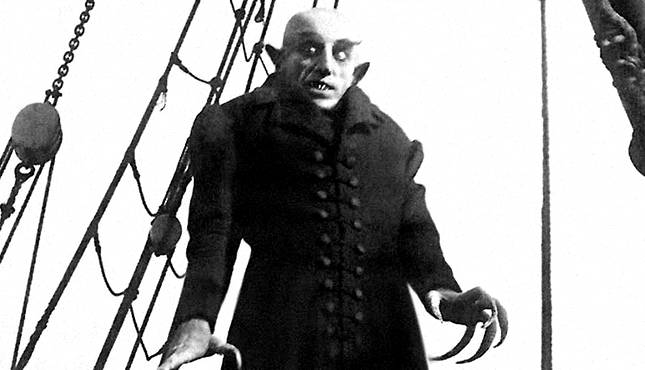
Count Orlok first emerged from the shadows in Nosferatu, portrayed with eerie brilliance by German actor Max Schreck. An unauthorized adaptation of Bram Stoker’s Dracula, Murnau’s film altered key elements to avoid legal repercussions—giving us Orlok in place of Dracula, a rat-like, ghoulish creature whose appearance was as unsettling as his supernatural presence.
Unlike the suave and charismatic vampires popularised in later decades, Orlok was grotesque and animalistic. His skeletal frame, elongated fingers, and bat-like visage made him an embodiment of pestilence and death, a fitting image in post-World War I Germany as the nation grappled with the horrors of war and the 1918 influenza pandemic. The film’s Expressionist cinematography only heightened the surreal terror of Orlok’s presence, cementing him as a cultural touchstone.
The Legal Battle and Cultural Resurrection
The original Nosferatu faced near destruction due to a lawsuit from Stoker’s estate, which ordered all copies of the film to be destroyed. Thankfully, several prints survived, allowing the film to gain legendary status over time. Orlok’s distinct appearance and the chilling atmosphere of the film have inspired generations of filmmakers, ensuring his place in horror history.
The 1979 Reinvention: Herzog’s Homage
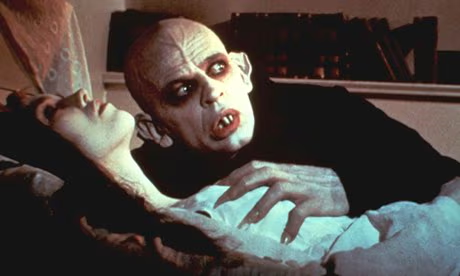
Werner Herzog’s Nosferatu the Vampyre (1979) reimagined Orlok for a new era. Starring Klaus Kinski as the Count, the film retained much of Murnau’s visual language while adding a layer of tragic melancholy to the character. Kinski’s Orlok was both monstrous and pitiable, a being cursed with immortality and insatiable hunger. This reinterpretation deepened the character’s complexity, offering a stark contrast to the more romanticised vampires of contemporary cinema.
Herzog’s film not only paid homage to Murnau but also underscored Orlok’s continued relevance as a symbol of existential dread and human vulnerability. It demonstrated that the Count’s haunting visage and the themes he embodies could transcend eras and cultural contexts.
Orlok in Popular Culture
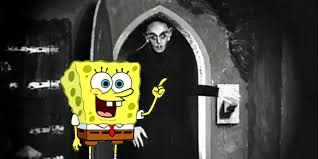
Beyond the silver screen, Count Orlok has seeped into various facets of pop culture. From parodies in animated shows like SpongeBob SquarePants to his influence on vampire lore in literature and games, Orlok’s shadow looms large. His monstrous form serves as a counterpoint to the seductive vampires popularized by the likes of Bela Lugosi and Anne Rice’s The Vampire Chronicles, offering a reminder of the genre’s more primal and terrifying origins.
The Eggers Era: A New Dawn
Now, with Robert Eggers at the helm of a new Nosferatu, the Count is poised to captivate audiences once again. Known for his meticulous attention to historical detail and atmospheric storytelling (The Witch, The Lighthouse), Eggers is uniquely equipped to breathe new life into Orlok’s tale. His vision promises to explore not only the horror but also the enduring mythos surrounding the vampire legend, ensuring that Orlok remains as vital and terrifying as ever.
Count Orlok’s journey from the shadows of silent cinema to modern reinterpretations is a testament to his enduring power as a symbol of fear and fascination. As Eggers’ Nosferatu approaches, we are reminded of the timeless allure of the monstrous and the uncanny. Orlok’s story is not merely a relic of the past but a living, evolving legend—one that continues to cast its eerie shadow over the world of horror.

 Surgeons of Horror