He always wanted to be special… but he never expected this!
Dust off that VHS, rewind your tape, and step back into the neon-soaked summer of 1985, because Teen Wolf is turning 40. Directed by Rod Daniel, this shaggy slice of high school fantasy is as pure ‘80s as a can of New Coke and a Back to the Future poster on your bedroom wall.
The story is simple but delightfully goofy: Scott Howard (Michael J. Fox), a shy, underdog teen, suddenly finds out he’s inherited a family curse… or gift, depending on your outlook. That’s right, he’s a werewolf—and instead of lurking in the shadows or howling at the moon, he’s dunking basketballs, dancing on car rooftops, and trying to figure out if he wants the popular girl or the one who’s been right there all along.
Looking back, Teen Wolf is by no means a perfect film. The script lopes from corny gags to half-baked teen melodrama, and the makeup effects are more Saturday matinee than spine-chilling horror. But it doesn’t really matter. This isn’t An American Werewolf in London—this is a PG, popcorn-munching time capsule of a decade that adored its offbeat high school comedies.
At the center is Michael J. Fox, riding the stratosphere of his fame after Back to the Future. His charisma and comedic timing are the glue that holds the whole fuzzy package together. Without him, Teen Wolf might have slipped into obscurity, but with him, it became an unlikely box office smash and an MTV-generation touchstone.
The Prognosis:
Four decades on, Teen Wolf still makes you grin. It’s awkward, it’s cheesy, it’s ridiculous—but that’s the charm. From “wolfing out” on the basketball court to that rooftop surfing scene, it wrestles all the nostalgic feels for an upbeat excuse to watch a teenage werewolf slam dunk his way through high school life.
So no, it doesn’t howl with greatness, but like a faded rental box at your local video store, it’s got just enough ‘80s magic to make you hit play one more time.
Saul Muerte
📼 Staff Pick!
“Michael J. Fox plays basketball… as a werewolf. That’s it, that’s the pitch. Totally silly, totally fun, totally ‘80s. Don’t expect scares—expect smiles.”
Premiering on the opening night of FrightFest 2025 at the ODEON Luxe Leicester Square, Illya Konstantin’s debut feature Night of Violence arrives with plenty of ambition and a message aimed squarely at the horrors of corporate greed and the opioid crisis. Part workplace-invasion thriller, part satire, it promises to confront real-world issues through the lens of exploitation cinema.
There’s no denying the energy behind Konstantin’s filmmaking. The film is scrappy, bloody, and unapologetically brash, with moments of gore that land effectively and demonstrate a clear enthusiasm for the genre. The central conceit — asking what survival looks like in a profit-driven world — is a timely and resonant one, ensuring that Night of Violence never lacks for thematic ambition.
Unfortunately, where the film falters is in its execution. The script struggles to sustain its weighty ideas, often relying on dialogue that feels blunt rather than biting. Characters come across as two-dimensional archetypes, serving more as mouthpieces for the film’s message than as people the audience can invest in. As a result, the satire feels undercooked, the thrills somewhat hollow, and the film’s bigger questions end up buried under noise rather than sharpened by it.
The Prognosis:
For a debut, Konstantin deserves credit for swinging big and refusing to play it safe — Night of Violence certainly doesn’t lack passion or intent. But with thinly drawn characters and a weak script dragging down its flashes of brutal impact, the film plays more like a promising calling card than a fully realised statement.
I Know What You Did Last Summer. Followed by I STILL Know What You Did Last Summer. Followed by I’ll Always Know What You Did Last Summer. Followed by an Indian rip off and a TV Series.
Who knew those last 3 were a thing?!
And now, a Legacy Sequel! That’s the term apparently! Which is basically what you call a sequel that happens so long after the last movie you can get away with slapping it with the original title.
Like The Thing and The Thing and Halloween and Halloween and Scream and Scream.
Or Inside Out and Inside Out and Inside Out and Inside Out and Inside Out. Although those last 5 had nothing to do with each other – that was just an exercise to show off I can use Google as a search engine.
Now with this film they really should have kept the momentum going with something like “Anyway, Where Were We? Oh Yeah! I REALLY Know What You Did Last Summer and Maaaan Are You In Twouble…”
‘Cause why not?
But I digress. When this instalment was announced, it seemed like a blatant cash in on the last Scream release. Except that film didn’t have its female Party of 5 lead, whereas this movie does.
So apart from Jennifer Love Hewitt returning as Julie James, we have Mr. Sarah Michelle Gellar AKA Freddie Prinze Jr. returning as Ray Bronson and…. Mrs. Sarah Michelle Gellar AKA Sarah Michelle Gellar returning as Helen Shivers.
And yes, for those of you who remember the original, that particular last factoid throws up a question that you can probably answer after thinking about it for half a second.
So – to catch you up on the premise of the original – a bunch of rather well-off white kids kill a stranger whilst driving irresponsibly on a quiet bendy road on the side of a hill.
Realising they can get away with this crime if they just stay schtum, we fast-forward a year later and we find these teenagers are dealing with what they’ve done in different ways – none of them healthy.
And their sitch gets worse when they get a mysterious note delivered to them that says the title of the movie, and a large dark figure dressed like a fisherman in a slicker (apparently that’s what the heavy raincoat look is called) armed with a hook starts stalking and killing them.
BUT with this legacy sequel, a bunch of rather well-off white kids kill a stranger whilst driving irresponsibly on a quiet bendy road on the side of a hill.
Realising they can get away with this crime if they just stay schtum, we fast-forward a year later and we find these teenagers are dealing with what they’ve done in different ways – none of them healthy.
And their sitch gets worse when they get a mysterious note delivered to them that says the title of the movie, and a large dark figure dressed like a fisherman in a slicker (apparently that’s what the heavy raincoat look is called) armed with a hook starts stalking and killing them.
So yeah. With that I’m pretty much at a loss as to what to say next. So… with his take on the film – here’s Chris Dawes…
HAHAHAHAHAHAHAHAHAHA
HAAAAAAAA
HAHAHAHAHAHAHAHAHAHAHA
Jesus Christ.
Ok.
So, get someone drunk. Like really drunk. Like “wheelbarrow of vodka and a hose” drunk.
Then, try to get them to recount the plotlines of every prior I Know What You Did movie.
That is this script.
It’s the most hilariously incoherent pastiche of moments from the earlier gear you could possibly spend 50 million dollars to create.
It is an absolutely terrible film. Just soooooo goddamn dire – but it’s the kind of dire that is enjoyed in the company of friends, with whom you will share every inconceivably written plot point and sophomorically acted quotation from now until the end of time.
I loved every fucking second of it, 1000% worth the price of admission.
Also, watch it with as many Zoomer and Alpha influencers who didn’t grow up ensconced in the culture as you can – their bewildered reactions to everything happening made it all the more special.
Thanks Chris!
Well there you have it. He liked it!
The Prognosis:
Long story short, it’s not very good. But then again, they’ve always been the poor relation to the SCREAM films. Although it’s nice to see Jennifer Love Hewitt again. And oh yeah – spoiler alert – there is a twisty twist that makes you feel… nothing really. Unless you’re invested in this franchise. In which case you cheeky little R. Slicker 😉
Director Matthew Losasso’s feature debut Row takes the oceanic survival thriller and places it in an unnervingly claustrophobic setting. When a blood-stained rowing boat washes up on the Scottish coast, sole survivor Erin (Bella Dayne) is found with no memory of what happened to her missing crew. As fragments of her ordeal begin to resurface, the line between truth and paranoia blurs, leaving her — and the audience — to question what really happened on the North Atlantic.
What makes Row compelling is its stripped-down intensity. Confined largely to a rowing boat and a handful of central characters, the film thrives on its sense of isolation. Much like Hitchcock’s Lifeboat, the limited setting heightens every glance, every fraying nerve, and every creeping suspicion. Losasso’s direction makes clever use of both the open sea and the more intimate water tank sequences, ensuring the tension never feels stagey or static.
Bella Dayne carries the film with a strong, layered performance, keeping Erin’s vulnerability and resilience in constant conflict. Around her, Sophie Skelton, Akshay Khanna, and Nick Skaugen add fuel to the psychological fire, feeding the audience’s doubts about who can be trusted. The film’s visual texture — captured in Caithness and along the Scottish coast — lends a bleak beauty to the ordeal, a reminder of nature’s indifference to human suffering.
If there’s a drawback, it’s that the narrative occasionally drifts into familiar survival-horror beats, and some viewers may find its final revelations less impactful than the gripping tension leading up to them. Still, as a debut feature, it’s a confident and unsettling piece of work that thrives on mood, anxiety, and the psychological unravelling of its characters.
The Prognosis:
Row doesn’t reinvent the genre, but it demonstrates that Losasso is a director with a keen eye for atmosphere and psychological stakes. Tightly woven, quietly haunting, and with shades of Hitchcockian influence, this is a thriller that pulls you in and refuses to let go.
In an era increasingly defined by bold reinterpretations of classic horror, Franc Roddam’s The Bride set out to breathe new life into Mary Shelley’s time-worn tale — but instead delivered a pallid, porcelain imitation, more concerned with moody stares and billowing curtains than genuine pathos or terror.
Reimagining the legendary final act of Frankenstein, this version begins where most others end: with the creation of a mate for the monster. The titular bride, named Eva and played by Flashdance’s Jennifer Beals, emerges not as a shrieking ghoul but a vision of modern femininity painted onto a Victorian canvas. Alas, neither the character nor the performance holds much electricity. Beals looks the part, but is never granted the depth required to make Eva anything more than an ornament in corsetry.
Sting, in a brooding and bizarrely detached turn as Baron Charles Frankenstein, embodies the film’s cold core. Rather than the obsessed, guilt-ridden creator of Shelley’s vision, Sting’s Frankenstein is a handsome cipher with cheekbones for days and little by way of soul. His descent into obsession with Eva is more about controlling her than loving her, turning what could have been an intriguing exploration of gender roles into a sluggish melodrama.
Clancy Brown fares best as the cast-off monster, who embarks on a tender journey of self-discovery and companionship far away from Frankenstein’s sterile chateau. His scenes with a kind-hearted dwarf are oddly touching, suggesting a much better film that briefly stirs to life before the narrative retreats back to its overwrought romance.
The cast, including Geraldine Page, Cary Elwes, Alexei Sayle, and Phil Daniels, is filled with strong players, but most are reduced to little more than Victorian set dressing. Their performances are engulfed by the film’s overly romanticised production design and languid pacing. One half expects them to melt into the candle wax before they get a meaningful line.
Roddam, best known for Quadrophenia, directs with a painter’s eye but not a horror fan’s heart. The film is lush to look at, but devoid of the dread or existential ache that made Shelley’s original novel and James Whale’s 1935 Bride of Frankenstein such enduring works. By trying to humanise the bride and elevate the material into gothic romance, the film forgets to engage with the monster at its centre — both literal and metaphorical.
The Prognosis:
In the grand laboratory of Frankenstein adaptations, The Bride is an experiment that looks exquisite in still frames but collapses under the weight of its own affected seriousness. There’s poetry in the concept, but very little pulse.
It’s been 40 years since The Return of the Living Dead shuffled, sprinted, and shrieked its way onto cinema screens, unleashing a chaotic blend of punk rock anarchy, grotesque splatter, and dark comedy that set it apart from the more solemn zombie canon of the time. Written and directed by Alien co-creator Dan O’Bannon in his directorial debut, the film took a side door into George A. Romero’s undead universe and blew it wide open with a mohawked middle finger.
Rather than emulate Romero’s social commentary-laden horrors, O’Bannon opted for something rowdier, more rebellious. He injected his tale with a subversive punk ethos that thrived on nihilism, attitude, and aesthetic chaos — fitting perfectly with the Reagan-era disillusionment bubbling beneath the surface of 1980s youth culture. From the moment the Tarman lurches from his canister with a gooey “Braaaains,” you know you’re in for something altogether weirder, louder, and dirtier.
A Director of Dark Ideas
O’Bannon’s fingerprints are all over this madness. Having previously collaborated with John Carpenter on Dark Star (1974), a lo-fi sci-fi satire, O’Bannon showed early signs of his interest in bureaucratic ineptitude, flawed authority figures, and characters who crack under pressure. Those themes are alive and well in Return, as Frank and Freddy (James Karen and Thom Mathews) bungle their way into doomsday with pitch-black comic flair. O’Bannon’s ability to juggle absurdity and dread feels like a spiritual continuation of Dark Star’s cosmic incompetence — only now with punk rock zombies and rib cages flying across the screen.
Linnea Quigley: Scream Queen Icon
No retrospective is complete without acknowledging Return’s punk siren, Linnea Quigley. As Trash — the cemetery-dancing, death-fantasizing goth girl — Quigley became a bona fide B-movie legend. Her performance isn’t just a campy cult favourite; it’s emblematic of a genre era where sex, gore, and attitude collided. I had the pleasure of interviewing Quigley in the early days of the Surgeons of Horror podcast, and her passion for indie horror and her status as a scream queen remain as potent today as ever.
One of the film’s most enduring legacies is its soundtrack. It didn’t just accompany the movie — it was the movie’s beating heart. Featuring tracks from The Cramps, 45 Grave, T.S.O.L., The Damned, and Roky Erickson, the music seethes with defiance and doom. The soundtrack wasn’t an afterthought; it was a manifesto. It locked the film into the punk subculture and turned it into a midnight movie mainstay, the kind you quoted at parties and watched on scratched VHS at 2AM with your loudest friends.
A Cult That’s Still Kicking
The Return of the Living Dead didn’t just inspire sequels — it inspired a lifestyle. Its heady mix of gallows humour, splatterpunk visuals, and self-awareness gave rise to a devoted fanbase who still scream “Send more paramedics!” at screenings. Its zombies are fast, smart, and unrelenting, subverting Romero’s rules and adding fresh panic to the genre. And its influence bleeds through countless horror-comedies that followed, from Dead Alive to Shaun of the Dead.
Though not always polished — the film wears its rough edges like badges of honour — Return survives as a riotous time capsule of punk horror energy. Dan O’Bannon may have only directed a handful of films, but this one alone is enough to keep his name in the horror hall of fame.
The Prognosis:
Forty years on, The Return of the Living Dead still kicks, bites, and thrashes. Whether you’re here for the brains, the tunes, or the screaming, mohawked zombies, there’s no denying its impact on horror, punk culture, and midnight movie fandom.
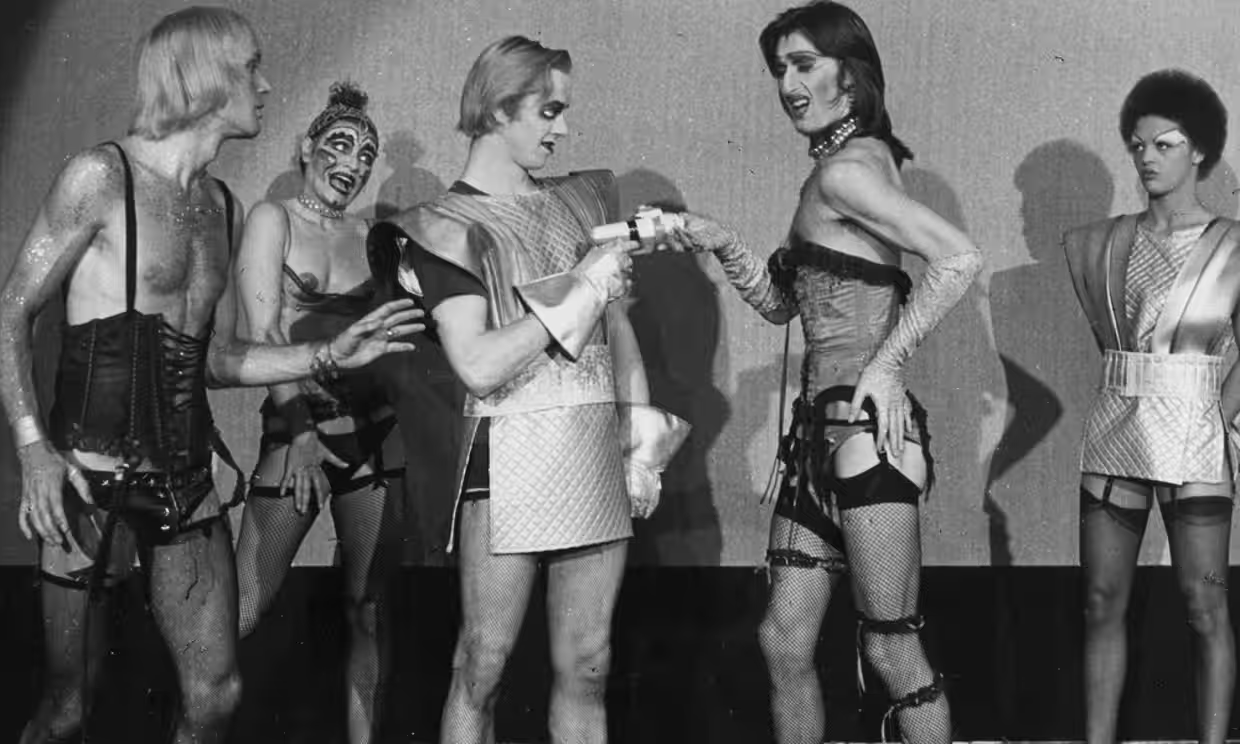
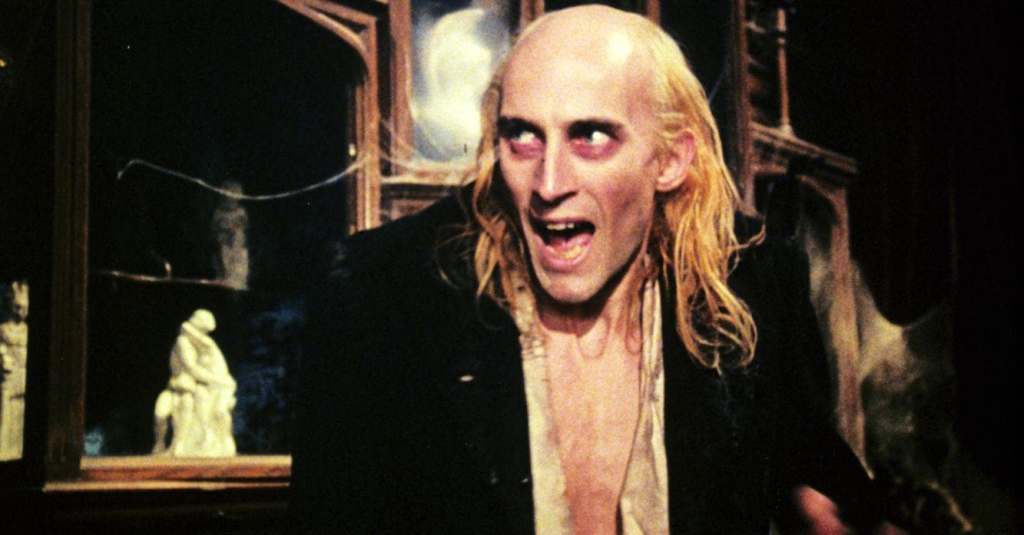
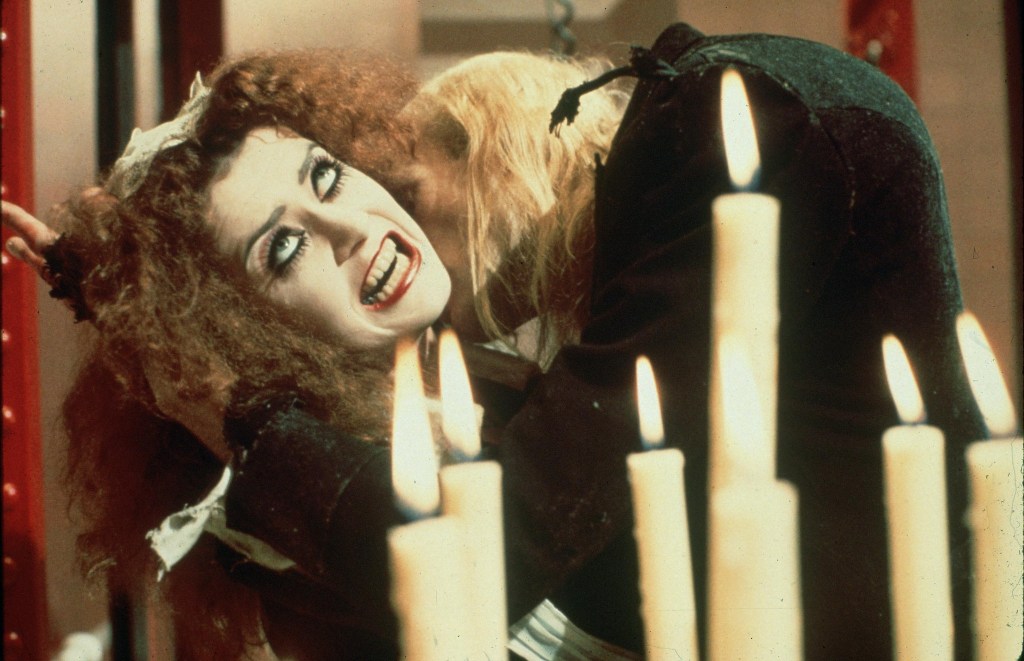
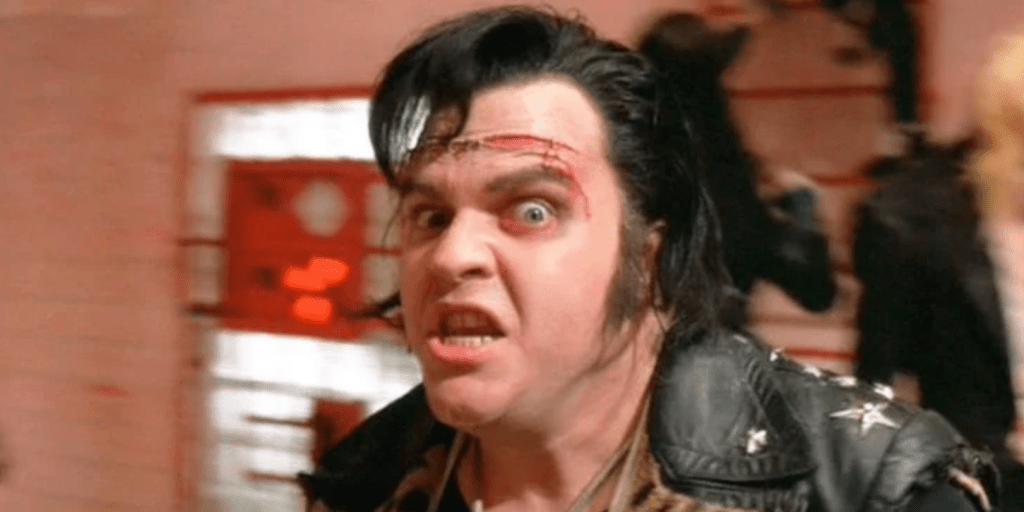
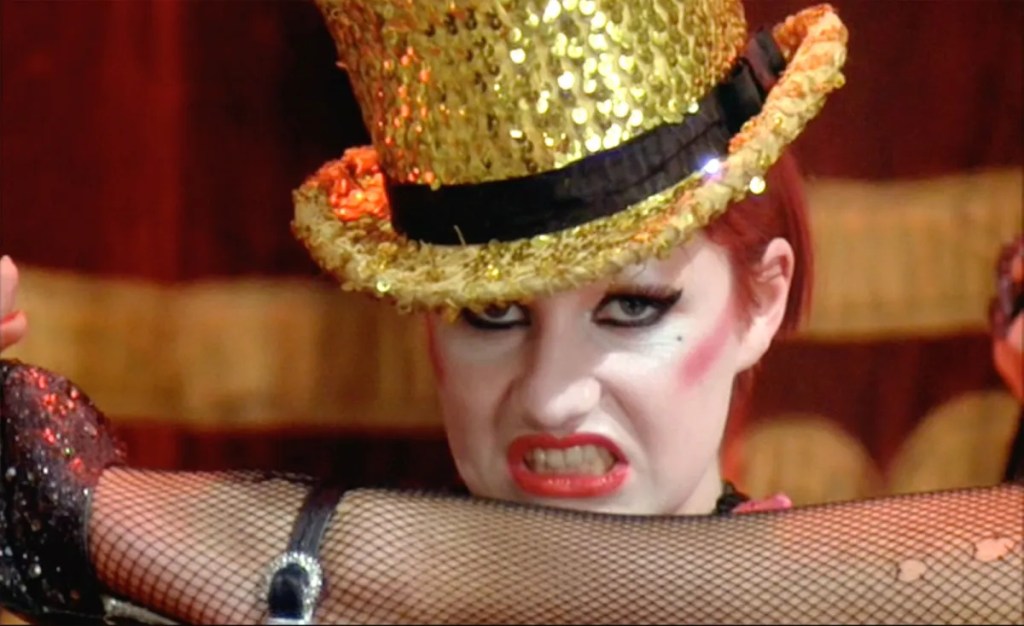
Half a century ago, something strange, spectacular, and undeniably sexy burst out of the lab and onto cinema screens. The Rocky Horror Picture Show, directed by Jim Sharman and based on Richard O’Brien’s 1973 stage musical, was a box office flop upon release. But if you listen closely, you can still hear the echo of fishnets shuffling down the aisles, newspapers crinkling, and toast flying. What began as a gleefully campy homage to B-movies and rock ’n’ roll has become the longest-running theatrical release in film history — a cultural institution whose legacy transcends cinema.
From Stage to Screen
Before Rocky stormed the midnight movie circuit, it was The Rocky Horror Show, a West End stage sensation born in the countercultural crucible of early-’70s London. Created by Richard O’Brien, the musical combined sci-fi schlock, Hammer horror, and glam rock swagger into a tight, taboo-shattering stage production that quickly caught the eye of 20th Century Fox.
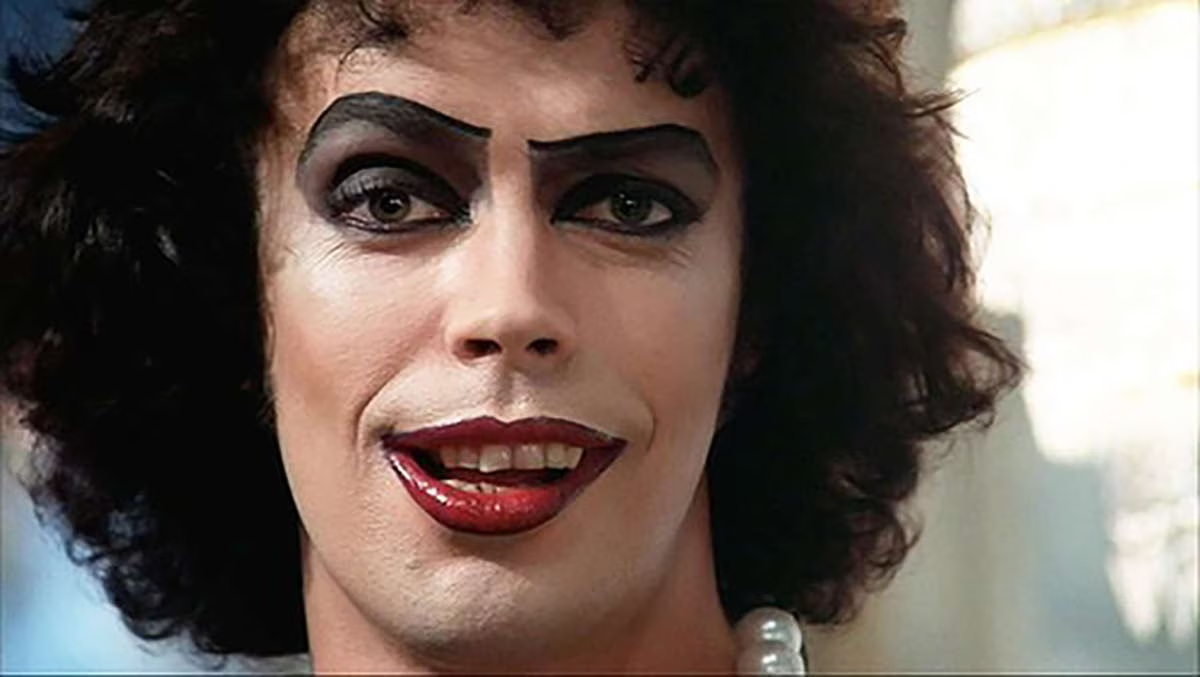
The leap to film in 1975 brought along director Jim Sharman and much of the original stage cast, including O’Brien himself. The film version expanded the show’s surrealism with expressionist sets and gaudy Technicolor palettes, but its heart remained the same: unapologetically queer, joyously anarchic, and deliriously fun. At its centre was Tim Curry’s legendary performance as Dr. Frank-N-Furter — a sexually fluid mad scientist from “transsexual Transylvania” — who made seduction, sass, and stilettos feel downright revolutionary.
The Rocky Horror Picture Show didn’t find its audience immediately. But beginning in 1976, it gained traction as a midnight movie, first in New York, then across the U.S. and worldwide. Fans came back week after week, dressed as their favourite characters, shouting lines at the screen, and participating in shadow casts — live performances synced with the film. It wasn’t just watching a movie; it was ritual, rebellion, and release.
Its impact can’t be overstated. Rocky Horror became a safe haven for outsiders, a beacon for the LGBTQ+ community long before mainstream media offered such visibility. It celebrated difference, queerness, camp, and kink with joyous abandon. Few films have made as many people feel seen by being so wonderfully strange.
Where Are They Now?
Tim Curry (Dr. Frank-N-Furter)
Curry’s outrageous performance launched a lifelong career. He went on to star in Clue (1985), Legend (1985), and as the terrifying Pennywise in the 1990 adaptation of It. After a stroke in 2012, he’s remained active in voice work and public appearances, still beloved by generations of fans.
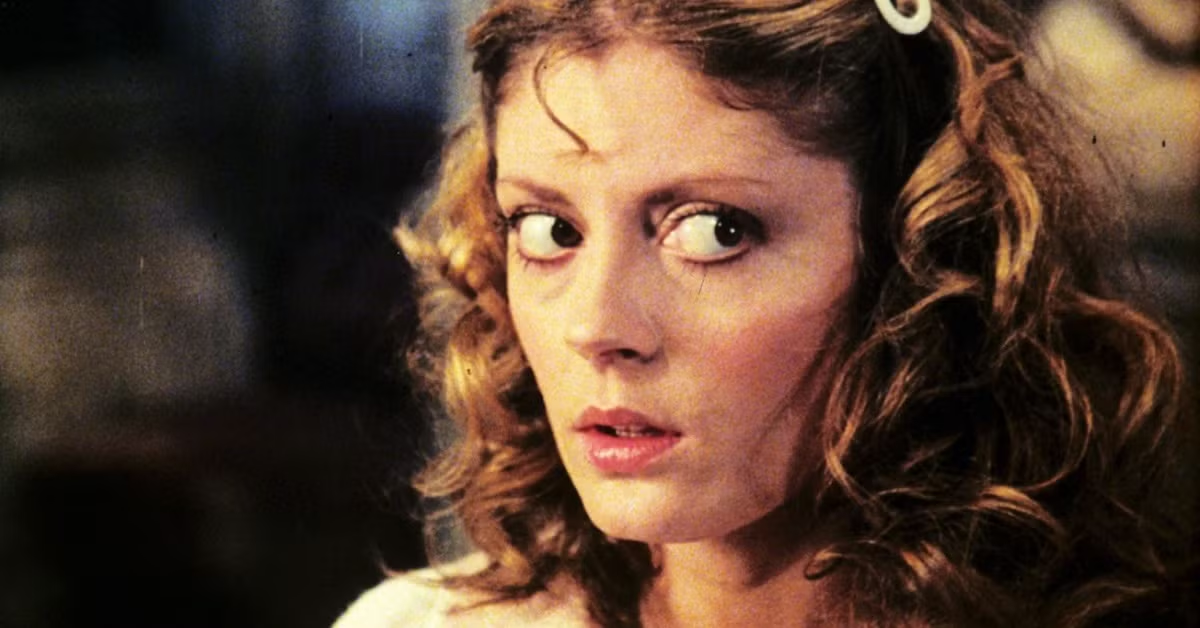
Susan Sarandon (Janet Weiss)
A relatively unknown actor at the time, Sarandon’s star rose fast. She would win an Oscar for Dead Man Walking (1995) and continues to be an outspoken activist and prolific performer.
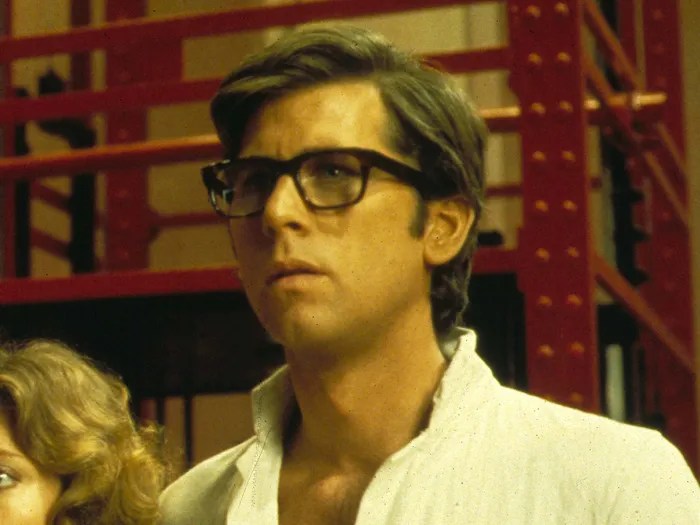
Barry Bostwick (Brad Majors)
Bostwick built a steady TV and film career, including a long-running role on Spin City. He’s embraced his Rocky past, often appearing at conventions and reunions.
Richard O’Brien (Riff Raff / Writer)
O’Brien remained closely tied to Rocky Horror, penning Shock Treatment (1981), a spiritual sequel. He continues to act, perform, and advocate for trans rights, having come out as gender-fluid in recent years.
Patricia Quinn (Magenta)
Quinn has maintained a cult following and reprised her Rocky role in various fan events. Her distinctive voice still opens every screening with “Science Fiction / Double Feature.”
Meat Loaf (Eddie)
Already a rising rock star, Rocky helped launch Meat Loaf into the stratosphere. His Bat Out of Hell albums became massive hits. He passed away in 2022, leaving behind a legacy as larger-than-life as Eddie himself.
Nell Campbell (Columbia)
Credited as “Little Nell,” Campbell brought jittery energy and a killer tap number to the film. After Rocky, she pursued a career in music, releasing quirky singles and opening a beloved Manhattan nightclub, Nell’s, in the 1980s. Though she stepped back from acting, she remains a cult icon and pops up occasionally in retrospectives.
Charles Gray (The Criminologist)
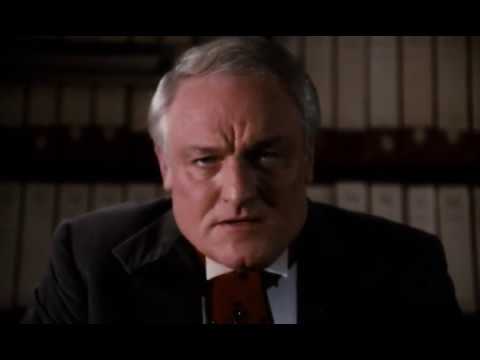
Already a veteran of stage and screen before Rocky, Gray was known for his commanding voice and steely presence, having appeared in James Bond films like You Only Live Twice and Diamonds Are Forever. His role as the tongue-in-cheek narrator added gravitas and wry comedy to Rocky Horror. He passed away in 2000, leaving behind a legacy of charismatic authority and delicious deadpan.
Jim Sharman (Director)
Sharman continued to direct in theatre and film, but Rocky Horror remains his defining work. His vision helped translate the intimate chaos of the stage show into a cinematic spectacle that has never faded.
Still Sweet, Still Transgressive
Fifty years on, The Rocky Horror Picture Show remains electric. It may be a cultural artifact, but it’s never felt dusty. New generations continue to discover it, claim it, and dress up for midnight screenings. Its message — be yourself, loudly and without shame — is just as vital now as it was in 1975.
Whether you’re watching it for the first time or the five-hundredth, there’s always a reason to return to that spooky old castle. After all, like the man said — don’t dream it, be it.
When Zach Cregger entered the horror feature scene, he didn’t tiptoe — he detonated expectations. Barbarianwas less a debut than an ambush: a grimy, surprising, and brutally effective tale that revealed the monstrous rot beneath the airbrushed façade of Airbnb America. Its impact was seismic enough to place Cregger alongside names like Ari Aster and Jordan Peele — auteurs reshaping horror into the cultural mirror it was always meant to be. So when Weapons, his sophomore effort, sparked a bidding war (with Peele among the contenders), it was more than a surprise — it was a coronation in waiting.
Needless to say, Cregger won that war — and what he’s delivered is not Barbarian 2.0, but something stranger, more ambitious, and arguably more fractured. Weapons is a moody mosaic of trauma and silence, a sinister Rubik’s Cube where every rotation deepens the dread.
The premise? Devastatingly simple: seventeen children vanish in a single night from a third-grade classroom, leaving behind one silent survivor. From this incomprehensible event, the narrative spirals outward — or perhaps downward — following a grieving parent, a guilt-ridden teacher (Julia Garner in one of her finest, most haunted performances), a cop on the edge, and a child forever changed. But where other films would tighten their grip around whodunit logic, Weapons unspools into something looser, more hypnotic, and more unsettling.
Like Magnolia if directed by a sleep-deprived David Lynch with a grudge against PTA meetings, Weapons stitches together fractured timelines and parallel points of view. What emerges is not a thriller in any traditional sense, but a psychological pressure-cooker about grief, complicity, and the invisible rot hiding beneath the manicured lawns of America’s suburbs.
This underworld — literal and figurative — is fast becoming Cregger’s signature terrain. In Barbarian, it was the basement: that dread-soaked labyrinth of generational abuse buried beneath a “perfect” Detroit neighborhood. In Weapons, there is no single basement, but many — emotional caverns, buried truths, suburban crypts dressed as cul-de-sacs. The “what lies beneath” motif returns, only now it’s diffused across an entire town, each household its own cracked mask.
Cregger’s knack for dissonant tonal shifts — likely honed during his time with the absurdist comedy troupe The Whitest Kids U’ Know — is used here not just for comic relief, but as a narrative landmine. Just as you settle into one emotional register, he flips it: tragedy becomes absurdity, horror becomes farce, and laughter curdles into a scream. The comedy doesn’t soften the horror — it accentuates it, like a smile too wide on a corpse.
Though Weapons doesn’t carry the shocking immediacy of Barbarian, it proves Cregger isn’t a one-trick provocateur. He’s a filmmaker drawn to structure — and its collapse. He’s fascinated by what people repress, and what happens when that repression becomes radioactive. What makes this second feature particularly resonant is its willingness to linger, to disorient, and to drag its audience down into the darkness without the promise of catharsis.
Josh Brolin, as a grizzled, emotionally feral father, grounds the film with a gut-punch performance that crackles with grief and rage. And Garner’s turn as Justine Gandy — a character navigating guilt, authority, and maternal ambivalence — is quietly devastating. Their presence not only adds gravitas, but signals that Weapons is aiming beyond the horror niche. It wants to haunt, not just horrify.
Yes, Weapons will divide. It lacks the clean arc of a traditional mystery. It demands attention, patience, and a willingness to fall into its emotional sinkholes. But for those attuned to its wavelength, it’s a rewarding descent — a fever dream that lingers in the bones.
The Prognosis:
Cregger has once again shown that he isn’t just interested in jump scares or gore. He wants to excavate — to dig through the ruins of modern life and see what festers beneath. With Weapons, he’s pulled up something malformed, tragic, and oddly beautiful.
The question isn’t whether he’ll push boundaries in future films. It’s whether we’ll be ready for where he takes us next — or what lies buried when we get there.
Quarxx’s All the Gods in the Sky (Tous les dieux du ciel) is not easily categorised, and that’s entirely the point. Sitting somewhere between psychological horror, arthouse drama, and cosmic nightmare, this French genre-bender takes its time and isn’t afraid to make its audience uncomfortable—both emotionally and philosophically.
At the centre of this bruising tale is Simon, a deeply troubled factory worker played with quiet intensity by Jean-Luc Couchard. Isolated on a decaying farmhouse in the French countryside, Simon devotes his life to caring for his sister Estelle (Melanie Gaydos), who was left severely disabled due to a tragic accident during their childhood. The pair exist in a shared purgatory of guilt, silence, and unresolved trauma.
Quarxx delivers a slow punch of a film—one that creeps under your skin not with conventional jump scares, but with mood, decay, and despair. It builds its atmosphere with surgical precision, weaving in splinters of sci-fi, existential dread, and surrealism. Simon’s fixation with extraterrestrial salvation offers a disturbing mirror into his desperation—a hope that something beyond this earth might rescue them from their irreversible reality.
While not all of its experimental swings land perfectly, the film is bolstered by weighty performances and a haunting visual style. The bleak, moldy interiors and ghostly farm exterior evoke a tactile sense of rot, both physical and spiritual. Quarxx makes no effort to handhold the viewer, instead demanding that we wade through the same confusion and torment as Simon himself.
All the Gods in the Sky is certainly not a film for everyone. Its pacing is deliberate, its emotional resonance often brutal, and its genre elements veer from subtle to grotesque. But for those willing to embrace its unsettling tones, there’s something strangely transcendent at its core—a meditation on guilt, disability, and the yearning for escape, whether divine or alien.
The Prognosis:
Though it never fully ascends into the upper tier of arthouse horror, it remains a distinct and memorable piece—an otherworldly prayer whispered from the darkest corners of human suffering.
Saul Muerte
All The Gods in the Sky premieres on Shudder and AMC+ Monday 4 August
Released at the turn of the millennium, Hollow Man promised a slick, effects-driven update on the classic H.G. Wells tale of invisible terror. With Paul Verhoeven at the helm—then still riding high off a string of bold, provocative genre films—and a high-profile cast including Kevin Bacon, Elisabeth Shue, Josh Brolin, and Kim Dickens, the ingredients were there for something groundbreaking. But 25 years later, Hollow Man feels less like a bold new direction and more like a misstep for one of cinema’s most iconoclastic directors.
The film follows brilliant but arrogant scientist Sebastian Caine (Bacon), who, obsessed with achieving the impossible, volunteers himself for an invisibility experiment that—shock—actually works. When the reversal proves ineffective, Caine slowly descends into unchecked id, using his newfound power for voyeurism, violence, and ultimately, murder. While the premise has classic sci-fi horror bones, Hollow Man seems content to coast on digital wizardry and B-movie sleaze rather than dig into the existential or psychological possibilities it flirts with.
For Verhoeven, a director never shy about subversion or satire, this was a surprising step into formula. After electrifying audiences with RoboCop(1987), Total Recall (1990), and the now-iconic (and initially maligned) Starship Troopers (1997), Verhoeven had made a name for himself as a master provocateur—balancing exploitation with critique, violence with intellect. Even his divisive Showgirls(1995) has been reappraised as audacious camp. Hollow Man, by contrast, is stripped of that sly intelligence, reduced to a glossy, FX-heavy thriller that seems to misunderstand its own potential.
That’s not to say the film is without merit. The visual effects—cutting edge for the time—were rightly praised, earning the film an Academy Award nomination. Bacon brings a creepy physicality to the role, especially once he’s rendered literally faceless. And Shue, Brolin, and Dickens do their best to ground a story that frequently loses interest in its characters the moment they’re not running or screaming. But the screenplay fails them, turning complex performers into disposable archetypes.
What’s most disappointing is how Hollow Man wastes its central conceit. The idea of invisibility as a metaphor for unchecked power, surveillance, and toxic masculinity is timely, but the film barely scratches at these themes. Instead, it leans into tired genre tropes—gratuitous nudity, generic lab-coat dialogue, and a final act that plays like a subpar slasher in a science lab. Verhoeven’s usual satirical edge is dulled here, replaced by something far more conventional and far less daring.
Looking back, Hollow Man marks the end of Verhoeven’s Hollywood phase—a seven-film run filled with wild highs and chaotic experiments. He would return to Europe for more introspective, boundary-pushing work (Black Book, Elle, Benedetta), suggesting that the rigid machinery of American studio filmmaking had finally worn him down.
The Prognosis:
Two decades on, Hollow Man stands as a footnote in an otherwise fascinating career: not quite terrible but deeply underwhelming. For a director who once gave us corrupt cops, brain-busting rebels, and fascist bugs, an invisible man never felt so forgettable.


 Surgeons of Horror