
In 2025, horror cinema continued its decisive shift away from spectacle toward structure. Rather than functioning as vehicles for shock, the most compelling works of the year positioned fear as a sustained condition — something embedded within systems, bodies, and histories. These films do not simply represent terror; they organise it, asking spectators to endure rather than react, to interpret rather than consume.
Across this selection, horror emerges as an analytic mode — a means of interrogating authority, inheritance, technology, and perception itself. What follows is not a list of crowd-pleasers, but of films that demonstrate how the genre continues to function as one of contemporary cinema’s most rigorous critical tools.
13. Ash
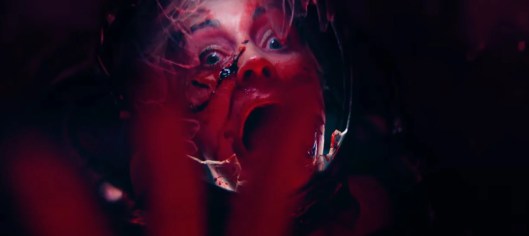
Ash occupies a transitional space between experimental media art and narrative cinema, foregrounding sensation over causality. Flying Lotus privileges rhythm, texture, and sonic density as primary conveyors of meaning, destabilising conventional narrative comprehension in favour of affective immersion.
The film’s significance lies less in its storytelling than in its refusal of interpretive clarity. Ash treats disorientation as a structuring principle, aligning the spectator’s cognitive uncertainty with the film’s thematic concern for alienation and fragmentation. In doing so, it advances a mode of sci-fi horror that operates phenomenologically, privileging experience over explanation.
Ash (2025): A Sensory Voyage from a Singular Artist
12. The Rule of Jenny Pen
Situated within a tightly regulated institutional space, The Rule of Jenny Pen examines how authority produces horror not through excess, but through routine. The film’s power derives from its attention to systems of control that are normalised rather than questioned, rendering violence bureaucratic and cruelty procedural.
Rather than positioning its antagonist as aberrant, the film implicates the structure itself. Performance and restraint are key formal strategies here: menace accumulates through micro-gestures and withheld action, forcing the spectator to recognise how institutional power becomes most terrifying when it is administered calmly and without spectacle.
The Rule of Jenny Pen (2025) – A Chilling Game of Fear and Manipulation
11. Dangerous Animals
Dangerous Animals strips survival horror down to its most elemental components, foregrounding endurance over escalation. The film’s pacing resists the logic of set-piece thrills, instead cultivating a slow accretion of threat that mirrors the bodily exhaustion of its characters.
What distinguishes the film is its refusal to sentimentalise victimhood. Predator and prey are rendered as unstable positions rather than fixed identities, suggesting violence as a latent condition rather than a moral rupture. In this sense, Dangerous Animals operates as an examination of instinctual hierarchy, locating horror within the mechanics of survival itself.
10. Keeper
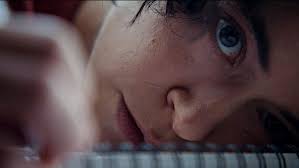
With Keeper, Osgood Perkins continues his exploration of isolation as a spatial and psychological condition. The film’s austere formalism — marked by elongated takes, sparse dialogue, and an emphasis on negative space — transforms setting into a form of narrative pressure.
Rather than offering mythological coherence, Keeper relies on emotional continuity. Ritual functions not as exposition but as repetition, reinforcing the sense of entrapment that defines the film’s affective core. Horror emerges gradually, not through revelation, but through the suffocating persistence of the unresolved.
Keeper (2025) — Osgood Perkins and the Slow Bleed of Mythic Terror
9. Sun
Sun rejects legibility as an organising principle. Its aggressive visual strategies — saturated colour, disjunctive editing, and sensory overload — position the spectator in a state of sustained assault, aligning form with thematic inquiry.
The film treats identity as unstable and perception as corrosive. Rather than constructing horror through narrative causation, Sun deploys excess as a destabilising force, implicating contemporary media saturation in the erosion of subjectivity. The result is a work that positions horror as experiential collapse rather than narrative event.
Dancing with Demons: SUN Burns Toxic Masculinity Alive in the Neon Abyss
8. Companion

Companion engages with speculative horror through a register of intimacy, examining how technological mediation reshapes emotional labour and consent. The film’s restraint is central to its effectiveness; moments of unease are generated through behavioural shifts rather than overt threat.
By situating its horror within domestic and relational spaces, Companion reframes technological anxiety as an extension of existing power dynamics. The film resists dystopian exaggeration, instead suggesting that the most disturbing futures are those that emerge seamlessly from present-day norms.
Companion (2025): A Sharp Blend of Humour, Tragedy, and Tech Gone Wrong
7. Presence
Defined by subtraction rather than accumulation, Presence employs absence as its primary aesthetic strategy. The film’s minimalism forces the spectator to attend to what is not shown, transforming silence and spatial emptiness into sites of tension.
Supernatural elements are deliberately ambiguous, allowing grief and memory to function as competing explanatory frameworks. In refusing to stabilise meaning, Presence aligns haunting with psychological persistence, suggesting that terror often resides not in invasion, but in endurance.
Steven Soderbergh’s Presence: A Chilling Descent into the Unseen
6. Bring Her Back
Bring Her Back operates through narrative fracture, destabilising temporal and causal coherence as a means of articulating loss. The film demands active spectatorship, requiring viewers to assemble meaning from incomplete information.
Its body horror is not gratuitous but instrumental, externalising the violence of obsession and the desire for restoration. By refusing interpretive closure, Bring Her Back transforms confusion into affect, positioning horror as a confrontation with the limits of understanding.
“Bring Her Back” Is a Brutal, Brain-Bending Horror That Sticks With You
5. The Dead Thing
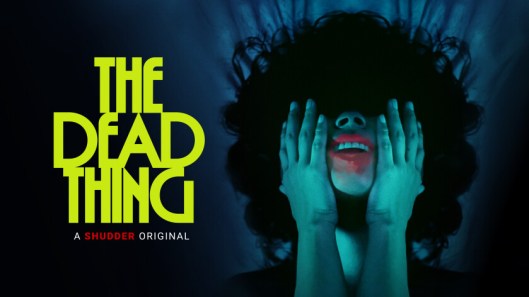
The Dead Thing frames horror as a byproduct of unresolved trauma, privileging emotional continuity over narrative propulsion. The film’s measured pacing allows grief to permeate its formal construction, rendering terror inseparable from mourning.
What emerges is a portrait of desire as compulsion — a need not to escape pain, but to remain tethered to it. The film’s restraint prevents catharsis, reinforcing the notion that some forms of suffering resist narrative resolution.
The Dead Thing (2025) – A Haunting Descent into Obsession and the Unknown
4. The Long Walk
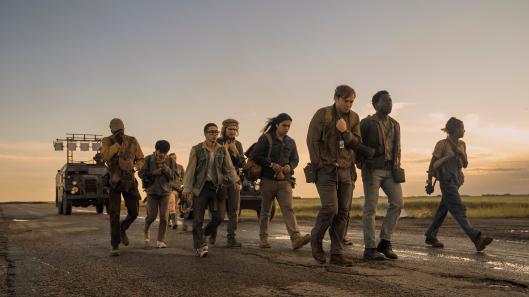
The Long Walk is structured around repetition as punishment. Its relentless forward motion mirrors the ideological rigidity of the system it depicts, transforming endurance into a mechanism of control.
By denying reprieve, the film implicates the spectator in its logic of attrition. Horror arises not from unpredictability, but from inevitability, positioning authoritarian violence as procedural rather than spectacular. The result is a work of sustained ideological critique.
No Finish Line: The Long Walk Turns Minimalism into Masterpiece
3. Nosferatu
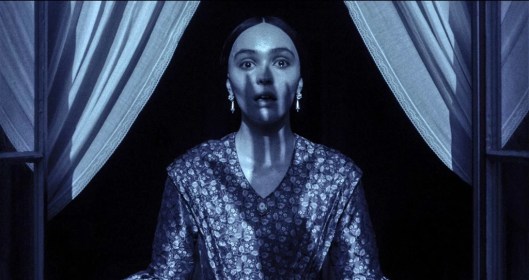
Robert Eggers’ Nosferatu approaches adaptation as cinematic archaeology, reconstructing gothic horror through meticulous attention to texture, light, and performance. The film privileges atmosphere over innovation, treating fidelity as a form of rigor rather than limitation.
Its power lies in its seriousness of intent. By resisting irony or revisionist impulse, Nosferatu reasserts the enduring potency of myth when rendered with formal precision. The film functions as both homage and reaffirmation of horror’s classical foundations.
A Haunting Symphony of Shadows: Robert Eggers’ Nosferatu
2. Weapons
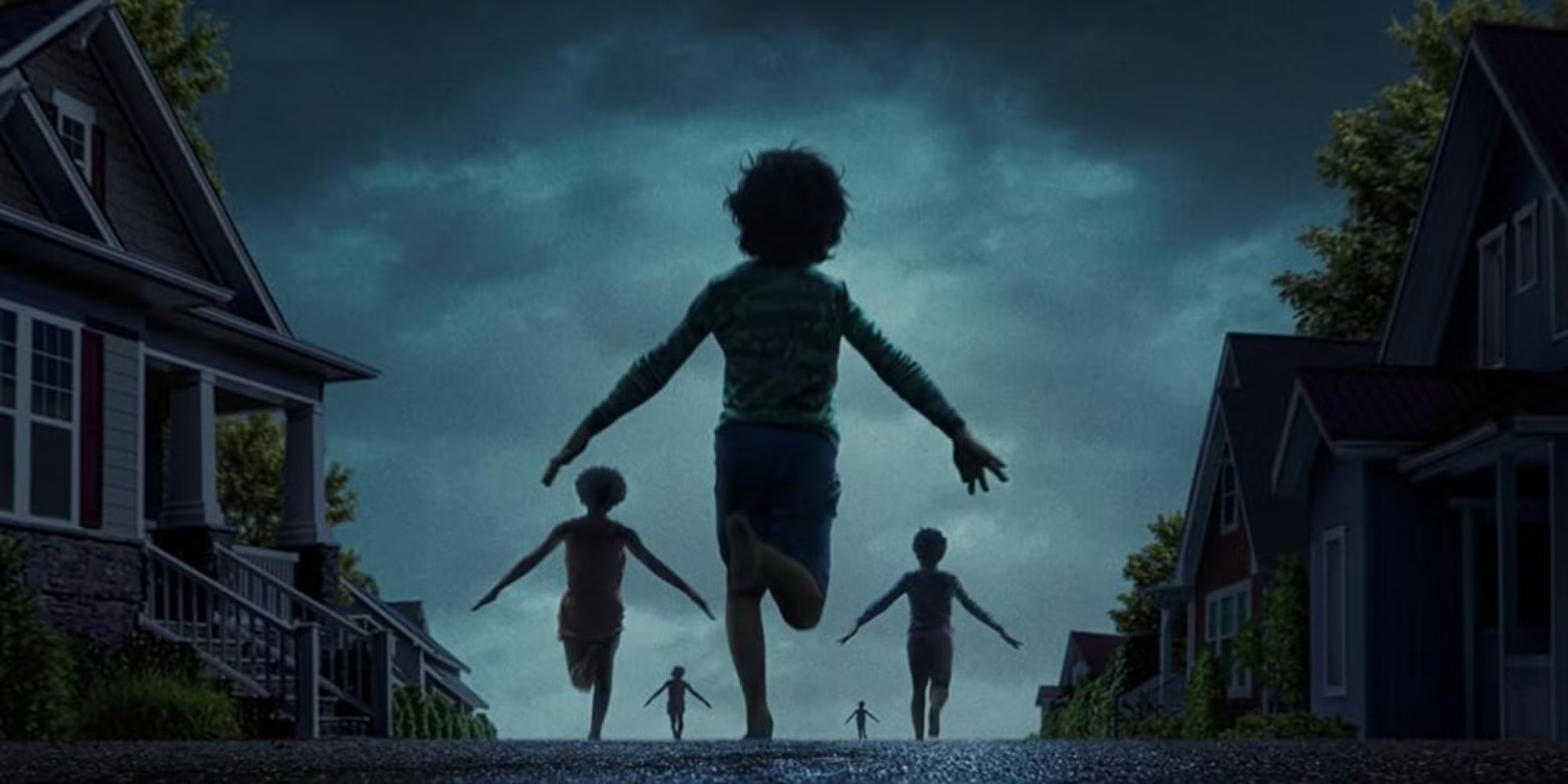
Weapons fragments narrative authority, refusing to privilege any single perspective or resolution. The film’s structural ambiguity destabilises conventional genre expectations, repositioning horror as epistemological uncertainty.
Rather than delivering answers, Weapons foregrounds absence and contradiction. Its terror emerges through implication, forcing the spectator to confront the discomfort of unresolved meaning. In this sense, the film operates less as a thriller than as an inquiry into perception and belief.
Buried Truths & Walking Away: Why Weapons (2025) Matters
1. Sinners
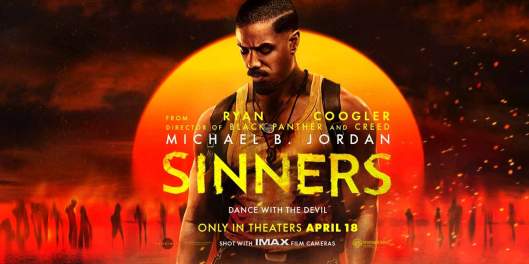
At the pinnacle of 2025’s horror landscape, Sinners synthesises genre with historical inquiry. The film locates terror within inherited structures — cultural, racial, and familial — positioning horror as an extension of collective memory.
Ryan Coogler’s formal restraint allows atmosphere and performance to carry ideological weight. Rather than externalising evil, Sinners frames it as an embedded legacy, transmitted across generations. The result is a work of rare gravity: a horror film that understands fear as something learned, remembered, and endured.
Sinners (2025) Burns Slow, Strikes Deep: A Southern Gothic Horror for the Soul
- Saul Muerte
 Surgeons of Horror