If you’re even slightly squeamish about insects, They Nest might push you into full-blown entomophobia. This made-for-TV creature feature from director Ellory Elkayem (Eight Legged Freaks) creeps along with familiar B-movie beats but manages to burrow under your skin with some genuinely unsettling bug-based horror. Think Arachnophobia meets The Thing, but with cockroaches—and far less prestige.
Thomas Calabro plays Dr. Cahill, a stressed-out surgeon escaping city burnout by retreating to a quaint island in Maine, only to be greeted by hostility from the locals and the rising threat of flesh-eating, mind-controlling cockroaches. The infestation is discovered via a waterlogged corpse, and as you’d expect, nobody believes Cahill until it’s far too late. Add Dean Stockwell to the mix as a cranky islander, and you’ve got a reliable genre face to anchor the mayhem when it hits.
Despite some low-rent production values and a fairly predictable plot, They Nest offers a few effective chills, especially when the critters start crawling into the more intimate spaces of the human body. The practical effects are modest but used cleverly, and Elkayem leans into the paranoia of small-town denial with just enough flair to keep it from feeling entirely by-the-numbers.
The Prognosis:
Where the film stumbles is in its uneven tone and forgettable characters, who mostly serve as bug fodder. But for fans of creature features who enjoy a slow buildup and a grotesque payoff, They Nest has enough squirmy moments to satisfy. It never reaches cult classic status, but it’s an enjoyable slice of early 2000s horror that earns its place in the insect invasion subgenre—just don’t watch it during dinner.
Some films make you question how they ever got made. Attack of the Beast Creatures is one of those films — a gloriously inept, low-budget oddity that barely scrapes together a plot but delivers just enough unintentional hilarity to justify its cult following. Lost for years in VHS obscurity, it’s the kind of movie you stumble across late at night and convince yourself was a fever dream.
After a shipwreck leaves a group of survivors stranded on a remote island, they soon discover the land is crawling with tiny, screeching, flesh-eating puppet creatures. That’s pretty much the entire plot. These rubbery monsters — who look like dollar-store tiki dolls with bad attitudes — hurl themselves at their victims in slow-motion attacks that manage to be both hysterical and strangely charming. It’s amateur hour on all fronts: shaky camera work, soap opera-level acting, and a score that sounds like someone noodling on a Casio keyboard during a power outage.
And yet, for all its incompetence, Attack of the Beast Creatures has an earnestness that’s hard to hate. There’s no irony or winking at the camera — the filmmakers genuinely thought they were making a terrifying survival horror movie. That misplaced sincerity is part of what makes it so watchable, especially for fans of bad movie nights and VHS-era junk treasures.
The Prognosis:
It’s a slog in places, with padded scenes and cardboard characters, but the sheer absurdity of being hunted by screeching, knee-high monsters keeps things oddly entertaining. It’s terrible — make no mistake — but it’s also a prime example of ’80s regional horror going for broke with no money and too much imagination. You may not survive the terror, but you’ll definitely survive with a smirk.
Directed by: Mike Wiluan | Starring Dean Fujioka, Callum Woodhouse | Premieres on Shudder & AMC+ July 25
In Monster Island, Shudder’s latest exclusive creature feature, wartime survival collides with Southeast Asian myth in a film that smartly blends old-school monster thrills with an unexpected emotional core. Inspired by Creature from the Black Lagoon and rooted in Malay folklore, the story drops a Japanese soldier and a British POW onto a seemingly deserted island following a submarine attack. But peace is short-lived, as the island is home to the Orang Ikan — a fearsome aquatic predator who’s as territorial as it is terrifying.
What sets Monster Island apart from many of its creature feature contemporaries is its willingness to slow down and explore the human side of horror. Rather than lean solely on blood and beasts, the film builds tension from cultural divides and post-traumatic wounds, forcing its two leads into a fragile alliance. Dean Fujioka and Callum Woodhouse bring depth and vulnerability to roles that could have been flat archetypes. Their chemistry makes the film’s central theme — that survival often means facing not just monsters, but your own past — all the more resonant.
Admittedly, the film’s ambition sometimes outpaces its resources. Pyrotechnic effects and digital enhancements can look rough around the edges, and the pacing dips during some mid-island soul-searching. But the film’s practical effects — particularly the creature design — are strong, evoking a rubber-suited charm without feeling dated. There’s enough gore to keep horror hounds engaged, but it never overpowers the human drama, and that balance is key to its charm.
The Prognosis:
While it might not revolutionise the genre, Monster Island shows there’s still plenty of room for creature features with a conscience. By grounding its mythological terror in real-world history and emotional stakes, the film claws its way out of B-movie cliché and into something far more sincere. For fans of wartime horror, international folklore, or just old-school monster mayhem with a pulse, this island trip is worth the ferry.
Trans horror’s fiercest voice returns with her most personal and spellbinding film yet
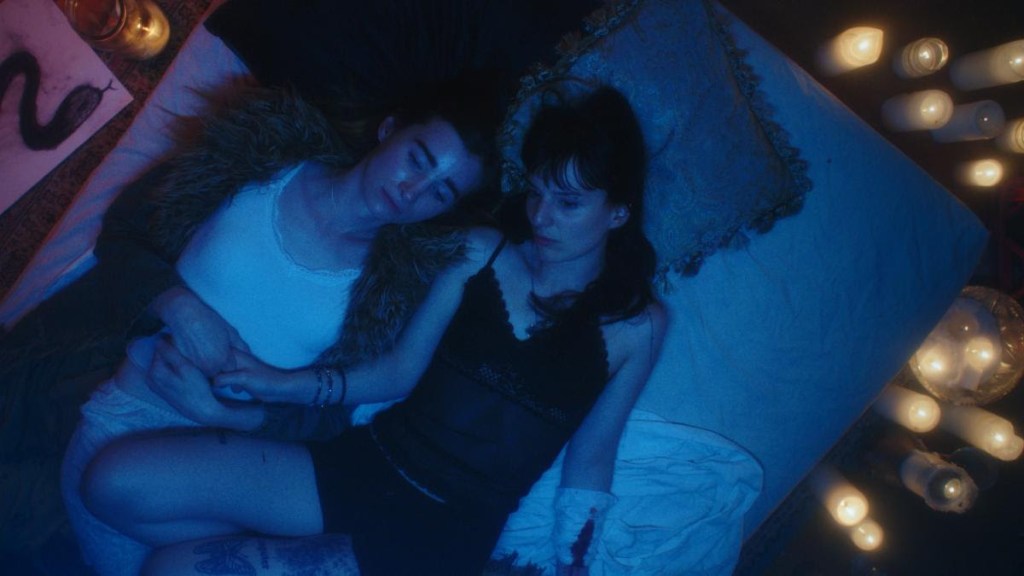
Australian filmmaker Alice Maio Mackay returns to the Fantasia International Film Festivalwith the Canadian premiere of her latest genre-defying feature, The Serpent’s Skin, screening July 23 and 25. Already hailed as her most emotionally resonant and stylistically bold film to date, The Serpent’s Skin fuses supernatural romance with visceral horror, balancing the grotesque and the intimate in true Mackay fashion.
With nods to The Craft, Buffy the Vampire Slayer, and Charmed, Mackay’s newest film conjures millennial teen nostalgia while grounding its witchy terror in the urgent realities of Gen-Z identity, trans survival, and queer resilience. The Serpent’s Skin follows Anna, a trans girl who escapes her stifling, bigoted hometown only to find both romance and horror in a new city—where she falls for goth tattoo artist Gen and accidentally unleashes a demon that begins feeding on their chosen family. What follows is a chilling exploration of trust, self-doubt, and love under supernatural pressure.
Mackay’s voice is unmistakable—raw, punk, defiantly queer—and in The Serpent’s Skin, she harnesses everything she’s learned across her rising career.
From her debut So Vam (2021), Mackay immediately caught the attention of the indie horror world. Described as “a perfect metaphor for transitions and change” and “crafted with a learned voice,” the film positioned Mackay as a filmmaker to watch. Her follow-up, Bad Girl Boogey (2023), was no less impactful—“gritty and raw,” it revealed a sharpened focus and a stronger command of message-driven horror, showing that Mackay could “resonate” beyond just subculture circles.
With T-Blockers (2024), she made perhaps her most personal statement yet. Reviewers called it “fresh,” “unifying,” and “awakening,” applauding how Mackay used her own lived experience to channel communal anger and hope, all while clearly “having a ball” pushing genre boundaries. Her rapid creative output continued with Satranic Panic, another bold and timely entry praised for placing “real characters dealing with real issues in surreal circumstances.”
Produced by Dark Star Pictures, the company that has stood behind each of Mackay’s last five films, The Serpent’s Skin stars Alexandra McVicker (Vice Principals), Scott Major (Heartbreak High), Charlotte Chimes (Neighbours), and Jordan Dulieu (Before Dawn). It also features Fantasia alumni cameos from Avalon Fast (Honeycomb), Joe Lynch (Suitable Flesh), and Betsey Brown (Assholes), with Emmy-nominated Vera Drew (The People’s Joker) returning as editor and Louise Weard (Castration Movie) joining as producer.
Premiering earlier this year at Frameline and heading next to FrightFest this August, The Serpent’s Skin is more than just a new chapter in Mackay’s filmography—it’s a culmination of her growth as a director, writer, and creative force. She’s built a canon that pulses with identity, rage, humour, and style, always speaking directly to those who need it most.
As she returns to Fantasia—a festival that helped champion her earliest work—it’s clear Alice Maio Mackay is no longer just a promising talent. She’s a defining voice in trans cinema and genre storytelling. And with The Serpent’s Skin, she reminds us that transformation, no matter how painful, can be power.
Rob Zombie trades haunted house horror for outlaw grime — but is it worth the ride?
Rob Zombie is, and always has been, a divisive filmmaker. For some, he’s a torchbearer of grimy grindhouse horror—a provocateur unafraid to rub blood and sleaze directly into the viewer’s face. For others, he’s a glorified fanboy with a fetish for exploitation cinema, offering violence without insight and style without restraint. This polarising vision is both The Devil’s Rejects’ biggest asset and its greatest liability.
A sequel to House of 1000 Corpses, this follow-up trades in the surreal, comic-book splatter of its predecessor for a meaner, dust-choked revenge western soaked in nihilism. It’s Rob Zombie unfiltered—gleefully anarchic and unrepentantly ugly. And while the ambition to shift tone and expand the universe deserves credit, the end result still feels like a self-indulgent mixtape of Texas terror clichés, Southern rock needle drops, and white-trash sadism.
There’s no denying Zombie has an eye for raw texture, and performances from Sid Haig, Bill Moseley, and Sheri Moon Zombie are all-in on the grotesque charisma of the Firefly clan. The inclusion of William Forsythe as the vengeful Sheriff Wydell adds a sense of fatalistic grit to the narrative. But underneath the sweaty aesthetic and outlaw theatrics, there’s little emotional depth or meaningful commentary to sustain the film’s relentless cruelty. Moments of potential introspection—particularly around the blurred lines between good and evil—are drowned in nihilism, and by the time Free Bird plays over the climactic slow-motion gunfight, it feels more like an empty pose than a cathartic send-off.
Sequel Scorecard: Does The Devil’s Rejects Work as a Sequel?
Is it a clone of the original? No. This is one of the film’s few clear strengths. The Devil’s Rejects ditches the carnival-horror weirdness of House of 1000 Corpses for a stripped-down, road-movie vibe that’s closer to The Texas Chain Saw Massacre 2 meets Bonnie and Clyde.
Is it a clone of the original but simply more and just bigger? No. In fact, it goes smaller and leaner in structure, avoiding elaborate set pieces for a more grounded aesthetic.
Does it expand the universe/lore of the original? Yes, but selectively. We get a deeper look at the Firefly family’s dynamic and how they function outside their lair—but the mythology is thin, and the expansion often feels like just an excuse to keep the violence rolling.
Is it a good standalone film without relying too heavily on the original? Mostly. While prior knowledge enhances the experience, it’s not strictly necessary. The film functions as a sadistic chase thriller even if you’ve never seen House of 1000 Corpses.
Does it have a cool new gimmick or element that’s not in the original film, but sits well within the universe of the first film? Yes. The tonal shift from psychedelic splatter to dusty outlaw epic is bold, even if not entirely successful.
Does it identify the SPIRIT of the original, and duplicate it? Partially. Zombie retains his love for depravity, exploitation and transgressive figures—but loses the lurid fun and surreal horror that made the original at least feel unpredictable.
The Prognosis:
The Devil’s Rejects is an uncompromising sequel that deserves recognition for its tonal shift and character focus. But its descent into brutality-for-brutality’s-sake leaves little room for nuance, and its adoration for nihilism can grow tiresome. Rob Zombie knows exactly what kind of film he wants to make—and fans of his aesthetic will defend this to the bitter end—but for others, it may feel like style over substance… with a soundtrack.
Glossy ghosts and domestic dread, but the water’s not quite as deep as it thinks.
Robert Zemeckis’ What Lies Beneath drips with old-school atmosphere, evoking the glossy, suspense-laden style of Hitchcock with a supernatural twist. Armed with a star-powered cast—Michelle Pfeiffer as the increasingly unmoored Claire and Harrison Ford in a rare villain-adjacent role—the film plays like a prestige haunted house tale crossed with a psychological thriller. There are foggy lake views, mysterious messages, bathtubs that fill by themselves, and a growing sense that something truly rotten lies beneath the Spencer household’s perfect exterior.
Pfeiffer anchors the story with a strong, emotional performance, capturing the creeping dread and loneliness of a woman whose reality is beginning to splinter. Ford, meanwhile, slowly unpacks a more sinister persona, playing against his traditional heroic image. But for all its technical polish and deliberate pacing, What Lies Beneath never quite escapes the feeling that it’s a greatest-hits collection of ghost story tropes. Zemeckis stages a few solid set pieces—particularly a bathtub scene that remains tense even today—but the script stumbles into predictability, and the final revelations don’t pack the punch they should.
The Prognosis:
What Lies Beneath is a classy, mid-budget thriller that flirts with greatness but ultimately gets bogged down by cliché. It wants to say something about guilt and repression, about the fractures hidden in a “perfect” marriage, but it’s more comfortable delivering stylish scares than true depth. Still, as a slice of supernatural cinema from a director best known for time travel and talking cartoons, it remains a curious, if uneven, detour.
There’s no better way to close a retrospective of 1960s horror cinema than with Horrors of Malformed Men, a fever dream of grotesquery and surrealism that was so transgressive, it vanished from circulation for decades. Directed by cult provocateur Teruo Ishii and loosely inspired by the works of Japanese mystery and erotic horror master Edogawa Ranpo, this film stands as one of the most controversial and singularly strange entries in the genre’s long, bloodied history.
The film begins in familiar pulp-horror territory: a young medical student escapes from an asylum, assumes the identity of his apparent double, and is drawn into the dark secrets surrounding a remote island populated by deformed men and ruled by a mad, god-complex-driven scientist. But what unfolds is anything but conventional. Ishii tosses gothic horror, grotesque body imagery, kabuki theatre, Freudian nightmares, and existential dread into a blender and hits mutilate.
More art-house hallucination than straight horror, Horrors of Malformed Men taps into deep post-war anxieties and long-standing cultural taboos around deformity, insanity, and identity. The film’s exploration of physical abnormality and psychological trauma, paired with scenes of near-surrealist horror, earned it an immediate ban in Japan. For decades, it remained unseen, whispered about in underground cinephile circles as a kind of forbidden fruit of Japanese cinema.
And yet, beyond the scandal lies something undeniably compelling: Ishii’s direction is bold and ambitious, mixing low-budget exploitation with a high-concept fever dream. Every frame carries a strange beauty or disquieting detail, enhanced by Jiro Takemura’s eerie score and the film’s striking use of theatrical staging. The lead performance from Teruo Yoshida is appropriately wide-eyed and distressed, anchoring the chaos with a tragic, almost operatic sense of fate.
It’s a film that refuses to sit still — shifting from gothic melodrama to art-house allegory to grindhouse freakshow in a heartbeat. It doesn’t always hold together narratively, and its tone can veer wildly, but that dissonance only amplifies the experience. Like a hallucination you can’t quite shake, it lingers.
In a decade where censorship and moral panic loomed large, Horrors of Malformed Men wore its taboos on its sleeve — and paid the price. But with time, it has emerged as a boundary-pushing relic of Japanese cinema history, a nightmarish outlier that still startles and fascinates.
The Prognosis:
As the 1960s came to a close, this film seemed to herald what horror cinema would increasingly become in the decades ahead: challenging, transgressive, and unafraid to look into the abyss. It’s a flawed but unforgettable swan song to a daring era.
There’s little irrefutable about The Irrefutable Truth About Demons, other than the fact that it’s a mess. Directed by Glenn Standring, this early-2000s New Zealand horror feature tries desperately to punch above its weight with feverish style and occult overdrive—but collapses under the weight of its own incoherence.
The film stars a young Karl Urban as Dr. Harry Ballard, a lecturer who stumbles into a demonic conspiracy involving cults, hallucinatory breakdowns, and a lot of unintelligible shouting in dimly lit warehouses. Urban, already showing glimmers of the talent he’d bring to far better roles down the track (The Boys, Dredd, LOTR), does his best to hold the centre—but it often feels like he’s battling the script as much as the demons.
Visually, the film is drenched in grime and erratic camera work, clearly aping the stylistic chaos of late-‘90s horror like Jacob’s Ladder and Event Horizon, but without the clarity or craftsmanship. What could have been an atmospheric descent into paranoia and possession is instead a barrage of half-baked ideas and shrieking performances. The narrative never quite decides if it wants to be a psychological thriller, an urban fantasy, or a cult horror flick—and ends up being none of the above convincingly.
The supporting characters, including a mysterious ex-cultist love interest, offer little substance, and the dialogue ranges from awkward to unintentionally hilarious. The demons themselves—both metaphorical and literal—are reduced to generic growling and bargain-bin effects, robbing the film of any true menace.
The Prognosis:
At the time, The Irrefutable Truth About Demons may have aimed for edgy, underground horror, but in hindsight, it feels more like an overwrought student film with delusions of grandeur. It wants to scorch the screen with dark revelations but instead fizzles out long before it finds its footing.
Thankfully, Karl Urban emerged from this chaos largely unscathed—and the only real truth here is that his career went in a much better direction.
Trapped in a Cave of Terror! is the tagline, but what It’s Alive! really traps you in is 80 minutes of painfully sluggish pacing, cardboard performances, and a prehistoric monster that looks like it crawled out of a craft store clearance bin.
Directed by infamous B-movie auteur Larry Buchanan, It’s Alive! is emblematic of his career: micro-budget genre filmmaking produced quickly and cheaply, often for television syndication. Known for titles like Zontar, the Thing from Venus and Curse of the Swamp Creature, Buchanan built a niche out of public domain plots, recycled storylines, and rubber-suited monstrosities. Unfortunately, It’s Alive! may be one of his least inspired efforts—and that’s saying something.
The “plot,” such as it is, involves a deranged farmer who lures three travellers into a cave and traps them with his pet monster—a leftover from some vague prehistoric past. What unfolds is a glacial march through bad dialogue, inert suspense, and long, dark cave scenes where it’s hard to tell whether anything is happening at all. Even by Buchanan’s notoriously low standards, the energy here feels drained.
The monster, when it finally appears, is a masterclass in zero-budget filmmaking—part papier-mâché, part bargain-bin rubber. It’s hard to be scared of something that looks so awkwardly immobile, and worse, it barely appears in the film. Most of the runtime is devoted to the characters sitting around, arguing, or reacting to sounds in the dark, presumably because the costume couldn’t withstand more than a few minutes of movement.
To Buchanan’s credit, he knew how to make movies fast and cheap—and there’s a certain campy charm to his drive-in philosophy. But in It’s Alive!, even that charm is in short supply. The film is padded, slow, and visually murky, with a script that feels like it was written on the back of a diner napkin during a lunch break.
The Prognosis:
Looking back, It’s Alive! might be worth a glance for die-hard fans of no-budget horror or as a curiosity in the Buchanan filmography. But for most, this is one fossil that should’ve stayed buried.
The sequel we all knew was coming. And yes, we will be referring to our checklist of what makes a good sequel, but that aside, is this outing any good, and was it necessary?
From memory the last movie (reviewed and podcasted by me and Chris Dawes) was definitely ripe for franchising. So straight away we’re not in Matrix territory where the question “Why!? Just why!??” isn’t screaming in your head every few minutes.
In 2.0 we pick up two years after the last movie, where Megan’s creator – Gemma (Allison Williams) and her niece Cady (her name is Cady!?? The whole time you swear they’re calling her “Katie!) played by Violet McGraw – are continuing their lives as the only family each one of them has. Except now Gemma is a staunch and vocal advocate for AI regulation due to her knee-jerk reaction to being almost killed by a robot AI (of her own making, it should be said) and Cady (in turn) is following in her aunts’ footsteps (of sorts) by being a computer science nerd.
In an overcompensating effort by Gemma, she ensures Cady takes Akido lessons so she can defend herself. Unfortunately Cady takes those lessons to an unwanted extreme by regarding Steven Segal as a martial arts poster boy, and one beaten up school bully later, Cady gets in trouble; Gemma is at her wits end, and we soon realise life between them is full of tension. For Gemma still punishes herself for putting Cady in harm’s (Megan’s) way, and Cady hates on Gemma for… reasons. She’s a teenager now, so it’s Hollywood lore she be a little bitch to any authority figure in her life. To be honest, you kinda zone out when you go through their motivations ‘cause you’re keen for the Megan goodness to begin.
And that gets kick started by the presence of another killer robot named Ameila (played by NOT Olsen sister, Ivanna Sakhno). However, unlike Megan, Ameila is very lifelike in face and body, as she is constructed NOT to be a faux babysitter for kids, but as a turbo charged infiltration assassin for the CIA.
How she came into existence is the McGuffin that drives the Main Plot of this film, as we simultaneously find out that (shock surprise) Megan is still “alive”, in an online only sort of way. So when Amelia goes rogue (because of course she does) and comes after Gemma and Cady (for reasons you’ll have to watch to understand) Megan’s primary directive to protect Cady at all costs comes to the surface as she demands Gemma build her a new body to literally kung fu fight Amelia (robato robato).
So with our pieces on the board, let’s get into the nuts ‘n’ bolts of M3gan 2.0.
And for a more detailed description of that, as with our last analysis of the first movie, here’s Chris
Dawes with his half of this review.
Dude – I didn’t see it! You went to the premiere without me!
Chris Dawes
Thanks Chris!
Anyway – some highlights worth mentioning is the existence of another Chekov’s Gun in the form of a cybernetic exo-skeleton that makes people super strong (although its application is at least a little funnier/cooler than you’d think).
We also have a new Megan dance number. For those of you who don’t remember, the main (and some would argue, only) reason the first movie did so well, was because of Megan’s hip-hop/ballet moves she pulls before killing Ronnie Cheng. It was a perfectly bite sized Tik Tok moment which gave the film it’s viral boost as countless people imitated it along the lines of Deadpools *Nsync number.
However, Megan’s effort this round – whilst certainly cool – is less memorable due to the fact it doesn’t have any unique & easy-to-copy dance move(s). In the first instalment it was a simple twist of the hips and a rubbery swing of the arms mixed with a sideways head-duck. But for 2.0 she does the Robot (very generic and a bit on the nose) with a 360-degree head spin (which is impossible to replicate). Although in its defence, it’s still entertaining to watch…
Kiwi legend Jermaine Clement guest stars as Alton Appleton, a tech billionaire who serves as both plot device and comedy device.
Another nice (re)addition is the return of Gemma’s two co-workers from the last film Cole (Brian Jordan Alvarez) and Tess (Jen Vann Epps) giving us some nice continuity for 2 characters (and actors) who really don’t need to be there.
And speaking of returning cast – the 2 most important also come back, despite the fact that, had they not, a lot of people wouldn’t have noticed. And they are Amie Donald and Jenna Davis. For they are Megan. More specifically her body and voice respectively.
As Megan was meant to be a pre-teen to match Cady in the first film, the immediate problem they were always facing was, IF they were going to recreate her as before, they would have to recast. But the film-makers clearly appreciate one of the reasons Megan works, is because Donald and Davis clearly work.
And so – with Donald going through the typical growth spurt that comes with puberty – Megan finds herself a foot taller when given her new body, and leaning into this means that the franchise is trying to give the impression each instalment will be a continuation of Megan’s evolution; both in body and in sentience.
And that alone implies this film series will be less Chucky and more Terminator. In more ways than one, as tonally there is a clear shift in Megan’s role from being the Big Bad, to the thing that fights the Big Bad (just like Arnie did in T2)
The Prognosis:
The film-makers have put careful thought into this sequel by analysing the first film’s success, identifying what worked, and leaning into those markers.
So checklist time:
1. Is it a clone of the original? NO
2. Is it a clone of the original but simply more and just bigger? NO
3. Does it expand the universe/lore of the original? YES
4. Is it a good standalone film without relying too heavily on the original? YES
5. (Optional) Does it have a cool new gimmick or element that’s not in the original film, but sits well within the universe of the first film? (Eg: Think Yoda and his ground breaking puppetry in The Empire Strikes Back. Or the CGI T-1000 in T2). NO
6. Does it identify the SPIRIT of the original, and duplicate it? YES definitely.
Because the biggest thing the film-makers have wisely clocked is that Megan ISN’T a horror film, but a fun film. Camp fun. And that’s what makes this movie an upgrade from the original.

 Surgeons of Horror