• About
  • podcasts
  • Shop

Surgeons of Horror

~ Dissecting horror films

Surgeons of Horror

Monthly Archives: October 2024

Retrospective: Black Christmas (1974) – The Birth of the Modern Slasher

12 Saturday Oct 2024

Posted by surgeons of horror in retrospective

≈ Leave a comment

Tags

billy, bob clark, film, horror, john saxon, keir dullea, margot kidder, movies, olivia hussey, reviews, slasher, slasher film

Few films have had as lasting and significant an impact on the horror genre as Bob Clark’s Black Christmas (1974). Often considered one of the earliest and most influential slasher films, this Canadian cult classic set the stage for an entire subgenre, crafting many of the tropes and techniques that would come to define horror for decades. Despite being overshadowed by later films like Halloween and Friday the 13th, Black Christmas deserves recognition for pioneering the slasher formula with a chilling, understated approach that remains terrifying even today.

At first glance, Black Christmas may appear deceptively simple: a group of sorority sisters are terrorized by a mysterious killer during the holiday season. However, beneath this surface lies a film that is far more unsettling and artfully constructed than the plot might suggest. The film centers on a sorority house where a series of disturbing phone calls from an anonymous stalker escalates into a killing spree, leaving the women inside fighting for their lives. What makes Black Christmas stand out, even now, is its unnerving atmosphere, psychological horror, and narrative ambiguity.

Though Black Christmas wasn’t the first horror film to feature a mysterious killer stalking victims, it was among the first to codify many of the key elements of the slasher genre. The killer is hidden, only referred to as “Billy,” and his identity is never revealed. This creates a terrifying sense of anonymity, leaving viewers unsettled and guessing throughout. The film’s signature technique of showing the killer’s point of view through a shaky, handheld camera, often as he lurks inside the sorority house, was a novel approach at the time. This perspective not only put the audience uncomfortably close to the villain but also emphasized the voyeuristic nature of the genre, which would become a hallmark of slasher films.

Furthermore, Black Christmas introduced another crucial element to the slasher formula: the final girl. Jess (played by Olivia Hussey) serves as the prototype for what would become a defining archetype in horror films. She is resourceful, determined, and morally complex, facing down not just the threat of the killer but also grappling with difficult personal decisions, such as her unplanned pregnancy. While Halloween’s Laurie Strode may get most of the credit as the iconic final girl, it was Jess who paved the way.

What truly sets Black Christmas apart is its refusal to rely on cheap jump scares or excessive gore. Bob Clark, who would ironically go on to direct the holiday classic A Christmas Story, leans heavily into psychological horror. The film’s pacing is slow but deliberate, building tension in a way that mirrors the growing paranoia and terror within the sorority house. The mysterious phone calls—featuring unsettling, incoherent babbling and eerie voices—play a significant role in creating a pervasive sense of dread. These moments are perhaps some of the most unnerving in the film, as they tap into the fear of the unknown. We never truly understand who “Billy” is or why he is targeting these women, and this ambiguity is far more terrifying than any clear motive.

There’s also a layer of ambiguity in the way the story ends. The final moments of the film leave the audience in a state of unease, as we realize that the killer may still be lurking inside the house. It’s a haunting conclusion that forgoes the catharsis of resolution, instead opting to leave viewers with lingering questions. This open-endedness not only subverts expectations but also keeps the fear alive long after the credits roll.

Despite Black Christmas’s relatively modest success at the box office, its influence on the genre cannot be overstated. Released four years before Halloween, it laid much of the groundwork that John Carpenter would refine to perfection. The trope of an unstoppable, unseen killer, the use of holiday settings as a backdrop for horror, and the idea of a final girl all originated here. Films like Friday the 13th (1980), A Nightmare on Elm Street (1984), and Scream (1996) would later take these concepts and run with them, but Black Christmas remains their precursor.

Moreover, Black Christmas redefined the role of women in horror films. While earlier horror often portrayed female characters as passive victims, this film empowered its female leads with agency and complexity. Jess, in particular, challenges the conventions of morality and survival that would later be expanded upon in the genre. This emphasis on strong female protagonists would become a defining characteristic of slasher films in the years to come.

Nearly 50 years after its release, Black Christmas retains its ability to shock and unsettle. Its stark portrayal of violence, coupled with its minimalistic style, lends it a timeless quality that feels just as disturbing today as it did in 1974. While it may not have the same widespread recognition as some of the films it influenced, its legacy is undeniable. The way it skillfully balances psychological horror, tension, and brutal realism set it apart from its contemporaries and continues to resonate with audiences, reminding us that true terror often lies in what we don’t see.

The Prognosis:

In the annals of horror, Black Christmas stands as a groundbreaking film that helped shape the slasher genre and define its future trajectory. Bob Clark’s minimalist approach, the chilling atmosphere, and the deeply unsettling narrative make it a landmark of horror cinema. For any fan of the genre, Black Christmas is essential viewing, both as a pioneering work and as a timeless masterpiece of fear.

  • Saul Muerte

The Witches (1966): Hammer’s Haunting Finale

09 Wednesday Oct 2024

Posted by surgeons of horror in retrospective

≈ 2 Comments

Tags

1960s horror, 1960s retrospective, cyril frankel, hammer films, Hammer Horror, joan fontaine, witch, witchcraft, witches

Concluding the 1966 lineup of Hammer Films is The Witches, a chilling tale that delves into the dark world of witchcraft, psychological manipulation, and the fragility of sanity. Directed by Cyril Frankel, this film marks a significant entry in Hammer’s catalogue, blending supernatural horror with psychological depth in a way that resonates with audiences long after its release.

Plot Overview

The Witches follows the story of a schoolteacher, Gwen Mayfield (played by Joan Fontaine), who relocates to a small village in Africa after a traumatic experience involving a cult of witches. As she attempts to start anew, Gwen finds herself embroiled in a web of supernatural intrigue and local superstitions. The villagers harbour a dark secret related to a coven of witches who wield powerful magic, and Gwen’s growing sense of paranoia leads her to question her sanity as she confronts the terrifying realities of witchcraft.

Themes of Fear and Isolation

The film effectively explores themes of fear, isolation, and the struggle for identity in the face of overwhelming circumstances. Gwen’s journey is marked by her attempts to break free from her traumatic past while grappling with the suffocating grip of the village’s secrets. The psychological tension builds as she becomes increasingly paranoid, blurring the lines between reality and illusion.

Visual Style and Atmosphere

Frankel’s direction enhances the film’s eerie atmosphere, using striking visuals and meticulous cinematography to evoke a sense of dread. The contrast between the serene landscape and the sinister undercurrents of witchcraft creates a disquieting backdrop that heightens the tension. The film’s haunting score complements the visual style, underscoring Gwen’s descent into fear and madness.

Character Development and Performances

Joan Fontaine delivers a captivating performance as Gwen, effectively capturing her character’s emotional turmoil and gradual unraveling. The supporting cast, including the enigmatic Edith Evans as the village matriarch, adds depth to the narrative, enriching the exploration of witchcraft and its psychological implications. The dynamic between the characters intensifies the suspense, drawing viewers into their chilling world.

A Compelling Conclusion to Hammer’s Legacy

While The Witches may not have garnered the same level of recognition as some of Hammer’s flagship titles, it serves as a fitting conclusion to the studio’s prolific year in 1966. Its blend of psychological horror and supernatural elements reflects Hammer’s commitment to pushing the boundaries of the genre, demonstrating their ability to craft thought-provoking narratives that resonate with audiences.

As part of the “1966: The Year Hammer Owned Horror” series, The Witches exemplifies the studio’s evolution and experimentation within the horror genre. Its exploration of fear, isolation, and the consequences of trauma marks a significant turning point for Hammer Films, solidifying its place in cinematic history.

  • Saul Muerte
1966: The Year Hammer Owned Horror

The Reptile (1966): A Slithering Spectacle

09 Wednesday Oct 2024

Posted by surgeons of horror in retrospective

≈ 2 Comments

Tags

1960s horror, 1960s retrospective, hammer films, Hammer Horror, jacqueline pearce, jennifer daniel, john gilling, michael ripper, noel willman

Continuing Hammer Films’ prolific 1966 output, The Reptile offers a chilling blend of horror and mystery, showcasing the studio’s ability to craft compelling narratives steeped in folklore and the macabre. Directed by John Gilling, this film combines elements of psychological tension with the supernatural, cementing Hammer’s reputation as a pioneer in horror cinema.

Plot Overview

Set in a remote Cornish village, The Reptile follows the story of Harry and Valerie Spalding, a young couple who arrive to settle in the countryside after the tragic death of Harry’s brother. Upon their arrival, they discover a series of mysterious deaths plaguing the village, all linked to a sinister local legend about a creature that can transform its victims into reptiles. As they dig deeper into the village’s secrets, the couple uncovers a dark family history intertwined with the curse of the Reptile, a tragic and vengeful being lurking in the shadows.

Themes of Isolation and Transformation

At its core, The Reptile explores themes of isolation, fear, and the struggle against forces beyond one’s control. The isolated setting amplifies the sense of dread, as the villagers harbor their own dark secrets, creating an atmosphere of paranoia and suspicion. The film’s exploration of transformation—both literal and metaphorical—adds depth to the narrative, highlighting the fragility of humanity when faced with the unknown.

Visual Style and Atmosphere

Gilling’s direction imbues the film with a haunting visual style, characterized by moody lighting and atmospheric set design. The film’s eerie locations—shrouded in mist and shadow—enhance the sense of danger that looms over the characters. The reptilian makeup and effects, while somewhat dated by modern standards, evoke a sense of terror that resonates with audiences, effectively blending horror with a touch of folklore.

Character Development and Performances

The Reptile features solid performances, particularly from Jacqueline Pearce as the titular character and Noel Willman as the menacing local doctor. Pearce’s portrayal of the cursed woman elicits sympathy and horror, providing a nuanced exploration of her tragic existence. Meanwhile, Willman’s sinister presence adds tension to the narrative, positioning him as a central figure in the unfolding mystery.

A Unique Addition to Hammer’s Legacy

While The Reptile may not have reached the iconic status of some of Hammer’s more famous titles, it stands as a noteworthy addition to the studio’s filmography. Its blend of psychological horror and folklore, coupled with engaging character dynamics, contributes to a rich tapestry of storytelling that exemplifies Hammer’s innovative spirit in the 1960s.

As part of the “1966: The Year Hammer Owned Horror” series, The Reptile showcases the studio’s commitment to exploring new themes and styles within the horror genre. The film’s ability to evoke tension and fear while weaving a compelling narrative cements its place in the annals of Hammer history.

  • Saul Muerte
1966: The Year Hammer Owned Horror

Rasputin: The Mad Monk (1966): A Dance with Darkness

09 Wednesday Oct 2024

Posted by surgeons of horror in retrospective

≈ 1 Comment

Tags

1960s horror, christopher lee, don sharp, grogori rasputin, hammer films, Hammer Horror

In 1966, Hammer Films continued to redefine the horror genre with Rasputin: The Mad Monk, a captivating biographical horror-drama that diverges from its earlier supernatural themes while maintaining the company’s trademark gothic flair. Directed by Don Sharp and featuring the magnetic performance of Christopher Lee in the titular role, this film presents a complex character study of one of history’s most notorious figures, Grigori Rasputin.

Plot Overview

Set in the early 20th century, Rasputin: The Mad Monk chronicles the life of the controversial mystic who ingratiated himself into the Russian royal family, wielding significant influence over Tsar Nicholas II and his wife, Alexandra. The film explores Rasputin’s ability to heal the Tsarevich Alexei, who suffers from hemophilia, leading to his growing power and the ensuing fear and paranoia among the aristocracy. However, his depravity and manipulation eventually lead to his tragic downfall.

Characterization and Performance

Christopher Lee’s portrayal of Rasputin is a tour de force, balancing the character’s charm and charisma with an underlying menace. Lee’s performance breathes life into Rasputin, allowing audiences to witness the mystic’s seductive nature as he uses his powers for personal gain. The film delves into Rasputin’s psychological complexity, presenting him as both a healer and a harbinger of doom, capturing the duality of his character with finesse.

Themes of Power and Corruption

Rasputin: The Mad Monk expertly examines themes of power, corruption, and the consequences of unchecked ambition. As Rasputin rises to prominence, the film highlights how his influence over the royal family leads to a deterioration of moral boundaries. The narrative poses thought-provoking questions about the ethical implications of wielding power and the impact of personal desires on societal structures.

Visual Aesthetics and Cinematography

While diverging from traditional horror tropes, the film retains Hammer’s distinctive visual style. The cinematography beautifully captures the opulence of the Russian court, juxtaposed against the darker, more sinister elements of Rasputin’s life. The lavish costumes and atmospheric settings enhance the film’s gothic sensibility, immersing viewers in a world of intrigue and dread.

A Significant Addition to the Hammer Canon

Rasputin: The Mad Monk is notable not only for its historical context but also for its exploration of psychological horror. By grounding its narrative in real events, the film invites audiences to contemplate the fine line between reality and madness, making it a compelling entry in Hammer’s 1966 lineup. The film’s ability to maintain a sense of dread while engaging with the complexities of its characters showcases Hammer’s versatility and willingness to evolve within the genre.

As part of the broader narrative of 1966, Rasputin: The Mad Monk represents Hammer’s ambition to expand beyond supernatural horror and delve into the intricacies of human behaviour. The film stands as a testament to the studio’s commitment to storytelling that resonates with audiences, blending horror with historical drama.

  • Saul Muerte
1966: The Year Hammer Owned Horror

The Plague of the Zombies (1966): A Grim Tale of Class and Undead Horror

09 Wednesday Oct 2024

Posted by surgeons of horror in retrospective

≈ Leave a comment

Tags

andre morell, brook williams, diane clare, hammer films, Hammer Horror, john carson, zombie

Hammer Films continued their dominance in 1966 with The Plague of the Zombies, a feature that, while not as immediately iconic as Dracula: Prince of Darkness, cemented itself as an important entry in the zombie subgenre. Directed by John Gilling, who also helmed The Reptile the same year, the film delivers a chilling tale set in a Cornish village, blending gothic horror with biting social commentary.

Plot Overview
The story follows Sir James Forbes (André Morell) and his daughter Sylvia (Diane Clare), who arrive in a remote Cornish village at the request of Dr. Peter Thompson (Brook Williams). The village is plagued by mysterious deaths, and the local workers are inexplicably dying only to rise from their graves as soulless, mindless zombies. As Forbes and Thompson investigate, they discover a dark secret—an aristocratic landowner, Squire Hamilton (John Carson), is using voodoo rituals to reanimate the dead and exploit them as free labor in his mine.

A Zombie Film Before Zombies Were “Cool”
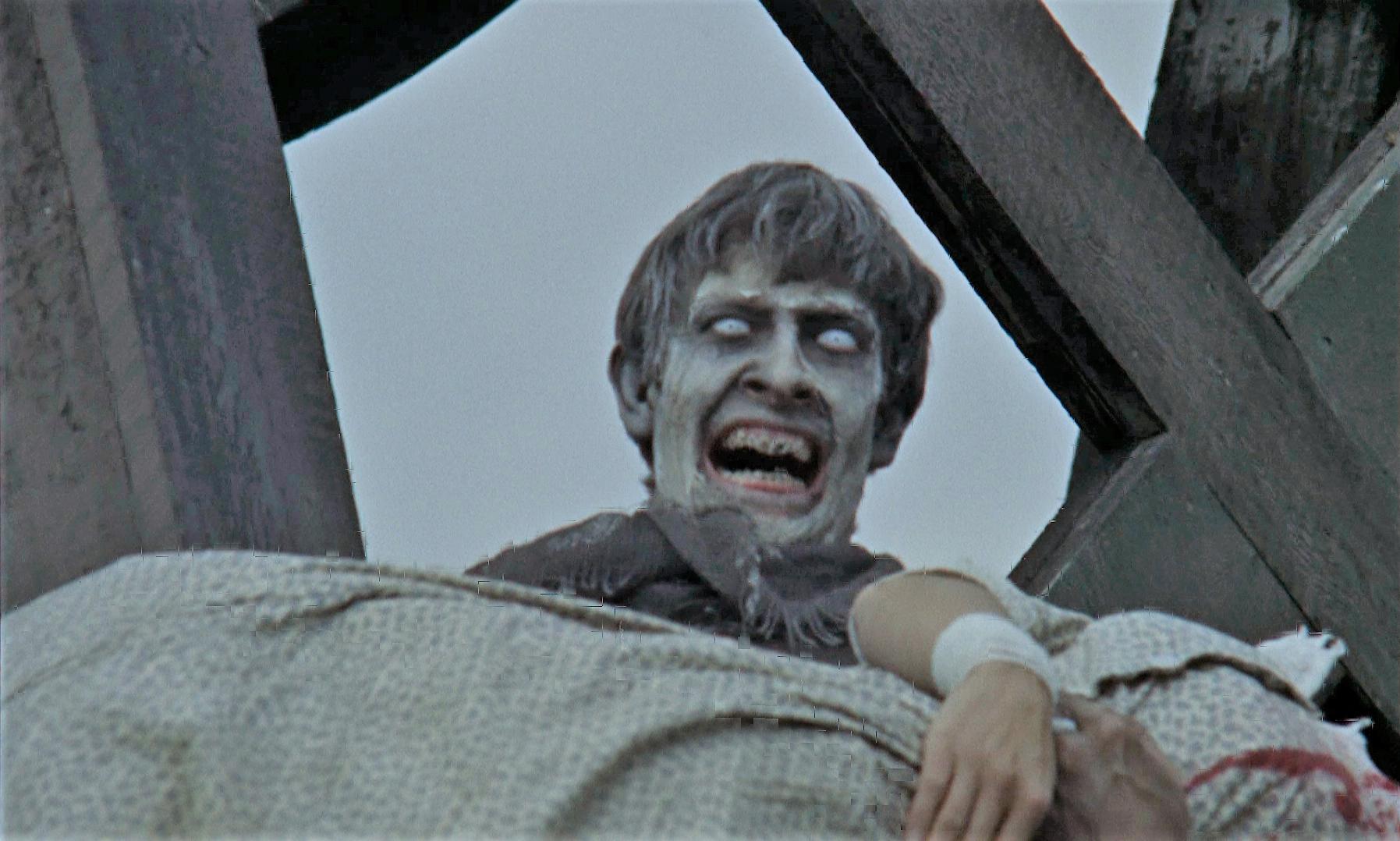
One of the most intriguing aspects of The Plague of the Zombies is how it predates the modern depiction of zombies popularised by George Romero. These zombies aren’t quite the flesh-eating monsters we now associate with the genre, but they are terrifying nonetheless, with a blank, lifeless gaze and grotesque, decayed appearances. Hammer’s visual flair shines here, with atmospheric graveyard sequences that perfectly capture the gothic dread the studio was famous for.

Though Hammer often leaned into supernatural threats like vampires and werewolves, The Plague of the Zombies took the less-trodden path of Haitian voodoo. This decision gives the film a unique flavor, mixing occult practices with the more grounded horror of a small community gripped by fear.

Social Critique Wrapped in Horror
Beyond its zombie scares, the film weaves in a critical commentary on class exploitation. Squire Hamilton’s use of undead miners as a form of free labor is a not-so-subtle jab at the oppressive landowning class exploiting the working poor. The film’s rural setting and class dynamics evoke a sense of timeless exploitation—those in power using any means to control and subjugate the weak, even beyond death.

Hammer was never shy about blending horror with social themes, and The Plague of the Zombies proves that sometimes the real monsters are those in positions of power, rather than the supernatural creatures they control.

Style and Atmosphere
John Gilling’s direction amplifies the eerie and claustrophobic nature of the village. The misty moors and the decaying village set the tone perfectly, creating a sense of isolation and doom. Cinematographer Arthur Grant, who also worked on The Reptile and Dracula: Prince of Darkness, brought a distinct visual flair to the film, utilising shadows and the bleak landscape to enhance the film’s grim atmosphere.

The makeup and practical effects, while simple by today’s standards, were groundbreaking at the time. The look of the zombies—complete with decaying skin and empty eyes—has a nightmarish quality that lingers long after the credits roll.

Tying It All Together
As part of Hammer’s 1966 lineup, The Plague of the Zombies fits in perfectly with the studio’s exploration of gothic horror themes while pushing the boundaries of what could be depicted on screen. It was innovative in its treatment of the undead, laying groundwork for future zombie films while maintaining the moody, atmospheric aesthetic Hammer was renowned for.

While the film might not have the star power of a Christopher Lee or Peter Cushing, it holds its own as a crucial entry in Hammer’s catalogue. More than just a horror film, The Plague of the Zombies is a somber reflection on the exploitation of the working class, wrapped in the trappings of gothic terror.

Hammer’s ability to elevate the horror genre, even with a modest budget, proves that 1966 was a year where they truly owned horror. The Plague of the Zombies remains a haunting and unique piece of their legacy—a grim reminder that horror can be both socially conscious and terrifying at the same time.

  • Saul Muerte
1966: The Year Hammer Owned Horror

Dracula: Prince of Darkness (1966): Reviving a Legend

09 Wednesday Oct 2024

Posted by surgeons of horror in retrospective

≈ 1 Comment

Tags

barbara shelley, christopher lee, Dracula, hammer films, Hammer Horror

Dracula: Prince of Darkness marked Hammer’s triumphant return to its most iconic villain—Dracula. After an eight-year hiatus, the gothic lord of the undead was brought back to life by Christopher Lee in a film that leaned heavily on mood, atmosphere, and terror, despite Lee’s notable absence of dialogue throughout the film. Directed by Terence Fisher, this third entry in Hammer’s Dracula series was a definitive moment for Hammer, reaffirming their dominance in gothic horror.

Christopher Lee, now an international horror icon, reprises his role as the infamous Count with effortless menace. While Dracula’s silence in the film has drawn some criticism, this choice imbues the character with a primal, almost animalistic aura. Stripping Dracula of speech makes his presence all the more haunting, amplifying the tension whenever he appears on screen. It’s a testament to Lee’s performance that even without dialogue, Dracula’s terror is palpable.

The film’s plot follows four travelers who unknowingly awaken Dracula from his death-like slumber after taking refuge in his abandoned castle. The narrative may be simple, but it serves as the perfect vehicle for the film’s true strength: its atmosphere. From the moment the travellers enter Dracula’s castle, the audience is immersed in a world of gothic dread. The sprawling, decaying castle, the candlelit corridors, and the mist-shrouded landscapes create an eerie, foreboding mood that is quintessentially Hammer.

Visually, Dracula: Prince of Darkness is a stunning achievement. Hammer’s mastery of gothic aesthetics is on full display, with vibrant color contrasts—particularly the deep reds of blood—against shadowy backdrops. Every frame is designed to heighten the sense of terror and isolation, pulling viewers deeper into Dracula’s dark domain. Terence Fisher’s direction ensures that the tension builds gradually, with a creeping sense of inevitability as Dracula’s resurrection draws near.

While the film may not break new ground in terms of plot, it delivers everything that fans of Hammer horror crave: suspenseful pacing, terrifying villains, and a heavy dose of gothic style. Lee’s performance, though wordless, conveys pure menace, and the supporting cast adds enough personality to keep the story engaging.

As the flagship film in Hammer’s 1966 lineup, Dracula: Prince of Darkness set the tone for what would be a banner year for the studio. It’s not a reinvention of the vampire mythos, but rather a confident refinement of everything Hammer had mastered up until that point. This return to Dracula not only revitalised Hammer’s most beloved franchise but also proved that, when it came to gothic horror, Hammer was still the undisputed leader.

  • Saul Muerte
1966: The Year Hammer Owned Horror

1966: The Year Hammer Owned Horror

09 Wednesday Oct 2024

Posted by surgeons of horror in Uncategorized

≈ 5 Comments

By 1966, Hammer Films had cemented its place as the dominant force in gothic horror, captivating audiences with its atmospheric settings, chilling villains, and signature blend of gore and mood. However, the year also marked a turning point for the company, as Hammer began to experiment with different subgenres, expanding its repertoire while still clinging to its horror roots. This was the year Hammer reminded the world it could not only scare them but could haunt them long after the credits rolled.

The standout among the five releases that year was Dracula: Prince of Darkness, which saw Christopher Lee return to the role that had made him synonymous with the infamous Count. Alongside it, films like The Plague of the Zombies and The Reptile ventured into new territory, testing the limits of traditional horror by mixing gothic dread with more exotic and psychological horror stories. Each film brought something fresh to Hammer’s catalog, reinforcing the studio’s status as the reigning master of fear.

In this series, we’ll revisit the five films that made 1966 Hammer’s most influential year, exploring how each one contributed to the studio’s enduring legacy. Though Hammer had found great success before, this was the year they owned horror, shaping the future of the genre in ways that continue to resonate.

Dracula: Prince of Darkness
The Plague of Zombies
Rasputin: The Mad Monk
The Reptile
The Witches

Daddy’s Head – A Sinister Take on Familiar Terrors

08 Tuesday Oct 2024

Posted by surgeons of horror in Movie review

≈ Leave a comment

Tags

benjamin barfoot, film, horror, julia brown, nathaniel martello-white, review, reviews, rupert turnbull, shudder, shudder australia

Shudder’s latest original, Daddy’s Head, follows a path well-trodden in horror, diving into themes of grief, mental health, and the complicated relationship between a grieving child and a struggling stepmother. While these are common threads in horror cinema, Daddy’s Head still manages to carve out moments of eerie tension that linger long after the film’s conclusion.

Set in the vast isolation of a rural estate, the film places the young boy at its emotional core. His confusion and loss after the sudden death of his father create an unsettling atmosphere, one that is heightened by his stepmother’s emotional distance. As the boy becomes haunted by a grotesque creature resembling his father, his stepmother dismisses his warnings, believing them to be mere figments of a grieving mind. This dismissal, of course, only tightens the grip of the sinister entity, with the boy’s warnings becoming more urgent.

Where Daddy’s Head shines is in the execution of its most disturbing moments. The eerie sounds echoing through the halls, the glimpses of the monstrous father figure, and the growing tension between the boy and his stepmother all contribute to a sense of creeping dread. The film effectively taps into the fear of being ignored when something truly menacing is lurking just out of sight.

However, it’s hard to ignore that Daddy’s Head leans heavily on well-known tropes. The child who sees what the adults don’t, the stepmother struggling to fill the role of parent, and the supernatural manifestation of unresolved grief all feel familiar. While the film crafts a decent narrative around these elements, it doesn’t quite escape the shadow of similar films that have come before it.

The Prognosis:

In spite of its predictability, Daddy’s Head does manage to resonate thanks to its haunting moments and unsettling creature design. It won’t revolutionise the genre, but it crafts a sufficiently sinister tale that horror fans will find some satisfaction in.

  • Saul Muerte

Daddy’s Head premieres Exclusively on Shudder and AMC+ Friday 11 October

Hellboy: The Crooked Man Stumbles Through Shadows, But Fails to Find Its Feet

08 Tuesday Oct 2024

Posted by surgeons of horror in Movie review

≈ Leave a comment

Tags

brian taylor, comic film, comics, film, hellboy, hellboy the crooked man, horror, jack kesy, mike mignola, movies, Rialto Distribution

Hellboy: The Crooked Man marks the fourth live-action installment in the Hellboy franchise and, unfortunately, continues the downward trend started by the 2019 Neil Marshall-directed reboot (which, full disclosure, I haven’t seen—so I won’t judge it too harshly). However, what The Crooked Man struggles with most is shaking off the long shadow cast by Guillermo del Toro’s Hellboy films, which, if I’m being honest, I hold a bit of bias for given my love for del Toro’s visionary style.

In The Crooked Man, Hellboy, played by Jack Kesy, teams up with a rookie agent from the Bureau for Paranormal Research and Defense (BPRD) to face witches and a local demon terrorizing a small 1950s Appalachian community. The setup is atmospheric, dripping with dark and moody rural horror vibes, but the style swings between working well in some moments and feeling like a TV pilot trying to test the waters for more adventures.

While Mike Mignola himself pens the screenplay, keeping the source material’s spirit alive, the execution of that spirit sometimes feels thin. There are certainly eerie moments and a heavy use of gothic imagery, but for all the darkness, the film rarely finds space for genuine scares. The “Crooked Man” villain has some potential, but he never feels quite as menacing as he should be, and the plot doesn’t take the time to build tension or fear effectively.

One thing I will credit the film for is its aesthetic, which evokes a grungy, eerie folklore atmosphere fitting for the Appalachia setting. Yet even here, the film can’t quite find its balance, often coming across as more stylistic than substantive. At times, it feels like a collection of eerie vignettes rather than a cohesive, immersive narrative.

The Prognosis:

Hellboy: The Crooked Man is not without some merit—there are moments where the moody visuals start to work, and the film grows on you as you settle into its world. But it struggles to rise above the feeling of being just another attempt at relaunching Hellboy into mainstream success, and unfortunately, it doesn’t hit the mark. It ends up feeling more like a trial run for something bigger that never quite takes off.

Fans of the comics might appreciate the nods to Mignola’s work but compared to the grand scope of del Toro’s vision for the character, The Crooked Man leaves much to be desired. It’s dark, yes, but not quite deep enough to make a lasting impression.

  • Saul Muerte

HELLBOY: THE CROOKED MAN will release in cinemas nationally on October 10 through Rialto Distribution.

It’s What’s Inside (2024) – A Twisted Tale of Identity and Revenge

06 Sunday Oct 2024

Posted by surgeons of horror in Movie review

≈ Leave a comment

Tags

alycia debnam-carey, brittany o'grady, david w thompson, devon terrell, film, greg jardin, james morosini, movies, netflix, review, reviews

It’s What’s Inside delivers a twisted, high-concept psychological thriller, exploring the dark side of identity, body swapping, and the lengths people will go to when driven by revenge, jealousy, and ambition. Directed by Greg Jardin, the film’s central premise—the manipulation of bodies and identities through a cutting-edge device—presents a disturbing reflection on the cost of transformation, both physical and moral.

The story revolves around a group of friends who reunite at Reuben’s (Devon Terrell) house for a pre-wedding party. Amid the celebration, their estranged friend Forbes (David W. Thompson) reappears, carrying a strange device that allows its users to swap bodies with one another. What begins as a game quickly spirals into chaos as lies are exposed, hidden desires come to light, and deep-seated grudges from their college days erupt with deadly consequences.

The film’s greatest strength lies in its unsettling portrayal of how changing one’s body—whether for vanity, power, or escape—can expose the true, often corrupt, personalities that lie within. As the group engages in their body-swapping game, it becomes clear that their outward transformations only serve to amplify their internal flaws. Forbes’s invention doesn’t just allow the characters to slip into new skins; it brings out the darkness they’ve hidden beneath the surface. As identities blur and alliances crumble, each character is forced to confront the parts of themselves they’ve tried to repress, revealing a disturbing lack of empathy and moral decay.

One of the most compelling elements of It’s What’s Inside is its critique of a generation that has lost sight of its purpose. The characters—consumed by a need for success, revenge, and personal gain—are driven by their ambitions with little concern for the consequences. Shelby (Brittany O’Grady), who eagerly embraces her newfound appearance after swapping into Nikki’s (Alycia Debnam-Carey) body, exemplifies this obsession with image and social media status. Meanwhile, Cyrus’s (James Morosini) jealousy and insecurity bubble over as he navigates the body-swapping game, becoming a key player in the film’s explosive climax. The group, so intent on achieving what they believe to be success, revenge, or escape, fail to realize the dangers of playing with their identities until it’s too late.

As the narrative escalates, we see the tragic consequences of their actions—deaths, betrayal, and a complete breakdown of trust including a shocking demise during the second round of body swapping sets the stage for the film’s darker turn, as Forbes, Shelby, and the others begin to unravel, trapped in a vicious cycle of lies and deception. The notion of swapping bodies as a game becomes a perverse metaphor for youth’s reckless pursuit of validation, where nothing—including one’s own identity—is sacred or permanent.

The ending leaves a lasting impression, and a final twist of revenge, leaving the audience and its players in a world where no one’s identity is fixed and everyone is willing to sacrifice their true selves for personal gain, It’s What’s Inside raises unsettling questions about the lengths people will go to control their own narratives. Even after the dust settles, the repercussions of the group’s actions hang over them, leaving the audience with an eerie sense of inevitability.

The Prognosis:

It’s What’s Inside offers a disturbing exploration of identity, revenge, and the corrupting influence of ambition. While the plot occasionally stumbles under the weight of its complex narrative, the film still manages to deliver a chilling commentary on the cost of changing one’s body, and by extension, oneself. As youth grapples with the allure of success and validation, the film serves as a cautionary tale of how easily one can lose sight of who they truly are. With its unsettling atmosphere and darkly intriguing concept, It’s What’s Inside lingers in the mind, reminding us that the greatest horrors come from within.

  • Saul Muerte

It’s What’s Inside is currently streaming on Netflix.

← Older posts
Newer posts →

Subscribe

  • Entries (RSS)
  • Comments (RSS)

Archives

  • February 2026
  • January 2026
  • December 2025
  • November 2025
  • October 2025
  • September 2025
  • August 2025
  • July 2025
  • June 2025
  • May 2025
  • April 2025
  • March 2025
  • February 2025
  • January 2025
  • December 2024
  • November 2024
  • October 2024
  • September 2024
  • August 2024
  • July 2024
  • June 2024
  • May 2024
  • April 2024
  • March 2024
  • February 2024
  • January 2024
  • November 2023
  • October 2023
  • September 2023
  • August 2023
  • July 2023
  • June 2023
  • May 2023
  • April 2023
  • March 2023
  • February 2023
  • January 2023
  • November 2022
  • October 2022
  • September 2022
  • August 2022
  • July 2022
  • June 2022
  • April 2022
  • March 2022
  • February 2022
  • January 2022
  • December 2021
  • November 2021
  • October 2021
  • September 2021
  • August 2021
  • July 2021
  • June 2021
  • May 2021
  • April 2021
  • March 2021
  • February 2021
  • January 2021
  • December 2020
  • November 2020
  • October 2020
  • September 2020
  • August 2020
  • July 2020
  • June 2020
  • May 2020
  • April 2020
  • March 2020
  • February 2020
  • January 2020
  • December 2019
  • November 2019
  • October 2019
  • September 2019
  • July 2019
  • June 2019
  • May 2019
  • April 2019
  • March 2019
  • February 2019
  • January 2019
  • December 2018
  • November 2018
  • October 2018
  • September 2018
  • August 2018
  • July 2018
  • June 2018
  • May 2018
  • April 2018
  • March 2018
  • February 2018
  • January 2018
  • December 2017
  • November 2017
  • October 2017
  • September 2017
  • August 2017
  • July 2017
  • June 2017
  • May 2017
  • April 2017
  • March 2017
  • February 2017
  • January 2017
  • December 2016
  • November 2016
  • October 2016
  • September 2016
  • August 2016
  • July 2016
  • June 2016
  • May 2016

Categories

  • A Night of Horror Film Festival
  • Alien franchise
  • Alliance Francaise French Film Festival
  • Australian Horror
  • Best Movies and Shows
  • Competition
  • dark nights film fest
  • episode review
  • Flashback Fridays
  • Friday the 13th Franchise
  • Full Moon Sessions
  • Halloween franchise
  • In Memorium
  • Interview
  • japanese film festival
  • John Carpenter
  • killer pigs
  • midwest weirdfest
  • MidWest WierdFest
  • MonsterFest
  • movie article
  • movie of the week
  • Movie review
  • New Trailer
  • News article
  • podcast episode
  • podcast review
  • press release
  • retrospective
  • Rialto Distribution
  • Ring Franchise
  • series review
  • Spanish horror
  • sydney film festival
  • Sydney Underground Film Festival
  • The Blair Witch Franchise
  • the conjuring franchise
  • The Exorcist
  • The Howling franchise
  • Top 10 list
  • Top 12 List
  • top 13 films
  • Trash Night Tuesdays on Tubi
  • umbrella entertainment
  • Uncategorized
  • Universal Horror
  • Wes Craven
  • wes craven's the scream years

Meta

  • Create account
  • Log in

Blog at WordPress.com.

  • Subscribe Subscribed
    • Surgeons of Horror
    • Join 228 other subscribers
    • Already have a WordPress.com account? Log in now.
    • Surgeons of Horror
    • Subscribe Subscribed
    • Sign up
    • Log in
    • Report this content
    • View site in Reader
    • Manage subscriptions
    • Collapse this bar