Tags
brendan cooney, dark nights film fest, film, horror, Movie review, paul evans thomas, review, reviews
Paul Evans Thomas’s feature debut Within The Pines pulls you into a world where sound becomes both a weapon and a warning, shaping a tense, atmospheric thriller that clings to your nerves and doesn’t let go. After years of crafting shorts, including his proof-of-concept Foley Man, Thomas has created a film that masterfully taps into primal fear, using sound design to create an immersive experience that is as unsettling as it is captivating.
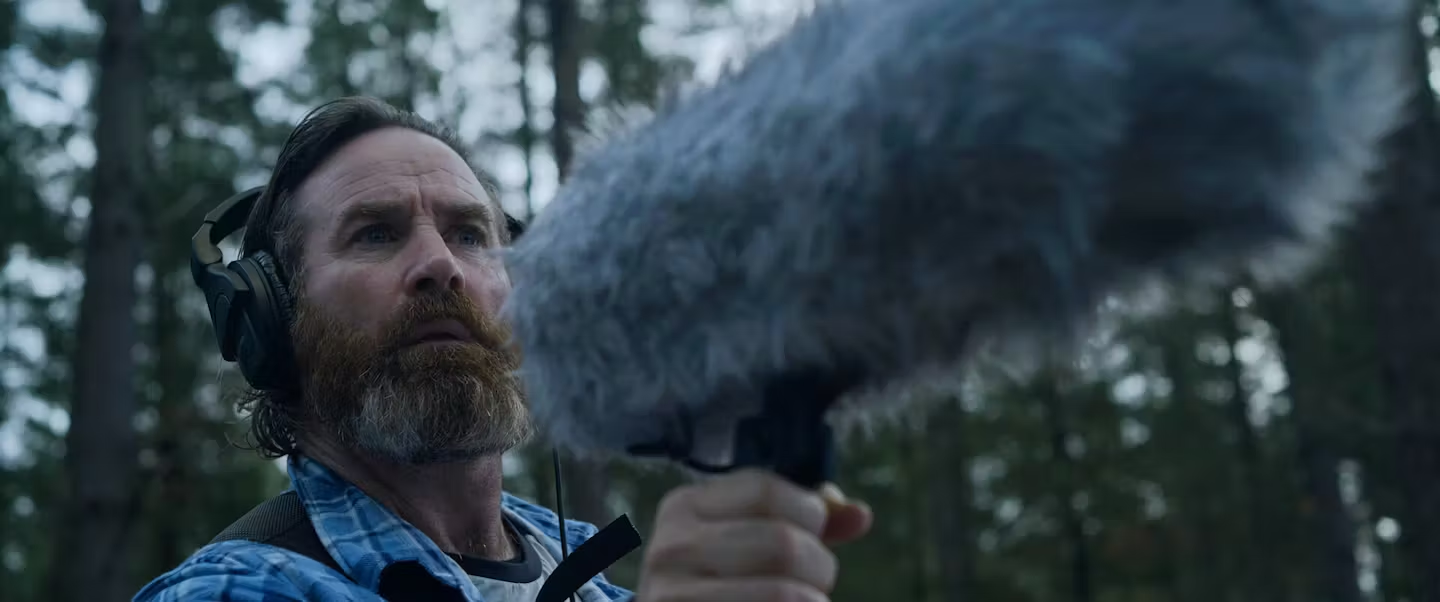
The story follows a seasoned sound recordist (Brendan Cooney) who ventures deep into an isolated forest to capture natural foley work. His search for the perfect audio, however, quickly turns into a harrowing nightmare when his microphone picks up a mysterious and terrifying sound. From that moment on, the forest—once tranquil—becomes a labyrinth of dread, where every crackle, every rustle, becomes a potential threat. Thomas weaves this sensory experience into the very fabric of the film, making it clear that sound, in Within The Pines, isn’t just a tool—it’s the heart of the story.
What stands out most is how Thomas makes audio the driving force behind the film’s atmosphere. The sound design is meticulously crafted, with each subtle noise adding to the tension. This is a film that demands to be listened to as much as watched. Every footstep, distant echo, and distorted whisper creates an air of unease, leading the audience into a heightened state of anxiety. As the recordist moves deeper into the woods, the soundscape begins to blur the line between reality and imagination, transforming the forest into a living, breathing entity. It’s a brilliant showcase of how integral sound is to the art of cinema, drawing you into the film’s core and ensnaring you in its thrilling journey.
Brendan Cooney’s performance as the recordist is central to Within The Pines’ success. His portrayal of a man caught between his professional duty and a growing sense of terror feels deeply authentic. Cooney’s ability to convey dread without dialogue—relying on his reactions to the sounds around him—makes for a compelling and understated performance. He becomes the audience’s conduit, hearing what we hear, feeling the tension grow with each auditory clue.
The location itself, an isolated and foreboding forest, works hand in hand with the sound design to create a sense of claustrophobia despite the open space. The forest is vast, but Thomas’s direction and sharp editing give the impression that it’s closing in on our protagonist. The trees feel like silent observers, while the sounds lurking within suggest something far more sinister. The film taps into the primal fear of being hunted, and it’s this constant feeling of pursuit—heightened by the expert use of sound—that makes Within The Pines so effective.
Within The Pines also excels in its pacing. Thomas builds the tension slowly, allowing the audience to settle into the rhythm of the recordist’s work before turning the peaceful setting into a nightmarish maze. It’s a gradual escalation of suspense, marked by small, subtle audio cues that hint at something lurking just out of sight. The film never rushes, instead drawing out the dread until it becomes almost unbearable, leading to a final act that delivers a scorpion sting in its tail.
This is a film that understands the importance of sensory storytelling. Paul Evans Thomas has crafted a deeply entrenched thriller that ensnares you in its world, using sound to create an atmosphere of fear and paranoia. The film’s brilliant use of audio isn’t just a technical achievement—it’s the very essence of the story, highlighting how crucial the sense of sound is to the cinematic experience.
The Prognosis:
Within The Pines is a gripping debut that showcases Thomas’s ability to create tension from the simplest of elements, leaving audiences with a film that lingers long after the final sound fades.
- Saul Muerte
Within The Pines is screening as part of the Dark Nights Film Fest, Sat 13 Oct at 7pm (Ritz Cinema – Randwick)
 Surgeons of Horror