• About
  • podcasts
  • Shop

Surgeons of Horror

~ Dissecting horror films

Surgeons of Horror

Tag Archives: klaus kinski

Creature (1985): A Pale Echo from Saturn’s Shadows

07 Wednesday May 2025

Posted by surgeons of horror in retrospective

≈ Leave a comment

Tags

alien horror, creature feature, klaus kinski, william malone

An icy moon, a forgotten monster, and a film still trapped in the shadow of its predecessors.

By 1985, the cinematic trail left by Alien had already spawned a legion of imitators, each trying to harness the same claustrophobic dread in cold, inhuman spaces. Creature, directed by William Malone, was one of those echoing attempts—big on promise, but undermined by budgetary constraints, pacing issues, and a story that always feels like it’s playing catch-up with better films.

Set on Titan, one of Saturn’s moons, the film follows a team of American explorers who stumble upon an ancient alien lifeform… one that’s been resting, quite undisturbed, for about 200,000 years—until now. But instead of unfurling as a fresh nightmare in the vein of Ridley Scott or John Carpenter, Creature quickly shows its hand as an awkward patchwork of sci-fi horror tropes, leaning on atmosphere it can’t fully conjure and characters we barely come to know.

The film does score points for its setting: the barren, icy terrain of Titan is a fitting stage for isolation and cosmic dread. There are moments—fleeting though they may be—where you can feel the weight of that space, the crushing silence, the desperate last gasps of human life under alien pressure. But these moments rarely evolve into anything more than background mood. The tension is never sustained.

Much of Creature’s legacy has survived in cult circles, owing partly to its practical effects and its modest but ambitious creature design, which—when shown sparingly—can deliver a jolt or two. Yet the creature itself, supposedly the film’s main draw, feels underutilised and poorly revealed. The mystery dies the moment we see too much, too soon. It’s less terrifying predator and more sluggish, rubbery reminder of what could have been.

Performances are serviceable, but thinly sketched. Klaus Kinski shows up as a wild card—naturally—but even his brand of manic energy can’t elevate a script that barely holds together under scrutiny. His presence, like the alien, feels like something stitched in for effect rather than organically grown from the narrative.

What Creature most sorely lacks is identity. It wants to be Alien, it wants to be The Thing, and it even wants to nod at Cold War paranoia with its American and German tensions, but never manages to settle into a rhythm of its own. The result is a film that feels more like a VHS relic than a true lost classic—better suited to playing in the background of a late-night sci-fi marathon than being revisited for serious chills.

That said, there’s still a strange charm to it all. The film is a product of its time—ambitious in scope, restricted in execution, and clearly crafted by filmmakers who loved the genre. William Malone would go on to prove himself more confidently in later works like House on Haunted Hill (1999), but here, he was still wading through derivative waters.

The Prognosis:

Forty years on, Creature remains a faint star in the vast constellation of 80s horror sci-fi. Not quite forgotten, not quite worth remembering—it lingers, orbiting obscurity, its promise still sleeping beneath the ice.

  • 40th Anniversary Retrospective by Saul Muerte
A Shadow Over Cinema: The History of Count Orlok

31 Tuesday Dec 2024

Posted by surgeons of horror in movie article

≈ Leave a comment

Tags

count orlok, FW Murnau, klaus kinski, Max Shreck, Nosferatu, robert eggers, spongebob squarepants, Werner Herzog

Few figures in horror cinema are as enduring or enigmatic as Count Orlok. From his haunting debut in F.W. Murnau’s 1922 silent masterpiece Nosferatu: A Symphony of Horror to his modern resurgence in pop culture, Orlok has remained a symbol of terror and the uncanny. With Robert Eggers’ highly anticipated remake of Nosferatu set for release, it’s the perfect time to delve into the fascinating history of this iconic vampire and the cinematic legacy he has cast over a century.

1922: Birth of a Horror Icon

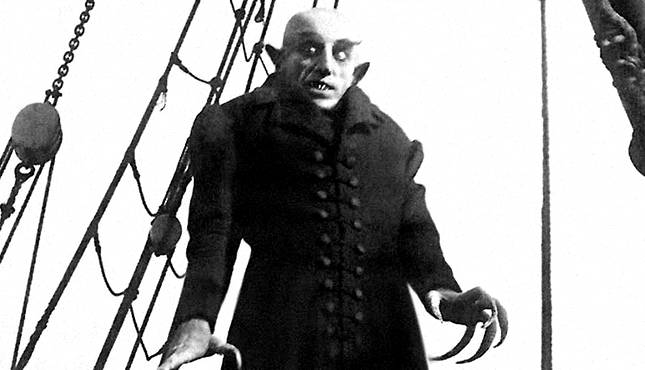
Count Orlok first emerged from the shadows in Nosferatu, portrayed with eerie brilliance by German actor Max Schreck. An unauthorized adaptation of Bram Stoker’s Dracula, Murnau’s film altered key elements to avoid legal repercussions—giving us Orlok in place of Dracula, a rat-like, ghoulish creature whose appearance was as unsettling as his supernatural presence.

Unlike the suave and charismatic vampires popularised in later decades, Orlok was grotesque and animalistic. His skeletal frame, elongated fingers, and bat-like visage made him an embodiment of pestilence and death, a fitting image in post-World War I Germany as the nation grappled with the horrors of war and the 1918 influenza pandemic. The film’s Expressionist cinematography only heightened the surreal terror of Orlok’s presence, cementing him as a cultural touchstone.

The Legal Battle and Cultural Resurrection

The original Nosferatu faced near destruction due to a lawsuit from Stoker’s estate, which ordered all copies of the film to be destroyed. Thankfully, several prints survived, allowing the film to gain legendary status over time. Orlok’s distinct appearance and the chilling atmosphere of the film have inspired generations of filmmakers, ensuring his place in horror history.

The 1979 Reinvention: Herzog’s Homage

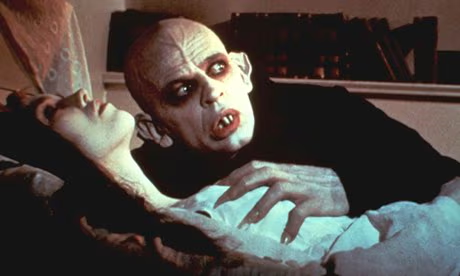
Werner Herzog’s Nosferatu the Vampyre (1979) reimagined Orlok for a new era. Starring Klaus Kinski as the Count, the film retained much of Murnau’s visual language while adding a layer of tragic melancholy to the character. Kinski’s Orlok was both monstrous and pitiable, a being cursed with immortality and insatiable hunger. This reinterpretation deepened the character’s complexity, offering a stark contrast to the more romanticised vampires of contemporary cinema.

Herzog’s film not only paid homage to Murnau but also underscored Orlok’s continued relevance as a symbol of existential dread and human vulnerability. It demonstrated that the Count’s haunting visage and the themes he embodies could transcend eras and cultural contexts.

Orlok in Popular Culture

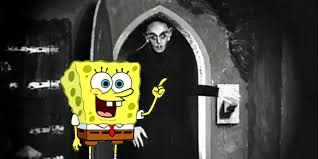
Beyond the silver screen, Count Orlok has seeped into various facets of pop culture. From parodies in animated shows like SpongeBob SquarePants to his influence on vampire lore in literature and games, Orlok’s shadow looms large. His monstrous form serves as a counterpoint to the seductive vampires popularized by the likes of Bela Lugosi and Anne Rice’s The Vampire Chronicles, offering a reminder of the genre’s more primal and terrifying origins.

The Eggers Era: A New Dawn

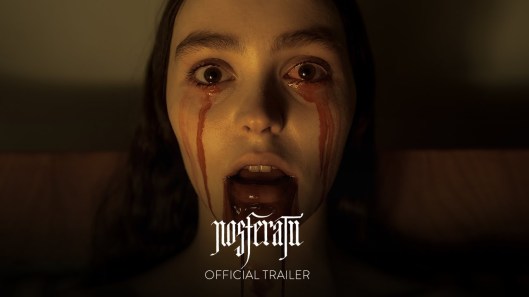
Now, with Robert Eggers at the helm of a new Nosferatu, the Count is poised to captivate audiences once again. Known for his meticulous attention to historical detail and atmospheric storytelling (The Witch, The Lighthouse), Eggers is uniquely equipped to breathe new life into Orlok’s tale. His vision promises to explore not only the horror but also the enduring mythos surrounding the vampire legend, ensuring that Orlok remains as vital and terrifying as ever.

Count Orlok’s journey from the shadows of silent cinema to modern reinterpretations is a testament to his enduring power as a symbol of fear and fascination. As Eggers’ Nosferatu approaches, we are reminded of the timeless allure of the monstrous and the uncanny. Orlok’s story is not merely a relic of the past but a living, evolving legend—one that continues to cast its eerie shadow over the world of horror.

  • Saul Muerte

Retrospective: Nella stretta morsa del ragno aka Web of the Spider (1971)

27 Friday Aug 2021

Posted by surgeons of horror in retrospective

≈ Leave a comment

Tags

anthony franciosca, antonio margheriti, Edgar Allan Poe, klaus kinski, michele mercier, silvano tranquilli

Web of the Spider is potentially an example of someone who is obsessed with a vision and is determined to fulfill their satisfaction to keep pushing an idea to make it work.
Director Antonio Margheriti (Cannibal Apocalypse) had already tried his hand at the tale of a man challenged to authenticate a story by Edgar Allan Poe by spending a night in a haunted castle and surviving, in 1964 with Castle of Blood starring Barbara Steele. Said film performed poorly at the box office but despite this Margheriti felt compelled to return once more to his source some seven years later, but this time in colour.

There is a part of me that kind of gets this, by having American writer Poe, known for the macabre with a lilt towards romanticism, tired of people judging the authenticity of his work. His claim is that all his fictional stories are based in truth, especially the spiritual or paranormal components. It is equally compelling having the eccentric performer Klaus Kinski take on this magnanimous personality to inject the strange yet driven nature that Poe possesses. In Castle of Blood, Poe was played by Silvano Tranquilli (Black Belly of the Tarantula) who appears this time around playing William Perkins, one of the “spectral” residents of the castle.

This time around, it’s a journalist, Alan Foster (Anthony Franciosca – Tenebrae) who takes up Poe’s bet to spend the dreaded night in the castle, where he meets a number of ghostly spirits of those who have been murdered in the castle walls, and throughout the night play out the moments leading to their deaths.
Curiously Foster becomes infatuated with one of the inhabitants, Elisabeth (Michèle Mercier), who equally appears to have fallen for him. As Foster begins to question his sanity and the events that are occurring around him, the big reveal turns out to be that these so-called spirits are in fact vampires, luring him to become their next victim. Foster must now try and fight his way out of the castle before he succumbs to their ways.

Web of the Spider has moments that could genuinely work well but I can’t help but feel that the storyline would serve best as a theatrical presentation where the location and sets can lend weight to the telling of the story using the tricks of the trade. It just doesn’t translate as well in celluloid form and hence why Margheriti falls short of accomplishing his vision for a second time. It would be one that he would openly admit to being a failure and a “stupid to remake it”.
I for one am inclined to agree and the less said about the ending the better.

  • Saul Muerte

Subscribe

  • Entries (RSS)
  • Comments (RSS)

Archives

  • December 2025
  • November 2025
  • October 2025
  • September 2025
  • August 2025
  • July 2025
  • June 2025
  • May 2025
  • April 2025
  • March 2025
  • February 2025
  • January 2025
  • December 2024
  • November 2024
  • October 2024
  • September 2024
  • August 2024
  • July 2024
  • June 2024
  • May 2024
  • April 2024
  • March 2024
  • February 2024
  • January 2024
  • November 2023
  • October 2023
  • September 2023
  • August 2023
  • July 2023
  • June 2023
  • May 2023
  • April 2023
  • March 2023
  • February 2023
  • January 2023
  • November 2022
  • October 2022
  • September 2022
  • August 2022
  • July 2022
  • June 2022
  • April 2022
  • March 2022
  • February 2022
  • January 2022
  • December 2021
  • November 2021
  • October 2021
  • September 2021
  • August 2021
  • July 2021
  • June 2021
  • May 2021
  • April 2021
  • March 2021
  • February 2021
  • January 2021
  • December 2020
  • November 2020
  • October 2020
  • September 2020
  • August 2020
  • July 2020
  • June 2020
  • May 2020
  • April 2020
  • March 2020
  • February 2020
  • January 2020
  • December 2019
  • November 2019
  • October 2019
  • September 2019
  • July 2019
  • June 2019
  • May 2019
  • April 2019
  • March 2019
  • February 2019
  • January 2019
  • December 2018
  • November 2018
  • October 2018
  • September 2018
  • August 2018
  • July 2018
  • June 2018
  • May 2018
  • April 2018
  • March 2018
  • February 2018
  • January 2018
  • December 2017
  • November 2017
  • October 2017
  • September 2017
  • August 2017
  • July 2017
  • June 2017
  • May 2017
  • April 2017
  • March 2017
  • February 2017
  • January 2017
  • December 2016
  • November 2016
  • October 2016
  • September 2016
  • August 2016
  • July 2016
  • June 2016
  • May 2016

Categories

  • A Night of Horror Film Festival
  • Alien franchise
  • Alliance Francaise French Film Festival
  • Australian Horror
  • Best Movies and Shows
  • Competition
  • dark nights film fest
  • episode review
  • Flashback Fridays
  • Friday the 13th Franchise
  • Full Moon Sessions
  • Halloween franchise
  • In Memorium
  • Interview
  • japanese film festival
  • John Carpenter
  • killer pigs
  • midwest weirdfest
  • MidWest WierdFest
  • MonsterFest
  • movie article
  • movie of the week
  • Movie review
  • New Trailer
  • News article
  • podcast episode
  • podcast review
  • press release
  • retrospective
  • Rialto Distribution
  • Ring Franchise
  • series review
  • Spanish horror
  • sydney film festival
  • Sydney Underground Film Festival
  • The Blair Witch Franchise
  • the conjuring franchise
  • The Exorcist
  • The Howling franchise
  • Top 10 list
  • Top 12 List
  • Trash Night Tuesdays on Tubi
  • umbrella entertainment
  • Uncategorized
  • Universal Horror
  • Wes Craven
  • wes craven's the scream years

Meta

  • Create account
  • Log in

Blog at WordPress.com.

  • Subscribe Subscribed
    • Surgeons of Horror
    • Join 228 other subscribers
    • Already have a WordPress.com account? Log in now.
    • Surgeons of Horror
    • Subscribe Subscribed
    • Sign up
    • Log in
    • Report this content
    • View site in Reader
    • Manage subscriptions
    • Collapse this bar
 

Loading Comments...