• About
  • podcasts
  • Shop

Surgeons of Horror

~ Dissecting horror films

Surgeons of Horror

Tag Archives: 1960s horror

Sixty Screams of the ’60s: The Ultimate Horror Countdown Part 4

26 Saturday Jul 2025

Posted by surgeons of horror in retrospective

≈ Leave a comment

Tags

1960s horror, 1960s retrospective

Part 4: #30–21 – Madness, Demons, and Psychological Dread

#30. Frankenstein Must Be Destroyed (1969, dir. Terence Fisher) ★★★½
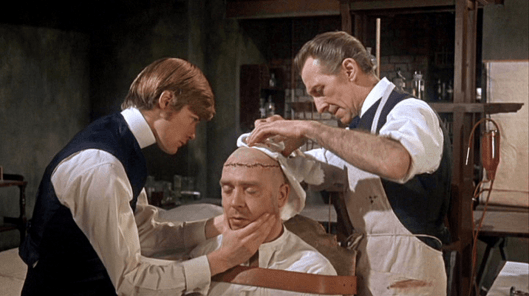
Arguably Hammer’s darkest Frankenstein entry, this time Peter Cushing’s Baron is more villain than anti-hero, orchestrating blackmail, body-snatching, and worse. Fisher brings a chilly intensity, and the film’s cold-blooded tone marks a grim evolution in the studio’s legacy. It’s intelligent, brutal, and emotionally bleak.

#29. Horrors of Malformed Men (1969, dir. Teruo Ishii) ★★★½
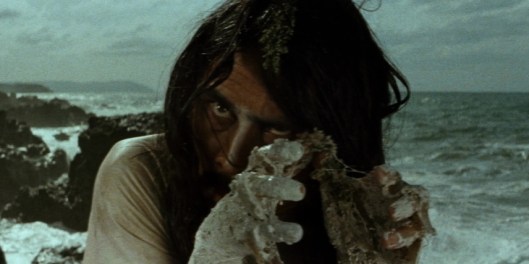
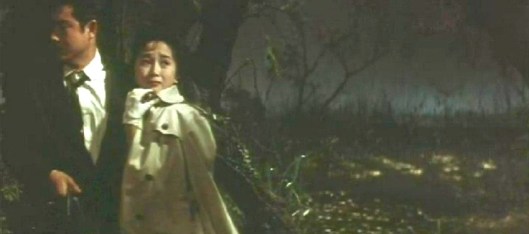
A nightmarish swirl of Edogawa Rampo adaptations and Ishii’s unique perversity, this Japanese cult classic was banned for decades. Full of surreal grotesquerie, body horror, and identity confusion, it’s a fever dream drenched in taboo. Not for the faint-hearted, but a fascinating genre provocation.

#28. Dracula: Prince of Darkness (1966, dir. Terence Fisher) ★★★½
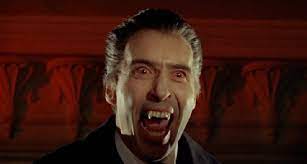
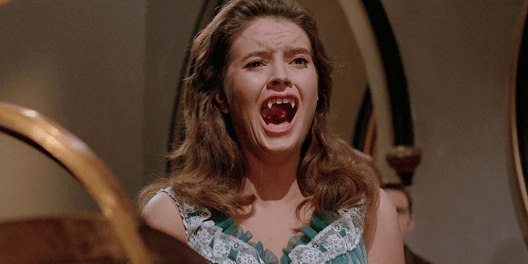
Christopher Lee returns (wordless, no less) in this elegant continuation of Hammer’s Dracula mythos. While the pacing is deliberate, the imagery is stunning, and Lee’s physical performance makes Dracula all the more monstrous. An important sequel that cemented the Count’s terrifying legacy.

#27. The Devil Rides Out (1968, dir. Terence Fisher) ★★★½
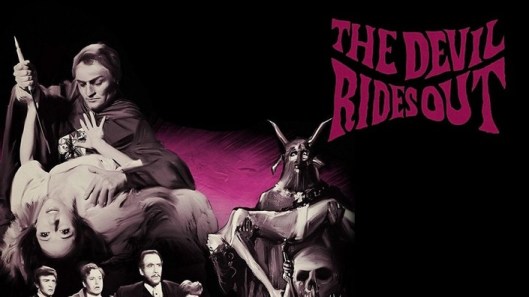
Hammer’s finest foray into Satanic horror, led by a commanding Christopher Lee performance as the heroic Duc de Richleau. Black masses, possession, and a tense battle of good vs. evil play out in bold, colourful fashion. Elevated by Richard Matheson’s script and Lee’s conviction.

#26. Viy (1967, dir. Konstantin Ershov & Georgi Kropachyov) ★★★½
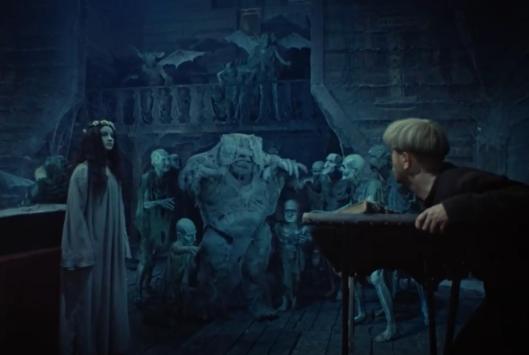
The first Soviet-era horror film, Viy is a folk tale brought to glorious life. A seminary student must spend three nights in a chapel with a witch’s corpse, leading to unforgettable supernatural chaos. Innovative effects and bizarre imagery make this a true one-of-a-kind.

#25. Goke, Body Snatcher From Hell (1968, dir. Hajime Satô) ★★★½
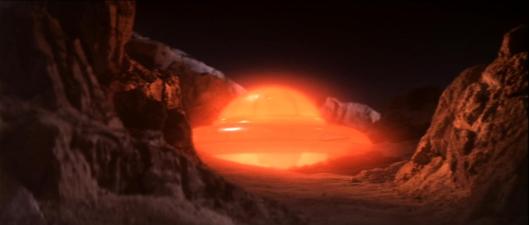
Aliens, gore, and political subtext crash-land in this wild Japanese sci-fi horror hybrid. A hijacked plane, a crashed UFO, and gooey body possession form the backbone of a sharp, cynical allegory about humanity’s self-destruction. Vivid, vicious, and wonderfully unhinged.

#24. Tales of Terror (1962, dir. Roger Corman) ★★★★
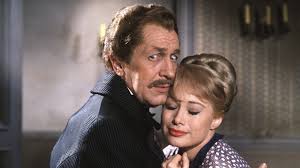
Three Poe tales, three Price performances. From the lugubrious “Morella” to the boozy brilliance of “The Black Cat,” this anthology shows Corman and Price at their most playful. Peter Lorre steals the middle segment, but the whole film is stylish, macabre fun.

#23. The Pit and the Pendulum (1961, dir. Roger Corman) ★★★★
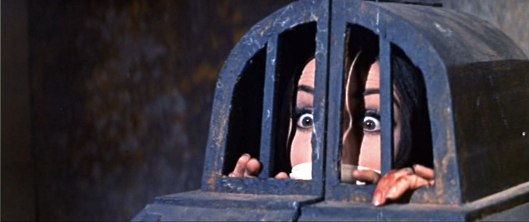
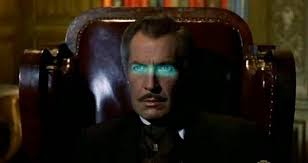
One of Corman’s finest. Vincent Price gives a tormented turn as a man unraveling in a Spanish castle haunted by murder and legacy. Lavish set design, expressionistic visuals, and a killer twist ending mark this as a highlight of the AIP-Poe cycle.

#22. Strait-Jacket (1964, dir. William Castle) ★★★★
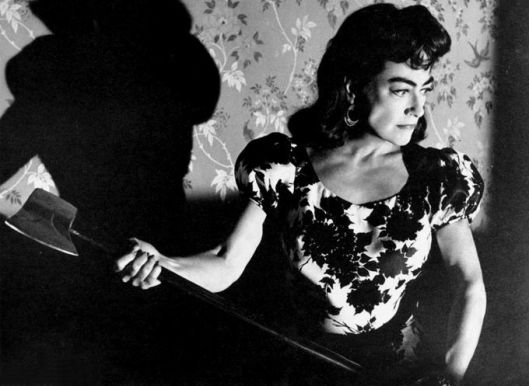
Joan Crawford wields an axe in this deliciously over-the-top slasher prototype. Playing with themes of madness, motherhood, and misdirection, Castle delivers more than gimmicks here. Crawford’s performance is both unhinged and heartbreaking—a camp classic with surprising depth.

#21. Eye of the Devil (1966, dir. J. Lee Thompson) ★★★★
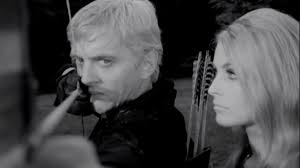
A deeply strange and haunting occult thriller with an aristocratic chill. Starring Deborah Kerr, David Niven, and a hypnotic Sharon Tate, the film channels folk horror vibes before it was fashionable. Mysterious rituals and fatalism make this a forgotten gem worth resurrecting.

Part 5: #20–11 – The Heavy Hitters of Horror’s New Age coming soon.

  • Saul Muerte

Sixty Screams of the ’60s: The Ultimate Horror Countdown Part 2

26 Saturday Jul 2025

Posted by surgeons of horror in retrospective, Uncategorized

≈ 1 Comment

Tags

1960s horror, 1960s retrospective

Haunted Villages, Ghost Cats, and Supernatural Schemes

With entries #50 to #41, we move deeper into international territory and find horror leaning into psychological dread, tragic spirits, and doomed villages. From Korea to Italy and Japan to the American heartland, the genre flexes new muscles as it breaks further from its gothic roots.

#50. Diary of a Madman (1963, dir. Reginald Le Borg) ★★★

Vincent Price headlines this adaptation of a lesser-known Guy de Maupassant tale. Possessed by a malevolent invisible entity, Price delivers delicious monologues while descending into madness. Though it never reaches the heights of his Poe roles, it’s an eerie morality tale worth rediscovering.

#49. The Ghost Cat of Otama Pond (1960, dir. Yoshihiro Ishikawa) ★★★

A fine example of Japan’s kaibyō eiga (ghost cat) subgenre, this film blends folktale with supernatural horror as a feline spirit exacts vengeance from beyond the grave. Eerie, painterly visuals and a chilling atmosphere elevate a haunting revenge story.

#48. Kiss of the Vampire (1963, dir. Don Sharp) ★★★

Hammer tried something a little different with this Dracula-adjacent tale, absent of Cushing and Lee but enriched with occult elements, eerie visuals, and a batty finale. Australian director Don Sharp lends a confident hand, offering a vampiric tale both eerie and off-kilter.

#47. The Phantom of the Opera (1962, dir. Terence Fisher) ★★★

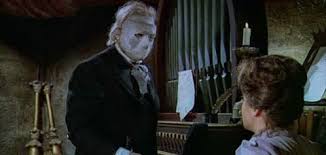
Hammer’s take on Leroux’s classic replaces horror with pathos, casting Herbert Lom as a sympathetic Phantom. Visually impressive with strong performances, but it lacks the menace of its Universal predecessor. Still, a noteworthy variation on a familiar tragedy.

#46. The Horrible Dr. Hichcock (1962, dir. Riccardo Freda) ★★★

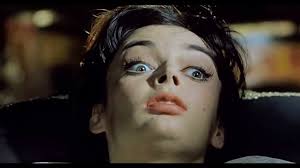
A controversial and stylish piece of Italian gothic horror featuring necrophilia, fog-drenched corridors, and morbid obsession. Barbara Steele is riveting as always, while Freda crafts an atmosphere of inescapable decay. More perverse than terrifying, but unforgettable.

#45. The Housemaid (1960, dir. Kim Ki-young) ★★★

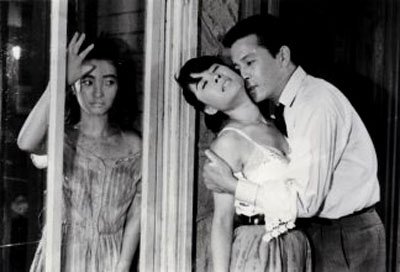
A proto-psychological thriller from South Korea that slides from domestic drama into full-blown horror. A manipulative housemaid destabilizes a middle-class household in a tale of infidelity, class, and control. Tense, tragic, and way ahead of its time.

#44. Spirits of the Dead (1968, dirs. Vadim, Malle, Fellini) ★★★½

A lavish Poe anthology boasting segments from three European auteurs. Jane Fonda stuns in Vadim’s “Metzengerstein,” Malle brings eerie tension in “William Wilson,” but it’s Fellini’s phantasmagoric “Toby Dammit” that steals the show. A decadent, surreal trip.

#43. Mill of the Stone Women (1960, dir. Giorgio Ferroni) ★★★½

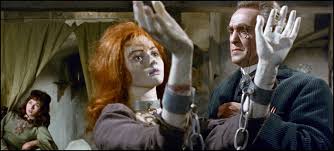
Italy’s answer to Hammer’s gothic boom. A mysterious sculptor uses a creepy windmill and his statuesque creations to cover a darker secret. Gorgeously shot and dripping with atmosphere, it’s a Euro-horror delight that deserves more love.

#42. Night of the Eagle (1962, dir. Sidney Hayers) ★★★½

Also known as Burn, Witch, Burn!, this British occult thriller follows a rational professor who discovers his wife is secretly using magic to protect him. Smartly written with creeping suspense and a strong anti-rationalist message. Low on gore, high on tension.

#41. The City of the Dead (1960, dir. John Llewellyn Moxey) ★★★½

An atmospheric gem often overshadowed by bigger titles. Christopher Lee lures a student into a New England town still ruled by witches. Fog, cobblestone, and stark monochrome make for a chilling morality tale steeped in black magic.

Horrors of Malformed Men (1969) – Beautiful, Bizarre, and Banned

20 Sunday Jul 2025

Posted by surgeons of horror in retrospective

≈ Leave a comment

Tags

1960s horror, 1960s retrospective, Edogawa Ranpo, iro Takemura, japanese cinema, japanese horror, teruo ishii, Teruo Yoshida

There’s no better way to close a retrospective of 1960s horror cinema than with Horrors of Malformed Men, a fever dream of grotesquery and surrealism that was so transgressive, it vanished from circulation for decades. Directed by cult provocateur Teruo Ishii and loosely inspired by the works of Japanese mystery and erotic horror master Edogawa Ranpo, this film stands as one of the most controversial and singularly strange entries in the genre’s long, bloodied history.

The film begins in familiar pulp-horror territory: a young medical student escapes from an asylum, assumes the identity of his apparent double, and is drawn into the dark secrets surrounding a remote island populated by deformed men and ruled by a mad, god-complex-driven scientist. But what unfolds is anything but conventional. Ishii tosses gothic horror, grotesque body imagery, kabuki theatre, Freudian nightmares, and existential dread into a blender and hits mutilate.

More art-house hallucination than straight horror, Horrors of Malformed Men taps into deep post-war anxieties and long-standing cultural taboos around deformity, insanity, and identity. The film’s exploration of physical abnormality and psychological trauma, paired with scenes of near-surrealist horror, earned it an immediate ban in Japan. For decades, it remained unseen, whispered about in underground cinephile circles as a kind of forbidden fruit of Japanese cinema.

And yet, beyond the scandal lies something undeniably compelling: Ishii’s direction is bold and ambitious, mixing low-budget exploitation with a high-concept fever dream. Every frame carries a strange beauty or disquieting detail, enhanced by Jiro Takemura’s eerie score and the film’s striking use of theatrical staging. The lead performance from Teruo Yoshida is appropriately wide-eyed and distressed, anchoring the chaos with a tragic, almost operatic sense of fate.

It’s a film that refuses to sit still — shifting from gothic melodrama to art-house allegory to grindhouse freakshow in a heartbeat. It doesn’t always hold together narratively, and its tone can veer wildly, but that dissonance only amplifies the experience. Like a hallucination you can’t quite shake, it lingers.

In a decade where censorship and moral panic loomed large, Horrors of Malformed Men wore its taboos on its sleeve — and paid the price. But with time, it has emerged as a boundary-pushing relic of Japanese cinema history, a nightmarish outlier that still startles and fascinates.

The Prognosis:

As the 1960s came to a close, this film seemed to herald what horror cinema would increasingly become in the decades ahead: challenging, transgressive, and unafraid to look into the abyss. It’s a flawed but unforgettable swan song to a daring era.

  • Saul Muerte

1960s Retrospective: It’s Alive! (1969) – Buried in Budget Horror

12 Saturday Jul 2025

Posted by surgeons of horror in retrospective

≈ Leave a comment

Tags

1960s horror, 1960s retrospective, larry buchanan

Trapped in a Cave of Terror! is the tagline, but what It’s Alive! really traps you in is 80 minutes of painfully sluggish pacing, cardboard performances, and a prehistoric monster that looks like it crawled out of a craft store clearance bin.

Directed by infamous B-movie auteur Larry Buchanan, It’s Alive! is emblematic of his career: micro-budget genre filmmaking produced quickly and cheaply, often for television syndication. Known for titles like Zontar, the Thing from Venus and Curse of the Swamp Creature, Buchanan built a niche out of public domain plots, recycled storylines, and rubber-suited monstrosities. Unfortunately, It’s Alive! may be one of his least inspired efforts—and that’s saying something.

The “plot,” such as it is, involves a deranged farmer who lures three travellers into a cave and traps them with his pet monster—a leftover from some vague prehistoric past. What unfolds is a glacial march through bad dialogue, inert suspense, and long, dark cave scenes where it’s hard to tell whether anything is happening at all. Even by Buchanan’s notoriously low standards, the energy here feels drained.

The monster, when it finally appears, is a masterclass in zero-budget filmmaking—part papier-mâché, part bargain-bin rubber. It’s hard to be scared of something that looks so awkwardly immobile, and worse, it barely appears in the film. Most of the runtime is devoted to the characters sitting around, arguing, or reacting to sounds in the dark, presumably because the costume couldn’t withstand more than a few minutes of movement.

To Buchanan’s credit, he knew how to make movies fast and cheap—and there’s a certain campy charm to his drive-in philosophy. But in It’s Alive!, even that charm is in short supply. The film is padded, slow, and visually murky, with a script that feels like it was written on the back of a diner napkin during a lunch break.

The Prognosis:

Looking back, It’s Alive! might be worth a glance for die-hard fans of no-budget horror or as a curiosity in the Buchanan filmography. But for most, this is one fossil that should’ve stayed buried.

  • Saul Muerte

Mad Doctor of Blood Island (1969) – A Sloppy Slice of Tropical Terror

05 Saturday Jul 2025

Posted by surgeons of horror in retrospective

≈ Leave a comment

Tags

1960s horror, 1960s retrospective, eddie romero, gerardo de leon, ronald remy

Arriving at the tail end of the 1960s horror boom, Mad Doctor of Blood Island (directed by Eddie Romero and Gerardo de León) is a lurid, low-budget slice of Filipino-American exploitation that promised “horrors beyond belief!” but delivered more on schlock than shock. As the second entry in Romero’s Blood Island trilogy, it typifies the era’s appetite for gore, nudity, and pulp thrills—though not always in the most coherent fashion.

The film follows a ship-bound doctor, a reporter, and a young woman who arrive on a remote island plagued by strange deaths. It doesn’t take long before they encounter the titular “mad doctor,” played by Ronald Remy, whose gruesome experiments have spawned a chlorophyll-infused, acid-blooded mutant wandering the jungle. If that sounds deliciously absurd, it is—but Mad Doctor of Blood Island rarely rises above its own ridiculous premise.

Despite a promising atmosphere—lush jungle settings, a sweaty sense of doom, and some decent creature effects for the time—the film is hampered by a plodding pace, wooden dialogue, and a narrative that stumbles more often than it strides. There’s also a curiously uneven tone: part jungle adventure, part grotesque horror, and part softcore romp. The result is a film that doesn’t quite commit to any one direction, leaving much of the tension and horror flat.

Ronald Remy gives it a spirited go as the deranged doctor, and the creature design—goopy green and grotesque—has become a cult image in horror circles. But the characters are thin, the plotting slack, and the direction lacks urgency. Even the infamous “green blood” gimmick, which involved cinema-goers drinking a fluorescent concoction before the film began, can’t mask the film’s overall lack of bite.

The Prognosis:

Viewed today, Mad Doctor of Blood Island is more notable for its place in drive-in cinema history than for any cinematic merit. It remains a curious oddity—entertaining in stretches for B-movie aficionados, but ultimately more of a tropical misfire than a terrifying vacation.

  • Saul Muerte

“The Night of Bloody Horror: A Dull, Drab Dismemberment of Sanity and Storytelling”

28 Saturday Jun 2025

Posted by surgeons of horror in retrospective

≈ Leave a comment

Tags

1960s horror, 1960s retrospective, Gerald McRaney, joy n houck jr

If ever a film title over-promised and under-delivered, it’s The Night of Bloody Horror. On paper, it sounds like a grimy drive-in gem—a Southern Gothic slasher soaked in Freudian dread and low-budget bloodshed. In reality, it’s a leaden, confusing slog through bad acting, worse pacing, and the kind of editing that suggests someone spilled the film reels and just guessed the order.

Directed by Joy N. Houck Jr., this Louisiana-shot mess follows Wesley, a man recently released from a mental institution who may or may not be carving up women in a series of disconnected, lazily staged murders. He also might be suffering the ghostly hangover of his dead brother’s trauma. Or maybe it’s his overbearing mother. Or a dream. Or all of the above. Or none of it. The plot doesn’t just meander—it collapses into a narrative sinkhole by the second act, never to recover.

As a horror film, Night of Bloody Horror is utterly toothless. The kills are bloodless, awkwardly blocked, and lack any tension or catharsis. Despite its title, the film is rarely bloody and never horrifying. What should be gory spectacle or psychological torment is instead reduced to flat, amateur-hour staging, complete with shrill sound cues and repetitive “shock” flashbacks that play like a slide projector from hell.

Gerald McRaney, in his first feature role, tries to give Wesley some depth, but he’s drowned by a script that gives him nothing but psychobabble and wooden melodrama to chew on. It’s an unfair start to a career that, thankfully, would rise above this mire. The supporting cast fares no better, delivering their lines with the enthusiasm of people waiting for lunch. Not a single character feels like they belong in this world—or any world.

Technically, the film is barely functional. The editing is choppy, often cutting mid-sentence or lingering awkwardly after scenes have died. The cinematography is flat, frequently overlit in some scenes and murky in others. The soundtrack is a Frankenstein’s monster of tinny stingers and misplaced jazz-funk grooves that suck any remaining atmosphere out of the room.

If there’s any entertainment to be found here, it’s accidental—unintentional comedy born from overwrought acting, bizarre dream sequences, and the sheer incompetence of the storytelling. But even as a so-bad-it’s-good experience, The Night of Bloody Horror struggles to maintain interest. It’s not weird enough to be cult-worthy, and not scary enough to justify the word “horror” in the title.

The Prognosis:

There’s a kernel of an idea in here—a Southern-fried psychological slasher with family trauma at its core—but it’s utterly squandered. Instead, what we get is an amateurish, directionless, and dreary affair that serves as a cautionary tale in how not to make a horror movie. Keep telling yourself, it’s only a picture? No need—there’s nothing nightmarish here, just the dull ache of wasted time.

  • Saul Muerte

“Fangs of the Living Dead: A False Start from the Father of the Blind Dead”

22 Sunday Jun 2025

Posted by surgeons of horror in retrospective

≈ Leave a comment

Tags

1960s horror, 1960s retrospective, amando de ossorio, anita ekberg

Before the eerie, hooded knights of Tombs of the Blind Dead rode out from the graveyards of Spanish horror cinema, director Amando de Ossorio dipped his toes into the genre with Fangs of the Living Dead—a gothic curiosity that plays more like a confused homage than a fully-formed fright fest. Released in 1969 under the alternate title Malenka, this early effort is notable less for its quality than for the glimmers of talent that would soon flourish in his later, more celebrated work.

The premise is classic Euro-horror: a young woman (played by the ever-enigmatic Anita Ekberg) inherits a crumbling castle from a mysterious uncle, only to find herself surrounded by alluring women, dark legends, and hints of vampirism. So far, so Hammer-lite. But where the British studios leaned into blood, mood, and menace, Fangs of the Living Dead waffles between gothic horror and awkward melodrama, never quite settling on a tone or identity.

Ekberg is game, and her presence gives the film a touch of continental class. But the supporting cast is uneven, and the plotting stumbles through cliché after cliché without much conviction. What should feel mysterious or sensual often comes off as wooden or unintentionally camp.

The most frustrating element is the bait-and-switch structure of the film. There are vampires—or at least the idea of them—but just when the story starts to build towards supernatural revelation, it pulls the rug out with a rationalist twist that saps the atmosphere. And yet, depending on which cut you’re watching, there’s an added final beat that seems to suggest the supernatural was real all along. It’s a tonal mess, and not the good kind.

Despite its shortcomings, Fangs of the Living Dead is a curious artifact. You can see de Ossorio tinkering with gothic tropes and experimenting with shadows and stone. The castle setting, the doomed lineage, the women of uncertain allegiance—all of these would be refined in his Blind Dead series just a few years later. While this film lacks the eerie silence, decaying iconography, and creeping dread that defined Tombs of the Blind Dead (1972), it does point to a director finding his way through genre fog.

The Prognosis:

Fangs of the Living Dead is more forgettable than fang-tastic. It’s an early, faltering step from a filmmaker who would soon become one of Spain’s leading horror voices. Not essential viewing, but worth a look for fans of Ossorio’s later work—or for those with a fondness for the weird and wavering twilight of 1960s Euro-horror.

  • Saul Muerte

Swinging Sixties Slasher in The Haunted House of Horror’s Lifeless Mystery

15 Sunday Jun 2025

Posted by surgeons of horror in retrospective

≈ Leave a comment

Tags

1960s horror, 1960s retrospective, frankie avalon

Frankie Avalon can’t save this creaky, confused slasher from itself.

Michael Armstrong’s The Haunted House of Horror promises much with its lurid title and mod-era setup, but the final product is a disappointingly tepid affair that never quite knows what it wants to be. Part swinging ’60s youth flick, part slasher prototype, and part drawing-room whodunit, the film struggles under the weight of its own confused identity—and the results are more boring than chilling.

The plot is familiar: a group of hip London teenagers (or at least actors playing them) decide to explore an abandoned mansion on a lark, only to be picked off one by one by an unseen killer. There’s potential here for either taut horror or campy fun, but The Haunted House of Horror commits to neither. The pacing is glacial, the tension limp, and the atmosphere undercut by odd tonal shifts and clunky dialogue.

The film seems content to coast on the marquee name of American teen idol Frankie Avalon, whose presence feels oddly out of place amidst the otherwise British cast. While he’s given the most screen time, his performance is stiff, and the script never gives him much to work with beyond furrowed brows and blank stares. Whatever youthful edge the film tries to evoke is lost in a fog of awkward character dynamics and wooden delivery.

What might have redeemed this clunky murder mystery is a satisfying twist or a killer finale—but The Haunted House of Horror fumbles that too. Its ambiguous ending, instead of offering intrigue or open-ended interpretation, feels more like a shrug. Who did it? Why? What does it mean? The film doesn’t seem all that interested in answering.

The Prognosis:

Despite a few stylish flourishes and some decent cinematography in its haunted corridors, The Haunted House of Horror lacks the bite or blood to stand out among its late-’60s horror contemporaries. It’s a curiosity piece at best—a relic trying to cash in on both the horror boom and the youth market and succeeding at neither.

  • 1960s Retrospective review by Saul Muerte

Fear, Fur, and Fortune: Eye of the Cat Delivers Giallo-Lite Thrills

08 Sunday Jun 2025

Posted by surgeons of horror in retrospective, Uncategorized

≈ Leave a comment

Tags

1960s horror, 1960s retrospective, david lowell, michael sarrazin

Directed by David Lowell Rich, Eye of the Cat claws its way into the tail end of the 1960s with a premise that’s part Hitchcockian suspense, part Gothic melodrama, and part giallo-lite. While it never fully embraces the stylistic excess of its European cousins, there’s just enough tension, sleaze, and visual flair to keep genre fans engaged.

The setup is deliciously pulpy: a man conspires with his lover to rob his wealthy, cat-loving aunt of her fortune. The twist? He suffers from crippling ailurophobia—a fear of cats so intense it borders on the irrational. As the couple manipulates their way into the aunt’s inner circle, it becomes clear that the real threat may not be the clowder of watchful cats, but the secrets and shifting loyalties within the human cast.

While it lacks the razor-sharp elegance of Italian gialli, the film borrows enough of the genre’s staples—suspicious motives, inheritance plots, sudden reversals—to flirt with its spirit. The San Francisco setting provides a breezy, modern contrast to the otherwise old-world paranoia. Stylish cinematography and a few well-executed suspense sequences help elevate what could have been a TV-grade thriller.

Performances are serviceable, if occasionally campy, with Michael Sarrazin giving the lead just the right balance of charm and cowardice. The cats—dozens of them—are effectively used not just as a visual motif but as avatars of retribution. Their calm menace lingers in the corners of every scene, especially as things take a turn for the sinister in the final act.

The Prognosis:

Eye of the Cat may not leave deep scratches, but it’s a fun, semi-decent slice of late-’60s paranoia with just enough bite to justify the watch. For fans of crime thrillers with a twisted core—and anyone who likes their feline horror served with a side of psychological torment—it’s worth a revisit.

  • 1960s Retrospective Review by Saul Muerte

Fog, Flesh, and Fear: The Doll of Satan and the Gothic Roots of Giallo

01 Sunday Jun 2025

Posted by surgeons of horror in retrospective

≈ Leave a comment

Tags

1960s horror, 1960s retrospective, giallo, giallo horror, gothic, gothic horror, italian gothic horror

“Behind every shadow lies a secret. Behind every secret, a scream.”

🗝️ “Behind every shadow lies a secret. Behind every secret, a scream.”

By the time La bambola di Satana (The Doll of Satan) crept into Italian cinemas in 1969, the giallo genre was still sharpening its knives. Mario Bava had lit the fuse with The Girl Who Knew Too Much (1963) and Blood and Black Lace (1964), but it would be another year before Dario Argento’s The Bird with the Crystal Plumage pushed the subgenre into full flight. The Doll of Satan landed at a curious midpoint: a gothic thriller draped in giallo stylings, ripe with misty castles, erotic hallucinations, and a hooded killer lurking in the shadows.

Directed by Ferruccio Casapinta—his only directorial credit—this occult-tinged thriller follows Elisabeth, a young woman returning to her family’s ancestral castle after her uncle’s mysterious death. As the inheritance looms, so do whispers of hauntings, cryptic locals, and ulterior motives. Elisabeth is soon plagued by bizarre, erotically charged visions and finds herself trapped in a web of deceit, culminating in dungeon-bound torture at the hands of a masked figure. Her fiancé, Jack, begins to suspect that the castle’s legend hides a far more human treachery.

While The Doll of Satan never fully commits to the baroque excess or stylish violence that would come to define giallo in the 1970s, it bears several of the genre’s fingerprints: a vulnerable woman in a labyrinthine estate, conspiracies surrounding wealth and inheritance, dreamlike hallucinations, and a killer whose identity is concealed behind cloaks and masks. Yet it’s still deeply tethered to the gothic tradition—with its rain-slicked graveyards, ancestral curses, and fog-choked corridors, the film feels caught in the final breath of the old horror world, even as it reaches toward the future.

There’s an undeniable camp charm in the way the film blends eroticism and suspense, from the exaggerated dream sequences to the near-operatic melodrama. Bruno Nicolai’s score—steeped in mood and menace—adds a ghostly elegance that elevates the film beyond its limited budget and occasionally clunky pacing. Casapinta may not have had the finesse of Bava or the bravado of Argento, but he delivers a stylish, if uneven, curiosity that flirts with the giallo blueprint.

The Prognosis:

The Doll of Satan stands as a minor, though intriguing, footnote in the evolution of Italian horror. It reflects a moment of transformation—when horror cinema in Italy was beginning to trade gothic gloom for lurid thrills, and the supernatural gave way to psychological menace. For giallo enthusiasts and completists, it offers a seductive glimpse into that transitional twilight, where haunted castles began to echo with the sound of switchblades.

  • 1960s Retrospective Review by Saul Muerte

← Older posts

Subscribe

  • Entries (RSS)
  • Comments (RSS)

Archives

  • December 2025
  • November 2025
  • October 2025
  • September 2025
  • August 2025
  • July 2025
  • June 2025
  • May 2025
  • April 2025
  • March 2025
  • February 2025
  • January 2025
  • December 2024
  • November 2024
  • October 2024
  • September 2024
  • August 2024
  • July 2024
  • June 2024
  • May 2024
  • April 2024
  • March 2024
  • February 2024
  • January 2024
  • November 2023
  • October 2023
  • September 2023
  • August 2023
  • July 2023
  • June 2023
  • May 2023
  • April 2023
  • March 2023
  • February 2023
  • January 2023
  • November 2022
  • October 2022
  • September 2022
  • August 2022
  • July 2022
  • June 2022
  • April 2022
  • March 2022
  • February 2022
  • January 2022
  • December 2021
  • November 2021
  • October 2021
  • September 2021
  • August 2021
  • July 2021
  • June 2021
  • May 2021
  • April 2021
  • March 2021
  • February 2021
  • January 2021
  • December 2020
  • November 2020
  • October 2020
  • September 2020
  • August 2020
  • July 2020
  • June 2020
  • May 2020
  • April 2020
  • March 2020
  • February 2020
  • January 2020
  • December 2019
  • November 2019
  • October 2019
  • September 2019
  • July 2019
  • June 2019
  • May 2019
  • April 2019
  • March 2019
  • February 2019
  • January 2019
  • December 2018
  • November 2018
  • October 2018
  • September 2018
  • August 2018
  • July 2018
  • June 2018
  • May 2018
  • April 2018
  • March 2018
  • February 2018
  • January 2018
  • December 2017
  • November 2017
  • October 2017
  • September 2017
  • August 2017
  • July 2017
  • June 2017
  • May 2017
  • April 2017
  • March 2017
  • February 2017
  • January 2017
  • December 2016
  • November 2016
  • October 2016
  • September 2016
  • August 2016
  • July 2016
  • June 2016
  • May 2016

Categories

  • A Night of Horror Film Festival
  • Alien franchise
  • Alliance Francaise French Film Festival
  • Australian Horror
  • Best Movies and Shows
  • Competition
  • dark nights film fest
  • episode review
  • Flashback Fridays
  • Friday the 13th Franchise
  • Full Moon Sessions
  • Halloween franchise
  • In Memorium
  • Interview
  • japanese film festival
  • John Carpenter
  • killer pigs
  • midwest weirdfest
  • MidWest WierdFest
  • MonsterFest
  • movie article
  • movie of the week
  • Movie review
  • New Trailer
  • News article
  • podcast episode
  • podcast review
  • press release
  • retrospective
  • Rialto Distribution
  • Ring Franchise
  • series review
  • Spanish horror
  • sydney film festival
  • Sydney Underground Film Festival
  • The Blair Witch Franchise
  • the conjuring franchise
  • The Exorcist
  • The Howling franchise
  • Top 10 list
  • Top 12 List
  • Trash Night Tuesdays on Tubi
  • umbrella entertainment
  • Uncategorized
  • Universal Horror
  • Wes Craven
  • wes craven's the scream years

Meta

  • Create account
  • Log in

Blog at WordPress.com.

  • Subscribe Subscribed
    • Surgeons of Horror
    • Join 228 other subscribers
    • Already have a WordPress.com account? Log in now.
    • Surgeons of Horror
    • Subscribe Subscribed
    • Sign up
    • Log in
    • Report this content
    • View site in Reader
    • Manage subscriptions
    • Collapse this bar
 

Loading Comments...