“The Emu War: A Hilariously Crass Battle That Delivers Laughs and Groans in Equal Measure”

Tags

, , , , , , , , , , , , ,

The Emu War, the latest offering from the prolific Australian comedy outfit Hot Dad Productions, is an unhinged take on the infamous Great Emu War of 1932. Following sold-out screenings at Monster Fest 2023, where the film clinched the coveted Golden Monster Award, the movie is set to hit national event screenings from June 21-23, 2023. Despite its purposefully crass nature and over-the-top tone, “The Emu War” offers a mixed bag of entertainment that may leave some audiences divided.

The film, a feature adaptation of a web series, leans heavily into its absurd premise: a rag-tag platoon of soldiers engaging in a brutal and bloody battle against Australia’s deadliest flightless birds. The narrative follows Major Meredith, haunted by the kidnapping of his son by the emus, as he leads his platoon behind enemy lines to confront the Queen Emu. This ludicrous storyline sets the stage for a barrage of jokes, sight gags, and comedic set pieces designed to elicit laughs through sheer audacity.

Starring some of Australia’s finest comedians, including Damian Callinan, Lisa Fineberg, Aaron Gocs, Dane Simpson, and Ben Russell, the film is packed with performances that range from genuinely funny to painfully over-the-top. While the ensemble cast brings undeniable energy and enthusiasm to their roles, the relentless pursuit of humour often comes at the expense of narrative coherence and character development.

Hot Dad Productions’ trademark style is evident throughout the film, with its crass humour and wild antics front and centre. However, this very quality may also be its downfall. The film’s crude jokes and grotesque humour, while initially amusing, quickly become repetitive and tiresome. Audiences expecting a more nuanced or satirical take on the historical event may find themselves disappointed by the film’s unwavering commitment to lowbrow comedy.

Moreover, the film’s production values, while commendable for a project of this scale, occasionally falter under the weight of its ambitions. Some action sequences and special effects feel amateurish, detracting from the overall viewing experience. The film’s pacing is also uneven, with moments of frenetic activity interspersed with slower, less engaging scenes that fail to maintain momentum.

Despite these shortcomings, The Emu War is not without its merits. The film’s willingness to embrace its ridiculous premise wholeheartedly is admirable, and there are moments of genuine hilarity scattered throughout. For fans of offbeat, irreverent humour, the film delivers exactly what it promises: an over-the-top, laugh-out-loud adventure that doesn’t take itself too seriously.

The Emu War” is a bold and brash comedic endeavour that will likely polarise audiences. Its crass nature and relentless pursuit of humour make it a wild ride, but one that may not be to everyone’s taste. While it succeeds in creating moments of laughter and absurdity, the film’s overall execution leaves much to be desired. Whether this adventurous romp becomes a cult favourite or a forgotten footnote will depend largely on the audience’s appetite for its brand of humour.

  • Saul Muerte

THE EMU WAR will be screening nationally across 21- 23 June, with cast and crew in attendance at all Melbourne screenings, before its release on video on demand platforms on July 8.
“Masterful Macabre: Exploring Roger Corman’s ‘Tales of Terror’ Through the Lens of its Stellar Ensemble Cast”

Tags

, , , , , ,

Tales of Terror” is a gem in Roger Corman’s filmography, showcasing his adeptness at adapting Edgar Allan Poe’s stories for the screen while also spotlighting a fantastic ensemble cast, the film consists of three separate segments, each based on a different Poe story.

The first segment, “Morella,” follows a man who returns to his ancestral home, only to be haunted by the ghost of his deceased wife. The second segment, “The Black Cat,” centers on a drunken man who becomes increasingly obsessed with his wife’s black cat, leading to tragic consequences. Finally, the third segment, “The Case of M. Valdemar,” tells the story of a mesmerist who experiments with hypnotizing a dying man, with horrifying results.

Throughout these tales of terror, themes of guilt, obsession, and the supernatural are explored, with each segment offering its own unique blend of horror and suspense. The film is notable for its atmospheric cinematography, eerie score, and, of course, its exceptional ensemble cast, which includes horror icon Vincent Price, among others. “Tales of Terror” remains a classic example of Corman’s mastery of the horror genre and his ability to bring Poe’s macabre tales to vivid life on the screen.

Vincent Price, a frequent collaborator with Corman and a master of Gothic horror, delivers a tour-de-force performance in each of the three segments that make up the anthology film. His ability to inhabit a range of characters, from the tragic to the macabre, adds depth and nuance to the storytelling.

Joining Price are esteemed actors such as Peter Lorre and Basil Rathbone, both of whom leave an indelible mark on their respective segments. Lorre’s trademark blend of humor and pathos infuses his portrayal with a sense of whimsy, while Rathbone’s commanding presence lends an air of gravitas to the proceedings.

Additionally, the film benefits from the contributions of actresses like Debra Paget and Joyce Jameson, who bring a sense of vulnerability and strength to their roles. Their performances add layers of complexity to the characters they portray, enriching the thematic depth of the stories.

Furthermore, the ensemble cast enhances the sense of camaraderie and collaboration that permeates the film. Each actor plays off of the others with seamless chemistry, creating a dynamic and engaging viewing experience for audiences.

In “Tales of Terror,” Roger Corman demonstrates his knack for assembling talent both in front of and behind the camera. The ensemble cast elevates the material, breathing life into Poe’s tales of horror and suspense with their captivating performances. Their collective contributions ensure that each segment of the film resonates with audiences long after the credits roll.

  • Saul Muerte

“Unmasking the Gothic Splendor: A Retrospective Review of Hammer’s ‘Phantom of the Opera’ and Its Vibrant Cinematic Palette”

Tags

, , , , , ,

Hammer Film Productions, known for their iconic horror films, including their reimagining of classic monsters like Dracula and Frankenstein, ventured into the realm of Gaston Leroux’s “The Phantom of the Opera” in 1962. This adaptation, directed by Terence Fisher, marked their return to Gothic roots after a series of successful ventures into color horror.

The Hammer production of “The Phantom of the Opera” is indeed a fascinating study in the studio’s ability to infuse new life into classic tales. While it may not be as revered as some of their other works, it certainly has its merits.

One of the standout elements of the film is Herbert Lom’s portrayal of the Phantom. Lom brings a sense of tragic depth to the character, capturing both the madness and the humanity of Erik, the Phantom. His performance adds layers of complexity to the role, making the character more than just a one-dimensional villain.

Additionally, the film is notable for its signature Hammer aesthetic. The Gothic atmosphere, lavish sets, and sumptuous costumes create a visually striking world that is unmistakably Hammer. The studio’s expertise in creating atmospheric horror is on full display here, drawing viewers into the eerie world of the Paris Opera House.

One of the prominent aspects of Hammer’s “Phantom of the Opera” is its cinematography and use of rich colour. As the studio transitioned into colour filmmaking, they capitalized on the vibrant palette to enhance the Gothic atmosphere of their productions.

In this film, the cinematography plays a crucial role in creating the mood and tone of the narrative. The use of shadow and light adds depth to the visuals, evoking a sense of mystery and foreboding. The grandiose sets of the Paris Opera House are brought to life through dynamic camera work, capturing the intricacies of the architecture and immersing viewers in the opulent world of the story.

Moreover, the rich color palette employed in the film contributes to its visual allure. Deep, velvety reds, luxurious purples, and haunting blues saturate the screen, heightening the Gothic ambiance and adding to the overall aesthetic appeal. The contrast between the lush colours and the dark shadows creates a visually stunning juxtaposition, underscoring the film’s themes of beauty and darkness.

Hammer’s embrace of color cinematography in “Phantom of the Opera” showcases their commitment to innovation while staying true to their Gothic roots. By leveraging the vibrant hues available to them, the filmmakers create a cinematic experience that is as visually striking as it is thematically resonant. The use of colour becomes an integral part of the storytelling, enhancing the emotional impact of the narrative and immersing audiences in the haunting world of the Phantom.

However, it’s important to acknowledge that the film does have its missteps. Some critics have pointed out inconsistencies in the plot and pacing issues that detract from the overall experience. Additionally, purists may take issue with the liberties taken in adapting Leroux’s novel, as the film deviates from the source material in several key ways.

While not without its flaws, Hammer’s “Phantom of the Opera” remains an intriguing entry in the studio’s catalog. It may not reach the heights of some of their other classics, but it still offers a compelling take on a timeless tale, bolstered by strong performances and the studio’s distinctive visual style.

  • Saul Muerte

Captain Clegg (Night Creatures): A Haunting Departure from Hammer’s Traditional Horror

Tags

, , , ,

Released in 1962, Hammer Film Productions’ Captain Clegg (also known as Night Creatures) stands as a unique entry in the studio’s illustrious catalogue. Known primarily for their gothic horror films featuring iconic monsters like Dracula, Frankenstein’s creature, and the Mummy, Hammer took a fascinating detour with Captain Clegg, blending swashbuckling adventure with eerie, supernatural elements. This film, while not as instantly recognizable as Hammer’s monster features, is a testament to the studio’s versatility and creativity.

Captain Clegg deviates from the typical gothic imagery and dark castle settings that defined Hammer’s earlier successes. Instead, it transports viewers to the windswept marshes and coastal villages of 18th century England, a setting more commonly associated with pirate tales than horror stories. This shift in scenery alone sets the film apart, offering a fresh visual palette and a different kind of atmospheric tension.

The film’s plot centers around the enigmatic Reverend Doctor Blyss (Peter Cushing), who harbors a dark secret. By day, he is the respected leader of a quiet coastal village, but by night, he is the infamous pirate Captain Clegg. The arrival of Captain Collier (Patrick Allen) and his band of naval officers to investigate reports of smuggling brings tension and suspense, as Blyss must outwit his adversaries while maintaining his façade.

Despite the absence of Hammer’s traditional monsters, Captain Clegg infuses its pirate story with haunting and supernatural undertones. The eerie marsh phantoms—glowing skeletons that ride ghostly horses—create a chilling atmosphere reminiscent of Hammer’s more conventional horror elements. These spectral figures are used to great effect, not just to frighten, but to underscore the film’s themes of deception and hidden identities.

Peter Cushing’s performance is central to the film’s success. As Blyss/Clegg, he masterfully balances charm and menace, embodying a character who is both sympathetic and fearsome. Cushing’s portrayal adds depth to the narrative, highlighting the duality of his character and the thin line between hero and villain.

The film also delves into themes of justice and retribution. Clegg’s transformation from a feared pirate to a community leader reflects a complex moral landscape, where redemption is pursued through dubious means. This moral ambiguity adds a layer of sophistication to the story, elevating it beyond a simple tale of good versus evil.

The cinematography of Captain Clegg further distinguishes it from Hammer’s earlier works. The film makes excellent use of its coastal setting, with expansive shots of the marshes creating a sense of isolation and foreboding. The nighttime scenes, in particular, are beautifully crafted, using shadows and fog to evoke a ghostly ambiance that complements the film’s supernatural elements.

Director Peter Graham Scott effectively balances action and suspense, ensuring that the film’s pace remains engaging. The sequences involving the marsh phantoms are particularly well-executed, blending practical effects and atmospheric cinematography to create genuinely unsettling moments.

Captain Clegg (or Night Creatures) stands out in Hammer Film Productions’ oeuvre as a unique and engaging blend of pirate adventure and supernatural horror. While it may lack the instantly recognizable imagery of the studio’s gothic classics, it compensates with a richly atmospheric setting, complex characters, and a compelling narrative. Peter Cushing’s standout performance and the film’s haunting undertones ensure that Captain Clegg remains a memorable and distinctive entry in Hammer’s filmography. This film is a testament to Hammer’s ability to innovate and experiment within the horror genre, offering audiences a thrilling departure from their traditional fare.

  • Saul Muerte

Movie Review: The Exorcism: Russell Crowe Shines in a Film Lost in its Own Shadows

Tags

, , , , , , , ,

The Exorcism presents an intriguing meta-concept: a movie within a movie, where the lines between performance and reality blur dangerously. Despite its promising premise and strong performances, the film struggles with tonal inconsistencies that ultimately undermine its potential.

Russell Crowe stars as Anthony Miller, a troubled actor trying to revive his waning career by taking on the role of a priest in a supernatural horror film about an exorcism. Crowe delivers a compelling performance, capturing Miller’s desperation and vulnerability as unsettling events unfold on and off the set. His portrayal of a man teetering on the edge of sanity is both intense and haunting, anchoring the film even when its narrative wavers.

The film’s director, Adam Goldberg, aims for authenticity, pushing Miller to confront past traumas. Goldberg’s character subjects Miller to humiliating treatment, believing this method will enhance the actor’s performance. This approach accelerates Miller’s decline, blurring the boundaries between his role and reality. Goldberg’s portrayal of a director obsessed with his craft adds a layer of unsettling realism to the film, highlighting the often-destructive nature of artistic pursuit.

Ryan Simpkins shines as Anthony’s estranged daughter, who becomes increasingly concerned for her father’s wellbeing. Her interactions with David Hyde Pierce’s character, the film’s priest advisor, provide some of the film’s most poignant moments. Pierce brings a quiet dignity to his role, offering a stark contrast to the chaos surrounding the production.

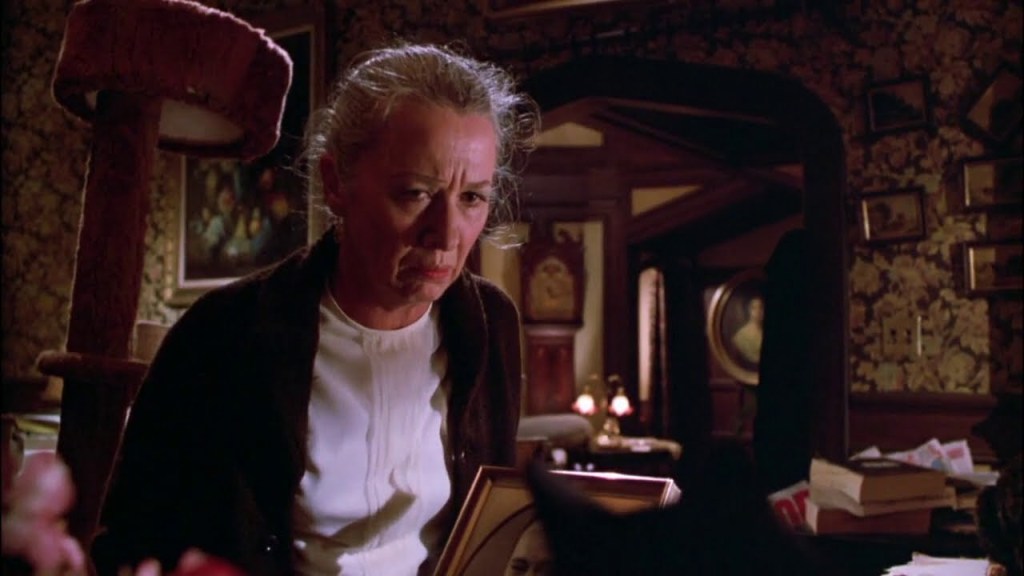
The origins of The Exorcism are deeply personal for director Joshua John Miller. Drawing from his childhood experiences and his father Jason Miller’s role in The Exorcist, Joshua infuses the film with a sense of inherited dread. The lore of cursed films, combined with his father’s haunting tales, provides a rich backdrop for the story. Unfortunately, this intriguing foundation is not enough to sustain the film’s uneven execution.

One of the major issues with The Exorcism is its struggle to find the right tone. The film oscillates between psychological horror and supernatural thriller, but it fails to fully commit to either genre. This indecision results in a lack of cohesive energy, making it difficult for the audience to stay engaged. Moments that should be terrifying are often undercut by awkward transitions or misplaced humor, diminishing the overall impact.

Additionally, while the film attempts to explore deep themes such as addiction, trauma, and the nature of performance, these elements are not sufficiently developed. The narrative often feels disjointed, with important plot points and character motivations left unexplored. As a result, the emotional weight of Anthony’s journey is diluted, and the story’s potential remains unfulfilled.

The cinematography and production design, while competent, do not compensate for the film’s narrative shortcomings. The atmosphere is suitably eerie, and there are some visually striking scenes, particularly those set within the film’s fictional exorcism. However, these moments are sporadic and fail to create a sustained sense of dread.

In conclusion, The Exorcism is a film with a strong concept and commendable performances, particularly from Russell Crowe and Ryan Simpkins. However, it falters in its execution, unable to maintain a consistent tone or fully develop its intriguing themes. While it offers glimpses of what could have been a gripping psychological horror, it ultimately falls short, leaving viewers with a sense of missed opportunity.

The Exorcism is a testament to the power of strong performances, but it also serves as a reminder that even the best actors cannot save a film from poor execution. Joshua John Miller’s personal connection to the material adds depth, but the film’s tonal inconsistencies and narrative flaws prevent it from reaching its full potential.

  • Saul Muerte

“The Watchers: A Mythic Tale of Highs, Lows, and Lush Cinematography”

Tags

, , , , , ,

The Watchers, directed by Ishana Night Shyamalan in her feature debut, is a supernatural horror film that weaves Irish folklore into its narrative fabric. Despite its intriguing premise and moments of visual splendor, the film struggles to break free from the shadow of its influences, offering a mixed bag of thrills and disappointments.

The plot centers on Mina (Dakota Fanning), an American immigrant in Galway, Ireland, who becomes entangled in a nightmarish scenario involving mysterious entities known as ‘The Watchers.’ As Mina navigates the dangers of the forest and the secrets of the Coop, the film delves into Irish folklore, specifically the myth of changelings—fairies that mimic and replace humans. This folklore, rich and unsettling, serves as a fascinating backdrop, yet the film sometimes falters in fully integrating these mythic elements into a cohesive and gripping story.

Ishana Night Shyamalan’s directorial style bears clear similarities to her father, M. Night Shyamalan, who produced the film. Both directors share a penchant for atmospheric tension and twisty narratives. However, The Watchers often feels like a pale imitation of M. Night’s more successful works. Ishana’s attempts to emulate her father’s knack for suspense and surprise occasionally fall flat, resulting in a narrative that lacks the punch and coherence needed to sustain its ambitious premise.

The cinematography by Eli Arenson is one of the film’s strongest assets. The lush, verdant landscapes of Ireland are captured with a richness that adds depth to the setting, and the claustrophobic interiors of the Coop are effectively oppressive. Certain scenes, particularly those in the catacombs, stand out for their visual flair and chaotic energy, providing a welcome jolt of excitement in an otherwise uneven film. These sequences are a testament to Shyamalan’s potential as a visual storyteller, even if the overall execution leaves something to be desired.

One major flaw in The Watchers is its clumsy narrative structure. The film’s pacing is uneven, with moments of tension frequently undercut by sluggish scenes that fail to advance the plot or develop the characters meaningfully. This disjointedness makes it difficult for the audience to stay engaged, as the film often loses momentum just when it should be ramping up the suspense. Additionally, the character development is inconsistent, with some characters feeling well-rounded and others remaining one-dimensional and underexplored. The back-and-forth shifts in tone and focus detract from the film’s overall impact, leaving viewers with a sense of missed potential.

The cinematographic choices, while sometimes beautiful, can also be disorienting. Too many scenes are shot with a shaky, swirling camera that makes it feel as if the viewer is trapped inside a washing machine. This approach, likely intended to heighten the sense of chaos and fear, instead often leaves the audience feeling more dizzy than scared.

The film’s incorporation of changeling mythology, however, is commendable. Irish folklore about these malevolent fairies adds a layer of historical intrigue to the story. The changelings’ ability to mimic humans and their aversion to sunlight are well-exploited plot points, although the execution sometimes lacks the finesse needed to truly terrify.

The familial ties to M. Night Shyamalan have also drawn comparisons, not always favorable. Critics have noted Ishana’s stylistic attempts to mirror her father’s work, which at times overshadow her own voice. Despite this, her efforts to carve out a space in the horror genre are evident, and she shows promise, particularly in her handling of atmosphere and visual storytelling.

In conclusion, The Watchers is a film of highs and lows, it is enriched by lush cinematography and intriguing use of folklore. Ishana Night Shyamalan’s debut showcases her potential as a filmmaker, even if it occasionally feels overshadowed by her father’s legacy. For fans of supernatural horror and Irish mythology, The Watchers offers an interesting, if uneven, viewing experience.

While it may not fully deliver on its promise, it offers glimpses of a director finding her voice and brings a fresh perspective to the genre’s rich tapestry of myth and lore.

  • Saul Muerte

Revisiting Madness: Uncovering the Chilling Depths of The Cabinet of Caligari

Tags

, , , , ,

While Robert Bloch’s The Cabinet of Caligari may not have reached the same cultural zenith as his seminal work Psycho, this cinematic adaptation of the classic tale deserves recognition for its own unique merits and contributions to the horror genre.

Released in 1962, The Cabinet of Caligari sought to reimagine the timeless story of madness and manipulation originally brought to life in Robert Wiene’s 1920 silent film masterpiece. While Bloch’s interpretation may not have captured the zeitgeist in the same way as Psycho, it nevertheless offers a fascinating glimpse into the evolution of horror cinema in the early 1960s.

One of the most notable qualities of The Cabinet of Caligari lies in its visual style and atmosphere. Director Roger Kay, known for his keen eye for cinematography, brings the eerie world of Dr. Caligari to vivid life, with stark contrasts and expressionistic flourishes reminiscent of the silent film era. From the twisted architecture of the asylum to the haunting landscapes of the German countryside, every frame is imbued with a sense of dread and unease.

At the heart of the film is Bloch’s reimagining of the enigmatic Dr. Caligari and his mesmerizing hold over his unwitting patients. While Bloch may not have captured the same psychological depth and complexity as in Psycho, his interpretation offers a compelling exploration of the darker aspects of human nature and the blurred lines between sanity and madness.

Another noteworthy aspect of The Cabinet of Caligari is its cast, led by the incomparable Glynis Johns as the tormented Jane Lindstrom. Johns brings a palpable sense of vulnerability and fear to her role, serving as the audience’s guide through the labyrinthine corridors of Dr. Caligari’s asylum.

While The Cabinet of Caligari may not have achieved the same level of acclaim as Psycho, it nevertheless stands as a testament to the enduring power of Wiene’s original vision and the timeless appeal of the mad genius archetype. With its striking visuals, atmospheric score, and compelling performances, it remains a worthy addition to the pantheon of horror cinema, offering a fresh interpretation of a classic tale for a new generation of audiences to enjoy and appreciate.

  • Saul Muerte

Gremlins at 40: The Mischief, Mayhem, and Merry Madness of a Cult Christmas Classic

Tags

, , , , , ,

As we mark the 40th anniversary of Gremlins, it’s a perfect time to reflect on why this 1984 classic continues to charm and terrify audiences. This film, directed by Joe Dante and produced by Steven Spielberg, is more than just a quirky horror-comedy; it’s a multifaceted narrative that weaves together themes of bullying, satire, and the holiday spirit into a unique cinematic experience.

At its core, Gremlins serves as a darkly humorous critique of small-town America and its social dynamics, particularly focusing on the theme of bullying. Billy Peltzer (Zach Galligan), the protagonist, is a kind-hearted but often marginalized young man, working at a job below his potential and dealing with the condescending treatment from authority figures like his boss and the bank’s mean-spirited Mrs. Deagle (Polly Holliday). Billy’s struggles resonate with many who have faced similar social hierarchies and injustices.

The arrival of the adorable Mogwai, Gizmo, who subsequently spawns the malevolent gremlins when fed after midnight, can be seen as a metaphor for the hidden, darker side of human nature that bullying can bring out. The gremlins themselves embody unchecked chaos and rebellion, turning the tables on the town’s bullies and hypocrites, serving them their just desserts in comically exaggerated fashion.

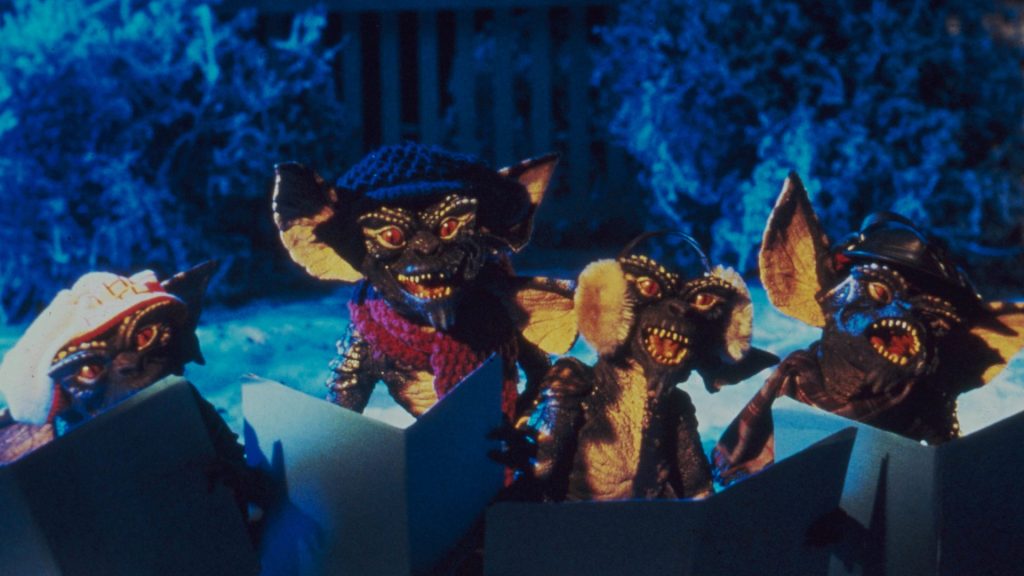
Gremlins masterfully blends horror with satire, using its monstrous antagonists to lampoon a range of cultural and societal norms. The gremlins’ antics, from disrupting Christmas carolers to mimicking iconic scenes from movies, are laced with a sardonic wit that underscores the absurdity of the situations. The film’s dark humour is especially evident in scenes where the gremlins wreak havoc in a local bar, parodying human vices with gleeful abandon.

This satirical edge is a significant reason why Gremlins has endured over the decades. It offers a commentary on consumerism, suburban life, and the veneer of civility that thinly masks our baser instincts. By exaggerating these elements, the film invites viewers to laugh at the absurdity while simultaneously reflecting on the underlying truths.

Despite its summer release, Gremlins has since become a staple of Christmas viewing, carving out a unique niche as a cult holiday horror film. The movie’s setting during the festive season, complete with snowy landscapes and twinkling lights, provides a stark contrast to the chaos unleashed by the gremlins. This juxtaposition heightens the film’s impact, blending the cozy familiarity of Christmas with the unexpected terror of a gremlin invasion.

The festive backdrop also amplifies the film’s themes of family and tradition, albeit through a twisted lens. From the heartwarming relationship between Billy and Gizmo to the darkly comedic mishaps involving Christmas decorations and carolers, Gremlins offers a refreshingly unconventional take on holiday cheer.

Four decades on, Gremlins remains a beloved classic, celebrated for its innovative blend of horror, humour, and social commentary. Its enduring appeal lies in its ability to entertain while provoking thought, making us laugh even as we shudder at the chaos on screen. As we revisit this gem on its 40th anniversary, it’s clear that Gremlins is not just a film about mischievous creatures; it’s a timeless observation of human nature, cleverly disguised as a holiday horror-comedy.

  • Saul Muerte

Ghostbusters: Celebrating 40 Years of Supernatural Fun

As we mark the 40th anniversary of the release of “Ghostbusters,” it’s impossible not to reflect on the cultural phenomenon it became and the lasting impact it had on popular culture. When the film hit theaters in 1984, it wasn’t just another summer blockbuster; it was a game-changer that captured the imaginations of audiences around the world and spawned a franchise that continues to thrive to this day.

**The Birth of a Phenomenon**

Directed by Ivan Reitman and starring comedy legends Bill Murray, Dan Aykroyd, and Harold Ramis, “Ghostbusters” was a perfect storm of humor, supernatural thrills, and groundbreaking special effects. Audiences were drawn to the witty dialogue, memorable characters, and the irresistible charm of the Ghostbusters themselves.

From its iconic theme song to its unforgettable catchphrases (“Who ya gonna call?”), “Ghostbusters” quickly became a cultural touchstone, sweeping up the world with its blend of comedy and supernatural adventure. It wasn’t long before fans were donning homemade proton packs and quoting lines from the movie.

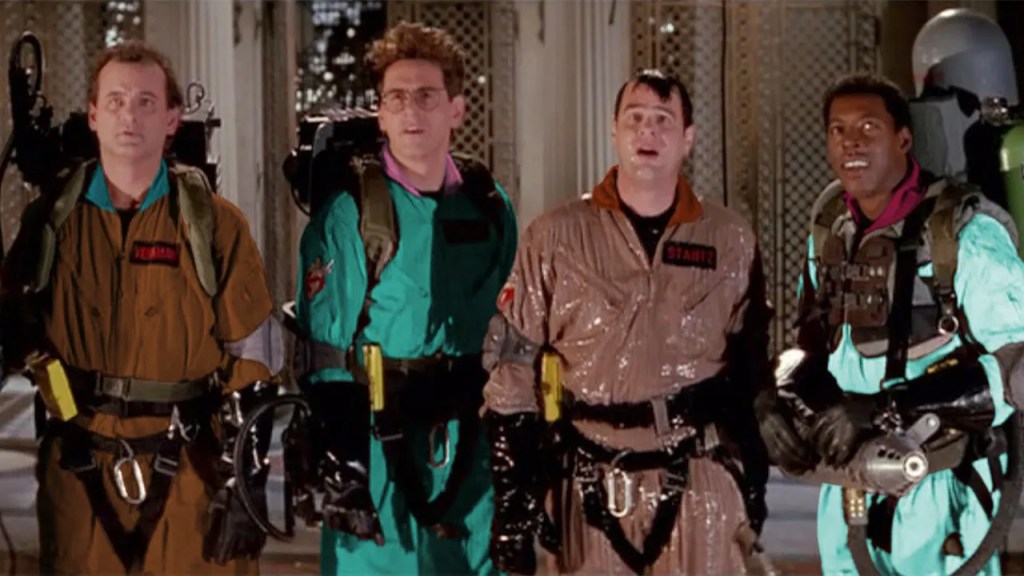
Ghostbusters (1984):

The original film introduced audiences to the world of the Ghostbusters, a team of paranormal investigators who start a ghost-catching business in New York City. With its blend of comedy, horror, and groundbreaking special effects, “Ghostbusters” became an instant classic and remains beloved by fans to this day.

Ghostbusters II (1989):

The sequel reunited the original cast as they faced off against a new paranormal threat in New York City. While not as universally acclaimed as the original, it still delighted fans with its humor and special effects, further cementing the Ghostbusters as cultural icons.

The All-Female Ghostbusters Film:

In 2016, director Paul Feig took a bold step by rebooting the Ghostbusters franchise with an all-female cast, featuring Kristen Wiig, Melissa McCarthy, Kate McKinnon, and Leslie Jones. While the film received mixed reviews from critics and fans alike, it sparked important conversations about gender representation in Hollywood and brought a fresh perspective to the Ghostbusters universe.

Ghostbusters: Afterlife (2021):

After years of speculation and anticipation, “Ghostbusters: Afterlife” brought the franchise back to the big screen with a new generation of Ghostbusters. Directed by Jason Reitman, son of Ivan Reitman, the film paid homage to the original while introducing fresh characters and a new chapter in the Ghostbusters saga.

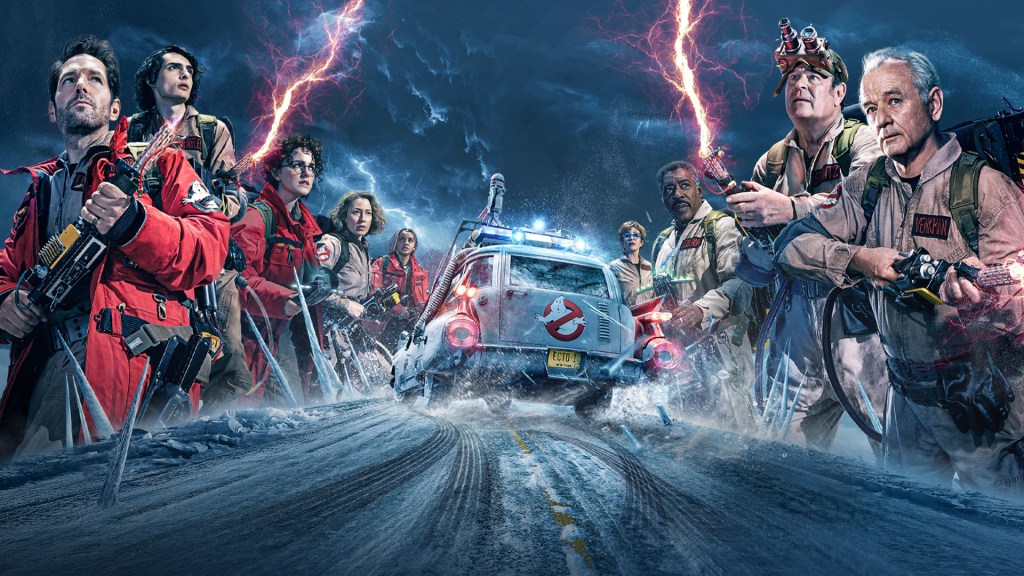
Ghostbusters: Frozen Empire (2024):

For the latest addition to the Ghostbusters universe, “Frozen Empire” promised to take fans on a chilling new adventure. Set in a remote arctic research facility, the Ghostbusters must confront a terrifying new threat that could unleash chaos upon the world. With the fate of humanity hanging in the balance, the team must use all of their skills and ingenuity to save the day.

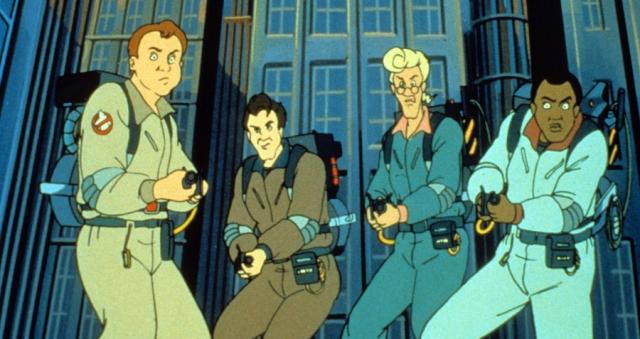
In addition to the films, “Ghostbusters” also found success on the small screen with the animated series “The Real Ghostbusters.” Running from 1986 to 1991, the show followed the adventures of the Ghostbusters as they battled supernatural threats across the city.

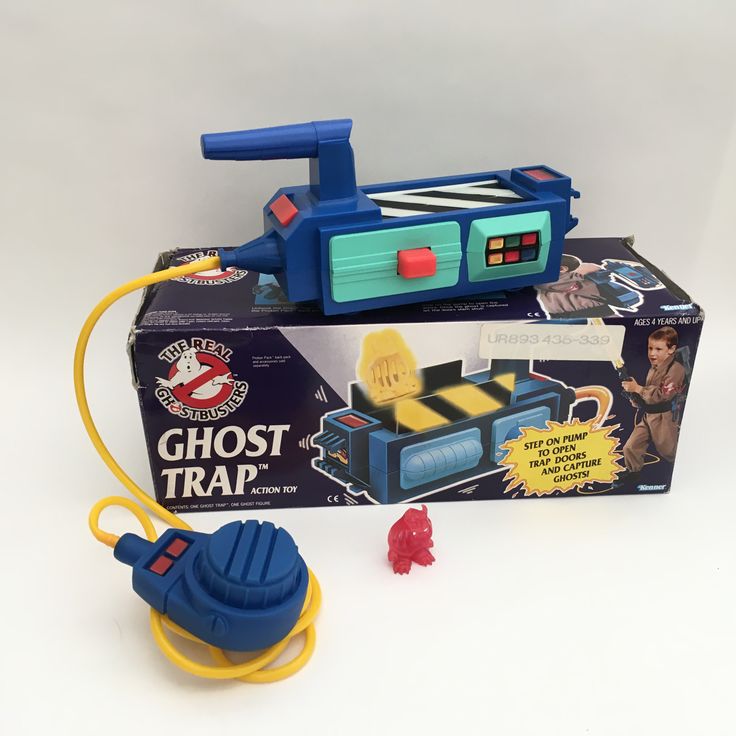
Of course, no cultural phenomenon would be complete without a line of merchandise, and “Ghostbusters” was no exception. The franchise spawned a lucrative toy line featuring action figures, vehicles, and playsets inspired by the film and animated series. Collectors and fans alike clamored to get their hands on these iconic toys, further cementing the franchise’s place in pop culture history.

Every year on June 8th, fans around the world come together to celebrate Ghostbusters Day, commemorating the release of the original film. From special screenings to cosplay events to social media tributes, Ghostbusters Day is a time for fans to show their love for the franchise and its iconic characters.

Released in 2009, the Ghostbusters video game brought the franchise to a new generation of gamers. Featuring the voices and likenesses of the original cast, the game allowed players to step into the shoes of a new recruit and join the Ghostbusters on their ghost-catching adventures. Praised for its faithful recreation of the Ghostbusters universe and its engaging gameplay, the game remains a favorite among fans of the franchise.

As we celebrate 40 years of “Ghostbusters,” it’s clear that its legacy is as strong as ever. From its humble beginnings as a summer blockbuster to its status as a beloved cultural icon, “Ghostbusters” continues to capture the hearts and imaginations of fans around the world. With new films, television series, and merchandise on the horizon, it’s safe to say that the Ghostbusters will be entertaining audiences for many years to come. Who ya gonna call? Ghostbusters, of course!

  • Saul Muerte

Retrospective: The Awful Dr. Orloff “From Controversy to Cult Classic”

Tags

, , ,

Released amidst the burgeoning wave of European horror cinema in 1962, The Awful Dr. Orloff initially faced a storm of negative reviews and comparisons to the iconic Eyes Without a Face. However, as time has passed, this atmospheric tale of terror has carved out its own unique place among the X certifications of the 1960s, earning a cult following for its blend of Gothic horror and psychological intrigue.

Directed by the prolific Jesus Franco, known for his avant-garde approach to filmmaking, The Awful Dr. Orloff stands out as one of his most accessible works. Franco, often associated with controversial and experimental cinema, demonstrated his mastery of the genre with this chilling tale of obsession and madness.

At its heart, The Awful Dr. Orloff is a haunting exploration of the dark recesses of the human psyche, as seen through the lens of the enigmatic Dr. Orloff and his macabre experiments. Played with sinister charisma by Howard Vernon, Dr. Orloff is a mesmerizing figure, drawing viewers into his twisted world of cruelty and depravity.

Despite initial criticisms and comparisons to Georges Franju’s masterpiece Eyes Without a Face, “The Awful Dr. Orloff” possesses its own distinct identity and merits. While both films explore themes of identity and morality within the realm of surgical horror, Franco’s vision offers a more visceral and lurid experience, unapologetically delving into the depths of human depravity.

What sets The Awful Dr. Orloff apart is its relentless atmosphere of dread and unease, fueled by Franco’s keen eye for visual storytelling and his willingness to push the boundaries of conventional horror. From its haunting cinematography to its evocative score, every element of the film is crafted to immerse viewers in a world of gothic terror and psychological torment.

Over the years, The Awful Dr. Orloff has found a devoted audience among horror aficionados, drawn to its blend of Gothic aesthetics, chilling atmosphere, and unabashed embrace of the macabre. While it may have been overlooked in its time, it has since earned its place as a cult classic of European horror cinema, standing as a testament to Franco’s visionary approach and the enduring power of cinematic terror.

  • Saul Muerte