• About
  • podcasts
  • Shop

Surgeons of Horror

~ Dissecting horror films

Surgeons of Horror

Category Archives: Universal Horror

Retrospective: Man-Made Monster (1941)

17 Friday Jul 2020

Posted by surgeons of horror in Movie review, Universal Horror

≈ 3 Comments

Tags

lionel atwill, Lon Chaney Jr, Universal, Universal Horror, universal pictures

https://www.youtube.com/watch?v=WjPJ4px-S3E

Historically speaking, Man-Made Monster marks a significant point in horror film history as it marked the Prince of Pain, Lon Chaney Jr’s first lead role in the genre.

Here Chaney Jr plays the happy-go-lucky Dan McCormick, a man with a curious immunity to an overdose of electricity that propels him to life on the road with a travelling circus.
The story picks up however when McCormick is the sole survivor of a tragic bus accident that collides into a power-line.
Think David Dunn from the Unbreakable series, but less dramatic and moody.

His survival comes to the attention of Dr. John Lawrence (Samuel S. Hinds – It’s A Wonderful Life), who just so happens to be studying the effects of electricity. 

The horror element comes in when Lawrence’s assistant, Dr. Paul Rigas (Lionel Atwill – Doctor X) takes the experiment into his own hands to manipulate an unwitting McCormick to undergo a series of tests with massive side effects.
McCormick soon shows signs of fatigue and irritability as a result of the tests and the transformation turns him into a super-charged monster (a walking atomic light bulb) with the ability to kill with a single touch.
This is exactly what occurs when Dr Lawrence finds out and attempts to shed light on Rigas’ illegal scientific experiments.
That won’t hold water and Rigas ensures that McCormick (who is now under the mad scientists’ rule) stops Lawrence at all costs.

Despite a fairly low box office return and that it bared all too similarity to the Lugosi/Karloff feature, The Invisible Ray (a reason that the film had been shelved for a few years), it is a fairly stable movie and boasts great performances from both Atwill and Chaney Jr.
For Chaney Jr. it would propel him into stardom and into a career that he could never shake, especially with The Wolf Man just around the corner, but there’s good reason as he’s definitely a captivating presence on screen.

  • Saul Muerte

Retrospective: Black Friday (1940)

02 Thursday Jul 2020

Posted by surgeons of horror in retrospective, Universal Horror

≈ Leave a comment

Tags

Bela Lugosi, Boris Karloff, curt siodmak, Universal, Universal Horror, universal pictures

https://www.youtube.com/watch?v=hQ3T9rniDic

Not to be confused with the crazed shopping spree that occurs after Thanksgiving, but arguably just as dark.
Universal would blend together two of their most successful genres from the era in horror and gangster thrillers to produce a solid movie which would once again combine the awesome pairing of Bela Lugosi and Boris Karloff.
The latter possibly delivers one of his finest performances for the production company as Dr. Ernest Sovac, a highly skilled surgeon who is compelled to save the life of his best friend college professor George Kinglsey (Stanley Ridges) with a brain transplant.
Being a Universal horror feature, things naturally don’t go according to plan when a curious side effect occurs post operation. 

The chosen brain just so happens to be from Red Cannon (also played by Ridges who should be commended for his portrayal of both characters) a gangster who is not only highly sought after by the police, but has hidden $500,000 dollars somewhere in the city. 

The curious concomitant occurs when somehow Kingsley starts to show personality traits of Cannon in an almost Jekyll and Hyde type situation. Cannon clearly the dominant personality starts to take firm control of Kinsley’s body in pursuit of his hidden fortune.

The drama from the movie comes from Lugosi’s Marnay, another gangster who was part of Cannon’s crew and knows of the loot and will stop at anything to stake his claim, but also from Dr. Kovac, who at first is driven by saving his friend, but when he too learns of the fortune, gets the green mist and becomes consumed with using Kingsley as a puppet to lead him to the money. 

It’s a pathway for doom and death for all involved and sparks an inevitable conclusion from a tale of greed, and power.

It’s a curious movie that is only really saved by Karloff’s performance from a script doctored by Curt Siodmak again, but comes across as a bit of a mish-mash of events leaving Lugosi grossly underutilised.
With some clever changes to the plotline and perhaps a shift in casting, this movie could have presented more fairly, but as it stands, gets a little lost in its own moralistic views. 

  • Saul Muerte

Retrospective: The Invisible Man’s Revenge

25 Thursday Jun 2020

Posted by surgeons of horror in Movie review, retrospective, Universal Horror

≈ Leave a comment

Tags

hg wells, john carradine, jon hall, The Invisible Man

Rounding out the quartet of Universal’s Invisible Man movies throughout the 1940s, The Invisible Man’s Revenge was a return to ‘form’-ula…in a good way.
Also returning to the series was Jon Hall, but he would not be reprising the role of Frank Griffin Jr.
Instead he would be playing Frank’s twin brother Robert Griffin, a man who escapes from a mental institution that he was incarcerated in after killing two orderlies.
Talk about polar opposites and proof of the flexibility to Hall’s work as an actor, although oddly Robert has no knowledge of the invisibility formula of his brother or grandfather for that matter. 

Once he is free, Robert seeks vengeance on the Herrick family who found their fortune from diamond fields that he helped to discover.
The Herrick family propose a share in the estate as a means to appease Robert, but he pushes things further, demanding to marry their daughter, Julie.
Their response? Drug him and get him out of their way.
This only angers Robert further and he plots his revenge.
In steps Dr. Peter Drury (John Carradine) who happens to be working on the formula for invisibility and with it, Robert’s key to claiming what he believes is owed to him.

The plotline is a little more convoluted than previous instalments and while it does some time before the cloak and dagger of invisibility lays the scene, the direction and delivery are more impactful due to the care and dedication devoted to character development.
Robert Griffin’s descent into madness and retribution is amplified by the back story delivered and Jon Hall’s depiction.
Likewise the supporting cast are on point, notably from Carradine and Gale Sondergaard as a cold-hearted Lady Irene Herrick.
Furthermore, the despair of Griffin’s fear of Brutus the dog, places a nice conclusion to the tale.
We are what we fear and if we place emphasis on those fears it will ultimately be our ruin.

The Invisible Man’s Revenge would mark the final time that the tale would be told with a dark edge with the next appearance coming in the Abbott and Costello movies.
It would be nearly 75 years before Universal would look into the black heart of the Griffin family with The Invisible Man starring Elizabeth Moss.

  • Saul Muerte

Retrospective: The Invisible Woman (1940)

10 Wednesday Jun 2020

Posted by surgeons of horror in retrospective, Universal Horror

≈ Leave a comment

Tags

john barrymore, john howard, oscar homolka, Universal, universal pictures, virginia bruce

https://www.youtube.com/watch?v=KiPqzcLgjs0

In 1940 Universal Pictures bookended the calendar year starting with The Invisible Man Returns and then ending with The Invisible Woman.
While the former took on the tone of a crime thriller, the latter took the series in an entirely different direction, comedy.
This would also be an indication of Universal Classic Monsters future, leaning away from the macabre and into humour.

With The Invisible Woman it is indicative of its time when it comes to the bawdy comedy at hand with a little bit of screwball rom com in the mix ala Cary Grant and Rosalind Russell in His Girl Friday, also released in the same year.
Here the two leads that are at odds with one another are wealthy lawyer Richard Russell (John Howard) and Kitty Carroll (Virginia Bruce), a feisty, smart and determined department store model.
When we meet Kitty, she gets fired from her job for basically speaking her mind and with the promise of money learns of a wild scheme by local scientist, Professor Gibbs (an ageing and always excellent, John Barrymore) who claims that he has invented an invisibility device.
Gibbs in need of a guinea pig gets one in Kitty, who is surprised to see that the mad professor’s invention actually works and what’s more, she can turn it to her advantage and seek revenge on her misogynistic former boss. 

Before long, we’re headlong into a crime caper with a mob boss, Blackie Cole (Oscar Homolka) seeking to use the invisibility device for his own gain. Kitty must use her guile and new-found abilities to stop Cole in his devious plans. 

The Prognosis:

The Invisible Woman is definitely a film for its time and even though some of its subject still resonates today, the style and mode of its delivery may be stifling for some.
I for one welcome this old-school, nostalgic road trip that the 40s delivered to the silver screen enjoying it all the way and for a third instalment, I personally connected with this one more than The Invisible Man Returns.
It would be interesting to see how it would have been handled as a dark comedy. At the time of writing, Elizabeth Banks is set to direct a new version of The Invisible Woman and being a veteran of the comedy and horror scene, it will be interesting to see if she plans to marry these two genres for a modern audience and continue the trend set by Whannell… and it does bode the question, Will we see the return of Elizabeth Moss as Cecilia Kass?

  • Saul Muerte

Retrospective: The Invisible Man Returns (1940)

03 Wednesday Jun 2020

Posted by surgeons of horror in retrospective, Universal Horror

≈ 1 Comment

Tags

hg wells, The Invisible Man, Universal, Vincent Price

Before Leigh Whannel and the Blumhouse team reinvented and reinvigorated the Invisible Man franchise for the modern generation with their 2020 adaptation, I would have argued that no one could have stepped into Claude Rains shoes as the doomed scientist, Dr. Jack Griffin.
In Fact he would reprise the role once more with American comedians Bud Abbot and Lou Costello in Abbott and Costello Meet The Invisible Man further associating himself with the iconic character.
Rains became synonymous with the Universal horror franchise with his dignified gentlemanly manner which also saw him in The Wolf Man movie and The Phantom of the Opera.
HG Wells’ novel would inspire 7 feature films under the Universal umbrella, none could match the original film however, but something must have stirred the creative flow to keep the infamous production company revisiting the story.

There would be a seven year gap between the original 1933 release and a sequel, so perhaps the time lapse was too big a call for it to truly lift off from its predecessor but for me The Invisible Man Returns never quite lands the mark.
This view may have raised eyebrows from some, particularly as the film boasts the magnificent Vincent Price as its lead, whose physical presence is only seen for about a minute of screen time.
The rest of the movie, the renaissance man is either wrapped up in bandages or providing his sultry tones to the piece.
As much as Price adds much needed gravitas to the narrative, it never encapsulates the viewer beyond the tale of redemption.
As such there is no real audience connection to the characters and their one-dimensional storyline, that essentially sees Price as Geoffrey Radcliffe, a man accused of murder and sentenced to death for a crime that he didn’t commit.
In steps Dr Jack Griffin’s brother, Frank, with the invisible formula and gives it to Radcliffe so that he can escape and prove his innocence.
Quite why Frank does this is neither mentioned, nor followed up again. The rest of the movie plays out as a crime thriller, where Radcliffe tries to uncover who the real murderer was.

The Prognosis:

Not a patch on the original, which personally is because it steers away from the science and the side effects that ensue from substance abuse.
It’s only saving grace is the presence of Vincent Price, even if it is merely in voice alone.

  • Saul Muerte

Movie review: Son of Frankenstein (1939)

13 Sunday Jan 2019

Posted by surgeons of horror in Movie review, Universal Horror

≈ 2 Comments

Tags

basil rathbone, Bela Lugosi, Boris Karloff, bride of frankenstein, Frankenstein, lionel atwill, son of frankenstein

We’ve barely a decade of horror under their Universal belts, the powerhouse production company was struggling once more to pull in the numbers at the box office. So it’s with some sense of irony that the movies that started it all in Dracula and Frankenstein would be screened as a double feature and reignite the craze all over again. The stunt would be so successful that Universal Pictures would look to producing another instalment of their beloved monster franchise with Son of Frankenstein, in what would be the third of the series.

In Frankenstein and Bride of Frankenstein, Universal had created two classic features, thanks to the direction of James Whale, where some have argued that the latter outweighed its predecessor. Whatever your views on the matter, it would be a touch act to follow and into the directors shoes steps Rowland V. Lee (The Count of Monte Cristo, The Three Musketeers) to try and accomplish this task.

The result is one that is worthy of the Frankenstein name, despite it bordering on silliness and camp on occasion. (A sign of the direction that Universal would fall into down the track.)

With grand plans to shoot the film in colour using Technicolor only to be disbanded due to artistic and budgetary reasons, Son of Frankenstein would be presented to the audience in black and white and reunite the horror icons, Bela Lugosi and Boris Karloff. In this instance, the latter donning the Monster mask for the last time in a feature film. The two would once again prove to be a winning formula with Lugosi playing the deformed Ygor and practically stealing the show with his performance. In an interesting turn of events, it is Ygor who is the dominant presence and has The Monster at his beckoning call, as he commands the creature to kill those that have proved him ill in the past.

Leading the cast as the son of Frankenstein is Basil Rathbone (The Adventures of Robin Hood) who cuts a fine figure of a man trying to right his fathers’ wrongs and changing the perceived conception of his family name. It would have been interesting had Peter Lorre had played the role as he had been cast, but had to withdraw due to illness. It’s a shame because I’m a huge fan of Lorre and would loved to see him cast against Lugosi and Karloff, but as I said, Rathbone more than proves his worth.

A worthy nod should also be assigned towards Lionel Atwill (Mark of the Vampire) as Inspector Krogh, a character whose past encounter saw his arm torn off his limb as a child when he came into contact with The Monster. It’s a stoic performance and Atwill shines in an already crowded cast of personalities.

The Diagnosis:

It’s a fitting end to this chapter in the Universal Horror history.
Son of Frankenstein manages to harness all the right ingredients to make it a worthy companion to its predecessors, whilst falling on the right side of drama and terror for its time.

Lugosi and Karloff are in their element and would ride out on a high. Around the corner a new king to the throne would lay in wait in Lon Chaney Jr… but that’s another tale.

  • Saul Muerte

Movie Review: Dracula’s Daughter (1936)

20 Thursday Jul 2017

Posted by surgeons of horror in Universal Horror

≈ 1 Comment

Tags

Dracula, dracula's daughter, edward van sloan, universal pictures, Van Helsing

The first sequel to the Universal Dracula franchise would be released just five years after its predecessor.

In the last outing we saw the demise of the titular character at the hands of Professor Van Helsing, (played once again by Edward Van Sloan, and the only returning character to the franchise) who interestingly enough is on trial for the murder of the Count.

That in itself is something I’ve often pondered about. In a world where vampires and werewolves are the stuff of legend, if they were to exist, how would one prove it after they’ve been through such an ordeal and essentially disposed of the evidence?
Anyway, I digress.

Dracula’s Daughter is not only a sequel, but the start of a trend for Universal in order to keep their booming business going when your lead villain has been dispatched – by introducing an offspring.

We would see this repeated again with the likes of Son of Dracula and Son of Frankenstein.
In this instance the Dracula bloodline flows down to his daughter, Countess Marya Zaleska, with a suitably melodramatic performance from Gloria Holden (The Life of Emile Zola).

Her portrayal of the female vampire with a craving to be human (an act that she hopes will come true with the destruction of her father’s body) served as an inspiration to Anne Rice’s Queen of the Damned.

The notion of a vampire’s desire to be human has often been looked at in films and novels throughout the years, but as far as I know, this is the first instance of it on the silver screen.

When Countess Zaleska burns the body of Dracula, with the help of her manservant, Sandor, she discovers that the curse has not been broken, so resorts to an alternate method of psychiatry instead.

In steps Dr. Garth (Otto Kruger, Saboteur) who may just have the answer she needs. Garth entices her to confront her demons head on, but her desire for blood proves too strong and she attacks a girl named Lili.

Broken and lost, the Countess feels her only option is to remain a vampire, but decides that Dr. Garth would prove a suitable companion in the after life.

So she resorts to kidnapping his true love, Janet (Marguerite Churchill, The Big Trail) and luring him back with her to Transylvania.

Dr Garth is willing to give up his life for the sake of Janet’s freedom, and all seems doomed for the Doctor, when the manservant Sandor puts a halt on the proceedings and kills the Countess in a jealous rage with an arrow through her heart.

Before he is able to exact his fury further, he too is brought down, when he is shot by a policeman.

~

Critics have been somewhat split in their reviews of Dracula’s Daughter, some citing its lush cinematography and praising both Director Lambert Hillyer’s work and the performance from Holden. Others say that it pails in comparison to Dracula.

I for one, found it strangely mesmerising and almost hypnotic with some of its lesbian overtones and this is in part down to Holden’s captivating presence on screen.

And like other critics, I too noticed a similarity to Sunset Boulevard in its themes, a film that I’m a great lover of and perhaps why I find myself drawn to this movie, despite it not carrying the same weight as Dracula.

I applaud its effort to push the story into a whole new direction and to offer some alternative narrative to the tried and tested monster storyline.

For this alone, I believe that Dracula’s Daughter its place alongside the movies that made Universal pictures a force to be reckoned with, and its perhaps a shame that it has been lost in the shadows of time due to the overwhelming impact that both Dracula and Frankenstein had on the industry.

– Paul Farrell
Lead Surgeon

Movie review: The Invisible Ray (1936)

27 Tuesday Jun 2017

Posted by surgeons of horror in Universal Horror

≈ 1 Comment

Tags

Bela Lugosi, Boris Karloff, Universal Horror

THE BORIS KARLOFF / Bela Lugosi horror express kept on trucking along for Universal Pictures, but this was definitely Karloff’s showpiece and this lesser known film from the iconic duo probably deserves more recognition than it currently holds.

Karloff plays the eccentric scientist, Dr Janos Rukh, a man with a wild belief that he can use a telescope to reach out to the Andromeda Galaxy and use images of light to capture Earth’s past as seen from space.

Scoffed at by his colleagues, it is only when he is able to present his findings to Dr Benet (Lugosi) and Dr Stevens (Walter Kingsford) and is able to capture when a meteor had crashed into the Earth, that his skeptics sit up and take notice.

An expedition is planned where Rukh is charged with finding the fallen meteor.

When Rukh finds the meteor, he is unwittingly exposed to the radiation, Radium X, which effectively makes him glow in the dark with a fatal touch with skin to skin contact.

He is aided temporarily by Benet who discovers an antidote that can keep the radioactive poison at bay, but it’s not long before it starts to eat away at his mind and Rukh goes on a killer rampage fuelled with jealousy.

By this time, Rukh’s estranged wife has fallen in love with Ronald Drake, the nephew of Dr Stevens.

At first, Rukh reluctantly let’s her go, but this soon turns to hatred and moulds into his vicious plan to rid the world of those responsible (or so he believes) for his downfall.

Rukh succeeds in killing the Stevens’s and then ventures to off the remaining few.

As the film proceeds, it feels certain that the only person who can stop him is Benet, but even he is thwarted in a surprise move considering the casting of Lugosi attached to this character and perhaps more could have been done to play with this encounter.

Instead, it comes down to Rukh’s mother, (who is magnificently played by Violet Kemble Cooper)

to intervene and destroy the antidote, thus rendering Rukh to succumb to the radiation and go out in a blaze.

It’s a painful story, which treads a similar path to The Invisible Man, but in this instance there is more sympathy laid out to the central character, which is a testament to Karloff’s handling of such a role.

Special mention should go to Kemble Cooper, who almost steals the show with every scene that’s she’s in, deftly displaying a balance of eeriness with her psychic ability and blindness combined with the motherly love and protectiveness that she bestows upon Rukh.

Not a lot has been written about this movie and from what I have read, they err on the side of negativity, but I feel that there’s enough of a plot and structure to this movie that it warrants further scrutiny.

I found it a lot more engaging than Karloff and Lugosi’s previous outings and that The Invisible Ray could potentially be a forgotten classic as a result.

  • Paul Farrell

Movie review: Werewolf of London (1935)

25 Sunday Jun 2017

Posted by surgeons of horror in Universal Horror

≈ 1 Comment

Tags

henry hull, Universal Horror, werewolf in london, Werewolf movies

IT SEEMS ALMOST criminal that this movie has been somewhat forgotten albeit from the hardcore cinephile.

Werewolf of London will forever be cemented in history as the first mainstream Hollywood feature to centre on lycanthropy and as such contains all the ingredients that would inspire more well-known horror films down the track, chief among these would be An American Werewolf In London.

The film centres on Wilfred Glendon (Henry Hull), a wealthy English botanist who ventures into Tibet in search of the rare mariphasa plant.

Whilst on his expedition, Glendon is attacked by a werewolf but lives to tell the tale, but must carry the curse inflicted upon him.

Glendon’s quest was not a complete failure as he was able to obtain a sample of the mariphasa plant and as luck would have it contains the antidote (albeit a temporary one) to the traits of lycanthropy.

Upon his return to London, Glendon meets a fellow botanist, Dr Yogami, with a peculiar background, and just do happens to also be a werewolf.

A conflict arises between the two of them, particularly as Glendon learns that Yogami was the same werewolf that bit him in Tibet.

As his condition escalates, Glendon ventures transformed into the streets of London raising havoc and carnage and attacking and killing people along the way.

Glendon’s plight increases further when Yogami steals the plant sample for himself.

The rage boils over and an almighty clash arises, resulting in Glendon overpowering his foe.

Now succumbed to the curse, Glendon is drawn to his one true love, Lisa (Valerie Hobson) and is finally ploughed down when he is shot and killed in his attempt to murder her.

His dying words are ones of  gratitude, as he transforms back to his former self, a tragic tale, which would be conveyed to its cinema going audience and many werewolf tales to come.

Hull’s performance is impeccably sound as Wilfred Glendon and captures both his profession and eventual transformation with great believability.

In fact, one could go on to argue that it is because of his performance and believability grounds this movie into reality and harnesses his despair even further.

Credit must also go to Jack Pierce, the man responsible for Boris Karloff’s make-up as The Monster in Frankenstein, and would produce the make-up here too, although a minimal version from what he had intended.

According to accounts from Hull’s family, he had insisted on pairing back effects so that his face could be more visible and recognisable.

Despite Pierce’s disapproval, Hull would succeed in getting what he wanted with the support of studio head, Carl Laemmle.

Pierce would however get to flex his creativity once more, six years later on Lon Chaney Jr in The Wolf Man, but event that didn’t go down too well and Pierce fast got a reputation that was unlikeable among his peers.

Despite all this, director Stuart Walker was able to steer the ship and deliver a solid movie as a result, which can feel a little dated by modern standards.

Classic horror enthusiasts may enjoy the trip back to where it all began, but it is tame compared to the films being generated today.

  • Saul Muerte

Movie review: The Mummy (2017)

20 Tuesday Jun 2017

Posted by surgeons of horror in Uncategorized, Universal Horror

≈ 2 Comments

Tags

Russell Crowe, The Mummy, Tom Cruise

Or too many cooks spoil the cloth?

AT FIRST WHEN Universal first posed the concept of a shared Universe, now known as the Dark Universe, in order to release a string of movies that would link all their classic monsters together, I wanted to say that it was a bold approach, but it’s not exactly new.

As a fellow horror enthusiast pointed out on a social thread, Universal were the originators of the crossover worlds with the likes of House of Frankenstein and House of Dracula.

They were though, wanting to relaunch this product into a modern world for a contemporary audience, but there are a few things that prove as an obstacle to completing their vision.

And with these obstacles, Universal find themselves navigating a minefield of troubles which leads the picture to snag on every component along the way and unravel before our very eyes.

So let’s take a look at these obstacles, starting with the elephant in the room, otherwise known as…

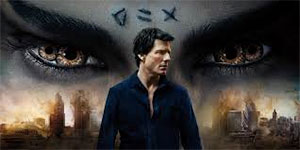
Tom Cruise
Mummy-Tom-Crusie

I’ve been reading a lot about this in the past few days and something that strikes me a little is that people are very quick to point their fingers at Mr. Cruise, citing too much involvement and interference on his part.

But here’s the thing, whether or not this is true, the buck has to stop with Universal and their director.

They decided to cast Cruise in this vehicle and with that you have to expect him to bring some weight and opinion to the piece.

He is known for getting hands on with every project that he takes on, including all the stunts that he performs himself.

So why so surprised when this turns into a Tom Cruise project?

Director Alex Kurtzman may have handled big picture projects as a writer, but prior to The Mummy, he has handled only one other feature at the helm, People Like Us.

So was this a case that veteran actor, Cruise took advantage of this and began to steer said film instead?

Perhaps more questionable is that the script itself is so disjointed and incoherent that you wonder how someone like Kurtzman, (who also wrote this movie) with the vast amount of writing credits to his name managed to make such a botch job of it.

Which comes to the second point.

Lack of character.

Mummy-Ahmanet

Sure enough we are presented with a back story to Princess Ahmanet, but at no stage do we engage with her or identify with her plight.

This basically means that her level of menace is weakened and the fear element is lost – the anchor of the PG-13 rating on it and like the Mummy, the film spends most of the time restrained and unable to break free.

By the time that she does, it’s all too little too late.

I really had high hopes for the female Mummy component and seriously wanted her to kick arse, but when it did happen, it was fleeting and reduced to a whimper.

The supposed transformation of Russell Crowe

Mummy-Russell-Crowe

So restricted were the creative team behind The Mummy that even Russell Crowe was reduced to a feeble example of Mr Hyde.

On paper, this casting sounded perfect as we have seen portray some notably dark characters on screen before.

Instead we’re present with a gruff version of himself with yellowy eyes.

Sure, I get that they may have wanted to go with a more subtle approach, but why do this if the whole point is to let the monsters loose?

Zombie Vail
Mummy-Buddy-Vail

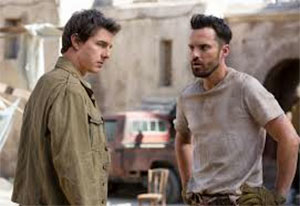
“You can be my wing-zombie anytime.”

While it was good to see Nick Morton (Cruise) spa with his buddy Vail at the beginning of the movie, which highlighted his recklessness, and I know I might be sounding fickle here, but it kind of got my goat, when they started riffing off An American Werewolf In London and have Vail come back as a zombie-buddy.

Even more so in the films climax, when they walk off into the sunset, ready for their next adventure.

The question is, will there another adventure?

Going off the poor box office receipts, you’d be forgiven to think that Universal would scrap their plans, but my overall feeling is that they’ll give it another push to win over their audience, which means there would be a lot riding on their next feature Bride of Frankenstein in order for them to see any payoff.

If the dominoes are now set in place for the crossover stories to take hold, then maybe, just maybe the producers will be free to flex their writing muscles and let the narrative go into some bold, new territory.

Ironically for their Dark universe to truly see any reward, Universal need to consider living up to the brand they’ve living by and take it darker.

As such, The Mummy was a mess that was placed too far into the light feel-good category for it to have the impact that horror fans were craving for.

 

  • Paul Farrell
← Older posts
Newer posts →

Subscribe

  • Entries (RSS)
  • Comments (RSS)

Archives

  • January 2026
  • December 2025
  • November 2025
  • October 2025
  • September 2025
  • August 2025
  • July 2025
  • June 2025
  • May 2025
  • April 2025
  • March 2025
  • February 2025
  • January 2025
  • December 2024
  • November 2024
  • October 2024
  • September 2024
  • August 2024
  • July 2024
  • June 2024
  • May 2024
  • April 2024
  • March 2024
  • February 2024
  • January 2024
  • November 2023
  • October 2023
  • September 2023
  • August 2023
  • July 2023
  • June 2023
  • May 2023
  • April 2023
  • March 2023
  • February 2023
  • January 2023
  • November 2022
  • October 2022
  • September 2022
  • August 2022
  • July 2022
  • June 2022
  • April 2022
  • March 2022
  • February 2022
  • January 2022
  • December 2021
  • November 2021
  • October 2021
  • September 2021
  • August 2021
  • July 2021
  • June 2021
  • May 2021
  • April 2021
  • March 2021
  • February 2021
  • January 2021
  • December 2020
  • November 2020
  • October 2020
  • September 2020
  • August 2020
  • July 2020
  • June 2020
  • May 2020
  • April 2020
  • March 2020
  • February 2020
  • January 2020
  • December 2019
  • November 2019
  • October 2019
  • September 2019
  • July 2019
  • June 2019
  • May 2019
  • April 2019
  • March 2019
  • February 2019
  • January 2019
  • December 2018
  • November 2018
  • October 2018
  • September 2018
  • August 2018
  • July 2018
  • June 2018
  • May 2018
  • April 2018
  • March 2018
  • February 2018
  • January 2018
  • December 2017
  • November 2017
  • October 2017
  • September 2017
  • August 2017
  • July 2017
  • June 2017
  • May 2017
  • April 2017
  • March 2017
  • February 2017
  • January 2017
  • December 2016
  • November 2016
  • October 2016
  • September 2016
  • August 2016
  • July 2016
  • June 2016
  • May 2016

Categories

  • A Night of Horror Film Festival
  • Alien franchise
  • Alliance Francaise French Film Festival
  • Australian Horror
  • Best Movies and Shows
  • Competition
  • dark nights film fest
  • episode review
  • Flashback Fridays
  • Friday the 13th Franchise
  • Full Moon Sessions
  • Halloween franchise
  • In Memorium
  • Interview
  • japanese film festival
  • John Carpenter
  • killer pigs
  • midwest weirdfest
  • MidWest WierdFest
  • MonsterFest
  • movie article
  • movie of the week
  • Movie review
  • New Trailer
  • News article
  • podcast episode
  • podcast review
  • press release
  • retrospective
  • Rialto Distribution
  • Ring Franchise
  • series review
  • Spanish horror
  • sydney film festival
  • Sydney Underground Film Festival
  • The Blair Witch Franchise
  • the conjuring franchise
  • The Exorcist
  • The Howling franchise
  • Top 10 list
  • Top 12 List
  • top 13 films
  • Trash Night Tuesdays on Tubi
  • umbrella entertainment
  • Uncategorized
  • Universal Horror
  • Wes Craven
  • wes craven's the scream years

Meta

  • Create account
  • Log in

Blog at WordPress.com.

  • Subscribe Subscribed
    • Surgeons of Horror
    • Join 227 other subscribers
    • Already have a WordPress.com account? Log in now.
    • Surgeons of Horror
    • Subscribe Subscribed
    • Sign up
    • Log in
    • Report this content
    • View site in Reader
    • Manage subscriptions
    • Collapse this bar
 

Loading Comments...