• About
  • podcasts
  • Shop

Surgeons of Horror

~ Dissecting horror films

Surgeons of Horror

Category Archives: retrospective

Horrors of Malformed Men (1969) – Beautiful, Bizarre, and Banned

20 Sunday Jul 2025

Posted by surgeons of horror in retrospective

≈ Leave a comment

Tags

1960s horror, 1960s retrospective, Edogawa Ranpo, iro Takemura, japanese cinema, japanese horror, teruo ishii, Teruo Yoshida

There’s no better way to close a retrospective of 1960s horror cinema than with Horrors of Malformed Men, a fever dream of grotesquery and surrealism that was so transgressive, it vanished from circulation for decades. Directed by cult provocateur Teruo Ishii and loosely inspired by the works of Japanese mystery and erotic horror master Edogawa Ranpo, this film stands as one of the most controversial and singularly strange entries in the genre’s long, bloodied history.

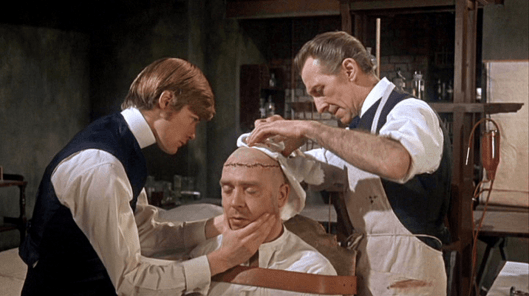
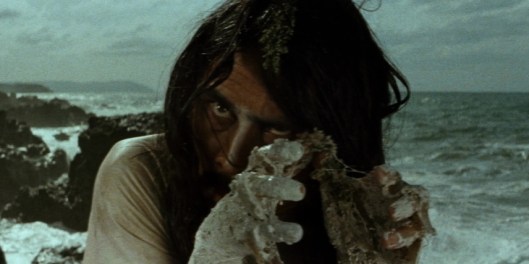
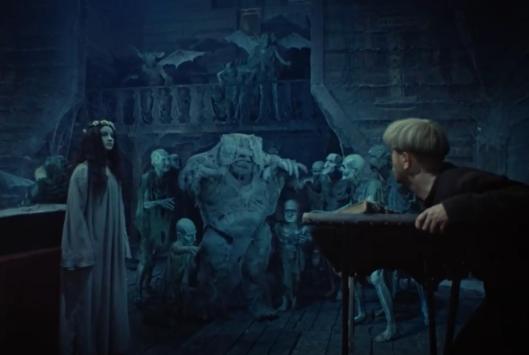
The film begins in familiar pulp-horror territory: a young medical student escapes from an asylum, assumes the identity of his apparent double, and is drawn into the dark secrets surrounding a remote island populated by deformed men and ruled by a mad, god-complex-driven scientist. But what unfolds is anything but conventional. Ishii tosses gothic horror, grotesque body imagery, kabuki theatre, Freudian nightmares, and existential dread into a blender and hits mutilate.

More art-house hallucination than straight horror, Horrors of Malformed Men taps into deep post-war anxieties and long-standing cultural taboos around deformity, insanity, and identity. The film’s exploration of physical abnormality and psychological trauma, paired with scenes of near-surrealist horror, earned it an immediate ban in Japan. For decades, it remained unseen, whispered about in underground cinephile circles as a kind of forbidden fruit of Japanese cinema.

And yet, beyond the scandal lies something undeniably compelling: Ishii’s direction is bold and ambitious, mixing low-budget exploitation with a high-concept fever dream. Every frame carries a strange beauty or disquieting detail, enhanced by Jiro Takemura’s eerie score and the film’s striking use of theatrical staging. The lead performance from Teruo Yoshida is appropriately wide-eyed and distressed, anchoring the chaos with a tragic, almost operatic sense of fate.

It’s a film that refuses to sit still — shifting from gothic melodrama to art-house allegory to grindhouse freakshow in a heartbeat. It doesn’t always hold together narratively, and its tone can veer wildly, but that dissonance only amplifies the experience. Like a hallucination you can’t quite shake, it lingers.

In a decade where censorship and moral panic loomed large, Horrors of Malformed Men wore its taboos on its sleeve — and paid the price. But with time, it has emerged as a boundary-pushing relic of Japanese cinema history, a nightmarish outlier that still startles and fascinates.

The Prognosis:

As the 1960s came to a close, this film seemed to herald what horror cinema would increasingly become in the decades ahead: challenging, transgressive, and unafraid to look into the abyss. It’s a flawed but unforgettable swan song to a daring era.

  • Saul Muerte

The Irrefutable Truth About Demons (2000) – Urban Horror Misfire

19 Saturday Jul 2025

Posted by surgeons of horror in retrospective

≈ Leave a comment

Tags

glenn standring, karl urban, new zealand horror

There’s little irrefutable about The Irrefutable Truth About Demons, other than the fact that it’s a mess. Directed by Glenn Standring, this early-2000s New Zealand horror feature tries desperately to punch above its weight with feverish style and occult overdrive—but collapses under the weight of its own incoherence.

The film stars a young Karl Urban as Dr. Harry Ballard, a lecturer who stumbles into a demonic conspiracy involving cults, hallucinatory breakdowns, and a lot of unintelligible shouting in dimly lit warehouses. Urban, already showing glimmers of the talent he’d bring to far better roles down the track (The Boys, Dredd, LOTR), does his best to hold the centre—but it often feels like he’s battling the script as much as the demons.

Visually, the film is drenched in grime and erratic camera work, clearly aping the stylistic chaos of late-‘90s horror like Jacob’s Ladder and Event Horizon, but without the clarity or craftsmanship. What could have been an atmospheric descent into paranoia and possession is instead a barrage of half-baked ideas and shrieking performances. The narrative never quite decides if it wants to be a psychological thriller, an urban fantasy, or a cult horror flick—and ends up being none of the above convincingly.

The supporting characters, including a mysterious ex-cultist love interest, offer little substance, and the dialogue ranges from awkward to unintentionally hilarious. The demons themselves—both metaphorical and literal—are reduced to generic growling and bargain-bin effects, robbing the film of any true menace.

The Prognosis:

At the time, The Irrefutable Truth About Demons may have aimed for edgy, underground horror, but in hindsight, it feels more like an overwrought student film with delusions of grandeur. It wants to scorch the screen with dark revelations but instead fizzles out long before it finds its footing.

Thankfully, Karl Urban emerged from this chaos largely unscathed—and the only real truth here is that his career went in a much better direction.

  • Saul Muerte

1960s Retrospective: It’s Alive! (1969) – Buried in Budget Horror

12 Saturday Jul 2025

Posted by surgeons of horror in retrospective

≈ Leave a comment

Tags

1960s horror, 1960s retrospective, larry buchanan

Trapped in a Cave of Terror! is the tagline, but what It’s Alive! really traps you in is 80 minutes of painfully sluggish pacing, cardboard performances, and a prehistoric monster that looks like it crawled out of a craft store clearance bin.

Directed by infamous B-movie auteur Larry Buchanan, It’s Alive! is emblematic of his career: micro-budget genre filmmaking produced quickly and cheaply, often for television syndication. Known for titles like Zontar, the Thing from Venus and Curse of the Swamp Creature, Buchanan built a niche out of public domain plots, recycled storylines, and rubber-suited monstrosities. Unfortunately, It’s Alive! may be one of his least inspired efforts—and that’s saying something.

The “plot,” such as it is, involves a deranged farmer who lures three travellers into a cave and traps them with his pet monster—a leftover from some vague prehistoric past. What unfolds is a glacial march through bad dialogue, inert suspense, and long, dark cave scenes where it’s hard to tell whether anything is happening at all. Even by Buchanan’s notoriously low standards, the energy here feels drained.

The monster, when it finally appears, is a masterclass in zero-budget filmmaking—part papier-mâché, part bargain-bin rubber. It’s hard to be scared of something that looks so awkwardly immobile, and worse, it barely appears in the film. Most of the runtime is devoted to the characters sitting around, arguing, or reacting to sounds in the dark, presumably because the costume couldn’t withstand more than a few minutes of movement.

To Buchanan’s credit, he knew how to make movies fast and cheap—and there’s a certain campy charm to his drive-in philosophy. But in It’s Alive!, even that charm is in short supply. The film is padded, slow, and visually murky, with a script that feels like it was written on the back of a diner napkin during a lunch break.

The Prognosis:

Looking back, It’s Alive! might be worth a glance for die-hard fans of no-budget horror or as a curiosity in the Buchanan filmography. But for most, this is one fossil that should’ve stayed buried.

  • Saul Muerte

2001 Maniacs (2005) – Southern Comfort Served Cold

07 Monday Jul 2025

Posted by surgeons of horror in retrospective

≈ Leave a comment

Tags

lin shaye, robert englund, tim sullivan

Tim Sullivan’s 2001 Maniacs rolls out the red carpet (and the entrails) for fans of grindhouse gore and Southern-fried sleaze, but 20 years on, its brand of horror-comedy feels more like a hangover than a hoot.

A remake of Herschell Gordon Lewis’s 1964 cult classic Two Thousand Maniacs!, the film follows a group of Spring Break-bound college kids who stumble into Pleasant Valley—a town still clinging to Confederate glory, where the annual “celebration” involves blood-drenched vengeance against unsuspecting Northerners. It’s an outrageous setup that promises over-the-top carnage, and sure enough, Sullivan delivers on that front. Bodies are torn, twisted, barbecued and dispatched in inventive (if juvenile) ways.

Robert Englund shines with his devilish turn as Mayor Buckman, clearly relishing the campy chaos, and Lin Shaye adds some deranged spice to the Southern stew. But beyond their performances, 2001 Maniacs quickly becomes a slog. The humour is crass and rarely clever, the characters are paper-thin even by genre standards, and the satire—if you can call it that—is muddled at best, offensive at worst.

Where Lewis’s original had a rough-edged grindhouse charm and a weirdly timely commentary, this update feels like an extended frat joke with a horror twist. The gore is plentiful, but the film never quite commits to saying anything with its Confederate ghost revenge plot. It’s content to wallow in stereotypes and slapstick without subverting or deepening the premise.

The Prognosis:

2001 Maniacs wants to be a wild, tongue-in-cheek bloodbath—an-d to a point, it is. But the novelty fades fast, leaving behind a film that’s more exhausting than entertaining. For die-hard splatter fans, it might still satisfy a curiosity itch. For everyone else, it’s best enjoyed with your brain firmly in neutral—and maybe a barf bag nearby.

  • Saul Muerte

Dark Water (2005) – Drenched in Atmosphere, Dried of Tension

07 Monday Jul 2025

Posted by surgeons of horror in retrospective

≈ Leave a comment

Tags

dougray scott, film, horror, jennifer connelly, john c reilly, movies, pete postlethwaite, review, reviews, tim roth, walter salles

Directed by The Motorcycle Diaries‘ Walter Salles and boasting a stellar cast led by Jennifer Connelly, Dark Water (2005) had all the ingredients for a compelling psychological horror. But despite its prestigious pedigree and the eerie bones of its Japanese source material, the film never quite rises above a slow, soggy trudge through grief, isolation, and leaky ceilings.

Connelly plays Dahlia, a mother in the throes of a bitter divorce who relocates with her daughter to a dilapidated apartment on Roosevelt Island. From the outset, the mood is steeped in melancholy—a constant downpour, peeling wallpaper, and a black stain that won’t stop bleeding through the ceiling. It’s all metaphor, of course, for abandonment, trauma, and emotional erosion. And while Connelly commits fully, offering a deeply felt, restrained performance, even her best efforts struggle to keep the film from sinking under its own dreariness.

There’s strong support from the likes of John C. Reilly, Tim Roth, Dougray Scott, and Pete Postlethwaite, each adding gravitas in small doses. But the ensemble feels wasted on a script that paces like a dirge and spends too long building atmosphere at the expense of real suspense. Where Hideo Nakata’s 2002 original (Honogurai mizu no soko kara) balanced its ghost story with quiet dread and a haunting emotional core, this remake feels bloated by comparison—drawn out and uncertain of where to land its final blow.

Salles, though an accomplished filmmaker, seems misaligned with the genre here. The horror elements never hit hard enough, the tension evaporates rather than builds, and even the film’s climactic revelations arrive without the sting they need. There is a tragic weight at the story’s centre—a meditation on motherhood, abandonment, and sacrifice—but it’s bogged down by the film’s sluggish rhythm and predictability.

The Prognosis:

Dark Water isn’t without merit. It’s beautifully shot and well-acted, and at its heart lies a poignant idea about the things we carry and the past we cannot rinse away. But ultimately, this is a film that, despite all the polish and pedigree, feels like a remake with little new to say—trailing in the shadow of its superior original.

Soaked in mood but lacking menace, Dark Water leaves only a damp impression.

  • Saul Muerte

Species (1995) – 30 Years On: Beauty, Brains, and Biohazards

06 Sunday Jul 2025

Posted by surgeons of horror in retrospective

≈ Leave a comment

Tags

alfred molina, ben kingsley, forest whitaker, michael madsen, Michelle Williams, natasha henstridge, species

It’s been three decades since Species first slithered onto screens in 1995—a glossy, genre-blending hybrid of sci-fi, horror, and late-night cable erotica that became something of a cult sensation. Directed by Roger Donaldson, the film offered a deceptively smart concept beneath its pulpy surface: What if we answered a message from space… and it answered back with DNA?

That DNA, of course, led to Sil—a genetically spliced human-alien hybrid designed in part by legendary artist H.R. Giger. The resulting creation? A deadly beauty with a primal drive to reproduce, mutate, and kill. Natasha Henstridge, in her film debut, brought an icy sensuality to the role, transforming Sil into an instantly iconic figure of ‘90s sci-fi. As a lethal blend of curiosity, vulnerability, and predator instinct, Henstridge’s physicality carried much of the film, even when the dialogue didn’t.

Behind the seductive sheen, Species boasted a surprisingly high-calibre cast. Ben Kingsley lent some serious gravitas as the ethically compromised scientist Xavier Fitch. Alfred Molina was endearingly out of his depth as a hapless biologist, and a pre-Dawson’s Creek Michelle Williams gave a strong early performance as young Sil. Meanwhile, Michael Madsen—still riding high off Reservoir Dogs—was all steely stares and sardonic cool, playing a government mercenary like he was on a weekend break from Tarantino’s universe.

But it’s Forest Whitaker as Dan, the soft-spoken empath, who truly steals the show. Equal parts eccentric and heartfelt, Dan’s ability to “feel” things becomes more than just a plot device—it gives the film a much-needed emotional centre. In a movie teetering on the edge of full-blown B-movie madness, Whitaker’s gentle weirdness provides just enough human grounding to keep it from falling over the edge.

Sure, the film isn’t without its flaws. The script often veers into hokey territory, the logic gets hazy, and the creature effects—impressive for the time—now flicker with a nostalgic fuzziness. But Species endures because it commits fully to its sci-fi sleaze and treats its central concept with just enough seriousness to stay compelling.

The Prognosis:

30 years on, Species remains a slick, oddly lovable oddity—a creature feature dressed up in prestige casting and dressed down in late-night thrills. It may not have evolved into a sci-fi classic, but it sure carved out its own curious corner in ‘90s genre cinema. And for that, it deserves its moment in the moonlight once again.

  • Saul Muerte

Scary Movie (2000) – A Gag Too Far, Even Then

06 Sunday Jul 2025

Posted by surgeons of horror in retrospective

≈ Leave a comment

Tags

anna faris, i know what you did last summer, keenan ivory wayans, parody, regina hall, scream, shannon elizabeth, shawn wayans

Released at the dawn of the new millennium, Scary Movie arrived as a riotous, rapid-fire parody that gleefully skewered late-‘90s horror staples like Scream and I Know What You Did Last Summer. Directed by Keenen Ivory Wayans and fronted by a then-rising cast including Anna Faris, Regina Hall, and the Wayans brothers, the film was an immediate box office smash. But a quarter of a century later, it’s clear that this once-popular spoof hasn’t aged gracefully—if it ever stood solidly on two feet to begin with.

At its core, Scary Movie is a barrage of slapstick gags, crass jokes, and references fired at the audience with relentless speed and very little subtlety. Its tagline, “No mercy. No shame. No sequel,” turned out to be only partially true—there were plenty of sequels, and arguably even less shame. But what the film severely lacked then, and even more so now, is wit.

What may have passed for edgy in 2000 now lands with a thud. The humour leans heavily on lazy stereotypes, body shaming, homophobic jabs, and bodily fluids—none of which were especially clever then, and are painfully tone-deaf today. While parody thrives on exaggeration, Scary Movie feels like it’s constantly shouting at the audience, relying on shock value rather than smart satire.

There are some bright spots: Anna Faris proves her comedic chops, and Regina Hall brings impeccable timing and energy to her now-iconic Brenda. But the film’s biggest flaw is its one-note approach—once you’ve seen one riff on a horror cliché, you’ve seen most of them. Rather than building momentum, it becomes a series of increasingly desperate skits stitched together by a threadbare plot.

The Prognosis:

Retrospectively, Scary Movie is more a cultural time capsule than a comedy classic—an emblem of a post-Scream era when horror was ripe for ridicule but rarely treated with nuance. It may have made audiences laugh in 2000, but today it plays more like a relic of cheap laughs and tired punchlines.

For better or worse, it left a legacy, but it’s a legacy that proves not all parody ages with grace. Some just curdle.

  • Saul Muerte

Mad Doctor of Blood Island (1969) – A Sloppy Slice of Tropical Terror

05 Saturday Jul 2025

Posted by surgeons of horror in retrospective

≈ Leave a comment

Tags

1960s horror, 1960s retrospective, eddie romero, gerardo de leon, ronald remy

Arriving at the tail end of the 1960s horror boom, Mad Doctor of Blood Island (directed by Eddie Romero and Gerardo de León) is a lurid, low-budget slice of Filipino-American exploitation that promised “horrors beyond belief!” but delivered more on schlock than shock. As the second entry in Romero’s Blood Island trilogy, it typifies the era’s appetite for gore, nudity, and pulp thrills—though not always in the most coherent fashion.

The film follows a ship-bound doctor, a reporter, and a young woman who arrive on a remote island plagued by strange deaths. It doesn’t take long before they encounter the titular “mad doctor,” played by Ronald Remy, whose gruesome experiments have spawned a chlorophyll-infused, acid-blooded mutant wandering the jungle. If that sounds deliciously absurd, it is—but Mad Doctor of Blood Island rarely rises above its own ridiculous premise.

Despite a promising atmosphere—lush jungle settings, a sweaty sense of doom, and some decent creature effects for the time—the film is hampered by a plodding pace, wooden dialogue, and a narrative that stumbles more often than it strides. There’s also a curiously uneven tone: part jungle adventure, part grotesque horror, and part softcore romp. The result is a film that doesn’t quite commit to any one direction, leaving much of the tension and horror flat.

Ronald Remy gives it a spirited go as the deranged doctor, and the creature design—goopy green and grotesque—has become a cult image in horror circles. But the characters are thin, the plotting slack, and the direction lacks urgency. Even the infamous “green blood” gimmick, which involved cinema-goers drinking a fluorescent concoction before the film began, can’t mask the film’s overall lack of bite.

The Prognosis:

Viewed today, Mad Doctor of Blood Island is more notable for its place in drive-in cinema history than for any cinematic merit. It remains a curious oddity—entertaining in stretches for B-movie aficionados, but ultimately more of a tropical misfire than a terrifying vacation.

  • Saul Muerte

The Descent (2005) – 20 Years On: Into the Abyss, Still Unmatched

05 Saturday Jul 2025

Posted by surgeons of horror in retrospective

≈ Leave a comment

Tags

myanna buring, natalie mendoza, neil marshall, nora-jane noonan, shauna macdonald, the descent

Two decades on from its blood-soaked release, Neil Marshall’s The Descent remains a standout in modern horror—a visceral, claustrophobic nightmare that doesn’t just hold up, but still towers over many of its successors. It’s a film that plunges deep, not just into the physical darkness of subterranean caves, but into the emotional void of grief, trust, and psychological unravelling.

Marshall had already turned heads with his scrappy werewolf-centric debut Dog Soldiers (2002), a cult favourite that blended horror and humour with military grit. But The Descent was another beast entirely: leaner, meaner, and infinitely more suffocating. With it, he proved himself not just a director with genre chops, but a filmmaker capable of real menace and maturity.

At its heart, The Descent is a study in female trauma and resilience—one of the finest female-led horror films of the 21st century. The all-women cast was a bold move at the time, but it’s what gives the film its unique texture. These aren’t scream queens or cannon fodder; they’re complicated, emotionally bruised people, each facing internal conflicts that only intensify as the cave closes in and the primal threat reveals itself.

Shauna Macdonald’s Sarah is the emotional core, her arc from grieving widow to blood-soaked survivor is one of the most haunting transformations in horror cinema. But just as crucial is the interplay of tension, betrayal, and loyalty among the group—Marshall weaves these threads masterfully, setting up a human drama before the monsters ever appear.

Thematically, The Descent is rich: the darkness as metaphor for unresolved grief, the cave as a womb and tomb, the creatures as the physical manifestation of internal dread. And while the Crawlers are terrifying in design and execution, it’s the breakdown of friendship, the psychological toll, and Sarah’s emotional collapse (and rebirth) that give the film its lasting power.

Technically, the film still stuns. Sam McCurdy’s cinematography transforms studio-built caves into something palpably real—tight, wet, and suffocating. David Julyan’s minimalist score adds an eerie heartbeat to the descent. And Marshall’s direction, both ruthless and precise, never relents once the horror kicks in.

Yet, in hindsight, The Descent feels like a peak that Marshall never quite reclaimed. While his later work (Doomsday, Centurion, Hellboy) had moments, none carried the same bold vision or emotional depth. It’s as if the fire that lit this pitch-black descent has since flickered, with Marshall’s once-promising edge dulled by studio misfires and uneven TV work.

The Prognosis:

Still, what he delivered in 2005 was nothing short of monumental. The Descent remains a benchmark in horror—a film as terrifying as it is tragic, as primal as it is profound. Even after 20 years, it still gets under your skin. And maybe, just maybe, it’s because it doesn’t just want to scare you. It wants to trap you—with no way out.

  • Saul Muerte

“Screaming Into Silence: Lori Cardille’s Sarah and the End of the World in Day of the Dead

29 Sunday Jun 2025

Posted by surgeons of horror in retrospective

≈ Leave a comment

Tags

day of the dead, george a romero, joseph pilato, lori cardille, terry alexander, zombie, zombie horror

40th Anniversary Retrospective

When people talk about Day of the Dead (1985), it’s often in terms of technical achievement—Tom Savini’s masterclass in practical gore, the feral intensity of Joseph Pilato’s Captain Rhodes, or Romero’s pessimistic descent into nihilism. But forty years on, what resonates most deeply is something quieter, more human. It’s Lori Cardille’s grounded, gut-punched performance as Sarah—the film’s reluctant anchor, emotional centre, and overlooked Final Girl of the apocalypse.

Sarah doesn’t scream her way through Romero’s third instalment. She endures. She negotiates with tyrants. She dissects corpses. She cries in silence. In a film drenched in testosterone and hopelessness, Cardille brings a quiet defiance that holds the chaos at bay—not with guns or bravado, but with composure. It’s not the scream queen trope we were sold in the ’80s. It’s something rarer: a portrait of strength amidst absolute collapse.

When I had the honour of interviewing Lori Cardille, what struck me most was her thoughtful insight into what Sarah represented. This wasn’t just another horror role—it was personal. Her father, Bill Cardille, had worked with Romero on Night of the Living Dead. She wasn’t entering a franchise; she was stepping into a legacy. And yet, rather than echo the past, she quietly redefined the role of the horror heroine for a world that had lost its mind.

Romero’s vision in Day of the Dead is arguably his bleakest. The world above is overrun, but it’s the bunker below that’s truly inhuman. Soldiers and scientists alike disintegrate into bickering, cruelty, and delusion. The infected may moan and lurch, but the real horror is watching people lose their grip on reason. In that nightmare, Sarah becomes the audience’s last tether to empathy. When she breaks, we break. When she fights, we cling to hope.

Cardille’s performance is far from showy. That’s its strength. She plays Sarah as someone on the edge of psychological exhaustion, pushing through trauma on pure nerve. She’s a survivor, yes, but also a witness—one who sees the whole of civilization unravel and still chooses, somehow, to believe in the possibility of something better. Her silence speaks volumes in a film where the men are always shouting.

The Prognosis:

It’s a shame that Day of the Dead was initially dismissed by some as the lesser of Romero’s original trilogy. Yes, it lacks the cultural revolution of Night and the satirical punch of Dawn, but it offers something more intimate: a portrait of what’s left when hope has withered. And at the centre of it is a woman trying not to scream, trying to build something in the ruins, trying to survive without becoming what she’s fighting against.

Forty years later, that feels more relevant than ever.

  • Saul Muerte

🎙 From the Vault: Lori Cardille on Becoming Sarah

“I didn’t see Sarah as a hero in the traditional sense. She was tired, she was holding on by a thread, and that’s what made her strong. She wasn’t there to be the last woman standing—she was there to try and hold something together while everything fell apart.”
— Lori Cardille, on portraying Sarah in Day of the Dead

In a genre often obsessed with scream queens and final girls who triumph in blood-soaked glory, Sarah survives not with a chainsaw or one-liner, but with focus, resolve, and fragility. Cardille’s portrayal elevates Day of the Dead into something more than just a bleak zombie flick—it becomes a meditation on holding onto your humanity when the world has long since lost its own.

← Older posts
Newer posts →

Subscribe

  • Entries (RSS)
  • Comments (RSS)

Archives

  • January 2026
  • December 2025
  • November 2025
  • October 2025
  • September 2025
  • August 2025
  • July 2025
  • June 2025
  • May 2025
  • April 2025
  • March 2025
  • February 2025
  • January 2025
  • December 2024
  • November 2024
  • October 2024
  • September 2024
  • August 2024
  • July 2024
  • June 2024
  • May 2024
  • April 2024
  • March 2024
  • February 2024
  • January 2024
  • November 2023
  • October 2023
  • September 2023
  • August 2023
  • July 2023
  • June 2023
  • May 2023
  • April 2023
  • March 2023
  • February 2023
  • January 2023
  • November 2022
  • October 2022
  • September 2022
  • August 2022
  • July 2022
  • June 2022
  • April 2022
  • March 2022
  • February 2022
  • January 2022
  • December 2021
  • November 2021
  • October 2021
  • September 2021
  • August 2021
  • July 2021
  • June 2021
  • May 2021
  • April 2021
  • March 2021
  • February 2021
  • January 2021
  • December 2020
  • November 2020
  • October 2020
  • September 2020
  • August 2020
  • July 2020
  • June 2020
  • May 2020
  • April 2020
  • March 2020
  • February 2020
  • January 2020
  • December 2019
  • November 2019
  • October 2019
  • September 2019
  • July 2019
  • June 2019
  • May 2019
  • April 2019
  • March 2019
  • February 2019
  • January 2019
  • December 2018
  • November 2018
  • October 2018
  • September 2018
  • August 2018
  • July 2018
  • June 2018
  • May 2018
  • April 2018
  • March 2018
  • February 2018
  • January 2018
  • December 2017
  • November 2017
  • October 2017
  • September 2017
  • August 2017
  • July 2017
  • June 2017
  • May 2017
  • April 2017
  • March 2017
  • February 2017
  • January 2017
  • December 2016
  • November 2016
  • October 2016
  • September 2016
  • August 2016
  • July 2016
  • June 2016
  • May 2016

Categories

  • A Night of Horror Film Festival
  • Alien franchise
  • Alliance Francaise French Film Festival
  • Australian Horror
  • Best Movies and Shows
  • Competition
  • dark nights film fest
  • episode review
  • Flashback Fridays
  • Friday the 13th Franchise
  • Full Moon Sessions
  • Halloween franchise
  • In Memorium
  • Interview
  • japanese film festival
  • John Carpenter
  • killer pigs
  • midwest weirdfest
  • MidWest WierdFest
  • MonsterFest
  • movie article
  • movie of the week
  • Movie review
  • New Trailer
  • News article
  • podcast episode
  • podcast review
  • press release
  • retrospective
  • Rialto Distribution
  • Ring Franchise
  • series review
  • Spanish horror
  • sydney film festival
  • Sydney Underground Film Festival
  • The Blair Witch Franchise
  • the conjuring franchise
  • The Exorcist
  • The Howling franchise
  • Top 10 list
  • Top 12 List
  • top 13 films
  • Trash Night Tuesdays on Tubi
  • umbrella entertainment
  • Uncategorized
  • Universal Horror
  • Wes Craven
  • wes craven's the scream years

Meta

  • Create account
  • Log in

Blog at WordPress.com.

  • Subscribe Subscribed
    • Surgeons of Horror
    • Join 227 other subscribers
    • Already have a WordPress.com account? Log in now.
    • Surgeons of Horror
    • Subscribe Subscribed
    • Sign up
    • Log in
    • Report this content
    • View site in Reader
    • Manage subscriptions
    • Collapse this bar