The late 1960s saw an influx of bizarre, low-budget horror films that leaned into surrealism and psychological horror. Scream Baby Scream (1969), directed by Joseph Adler, fits squarely into this niche—an oddball mix of artsy horror and grindhouse sleaze. While the film struggles with pacing and lacks narrative depth, its eerie dreamlike atmosphere and grotesque imagery make it a strangely compelling relic of its time.
The plot follows a deranged artist who kidnaps models and disfigures their faces to create his own “masterpieces,” a setup that recalls Eyes Without a Face (1960) but with a much grimier, low-rent execution. The film attempts to explore themes of artistic obsession and vanity but never fully commits, instead relying on a series of repetitive kidnappings and hallucinatory sequences that teeter between hypnotic and tedious.
Where Scream Baby Scream excels is in its visuals. While the budgetary constraints are obvious, the film embraces a psychedelic aesthetic with strange lighting, distorted imagery, and an eerie, off-kilter score that adds to its nightmarish quality. The scenes of the artist at work, transforming his victims into grotesque creations, are genuinely unsettling, even if the effects aren’t always convincing.
However, the film suffers from a sluggish pace and a script that struggles to maintain tension. The dialogue is clunky, and the characters feel more like sketches than real people, making it difficult to invest in their fates. Despite its flaws, the film’s feverish tone and macabre concept give it an undeniable cult appeal.
The Prognosis:
While not a lost classic, Scream Baby Scream is an intriguing example of late-’60s horror, where artistic ambition and exploitation filmmaking collided in strange and sometimes fascinating ways. Fans of obscure, surreal horror may find something to appreciate here, but casual viewers may find the experience more frustrating than frightening.
South Korean horror cinema in the 1970s rarely delved into the mad scientist subgenre, making A Horrible Double-Faced Man (공포의 이중인간), directed by Lee Yong-min, a fascinating oddity. Mixing elements of gothic horror, psychological terror, and pulp sci-fi, the film weaves a macabre tale of resurrection gone horribly wrong. While it suffers from uneven pacing and some narrative absurdities, it remains an intriguing, if flawed, effort that deserves a closer look.
The film follows Dr. Jeong, a morally corrupt scientist whose obsession with reviving the dead leads him to commit unspeakable acts. His ultimate goal is to resurrect Ono, a war criminal who hid a fortune in diamonds, using a twisted method that involves transplanting a dying man’s soul into a dead body. The result is a monstrous “double-faced man” – a being with a fractured existence, caught between life and death. It’s a compelling concept, one that recalls Frankenstein, Eyes Without a Face, and even Dr. Jekyll and Mr. Hyde, but infused with distinctly Korean cinematic sensibilities.
Lee Yong-min, best known for A Devilish Homicide (1965), once again showcases a flair for eerie atmosphere. The film makes excellent use of stormy weather, dimly lit laboratories, and desolate graveyards to craft a moody, almost dreamlike setting. However, the execution of its horror elements is inconsistent. Some moments, particularly those involving the resurrected Ono’s eerie movements and disjointed identity, carry an unsettling edge, while others feel unintentionally campy due to the era’s limited special effects and melodramatic performances.
The film’s thematic depth, exploring the dangers of unchecked ambition and the consequences of playing god, gives it an intellectual weight beyond its B-movie trappings. Yet, its pacing can be sluggish, and the narrative sometimes loses focus, shifting between horror, crime thriller, and supernatural drama without fully committing to any.
While A Horrible Double-Faced Man never achieved international recognition, it remains an interesting relic of 1970s Korean horror—one that blends genre influences into something both familiar and uniquely strange. Fans of vintage sci-fi horror will appreciate its eerie concept, even if its execution doesn’t fully realise its potential.
Freddie Francis’ Legend of the Werewolf (1975) is an atmospheric entry in the world of lycanthropic horror, offering a blend of Gothic visual style and the usual blood-soaked thrills of a werewolf tale. Set in 19th century France, it introduces us to a feral boy who, raised in a travelling circus, undergoes a chilling transformation as he grows into adulthood. His fate is sealed when a grisly murder sets off a chain of events, leading to a bloodthirsty rampage that culminates in a vicious pursuit across Paris.
The film opens with a certain rawness, beginning with a young, mute boy found in the woods by a circus troupe. This “wolf boy,” as they call him, is put on display, his feral nature captivating the audience while unsettling anyone who sees him. As he grows older, the boy, played by the imposing David Rintoul, slowly becomes a creature of terror, tormented by his animal instincts. This descent into savagery is fascinating to watch, especially under Francis’ directorial eye, known for his command over visual horror. The atmosphere is rich, and the sets create a lovely period feel, heightened by the interplay of shadow and light that Francis has become renowned for.
What elevates the film for me—despite its shortcomings—is the presence of Peter Cushing. Cushing, as always, brings gravitas to the role of the determined police surgeon, a man who becomes the obsessive pursuer of the wolfman. Even when the story meanders or becomes predictable, Cushing’s charisma and commitment to the role inject it with life, as only he can. His role isn’t expansive, but his screen time is always a treat, especially in a genre film like this one, where his presence provides a certain sense of respectability and class.
That said, Legend of the Werewolf does have its issues. The pacing feels uneven, and while the visual elements are appealing, the narrative stumbles in parts. The transformation scenes, while not without their intrigue, lack the oomph that might have made this a standout entry in the werewolf genre. The character development is relatively shallow, and the final act, while tense, feels like it lacks the emotional resonance of some other lycanthrope stories. The script offers little depth, focusing more on the physical horror rather than the psychological torment of its characters, something that could have given the film more weight.
The romance element between the werewolf and a prostitute, which forms a significant part of the film, feels underdeveloped, making the tension between love, obsession, and violence seem somewhat contrived. This weakens the central narrative, as the werewolf’s descent into madness could have been more nuanced.
That said, there is still enjoyment to be found in Legend of the Werewolf, particularly for those who appreciate period horror and are fond of Francis’ visual flair. It’s a decent 70s horror outing that ultimately serves as a solid but not spectacular entry into the genre.
A Brief About Tyburn Films Productions Ltd.
Tyburn Films Productions Ltd. was a British film production company that specialised in low-budget horror films during the 1970s, often dealing with themes of the supernatural, the macabre, and the grotesque. While the company didn’t boast a vast library of films, the few it did produce left a significant impact on the genre, particularly in the UK.
Tyburn was founded by Michael Klinger, who had a vision of reviving classic horror with a more contemporary twist. The films produced by Tyburn were often heavily reliant on atmosphere and shock value, something that perfectly fit into the popular tastes of the 1970s, which was a golden era for horror cinema. Legend of the Werewolf is an example of Tyburn’s signature style—more mood-driven than plot-driven, with its focus on visuals and atmosphere. Tyburn’s other notable films include The Ghoul (1975) and The House That Vanished (1973), which, like Legend of the Werewolf, combined old-fashioned Gothic horror tropes with modern sensibilities. Tyburn Films was not in the business of subtlety, often leaning into lurid exploitation and grotesque imagery to make their mark.
While the company didn’t last long, and its filmography remains niche in the broader world of horror, Tyburn’s contributions to the genre continue to be appreciated by fans of vintage, atmospheric horror films.
Larry Cohen’s The Stuff is a cult curiosity that blends body horror, B-movie absurdity, and sharp social satire into one messy, unpredictable package. The film follows David Rutherford (Michael Moriarty), an ex-FBI agent hired to investigate a mysterious new dessert craze that’s sweeping the nation. The Stuff isn’t just delicious—it’s alive, and once it takes hold of its consumers, it turns them into hollowed-out, mind-controlled husks.
On a purely visual level, The Stuff is a delightfully grotesque spectacle. The practical effects—oozing, stretching, and slithering white goo—are gloriously over-the-top, calling to mind The Blob (1958) but with an extra dose of ‘80s excess. The standout body horror moments, such as the stomach-churning sight of The Stuff bursting from its victims or taking over their bodies from within, are a testament to Cohen’s ability to deliver memorable, lo-fi carnage on a budget.
Beyond the slime and splatter, The Stuff functions as a scathing satire of consumer culture. Cohen takes aim at corporate greed, mindless marketing, and the dangers of mass-produced food products, turning a silly horror premise into a sharp critique of America’s addiction to processed goods. The film’s fictional advertising campaigns, featuring smiling families mindlessly shoveling The Stuff into their mouths, feel unsettlingly close to real-life junk food commercials. It’s an obvious but effective jab at a society that consumes without question.
However, despite its ambitious themes and inventive effects, The Stuff struggles with its execution. The pacing is uneven, the tonal shifts are jarring, and while Michael Moriarty delivers an enjoyably offbeat performance, the rest of the cast wavers between deadpan and overly cartoonish. The film’s satire is biting but often undermined by its own absurdity, making it feel more like a collection of great ideas rather than a fully cohesive horror-comedy.
As for Larry Cohen, The Stuff is a prime example of his signature approach to horror—blending pulpy thrills with pointed social commentary. Throughout his career, Cohen carved out a unique space in the genre, crafting inventive, low-budget horror films that often had something meaningful to say. From It’s Alive (1974), a nightmarish take on parenthood, to Q: The Winged Serpent (1982), his offbeat creature feature set in New York City, Cohen consistently delivered high-concept horror with a satirical bite. His work may not have had the polish of mainstream horror directors, but his DIY spirit and subversive storytelling made him a cult icon.
As a piece of schlocky, effects-driven body horror, The Stuff is a fun ride. As a social commentary, it’s admirably bold but ultimately a little too messy. It’s not Cohen’s best work, but it remains a fascinating, if flawed, slice of ‘80s horror satire that still oozes with cult appeal.
By the time Friday the 13th: A New Beginning slashed its way into theaters in 1985, the franchise was already a well-oiled machine, churning out a sequel nearly every year. However, this fifth entry remains one of the most divisive, largely due to its decision to shift away from the traditional Jason Voorhees formula and experiment with a psychological approach. While that sounds intriguing on paper, the execution leaves much to be desired, resulting in a film that struggles to balance its slasher roots with a misguided attempt at reinvention.
The story picks up after the events of The Final Chapter (1984), with a now-older Tommy Jarvis (John Shepherd) struggling with the trauma of his past. Sent to a halfway house for troubled teens, Tommy finds himself in a new nightmare when a series of gruesome murders begins, mimicking Jason’s trademark brutality. The film tries to play with audience expectations, teasing whether Tommy himself has snapped under the weight of his past, but the final reveal—spoiler alert—of a Jason copycat killer feels more like a cheap gimmick than a clever twist.
Despite its narrative shortcomings, A New Beginning does have its moments. The kill sequences are still delightfully over-the-top, featuring everything from a brutal machete dismemberment to a flare to the mouth. The film also leans into the sleazy side of ’80s slashers, packing in gratuitous nudity, drug use, and bizarre comedic beats that make for an occasionally entertaining watch. Unfortunately, these moments are often undercut by a cast of thinly drawn, one-note characters who exist solely to be picked off, making it difficult to care about their inevitable fates.
While A New Beginning deserves some credit for attempting to steer the franchise in a fresh direction, it ultimately feels like a misfire. The absence of the real Jason leaves a void that the film can’t quite fill, and its attempt at psychological horror never fully lands. That said, it’s not without its trashy charm, and for fans of the series, it offers enough blood-soaked carnage to be worth revisiting—just don’t expect a Friday the 13th classic.
By the late 1960s, British horror was riding the wave of gothic indulgence, and Curse of the Crimson Altar (also known as The Crimson Cult) fit right into that mold—on paper, at least. Featuring an enviable cast of horror icons, including Boris Karloff, Christopher Lee, and Barbara Steele, the film promises an eerie descent into black magic, secret rituals, and sinister family secrets. However, despite its intriguing setup and legendary names, Vernon Sewell’s film struggles to leave a lasting impression, failing to weave its disparate elements into something truly chilling.
The story follows Robert Manning (Mark Eden), who arrives at a countryside estate in search of his missing brother. Greeted warmly by his host Morley (Christopher Lee) and drawn in by his flirtatious niece Eve (Virginia Wetherell), Manning soon realises that something sinister lurks beneath the surface. At the heart of the mystery is Lavinia Morley (Barbara Steele), the legendary Black Witch of Greymarsh, whose influence still seems to haunt the house. Boris Karloff, in one of his final roles, plays Professor Marsh, adding a layer of authority to the film’s occult themes.
While the premise suggests a brooding supernatural thriller, Curse of the Crimson Altar never quite capitalises on its potential. The film’s pacing is uneven, bogged down by awkward tonal shifts and a reliance on hallucinatory dream sequences that, while visually interesting, fail to generate true suspense. The script meanders between traditional gothic horror and psychedelic surrealism, yet never fully commits to either. Some moments feel inspired—particularly the ritualistic scenes featuring Steele’s striking presence—but the film lacks a cohesive narrative drive.
That’s not to say there aren’t pleasures to be found. Karloff, despite his declining health, delivers a dignified performance, and Lee once again exudes effortless menace, even if his role is underwritten. The gothic atmosphere is well-crafted, and the concept of a lingering ancestral curse is one with rich potential. Unfortunately, the execution is middling, leaving Curse of the Crimson Altar feeling like a missed opportunity. As a late-era gothic horror, it’s worth a watch for genre completists, but it ultimately fails to cast a truly lasting spell.
There’s something inherently cursed about Dominion: Prequel to The Exorcist, and not in the way it intends. As the first attempt at an origin story for Father Merrin’s battle with Pazuzu, Paul Schrader’s take on the material is a sluggish and misguided affair that never finds its footing. It exists in a strange limbo—not as outright ridiculous as Renny Harlin’s Exorcist: The Beginning (the studio-mandated reshoot that replaced it) but just as devoid of true terror. The film fumbles in nearly every aspect, weighed down by a plodding script and woefully outdated CGI that undermines any atmosphere it tries to build.
Stellan Skarsgård does his best to elevate the material, but even his presence as a younger Father Merrin isn’t enough to salvage a film that constantly fights against itself. Schrader leans into psychological horror over cheap thrills, which in theory should work—but the execution is flat and lifeless. Key moments that should be disturbing are instead unintentionally laughable, thanks in no small part to the distractingly bad effects work. The demonically contorted bodies and spectral visions come across as half-baked, robbing the film of any lasting impact.
One of the film’s biggest sins is how it fails to generate any real tension. Despite Schrader’s more introspective approach, the pacing is painfully sluggish, and the horror elements feel like an afterthought. There are glimmers of intriguing ideas—the exploration of faith and guilt, Merrin’s past trauma, and the horrors of war—but they’re buried under lifeless dialogue and stiff performances from much of the supporting cast. The possessed Cheche (Billy Crawford) should have been the film’s terrifying centerpiece, but instead, he’s saddled with effects so poor they make The Scorpion King look like cutting-edge CGI.
The Exorcist franchise has always struggled with its sequels, but Dominion proves that sometimes, an origin story just isn’t necessary. It lacks the primal terror of the original and even the bizarre charm of some later entries, leaving it as a dull and frustrating misfire. While it’s marginally better than Harlin’s chaotic take, that’s hardly a glowing endorsement. In the end, Dominion is a film that never should have been resurrected.
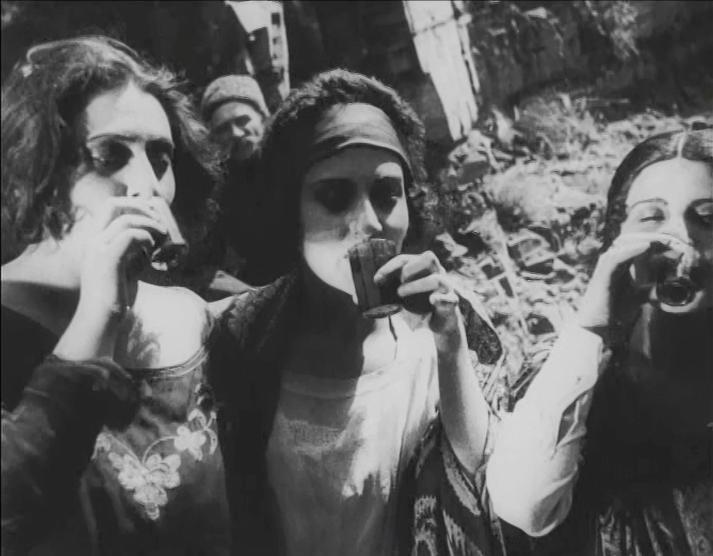
Silent cinema was no stranger to the macabre in the 1920s, with German Expressionism defining much of early horror. Yet, tucked away in Soviet film history lies The Case of the Murder of Tariel Mklavadze (1925), a largely overlooked but deeply atmospheric silent thriller from Georgia, directed by Ivane Perestiani. As the film reaches its centennial, it deserves recognition not only for its eerie storytelling but also for its place in Soviet and Georgian cinematic history.
At its core, The Case of the Murder of Tariel Mklavadze is a tale of obsession and cruelty, unfolding as a psychological horror rather than a supernatural one. The film follows Spiridon Mtsirishvili (Kote Mikaberidze), a schoolteacher, and his wife Despine (Nato Vachnadze), who find themselves ensnared in the twisted desires of a local nobleman, Tariel Mklavadze (Mikheil Kadagidze). The plot is one of creeping dread rather than outright terror, as Tariel and his cohorts engage in a campaign of intimidation and psychological torment, culminating in a series of harrowing encounters.
Unlike many early horror films that relied on elaborate set design and grotesque makeup, The Case of Tariel Mklavadze thrives on mood and tension. Perestiani crafts an unnerving atmosphere using stark lighting contrasts and a slow-burning narrative, heightening the sense of isolation and vulnerability faced by the young couple. While Soviet cinema of the time was largely concerned with revolutionary themes, this film instead explores the power dynamics of class and gender through its horror framework, making it a unique outlier in the era’s cinematic landscape.
One of the film’s greatest strengths lies in its performances, particularly that of Nato Vachnadze. Though she would go on to become one of Soviet Georgia’s most celebrated actresses, The Case of the Murder of Tariel Mklavadze showcases her early talent in a role that demands both fragility and resilience. As Despine, she is at the centre of the film’s tension, her fate seemingly sealed by the whims of men who see her as a prize rather than a person.
Despite its compelling execution, The Case of the Murder of Tariel Mklavadze remains a footnote in horror history, overshadowed by more famous silent-era works like Nosferatu (1922) and The Cabinet of Dr. Caligari (1920). The film’s relative obscurity is partly due to the limited distribution of early Soviet cinema outside the USSR, and it lacks the kind of restoration and revival efforts that have preserved other classics. However, its themes of unchecked power and psychological terror resonate even today, making it a fascinating relic of early horror filmmaking.
One hundred years later, The Case of the Murder of Tariel Mklavadze stands as a testament to the silent era’s ability to unsettle and captivate. With its centenary upon us, it’s a perfect time for film historians and horror aficionados to revisit—or perhaps discover—this lost gem of Georgian cinema.
The turn of the millennium was a defining moment for horror, giving rise to new trends and innovative storytelling. Among them, Final Destination (2000) arrived with a fresh, terrifying concept—one that not only played with the supernatural but also turned everyday life into a potential death trap. Directed by James Wong and co-written with longtime X-Files collaborator Glen Morgan, the film turned the slasher genre on its head by removing the traditional masked killer and replacing it with something far more sinister: Death itself.
What sets Final Destination apart is its antagonist—or rather, the lack of one. Death is an omnipresent force, stalking those who were never meant to survive. Unlike slashers where the villain can be outrun or outwitted, Death is patient, meticulous, and utterly inevitable. The film introduces the concept of “Death’s Design,” a predestined pattern that, once disrupted, seeks to correct itself. The brilliance of this idea lies in its execution: every near-miss, every subtle hint, and every Rube Goldberg-like demise adds to the sense of unease, making audiences hyper-aware of their surroundings.
One of the most memorable elements of Final Destination is the brief yet powerful appearance of Tony Todd as Bludworth, a mortician who seems to know far more than he lets on. His eerie demeanour and cryptic warnings serve as a grim reminder that Death is not something to be played with. Todd’s performance elevates the film, adding a sense of mythos and foreboding that lingers long after his character exits the screen.
Much of Final Destination’s effectiveness comes from its strong cast, led by Devon Sawa as the reluctant psychic Alex Browning. Sawa brings a raw intensity to the role, capturing the paranoia and helplessness of someone who can see what’s coming but can’t fully prevent it. Ali Larter’s Clear Rivers provides a grounded, emotional counterbalance, while Kerr Smith’s jock-turned-survivor adds depth to what could have been a stock character. Seann William Scott, fresh off American Pie, plays against type as the vulnerable Billy, while Kristen Cloke’s panicked teacher gives the film one of its most unsettling sequences.
While some horror films rely on a knife-wielding maniac or grotesque monsters, Final Destination finds horror in the mundane. Death’s methods are elaborate, with each kill playing out like a meticulously planned accident. The infamous bus scene, which arrives with no warning, remains one of the best jump scares in modern horror. The bathtub electrocution, the train decapitation, and the airport bathroom sequence—all highlight the film’s ability to make even the most ordinary moments feel like impending doom. The unpredictability keeps audiences on edge, reinforcing the film’s central theme: no one is safe.
One of the film’s most intriguing recurring motifs is the number 180. Flight 180 is the ill-fated plane that Alex and his classmates were meant to die on, but the number continues to appear throughout the movie in subtle and eerie ways. From license plates to clock readouts, the presence of “180” serves as a constant reminder that Death has not forgotten. It’s a clever detail that rewards attentive viewers and adds to the film’s underlying sense of inevitability.
Final Destination kickstarted a franchise that would spawn four sequels, each expanding on the concept of Death’s Design with increasingly elaborate and over-the-top kill sequences. While the later films often leaned into spectacle, the original remains the most grounded, effectively blending psychological tension with supernatural horror. More importantly, it left a lasting impact on horror cinema—introducing a new kind of fear that made people second-guess every seemingly harmless situation in their daily lives.
The Prognosis:
With its gripping concept, strong performances, and masterful execution of suspenseful set pieces, Final Destination remains one of the standout horror films of the early 2000s. It took the slasher formula and reinvented it, proving that horror doesn’t need a masked villain when fate itself is the enemy. Even after 24 years, the film still resonates, reminding us that no matter how hard we try, you can’t cheat Death.
José Mojica Marins, Brazil’s master of the macabre, brings his signature brand of nihilistic horror to The Strange World of Coffin Joe (O Estranho Mundo de Zé do Caixão), an anthology film that revels in the grotesque and the surreal. As a showcase of Marins’ bleak, transgressive vision, it’s both compelling and frustrating—packed with striking imagery and unrelenting cruelty, yet uneven in execution.
Framed by the presence of Coffin Joe himself (played by Marins), the film presents three eerie tales of obsession, madness, and moral decay. The first segment follows a dollmaker whose unsettling creations take on a sinister purpose. The second, the most infamous, features a deranged balloon seller whose necrophilic urges and foot fetish lead to nightmarish consequences. The final tale focuses on a sadistic professor performing horrific rituals, pushing the film into full-blown exploitation territory.
Marins’ raw, almost documentary-like approach to horror makes The Strange World of Coffin Joe feel uniquely unsettling. Shot in stark black and white, with unflinching depictions of violence and depravity, the film immerses the viewer in a world of unfiltered cruelty. Yet, as with many horror anthologies, the segments vary in quality. The middle story is the most effective in its sheer audacity, while the others, despite intriguing premises, suffer from pacing issues and a lack of narrative cohesion.
Despite its flaws, The Strange World of Coffin Joe remains a fascinating entry in Marins’ filmography. It lacks the narrative strength of At Midnight I’ll Take Your Soul (1964) but compensates with sheer audacity, cementing Marins’ status as a filmmaker unafraid to push the boundaries of horror. It’s not an easy watch, nor is it entirely successful, but for those drawn to the more extreme corners of 1960s horror, it’s a film worth experiencing—if only to witness the strange, twisted world of Coffin Joe at its most unhinged.