
• About
  • podcasts
  • Shop

Surgeons of Horror

~ Dissecting horror films

Surgeons of Horror

Author Archives: surgeons of horror

The Rule of Jenny Pen (2025) – A Chilling Game of Fear and Manipulation

23 Sunday Mar 2025

Posted by surgeons of horror in Movie review

≈ 1 Comment

Tags

geoffrey rush, john lithgow, shudder, shudder australia

Shudder continues its streak of unsettling original films with The Rule of Jenny Pen, a psychological horror-thriller that sinks its claws into the vulnerability of aging and the horrors lurking in the quiet corners of a retirement home. Anchored by powerhouse performances from Geoffrey Rush and John Lithgow, this eerie and claustrophobic tale crafts an atmosphere thick with dread, proving that terror knows no age.

The film follows Judge Stefan Mortensen (Rush), a once-powerful legal mind now reduced to a shadow of himself after suffering a debilitating stroke. Sent to a secluded rest home to recover, Mortensen soon finds himself at odds with Dave Crealy (Lithgow), a seemingly affable resident whose innocent facade masks a twisted, controlling presence. Crealy rules the facility through an insidious game known as “The Rule of Jenny Pen,” using a disturbing dementia doll as both his mouthpiece and his weapon. As Mortensen fights to expose the horrors unfolding around him, he realises that no one believes him—leaving him to take matters into his own frail but determined hands.

What makes The Rule of Jenny Pen so compelling is its setting—an elderly care facility rarely seen in horror, yet rife with an inherent sense of powerlessness. The film leans into that, drawing horror not just from Crealy’s psychological torment but from the indifference of the staff, the isolation of its residents, and the fear of losing one’s agency. Director James Ashcroft (Coming Home in the Dark) masterfully builds tension, blending psychological horror with moments of outright terror as Crealy’s grip over the home tightens.

Rush and Lithgow are mesmerising, delivering two of the most sinister performances in recent memory. Lithgow, in particular, is chilling—his portrayal of Crealy is equal parts charming and horrifying, a villain who wields his dementia doll like a twisted totem of authority. Meanwhile, Rush imbues Mortensen with a tragic, desperate resilience, making his struggle against Crealy both gripping and deeply affecting.

While The Rule of Jenny Pen does veer into some familiar horror tropes in its final act, it remains a uniquely unsettling experience. With its fresh setting, masterful performances, and an unnerving psychological edge, reminding us that the most dangerous monsters aren’t always supernatural, and that horror can fester in the most unexpected places.

  • Saul Muerte

The Rule of Jenny Pen will start streaming on Shudder from Fri 28th March
Friday the 13th: A New Beginning (1985) – A Franchise Detour That Misses More Than It Hits

22 Saturday Mar 2025

Posted by surgeons of horror in retrospective

≈ Leave a comment

Tags

corey feldman, Friday the 13th, Friday the 13th Franchise, john shepherd, tiffany helm

By the time Friday the 13th: A New Beginning slashed its way into theaters in 1985, the franchise was already a well-oiled machine, churning out a sequel nearly every year. However, this fifth entry remains one of the most divisive, largely due to its decision to shift away from the traditional Jason Voorhees formula and experiment with a psychological approach. While that sounds intriguing on paper, the execution leaves much to be desired, resulting in a film that struggles to balance its slasher roots with a misguided attempt at reinvention.

The story picks up after the events of The Final Chapter (1984), with a now-older Tommy Jarvis (John Shepherd) struggling with the trauma of his past. Sent to a halfway house for troubled teens, Tommy finds himself in a new nightmare when a series of gruesome murders begins, mimicking Jason’s trademark brutality. The film tries to play with audience expectations, teasing whether Tommy himself has snapped under the weight of his past, but the final reveal—spoiler alert—of a Jason copycat killer feels more like a cheap gimmick than a clever twist.

Despite its narrative shortcomings, A New Beginning does have its moments. The kill sequences are still delightfully over-the-top, featuring everything from a brutal machete dismemberment to a flare to the mouth. The film also leans into the sleazy side of ’80s slashers, packing in gratuitous nudity, drug use, and bizarre comedic beats that make for an occasionally entertaining watch. Unfortunately, these moments are often undercut by a cast of thinly drawn, one-note characters who exist solely to be picked off, making it difficult to care about their inevitable fates.

While A New Beginning deserves some credit for attempting to steer the franchise in a fresh direction, it ultimately feels like a misfire. The absence of the real Jason leaves a void that the film can’t quite fill, and its attempt at psychological horror never fully lands. That said, it’s not without its trashy charm, and for fans of the series, it offers enough blood-soaked carnage to be worth revisiting—just don’t expect a Friday the 13th classic.

  • Saul Muerte

Curse of the Crimson Altar (1968) – A Star-Studded but Stumbling Occult

21 Friday Mar 2025

Posted by surgeons of horror in retrospective

≈ Leave a comment

Tags

1960s horror, 1960s retrospective, barbara steele, Boris Karloff, christopher lee, mark eden, michael gough, virginia wetherell

By the late 1960s, British horror was riding the wave of gothic indulgence, and Curse of the Crimson Altar (also known as The Crimson Cult) fit right into that mold—on paper, at least. Featuring an enviable cast of horror icons, including Boris Karloff, Christopher Lee, and Barbara Steele, the film promises an eerie descent into black magic, secret rituals, and sinister family secrets. However, despite its intriguing setup and legendary names, Vernon Sewell’s film struggles to leave a lasting impression, failing to weave its disparate elements into something truly chilling.

The story follows Robert Manning (Mark Eden), who arrives at a countryside estate in search of his missing brother. Greeted warmly by his host Morley (Christopher Lee) and drawn in by his flirtatious niece Eve (Virginia Wetherell), Manning soon realises that something sinister lurks beneath the surface. At the heart of the mystery is Lavinia Morley (Barbara Steele), the legendary Black Witch of Greymarsh, whose influence still seems to haunt the house. Boris Karloff, in one of his final roles, plays Professor Marsh, adding a layer of authority to the film’s occult themes.

While the premise suggests a brooding supernatural thriller, Curse of the Crimson Altar never quite capitalises on its potential. The film’s pacing is uneven, bogged down by awkward tonal shifts and a reliance on hallucinatory dream sequences that, while visually interesting, fail to generate true suspense. The script meanders between traditional gothic horror and psychedelic surrealism, yet never fully commits to either. Some moments feel inspired—particularly the ritualistic scenes featuring Steele’s striking presence—but the film lacks a cohesive narrative drive.

That’s not to say there aren’t pleasures to be found. Karloff, despite his declining health, delivers a dignified performance, and Lee once again exudes effortless menace, even if his role is underwritten. The gothic atmosphere is well-crafted, and the concept of a lingering ancestral curse is one with rich potential. Unfortunately, the execution is middling, leaving Curse of the Crimson Altar feeling like a missed opportunity. As a late-era gothic horror, it’s worth a watch for genre completists, but it ultimately fails to cast a truly lasting spell.

  • Saul Muerte

Bloody Axe Wound (2025) – A Slasher with Sharp Ideas but a Blunt Edge

17 Monday Mar 2025

Posted by surgeons of horror in Movie review

≈ Leave a comment

Tags

billy burke, matthew john lawrence, molly brown, shudder, shudder australia, slasher comedy

Shudder’s latest exclusive, Bloody Axe Wound, comes swinging with a promising concept—mixing slasher horror with media satire—but ultimately stumbles in execution. Set in the quiet yet bloodstained town of Clover Falls, the film follows Abbie Bladecut (Sari Arambulo), a teenager struggling with the weight of her family’s gruesome legacy. Her father, Roger Bladecut (Billy Burke), has turned murder into a business, capturing real-life killings and distributing them to eager viewers. But as Abbie begins questioning the family trade, she’s forced to decide whether to embrace the cycle of carnage or carve out her own path.

At its best, Bloody Axe Wound delivers a wickedly fun premise, bolstered by strong performances. Arambulo shines as Abbie, balancing vulnerability and determination, while Molly Brown (Dexter: Original Sin) brings a sharp edge as her friend Sam Crane. Billy Burke’s Roger exudes a sleazy charisma, making his character’s justifications for his twisted business both unsettling and eerily believable. There’s also a noteworthy cameo from Jeffrey Dean Morgan, whose presence adds some weight to the film, even if his role is fleeting.

However, despite its engaging setup, the film begins to veer off course as it struggles to sustain its own momentum. The biggest issue lies in its execution of the central premise—who exactly is filming these supposed “real” murder videos? The film flirts with the idea of voyeuristic horror and true crime obsession but never fully commits to exploring the logistics of its own mythology. Instead, it throws in a few late-game twists that feel more like distractions than revelations.

Director Matthew John Lawrence (Uncle Peckerhead) crafts some effectively gory set pieces, but the film’s tone wavers between biting satire and straight-up slasher mayhem, never fully committing to either. 

The Prognosis:

When it works, Bloody Axe Wound is an enjoyably grim ride with moments of inspired horror. When it falters, it leaves you questioning the gaps in its own logic. Still, there’s enough blood-soaked fun to make it worth a watch—just don’t expect it to leave a lasting mark.

  • Saul Muerte

Dominion: Prequel to The Exorcist (2005) – A Possessed Production Gone Wrong

17 Monday Mar 2025

Posted by surgeons of horror in retrospective

≈ Leave a comment

Tags

billy crawford, demonic possession, dominion, stellan skarsgard, The Exorcist

There’s something inherently cursed about Dominion: Prequel to The Exorcist, and not in the way it intends. As the first attempt at an origin story for Father Merrin’s battle with Pazuzu, Paul Schrader’s take on the material is a sluggish and misguided affair that never finds its footing. It exists in a strange limbo—not as outright ridiculous as Renny Harlin’s Exorcist: The Beginning (the studio-mandated reshoot that replaced it) but just as devoid of true terror. The film fumbles in nearly every aspect, weighed down by a plodding script and woefully outdated CGI that undermines any atmosphere it tries to build.

Stellan Skarsgård does his best to elevate the material, but even his presence as a younger Father Merrin isn’t enough to salvage a film that constantly fights against itself. Schrader leans into psychological horror over cheap thrills, which in theory should work—but the execution is flat and lifeless. Key moments that should be disturbing are instead unintentionally laughable, thanks in no small part to the distractingly bad effects work. The demonically contorted bodies and spectral visions come across as half-baked, robbing the film of any lasting impact.

One of the film’s biggest sins is how it fails to generate any real tension. Despite Schrader’s more introspective approach, the pacing is painfully sluggish, and the horror elements feel like an afterthought. There are glimmers of intriguing ideas—the exploration of faith and guilt, Merrin’s past trauma, and the horrors of war—but they’re buried under lifeless dialogue and stiff performances from much of the supporting cast. The possessed Cheche (Billy Crawford) should have been the film’s terrifying centerpiece, but instead, he’s saddled with effects so poor they make The Scorpion King look like cutting-edge CGI.

The Exorcist franchise has always struggled with its sequels, but Dominion proves that sometimes, an origin story just isn’t necessary. It lacks the primal terror of the original and even the bizarre charm of some later entries, leaving it as a dull and frustrating misfire. While it’s marginally better than Harlin’s chaotic take, that’s hardly a glowing endorsement. In the end, Dominion is a film that never should have been resurrected.

  • Saul Muerte

The Case of the Murder of Tariel Mklavadze (1925) – A Forgotten Soviet Horror Classic Turns 100

16 Sunday Mar 2025

Posted by surgeons of horror in retrospective

≈ Leave a comment

Tags

Georgian cinema, ivane perestiani, kote mikaberidze, mikheil kadagidze, nato vachnadze, silent horror, soviet cinema, the case of the murder of tariel Mklavadze

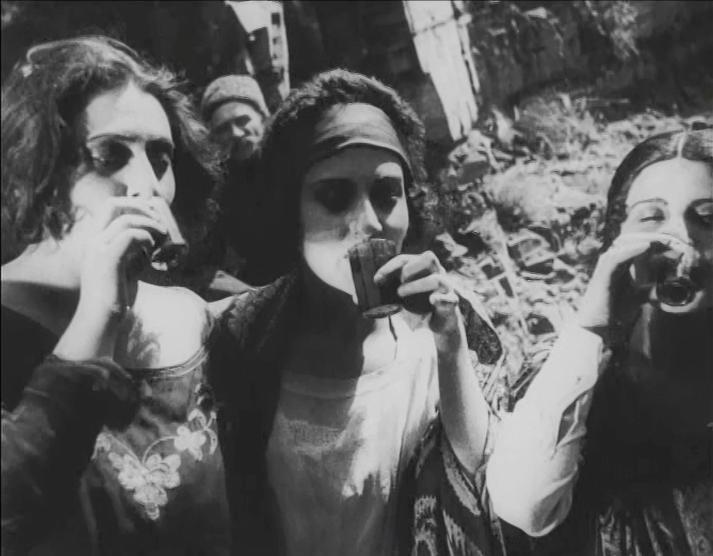
Silent cinema was no stranger to the macabre in the 1920s, with German Expressionism defining much of early horror. Yet, tucked away in Soviet film history lies The Case of the Murder of Tariel Mklavadze (1925), a largely overlooked but deeply atmospheric silent thriller from Georgia, directed by Ivane Perestiani. As the film reaches its centennial, it deserves recognition not only for its eerie storytelling but also for its place in Soviet and Georgian cinematic history.

At its core, The Case of the Murder of Tariel Mklavadze is a tale of obsession and cruelty, unfolding as a psychological horror rather than a supernatural one. The film follows Spiridon Mtsirishvili (Kote Mikaberidze), a schoolteacher, and his wife Despine (Nato Vachnadze), who find themselves ensnared in the twisted desires of a local nobleman, Tariel Mklavadze (Mikheil Kadagidze). The plot is one of creeping dread rather than outright terror, as Tariel and his cohorts engage in a campaign of intimidation and psychological torment, culminating in a series of harrowing encounters.

Unlike many early horror films that relied on elaborate set design and grotesque makeup, The Case of Tariel Mklavadze thrives on mood and tension. Perestiani crafts an unnerving atmosphere using stark lighting contrasts and a slow-burning narrative, heightening the sense of isolation and vulnerability faced by the young couple. While Soviet cinema of the time was largely concerned with revolutionary themes, this film instead explores the power dynamics of class and gender through its horror framework, making it a unique outlier in the era’s cinematic landscape.

One of the film’s greatest strengths lies in its performances, particularly that of Nato Vachnadze. Though she would go on to become one of Soviet Georgia’s most celebrated actresses, The Case of the Murder of Tariel Mklavadze showcases her early talent in a role that demands both fragility and resilience. As Despine, she is at the centre of the film’s tension, her fate seemingly sealed by the whims of men who see her as a prize rather than a person.

Despite its compelling execution, The Case of the Murder of Tariel Mklavadze remains a footnote in horror history, overshadowed by more famous silent-era works like Nosferatu (1922) and The Cabinet of Dr. Caligari (1920). The film’s relative obscurity is partly due to the limited distribution of early Soviet cinema outside the USSR, and it lacks the kind of restoration and revival efforts that have preserved other classics. However, its themes of unchecked power and psychological terror resonate even today, making it a fascinating relic of early horror filmmaking.

One hundred years later, The Case of the Murder of Tariel Mklavadze stands as a testament to the silent era’s ability to unsettle and captivate. With its centenary upon us, it’s a perfect time for film historians and horror aficionados to revisit—or perhaps discover—this lost gem of Georgian cinema.

  • Saul Muerte

Final Destination (2000) – A Deadly Game of Fate That Still Holds Up

16 Sunday Mar 2025

Posted by surgeons of horror in retrospective

≈ Leave a comment

Tags

ali larter, devon sawa, final destination, kerr smith, seann william scott, tony Todd

The turn of the millennium was a defining moment for horror, giving rise to new trends and innovative storytelling. Among them, Final Destination (2000) arrived with a fresh, terrifying concept—one that not only played with the supernatural but also turned everyday life into a potential death trap. Directed by James Wong and co-written with longtime X-Files collaborator Glen Morgan, the film turned the slasher genre on its head by removing the traditional masked killer and replacing it with something far more sinister: Death itself.

What sets Final Destination apart is its antagonist—or rather, the lack of one. Death is an omnipresent force, stalking those who were never meant to survive. Unlike slashers where the villain can be outrun or outwitted, Death is patient, meticulous, and utterly inevitable. The film introduces the concept of “Death’s Design,” a predestined pattern that, once disrupted, seeks to correct itself. The brilliance of this idea lies in its execution: every near-miss, every subtle hint, and every Rube Goldberg-like demise adds to the sense of unease, making audiences hyper-aware of their surroundings.

One of the most memorable elements of Final Destination is the brief yet powerful appearance of Tony Todd as Bludworth, a mortician who seems to know far more than he lets on. His eerie demeanour and cryptic warnings serve as a grim reminder that Death is not something to be played with. Todd’s performance elevates the film, adding a sense of mythos and foreboding that lingers long after his character exits the screen.

Much of Final Destination’s effectiveness comes from its strong cast, led by Devon Sawa as the reluctant psychic Alex Browning. Sawa brings a raw intensity to the role, capturing the paranoia and helplessness of someone who can see what’s coming but can’t fully prevent it. Ali Larter’s Clear Rivers provides a grounded, emotional counterbalance, while Kerr Smith’s jock-turned-survivor adds depth to what could have been a stock character. Seann William Scott, fresh off American Pie, plays against type as the vulnerable Billy, while Kristen Cloke’s panicked teacher gives the film one of its most unsettling sequences.

While some horror films rely on a knife-wielding maniac or grotesque monsters, Final Destination finds horror in the mundane. Death’s methods are elaborate, with each kill playing out like a meticulously planned accident. The infamous bus scene, which arrives with no warning, remains one of the best jump scares in modern horror. The bathtub electrocution, the train decapitation, and the airport bathroom sequence—all highlight the film’s ability to make even the most ordinary moments feel like impending doom. The unpredictability keeps audiences on edge, reinforcing the film’s central theme: no one is safe.

One of the film’s most intriguing recurring motifs is the number 180. Flight 180 is the ill-fated plane that Alex and his classmates were meant to die on, but the number continues to appear throughout the movie in subtle and eerie ways. From license plates to clock readouts, the presence of “180” serves as a constant reminder that Death has not forgotten. It’s a clever detail that rewards attentive viewers and adds to the film’s underlying sense of inevitability.

Final Destination kickstarted a franchise that would spawn four sequels, each expanding on the concept of Death’s Design with increasingly elaborate and over-the-top kill sequences. While the later films often leaned into spectacle, the original remains the most grounded, effectively blending psychological tension with supernatural horror. More importantly, it left a lasting impact on horror cinema—introducing a new kind of fear that made people second-guess every seemingly harmless situation in their daily lives.

The Prognosis:

With its gripping concept, strong performances, and masterful execution of suspenseful set pieces, Final Destination remains one of the standout horror films of the early 2000s. It took the slasher formula and reinvented it, proving that horror doesn’t need a masked villain when fate itself is the enemy. Even after 24 years, the film still resonates, reminding us that no matter how hard we try, you can’t cheat Death.

  • Saul Muerte

The Strange World of Coffin Joe (1968) – A Bizarre, Uncompromising Nightmare

15 Saturday Mar 2025

Posted by surgeons of horror in retrospective

≈ Leave a comment

Tags

1960s horror, 1960s retrospective, coffin joe, jose mojica marins

José Mojica Marins, Brazil’s master of the macabre, brings his signature brand of nihilistic horror to The Strange World of Coffin Joe (O Estranho Mundo de Zé do Caixão), an anthology film that revels in the grotesque and the surreal. As a showcase of Marins’ bleak, transgressive vision, it’s both compelling and frustrating—packed with striking imagery and unrelenting cruelty, yet uneven in execution.

Framed by the presence of Coffin Joe himself (played by Marins), the film presents three eerie tales of obsession, madness, and moral decay. The first segment follows a dollmaker whose unsettling creations take on a sinister purpose. The second, the most infamous, features a deranged balloon seller whose necrophilic urges and foot fetish lead to nightmarish consequences. The final tale focuses on a sadistic professor performing horrific rituals, pushing the film into full-blown exploitation territory.

Marins’ raw, almost documentary-like approach to horror makes The Strange World of Coffin Joe feel uniquely unsettling. Shot in stark black and white, with unflinching depictions of violence and depravity, the film immerses the viewer in a world of unfiltered cruelty. Yet, as with many horror anthologies, the segments vary in quality. The middle story is the most effective in its sheer audacity, while the others, despite intriguing premises, suffer from pacing issues and a lack of narrative cohesion.

Despite its flaws, The Strange World of Coffin Joe remains a fascinating entry in Marins’ filmography. It lacks the narrative strength of At Midnight I’ll Take Your Soul (1964) but compensates with sheer audacity, cementing Marins’ status as a filmmaker unafraid to push the boundaries of horror. It’s not an easy watch, nor is it entirely successful, but for those drawn to the more extreme corners of 1960s horror, it’s a film worth experiencing—if only to witness the strange, twisted world of Coffin Joe at its most unhinged.

  • Saul Muerte

Living Skeleton (1968) – A Haunting, If Uneven, Nautical Nightmare

14 Friday Mar 2025

Posted by surgeons of horror in retrospective

≈ Leave a comment

Tags

1960s horror, 1960s retrospective, Hiroshi Matsuno, japanese cinema, japanese horror, Kyūketsu Dokuro-sen

Hiroshi Matsuno’s Living Skeleton (Kyūketsu Dokuro-sen) is a curious relic of 1960s Japanese horror—an eerie ghost story wrapped in revenge thriller trappings, with a striking visual palette that occasionally outshines its uneven narrative.

The film opens with a brutal act of piracy: a group of thieves slaughter the crew of a cargo ship, including a newlywed doctor, before subjecting his wife to a horrific fate. Three years later, her twin sister is drawn into a cycle of vengeance, as the killers begin to meet ghastly ends. What follows is a surreal and often hypnotic tale of supernatural retribution, blending gothic horror with psychological unease.

Matsuno’s direction leans heavily on shadow-drenched cinematography, making excellent use of stark black-and-white visuals that give the film a dreamlike, almost otherworldly quality. The maritime setting—complete with mist-covered waters and ghostly apparitions—enhances the atmosphere, at times recalling the expressionistic horror of Onibaba (1964) or Kwaidan (1964).

Where Living Skeleton falters is in its pacing and coherence. While the film’s themes of trauma, guilt, and spectral justice are intriguing, the execution wavers between compelling and sluggish. Some sequences are drenched in atmospheric dread, while others drag under the weight of exposition. The supernatural elements, though often effective, sometimes feel more ornamental than fully realised.

Despite its flaws, Living Skeleton remains an interesting artifact of 1960s Japanese horror—one that offers ghostly thrills and a visual style that lingers. While not on the level of Japan’s finest horror exports, it’s an atmospheric, occasionally haunting voyage into vengeance from beyond the grave.

  • Saul Muerte

Silent Zone – A Surprisingly Effective Action Horror Thriller

11 Tuesday Mar 2025

Posted by surgeons of horror in Movie review

≈ 1 Comment

Tags

eagle entertainment, Eagle Entertainment Australia, luca papp, matt devere, nikolett barabas, peter deak

In a genre often filled with predictable scares and uninspired post-apocalyptic settings, Silent Zone manages to stand out as a surprisingly engaging action horror film. While it doesn’t reinvent the wheel, it does well to hold your attention thanks to a gripping premise, solid pacing, and some commendable performances from its cast.

Set years after a devastating outbreak that has turned the world into a desolate wasteland, the film follows survivors Cassius and Abigail, who have managed to stay alive by sticking together. Their fragile sense of safety is thrown into chaos when they encounter a pregnant woman, forcing them to risk everything on a dangerous journey to find a secure refuge. As tensions rise and threats emerge from both the mutated infected and desperate survivors, Silent Zone builds tension effectively, never letting its characters—or the audience—feel truly safe.

The film’s biggest strength lies in its performances. While action horror can sometimes suffer from thinly written characters, the central trio here delivers enough emotional depth to make their struggle compelling. The cinematography also does an admirable job of capturing the bleak, unforgiving world they inhabit, and the action sequences are staged with enough energy to keep things engaging without descending into chaos.

While Silent Zone doesn’t break new ground in the post-apocalyptic horror subgenre, it delivers enough suspense, emotion, and well-crafted action to make it worth a watch. If you’re in the mood for a tense survival thriller with a strong human core, this one is worth checking out.

SILENT ZONE (2025) will be Available on DVD & Digital in Australia & New Zealand from MARCH 12th.

  • Saul Muerte
← Older posts
Newer posts →

Subscribe

  • Entries (RSS)
  • Comments (RSS)

Archives

  • April 2026
  • March 2026
  • February 2026
  • January 2026
  • December 2025
  • November 2025
  • October 2025
  • September 2025
  • August 2025
  • July 2025
  • June 2025
  • May 2025
  • April 2025
  • March 2025
  • February 2025
  • January 2025
  • December 2024
  • November 2024
  • October 2024
  • September 2024
  • August 2024
  • July 2024
  • June 2024
  • May 2024
  • April 2024
  • March 2024
  • February 2024
  • January 2024
  • November 2023
  • October 2023
  • September 2023
  • August 2023
  • July 2023
  • June 2023
  • May 2023
  • April 2023
  • March 2023
  • February 2023
  • January 2023
  • November 2022
  • October 2022
  • September 2022
  • August 2022
  • July 2022
  • June 2022
  • April 2022
  • March 2022
  • February 2022
  • January 2022
  • December 2021
  • November 2021
  • October 2021
  • September 2021
  • August 2021
  • July 2021
  • June 2021
  • May 2021
  • April 2021
  • March 2021
  • February 2021
  • January 2021
  • December 2020
  • November 2020
  • October 2020
  • September 2020
  • August 2020
  • July 2020
  • June 2020
  • May 2020
  • April 2020
  • March 2020
  • February 2020
  • January 2020
  • December 2019
  • November 2019
  • October 2019
  • September 2019
  • July 2019
  • June 2019
  • May 2019
  • April 2019
  • March 2019
  • February 2019
  • January 2019
  • December 2018
  • November 2018
  • October 2018
  • September 2018
  • August 2018
  • July 2018
  • June 2018
  • May 2018
  • April 2018
  • March 2018
  • February 2018
  • January 2018
  • December 2017
  • November 2017
  • October 2017
  • September 2017
  • August 2017
  • July 2017
  • June 2017
  • May 2017
  • April 2017
  • March 2017
  • February 2017
  • January 2017
  • December 2016
  • November 2016
  • October 2016
  • September 2016
  • August 2016
  • July 2016
  • June 2016
  • May 2016

Categories

  • A Night of Horror Film Festival
  • Alien franchise
  • Alliance Francaise French Film Festival
  • Australian Horror
  • Best Movies and Shows
  • Competition
  • dark nights film fest
  • episode review
  • Flashback Fridays
  • Friday the 13th Franchise
  • Full Moon Sessions
  • Halloween franchise
  • In Memorium
  • Interview
  • japanese film festival
  • John Carpenter
  • killer pigs
  • midwest weirdfest
  • MidWest WierdFest
  • MonsterFest
  • movie article
  • movie of the week
  • Movie review
  • New Trailer
  • News article
  • podcast episode
  • podcast review
  • press release
  • retrospective
  • Rialto Distribution
  • Ring Franchise
  • series review
  • Spanish horror
  • sydney film festival
  • Sydney Underground Film Festival
  • The Blair Witch Franchise
  • the conjuring franchise
  • The Exorcist
  • The Howling franchise
  • Top 10 list
  • Top 12 List
  • top 13 films
  • Trash Night Tuesdays on Tubi
  • umbrella entertainment
  • Uncategorized
  • Universal Horror
  • Wes Craven
  • wes craven's the scream years

Meta

  • Create account
  • Log in

Blog at WordPress.com.

  • Subscribe Subscribed
    • Surgeons of Horror
    • Join 218 other subscribers
    • Already have a WordPress.com account? Log in now.
    • Surgeons of Horror
    • Subscribe Subscribed
    • Sign up
    • Log in
    • Report this content
    • View site in Reader
    • Manage subscriptions
    • Collapse this bar
 

Loading Comments...