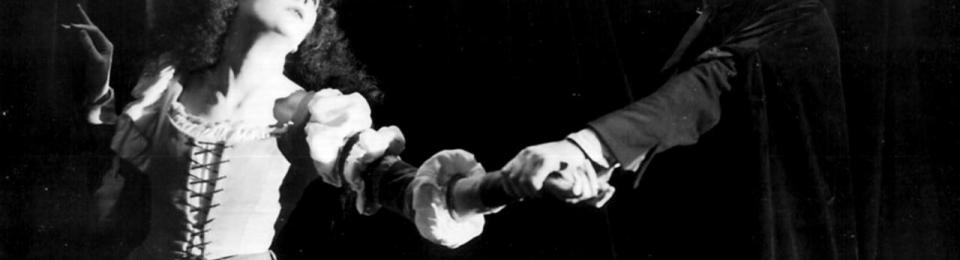
For all its eerie grandeur, The Phantom of the Opera (1925) is not simply a tale of horror—it’s a deeply tragic story of longing, beauty, and unrequited love. At its core lies a desperate ache for connection, veiled by a mask of terror. While Lon Chaney’s Phantom may haunt the opera house, it is his tortured soul—wounded by rejection and driven by a perverse devotion—that makes him unforgettable.
This is where the film transcends its genre roots. Unlike the mindless monsters of other early horror tales, Erik is painfully aware of his deformity and isolation. He composes music, writes letters, and navigates the underground labyrinth of his own making, not as a beast, but as a man shaped by the cruelty of others. His obsession with Christine is not merely a possessive infatuation—it’s a twisted hope for redemption through love. She becomes his muse, his salvation, and ultimately, his undoing.
This romantic fixation draws clear lines back to the Gothic tradition—the brooding figures of Frankenstein or The Hunchback of Notre Dame—but with a sharper emotional intimacy. Where Frankenstein’s creature lashes out against his creator and society, and Quasimodo resigns himself to fate, Erik is actively trying to shape his world, rewriting his tragedy as a love story, even as it inevitably collapses into horror.
The film also plays with the dualities of beauty and monstrosity. Christine, caught between the dashing Raoul and the shadowy Phantom, becomes more than a damsel—she’s the axis of a moral and emotional triangle. Her eventual pity for Erik, especially in the final scenes, brings an unexpected grace to the story. Unlike many horror films of the era, Phantom grants its monster a moment of tenderness before death—a silent farewell, not just to Christine, but to the dream of being loved.
Chaney’s performance imbues this romantic tragedy with raw, physical emotion. His gestures are operatic yet sincere; every tilt of the head or clutch of the heart echoes with yearning. When he reveals his face to Christine, the horror is visceral—but so too is the heartbreak.
In the end, The Phantom of the Opera is less a monster movie and more a requiem for those who live in the shadows, yearning to be seen. It tapped into a universal fear—not of creatures lurking in the dark, but of being unloved and alone. That’s the true horror at the heart of the Phantom—and perhaps why, a century later, we still feel his pain.
- Saul Muerte
Afterlife of the Phantom: Cultural Echoes and Modern Resurrection
 Surgeons of Horror
Pingback: Shadows and Stylization: German Expressionism’s Influence on The Phantom of the Opera | Surgeons of Horror