Two decades on from its blood-soaked release, Neil Marshall’s The Descent remains a standout in modern horror—a visceral, claustrophobic nightmare that doesn’t just hold up, but still towers over many of its successors. It’s a film that plunges deep, not just into the physical darkness of subterranean caves, but into the emotional void of grief, trust, and psychological unravelling.
Marshall had already turned heads with his scrappy werewolf-centric debut Dog Soldiers (2002), a cult favourite that blended horror and humour with military grit. But The Descent was another beast entirely: leaner, meaner, and infinitely more suffocating. With it, he proved himself not just a director with genre chops, but a filmmaker capable of real menace and maturity.
At its heart, The Descent is a study in female trauma and resilience—one of the finest female-led horror films of the 21st century. The all-women cast was a bold move at the time, but it’s what gives the film its unique texture. These aren’t scream queens or cannon fodder; they’re complicated, emotionally bruised people, each facing internal conflicts that only intensify as the cave closes in and the primal threat reveals itself.
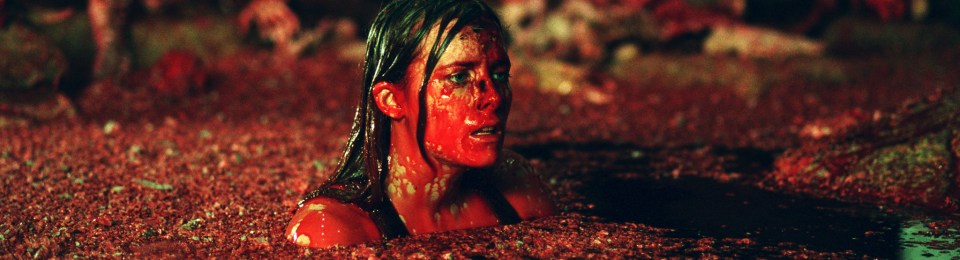
Shauna Macdonald’s Sarah is the emotional core, her arc from grieving widow to blood-soaked survivor is one of the most haunting transformations in horror cinema. But just as crucial is the interplay of tension, betrayal, and loyalty among the group—Marshall weaves these threads masterfully, setting up a human drama before the monsters ever appear.
Thematically, The Descent is rich: the darkness as metaphor for unresolved grief, the cave as a womb and tomb, the creatures as the physical manifestation of internal dread. And while the Crawlers are terrifying in design and execution, it’s the breakdown of friendship, the psychological toll, and Sarah’s emotional collapse (and rebirth) that give the film its lasting power.
Technically, the film still stuns. Sam McCurdy’s cinematography transforms studio-built caves into something palpably real—tight, wet, and suffocating. David Julyan’s minimalist score adds an eerie heartbeat to the descent. And Marshall’s direction, both ruthless and precise, never relents once the horror kicks in.
Yet, in hindsight, The Descent feels like a peak that Marshall never quite reclaimed. While his later work (Doomsday, Centurion, Hellboy) had moments, none carried the same bold vision or emotional depth. It’s as if the fire that lit this pitch-black descent has since flickered, with Marshall’s once-promising edge dulled by studio misfires and uneven TV work.
The Prognosis:
Still, what he delivered in 2005 was nothing short of monumental. The Descent remains a benchmark in horror—a film as terrifying as it is tragic, as primal as it is profound. Even after 20 years, it still gets under your skin. And maybe, just maybe, it’s because it doesn’t just want to scare you. It wants to trap you—with no way out.
- Saul Muerte
 Surgeons of Horror