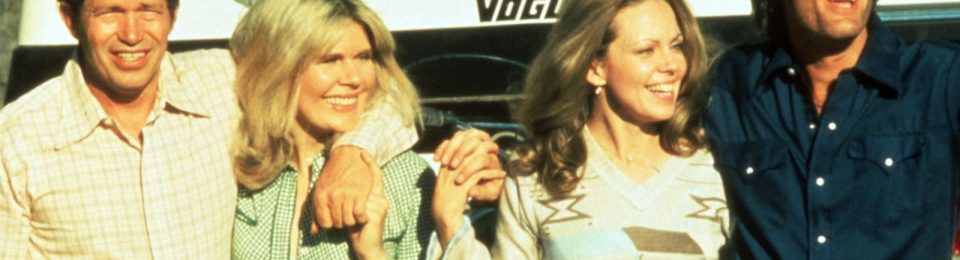
Somewhere between the last gasps of the hippy hangover and the creeping dread of post-Manson America, Race with the Devil barreled down the highway like a bat out of Hell—literally. Released in 1975 and directed by action-hardened journeyman Jack Starrett, this cult classic is a dusty, occult-tinged road thriller that taps directly into the national paranoia of the time. Fifty years later, it still hits a nerve—especially if, like me, your first encounter was via a late-night television broadcast that left you afraid to look out the caravan window.
The plot is lean and mean: two Texas couples—Peter Fonda and Lara Parker, Warren Oates and Loretta Swit—head out on an RV road trip to Colorado for a little dirt biking and rest. But their trip takes a brutal detour when they stumble across a midnight satanic ritual in the desert, and worse still, witness a human sacrifice. They flee the scene, but the cultists see them… and the chase begins.
What follows is part road movie, part conspiracy thriller, and all-out occult nightmare. The group is pursued across the dusty American Southwest by seemingly every local in sight—mechanics, police officers, townsfolk—all of whom might be in league with the Devil. Paranoia builds with every mile, the sense of isolation increasing even within the relative safety of the RV. There’s no sanctuary here—only dust, devilry, and dread.
It’s the Satanic Panic subtext that gives Race with the Devil its bite. Released at a time when America was nervously scanning the horizon for devil worshippers, ritual killers, and cultural decay, the film exploits that fear with precision. Unlike other occult-themed films of the era—The Omen, The Devil’s Rain, or The Mephisto Waltz—this one never lets the supernatural overshadow the real terror: people. Regular folks, hidden in plain sight, quietly devoted to something unholy.
Fonda and Oates make for a superb, contrasting duo—Fonda the laconic cool, Oates the ever-suspicious skeptic. There’s an unspoken weight in their friendship, an almost unshakable faith in their ability to muscle through the ordeal—until that faith is tested, and shattered. Loretta Swit, now best remembered for MASH*, adds a sharp emotional core to the film, holding her own in the growing panic. All four leads ground the madness in a relatable domesticity, which only makes the horror feel closer to home.
Then there’s that ending. Still bleak. Still brutal. Still brilliant. It’s a masterstroke in nihilism, the kind of finish that leaves you staring at a black screen, wondering how far evil will go to win. It was a punch to the gut as a kid, watching through half-lidded eyes during a late-night broadcast, and it hasn’t lost its sting.
Visually, the film captures the sun-baked emptiness of the landscape—open highways and desolate motels that conceal threats behind every shadow. Starrett directs with a muscular, no-nonsense style that keeps the tension simmering, while the sound design and jarring music cues keep your nerves frayed.
The Prognosis:
Race with the Devil may not be the most stylish film of its era, nor the most overtly supernatural, but its blend of Americana, paranoia, and occult horror earns it a lasting place in the canon of 1970s genre cinema. Fifty years on, it remains a taut, unsettling ride—a reminder that out on the open road, it’s not just flat tires or bad weather you need to worry about… sometimes it’s Satan himself.
- Saul Muerte
 Surgeons of Horror
If nothing else, If you’re going to race with the devil, you’ve got to be as fast as Hell! is a great tagline
LikeLike