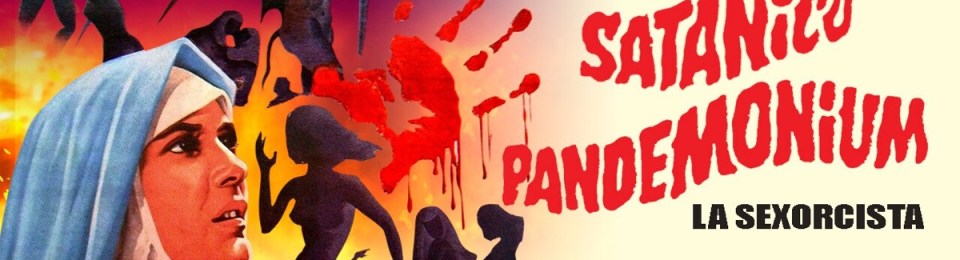
Before The Exorcist spawned a thousand cinematic imitators, and long before Hollywood dared tread into the cloisters of religious blasphemy, Mexico delivered one of the most blasphemously potent entries in the nunsploitation canon with Satánico Pandemonium—a heady cocktail of sin, sanctity, and sacrilege. Released in 1975 and directed by veteran filmmaker Gilberto Martínez Solares, this provocative feature walks a delicate line between erotic horror and moral indictment, all while drenched in the fevered atmosphere of forbidden desire.
At its core is Sister Maria, played with hypnotic conviction by Cecilia Pezet. She is a figure of virtue, charity, and devout service—until, that is, she finds herself tempted by the Devil himself (embodied here with a smirking menace by Enrique Rocha). What begins as a whisper of fantasy and temptation unravels into full-blown psychosexual madness, as visions of lust, sadism, and blasphemy consume the cloistered world around her.
It’s tempting to dismiss Satánico Pandemonium as just another skin-heavy slice of exploitation—and it certainly doesn’t shy away from the genre’s expected trappings. But there’s a strange elegance to the way Solares constructs his descent. The convent setting is stark, sun-bleached, and eerily calm, providing a jarring contrast to the escalating depravity. The Devil doesn’t just torment Maria—he awakens her, inviting the viewer into a layered conflict between desire, repression, and damnation.
As with many entries in the nunsploitation cycle, Satánico Pandemonium thrives on controversy. In a deeply Catholic nation like Mexico, the film’s blend of religious imagery and erotic violence sparked unease and outright condemnation. The sacrilegious content—nudity in sacred spaces, self-flagellation, perverse rituals—was designed to provoke. But unlike some of its European counterparts, there’s a cultural specificity here that adds weight to the iconoclasm. This isn’t just about sex and shock—it’s a portrait of religious hysteria filtered through a deeply Latin American lens.
Still, it’s not without its pulp pleasures. The film leans into surrealism and softcore excess with relish, and it sometimes wobbles under the weight of its contradictions. It wants to titillate and terrify, to condemn and celebrate. That ambiguity is both its greatest strength and its ultimate flaw—it neither fully critiques the institution it corrupts nor wholly surrenders to its indulgent premise. It’s as if the film itself is struggling with the same spiritual torment that haunts its lead character.
What Satánico Pandemonium offers is not clarity, but chaos—the kind of infernal, fevered chaos that marked the zenith of 1970s exploitation. As part of the wider nunsploitation movement—which includes films like School of the Holy Beast, The Nun and the Devil, and Flavia the Heretic—it holds its own with a distinctly Mexican flair. In fact, its title would later inspire From Dusk Till Dawn’s iconic stripper-turned-vampire Satanico Pandemonium, proving its cult legacy is well intact.
The Prognosis:
For all its sins, Satánico Pandemonium is a memorable relic from a time when horror wasn’t afraid to confront taboos with lurid abandon. Three stars, for the devil, the daring, and the decadence.
- Saul Muerte
 Surgeons of Horror