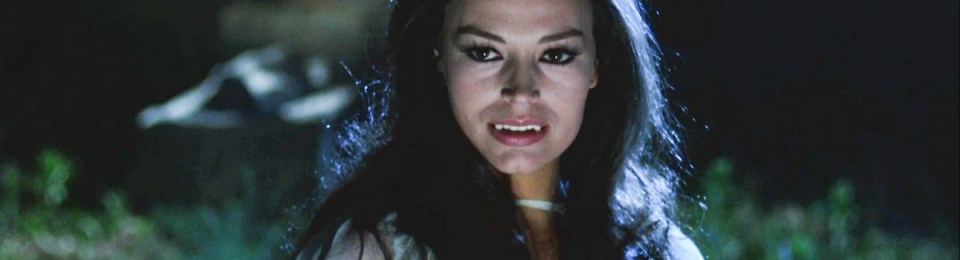
Before the eerie, hooded knights of Tombs of the Blind Dead rode out from the graveyards of Spanish horror cinema, director Amando de Ossorio dipped his toes into the genre with Fangs of the Living Dead—a gothic curiosity that plays more like a confused homage than a fully-formed fright fest. Released in 1969 under the alternate title Malenka, this early effort is notable less for its quality than for the glimmers of talent that would soon flourish in his later, more celebrated work.
The premise is classic Euro-horror: a young woman (played by the ever-enigmatic Anita Ekberg) inherits a crumbling castle from a mysterious uncle, only to find herself surrounded by alluring women, dark legends, and hints of vampirism. So far, so Hammer-lite. But where the British studios leaned into blood, mood, and menace, Fangs of the Living Dead waffles between gothic horror and awkward melodrama, never quite settling on a tone or identity.
Ekberg is game, and her presence gives the film a touch of continental class. But the supporting cast is uneven, and the plotting stumbles through cliché after cliché without much conviction. What should feel mysterious or sensual often comes off as wooden or unintentionally camp.
The most frustrating element is the bait-and-switch structure of the film. There are vampires—or at least the idea of them—but just when the story starts to build towards supernatural revelation, it pulls the rug out with a rationalist twist that saps the atmosphere. And yet, depending on which cut you’re watching, there’s an added final beat that seems to suggest the supernatural was real all along. It’s a tonal mess, and not the good kind.
Despite its shortcomings, Fangs of the Living Dead is a curious artifact. You can see de Ossorio tinkering with gothic tropes and experimenting with shadows and stone. The castle setting, the doomed lineage, the women of uncertain allegiance—all of these would be refined in his Blind Dead series just a few years later. While this film lacks the eerie silence, decaying iconography, and creeping dread that defined Tombs of the Blind Dead (1972), it does point to a director finding his way through genre fog.
The Prognosis:
Fangs of the Living Dead is more forgettable than fang-tastic. It’s an early, faltering step from a filmmaker who would soon become one of Spain’s leading horror voices. Not essential viewing, but worth a look for fans of Ossorio’s later work—or for those with a fondness for the weird and wavering twilight of 1960s Euro-horror.
- Saul Muerte
 Surgeons of Horror