Tags
jaws, Killer shark, lorraine gray, Richard Dreyfus, Robert Shaw, Roy Scheider, shark movies, Steven Spielberg
You know the saying: life imitates art. But sometimes art takes a chunk out of life and doesn’t let go. That’s what Jaws did. It didn’t just reshape cinema—it rewrote the cultural script for what a shark was, what the ocean meant, and who we were when we dipped a toe in the surf. Spielberg’s fake shark may have been rubber, but the fallout was all too real.
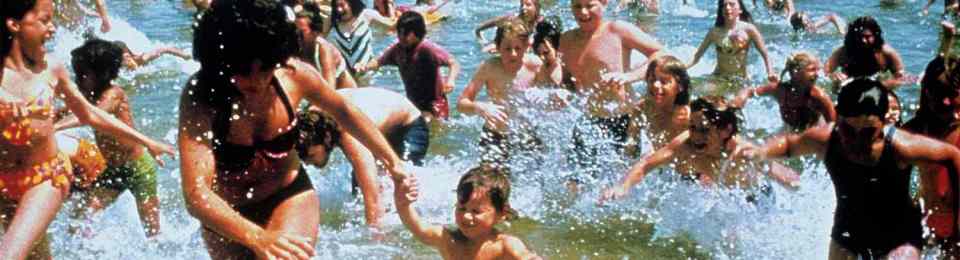
Because when Jaws hit theatres in 1975, it didn’t just break box office records. It detonated a planet-wide phobia. Rational adults who’d swum in the sea their whole lives suddenly refused to go waist-deep. Boating trips were cancelled. Beaches posted shark patrols like they were expecting Normandy-level invasions. People weren’t afraid of sharks before Jaws. After Jaws, they couldn’t stop picturing themselves inside one.
It’s not hard to understand why. Spielberg’s shark wasn’t just a predator—it was a force of nature, a myth made flesh. It was death from below, unknowable and unstoppable. Williams’ theme didn’t help either—it drilled into your brain like a warning siren. And once the public bought in, they didn’t just flinch at the water. They went hunting.
In the years following the release of Jaws, shark killings skyrocketed. Fishermen organised tournaments with the explicit goal of slaughtering as many as possible. Some sharks were mutilated for sport. Others were left to rot as trophies. The film had awakened an ancient fear and rebranded it as a civic duty. Sharks weren’t just animals anymore. They were villains. And the public wanted revenge.
Peter Benchley, who penned the original novel, would spend the rest of his life trying to undo the damage. He became a staunch conservationist, publicly lamenting how Jaws had fed hysteria. He wrote editorials, gave speeches, funded marine science. But the cultural machine had already chewed through the facts and spat out something far juicier: the monster myth.
And that myth still lingers.
Modern marine biologists have tried for decades to rehabilitate the shark’s image. We now know most species are shy, endangered, and critical to ocean ecosystems. We know attacks are rare—freakish outliers, not targeted carnage. But Jaws set the template. It tattooed an idea onto the global psyche: that beneath the surface lurks something ancient, evil, and waiting.
Here’s the kicker: Spielberg didn’t set out to demonise sharks. The terror came from budget constraints, not bloodlust. Bruce the Shark barely worked, and so the film’s horror became abstract, psychological. But abstraction has consequences. When the threat is offscreen, your brain fills in the blanks—and public imagination filled those blanks with teeth.
Yet maybe there’s something poetic in that. Because Jaws isn’t really about a shark—it’s about fear. Fear of nature, of losing control, of our place on the food chain. It’s about how humans respond when faced with something vast and indifferent. We named it. We hunted it. We called it evil. And the sea just kept rolling in.
Fifty years later, we’re still wrestling with the aftermath. Not just in how we make movies, but in how we treat the planet. The irony of Jaws is that it scared us away from the ocean, when what we really should’ve been afraid of was ourselves.
- Saul Muerte
 Surgeons of Horror
Pingback: Still Waters Run Deep: 50 Years of Jaws” | Surgeons of Horror