Tags
jaws, Killer shark, lorraine gray, Richard Dreyfus, Robert Shaw, Roy Scheider, shark movies, Steven Spielberg
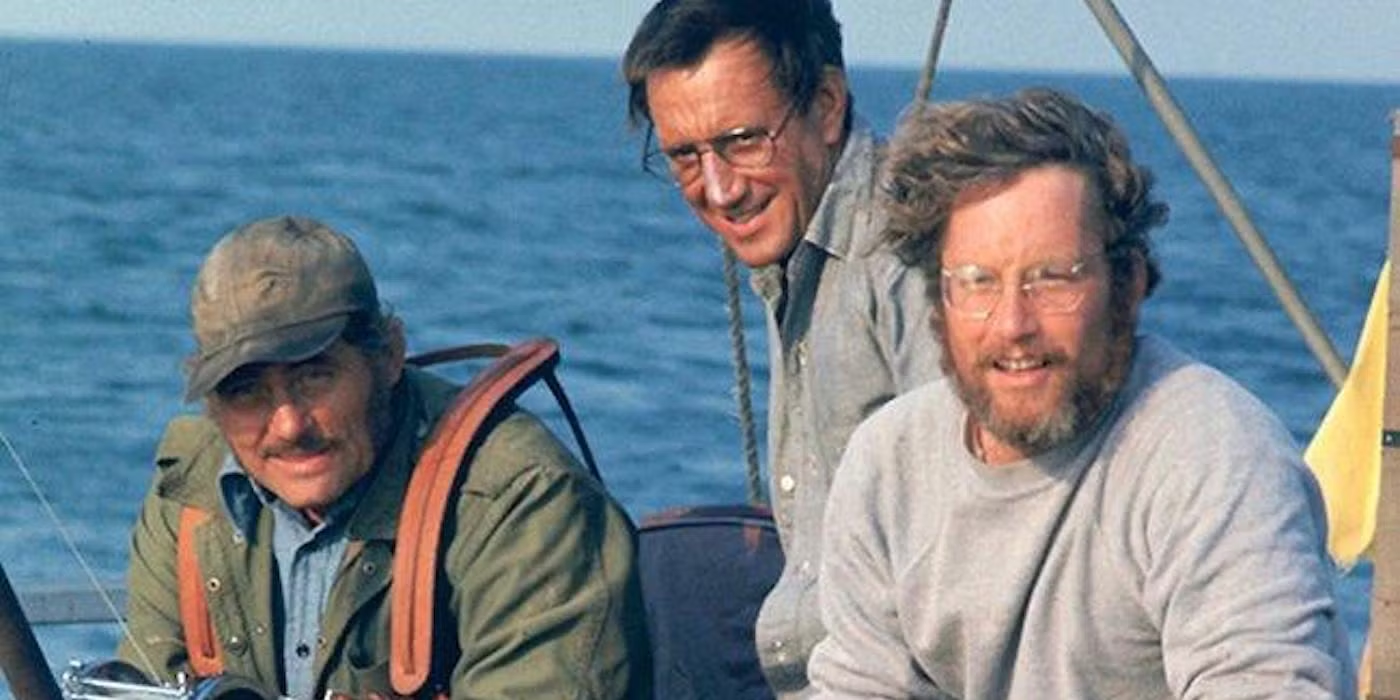
Before the blood, before the teeth, before the fins slicing through sunlit water—Jaws is a story about three men on a boat. Three archetypes stuffed into a floating coffin and set adrift with nothing but a harpoon gun, some beer, and enough resentment to sink a battleship. Forget the shark for a moment—this is the real engine of the film: Brody, the outsider cop with a conscience, Hooper, the rich-boy oceanographer with gadgets and a grudge, and Quint, the seafaring working-class warrior who’d rather spit on authority than answer to it.
It’s Moby Dick meets 12 Angry Men, with blood in the water and resentment in the air.
Let’s start with Brody—our everyman. A New York transplant trying to keep Amity safe, but slowly realising that civic responsibility means nothing when your town’s economy is built on sunburns and fried clams. He’s the man in the middle. Not rich, not poor. Not a sea dog, not a scientist. Just a guy with a badge and a conscience, trapped between two forces louder and more certain than him. Watch him on that boat—swabbing, second-guessing, chain-smoking his stress. He’s the reluctant centre of a tug-of-war between experience and education, brawn and brain.
Then there’s Hooper—young, wired, arrogant. He’s got sonar, flares, and a boat that cost more than your house. He’s used to talking over people, used to being right. But he’s also deeply, emotionally rattled by what’s happening. A kid who loved the sea until it bit back. You can see it in that moment he stares into the opened belly of a tiger shark and realises the real killer is still out there. Hooper’s got money, but no armour. He’s the progressive in a world that doesn’t care about your degrees when the water turns red.
And Quint—ah, Quint. Salt-crusted, sunburnt, drunk on both whiskey and war trauma. He’s the last of a dying breed: the self-made man who doesn’t trust institutions, technology, or rich kids with soft hands. He’s got scars—literal and metaphorical. His monologue about the USS Indianapolis isn’t just a great scene; it’s the soul of the movie. The war shaped him, spat him back, and now he hunts sharks the way some men hunt ghosts. He’s not fighting just a fish—he’s fighting death itself, with a smirk and a machete.
Put these three together on a boat, and what you get isn’t just tension. You get a class war. Old money vs. old trauma. The system vs. the sea. Intellectualism vs. instinct. Spielberg knew exactly what he was doing here—this wasn’t just a monster movie, it was a chamber piece in saltwater. The shark? Just the trigger. The real horror is watching these men unravel—respect each other, resent each other, and finally, get ripped apart by the very thing they were trying to control.
By the time Quint’s blood paints the deck, it’s not just a death—it’s a eulogy for an entire generation of men who thought they could conquer the wild with nothing but grit. Hooper survives, but barely, and only by going under. Brody survives too, but you can see the price in his silence as he paddles away on the wreckage of the Orca. They both live, but the myth of masculinity—stoic, self-reliant, invincible—sinks to the bottom with the shark.
Fifty years on, this triptych of men feels even more vital. Not because it tells us who we should be, but because it shows us what happens when we try to be it all at once. The protector, the thinker, the killer. We saw ourselves in these three. And we watched what the ocean did to them.
Spoiler: the ocean won.
- Saul Muerte
 Surgeons of Horror
Pingback: Still Waters Run Deep: 50 Years of Jaws” | Surgeons of Horror