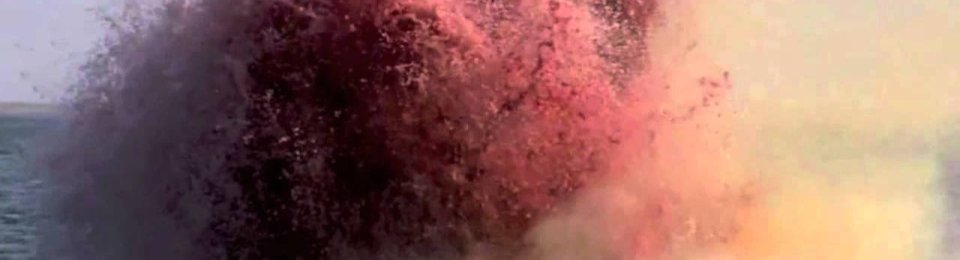
The shark exploded. Literally. A scuba tank to the gut and a chunk of ocean sky lit up like the Fourth of July. Boom. Done. Fade to black. But of course, it wasn’t done.
Because Jaws didn’t just launch a blockbuster—it launched a beast. Not the kind with fins and teeth, but the kind that lives in boardrooms. The kind that smells profit in blood and doesn’t care who bleeds next.
Spielberg walked away. Smart move. He knew he’d pushed his luck once and nearly drowned doing it. But the studio? They smelled money—hot, salty, mid-’70s Americana money. Jaws made $100 million faster than any film before it. And when a monster does that, you don’t bury it. You build a theme park around it. You crank out sequels. You slap its name on lunchboxes, novelisations, jigsaw puzzles, Atari cartridges, and eventually, straight-to-cable sludge.
And so the shark came back. Again and again. Jaws 2 (not terrible, just toothless), Jaws 3-D (aka the fish tank screensaver from hell), and finally Jaws: The Revenge—a film so apocalyptically stupid it made Plan 9 from Outer Space look like Citizen Kane. This was where things got unhinged. The shark follows the Brody family from Amity to the Bahamas. It growls. It explodes in slow motion. It holds grudges. Somewhere, Moby Dick is rolling his eyes.
But here’s the rub: Jaws didn’t just franchise itself—it birthed the very concept of franchise-as-strategy. Before this, sequels were an afterthought, a maybe, a footnote. After Jaws, they became the plan. The future. The business model.
Studios started greenlighting entire trilogies before cameras rolled on the first frame. Intellectual property (IP) became the new oil, mined from the bones of old ideas. If it had a logo, it had legs. Star Wars, Rocky, Halloween, Alien—all in the wake of that fin cutting through the water. And that legacy only grew more grotesque in the 2000s. Prequels, reboots, cinematic universes. Every monster has a cousin. Every killer has an origin story. Every shark gets a spinoff.
You can see the DNA of Jaws in Jurassic Park, Pirates of the Caribbean, even Marvel. Big beast. Bigger box office. Bigger merchandising rollout. Spielberg didn’t just direct Jaws—he accidentally wrote the modern studio playbook, and then tried to outrun it.
And yet… through all the corporate feeding frenzy, the original remains untouched. Untarnished. Somehow, despite the cash-ins and copycats, Jaws still feels singular. A freak accident. A masterpiece birthed from chaos, not commerce. And maybe that’s why the shark never really died—because we keep coming back, not for the sequels or the plastic toys, but for the feeling. The quiet before the scream. The thrum of danger just beneath the surface. The electricity of a movie that didn’t know what it was until it was finished—and then couldn’t be replicated.
Franchise culture may have chummed the waters, but Jaws still swims alone.
- Saul Muerte
 Surgeons of Horror
Pingback: Still Waters Run Deep: 50 Years of Jaws” | Surgeons of Horror